
Time and Money The Macroeconomics of Capital Structure

- Slides: 25
Time and Money: The Macroeconomics of Capital Structure London: Routledge, 2001 Also see: http: //www. auburn. edu/~garriro
Forced Saving and Overconsumption in the Mises-Hayek Theory of the Business Cycle http: //www. auburn. edu/~garriro/strigl. htm FD HAYE K …. . VS . MISE
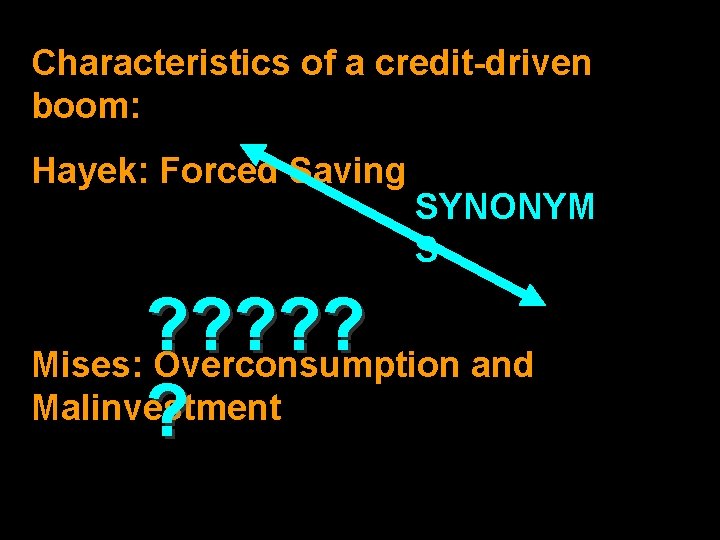
Characteristics of a credit-driven boom: Hayek: Forced Saving ANTONYM S? FD Mises: Overconsumption and Malinvestment
Characteristics of a credit-driven boom: Hayek: Forced Saving is a pattern of investment inconsistent. FDwith saving preferences. Mises: Overconsumption and Malinvestment is a pattern of Malinvestment inconsistent with saving preferences.
Characteristics of a credit-driven boom: Hayek: Forced Saving SYNONYM FD S ? ? ? Mises: Overconsumption and Malinvestment ?
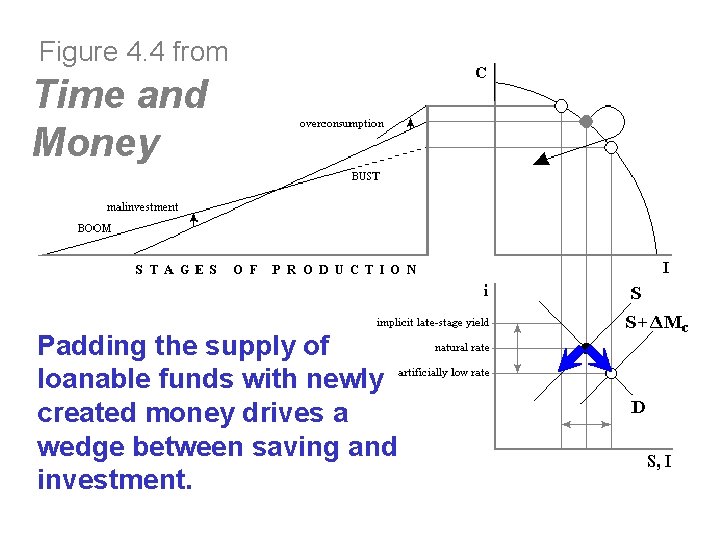
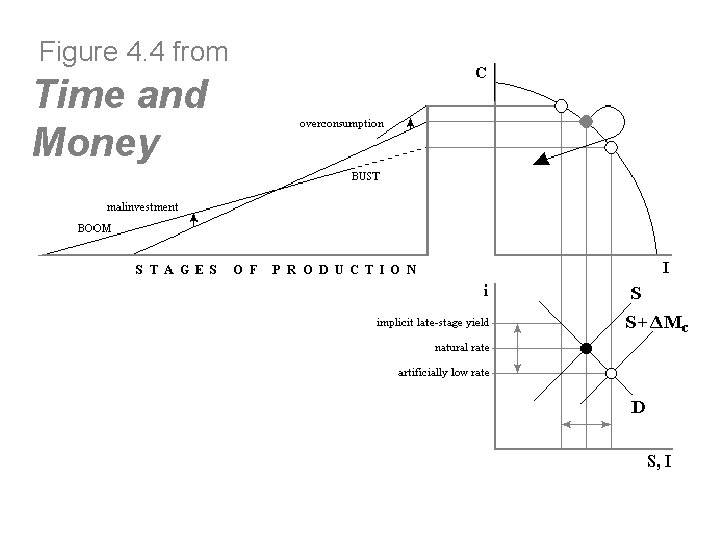
Figure 4. 4 from Time and Money Padding the supply of loanable funds with newly created money drives a wedge between saving and investment.
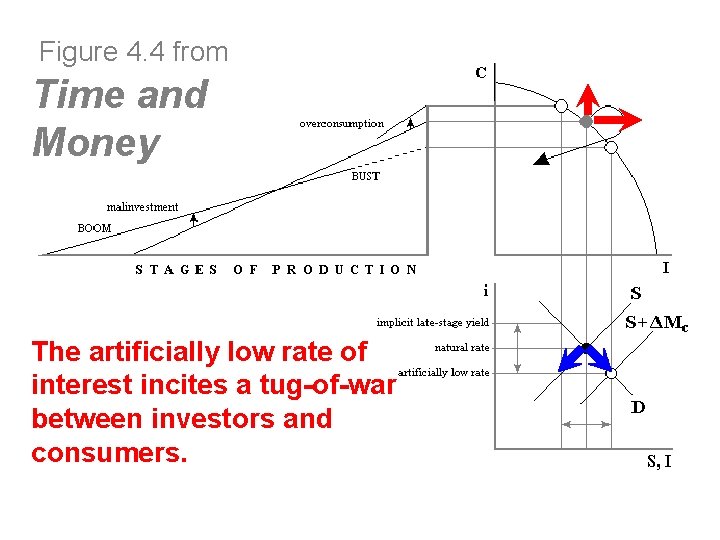
Figure 4. 4 from Time and Money The artificially low rate of interest incites a tug-of-war between investors and consumers.
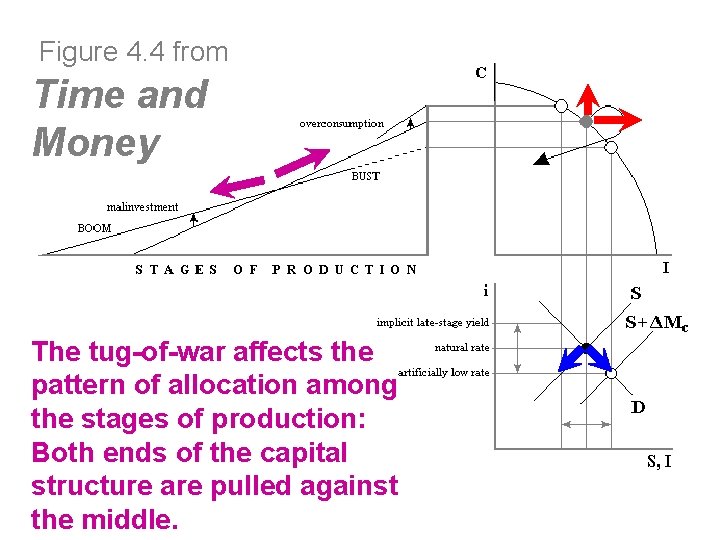
Figure 4. 4 from Time and Money The tug-of-war affects the pattern of allocation among the stages of production: Both ends of the capital structure are pulled against the middle.
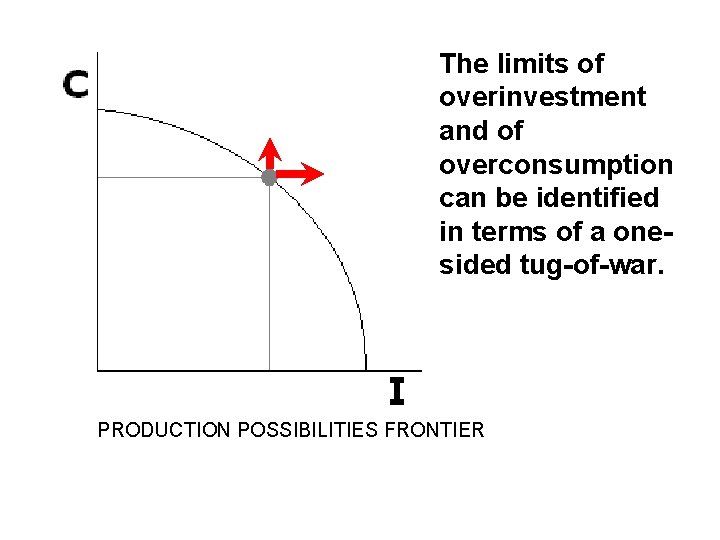
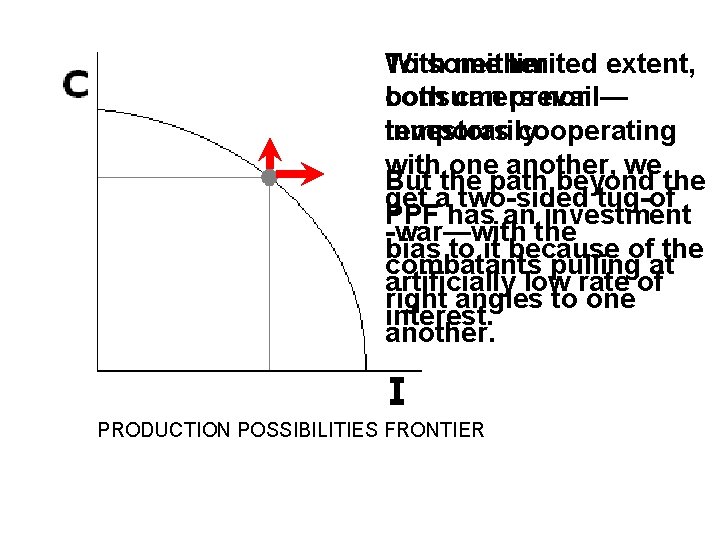
The limits of overinvestment and of overconsumption can be identified in terms of a onesided tug-of-war. PRODUCTION POSSIBILITIES FRONTIER
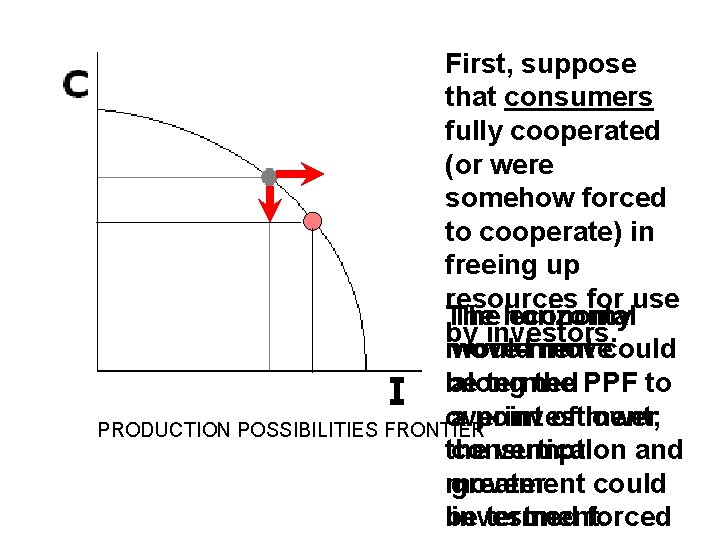
First, suppose that consumers fully cooperated (or were somehow forced to cooperate) in freeing up resources for use The horizontal economy by investors. move-ment would movecould be along termed the PPF to overinvestment; a point of lower PRODUCTION POSSIBILITIES FRONTIER the consumption vertical and movement greater could be investment. termed forced
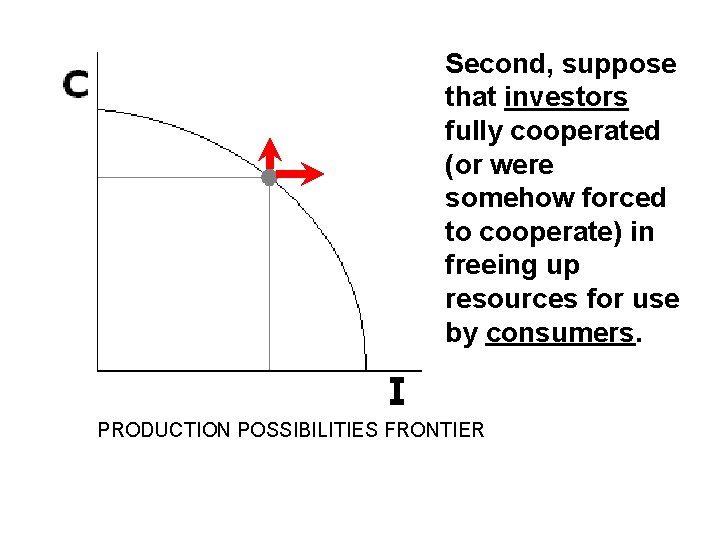
Second, suppose that investors fully cooperated (or were somehow forced to cooperate) in freeing up resources for use by consumers. PRODUCTION POSSIBILITIES FRONTIER
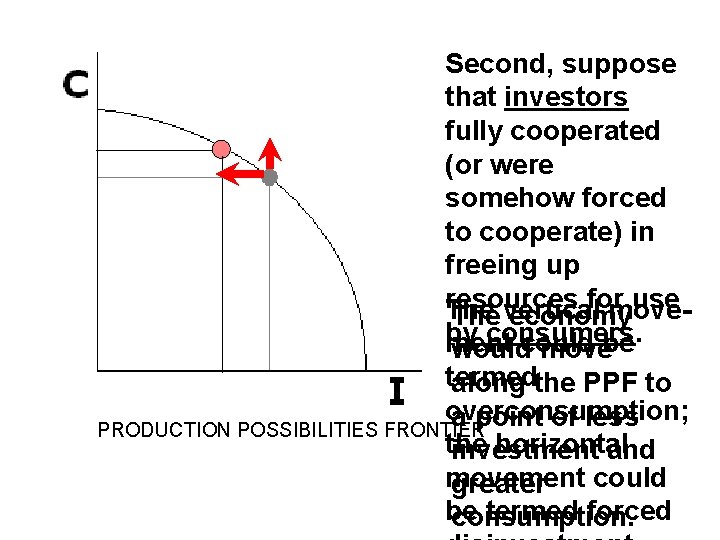
Second, suppose that investors fully cooperated (or were somehow forced to cooperate) in freeing up resources for use The vertical move. The economy by consumers. ment wouldcould movebe termed along the PPF to overconsumption; a point of less PRODUCTION POSSIBILITIES FRONTIER the horizontal investment and movement could greater be termed forced consumption.
To some With neither limited extent, consumers both can prevail— nor investors cooperating temporarily. with one another, we But the path beyond the get a two-sided tug-of PPF has an investment -war—with the bias to it because of the combatants pulling at artificially low rate of right angles to one interest. another. PRODUCTION POSSIBILITIES FRONTIER
Figure 4. 4 from Time and Money
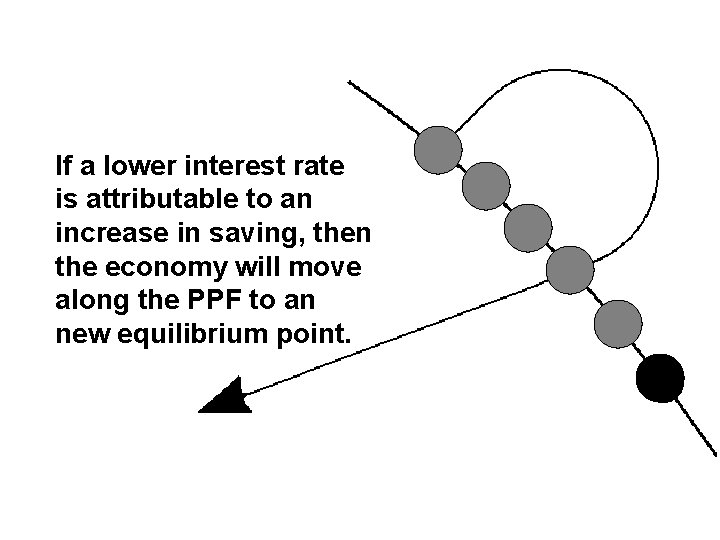
If a lower interest rate is attributable to an increase in saving, then the economy will move along the PPF to an new equilibrium point.
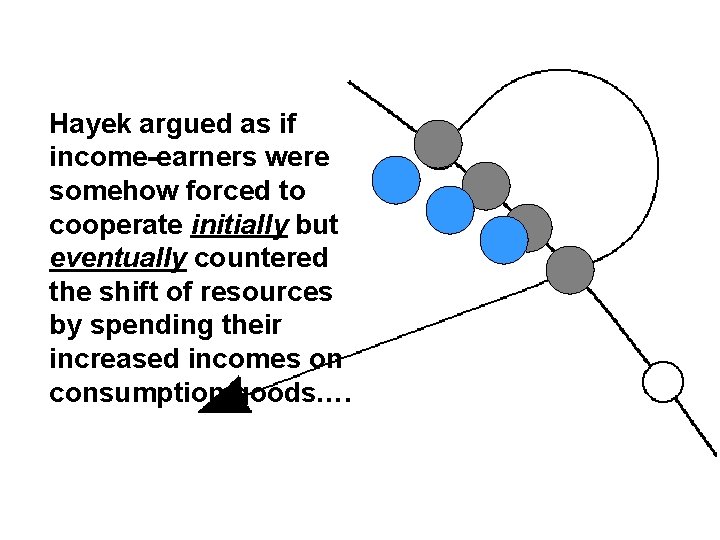
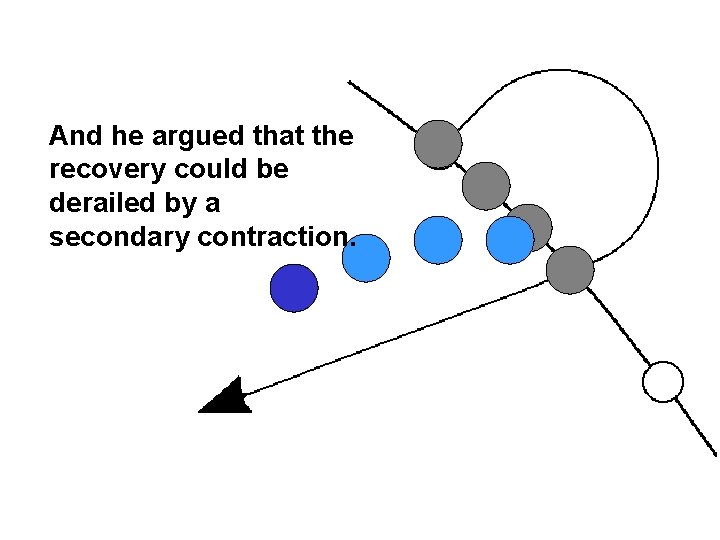
Hayek argued as if income-earners were somehow forced to cooperate initially but eventually countered the shift of resources by spending their increased incomes on consumption goods….
And he argued that the recovery could be derailed by a secondary contraction.
Hayek’s discussion of the situation created by cheap-credit investment boom is to the point: “[A]s thing are, for some time, society as a whole will have to put up with an involuntary reduction of consumption. ” For him, the eventual increased consumption characterizes the end of the boom. Using italics, he makes the “fundamental point” that the increase in consumer demand means “a new and reversed change of proportion between the demand for consumers’ goods and the demand for
Problems with Hayek’s construction: 1. It takes “forced saving” in the sense of a pattern of investment at odds with saving preferences to mean also saving in the sense of abstaining from consumption. 2. It leaves Hicks’ question about the lag between credit expansion and increased consumer spending unanswered. 3. It denies one of the most salient features of an credit-induced boom—increased consumption.
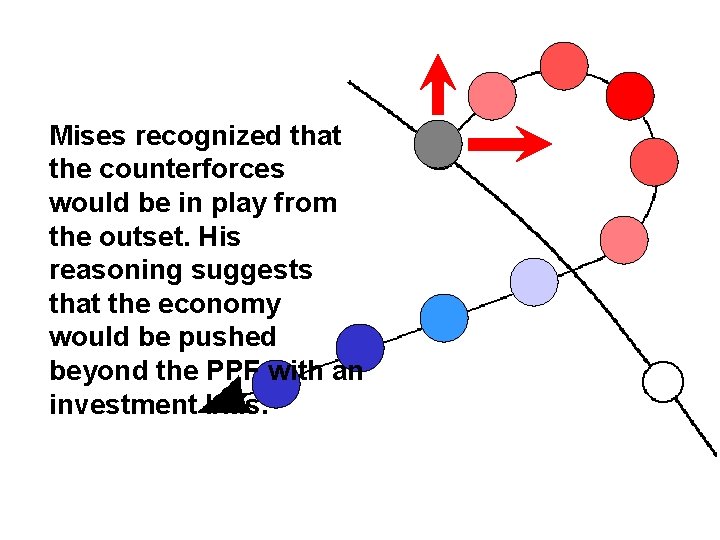
Mises recognized that the counterforces would be in play from the outset. His reasoning suggests that the economy would be pushed beyond the PPF with an investment bias.
According to Mises (TMC), “A time must necessarily come when the means of subsistence available for consumption are all used up although the capital goods employed in production have not yet been transformed into consumption goods. This time must come all the more quickly inasmuch as the fall in the rate of interest weakens the motive for saving and slows up the rate of capital accumulation” (emphasis added).
And from Mises Human Action: The overconsumption “squanders capital and impairs the future state of want-satisfaction. ” Also, “the immediate consequence of credit expansion is a rise in consumption on the part of those wage earners whose wages have risen on account of the intensified demand for labor displayed by the expanding entrepreneurs” (emphasis added). “[T]he boom itself does not result in a restriction but rather in an increase in consumption” (emphasis added). And again, “the boom affects also the consumers’ goods industries. They too invest
A summary comparison: Hayek sees the boom-bust cycle as forced saving, which is eventually countered by intensified consumption demand. Mises sees the boom as malinvestment, which is immediately compounded by overconsumption. HAYEK v. MISES: “eventually countered” v “immediately compounded”
HAYEK and MISES: A credit-driven boom constains the seeds of its own undoing. The artificially low interest rate encoursges the initiation of more long-term projects than can actually be completed. On the eve of the bust, distress borrowing allows some producers to finish their projects and minimize their losses. In this phase, the high interest rates bolstered by distress borrowing cause people to curtail their consumption and to save instead. The resources thus freed up constitute an explicit form of “forced saving”–a term used more broadly by Hayek to characterize all the boom-related commitments of resources that are at odds with consumers’ time preferences. With scope for sustaining the boom on the basis of forced saving severely limited, the economy is forced to adjust to a slower growth path.