
Timbre What does timbre mean The distinctive individual
Timbre

What does timbre mean? The distinctive individual sound of an instrument or voice Factors include: - Materials used - Played e. g. strings? reed? - Resonates e. g. brass? strings? Timbres create different moods or feelings

Technology - Reverb A sound lasts longer because it is reflected between walls, floor and ceiling of a room
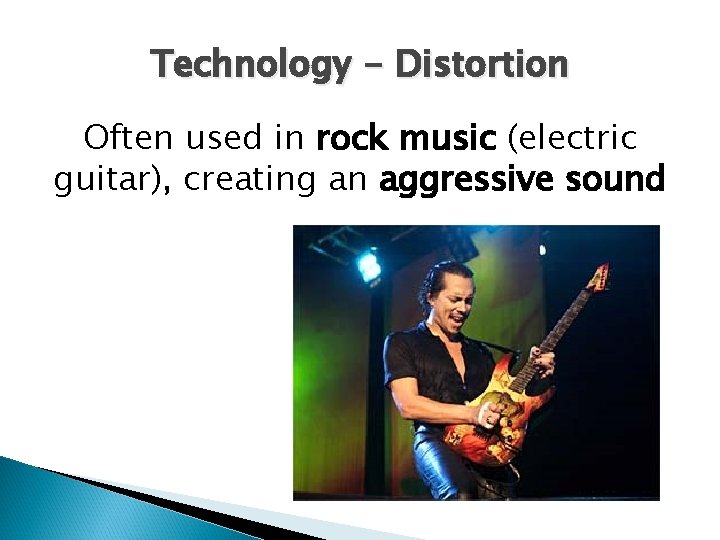
Technology - Distortion Often used in rock music (electric guitar), creating an aggressive sound
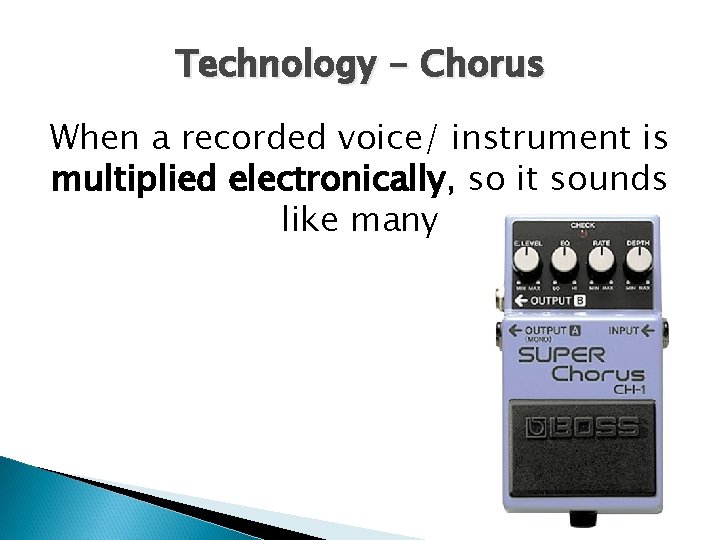
Technology - Chorus When a recorded voice/ instrument is multiplied electronically, so it sounds like many

Technology – Multi-tracking A recording technique where different sounds are recorded separately, then played back together
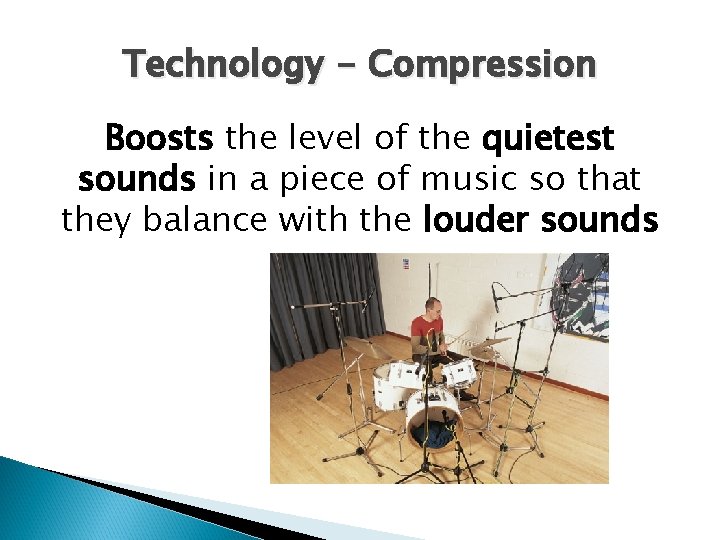
Technology - Compression Boosts the level of the quietest sounds in a piece of music so that they balance with the louder sounds
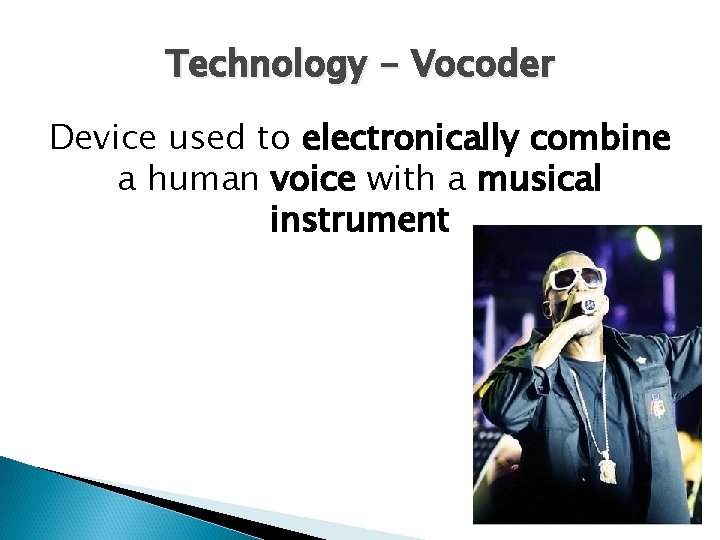
Technology - Vocoder Device used to electronically combine a human voice with a musical instrument
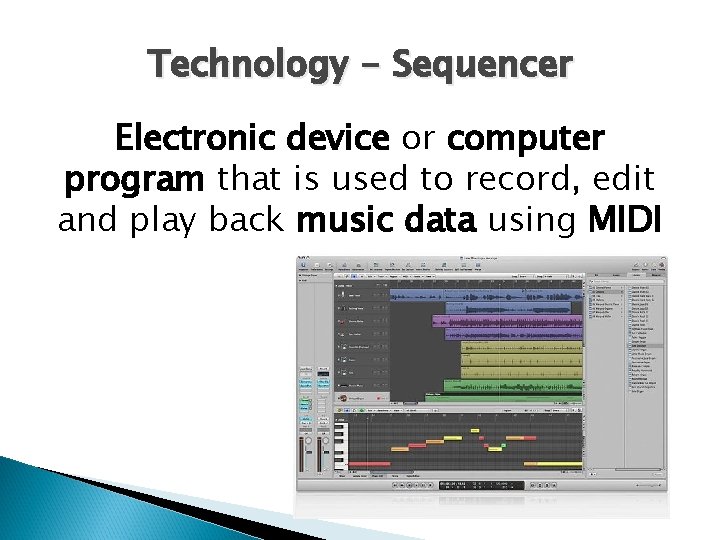
Technology - Sequencer Electronic device or computer program that is used to record, edit and play back music data using MIDI
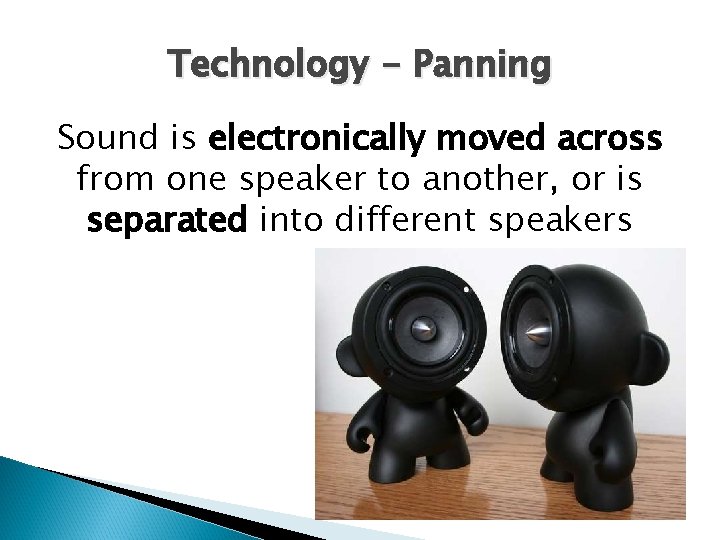
Technology - Panning Sound is electronically moved across from one speaker to another, or is separated into different speakers
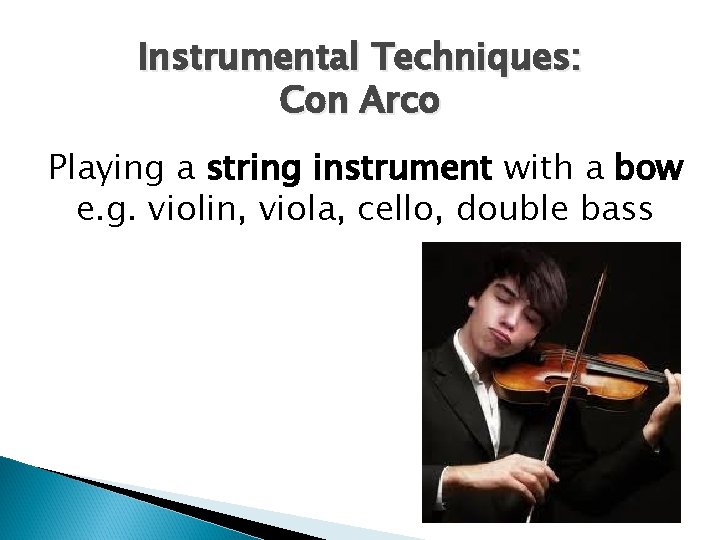
Instrumental Techniques: Con Arco Playing a string instrument with a bow e. g. violin, viola, cello, double bass
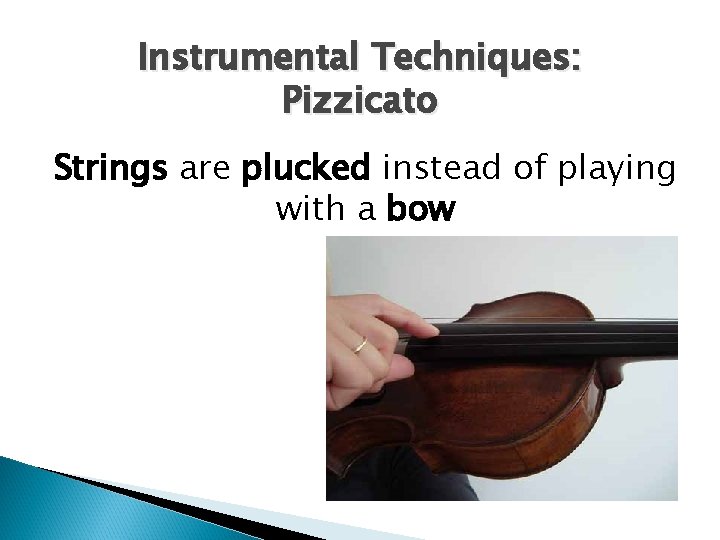
Instrumental Techniques: Pizzicato Strings are plucked instead of playing with a bow
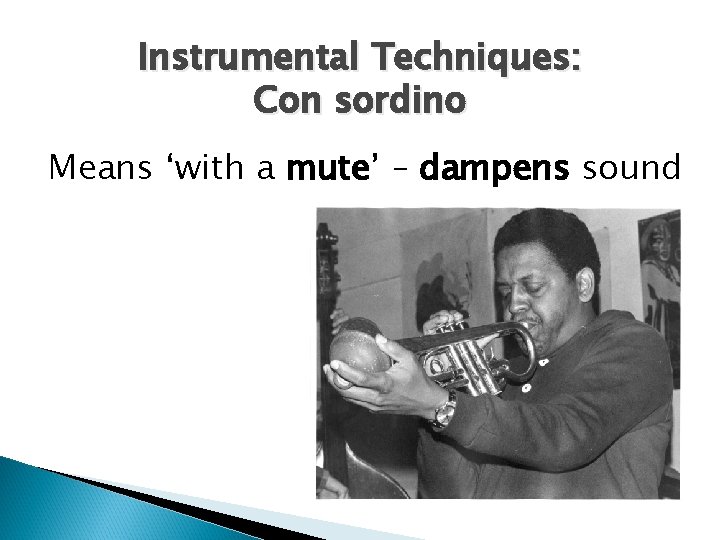
Instrumental Techniques: Con sordino Means ‘with a mute’ – dampens sound
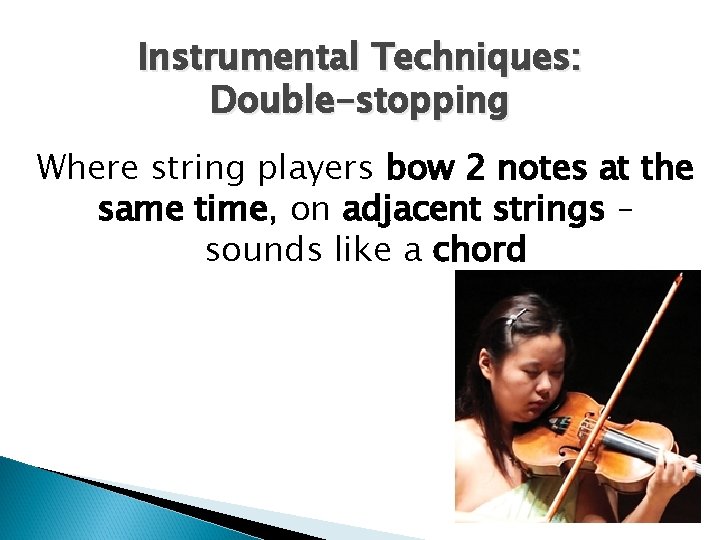
Instrumental Techniques: Double-stopping Where string players bow 2 notes at the same time, on adjacent strings – sounds like a chord
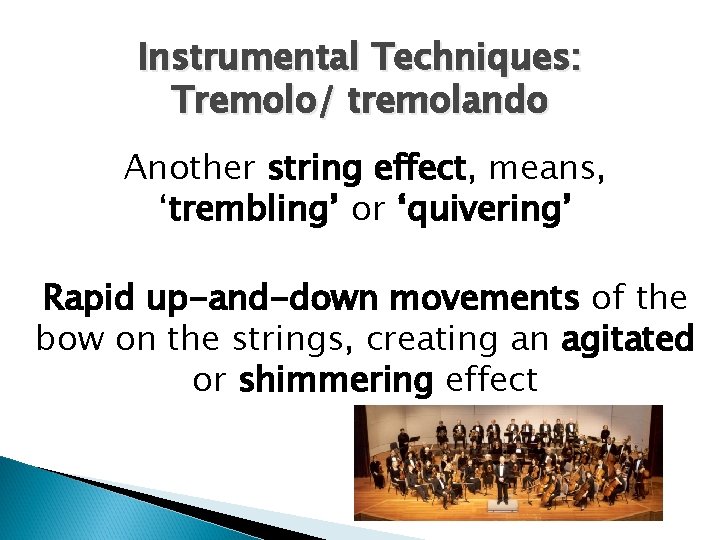
Instrumental Techniques: Tremolo/ tremolando Another string effect, means, ‘trembling’ or ‘quivering’ Rapid up-and-down movements of the bow on the strings, creating an agitated or shimmering effect
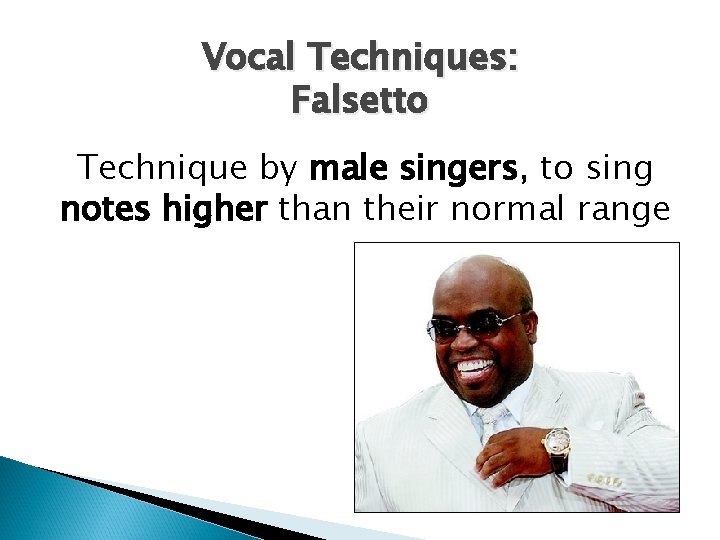
Vocal Techniques: Falsetto Technique by male singers, to sing notes higher than their normal range
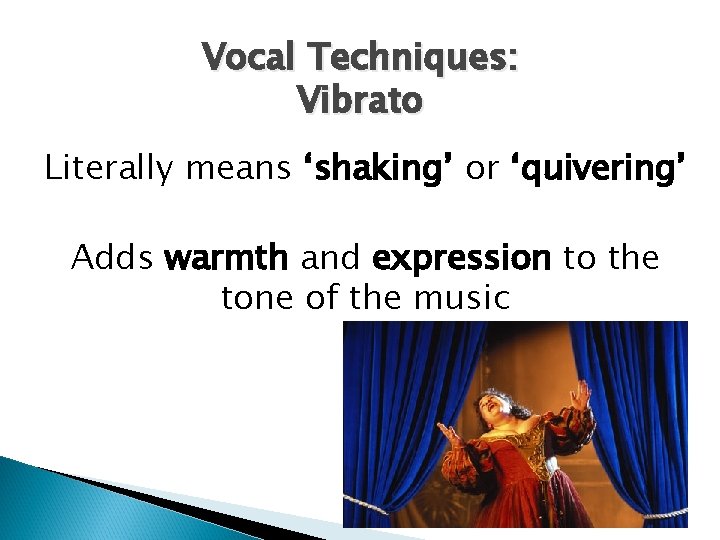
Vocal Techniques: Vibrato Literally means ‘shaking’ or ‘quivering’ Adds warmth and expression to the tone of the music
- Slides: 17