
Tilt of the Earth Axis an imaginary line

- Slides: 14
Tilt of the Earth • Axis- an imaginary line running from the North Pole, through the center of the Earth, to the South Pole. –Located at 23 ½ degrees upon the axis –Effects temperature depending upon tilt of the Earth towards or away from the sun. –https: //www. youtube. com/watch? v=3 e. Fq. ZWX 8 n. To
Rotation • The spinning of the Earth on its axis. • 1 rotation= 24 hours
Revolution • Orbit of the Earth around the sun. • 365 ¼ days in one year
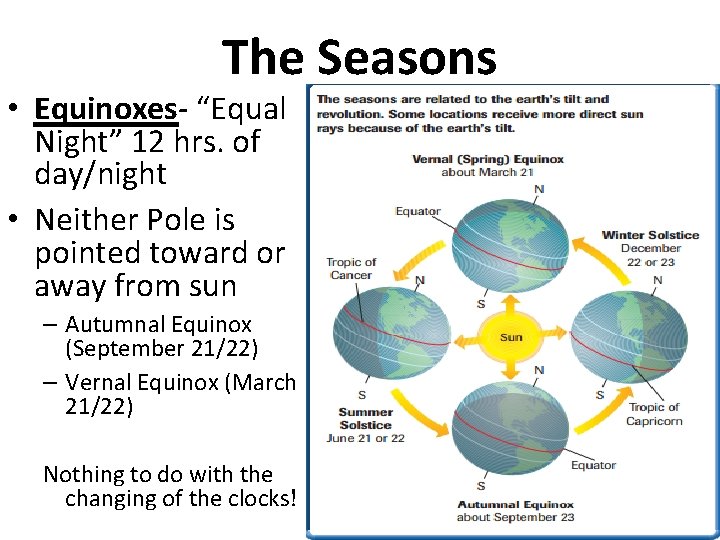
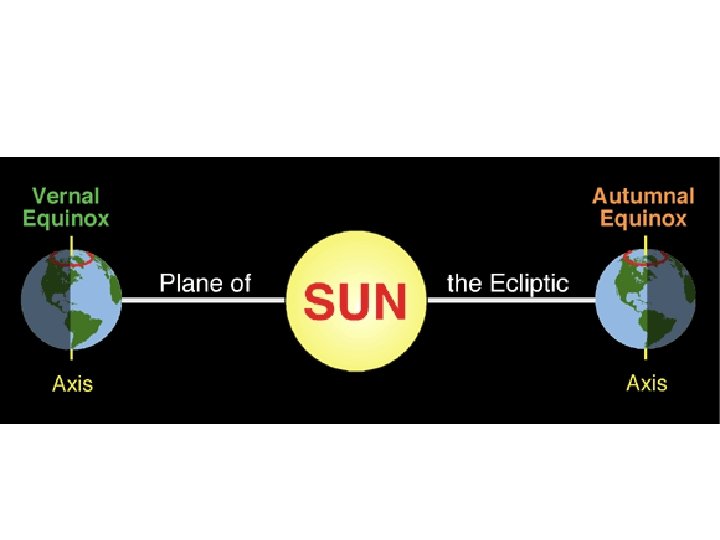
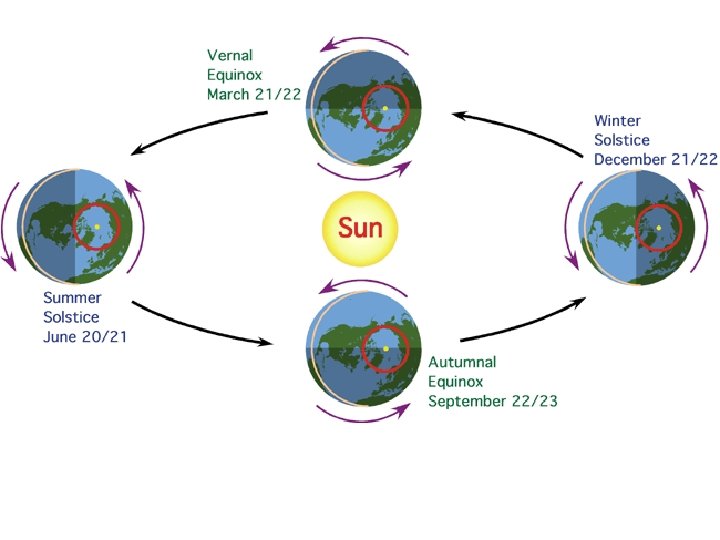
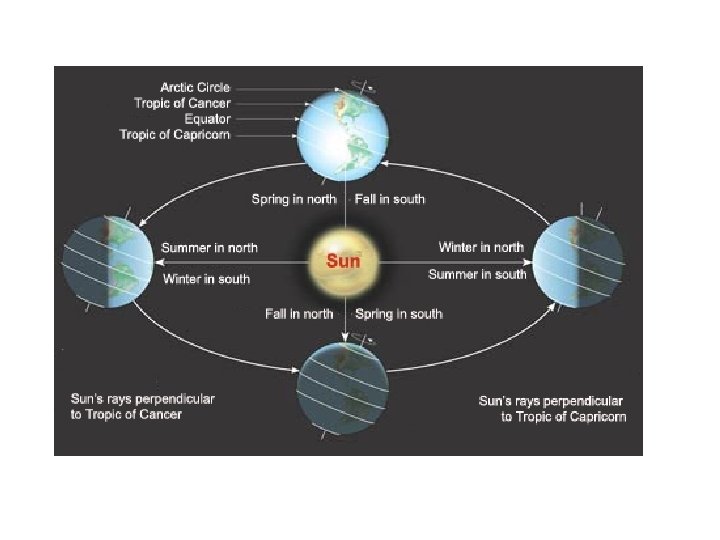
The Seasons • Equinoxes- “Equal Night” 12 hrs. of day/night • Neither Pole is pointed toward or away from sun – Autumnal Equinox (September 21/22) – Vernal Equinox (March 21/22) Nothing to do with the changing of the clocks!
Cancer and Capricorn • 23 ½ degrees North- Tropic of Cancer – Northernmost point on Earth to receive direct sunlight • 23 ½ degrees South- Tropic of Capricorn – Southernmost point on Earth to receive direct sunlight
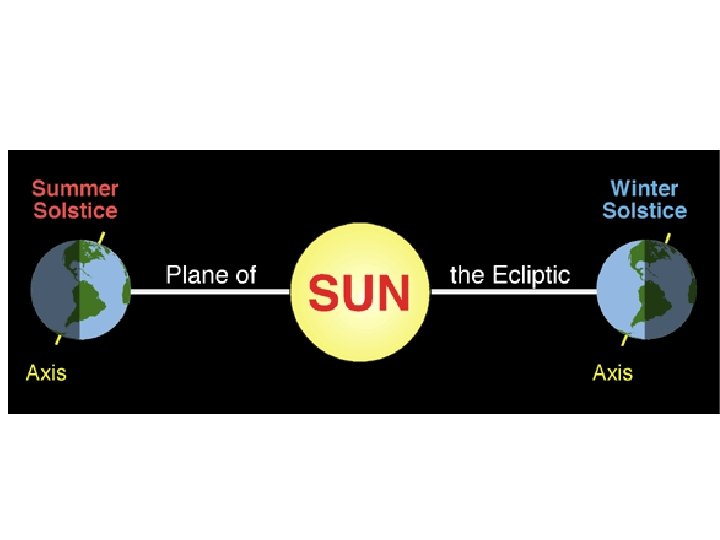
The Seasons • Summer Solstice- North pole is pointed toward the sun at 23 ½ degrees North • Winter Solstice- South pole is pointed toward the sun at 23 ½ degrees South
The Poles • Each pole receives continuous sunlight for 6 months of the year • When one pole receives sunlight the other receives little to no sunlight
Earth-Sun Notes • Axis- an imaginary line running from the North Pole, through the center of the Earth, to the South Pole. – Located at 23 ½ degrees upon the axis – Effects temperature depending upon tilt of the Earth towards or away from the sun. • Rotation & Revolution – 1 rotation = 24 hours – 1 revolution around the sun = 365 ¼ days • Tropic of Cancer & Capricorn • Tropic of Cancer-23 ½ degrees North • Northernmost point on Earth to receive direct sunlight • Tropic of Capricorn – 23 ½ degrees South • Southernmost point on Earth to receiver direct sunlight
Earth-Sun Notes • Equinoxes “Equal Night” – 12 hours of Day/Night – Autumn Equinox (September 21/22) – Vernal Equinox ( March 21/22) • Seasons – Summer Solstice • North pole is pointed towards the sun at 23 ½ degrees North – Winter Solstice • South pole is pointed towards the sun at 23 ½ degrees South • Poles – Each pole receives continuous sunlight for 6 months of the year.