
Ties to the Land Program Clint Bentz CPA
Ties to the Land Program Clint Bentz, CPA Chairman, American Forest Foundation Partner, Boldt, Carlisle & Smith, LLC 321 1 st Ave E, Suite 2 A Albany, OR 97321 (541) 928 -6500
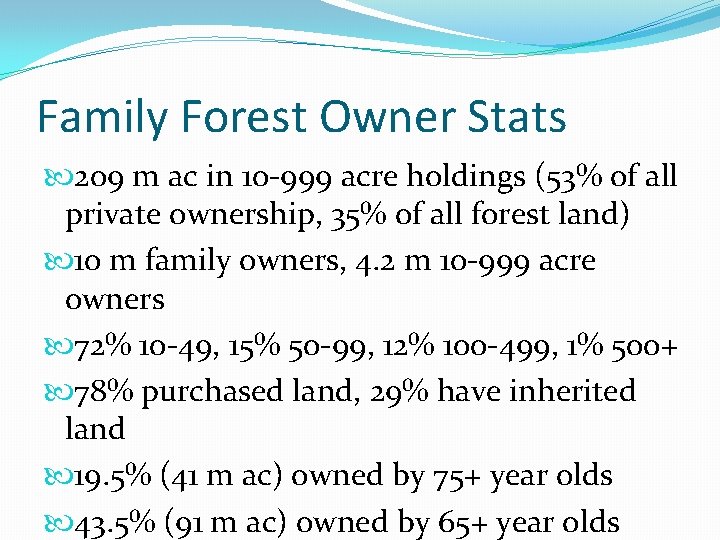
Family Forest Owner Stats 209 m ac in 10 -999 acre holdings (53% of all private ownership, 35% of all forest land) 10 m family owners, 4. 2 m 10 -999 acre owners 72% 10 -49, 15% 50 -99, 12% 100 -499, 1% 500+ 78% purchased land, 29% have inherited land 19. 5% (41 m ac) owned by 75+ year olds 43. 5% (91 m ac) owned by 65+ year olds
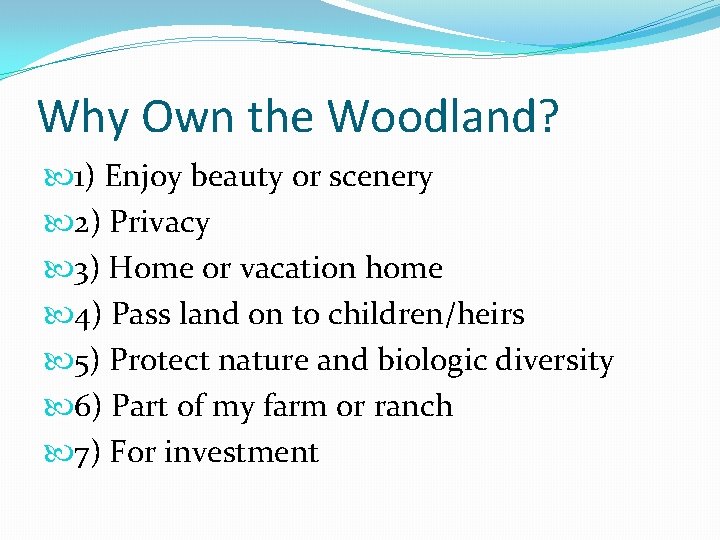
Why Own the Woodland? 1) Enjoy beauty or scenery 2) Privacy 3) Home or vacation home 4) Pass land on to children/heirs 5) Protect nature and biologic diversity 6) Part of my farm or ranch 7) For investment
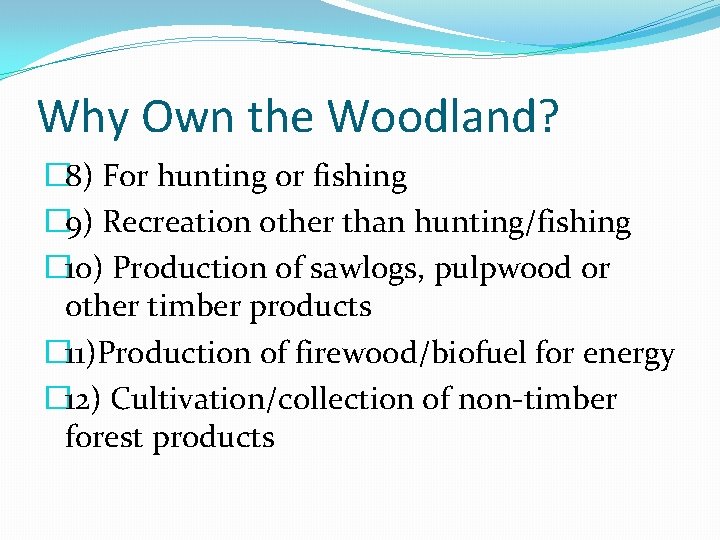
Why Own the Woodland? � 8) For hunting or fishing � 9) Recreation other than hunting/fishing � 10) Production of sawlogs, pulpwood or other timber products � 11)Production of firewood/biofuel for energy � 12) Cultivation/collection of non-timber forest products
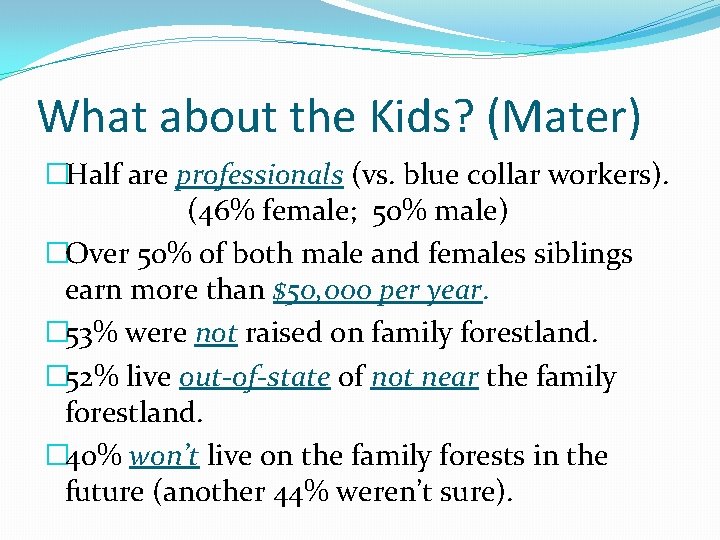
What about the Kids? (Mater) �Half are professionals (vs. blue collar workers). (46% female; 50% male) �Over 50% of both male and females siblings earn more than $50, 000 per year. � 53% were not raised on family forestland. � 52% live out-of-state of not near the family forestland. � 40% won’t live on the family forests in the future (another 44% weren’t sure).
What about the Kids (Mater) Many did not know the amount of acreage of the family forest prior to interview. Some did not even know that their family owned forestlands! 20% did not know whether their own family forests were contiguous or scattered among several tracts. Clear majority (87%) wish to own the family forest when transfer time occurs.
Concerns for the Future Intergenerational transfer (40 million ac) 10% (20 m ac) transfer in next 5 years Non-engaged owners/heirs – 3% have plans Only 29% have inherited before experience Continued development pressure Next generation not connected to land Family fragmentation – blended families
Problems with Property What are we going to do with it? (common vision) Why should we continue to own it? (passion) How will we make decisions (governance) How are we going to maintain it? (management) How can we improve it for next gen? (stewardship) Who is going to make it happen? (leadership) How are we going to pay for it? (financial) How will we engage the next generation? (succession)
Family Life Shirtsleeves to shirtsleeves in 3 generations (entropy) Movement from land – rise of nuclear families Explosion of knowledge – psychology, management Families of wealth – families of affinity Using the land as a tool to help us
The Five Options for Property Accumulate things during our lives Sell now or at death Give all or part (easement) away to charity Carve up property between children Leave to one child & disinherit others Leave undivided interests to children (partnership)
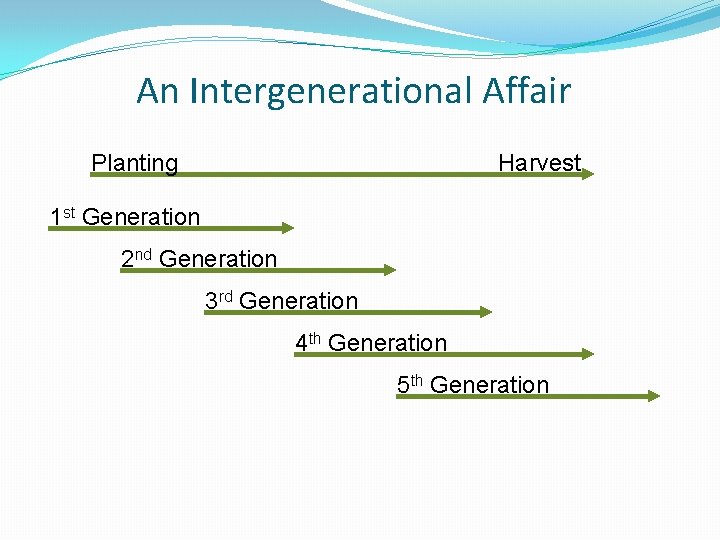
An Intergenerational Affair Planting Harvest 1 st Generation 2 nd Generation 3 rd Generation 4 th Generation 5 th Generation
4 Recurring Generational Types Builder generation (greatest generation, millennials) Team players, pragmatic, build organizations, lead Bureaucrat generation (traditional, post millennial? ) Team players, acquire knowledge, systems, technical skills, consensus, operate organizations, follow Iconoclast generation (boomers) Indivdiuals, social change, workaholic, optimistic, selfmotivated, lead Lost generation (silent generation, gen x) Individuals, work/life balance, skeptical of organizations, follow
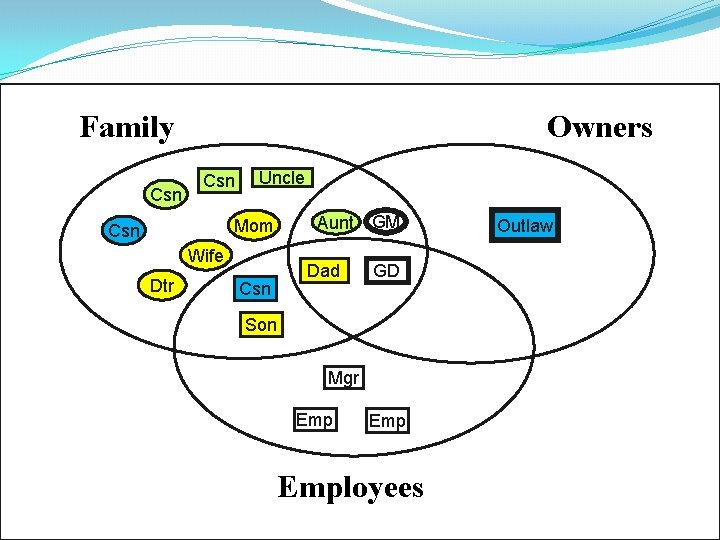
Family Csn Owners Csn Uncle Mom Csn Wife Dtr Csn Aunt GM Dad GD Son Mgr Emp Employees Outlaw
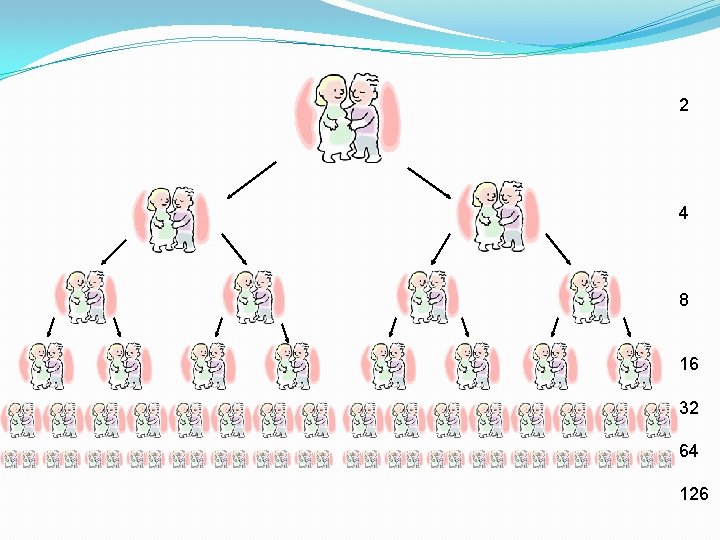
2 4 8 16 32 64 126
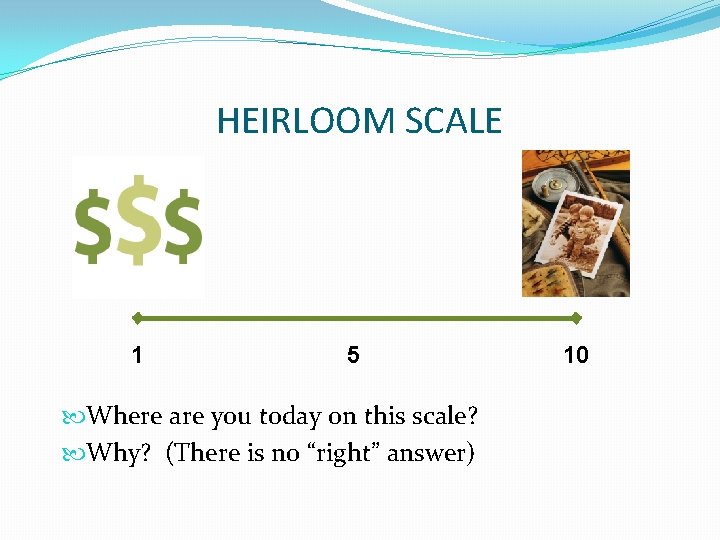
HEIRLOOM SCALE 1 5 Where are you today on this scale? Why? (There is no “right” answer) 10
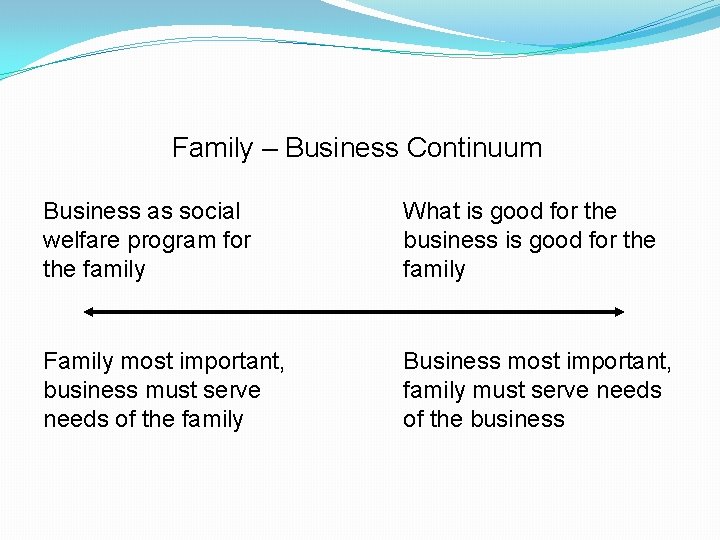
Family – Business Continuum Business as social welfare program for the family What is good for the business is good for the family Family most important, business must serve needs of the family Business most important, family must serve needs of the business
Ties To The Land Program �The Heirloom Scale© - financial asset vs. treasure �Parents give land to kids as joint owners (partners) �Parents and children need training and assistance to get through transition stress �Create common vision for use of property �Deal realistically with differing needs, abilities, and passion for the property among children �Encourage formation of business entity to hold land create governance structure �The importance of regular family meetings �The power of intergenerational family ownership
T 3 L in Europe? Started as local program in Oregon Partnership with OSU, Extension & myself AFF grant funds took program nationally Initial scientific research completed What are the needs? Interest in future dialogue?
- Slides: 18