
Tier 2 and Tier 3 Interventions and Supports
- Slides: 12
Tier 2 and Tier 3 Interventions and Supports Optional PBIS Coaches Meeting November 15, 2010
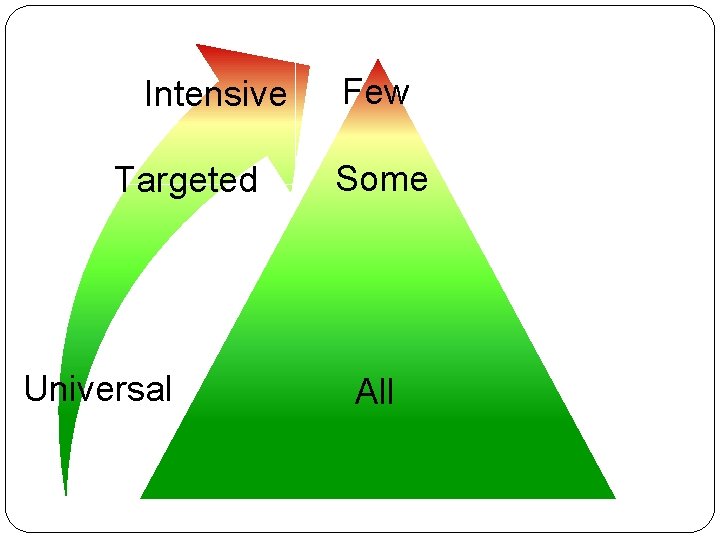
Intensive Targeted Universal Few Some All
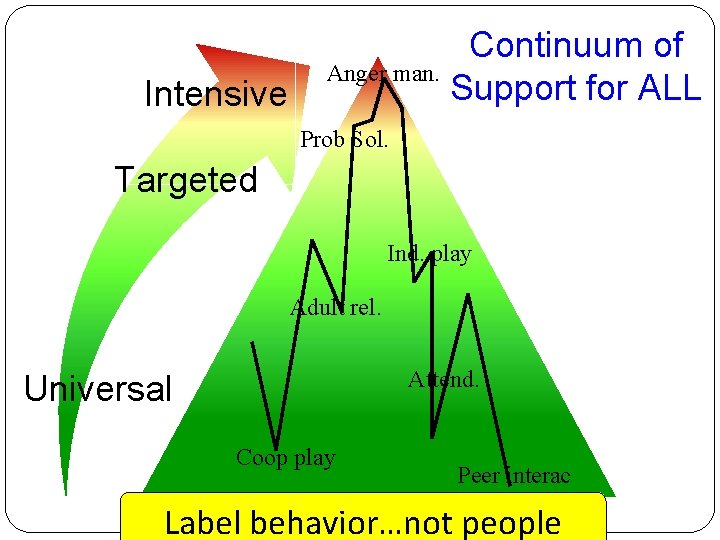
Intensive Continuum of Anger man. Support for ALL Prob Sol. Targeted Ind. play Adult rel. Attend. Universal Coop play Peer interac Label behavior…not people
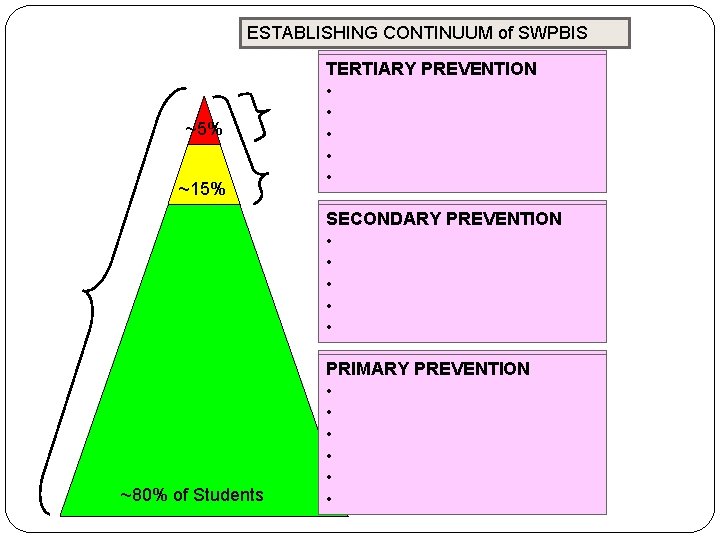
ESTABLISHING CONTINUUM of SWPBIS ~5% ~15% TERTIARY PREVENTION • Function-based support • Wraparound • Person-centered planning • • SECONDARY PREVENTION • Check in/out • Targeted social skills instruction • Peer-based supports • Social skills club • ~80% of Students PRIMARY PREVENTION • Teach SW expectations • Proactive SW discipline • Positive reinforcement • Effective instruction • Parent engagement •
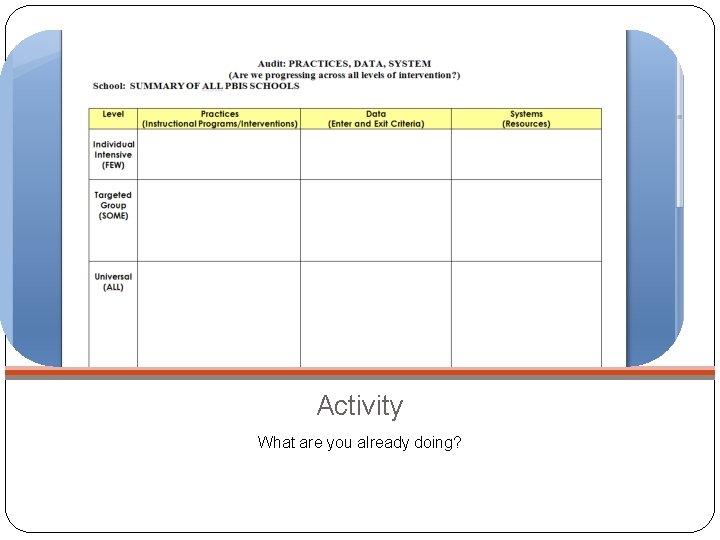
Activity What are you already doing?
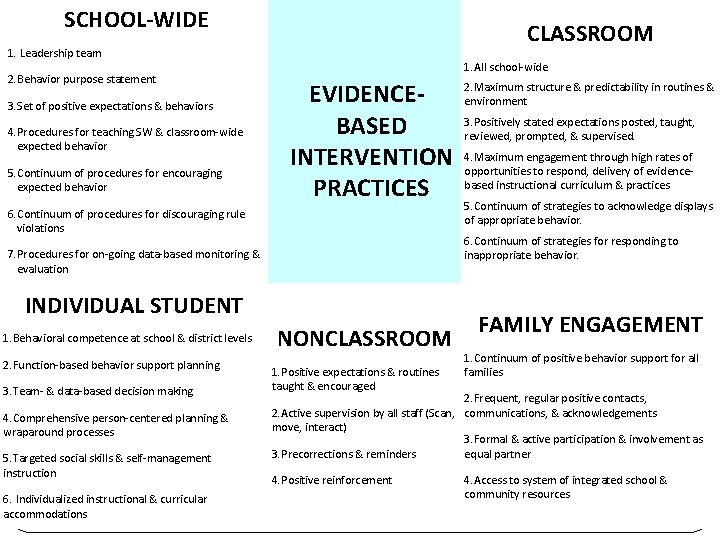
SCHOOL-WIDE CLASSROOM 1. Leadership team 2. Behavior purpose statement 3. Set of positive expectations & behaviors 4. Procedures for teaching SW & classroom-wide expected behavior 5. Continuum of procedures for encouraging expected behavior 1. All school-wide EVIDENCEBASED INTERVENTION PRACTICES 6. Continuum of procedures for discouraging rule violations INDIVIDUAL STUDENT 2. Function-based behavior support planning 3. Team- & data-based decision making 4. Comprehensive person-centered planning & wraparound processes 5. Targeted social skills & self-management instruction 6. Individualized instructional & curricular accommodations 3. Positively stated expectations posted, taught, reviewed, prompted, & supervised. 4. Maximum engagement through high rates of opportunities to respond, delivery of evidencebased instructional curriculum & practices 5. Continuum of strategies to acknowledge displays of appropriate behavior. 6. Continuum of strategies for responding to inappropriate behavior. 7. Procedures for on-going data-based monitoring & evaluation 1. Behavioral competence at school & district levels 2. Maximum structure & predictability in routines & environment NONCLASSROOM 1. Positive expectations & routines taught & encouraged FAMILY ENGAGEMENT 1. Continuum of positive behavior support for all families 2. Frequent, regular positive contacts, 2. Active supervision by all staff (Scan, communications, & acknowledgements move, interact) 3. Formal & active participation & involvement as 3. Precorrections & reminders equal partner 4. Positive reinforcement 4. Access to system of integrated school & community resources
Discussion How do you determine when a student needs Tier 2 or Tier 3 levels of support?
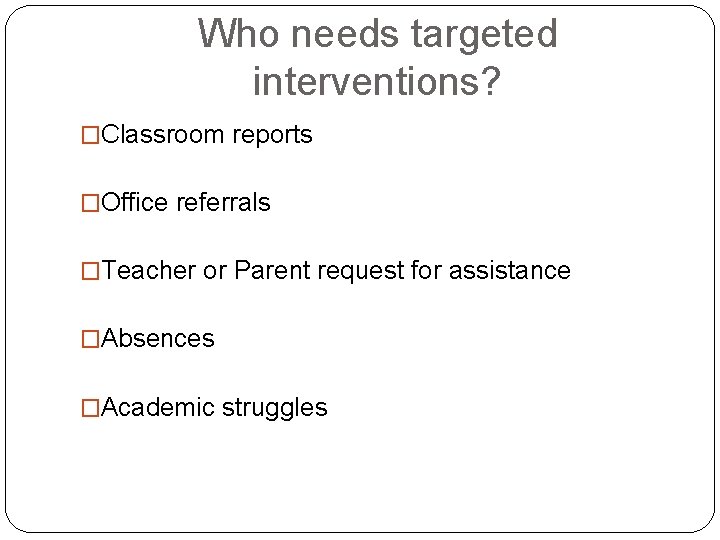
Who needs targeted interventions? �Classroom reports �Office referrals �Teacher or Parent request for assistance �Absences �Academic struggles
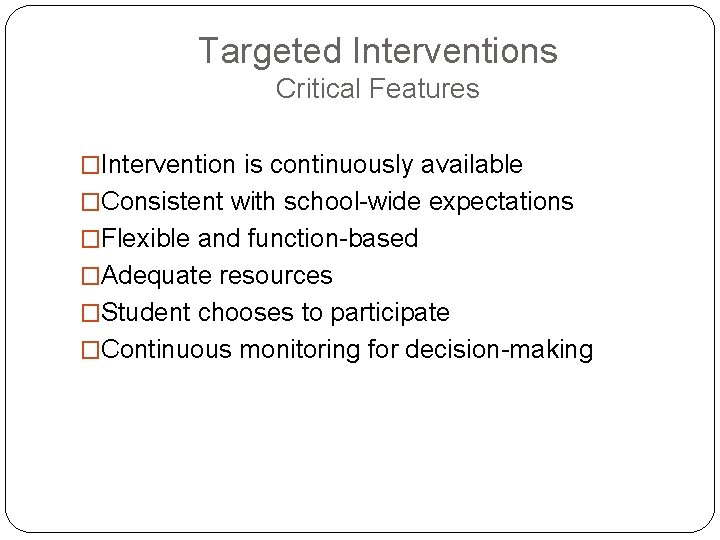
Targeted Interventions Critical Features �Intervention is continuously available �Consistent with school-wide expectations �Flexible and function-based �Adequate resources �Student chooses to participate �Continuous monitoring for decision-making
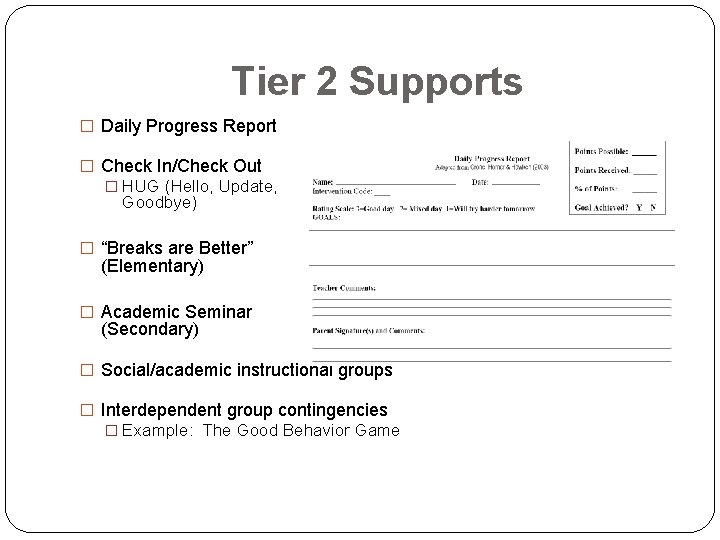
Tier 2 Supports � Daily Progress Report � Check In/Check Out � HUG (Hello, Update, Goodbye) � “Breaks are Better” (Elementary) � Academic Seminar (Secondary) � Social/academic instructional groups � Interdependent group contingencies � Example: The Good Behavior Game
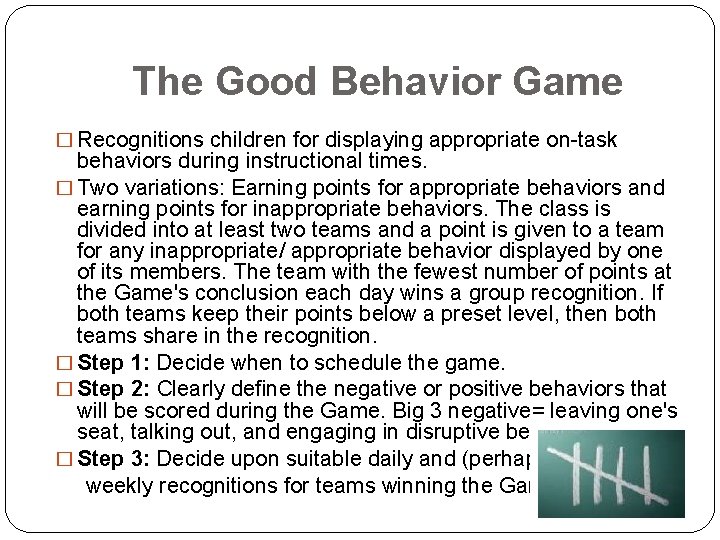
The Good Behavior Game � Recognitions children for displaying appropriate on-task behaviors during instructional times. � Two variations: Earning points for appropriate behaviors and earning points for inappropriate behaviors. The class is divided into at least two teams and a point is given to a team for any inappropriate/ appropriate behavior displayed by one of its members. The team with the fewest number of points at the Game's conclusion each day wins a group recognition. If both teams keep their points below a preset level, then both teams share in the recognition. � Step 1: Decide when to schedule the game. � Step 2: Clearly define the negative or positive behaviors that will be scored during the Game. Big 3 negative= leaving one's seat, talking out, and engaging in disruptive behavior � Step 3: Decide upon suitable daily and (perhaps) weekly recognitions for teams winning the Game.
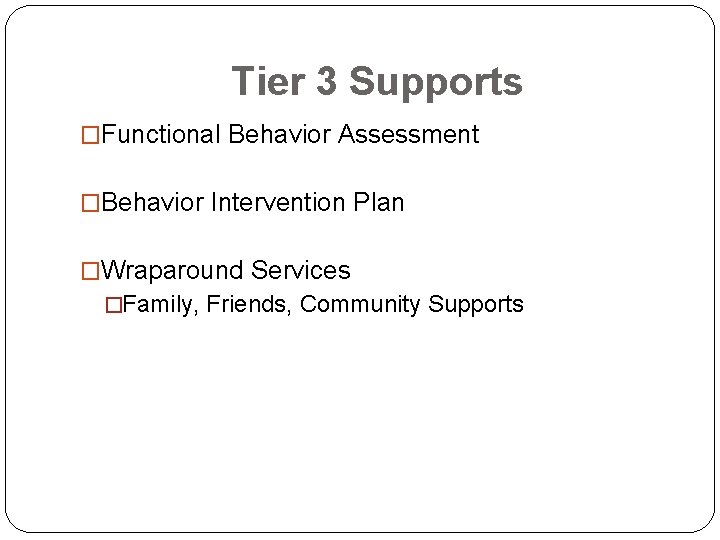
Tier 3 Supports �Functional Behavior Assessment �Behavior Intervention Plan �Wraparound Services �Family, Friends, Community Supports