
Tides Tide Generating Forces Earth Moon and Sun
- Slides: 24
Tides Tide Generating Forces
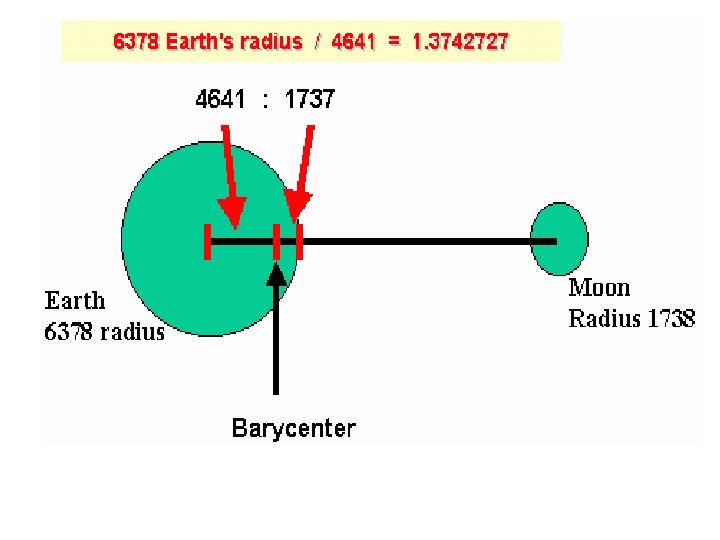
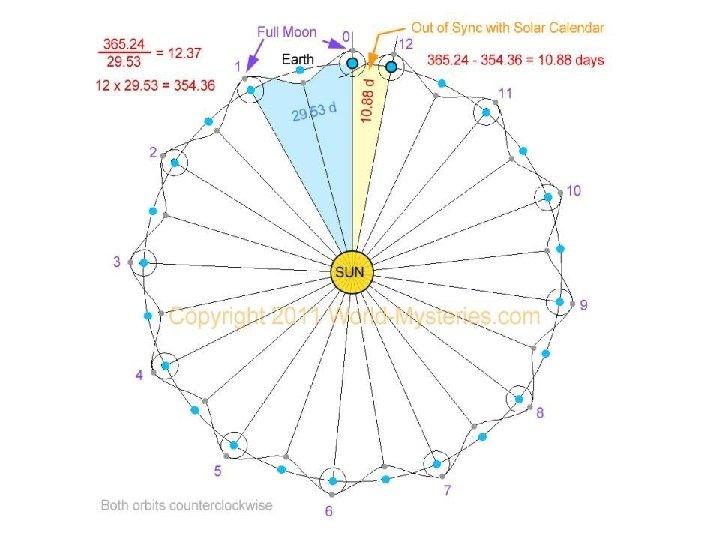
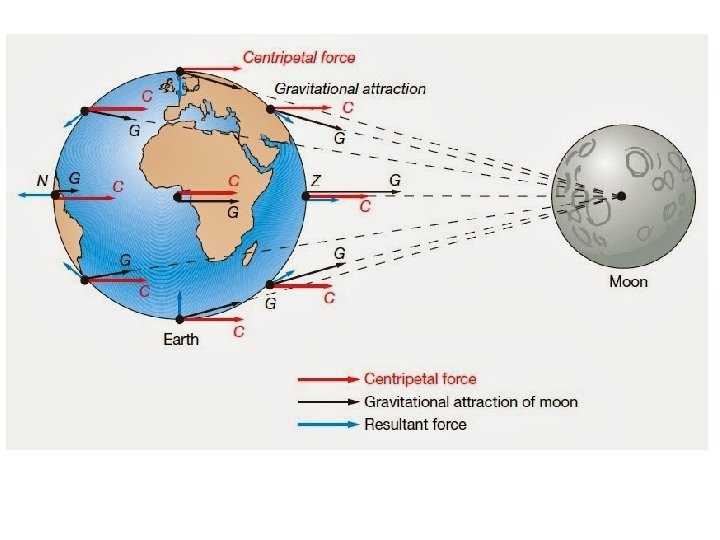
Earth, Moon and Sun • Moon orbits the Earth, rotates around a common center (Barycenter) located 1000 miles beneath earths surface • The Barycenter follows a smooth orbit around the Sun but the Earth and Moon follow wavy paths • Earth moon interaction- gravitational force of moon on Earth varies at points depending on their distance from the moon, also angle of pull varies
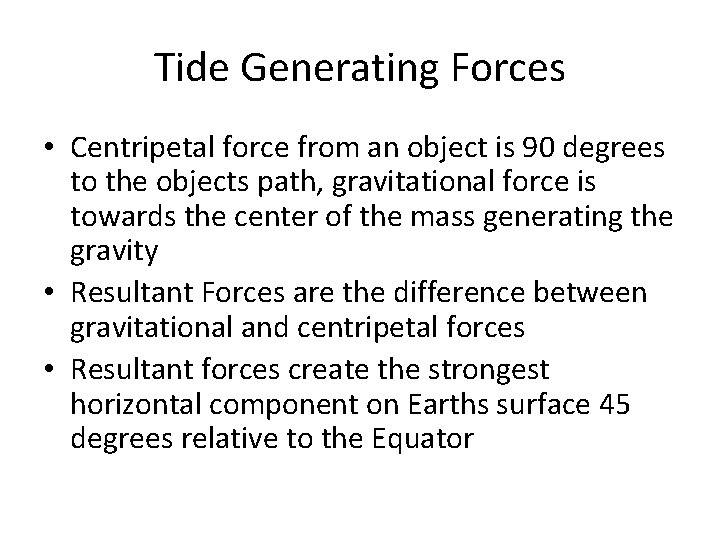
Tide Generating Forces • Centripetal force from an object is 90 degrees to the objects path, gravitational force is towards the center of the mass generating the gravity • Resultant Forces are the difference between gravitational and centripetal forces • Resultant forces create the strongest horizontal component on Earths surface 45 degrees relative to the Equator
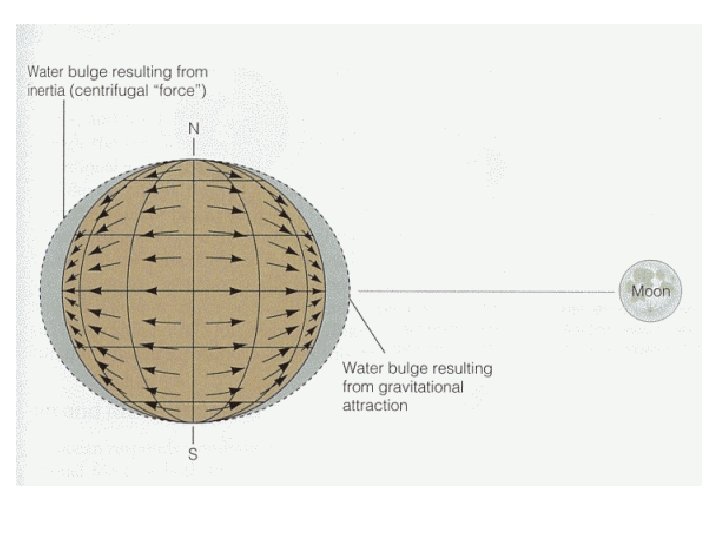
Tidal Forces • Tide generating forces push water into two equal bulges on opposite sides of the Earth, one towards the moon because of gravity and the other away from the moon because of centripetal force • Lunar Day is 50 minutes longer than the Solar Day , while Earth rotates Moon continues its path and moves a further 12. 2 degrees to the East, Earth rotates 50 more minutes to catch up • Alternating High tide are 50 minutes later each day
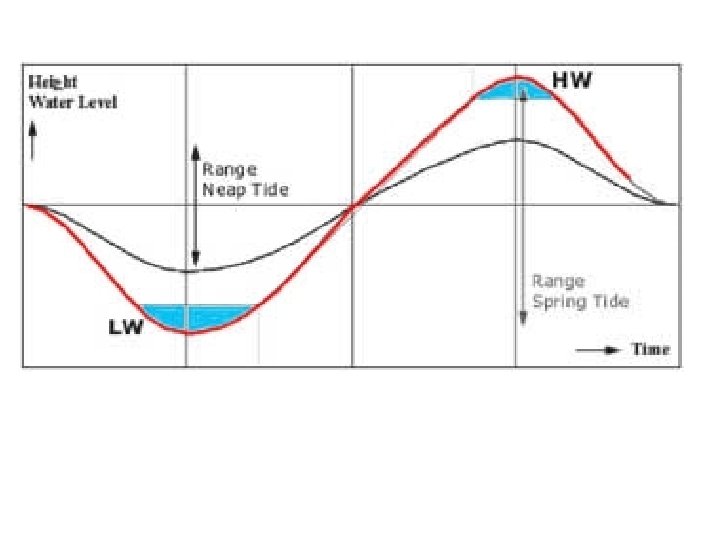
Tidal Forces • Sun is 27 million times the mass of the moon but it is 390 times further away so force is 59 million times less than moon or about 1/2 • Flood tide – water moving shoreward • Ebb tide – water moving away from shore • The Earths rotates inside the fluid bulges that are supported by the sun and moon • Tidal Range- Vertical distance between High and Low tides
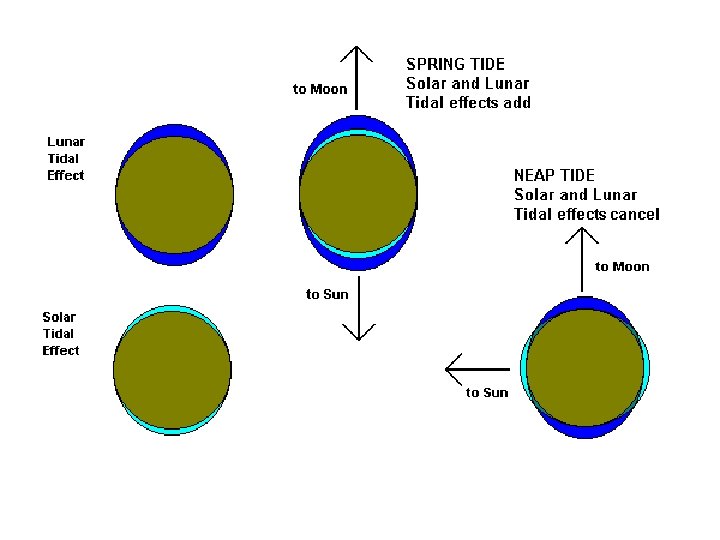
Tidal Forces • Spring tides- Sun and Moon aligned either on same or opposite sides “springs forth” Highest highs and lowest lows, greatest range • Neap tides – sun and moon at 90 degrees to each other “Barely touching”, Lower highs and Higher lows, least range • Waxing and Waning moon half way between spring and neap tides
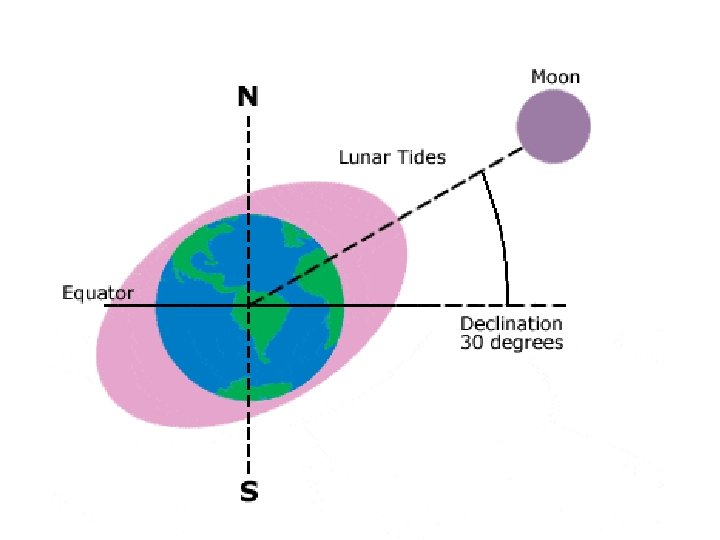
Tidal Forces • Declination of the moon and Sun- Angular distance of the moon and sun above or below the equator • Suns declination varies between 23. 5 degrees north and 23. 5 degrees south • Moons declination varies between 28. 5 degrees north and 28. 5 degrees south • Elliptical Orbits- Earths orbit around sun varies from 92. 2 (perihelion)to 94. 5(aphelion) million miles away • Moons orbit around earth varies between 233, 000 (perigee)and 252, 000 (apogee) thousand miles away
Dynamic Tide Theory • Ocean Tides cannot keep up with the rotational speed of the Earth or the body creating the gravity so ocean tides are broken up into “Cells” which trail behind the body • Over 150 different factors affect tides at a particular coast • Mathematical models along with observations make predictions as accurate as possible
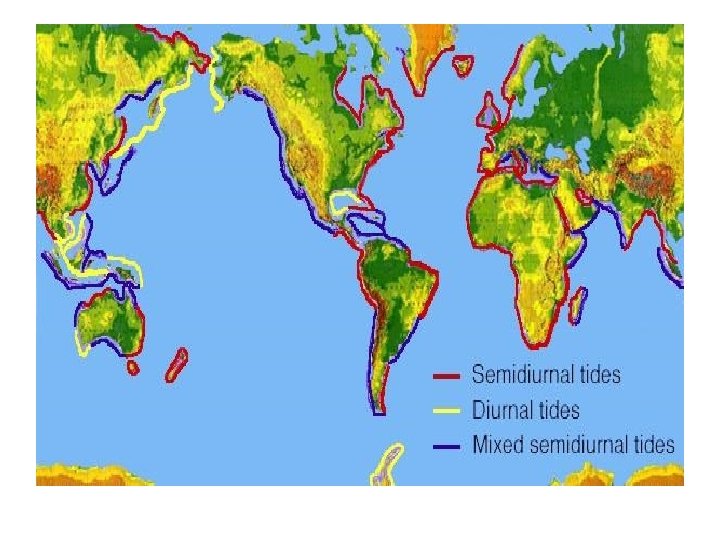
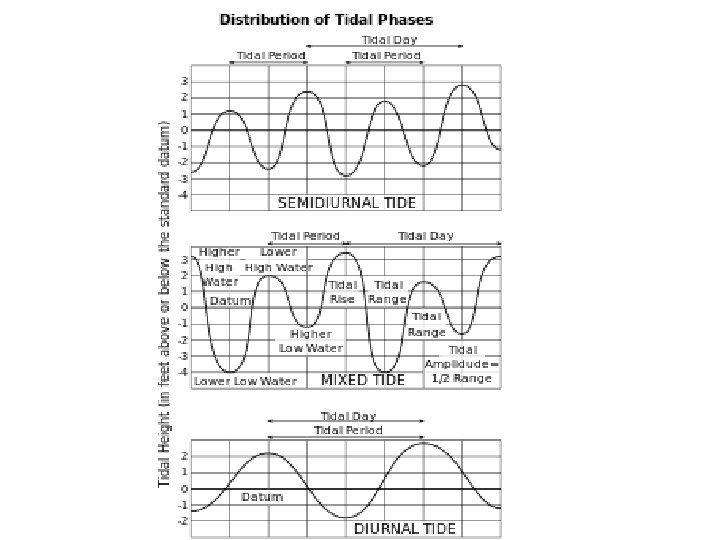
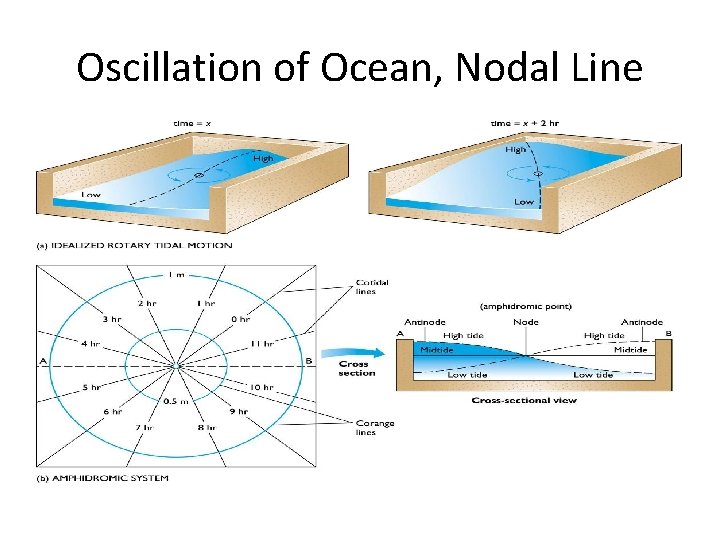
Tidal Patterns • Diurnal – Daily tides, single high and low per day, gulf Mexico, South East Asia • Semidiurnal-twice Daily, two high and two low per day, same heights, Atlantic coast U. S. • Mixed- most common, successive high and low tides will have very different heights, Pacific coast U. S. • Nodal Line- Water rocks back and forth in basins, center of rocking is the nodal line where depth does not change produce standing waves at edge
Oscillation of Ocean, Nodal Line
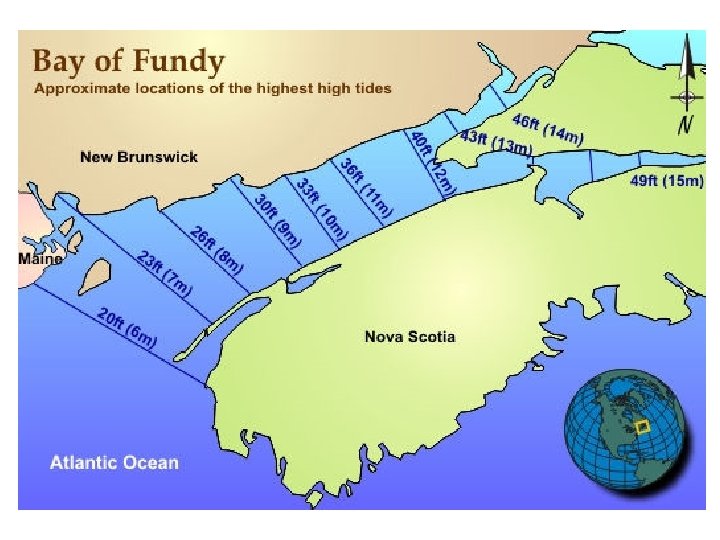
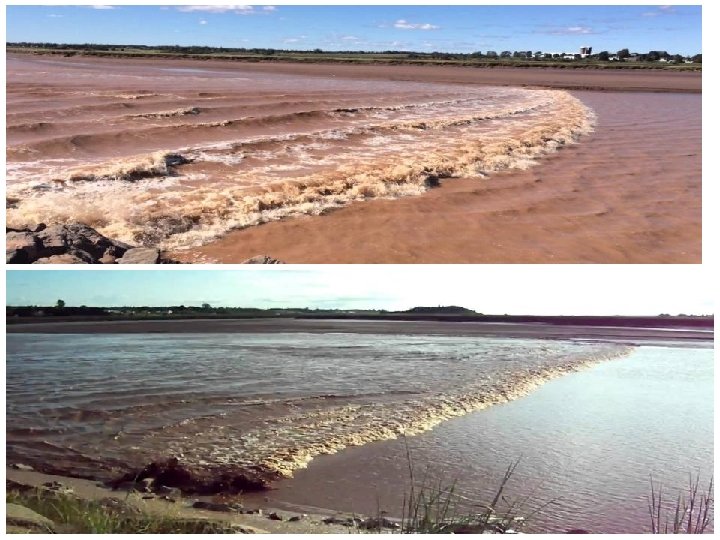
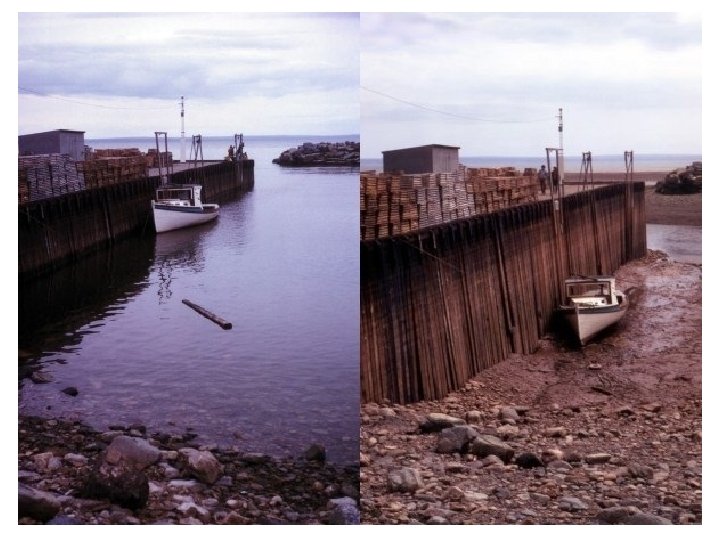
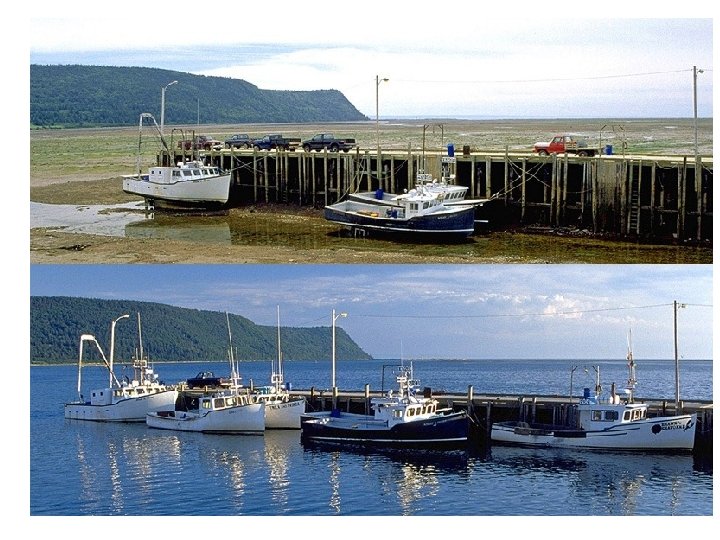
Bay of Fundy, Nova Scotia • Bay of Fundy-standing waves along with constructive interference create largest tides in the world, 56 feet at upper end • Bay has a very wide opening, length is 160 miles and the bottom ramps up, Bay curves to the right so coriolis effect helps • Reflection and Amplification also play a part.