
Tides are generated by 1 Gravitational pull of
Tides are generated by: 1. Gravitational pull of the moon and sun 2. Centripetal force of the rotating Earth

Tides are generated by: • the gravitational pull of the moon and sun - moon has 2 x greater gravitational pull than the sun - sun is 10 million x more massive than the moon and is 390 times farther away
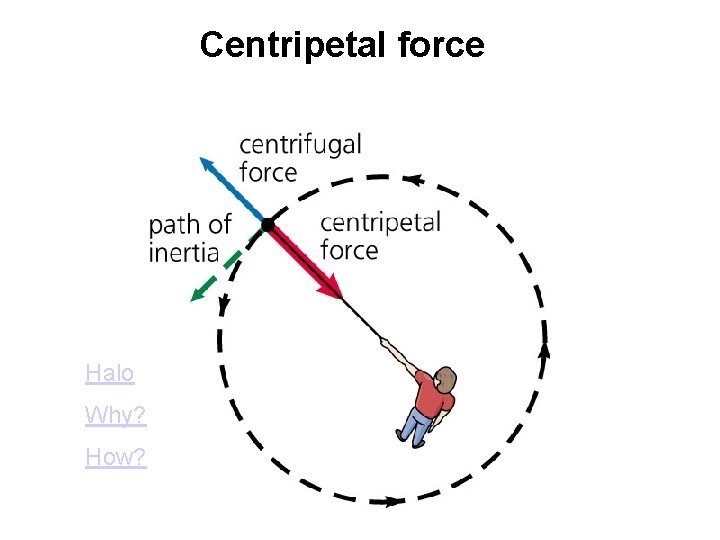
Centripetal force Halo Why? How?
• In any two body system, such as the Earth and moon or the Earth and sun, one body does not orbit around the other. Rather the two bodies orbit around a common balance point that is closer to the larger body. For the Earth and moon, this balance point is beneath the Earth’s surface but not at the Earth’s center. Similarly the common point of rotation between the Earth and sun is inside, but not at the center of, the sun. • Any body in orbit must be held in that orbit by a centripetal force that can be supplied by the gravitational attraction. • Centripetal force varies with distance from the center of rotation. All points within each rotating body follow the same diameter circle of rotation, and centripetal force is the same at all points on and within each of two orbiting bodies. • The gravitational force varies with the square of the distance and is slightly higher on the side of a body facing the other orbiting body and slightly lower on the opposite side
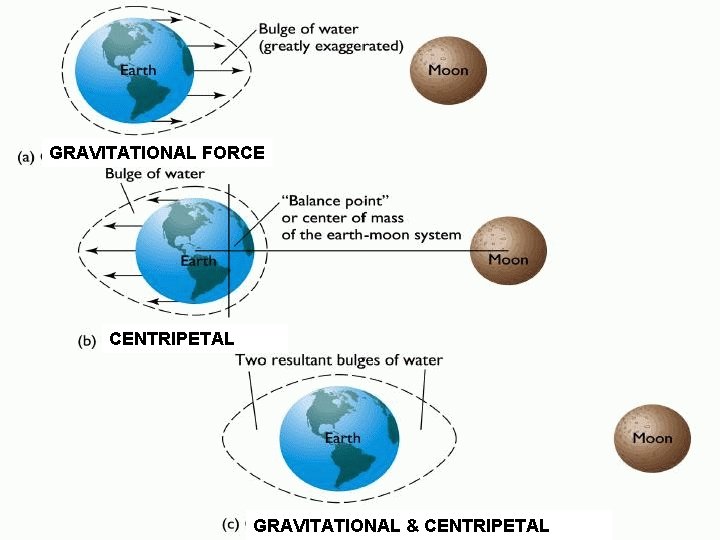
GRAVITATIONAL FORCE CENTRIPETAL GRAVITATIONAL & CENTRIPETAL
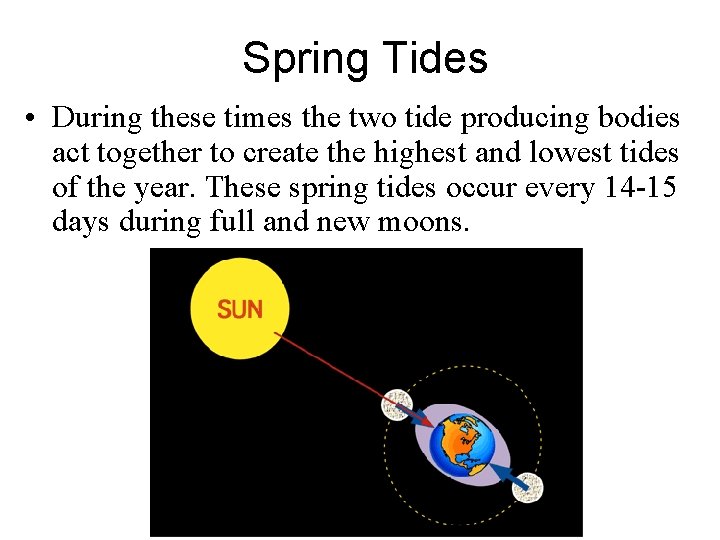
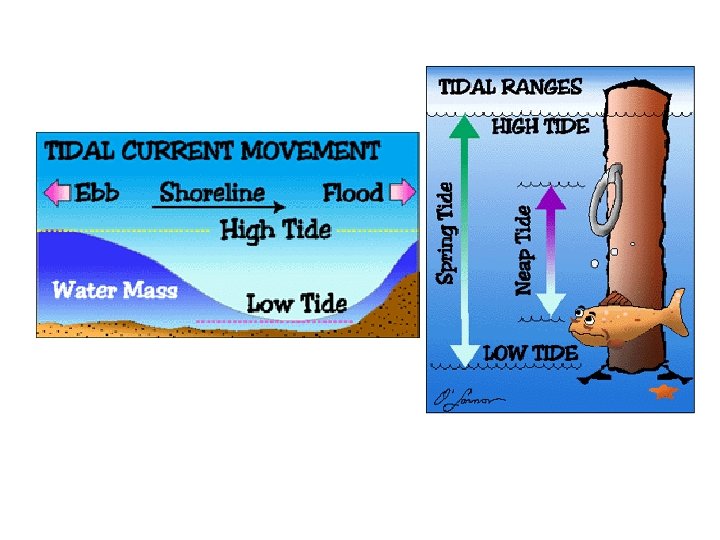
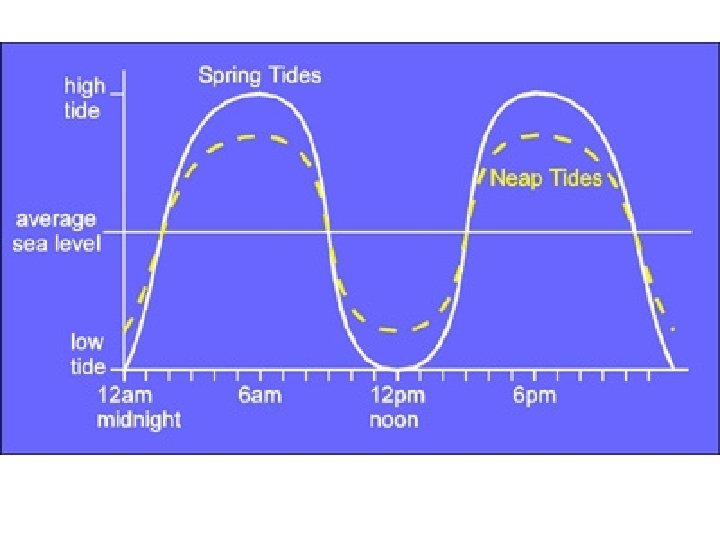
Spring Tides • During these times the two tide producing bodies act together to create the highest and lowest tides of the year. These spring tides occur every 14 -15 days during full and new moons.
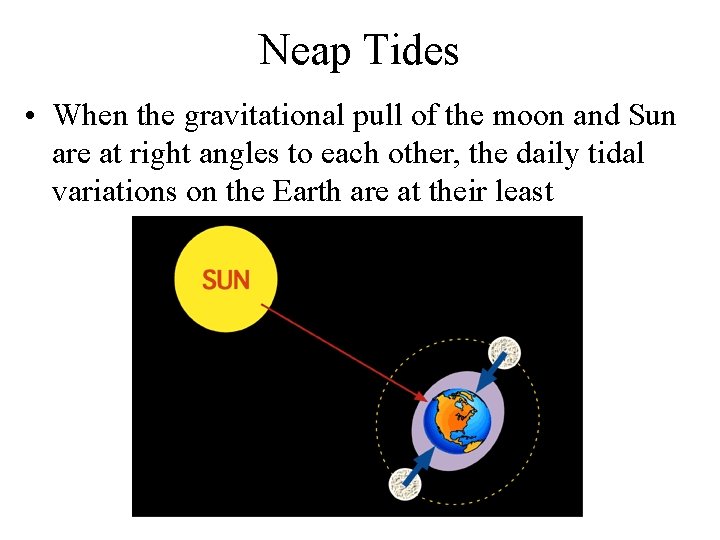
Neap Tides • When the gravitational pull of the moon and Sun are at right angles to each other, the daily tidal variations on the Earth are at their least
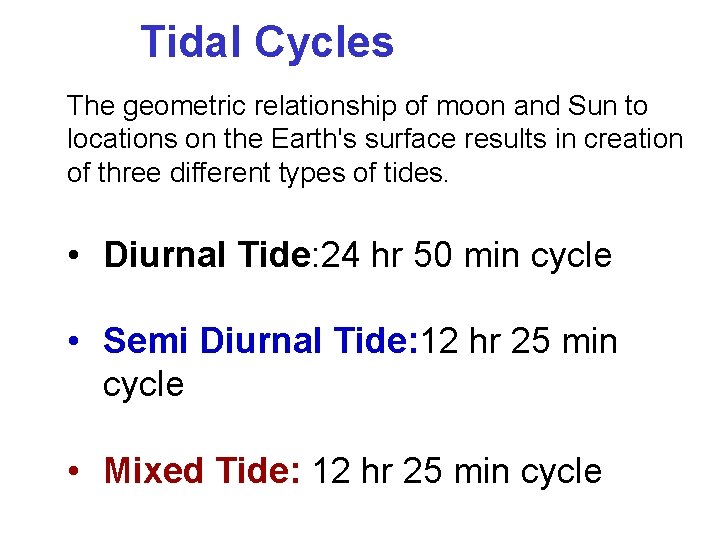
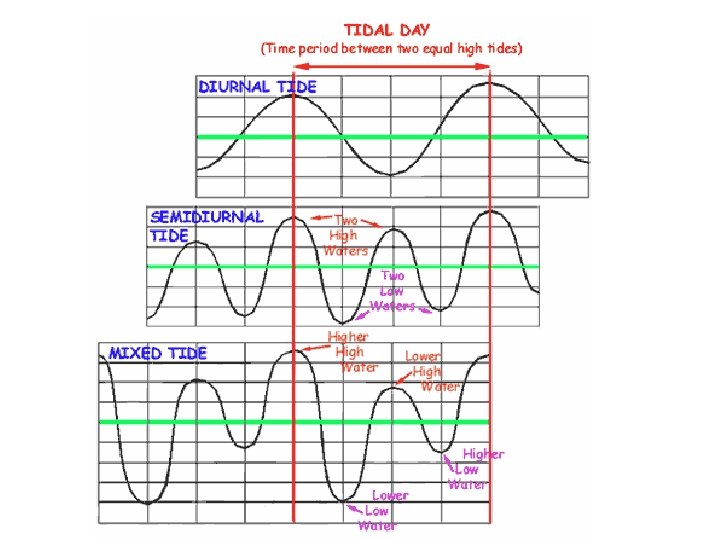
Tidal Cycles The geometric relationship of moon and Sun to locations on the Earth's surface results in creation of three different types of tides. • Diurnal Tide: 24 hr 50 min cycle • Semi Diurnal Tide: 12 hr 25 min cycle • Mixed Tide: 12 hr 25 min cycle
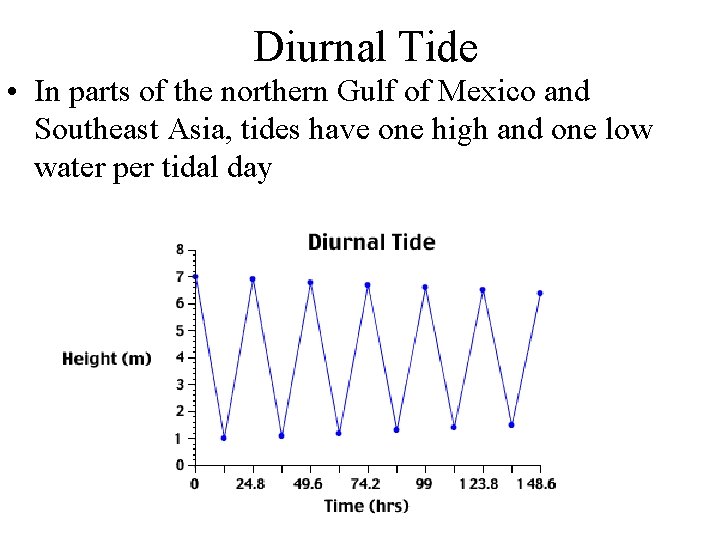
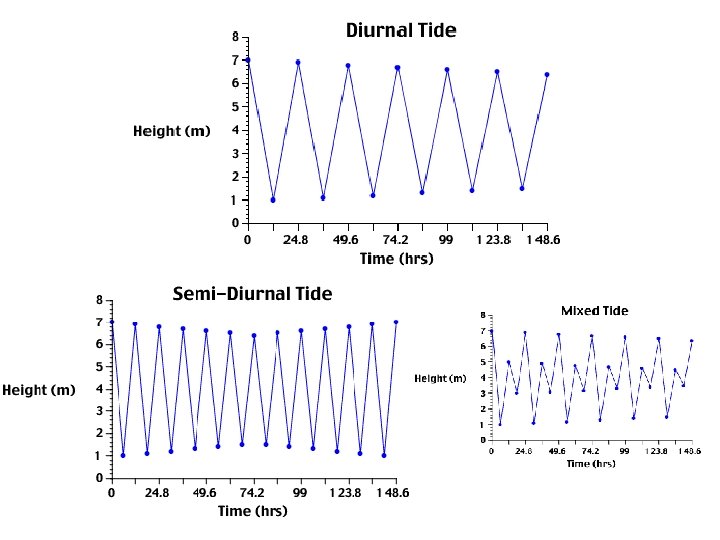
Diurnal Tide • In parts of the northern Gulf of Mexico and Southeast Asia, tides have one high and one low water per tidal day
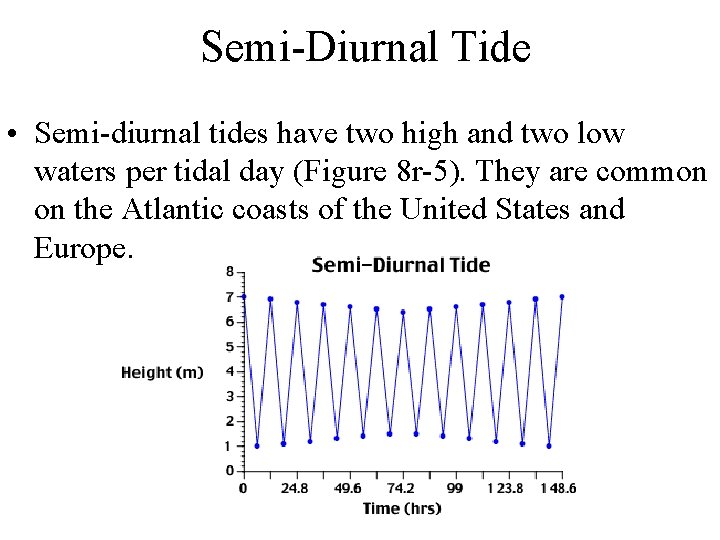
Semi-Diurnal Tide • Semi-diurnal tides have two high and two low waters per tidal day (Figure 8 r-5). They are common on the Atlantic coasts of the United States and Europe.
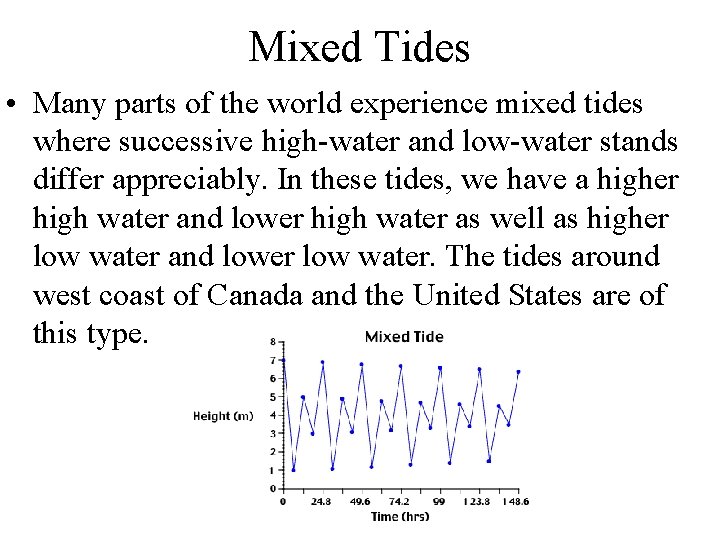
Mixed Tides • Many parts of the world experience mixed tides where successive high-water and low-water stands differ appreciably. In these tides, we have a higher high water and lower high water as well as higher low water and lower low water. The tides around west coast of Canada and the United States are of this type.
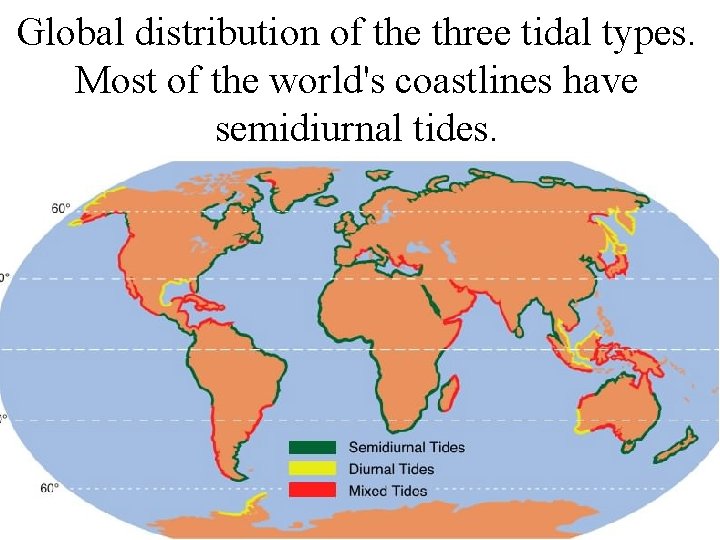
Global distribution of the three tidal types. Most of the world's coastlines have semidiurnal tides.
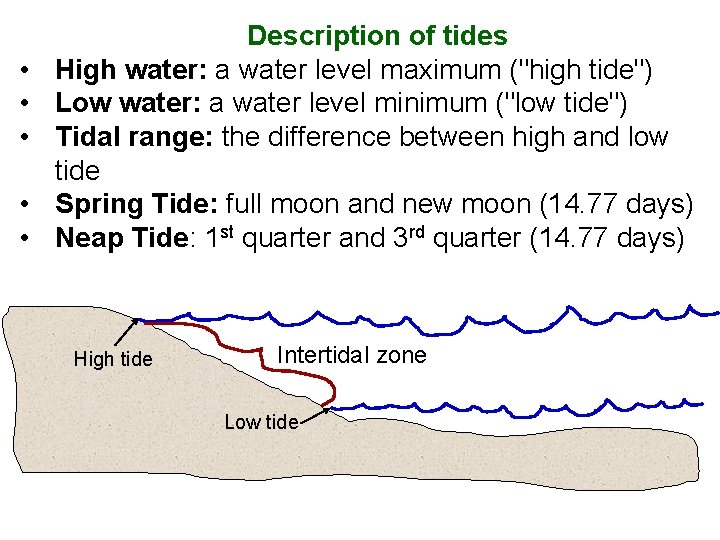
• • • Description of tides High water: a water level maximum ("high tide") Low water: a water level minimum ("low tide") Tidal range: the difference between high and low tide Spring Tide: full moon and new moon (14. 77 days) Neap Tide: 1 st quarter and 3 rd quarter (14. 77 days) High tide Intertidal zone Low tide
The monthly tidal cycle (29½ days) • About every 7 days, Earth alternates between: – Spring tide • Alignment of Earth-Moon-Sun system (syzygy) • Lunar and solar bulges constructively interfere • Large tidal range – Neap tide • Earth-Moon-Sun system at right angles (quadrature) • Lunar and solar bulges destructively interfere • Small tidal range
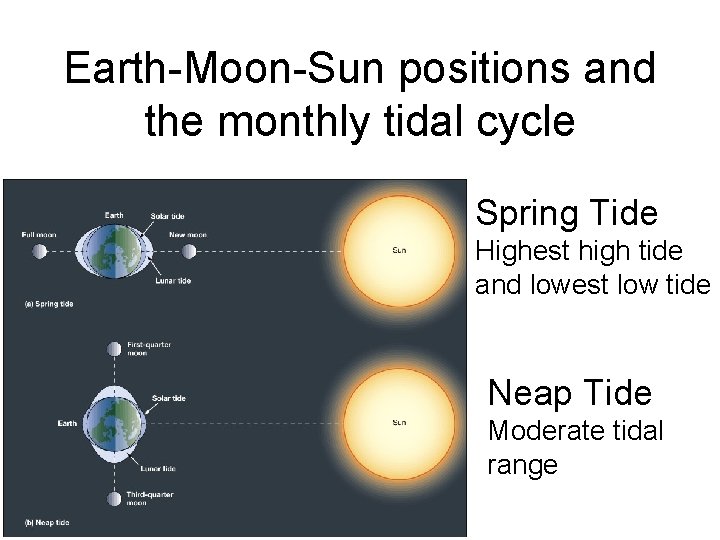
Earth-Moon-Sun positions and the monthly tidal cycle Spring Tide Highest high tide and lowest low tide Neap Tide Moderate tidal range
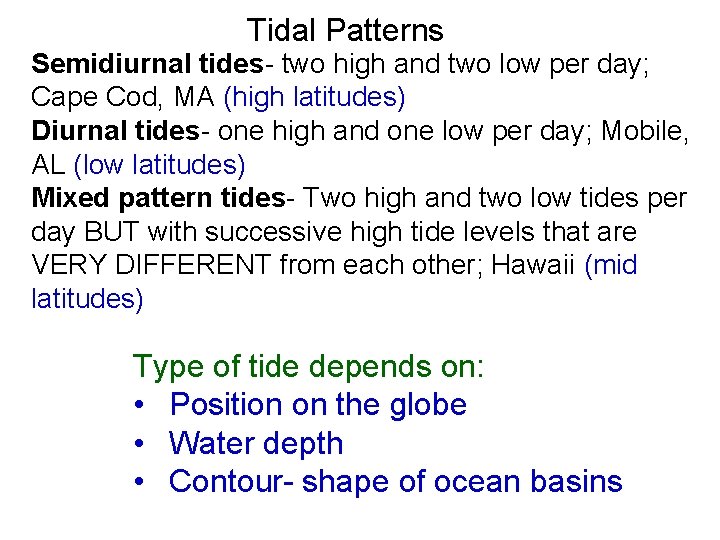
Tidal Patterns Semidiurnal tides- two high and two low per day; Cape Cod, MA (high latitudes) Diurnal tides- one high and one low per day; Mobile, AL (low latitudes) Mixed pattern tides- Two high and two low tides per day BUT with successive high tide levels that are VERY DIFFERENT from each other; Hawaii (mid latitudes) Type of tide depends on: • Position on the globe • Water depth • Contour- shape of ocean basins
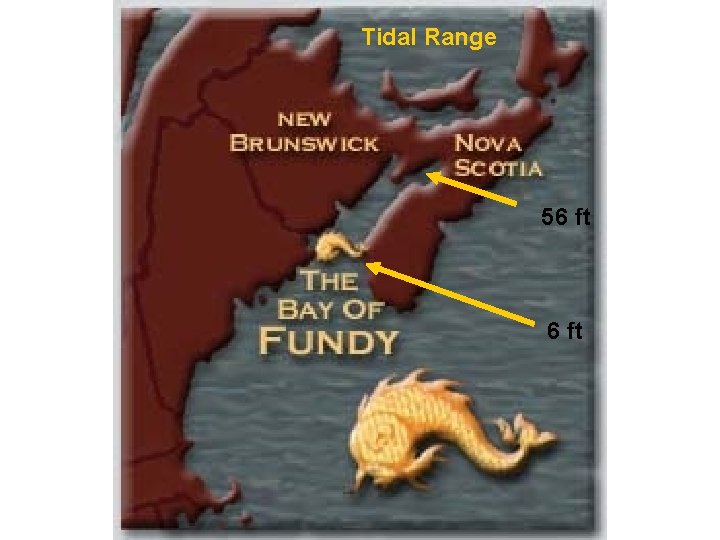
Tidal Range 56 ft
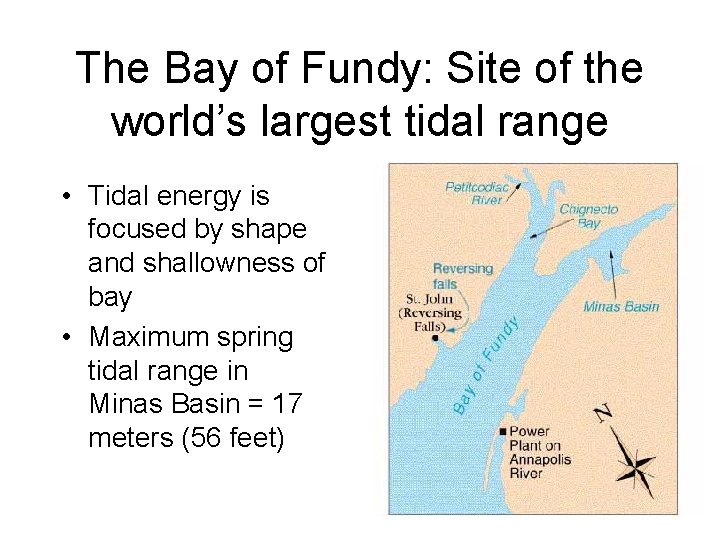
The Bay of Fundy: Site of the world’s largest tidal range • Tidal energy is focused by shape and shallowness of bay • Maximum spring tidal range in Minas Basin = 17 meters (56 feet)
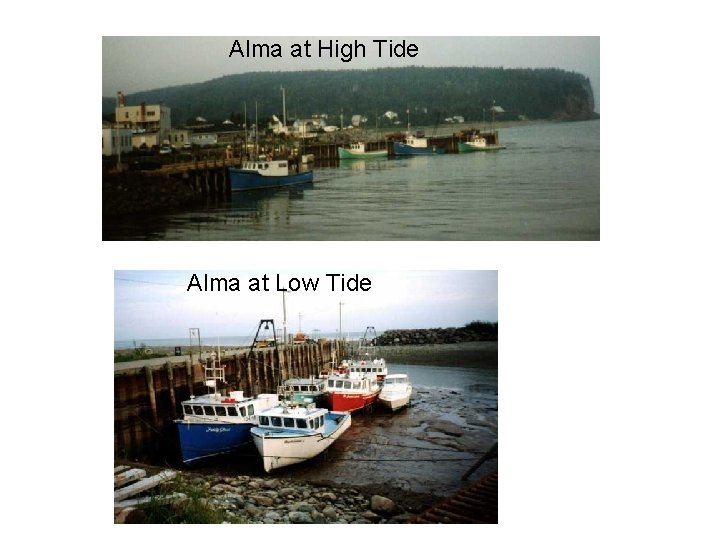
Alma at High Tide Alma at Low Tide
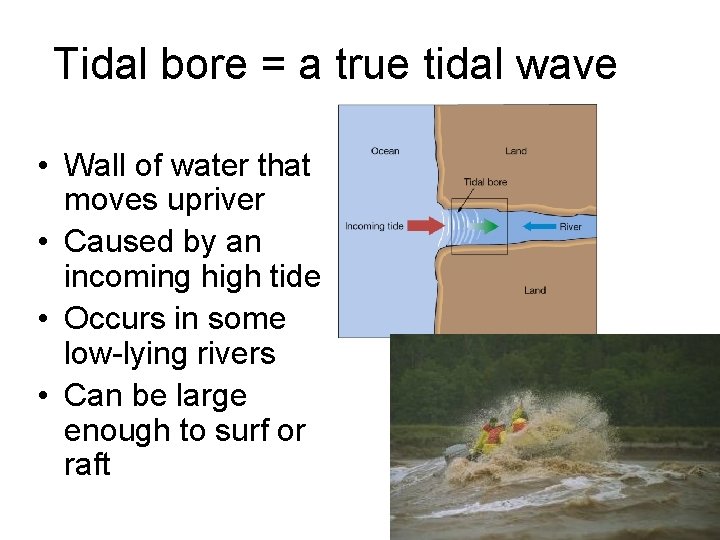
Tidal bore = a true tidal wave • Wall of water that moves upriver • Caused by an incoming high tide • Occurs in some low-lying rivers • Can be large enough to surf or raft
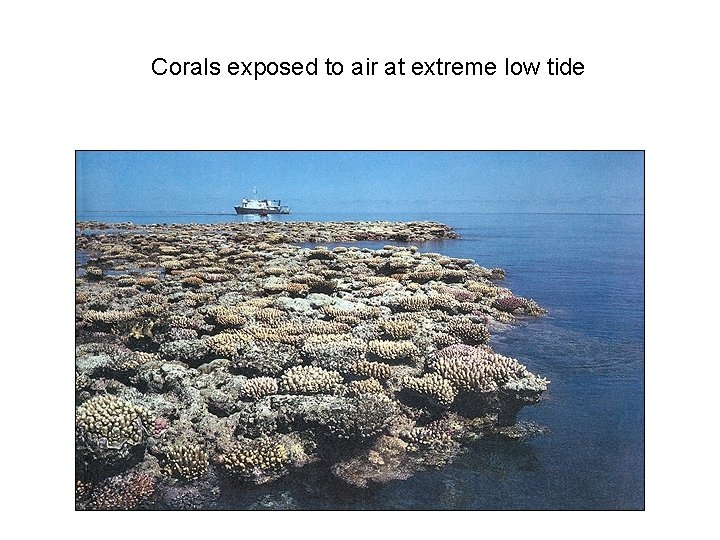
Corals exposed to air at extreme low tide
Inquiry 1. Which has the greatest tidal effect– sun or moon? 2. Where is the greatest tidal range located? 3. Which lunar phase produces moderate tides? 4. How is a tidal bore created? Surf the tidal bore
- Slides: 27