
Ticks Lyme Disease Bureau of Workers Compensation PA
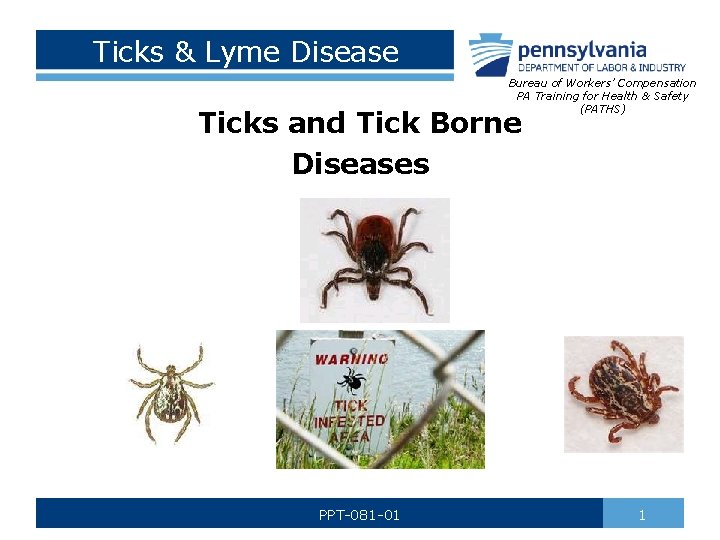
Ticks & Lyme Disease Bureau of Workers’ Compensation PA Training for Health & Safety (PATHS) Ticks and Tick Borne Diseases PPT-081 -01 1
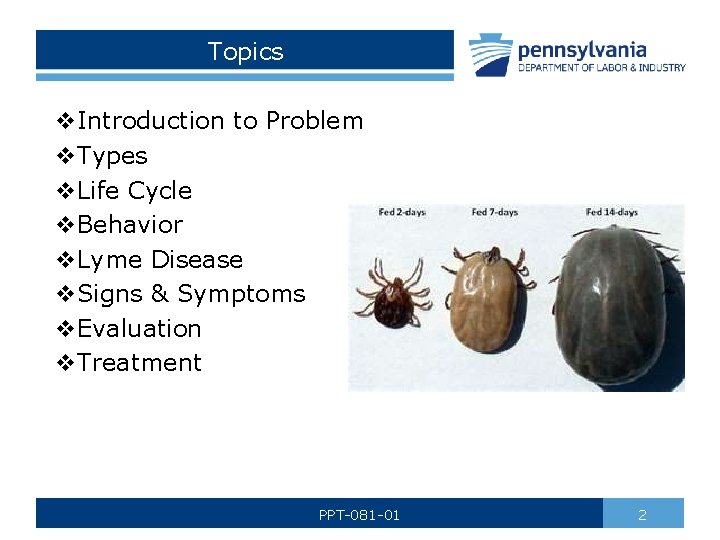
Topics v. Introduction to Problem v. Types v. Life Cycle v. Behavior v. Lyme Disease v. Signs & Symptoms v. Evaluation v. Treatment PPT-081 -01 2

Why the Fuss about Ticks? Tick populations are exploding – there’s no place in Pennsylvania without deer ticks! Ticks are hard to kill “. . . we’ve learned that washing clothes in warm water and detergent doesn't kill all these ticks” “The only sure way to get rid of them is to dry clothes on high heat for a long cycle time” “without snow cover, these adult ticks can be active in temperatures as low as 28 degrees F” Steven Jacobs of Penn State Dept of Entomology, Penn State Ag. Sciences News 11/23/05 Ticks are becoming resistant to pesticides ? ? ? PPT-081 -01 3
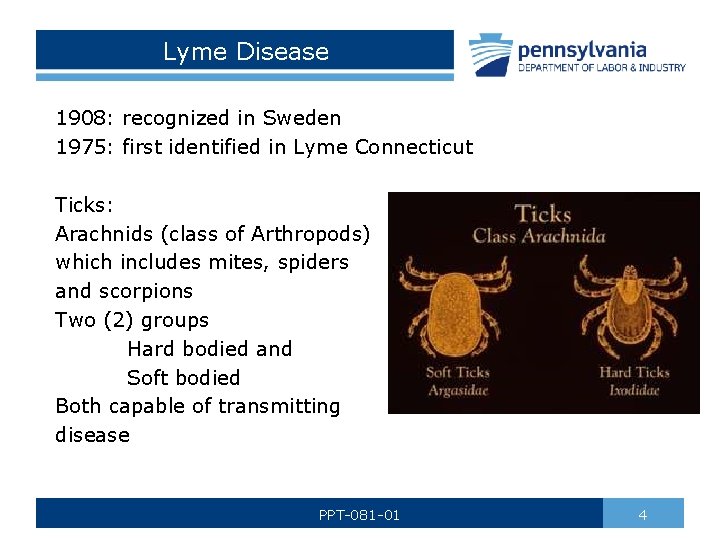
Lyme Disease 1908: recognized in Sweden 1975: first identified in Lyme Connecticut Ticks: Arachnids (class of Arthropods) which includes mites, spiders and scorpions Two (2) groups Hard bodied and Soft bodied Both capable of transmitting disease PPT-081 -01 4
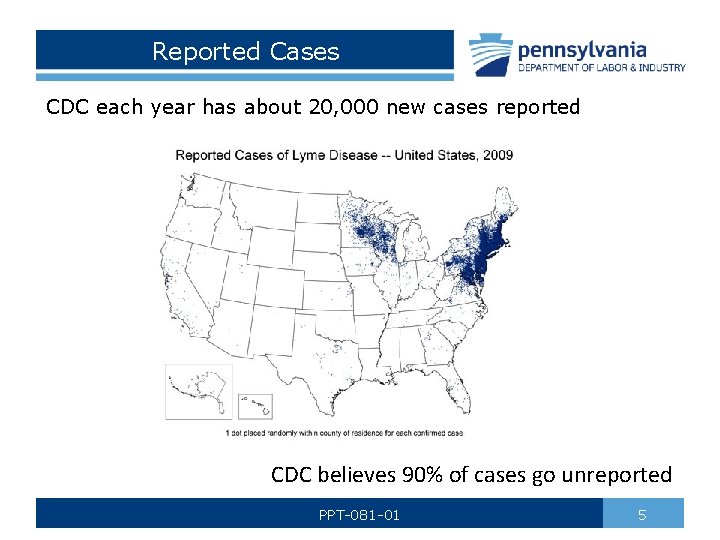
Reported Cases CDC each year has about 20, 000 new cases reported CDC believes 90% of cases go unreported PPT-081 -01 5
For Lyme Disease to Exist There appears to be a symbiotic relationship between: 1. The Lyme disease bacteria, 2. Ticks which can transmit them, and 3. Mammals to provide food for the ticks such as: Deer and Mice Ticks can be found in areas with very high or low temperature with a constant high relative humidity. PPT-081 -01 6
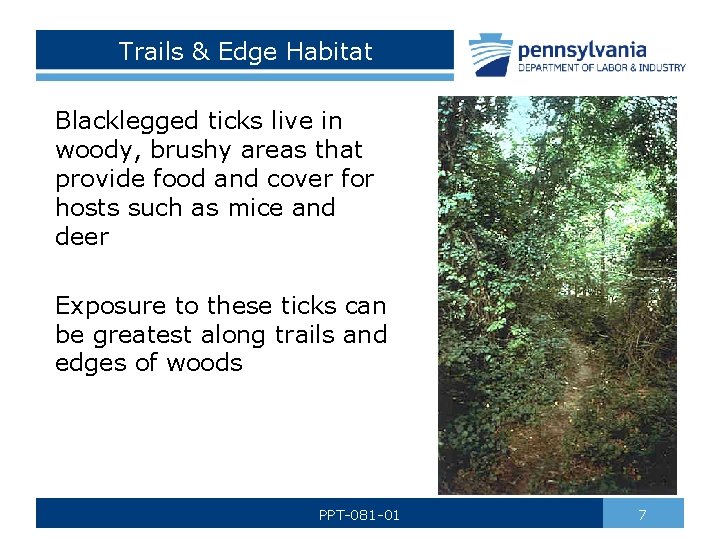
Trails & Edge Habitat Blacklegged ticks live in woody, brushy areas that provide food and cover for hosts such as mice and deer Exposure to these ticks can be greatest along trails and edges of woods PPT-081 -01 7
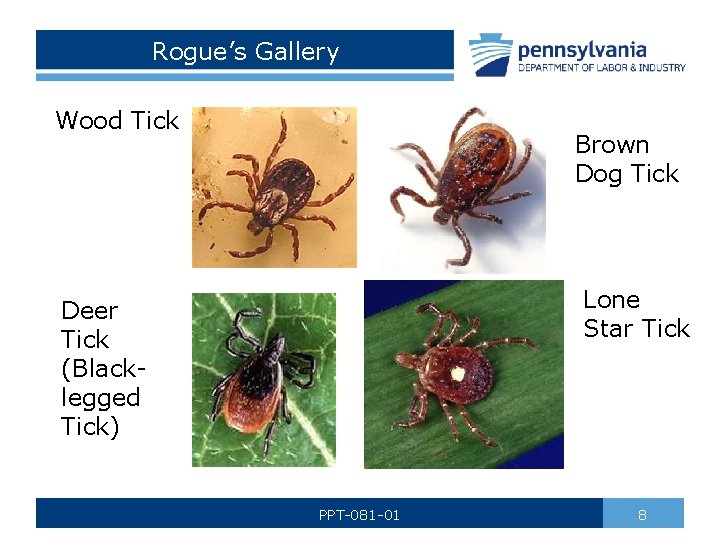
Rogue’s Gallery Wood Tick Brown Dog Tick Lone Star Tick Deer Tick (Blacklegged Tick) PPT-081 -01 8
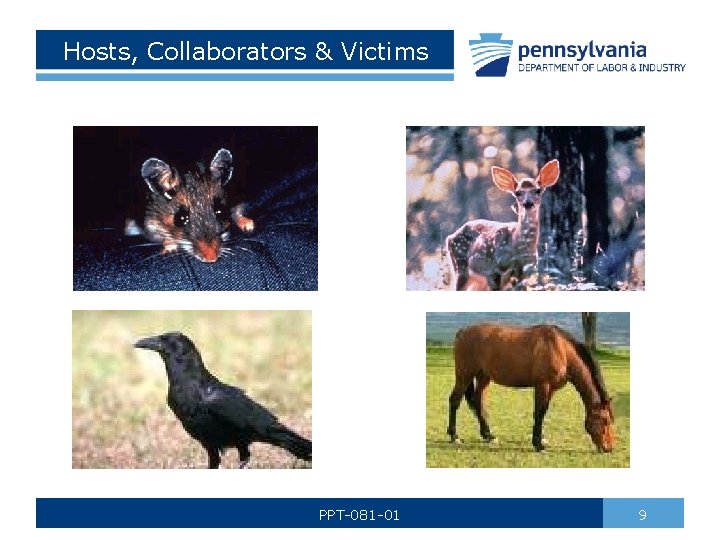
Hosts, Collaborators & Victims PPT-081 -01 9
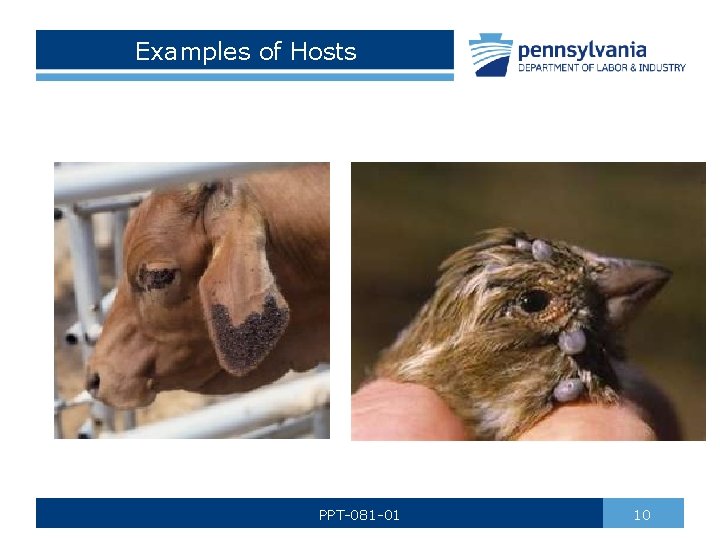
Examples of Hosts PPT-081 -01 10
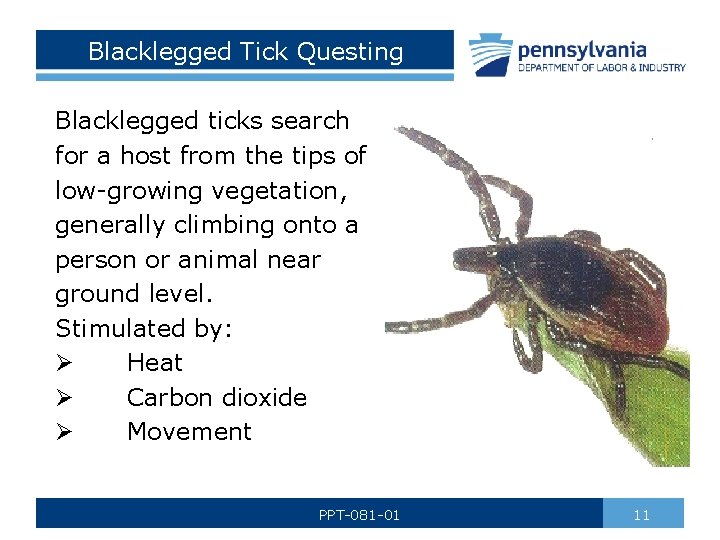
Blacklegged Tick Questing Blacklegged ticks search for a host from the tips of low-growing vegetation, generally climbing onto a person or animal near ground level. Stimulated by: Ø Heat Ø Carbon dioxide Ø Movement PPT-081 -01 11
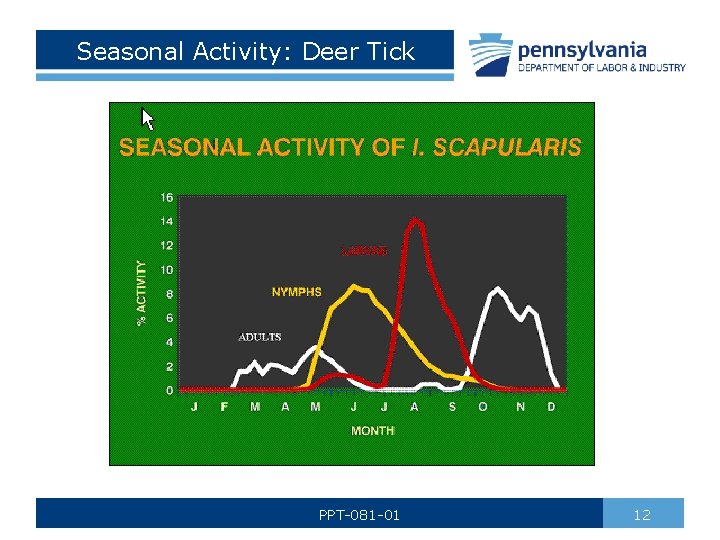
Seasonal Activity: Deer Tick PPT-081 -01 12
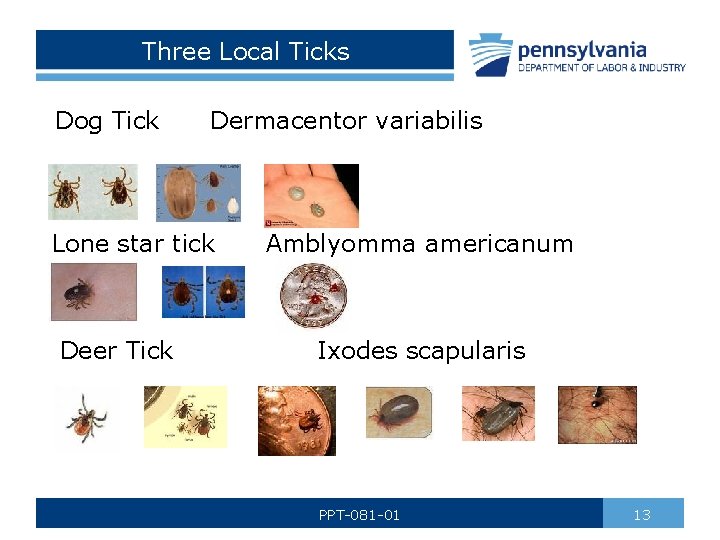
Three Local Ticks Dog Tick Dermacentor variabilis Lone star tick Deer Tick Amblyomma americanum Ixodes scapularis PPT-081 -01 13
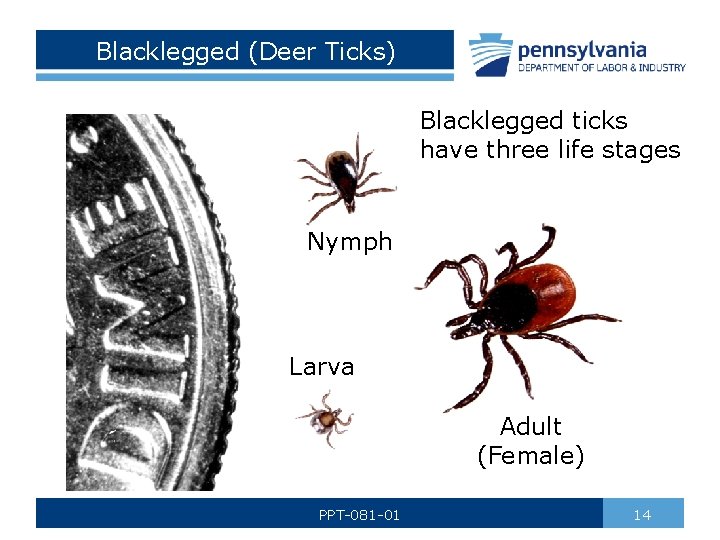
Blacklegged (Deer Ticks) Blacklegged ticks have three life stages Nymph Larva Adult (Female) PPT-081 -01 14
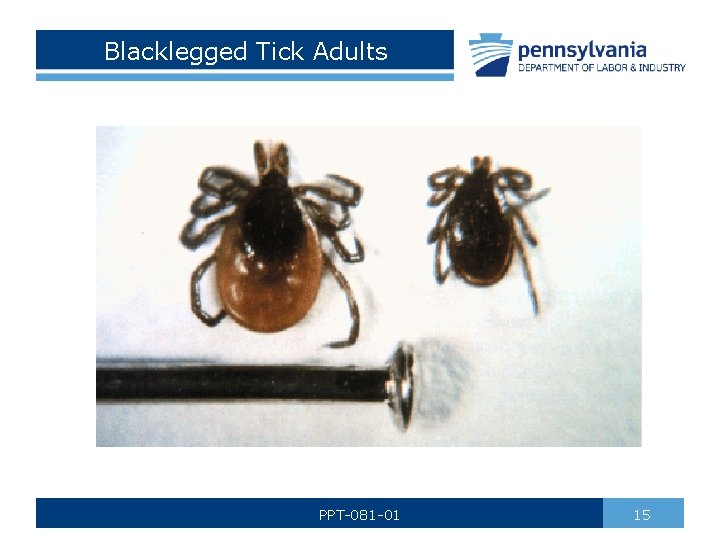
Blacklegged Tick Adults PPT-081 -01 15
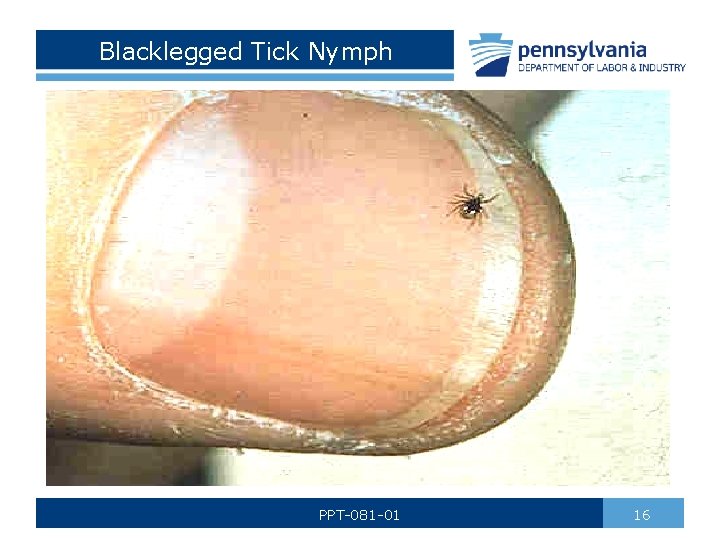
Blacklegged Tick Nymph PPT-081 -01 16
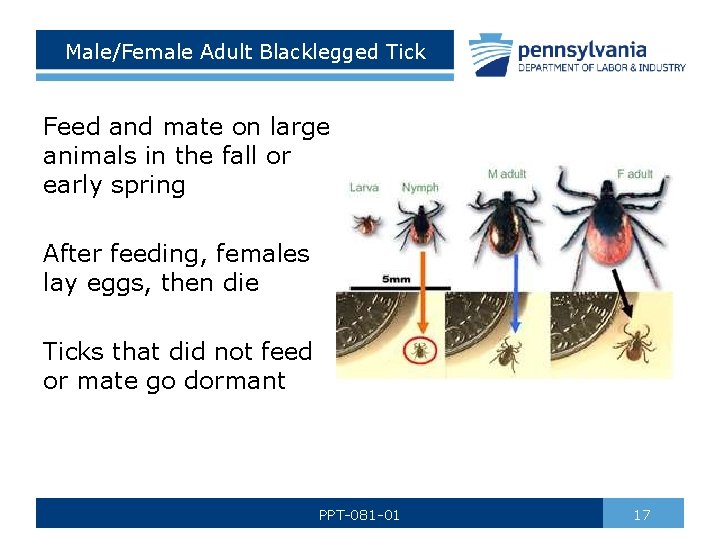
Male/Female Adult Blacklegged Tick Feed and mate on large animals in the fall or early spring After feeding, females lay eggs, then die Ticks that did not feed or mate go dormant PPT-081 -01 17
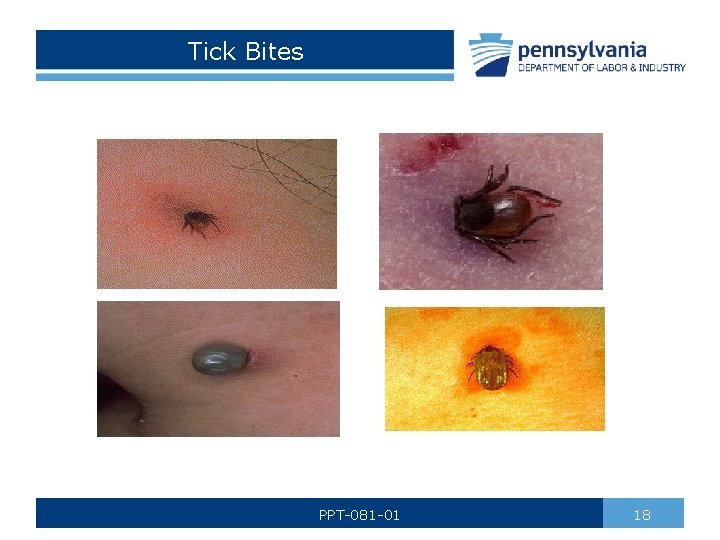
Tick Bites PPT-081 -01 18
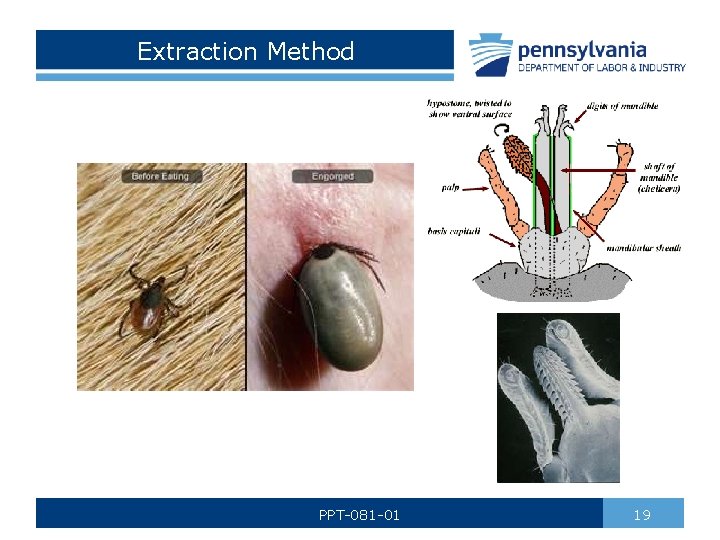
Extraction Method PPT-081 -01 19
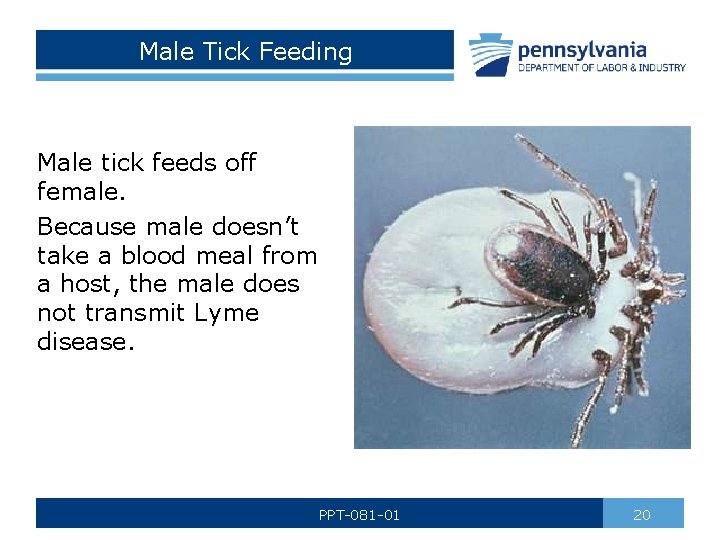
Male Tick Feeding Male tick feeds off female. Because male doesn’t take a blood meal from a host, the male does not transmit Lyme disease. PPT-081 -01 20
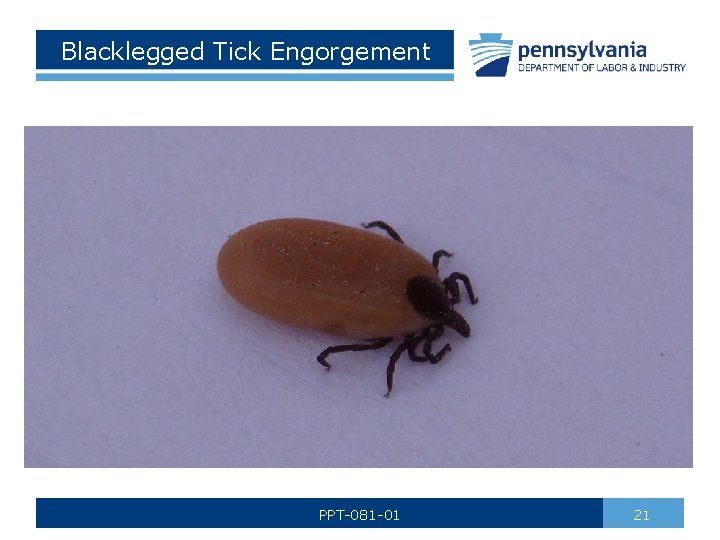
Blacklegged Tick Engorgement PPT-081 -01 21
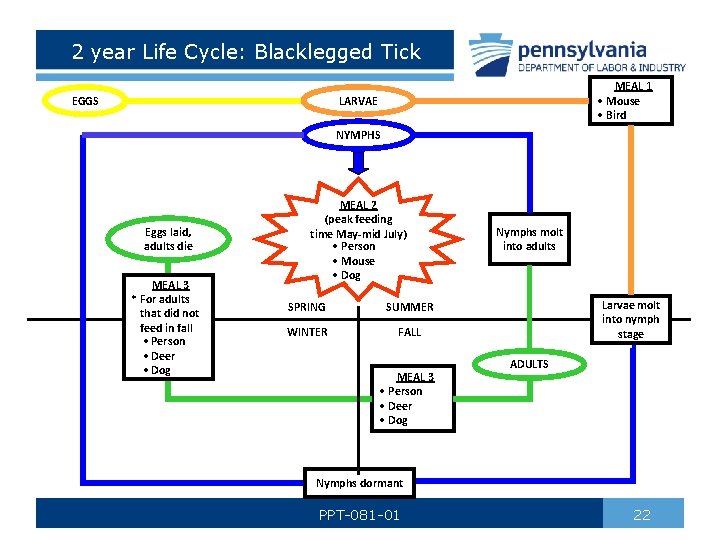
2 year Life Cycle: Blacklegged Tick EGGS MEAL 1 • Mouse • Bird LARVAE NYMPHS Eggs laid, adults die MEAL 3 * For adults that did not feed in fall • Person • Deer • Dog MEAL 2 (peak feeding time May-mid July) • Person • Mouse • Dog SPRING SUMMER WINTER FALL MEAL 3 • Person • Deer • Dog Nymphs molt into adults Larvae molt into nymph stage ADULTS Nymphs dormant PPT-081 -01 22
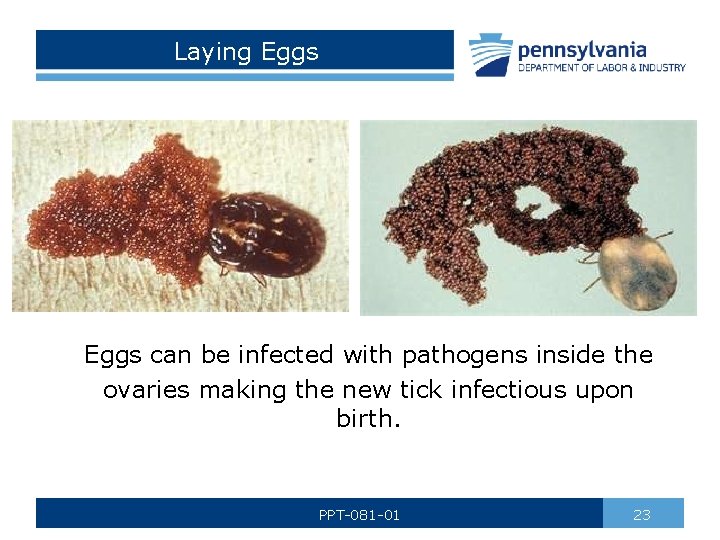
Laying Eggs can be infected with pathogens inside the ovaries making the new tick infectious upon birth. PPT-081 -01 23
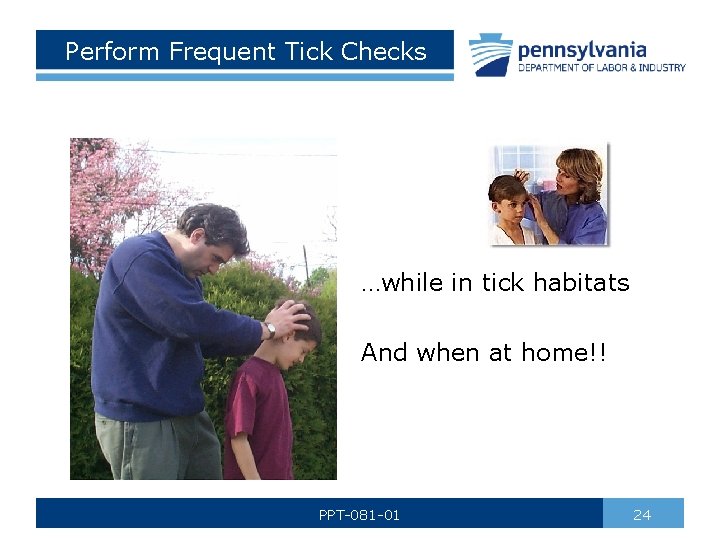
Perform Frequent Tick Checks …while in tick habitats And when at home!! PPT-081 -01 24
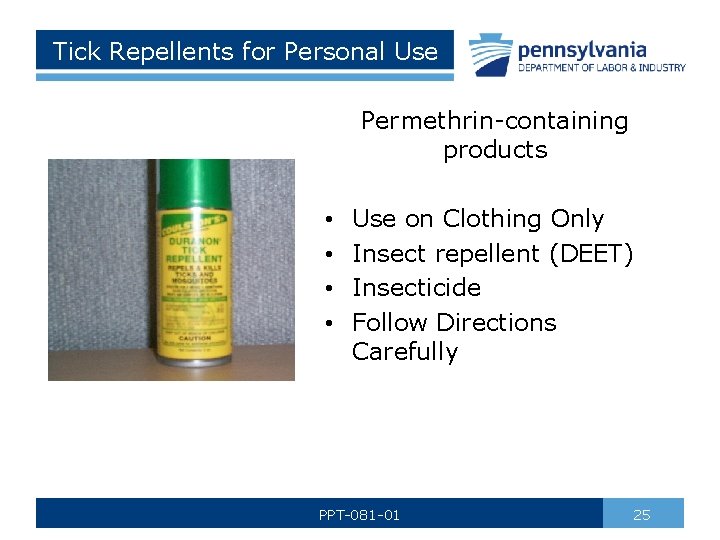
Tick Repellents for Personal Use Permethrin-containing products • • Use on Clothing Only Insect repellent (DEET) Insecticide Follow Directions Carefully PPT-081 -01 25
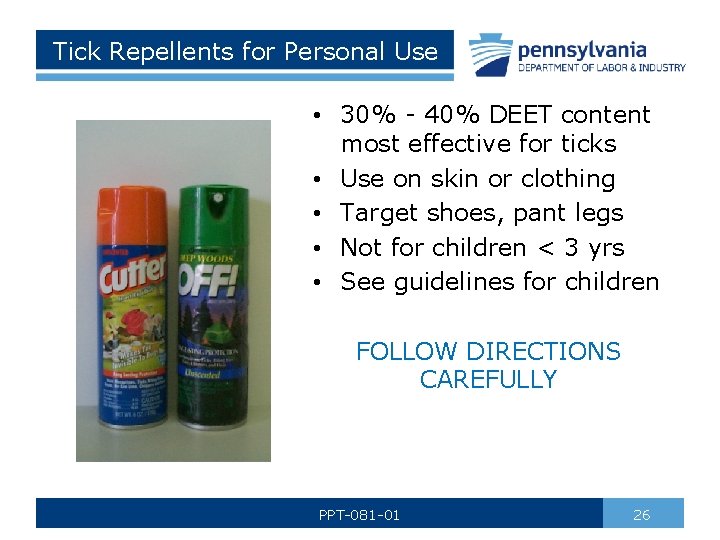
Tick Repellents for Personal Use • 30% - 40% DEET content most effective for ticks • Use on skin or clothing • Target shoes, pant legs • Not for children < 3 yrs • See guidelines for children FOLLOW DIRECTIONS CAREFULLY PPT-081 -01 26
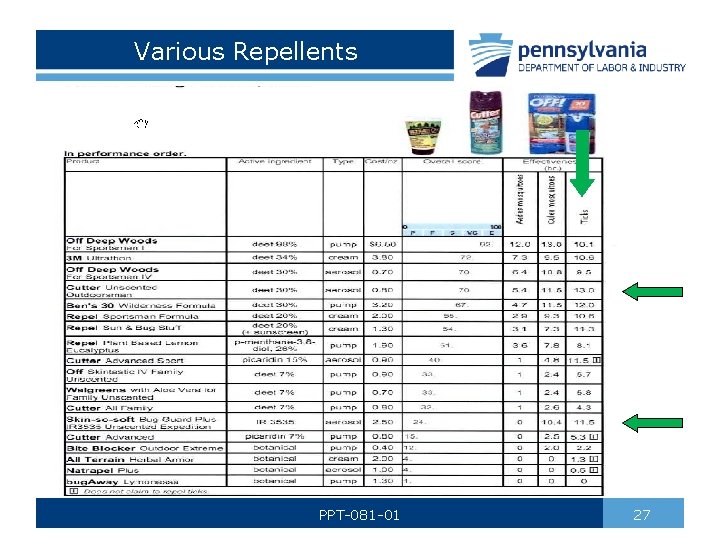
Various Repellents PPT-081 -01 27
Picaridin World Health Organization (WHO) 2000 recognized effectiveness of Picaridin In some tests, more effective than DEET Effective in field and lab tests against: • Common tick (sheep, pasture or castorbean tick) • Deer tick (carrier of Lyme Disease) • Brown dog tick www. picaridin. info PPT-081 -01 28

Proper Tick Removal 1. Use fine-point tweezers or tick removal tool 2. Grasp close to skin 3. Pull gently 4. Wash area with soap, water and antiseptic Ø Do not use gasoline or match Ø Do not use Vaseline Ø Never use products such as soap or finger nail polish to try and remove a tick - this will trigger injection of the salivary glands and disease causing microbes into the feeding source PPT-081 -01 29
Tick-Borne Diseases Ticks may carry other pathogens, rickettsia, bacteria, viruses and protozoa: q q q Rocky Mountain spotted fever Tularemia Colorado tick fever Crimean-Congo hemorrhagic fever Lyme disease PPT-081 -01 30
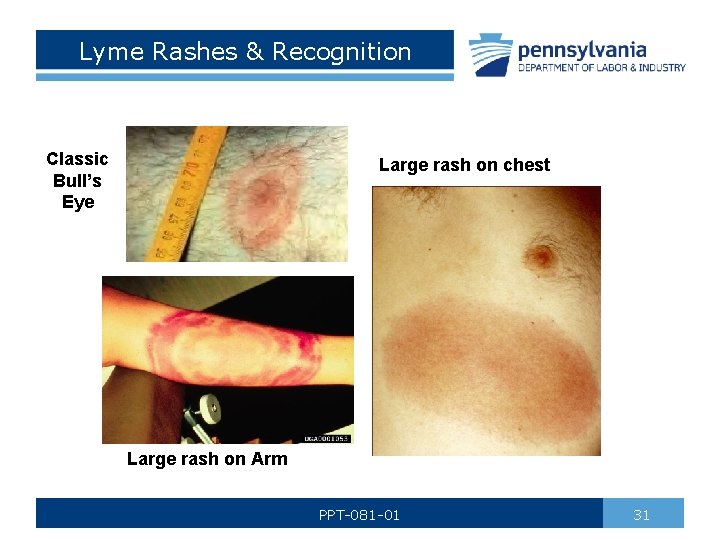
Lyme Rashes & Recognition Classic Bull’s Eye Large rash on chest Large rash on Arm PPT-081 -01 31

Lyme Rashes • Typical “bulls eye” rash • Several concentric circles • Expands over time • Raised or flat • May be warm • Can be painful, painless or itchy PPT-081 -01 32
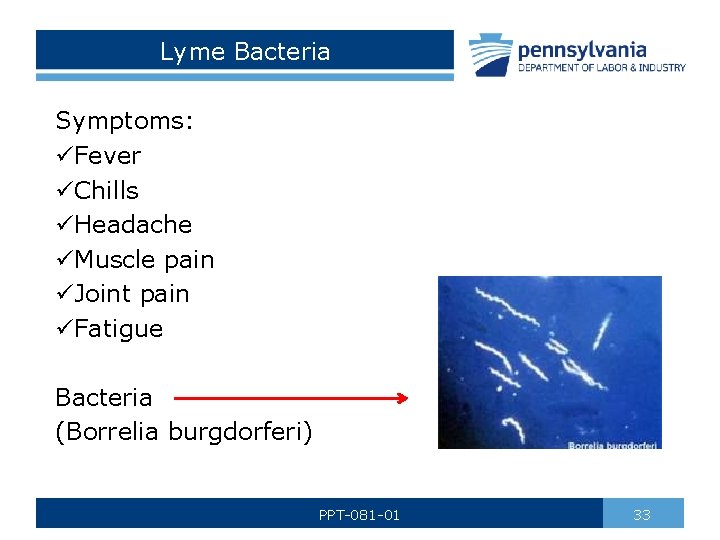
Lyme Bacteria Symptoms: üFever üChills üHeadache üMuscle pain üJoint pain üFatigue Bacteria (Borrelia burgdorferi) PPT-081 -01 33
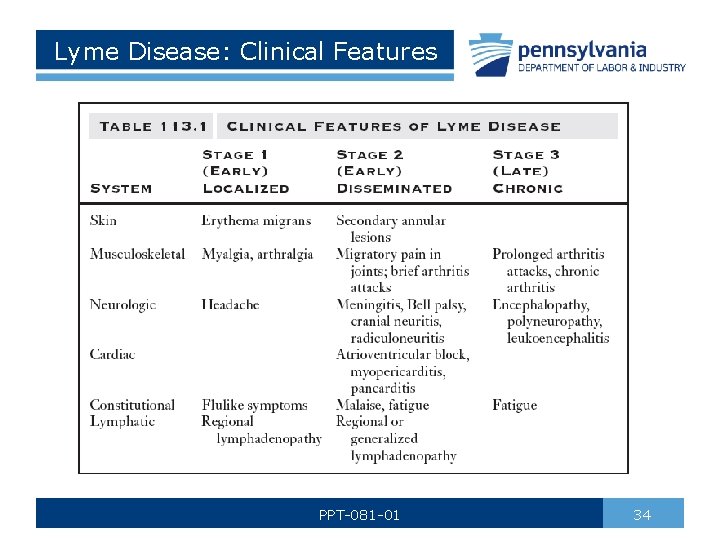
Lyme Disease: Clinical Features PPT-081 -01 34
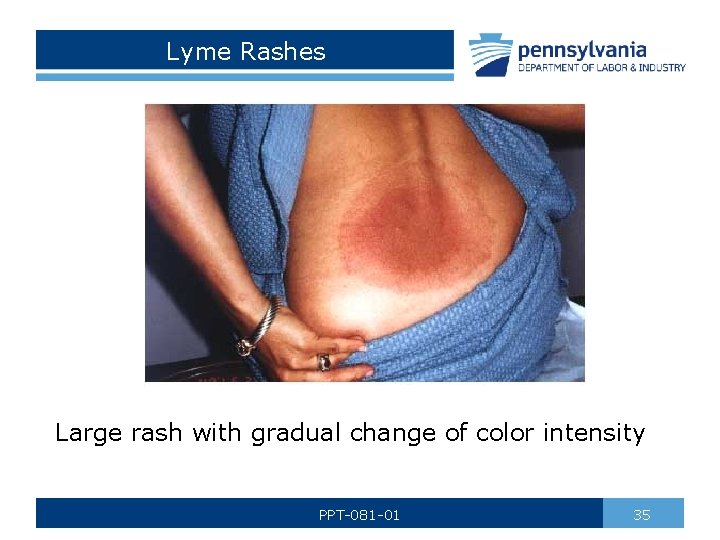
Lyme Rashes Large rash with gradual change of color intensity PPT-081 -01 35
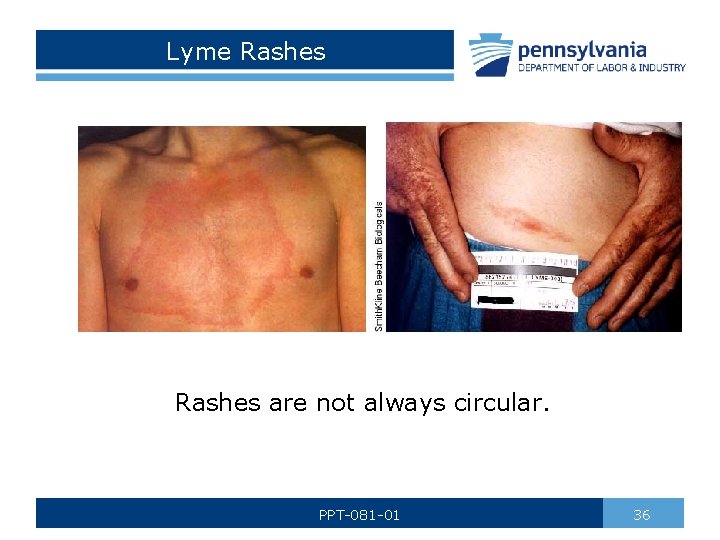
Lyme Rashes are not always circular. PPT-081 -01 36
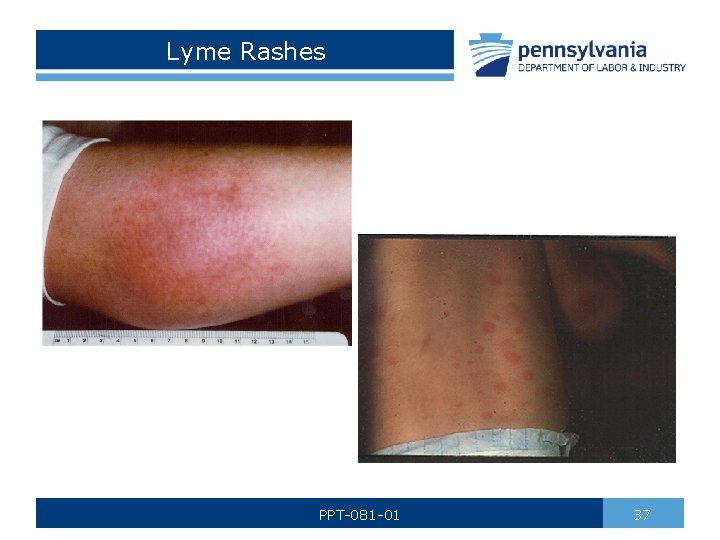
Lyme Rashes PPT-081 -01 37
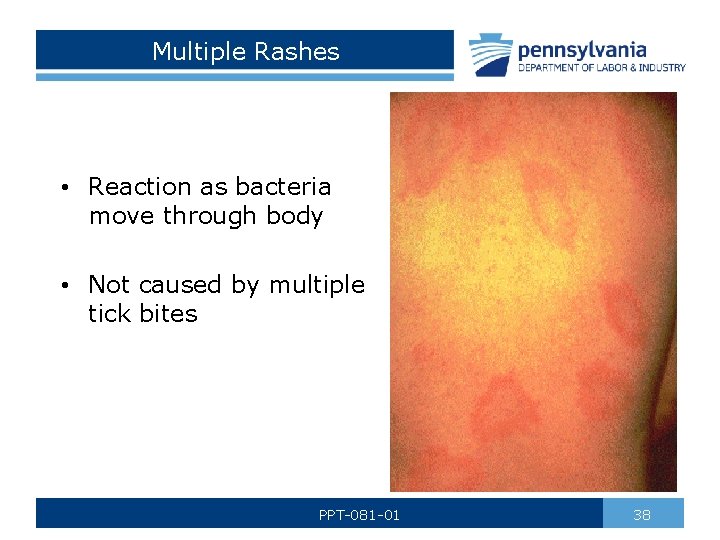
Multiple Rashes • Reaction as bacteria move through body • Not caused by multiple tick bites PPT-081 -01 38
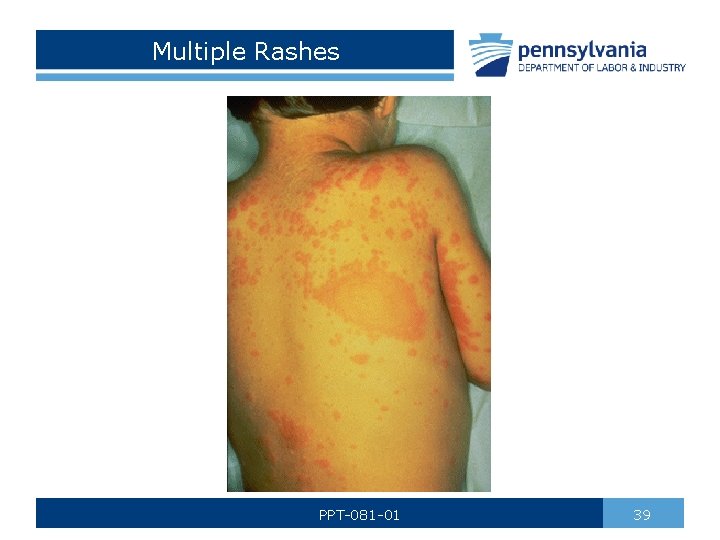
Multiple Rashes PPT-081 -01 39
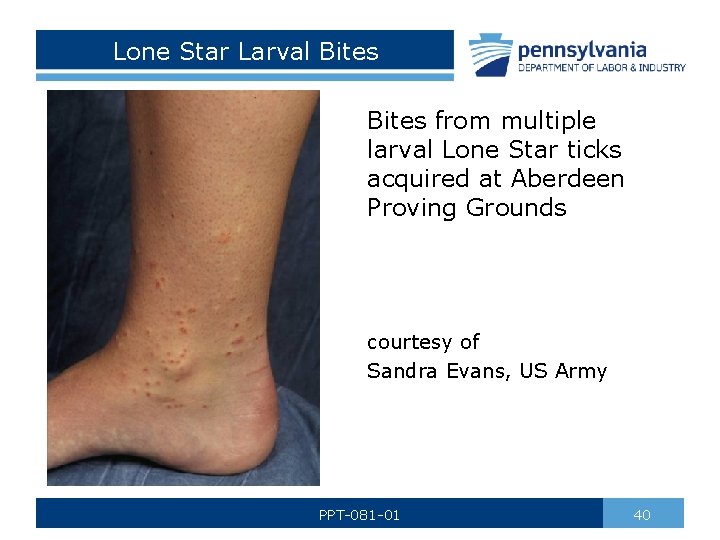
Lone Star Larval Bites from multiple larval Lone Star ticks acquired at Aberdeen Proving Grounds courtesy of Sandra Evans, US Army PPT-081 -01 40
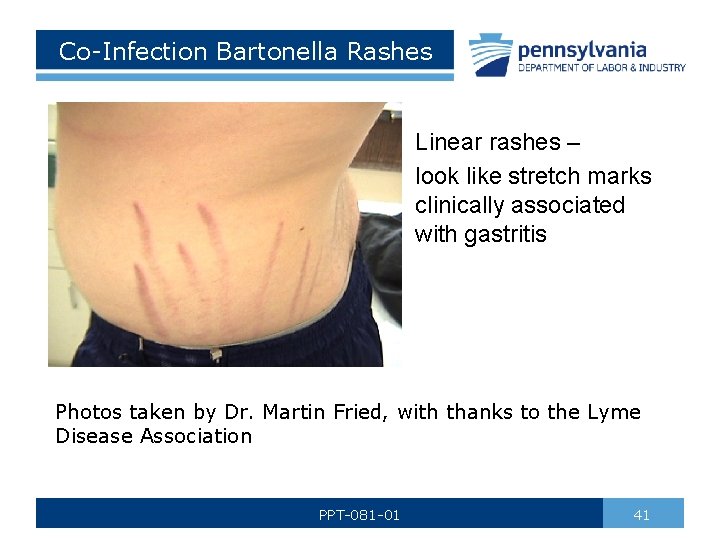
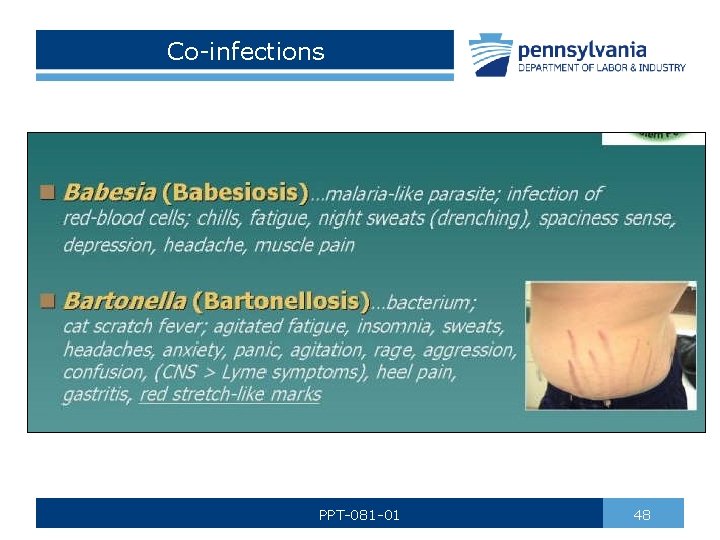
Co-Infection Bartonella Rashes Linear rashes – look like stretch marks clinically associated with gastritis Photos taken by Dr. Martin Fried, with thanks to the Lyme Disease Association PPT-081 -01 41
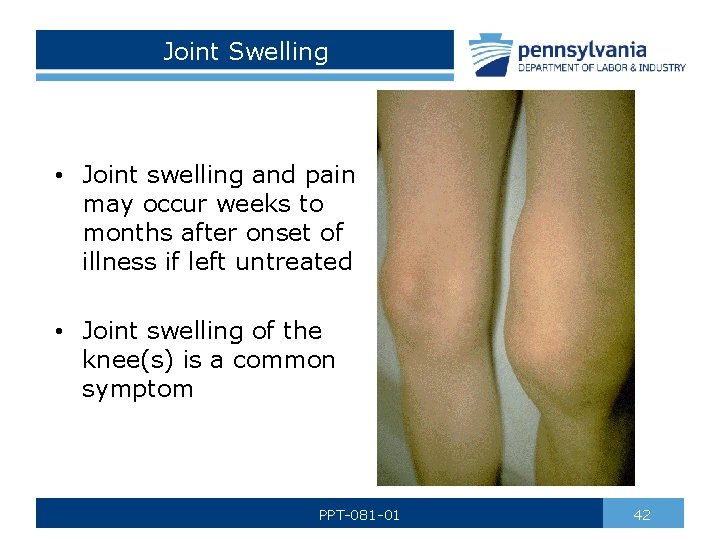
Joint Swelling • Joint swelling and pain may occur weeks to months after onset of illness if left untreated • Joint swelling of the knee(s) is a common symptom PPT-081 -01 42
Misconception “Tick needs to be attached more than 24 hours before infection is transmitted. ” • Published literature reports anywhere from 2 to 48 hours • Scientific knowledge of the interactions between tick saliva, tick pathogens, the host immune system is incredibly complex • What duration of tick attachment would permit assumption of zero risk of transmission? FNone! PPT-081 -01 43
Truth • Less than 50% patients with tick borne disease even remember a tick bite • Of those who do remember a tick bite, only roughly half have an erythema migrans (EM) rash o EM rashes are extremely variable - not being recognized by doctors or patients o Rashes are dismissed or misdiagnosed • Co-infections go undiagnosed and untreated • “Watchful waiting” after any tick bite is not wiseseek medical help PPT-081 -01 44
Lyme Disease: Signs/Symptoms • • Extreme fatigue, often interfering with activities Headaches of all types Recurrent fevers, chills, night sweats Myalgias and arthralgias; either may be migratory Muscle fasciculations (twitching)and weakness Paresthesias and neuropathic pain syndromes Sleep disturbances Cranial nerve dysfunction PPT-081 -01 45
More Signs & Symptoms • Neuropsychiatric problems: irritability, depression, anxiety, panic attacks, new onset ADHD, mood swings similar to bipolar disease, rage attacks, OCD (Obsessive-Compulsive Disorder) • Cognitive losses: memory impairment, difficulty multi-tasking, slowed mental processing, speech and language problems, poor concentration, loss of math skills, impaired visual/spatial processing • Children may have behavioral changes, declining school performance, headache, fatigue, forgetfulness, complex partial seizures, depression and be misdiagnosed with primary ADHD PPT-081 -01 46
Co-infections are the rule, not the exception “ 80% of my pediatric patients are co-infected” Co-infections are often best diagnosed clinically Co-infected patients are: ØSicker ØMore likely to have failed prior treatment ØRequire longer treatment with multiple agents Co-infections must be eradicated or Borrelia infection will persist PPT-081 -01 47
Co-infections PPT-081 -01 48
Evaluation “If false results are to be feared, it is the false negative result which holds the greatest peril for the patient. ” Gestational Lyme Borreliosis. Implications for the fetus. Mac. Donald, AB, Rheum Dis Clin North Am 1989; 15(4): 657 -77. Ann F Corson, MD PPT-081 -01 49
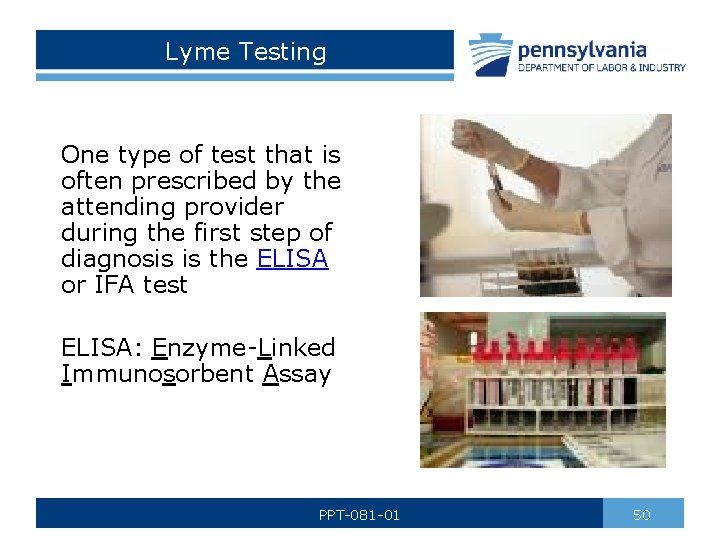
Lyme Testing One type of test that is often prescribed by the attending provider during the first step of diagnosis is the ELISA or IFA test ELISA: Enzyme-Linked Immunosorbent Assay PPT-081 -01 50
Lyme Testing • The second type of test and the one many feel is the most preferred uses an immunoblot (this is the Western blot or striped blot test) • Sometimes two types of Western blot are performed: "Ig. M" and "Ig. G" • Patients who test positive by Ig. M but not Ig. G should have the test repeated a few weeks later if they remain ill PPT-081 -01 51
Treatment • Antibiotics such as: o Doxycycline o Amoxicillin o Ceftin • Usually treated for 4 -6 weeks • A recent study of in the New England Journal of Medicine indicates that a four-week course of oral doxycycline is just as effective in treating late LD, and much less expensive, than a similar course of intravenous Ceftriaxone (Rocephin) unless neurological or severe cardiac abnormalities are present PPT-081 -01 52
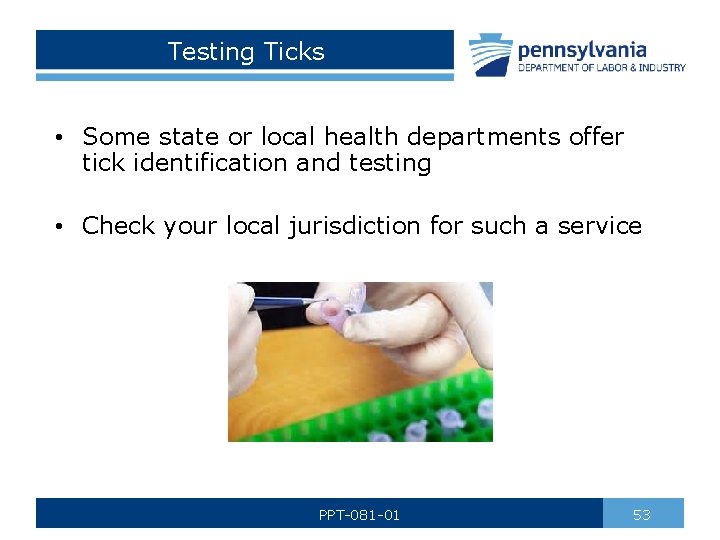
Testing Ticks • Some state or local health departments offer tick identification and testing • Check your local jurisdiction for such a service PPT-081 -01 53
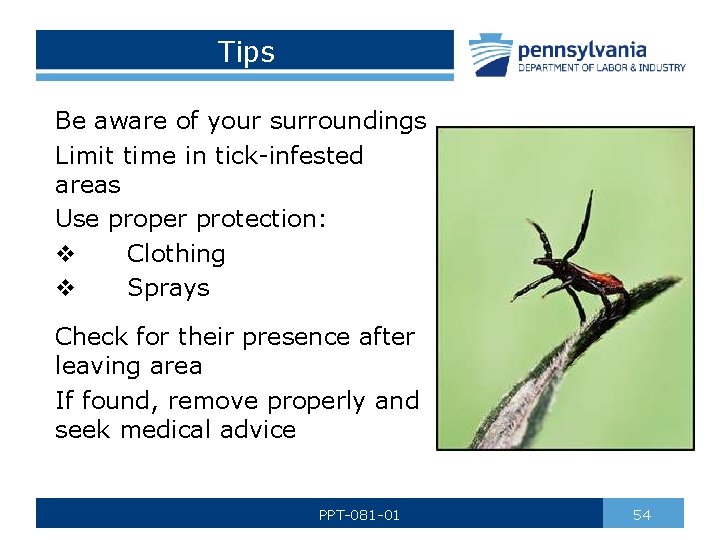
Tips Be aware of your surroundings Limit time in tick-infested areas Use proper protection: v Clothing v Sprays Check for their presence after leaving area If found, remove properly and seek medical advice PPT-081 -01 54
Websites of Interest www. ilads. org www. lymepa. org www. lymediseaseassociation. org www. thehumansideoflyme. net www. lymeinfo. net/lymefiles. html www. lymeinfo, net/medical/LDPersist. pdf www. lymeinfo. net/medical/LDSymptoms. pdf www. lymeinfo. net/medical/LDSupplement. pdf www. lymeinfo. net/medical/LDSeronegativity. pdf www. lymeinfo. net/medical/LDCysts. pdf www. lymeinfo. net/medical/LDAdverse. Conditions. pdf www. lymeinfo. net/medical/LDBibliography. pdf PPT-081 -01 55

Contact Information Health & Safety Training Specialists 1171 South Cameron Street, Room 324 Harrisburg, PA 17104 -2501 (717) 772 -1635 RA-LI-BWC-PATHS@pa. gov Like us on Facebook! https: //www. facebook. com/BWCPATHS PPT-081 -01 56
Questions PPT-081 -01 57
- Slides: 57