
Tich Miller Wendy Cope Date Objectives 1 Introduce
Tich Miller– Wendy Cope Date: Objectives 1. Introduce the poem. 2. Examine themes of ‘Youth’ and ‘A Person’ and ‘An important issue (Bullying)’. (This could also be a poem with a special meaning for you or with interesting images) Warm –up – picture on next page I see, I think, I wonder
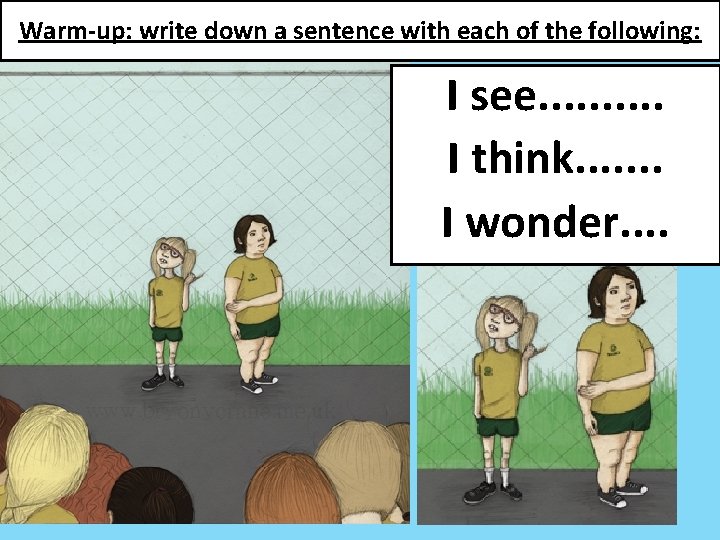
Warm-up: write down a sentence with each of the following: I see. . I think. . . . I wonder. .
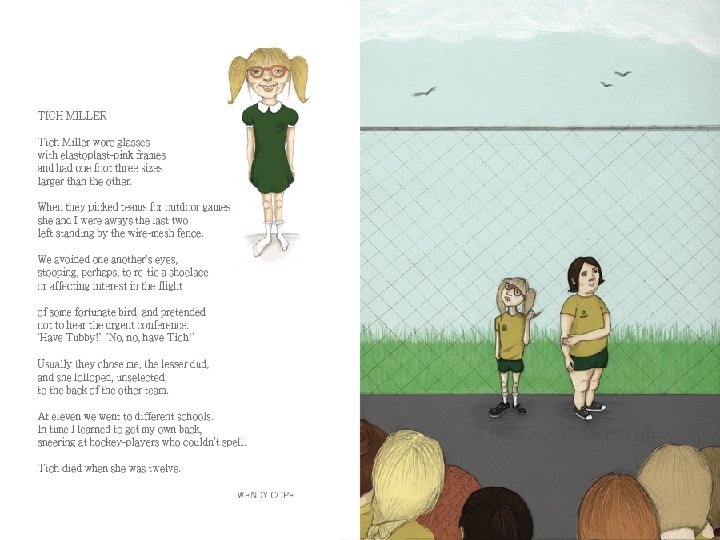
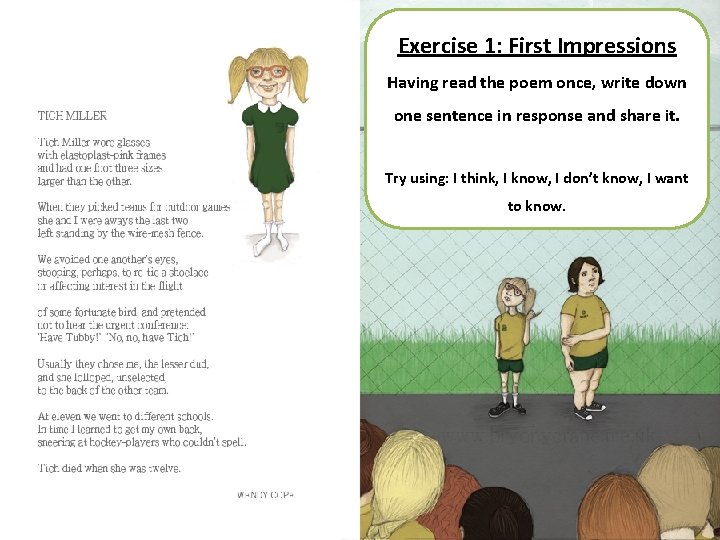
Exercise 1: First Impressions Having read the poem once, write down one sentence in response and share it. Try using: I think, I know, I don’t know, I want to know.
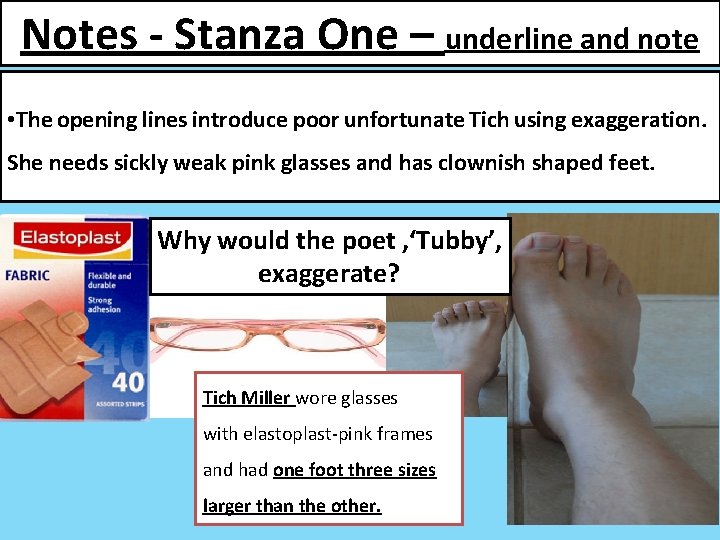
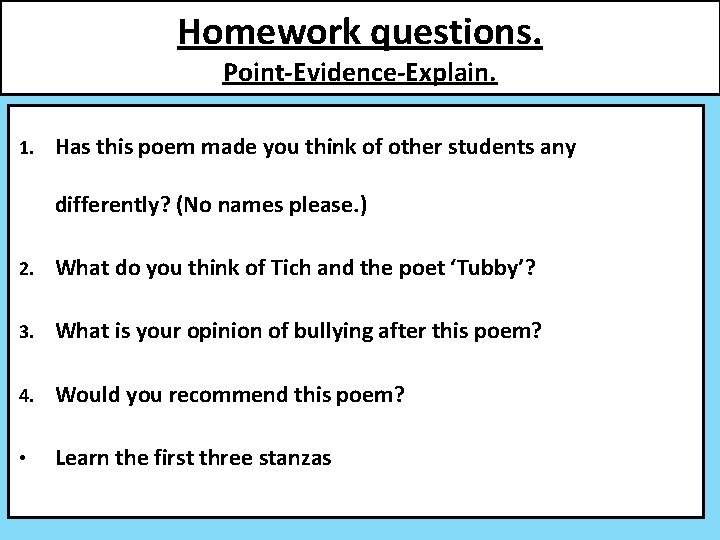
Notes - Stanza One – underline and note • The opening lines introduce poor unfortunate Tich using exaggeration. She needs sickly weak pink glasses and has clownish shaped feet. Why would the poet , ‘Tubby’, exaggerate? Tich Miller wore glasses with elastoplast-pink frames and had one foot three sizes larger than the other.

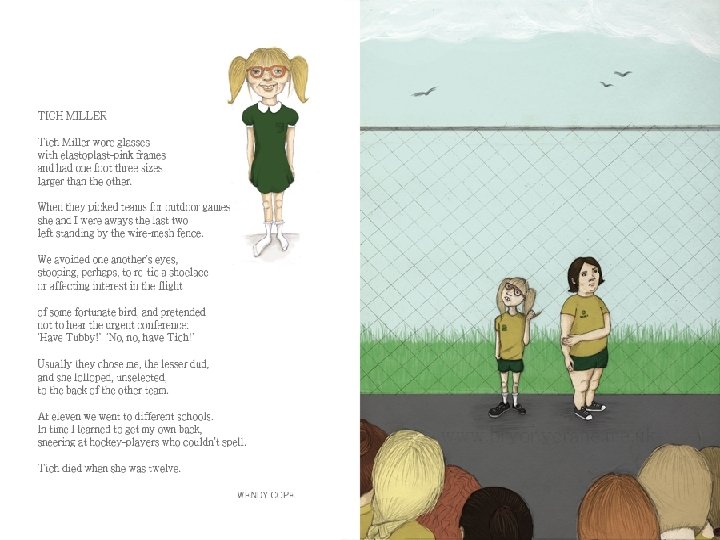
Notes – Stanza Two • We can see the misery of being left out and alienated at school. Tich and the poet stand by a “wire-mesh fence” like they are in prison or a cage. They feel trapped. (What other feelings would you have being last picked every time? ) When they picked teams for outdoor games she and I were always the last two left standing by the wire-mesh fence.
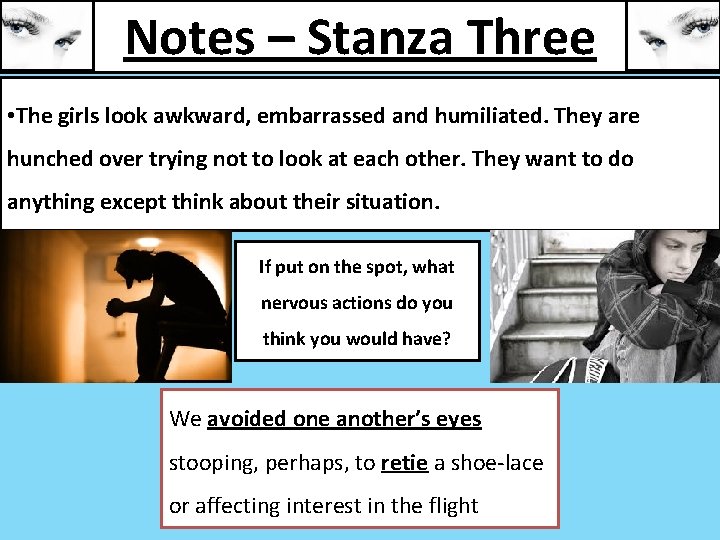
Notes – Stanza Three • The girls look awkward, embarrassed and humiliated. They are hunched over trying not to look at each other. They want to do anything except think about their situation. If put on the spot, what nervous actions do you think you would have? We avoided one another’s eyes stooping, perhaps, to retie a shoe-lace or affecting interest in the flight
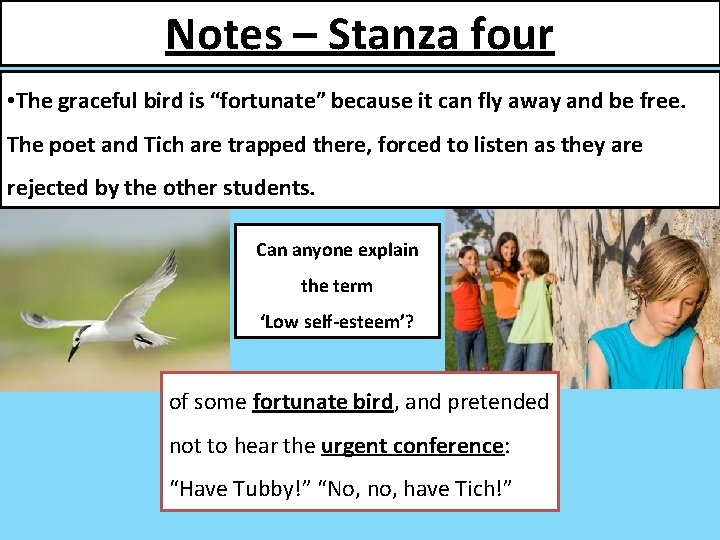
Notes – Stanza four • The graceful bird is “fortunate” because it can fly away and be free. The poet and Tich are trapped there, forced to listen as they are rejected by the other students. Can anyone explain the term ‘Low self-esteem’? of some fortunate bird, and pretended not to hear the urgent conference: “Have Tubby!” “No, no, have Tich!”
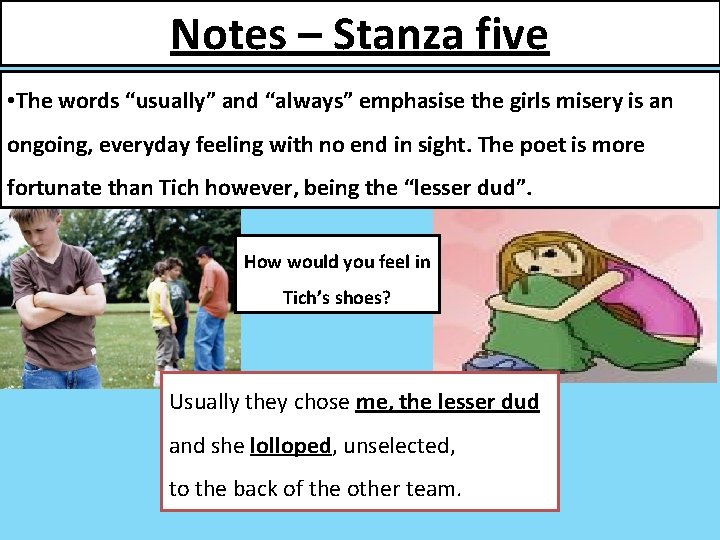
Notes – Stanza five • The words “usually” and “always” emphasise the girls misery is an ongoing, everyday feeling with no end in sight. The poet is more fortunate than Tich however, being the “lesser dud”. How would you feel in Tich’s shoes? Usually they chose me, the lesser dud and she lolloped, unselected, to the back of the other team.
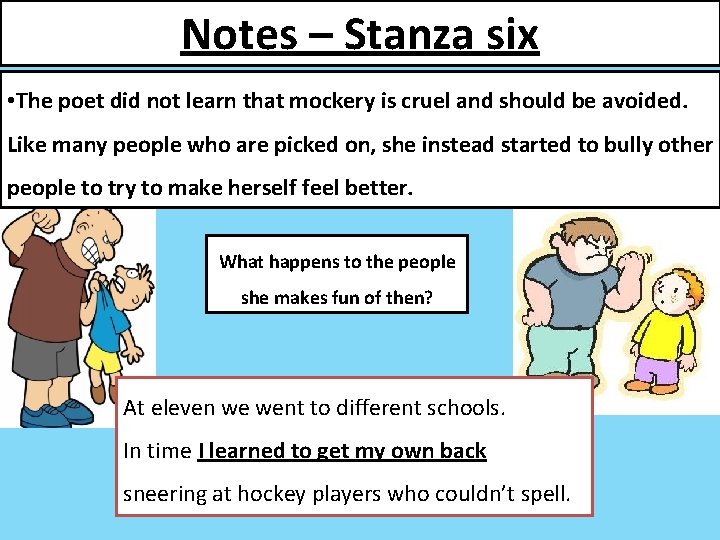
Notes – Stanza six • The poet did not learn that mockery is cruel and should be avoided. Like many people who are picked on, she instead started to bully other people to try to make herself feel better. What happens to the people she makes fun of then? At eleven we went to different schools. In time I learned to get my own back sneering at hockey players who couldn’t spell.
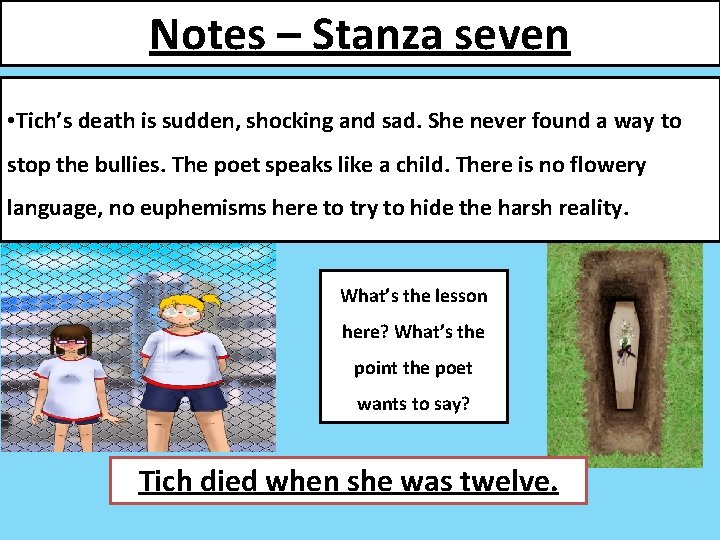
Notes – Stanza seven • Tich’s death is sudden, shocking and sad. She never found a way to stop the bullies. The poet speaks like a child. There is no flowery language, no euphemisms here to try to hide the harsh reality. What’s the lesson here? What’s the point the poet wants to say? Tich died when she was twelve.
Homework questions. Point-Evidence-Explain. 1. Has this poem made you think of other students any differently? (No names please. ) 2. What do you think of Tich and the poet ‘Tubby’? 3. What is your opinion of bullying after this poem? 4. Would you recommend this poem? • Learn the first three stanzas

• Part 2
Tich Miller 2 Date: Objectives 1. Examine the technique of the poem. (1) Look at the rhyme, tone, onomatopeoia 2. Reinforce the important message of the poem. Warm –up – pictures on next page I think. . . I know. . . I don’t know. . . I want to know. . .
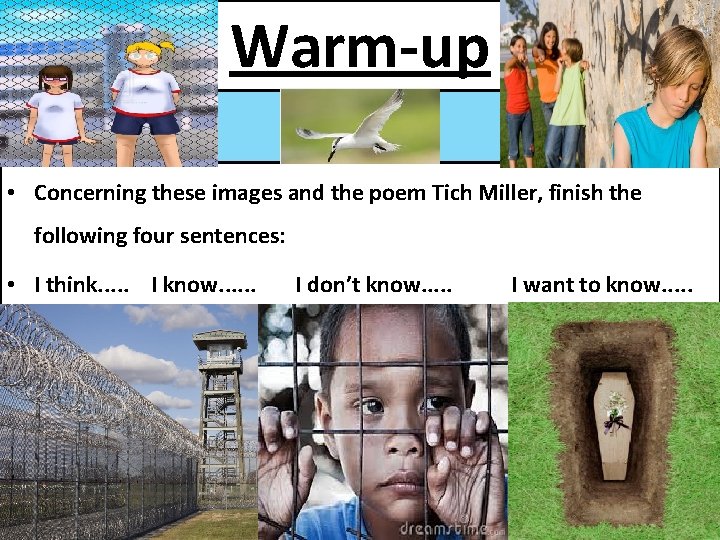
Warm-up • Concerning these images and the poem Tich Miller, finish the following four sentences: • I think. . . I know. . . I don’t know. . . I want to know. . .
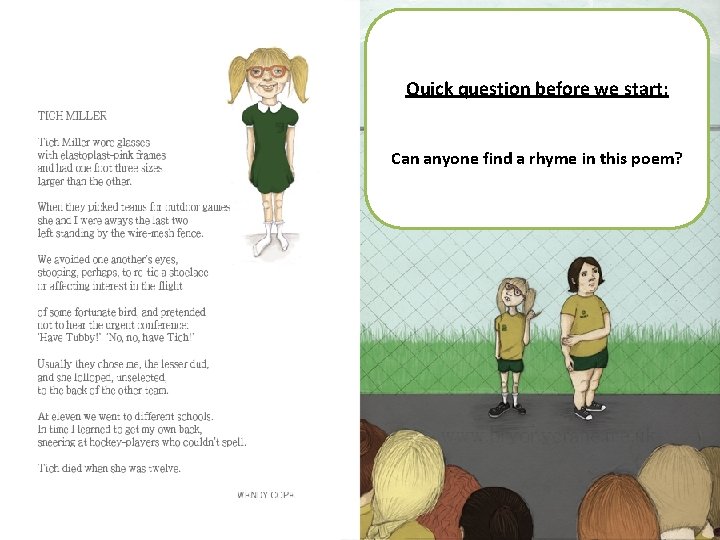
Quick question before we start: Can anyone find a rhyme in this poem?
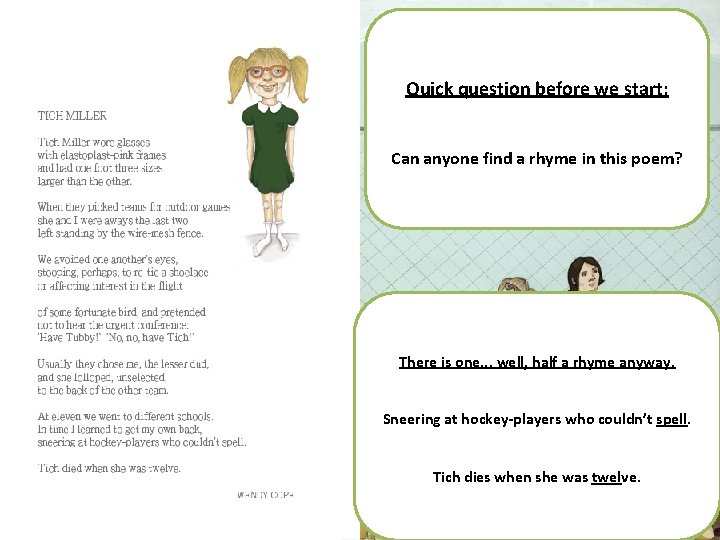
Quick question before we start: Can anyone find a rhyme in this poem? There is one. . . well, half a rhyme anyway. Sneering at hockey-players who couldn’t spell. Tich dies when she was twelve.
Notes • Rhyme: The absence of rhyme in a poem is very significant. Rhymes create harmony, links and a feeling of comfort because there is structure. The lack of rhyme in ‘Tich Miller’ conveys the poets experience. • Question to discuss: Pretend that Tich is named “ Rhyme”. What happens to her in the poem? METAPHOR! (Simile if we use ‘like’)
Notes (If we ever can’t talk about rhyme, we talk about tone. ) • Tone: The speaker’s tone is matter-of-fact. She presents what happened without approving or disapproving, leaving us to judge. • Question to write an answer to: Think – pair - share • The poet invites us to judge so let us. What do you think of the situation and her response? Make reference to the poem.
Before the next note: • What does ‘Lolloping’ look like? Usually they chose me, the lesser dud and she lolloped, unselected, to the back of the other team.
Notes Ono-mato-pay-YA (There is one poetic technique used: Onomatopoeia. ) • Onomatopoeia: Being last picked, Tich “lolloped” to the back of a team that did not want her. The word lollop paints us a picture. Like the sound, she moves without grace slowly to the back of the group.
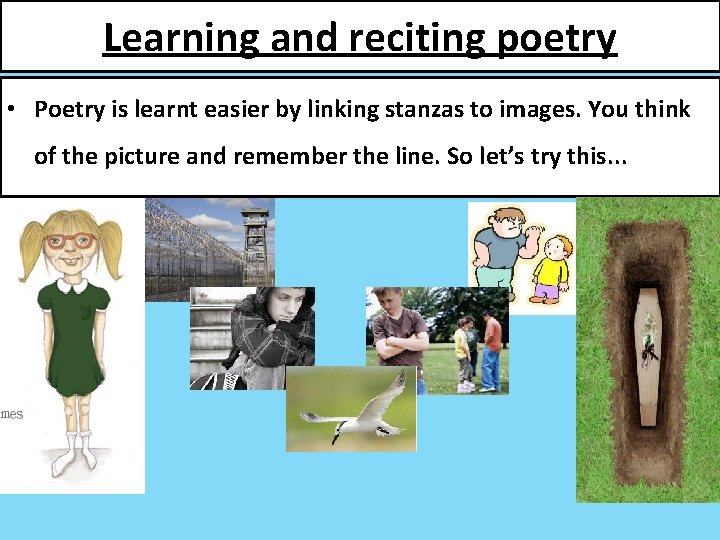
Learning and reciting poetry • Poetry is learnt easier by linking stanzas to images. You think of the picture and remember the line. So let’s try this. . .
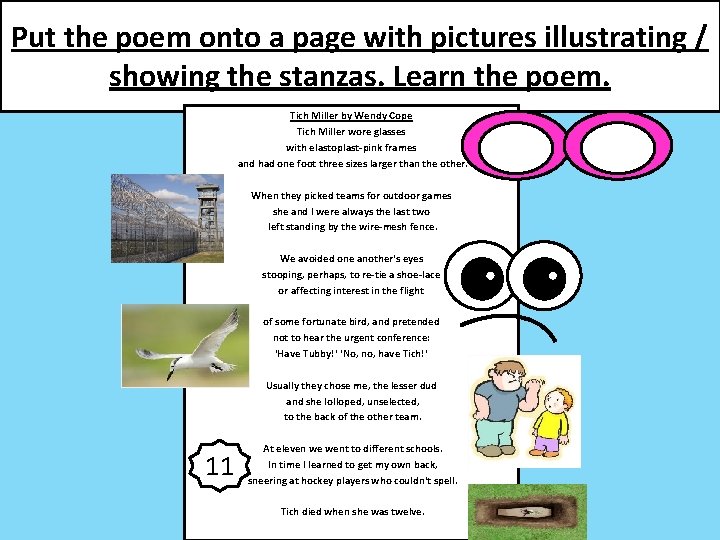
Put the poem onto a page with pictures illustrating / showing the stanzas. Learn the poem. 11 Tich Miller by Wendy Cope Tich Miller wore glasses with elastoplast-pink frames and had one foot three sizes larger than the other. When they picked teams for outdoor games she and I were always the last two left standing by the wire-mesh fence. We avoided one another's eyes stooping, perhaps, to re-tie a shoe-lace or affecting interest in the flight of some fortunate bird, and pretended not to hear the urgent conference: 'Have Tubby!' 'No, no, have Tich!' Usually they chose me, the lesser dud and she lolloped, unselected, to the back of the other team. At eleven we went to different schools. In time I learned to get my own back, sneering at hockey players who couldn't spell. Tich died when she was twelve.
- Slides: 24