
TIA1005 Proposed by TR42 9 Industrial Cabling Standard

TIA-1005 (Proposed by TR-42. 9) Industrial Cabling Standard Pete Lockhart Anixter Standards Certification Education & Training Publishing Conferences & Exhibits Manufacturing IT Forum Cleveland, Ohio May 20 -21, 2008
Key Points to be Covered • Definition of Structured Cabling for Commercial Networks • Definition of Structured Cabling for Industrial Networks • The proposed TIA-1005 Draft Standard Structure • Industrial Area Concepts • Recognized cables • Recognized connectivity • The Automation Outlet • 2 -Pair Cabling • Multi-connector Ethernet Channels • M. I. C. E.
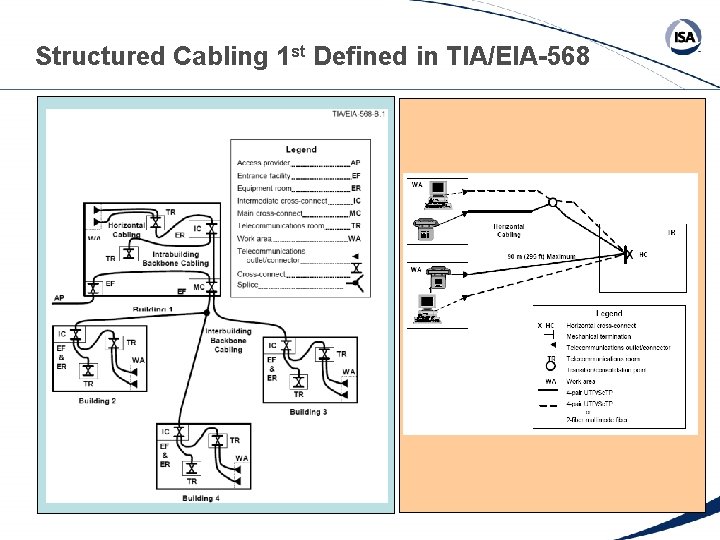
Structured Cabling 1 st Defined in TIA/EIA-568
ANSI/TIA-PN-3 -4822 -G 12 -12 -2007 Telecommunications Infrastructure Standard for Industrial Premises • Ballot proposal from TIA-TR-42. 9 working group • Will become ANSI/TIA-1005 Industrial Cabling Standard on approval • Based closely on the ANSI/TIA/EIA 568 -B, TIA-569 -B, ANSI-J-STD-607 -A, ANSI/TIA/EIA-606 -A, and ISO/IEC 11801 Standards • Also related to ISO/IEC 24702 Information Technology. Industrial Premises • Environmental references: IEC 60721 -x, IEC 60654 -x
Purpose of Standard • To enable the planning and installation of telecommunications cabling infrastructure within and between industrial buildings • The potential exposure to hostile environments in the industrial space is the central concept of the standard in contrast to that of TIA/EIA 568, which addresses commercial buildings • The special cabling system requirements of industrial operations is also a prime design principle of the document
New Terms, not in TIA/EIA-568 B • Automation island – Area in proximity to the industrial machines • Automation outlet – Where the generic telecommunications cabling ends and the automation-specific cabling begins • Device area – Where system I/O interacts with control equipment • Industrial segment – A point-to-point connection between two active industrial communications devices • M. I. C. E. – For Mechanical, Ingress, Climate/Chemical, Electromechanical
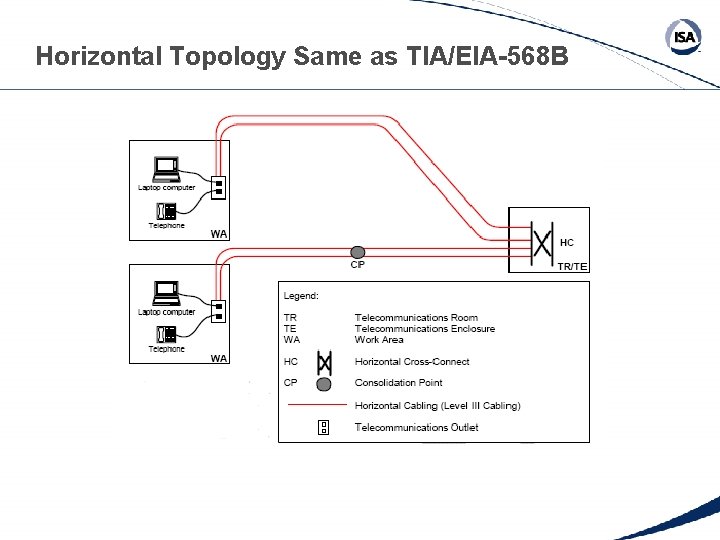
Horizontal Topology Same as TIA/EIA-568 B
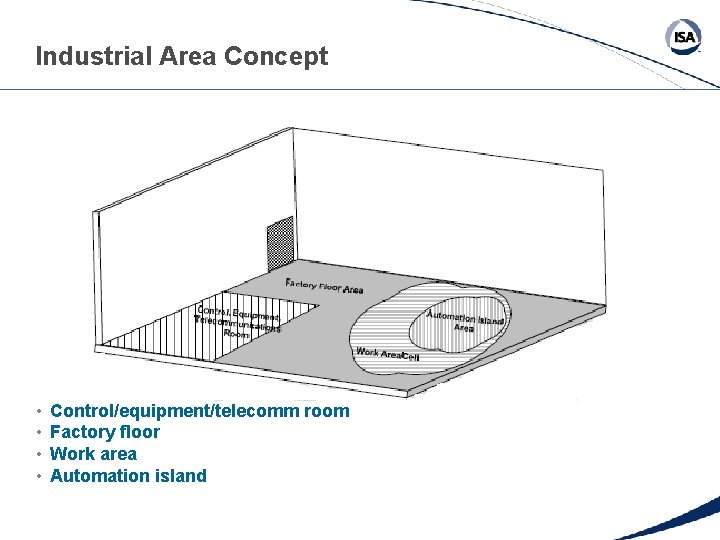
Industrial Area Concept • • Control/equipment/telecomm room Factory floor Work area Automation island
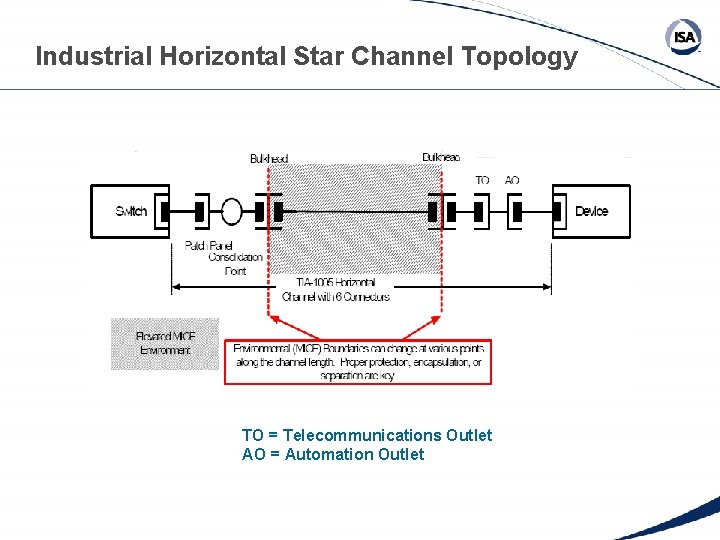
Industrial Horizontal Star Channel Topology TO = Telecommunications Outlet AO = Automation Outlet
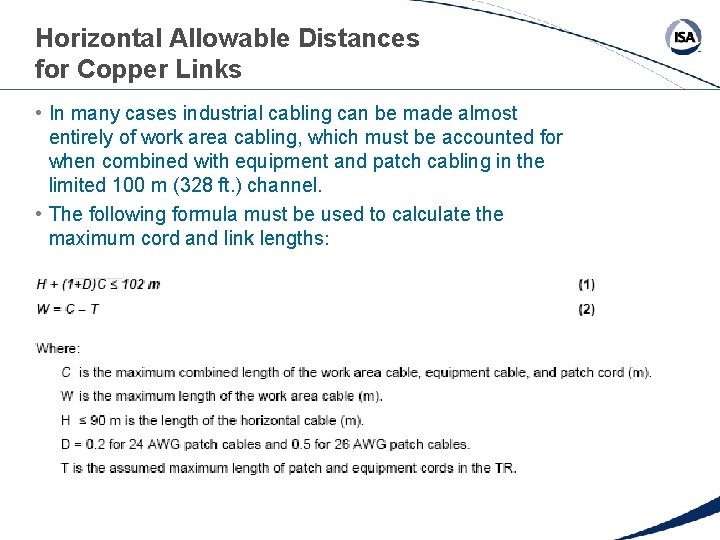
Horizontal Allowable Distances for Copper Links • In many cases industrial cabling can be made almost entirely of work area cabling, which must be accounted for when combined with equipment and patch cabling in the limited 100 m (328 ft. ) channel. • The following formula must be used to calculate the maximum cord and link lengths:
Recognized Horizontal Cables • Twisted-pair copper – 4 -pair, 100 ohm balanced (unshielded or shielded) – 2 -pair, 100 ohm balanced (unshielded or shielded) • Optical fiber – Optical (glass) fiber, single-mode and multimode cable (ANSI/TIA/EIA-568 -B. 3) • Plastic Optical Fiber: Removed from the issue of the Standard and referred to a Working Group for later addition as an Addendum – Plastic polymer optical fiber (ISO/IEC 24702) – Plastic polymer clad silica optical fiber (ISO/IEC 24702)
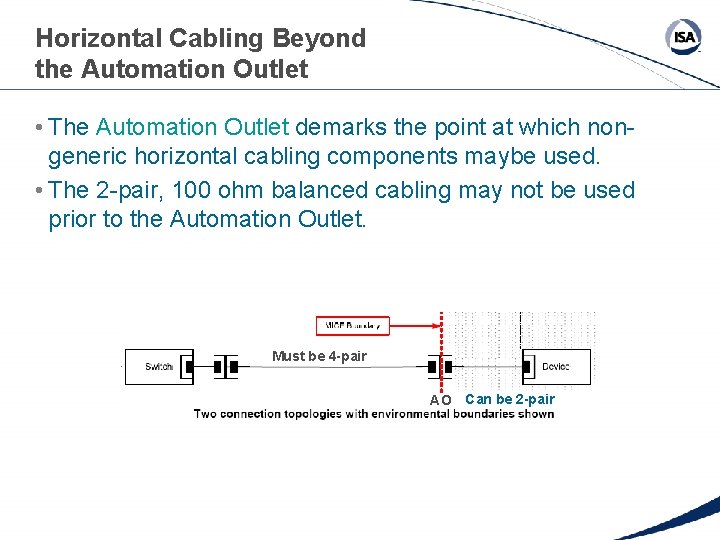
Horizontal Cabling Beyond the Automation Outlet • The Automation Outlet demarks the point at which nongeneric horizontal cabling components maybe used. • The 2 -pair, 100 ohm balanced cabling may not be used prior to the Automation Outlet. Must be 4 -pair AO Can be 2 -pair
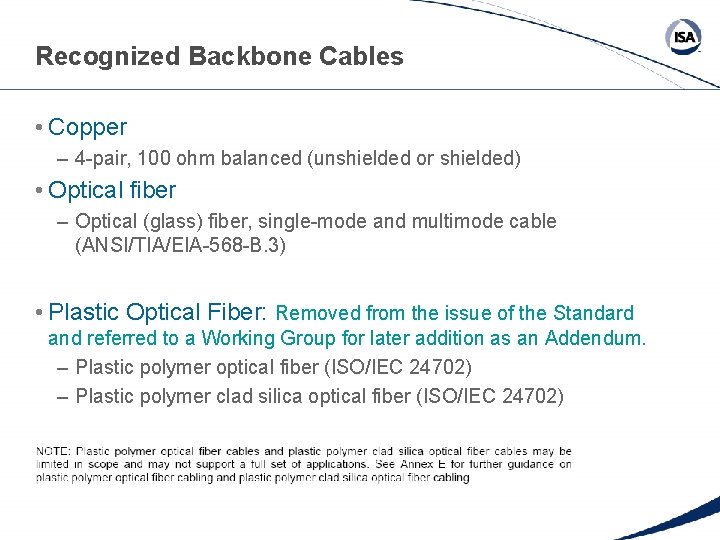
Recognized Backbone Cables • Copper – 4 -pair, 100 ohm balanced (unshielded or shielded) • Optical fiber – Optical (glass) fiber, single-mode and multimode cable (ANSI/TIA/EIA-568 -B. 3) • Plastic Optical Fiber: Removed from the issue of the Standard and referred to a Working Group for later addition as an Addendum. – Plastic polymer optical fiber (ISO/IEC 24702) – Plastic polymer clad silica optical fiber (ISO/IEC 24702)

Grounding and Bonding Considerations • Use ANSI-J-STD-607 -A for grounding requirements – Use single point grounds – Grounding and bonding should be configured to provide an equal potential grounding system to prevent ground loops – The use of star grounding in communications coverage areas can be used to mitigate ground loops
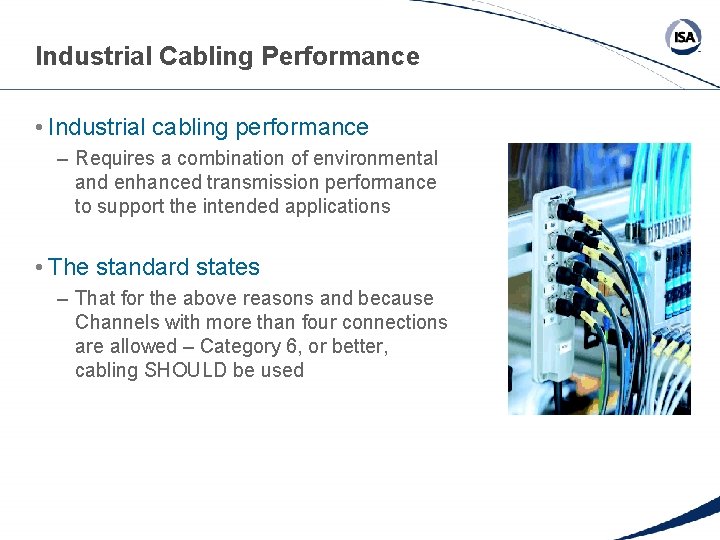
Industrial Cabling Performance • Industrial cabling performance – Requires a combination of environmental and enhanced transmission performance to support the intended applications • The standard states – That for the above reasons and because Channels with more than four connections are allowed – Category 6, or better, cabling SHOULD be used
Industrial Cabling Performance Requirements • Twisted-pair copper • The installed channels and permanent links shall meet the requirements for cabling as specified for – Category 5 e per ANSI/TIA/EIA-568 -B. 1, clause 11. 2 – Category 6 per ANSI/TIA/EIA-568 -B. 2, clause 7
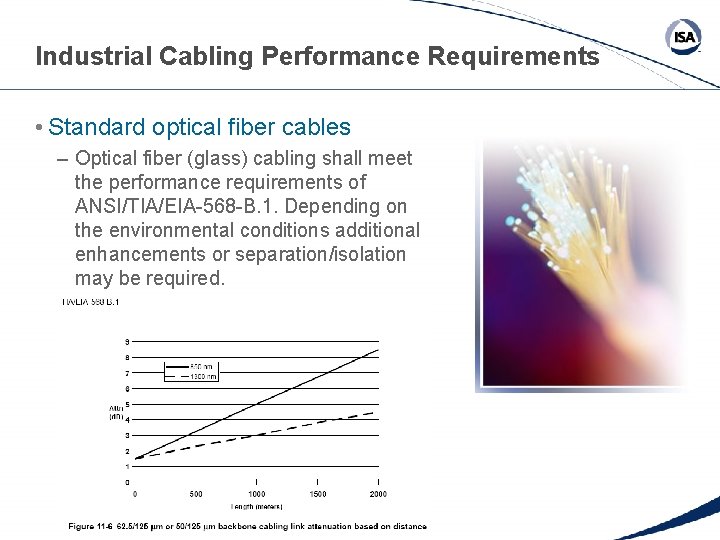
Industrial Cabling Performance Requirements • Standard optical fiber cables – Optical fiber (glass) cabling shall meet the performance requirements of ANSI/TIA/EIA-568 -B. 1. Depending on the environmental conditions additional enhancements or separation/isolation may be required.
Connecting Hardware – Copper • Telecommunications outlet/connector – 8 -position modular: (100 ohm balanced twisted pair) per ANSI/TIA/EIA-568 -B. 1 using T 568 A 0 r B wiring method – Non-Sealed: 4 -pair terminated, must meet the performance requirements of ANSI/TIA/EIa-568 -B. 2 – Sealed: may be housed (encapsulated) within a protective housing, must meet the performance requirements of ANSI/TIA/EIa-568 -B. 2, when subject to the applicable environmental conditions – defined by MICE Table
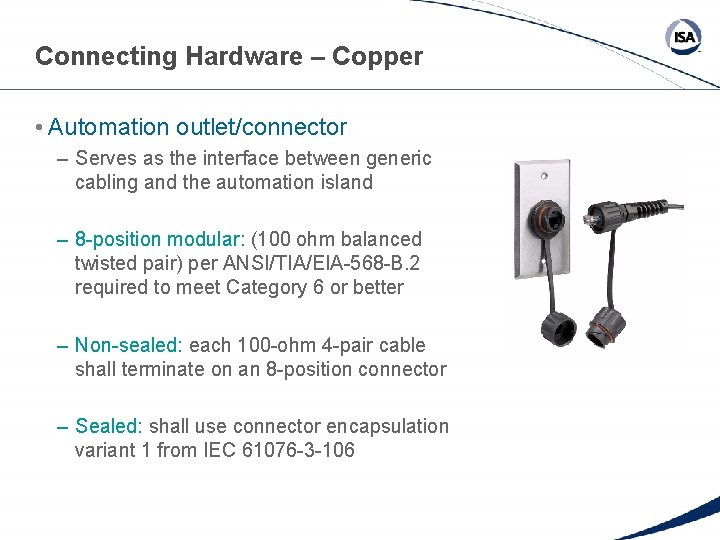
Connecting Hardware – Copper • Automation outlet/connector – Serves as the interface between generic cabling and the automation island – 8 -position modular: (100 ohm balanced twisted pair) per ANSI/TIA/EIA-568 -B. 2 required to meet Category 6 or better – Non-sealed: each 100 -ohm 4 -pair cable shall terminate on an 8 -position connector – Sealed: shall use connector encapsulation variant 1 from IEC 61076 -3 -106
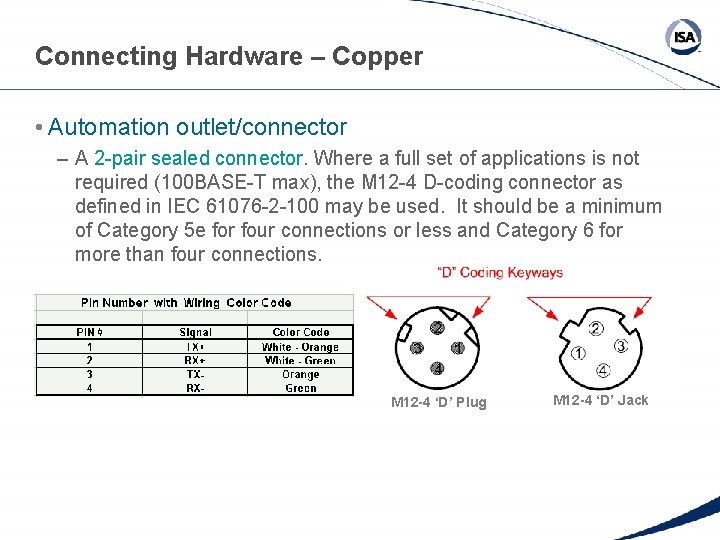
Connecting Hardware – Copper • Automation outlet/connector – A 2 -pair sealed connector. Where a full set of applications is not required (100 BASE-T max), the M 12 -4 D-coding connector as defined in IEC 61076 -2 -100 may be used. It should be a minimum of Category 5 e for four connections or less and Category 6 for more than four connections. M 12 -4 ‘D’ Plug M 12 -4 ‘D’ Jack
Connecting Hardware – Fiber Optic • Telecommunications outlet connector – LC connector family, as specified in ANSI/TIA/EIA-604 -10 A and shall perform to ANSI/TIA/EIA-568 -B. 3 – Sealed optical fiber connectors, may be protected by encapsulation, isolation or separation. Variant 1 of IEC 61076 -3106 methods should be used, but any suitable encapsulation may be used, as long as a single method is used throughout the facility.
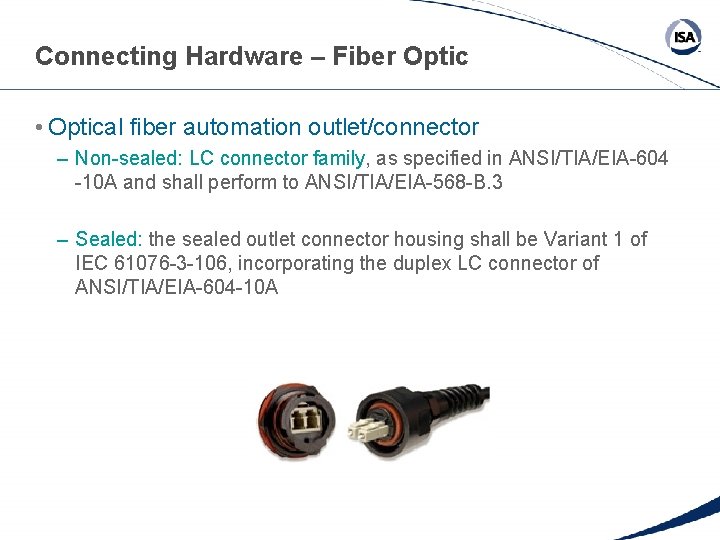
Connecting Hardware – Fiber Optic • Optical fiber automation outlet/connector – Non-sealed: LC connector family, as specified in ANSI/TIA/EIA-604 -10 A and shall perform to ANSI/TIA/EIA-568 -B. 3 – Sealed: the sealed outlet connector housing shall be Variant 1 of IEC 61076 -3 -106, incorporating the duplex LC connector of ANSI/TIA/EIA-604 -10 A
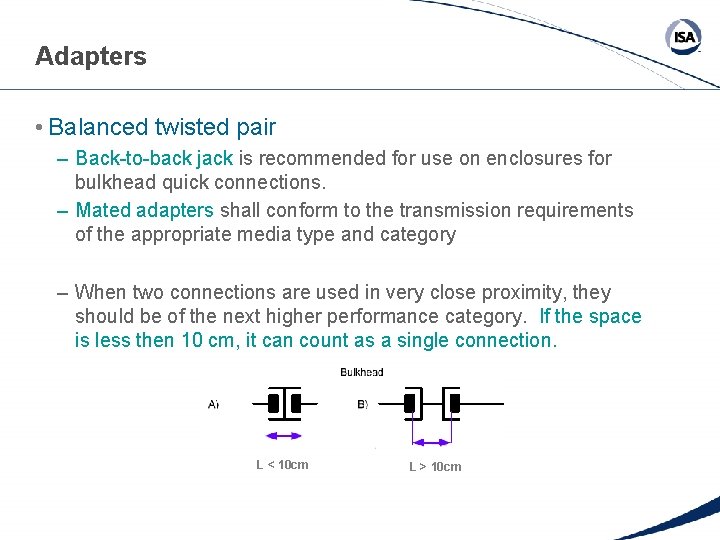
Adapters • Balanced twisted pair – Back-to-back jack is recommended for use on enclosures for bulkhead quick connections. – Mated adapters shall conform to the transmission requirements of the appropriate media type and category – When two connections are used in very close proximity, they should be of the next higher performance category. If the space is less then 10 cm, it can count as a single connection. L < 10 cm L > 10 cm
Consolidation Point • Interconnection point within the horizontal cabling using ANSI/TIA/EIA-568 -B. 2 or -B. 3 compliant connecting hardware in accordance with the requirements of Clause 0 • Differs from a MUTOA as it requires an additional connection point • No more than a single consolidation point or transition point shall be used in the same horizontal run • Each cable extending to the work area from a consolidation point shall be terminated to a compliant TO, AO or MUTOA
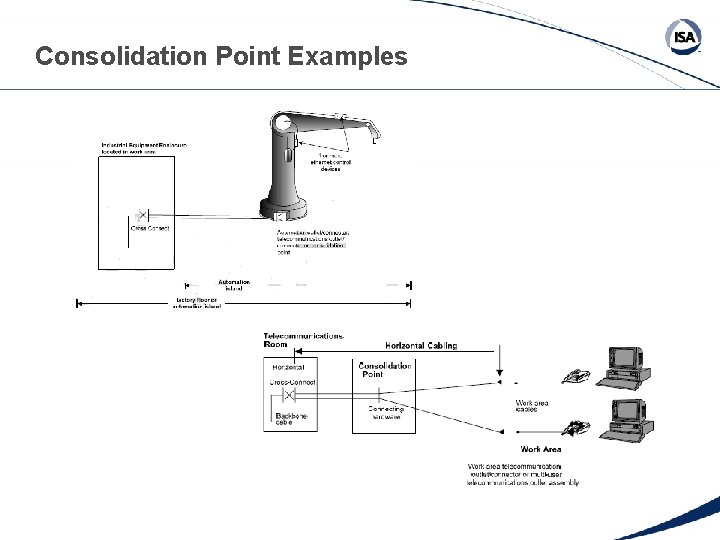
Consolidation Point Examples
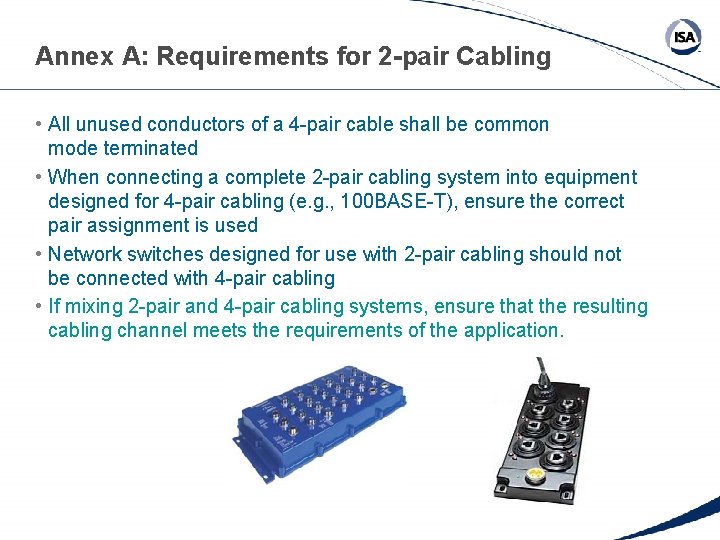
Annex A: Requirements for 2 -pair Cabling • All unused conductors of a 4 -pair cable shall be common mode terminated • When connecting a complete 2 -pair cabling system into equipment designed for 4 -pair cabling (e. g. , 100 BASE-T), ensure the correct pair assignment is used • Network switches designed for use with 2 -pair cabling should not be connected with 4 -pair cabling • If mixing 2 -pair and 4 -pair cabling systems, ensure that the resulting cabling channel meets the requirements of the application.
MICE Concept – Now in TIA-568 -C 0 • There are three basic types of industrial areas: – Factory floor (MICE 1 or 2) – Work area (MICE 2 or 3) – Automation island (MICE 3) • The areas have mixed environments and are given classifications (subscripts 1, 2 and 3) based on the MICE limits assigned to that level of hazard
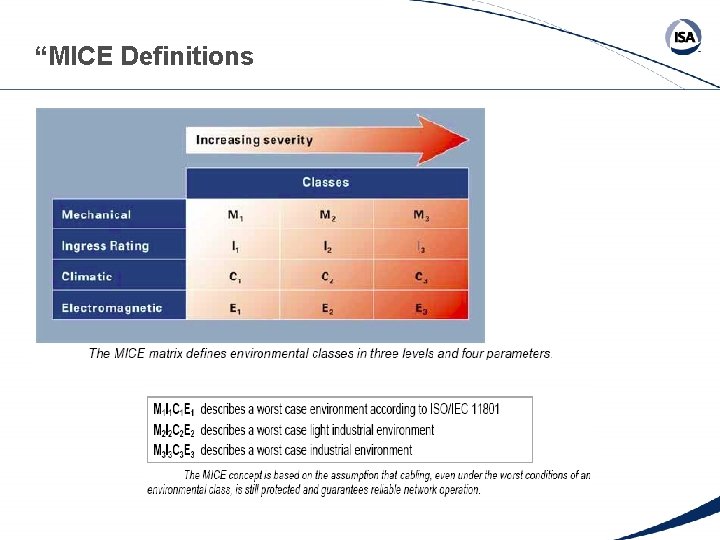
“MICE Definitions
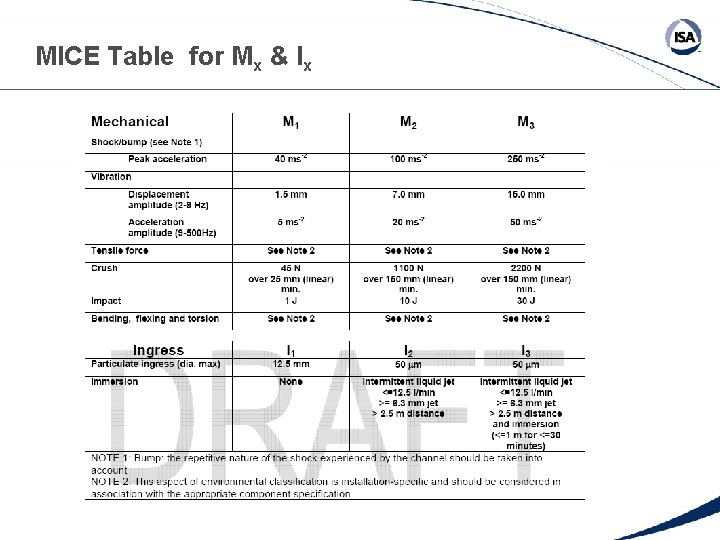
MICE Table for Mx & Ix
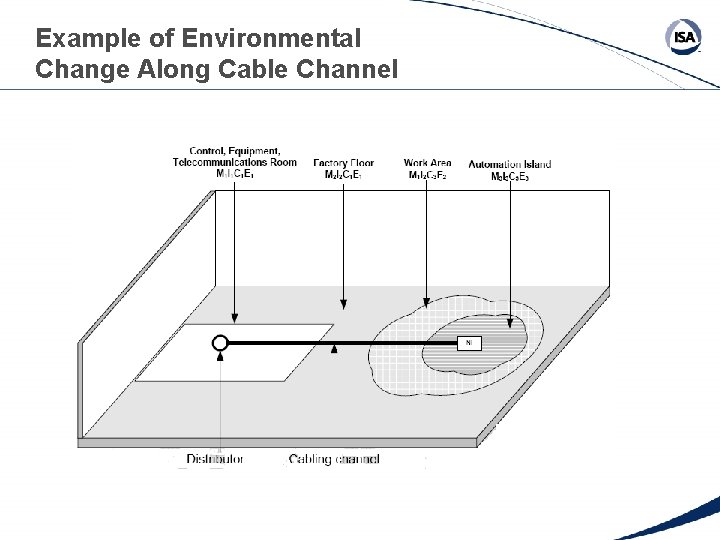
Example of Environmental Change Along Cable Channel
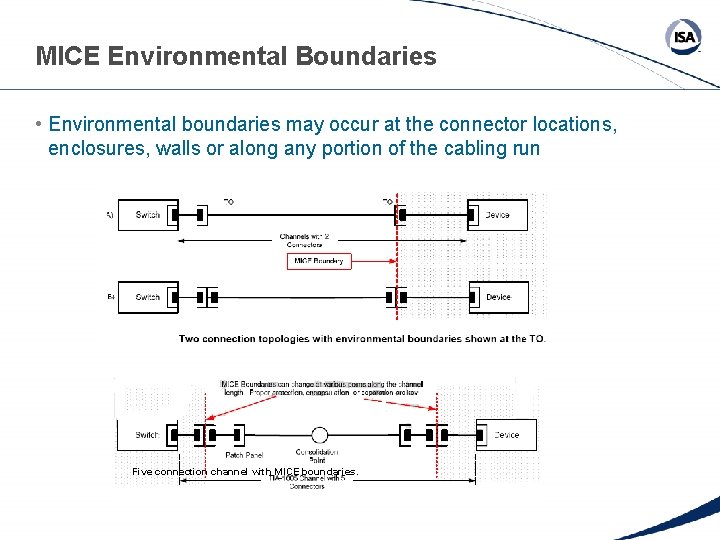
MICE Environmental Boundaries • Environmental boundaries may occur at the connector locations, enclosures, walls or along any portion of the cabling run Five connection channel with MICE boundaries.
Summary • Standard Allows for 2 -pair Cabling Systems • Standard Defines an “Automation Island” • Standard Defines “Automation” Outlets & Cables • Standard States that Category 6 or Better Cabling shall be used for the Automation Islands. • Defines Environmental Concerns in concrete terms with M. I. C. E. Tables (referenced in TIA-568 -C 0) • POF-Plastic Optical Fiber has been removed for further technical review for later addition to Standard. • The Draft “SP” Ballot is expected to be issued in April for final review in June 2008, possible release of Standard in 2009.

Questions and Discussion
Related Resources • TIA-TR-42. 9 Industrial Cabling Working Group • ANSI/TIA-1005 Industrial Cabling Standard-Proposed • ANSI/TIA/EIA 568 -B Commercial Building Telecommunications Cabling Standard • ANSI/TIA-569 -B Commercial Building Standard for Pathways & Spaces • ANSI-J-STD-607 -A Commercial Building Grounding and Bonding Requirements for Telecommunications • ANSI/TIA/EIA-606 -A Administration Standard for Commercial Telecommunications Infrastructure • ISO/IEC 11801 Generic Cabling for Customer Premises • ISO/IEC 24702 Information Technology-Industrial Premises • Environmental references: IEC 60721 -x, IEC 60654 -x Phone: (919) 549 -8411 E-mail Address: info@isa. org
- Slides: 34