
THYROIDITIS Thyrotoxicosis hypermetabolic condition associated with elevated levels
THYROIDITIS
Thyrotoxicosis hypermetabolic condition associated with elevated levels of free thyroxine (FT 4) and/or triiodo-thyronine (T 3). Hyperthyroidism --excess synthesis and secretion of thyroid hormone by the thyroid
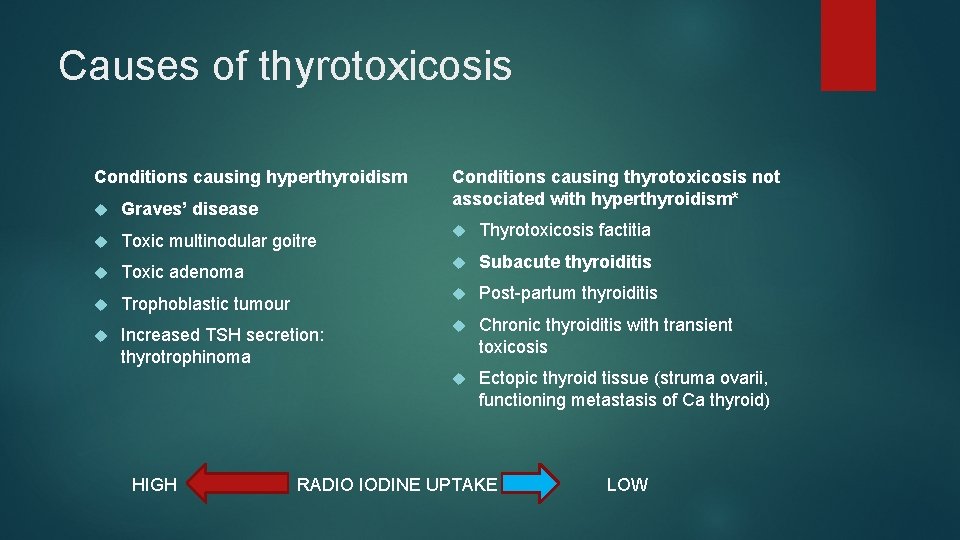
Causes of thyrotoxicosis Conditions causing hyperthyroidism Conditions causing thyrotoxicosis not associated with hyperthyroidism* Graves’ disease Toxic multinodular goitre Thyrotoxicosis factitia Toxic adenoma Subacute thyroiditis Trophoblastic tumour Post-partum thyroiditis Increased TSH secretion: thyrotrophinoma Chronic thyroiditis with transient toxicosis Ectopic thyroid tissue (struma ovarii, functioning metastasis of Ca thyroid) HIGH RADIO IODINE UPTAKE LOW
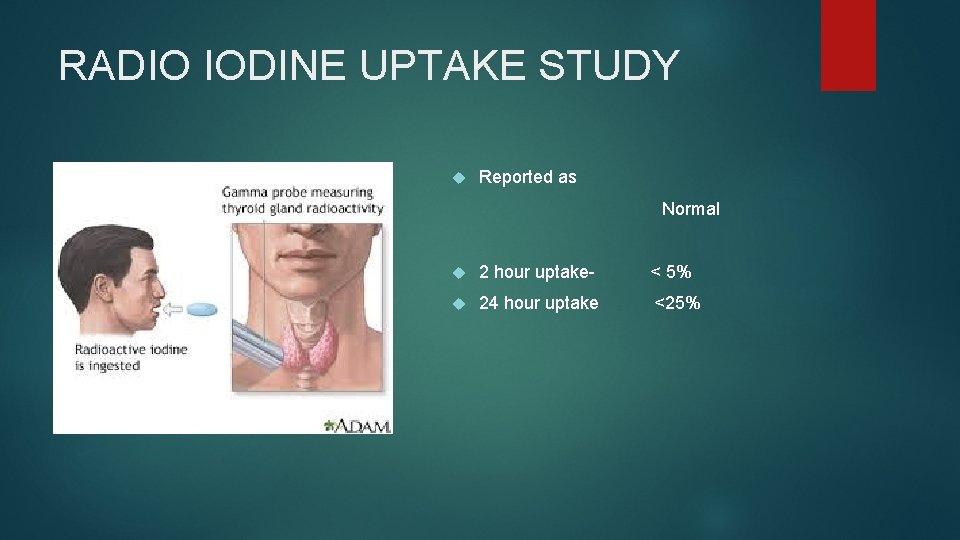
RADIO IODINE UPTAKE STUDY Reported as Normal 2 hour uptake- < 5% 24 hour uptake <25%
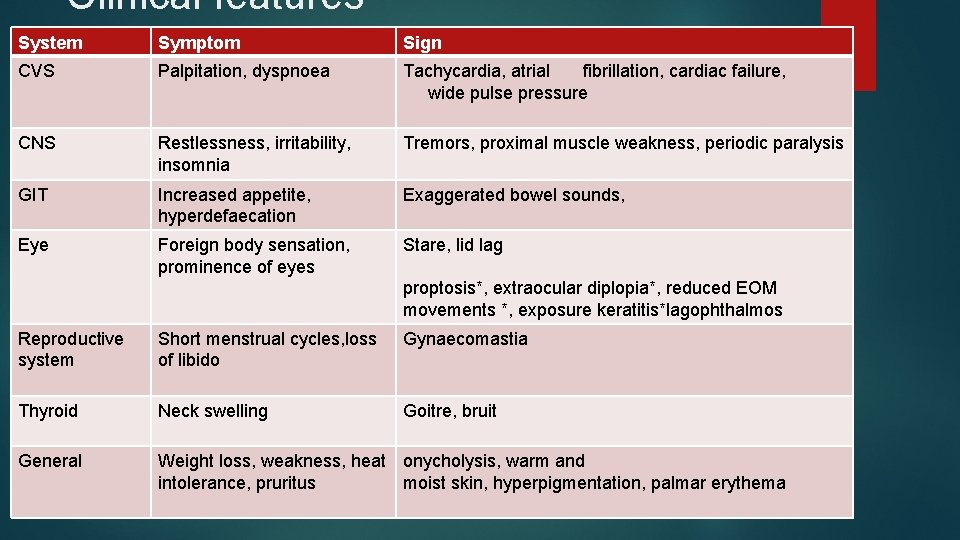
Clinical features System Symptom Sign CVS Palpitation, dyspnoea Tachycardia, atrial fibrillation, cardiac failure, wide pulse pressure CNS Restlessness, irritability, insomnia Tremors, proximal muscle weakness, periodic paralysis GIT Increased appetite, hyperdefaecation Exaggerated bowel sounds, Eye Foreign body sensation, prominence of eyes Stare, lid lag proptosis*, extraocular diplopia*, reduced EOM movements *, exposure keratitis*lagophthalmos Reproductive system Short menstrual cycles, loss of libido Gynaecomastia Thyroid Neck swelling Goitre, bruit General Weight loss, weakness, heat onycholysis, warm and intolerance, pruritus moist skin, hyperpigmentation, palmar erythema
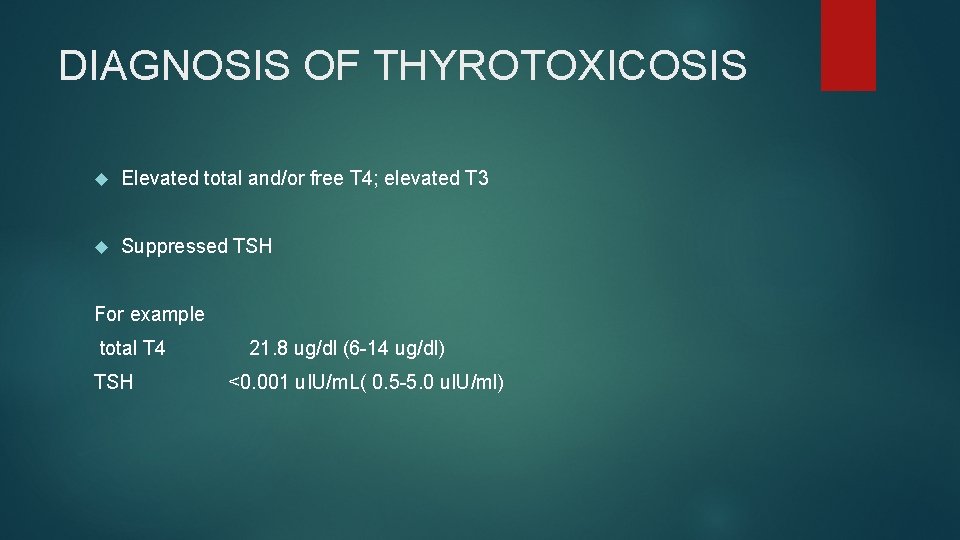
DIAGNOSIS OF THYROTOXICOSIS Elevated total and/or free T 4; elevated T 3 Suppressed TSH For example total T 4 TSH 21. 8 ug/dl (6 -14 ug/dl) <0. 001 u. IU/m. L( 0. 5 -5. 0 u. IU/ml)
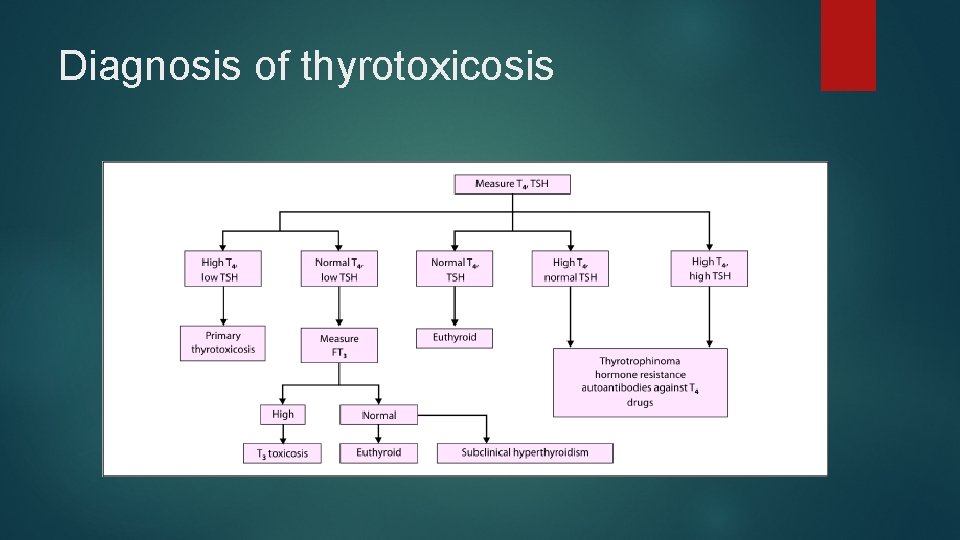
Diagnosis of thyrotoxicosis
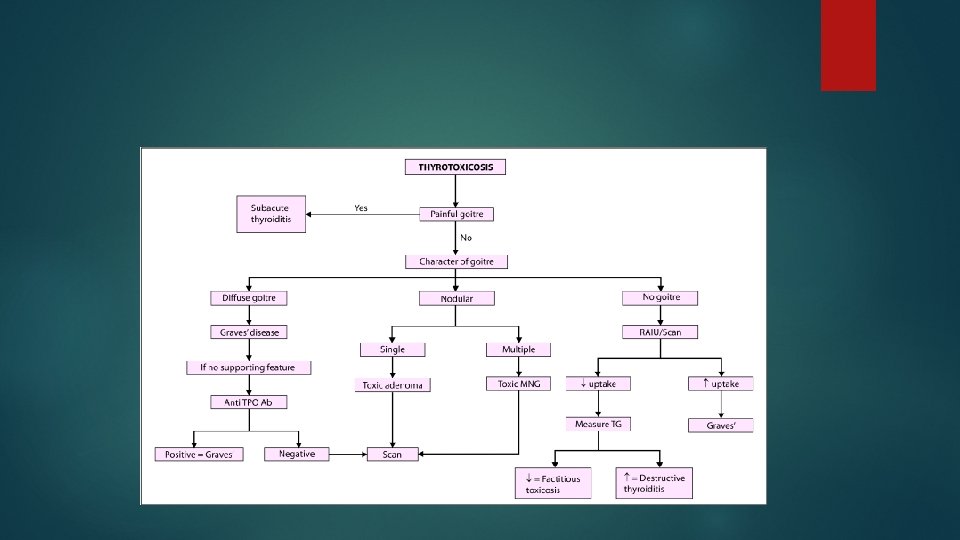
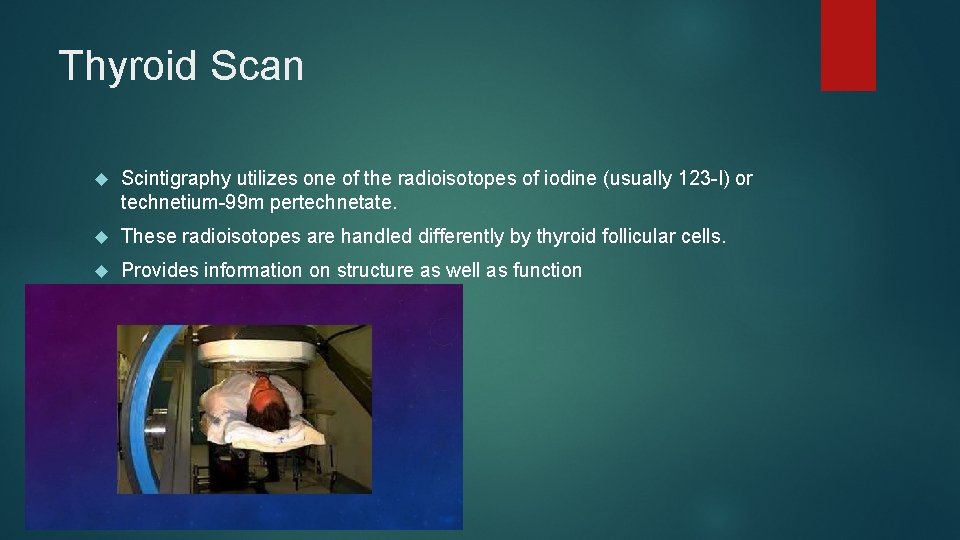
Thyroid Scan Scintigraphy utilizes one of the radioisotopes of iodine (usually 123 -I) or technetium-99 m pertechnetate. These radioisotopes are handled differently by thyroid follicular cells. Provides information on structure as well as function

Thyroid scan
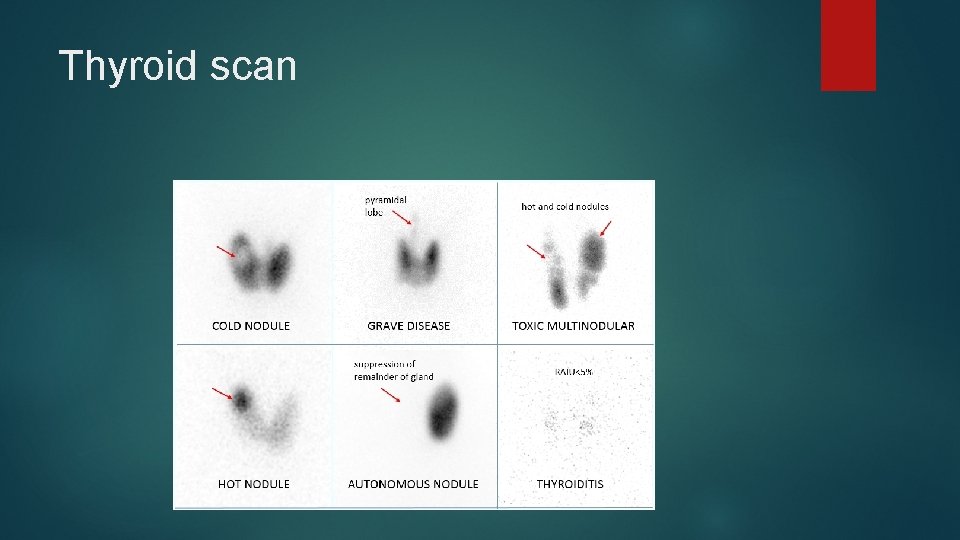
Thyroid scan
THYROIDITIS Causes of thyroiditis include Painless chronic autoimmune (Hashimoto’s) thyroiditis, postpartum thyroiditis, Riedel’s thyroiditis, amiodarone-induced thyroiditis ( Painful subacute thyroiditis, acute infectious thyroiditis radiation thyroiditis traumatic (e. g. surgery, palpation, FNAB),
Subacute Thyroiditis (de Quervain’s Thyroiditis, Viral Thyroiditis, Granulomatous Giant Cell Thyroiditis) Viral in origin. Neck pain, which may radiate to ear or mandible. Hoarseness, dysphagia and signs of thyrotoxicosis may be present. systemic features like lassitude and weakness. Thyroid gland is very tender and firm. severe cases may require glucocorticoid therapy.
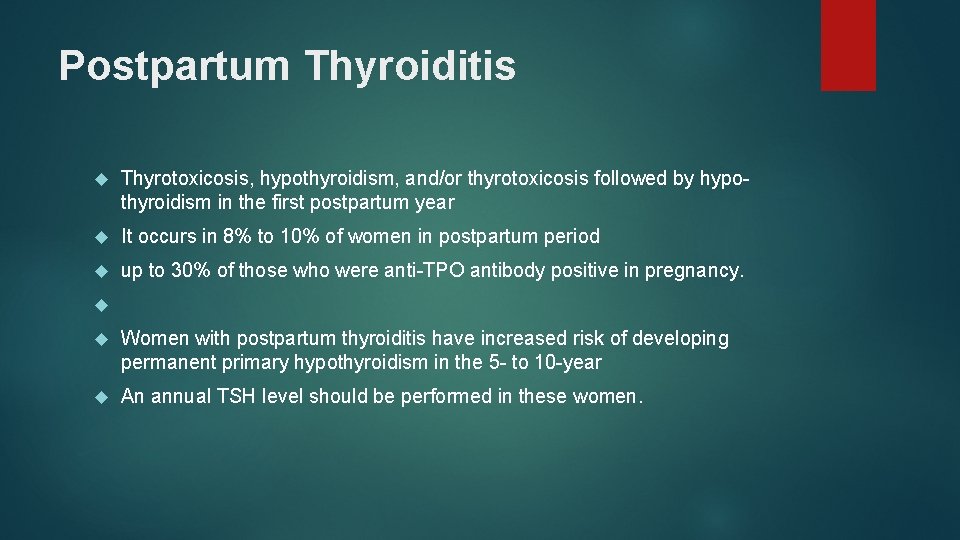
Postpartum Thyroiditis Thyrotoxicosis, hypothyroidism, and/or thyrotoxicosis followed by hypothyroidism in the first postpartum year It occurs in 8% to 10% of women in postpartum period up to 30% of those who were anti-TPO antibody positive in pregnancy. Women with postpartum thyroiditis have increased risk of developing permanent primary hypothyroidism in the 5 - to 10 -year An annual TSH level should be performed in these women.
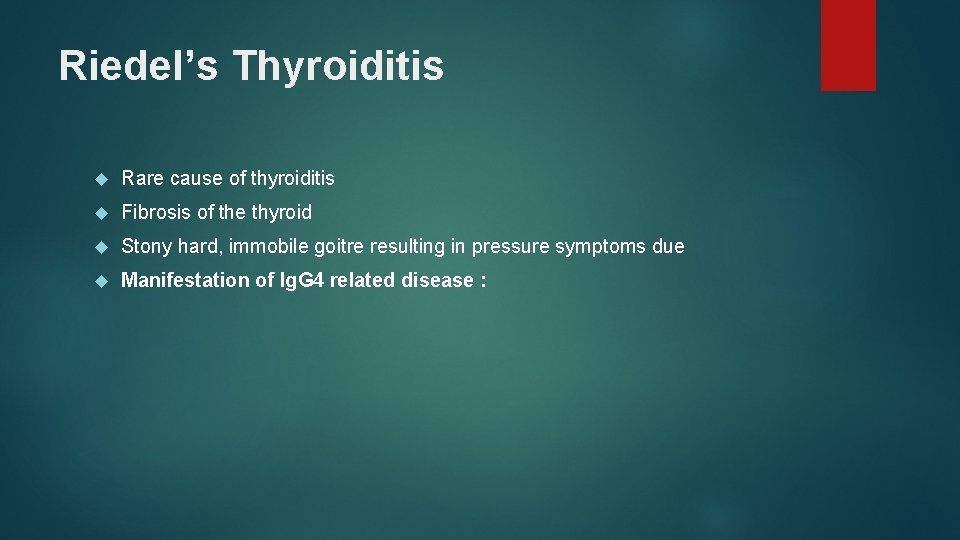
Riedel’s Thyroiditis Rare cause of thyroiditis Fibrosis of the thyroid Stony hard, immobile goitre resulting in pressure symptoms due Manifestation of Ig. G 4 related disease :
- Slides: 15