
Thyroid Pathology Kristine Krafts M D Introduction Hyperthyroidism




- Slides: 74
Thyroid Pathology Kristine Krafts, M. D.
Introduction Hyperthyroidism Hypothyroidism Non-neoplastic diseases Neoplastic diseases
Introduction
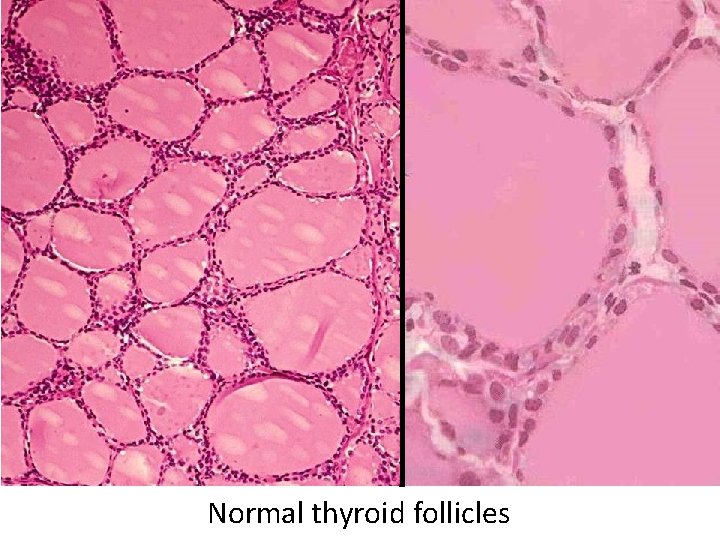
Normal thyroid follicles
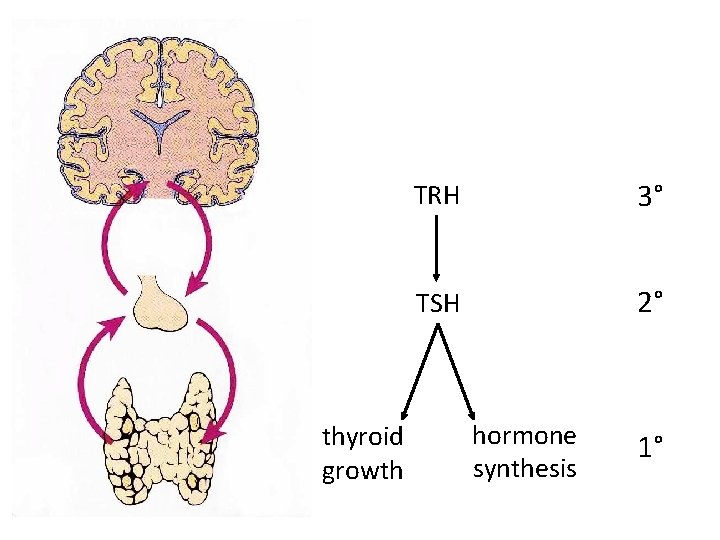
thyroid growth TRH 3° TSH 2° hormone synthesis 1°
Lab Tests
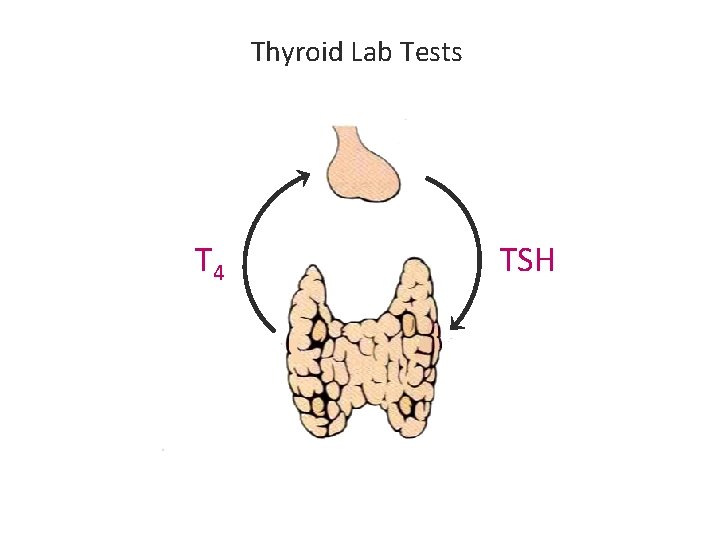
Thyroid Lab Tests T 4 TSH
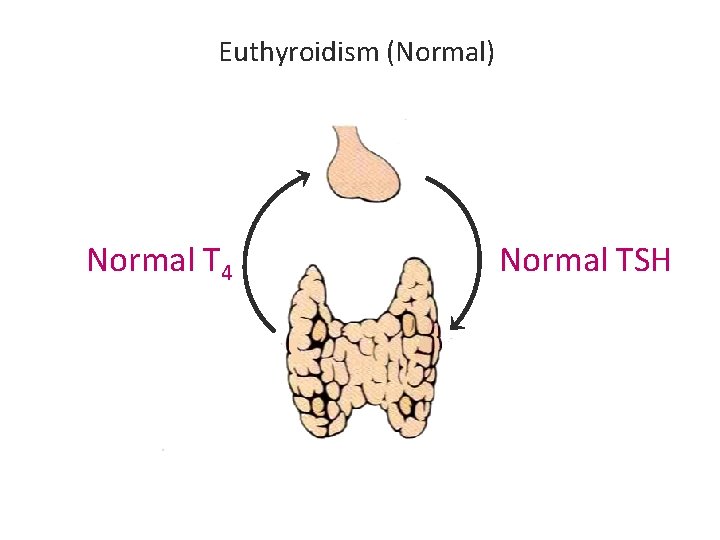
Euthyroidism (Normal) Normal T 4 Normal TSH
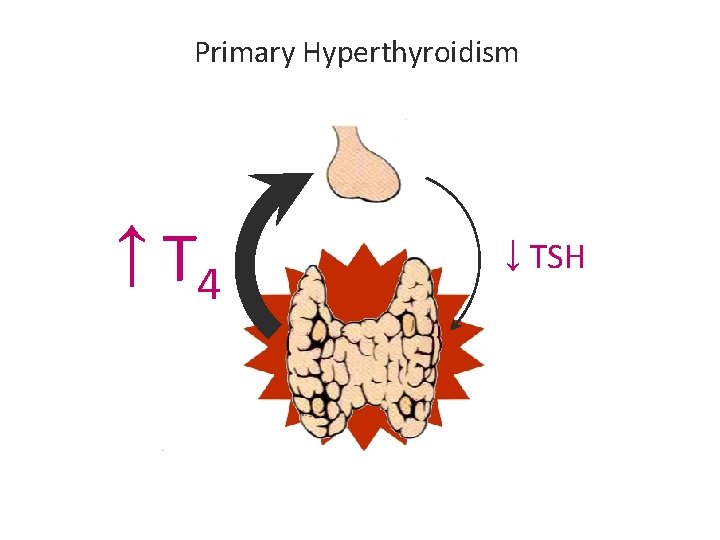
Primary Hyperthyroidism ↑ T 4 ↓ TSH
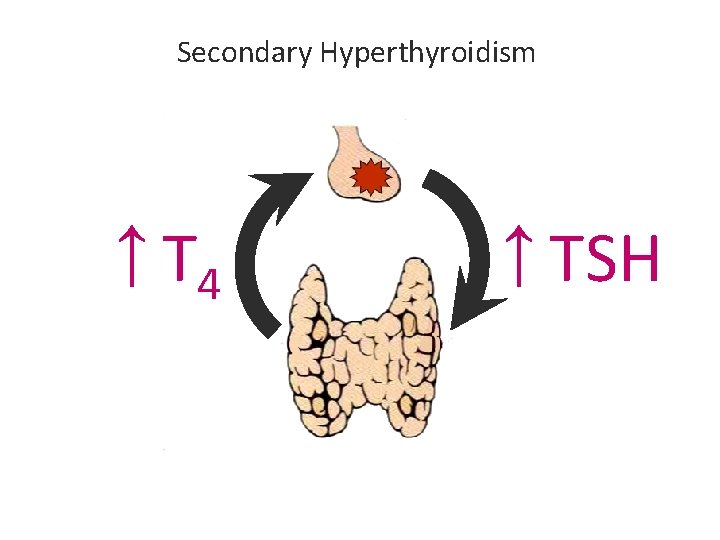
Secondary Hyperthyroidism ↑ T 4 ↑ TSH
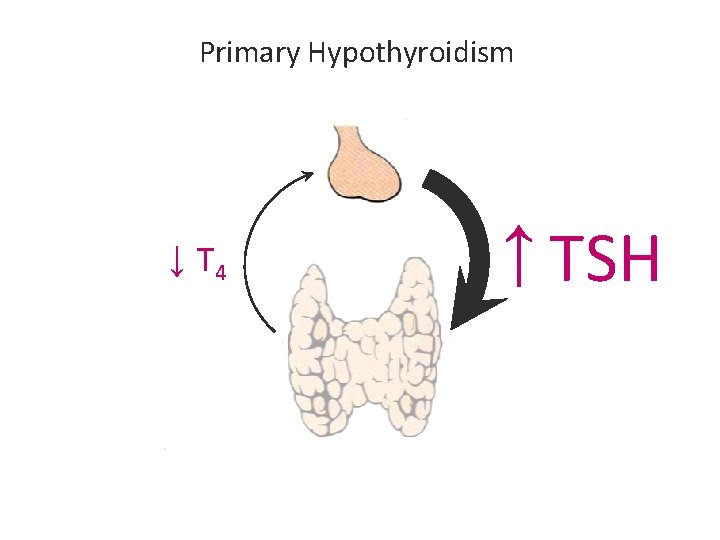
Primary Hypothyroidism ↓ T 4 ↑ TSH
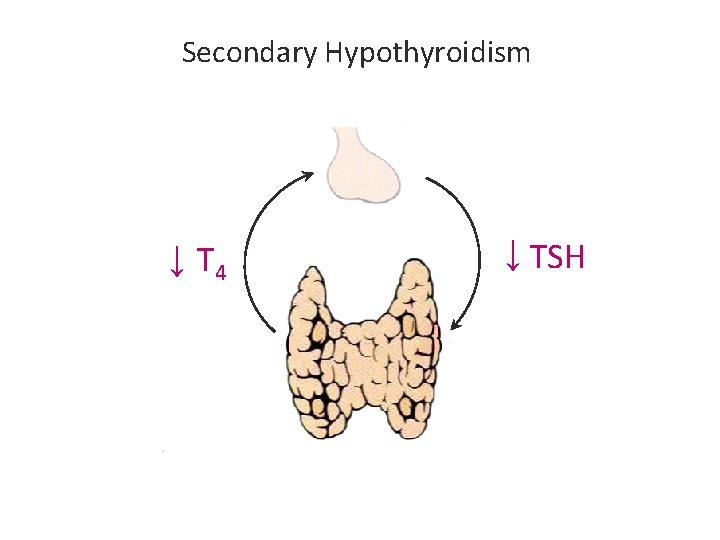
Secondary Hypothyroidism ↓ T 4 ↓ TSH
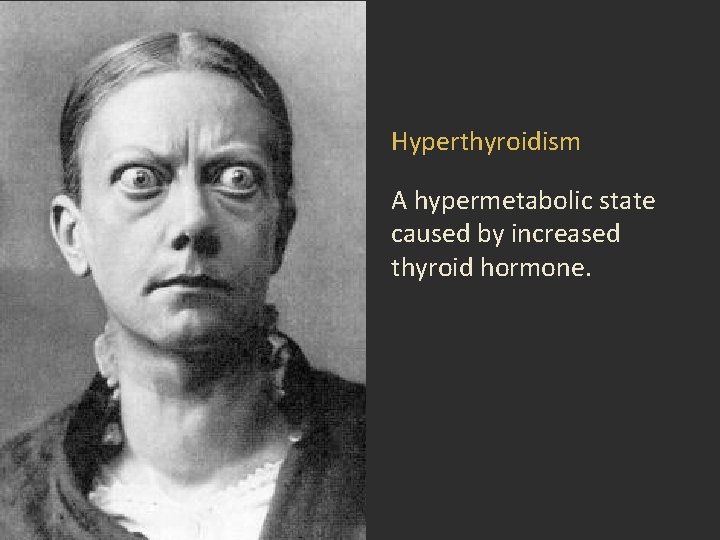
Hyperthyroidism A hypermetabolic state caused by increased thyroid hormone.
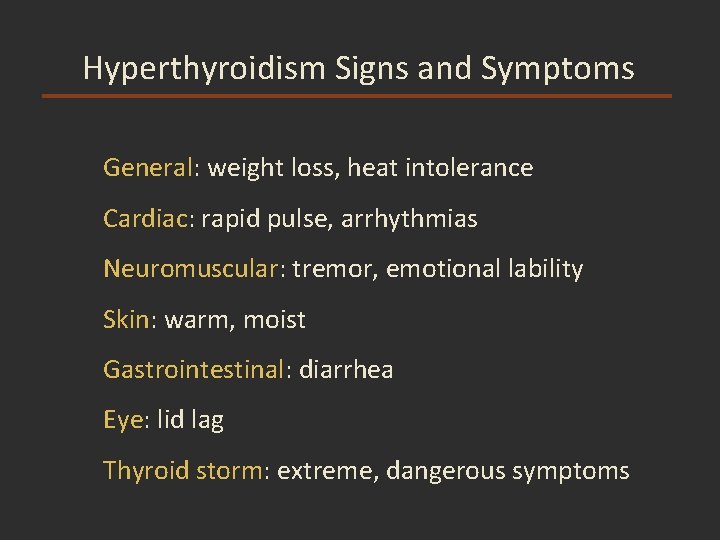
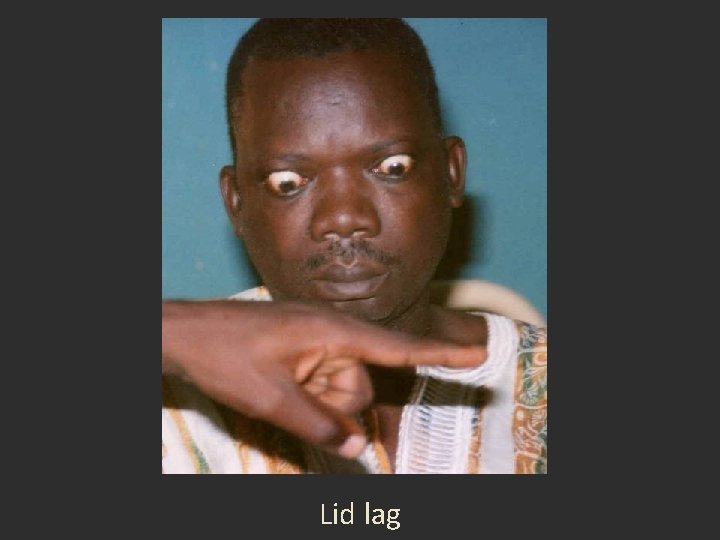
Hyperthyroidism Signs and Symptoms General: weight loss, heat intolerance Cardiac: rapid pulse, arrhythmias Neuromuscular: tremor, emotional lability Skin: warm, moist Gastrointestinal: diarrhea Eye: lid lag Thyroid storm: extreme, dangerous symptoms
Lid lag
Introduction Hyperthyroidism Hypothyroidism
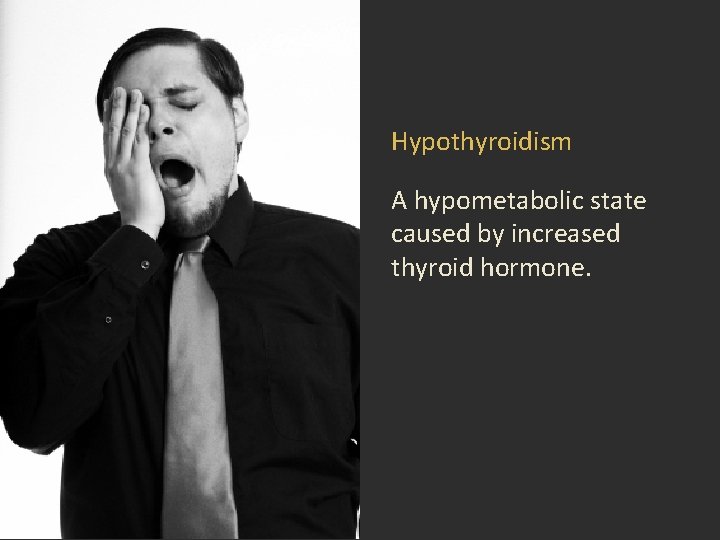
Hypothyroidism A hypometabolic state caused by increased thyroid hormone.
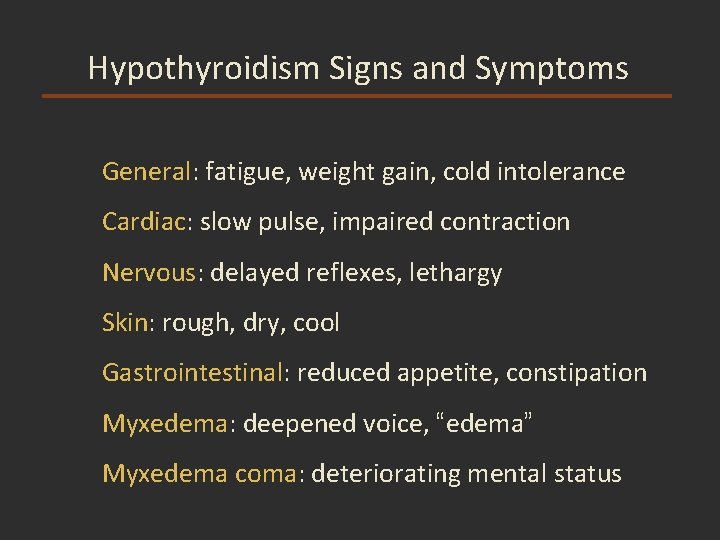
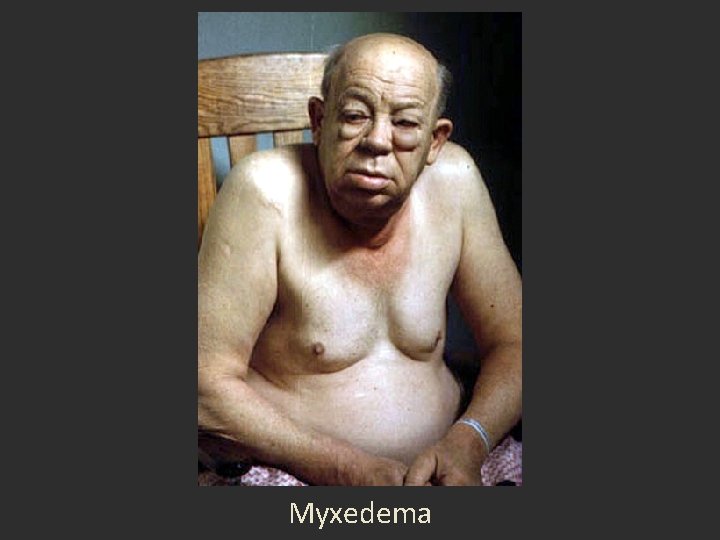
Hypothyroidism Signs and Symptoms General: fatigue, weight gain, cold intolerance Cardiac: slow pulse, impaired contraction Nervous: delayed reflexes, lethargy Skin: rough, dry, cool Gastrointestinal: reduced appetite, constipation Myxedema: deepened voice, “edema” Myxedema coma: deteriorating mental status
Myxedema
Introduction Hyperthyroidism Hypothyroidism Non-neoplastic diseases
Introduction Hyperthyroidism Hypothyroidism Non-neoplastic diseases • Thyroiditis • Graves disease • Goiter
Introduction Hyperthyroidism Hypothyroidism Non-neoplastic diseases • Thyroiditis
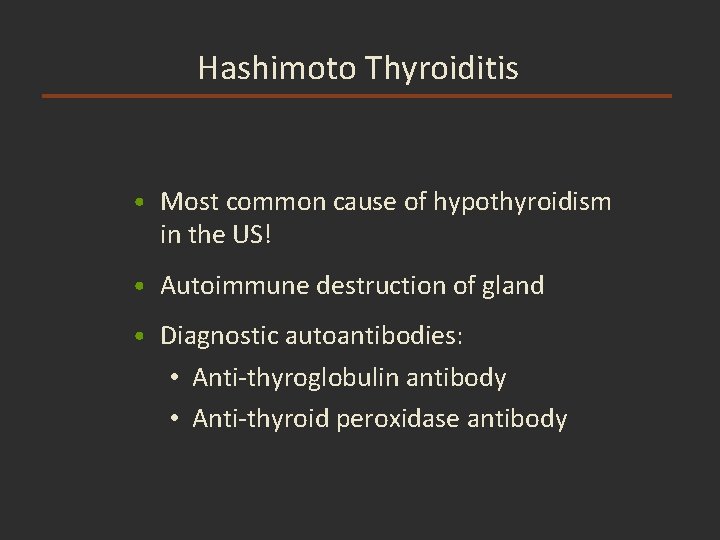
Hashimoto Thyroiditis • Most common cause of hypothyroidism in the US! • Autoimmune destruction of gland • Diagnostic autoantibodies: • Anti-thyroglobulin antibody • Anti-thyroid peroxidase antibody
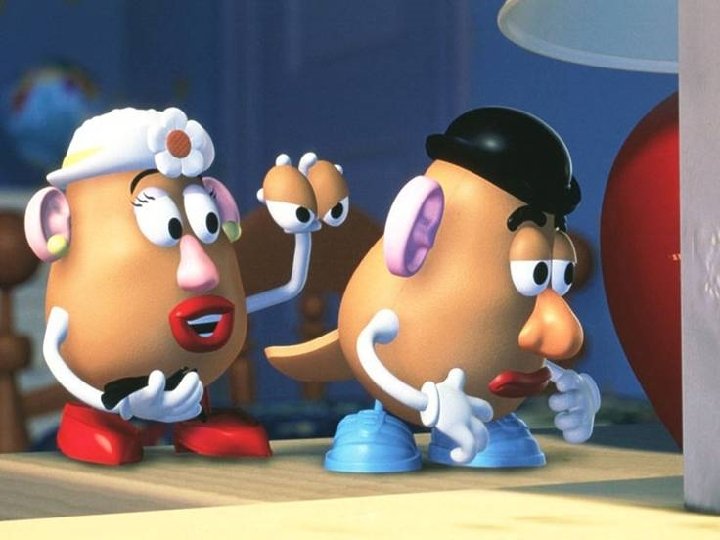
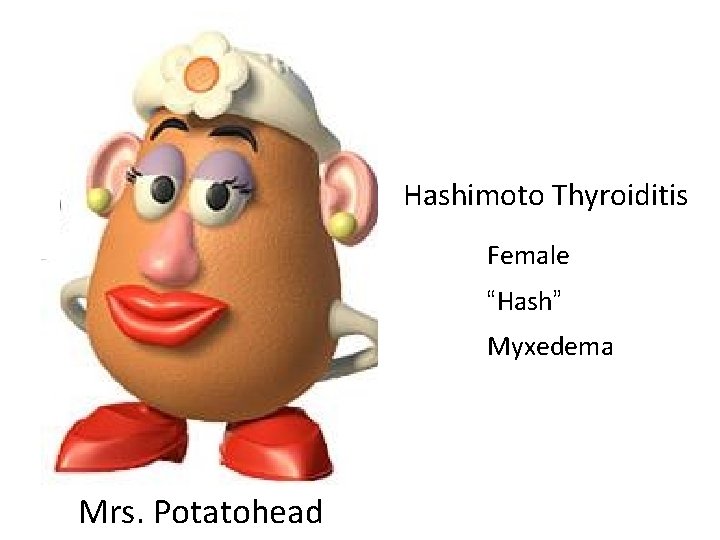
Hashimoto Thyroiditis Female “Hash” Myxedema Mrs. Potatohead
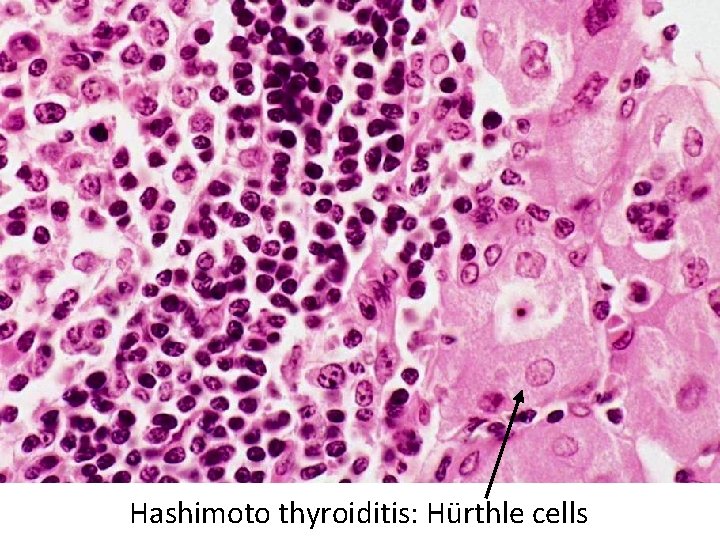
Hashimoto thyroiditis: Hürthle cells
De. Quervain Thyroiditis • Big, sore thyroid • Recent URI • Immune cross-reaction with thyroid follicles • Self-limiting
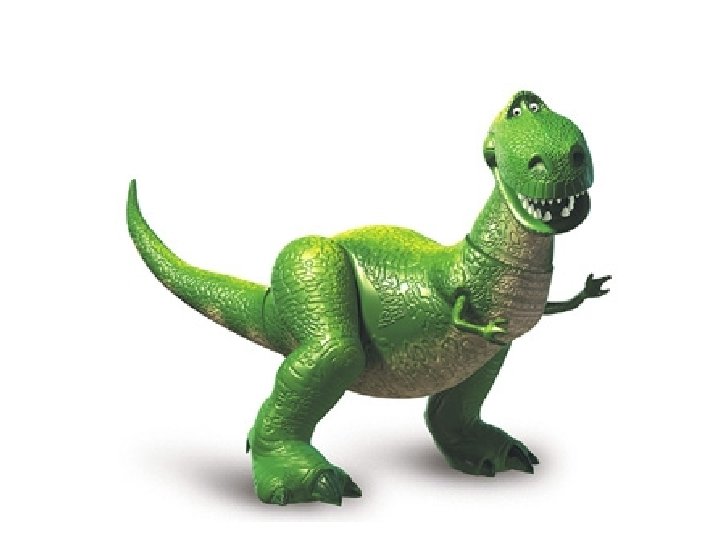
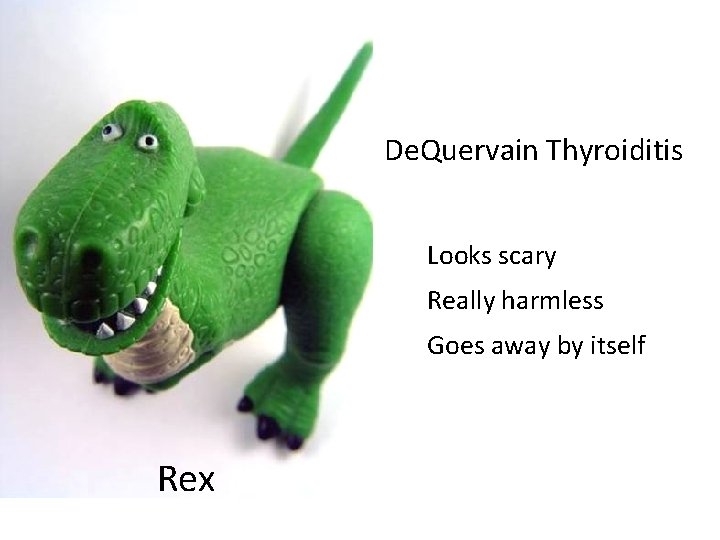
De. Quervain Thyroiditis Looks scary Really harmless Goes away by itself Rex
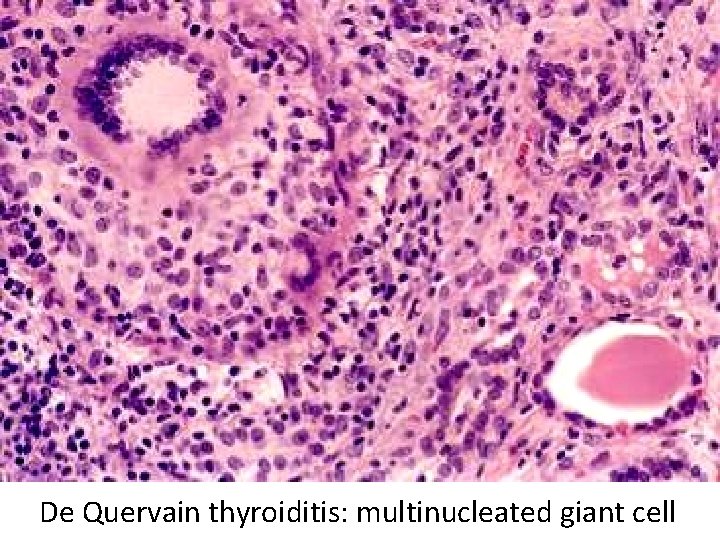
De Quervain thyroiditis: multinucleated giant cell
Silent Thyroiditis • Post-partum or middle age. • Painless, slightly enlarged thyroid.
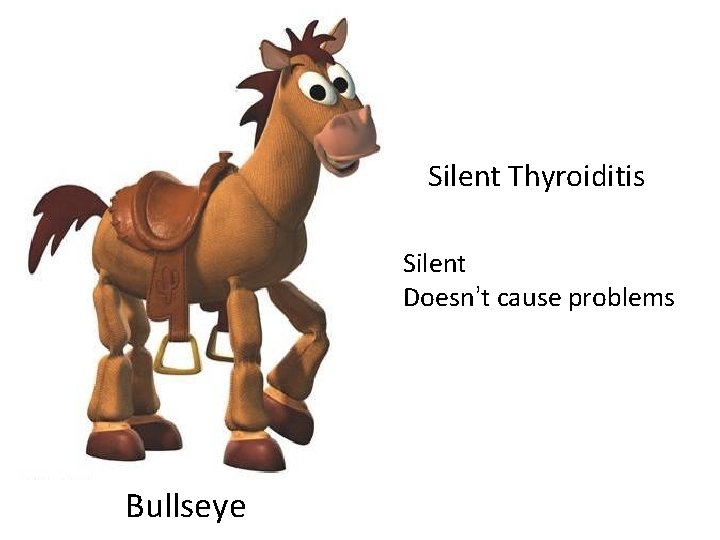
Silent Thyroiditis Silent Doesn’t cause problems Bullseye
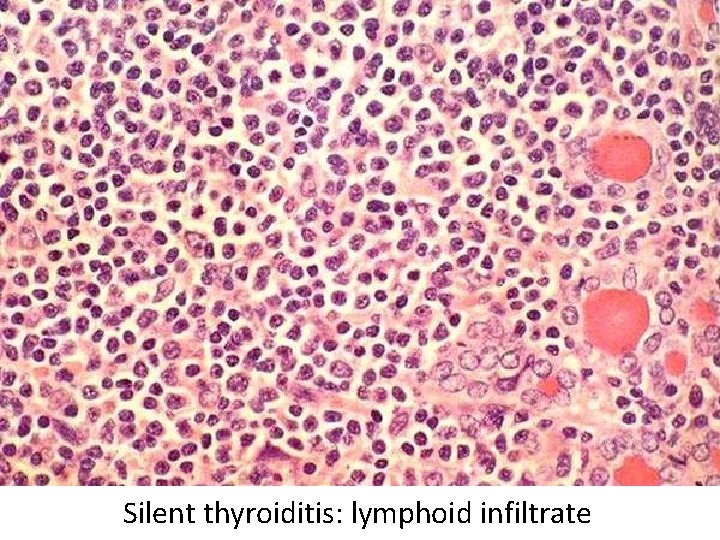
Silent thyroiditis: lymphoid infiltrate
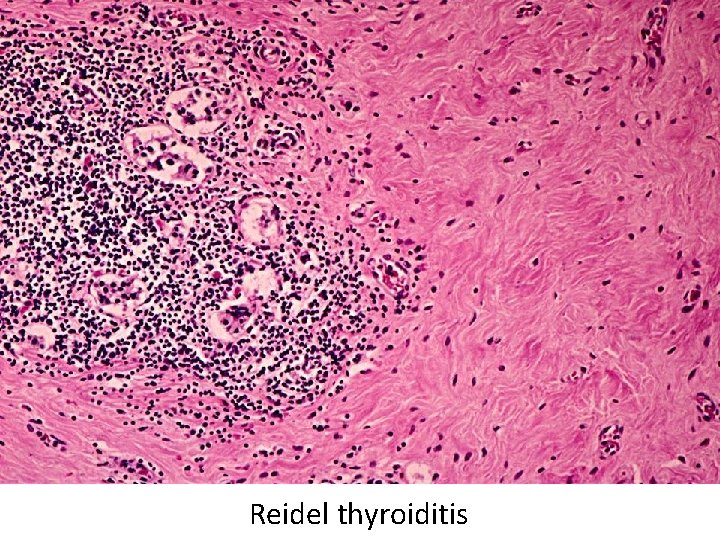
Reidel Thyroiditis • Rare! • Rock-hard neck mass • Hypothyroidism • Tracheal compression
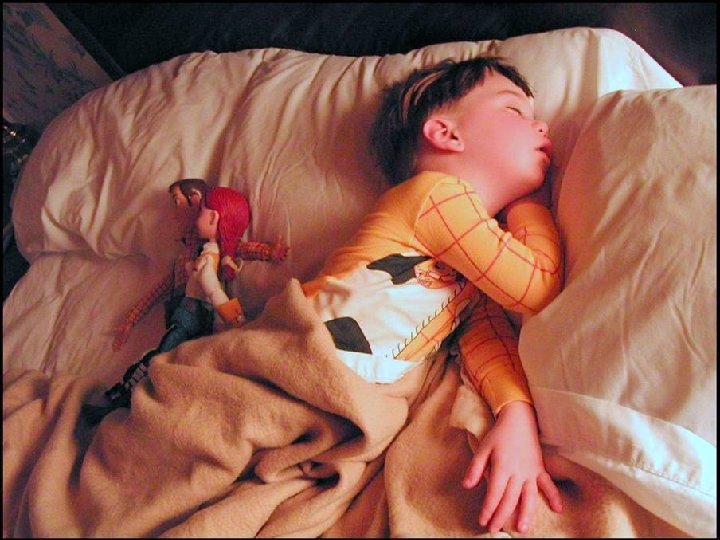
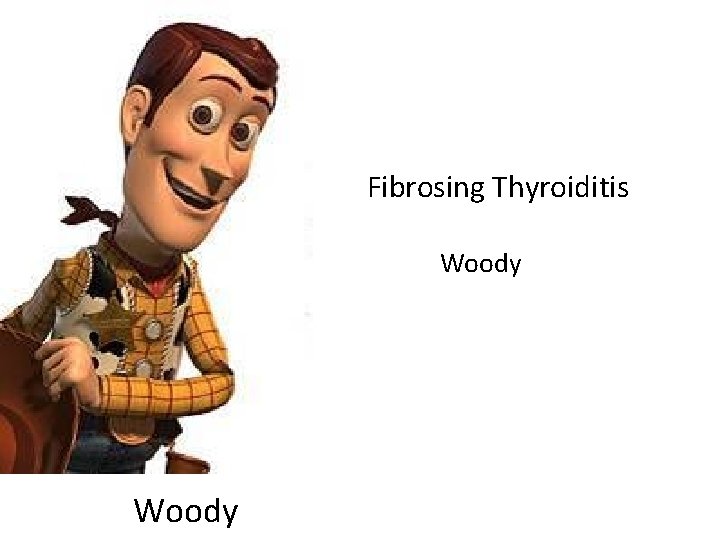
Fibrosing Thyroiditis Woody
Reidel thyroiditis
Introduction Hyperthyroidism Hypothyroidism Non-neoplastic diseases • Thyroiditis • Graves disease
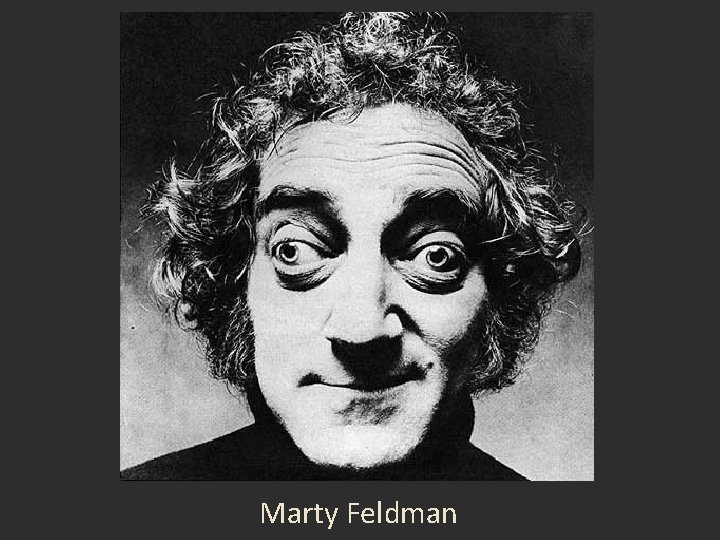
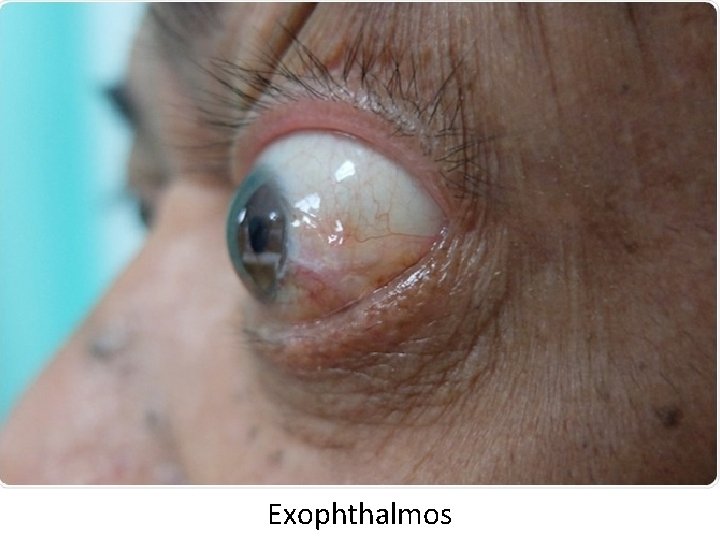
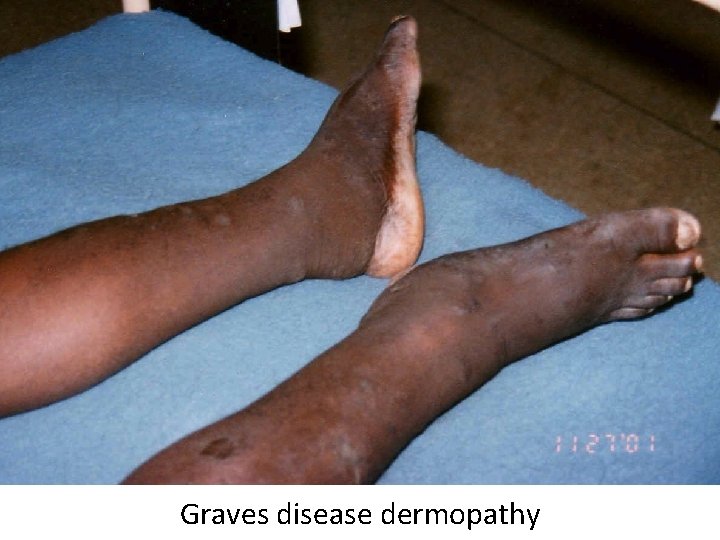
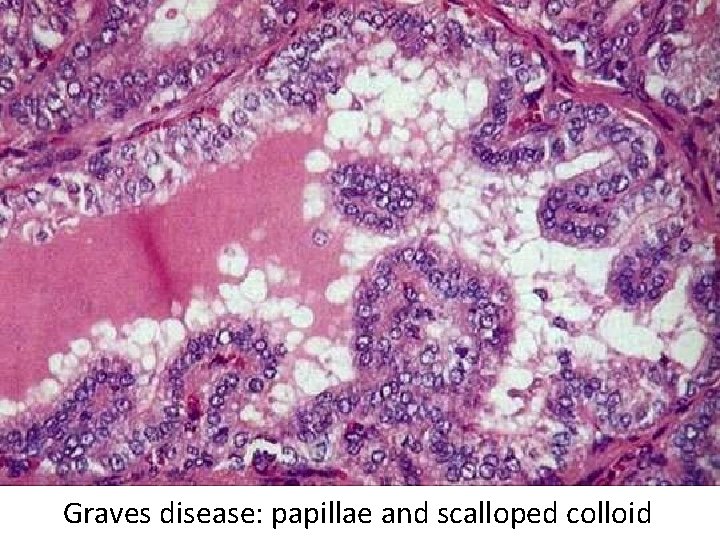
Graves Disease • Most common cause of hyperthyroidism in the US! • Classic triad: hyperthyroidism, ophthalmopathy, dermopathy • Autoimmune stimulation of thyroid • Diagnostic autoantibody: anti-TSH receptor antibody (stimulates growth)
Marty Feldman
Exophthalmos
Graves disease dermopathy
Graves disease: papillae and scalloped colloid
Introduction Hyperthyroidism Hypothyroidism Non-neoplastic diseases • Thyroiditis • Graves disease • Goiter
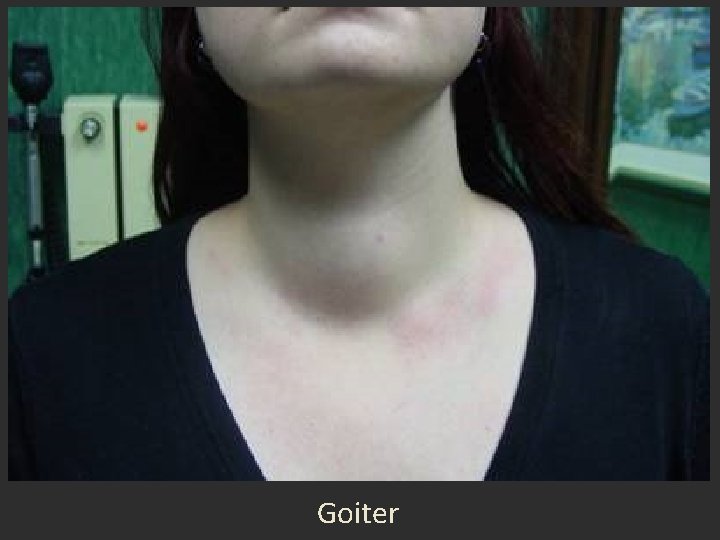
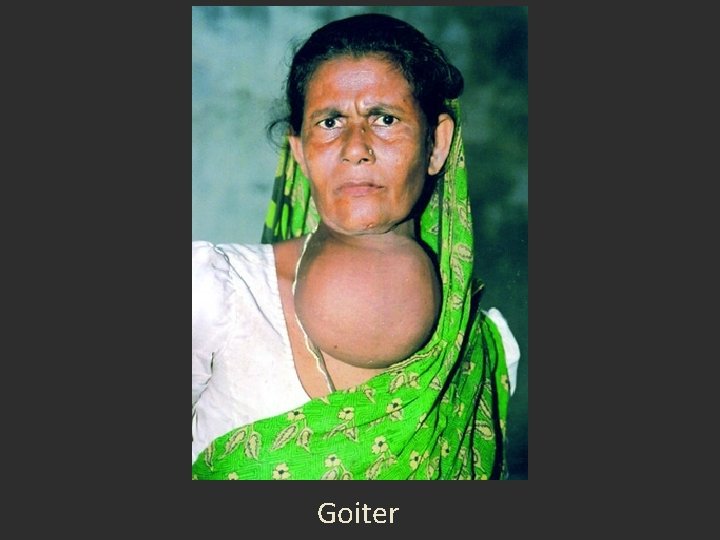
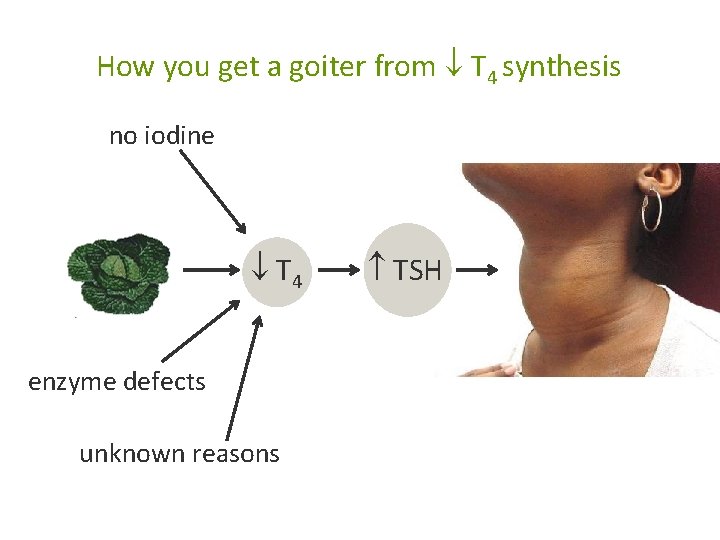
Goiter • “Goiter” = big thyroid gland • You can see a goiter in Graves disease and in some cases of thyroiditis. • You can also see a goiter in patients who aren’t making enough T 4.
Goiter
Goiter
How you get a goiter from T 4 synthesis no iodine T 4 enzyme defects unknown reasons TSH
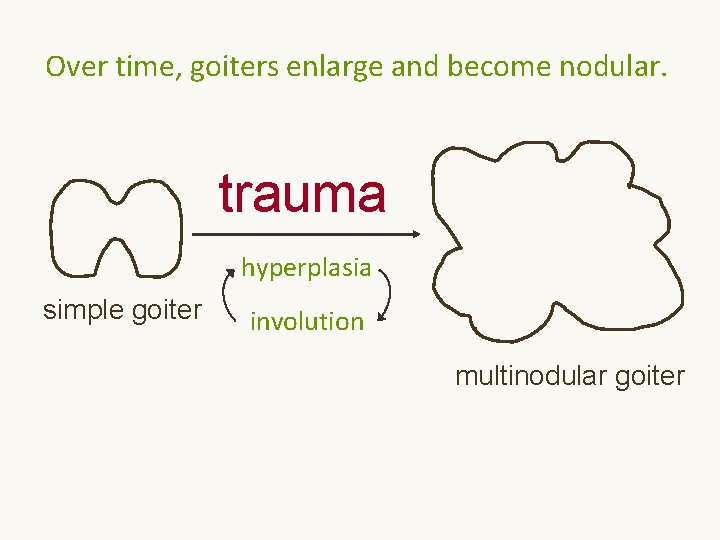
Over time, goiters enlarge and become nodular. trauma hyperplasia simple goiter involution multinodular goiter
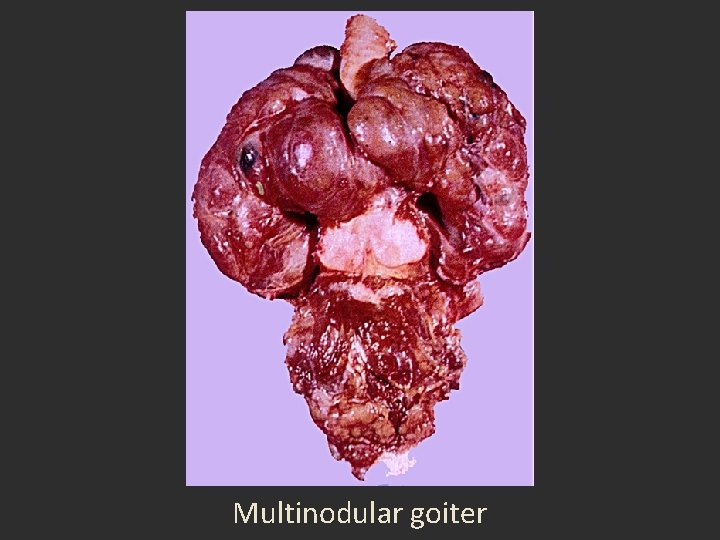
Multinodular goiter
Introduction Hyperthyroidism Hypothyroidism Non-neoplastic diseases Neoplastic diseases • Benign • Malignant
Introduction Hyperthyroidism Hypothyroidism Non-neoplastic diseases Neoplastic diseases • Benign
Thyroid neoplasms Most neoplasms present as nodules. • Nodules are common! • Most are benign. • Thyroid carcinoma is uncommon.
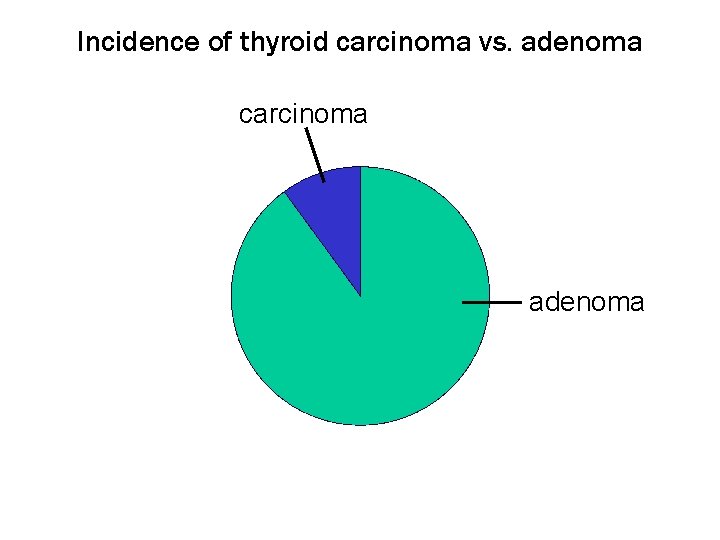
Incidence of thyroid carcinoma vs. adenoma carcinoma adenoma
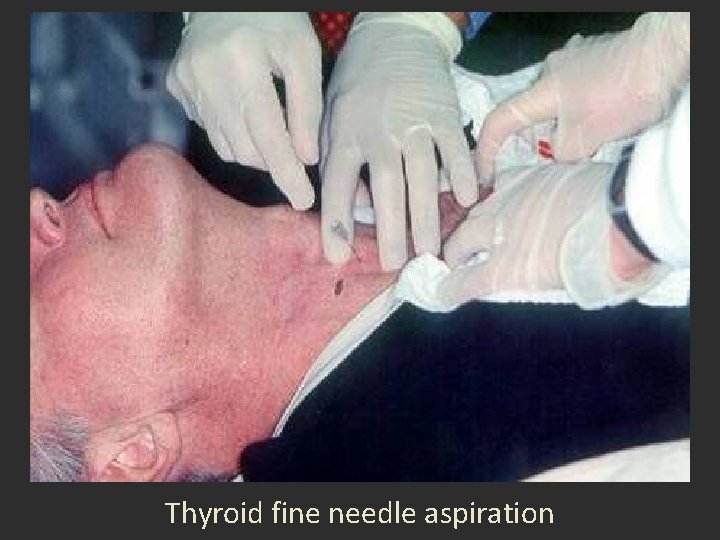
Thyroid fine needle aspiration
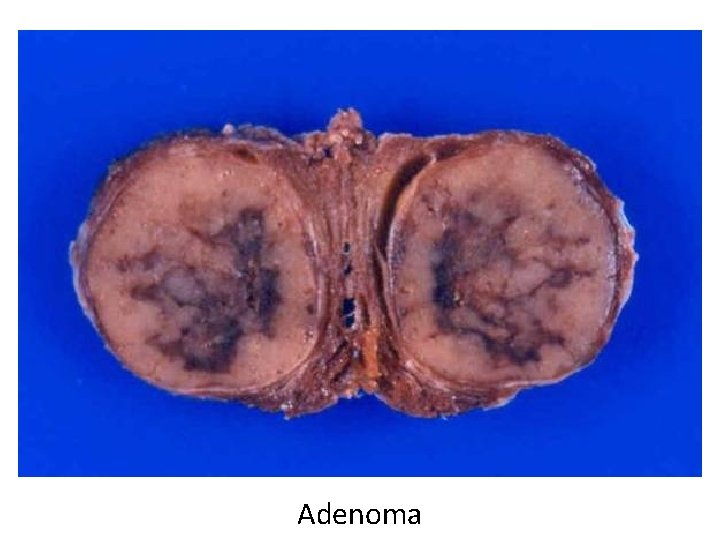
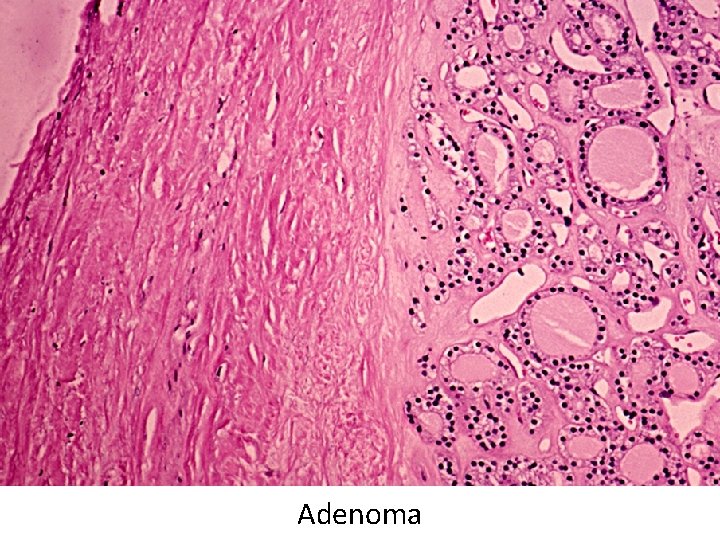
Thyroid adenoma • Common! • Most patients are euthyroid • Some are hyperthyroid
Adenoma
Adenoma
Thyroid adenoma Treatment: take it out! Q. Why, if it’s benign? A. Because thyroid adenomas can look exactly like follicular thyroid carcinoma!
Introduction Hyperthyroidism Hypothyroidism Non-neoplastic diseases Neoplastic diseases • Benign • Malignant
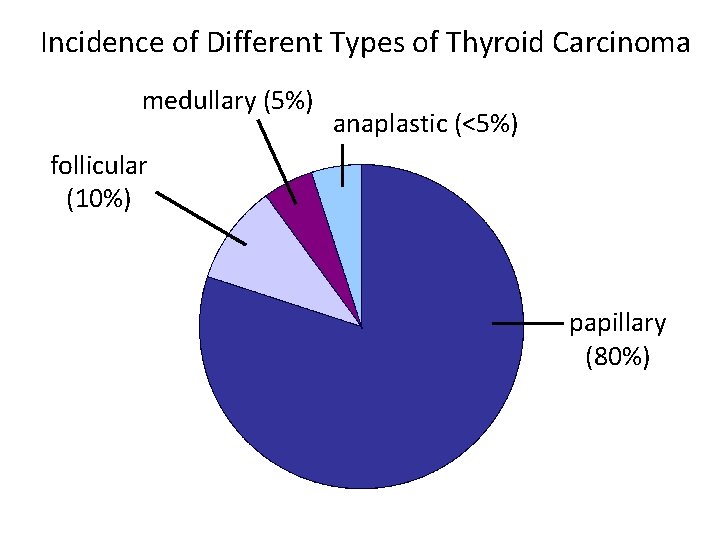
Incidence of Different Types of Thyroid Carcinoma medullary (5%) anaplastic (<5%) follicular (10%) papillary (80%)
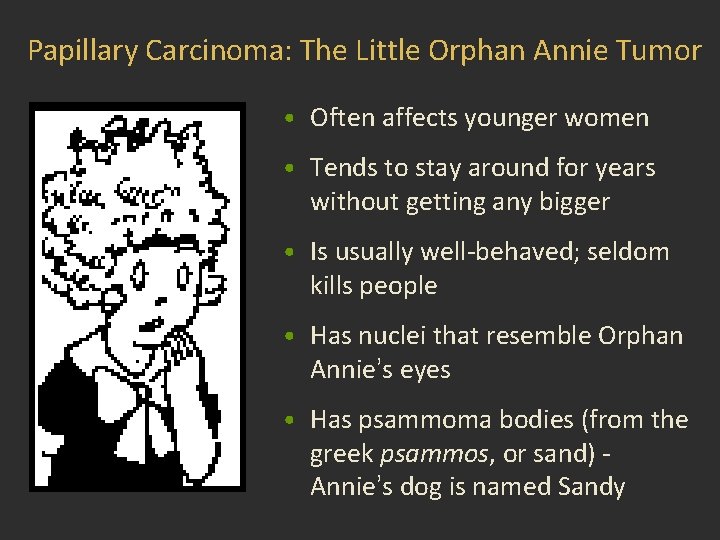
Papillary Thyroid Carcinoma • Most common thyroid malignancy • Excellent prognosis (>95% 10 y survival) • “Orphan Annie” tumor
Papillary thyroid carcinoma
Papillary carcinoma: Orphan Annie nuclei
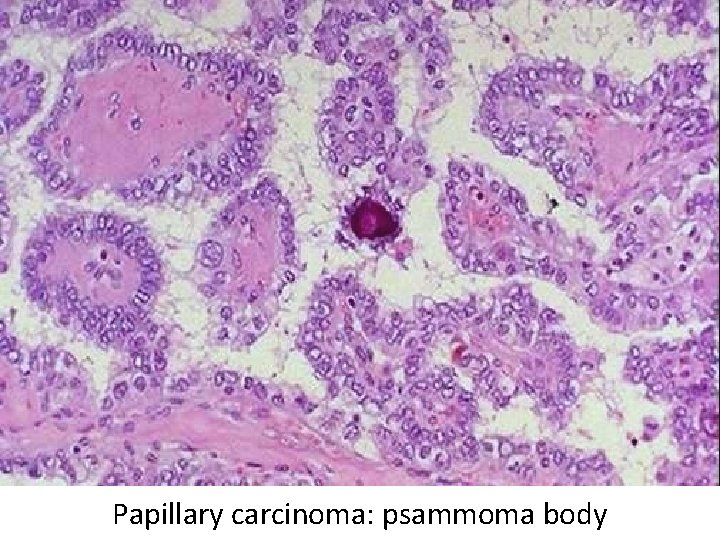
Papillary carcinoma: psammoma body
Papillary Carcinoma: The Little Orphan Annie Tumor • Often affects younger women • Tends to stay around for years without getting any bigger • Is usually well-behaved; seldom kills people • Has nuclei that resemble Orphan Annie’s eyes • Has psammoma bodies (from the greek psammos, or sand) Annie’s dog is named Sandy
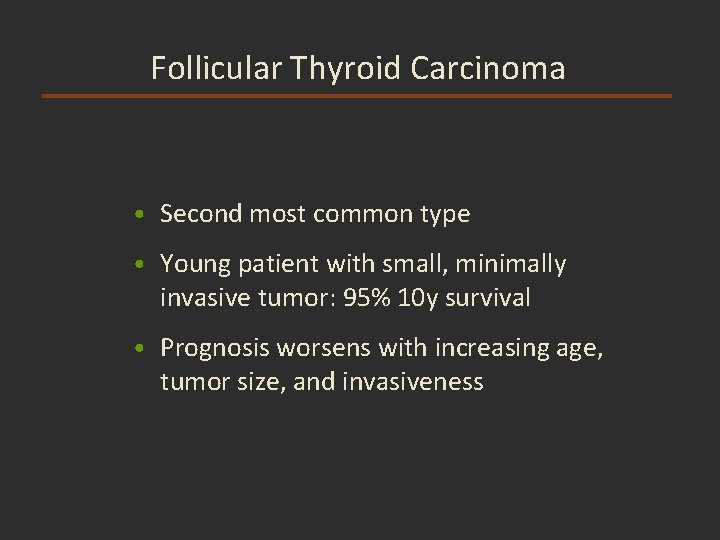
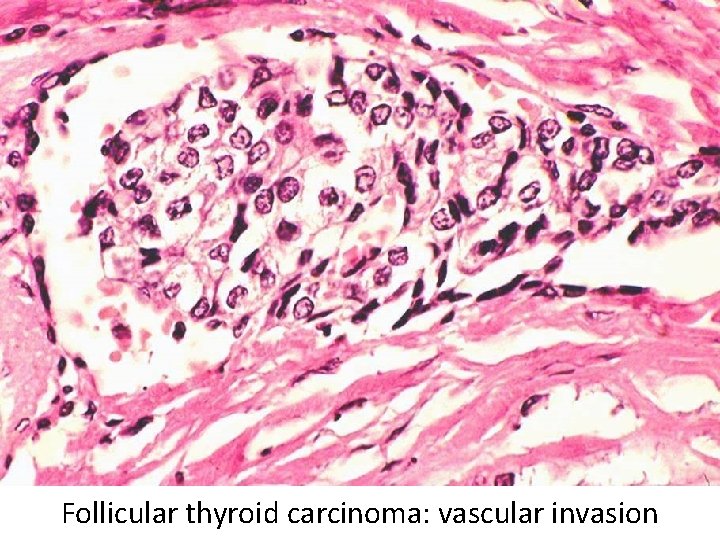
Follicular Thyroid Carcinoma • Second most common type • Young patient with small, minimally invasive tumor: 95% 10 y survival • Prognosis worsens with increasing age, tumor size, and invasiveness
Follicular thyroid carcinoma: vascular invasion
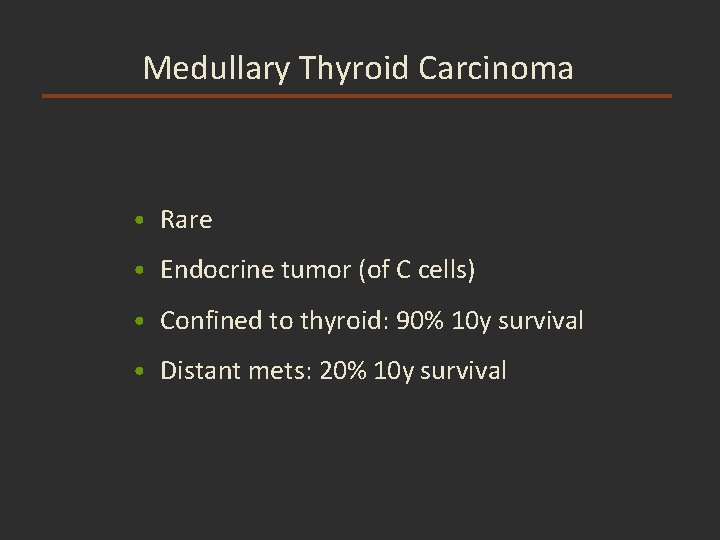
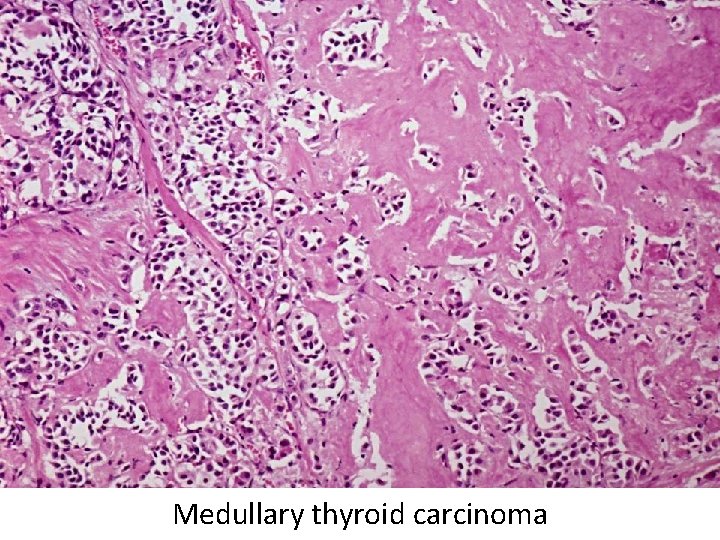
Medullary Thyroid Carcinoma • Rare • Endocrine tumor (of C cells) • Confined to thyroid: 90% 10 y survival • Distant mets: 20% 10 y survival
Medullary thyroid carcinoma
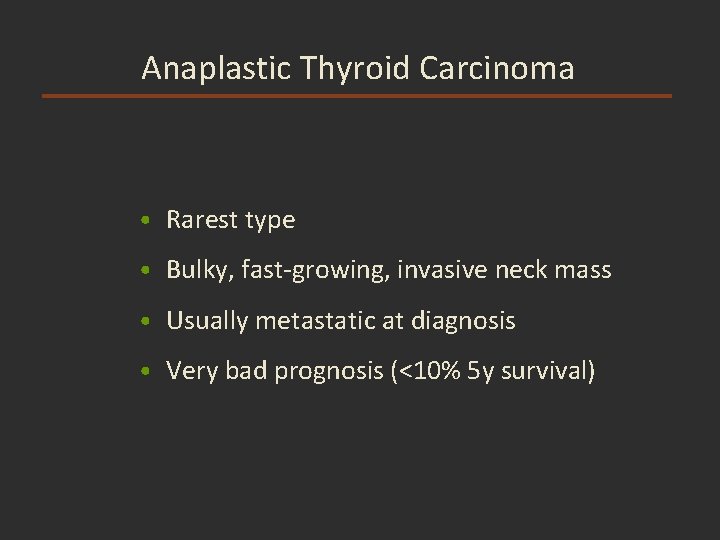
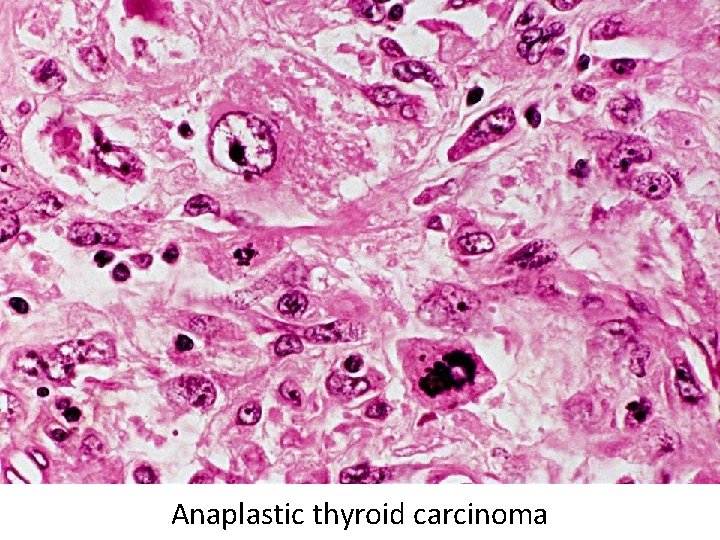
Anaplastic Thyroid Carcinoma • Rarest type • Bulky, fast-growing, invasive neck mass • Usually metastatic at diagnosis • Very bad prognosis (<10% 5 y survival)
Anaplastic thyroid carcinoma