
Thyroid Gland Two lateral lobes connected by median
Thyroid Gland • Two lateral lobes connected by median mass called isthmus • Composed of follicles that produce glycoprotein thyroglobulin • Parafollicular cells produce the hormone calcitonin
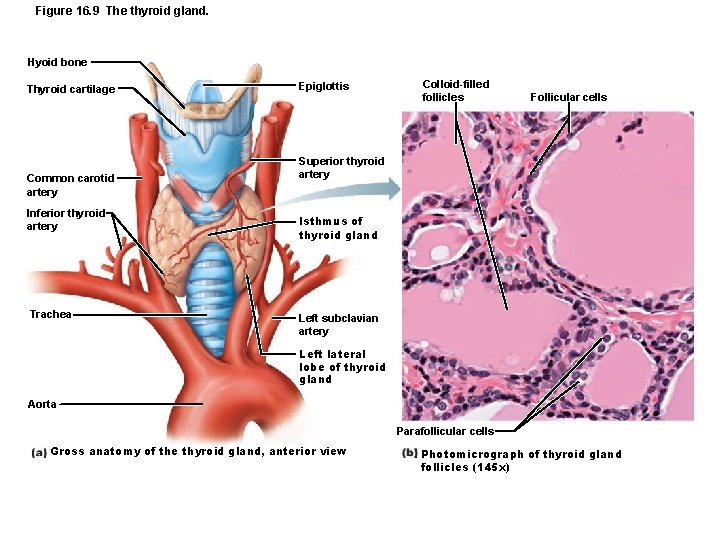
Figure 16. 9 The thyroid gland. Hyoid bone Thyroid cartilage Common carotid artery Inferior thyroid artery Trachea Epiglottis Colloid-filled follicles Follicular cells Superior thyroid artery Isthmus of thyroid gland Left subclavian artery Left lateral lobe of thyroid gland Aorta Parafollicular cells Gross anatomy of the thyroid gland, anterior view Photomicrograph of thyroid gland follicles (145 x)
Synthesis of Thyroid Hormone • Thyroglobulin synthesized and discharged into follicle lumen • Iodides (I–) actively taken into cell and released into lumen • Iodine attaches to tyrosine, to form T 3 and T 4 – T 4 (thyroxine); has 2 tyrosine molecules + 4 bound iodine atoms – T 3 (triiodothyronine); has 2 tyrosines + 3 bound iodine atoms
Thyroid Hormone • Major metabolic hormone • Increases metabolic rate and heat production (calorigenic effect) • Regulation of tissue growth and development – Development of skeletal and nervous systems – Reproductive capabilities • Maintenance of blood pressure
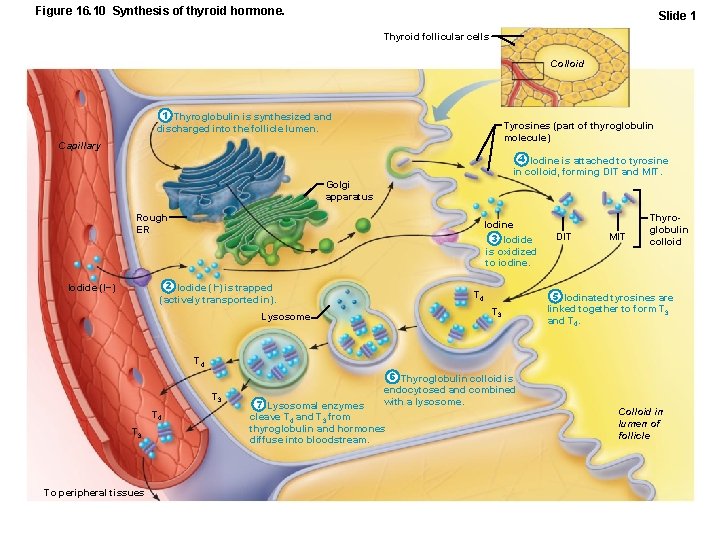
Figure 16. 10 Synthesis of thyroid hormone. Slide 1 Thyroid follicular cells Colloid 1 Thyroglobulin is synthesized and discharged into the follicle lumen. Tyrosines (part of thyroglobulin molecule) Capillary 4 Iodine is attached to tyrosine in colloid, forming DIT and MIT. Golgi apparatus Rough ER Iodine 3 Iodide is oxidized to iodine. 2 Iodide (I–) is trapped (actively transported in). Iodide (I−) T 4 T 3 Lysosome DIT MIT Thyroglobulin colloid 5 Iodinated tyrosines are linked together to form T 3 and T 4 T 3 To peripheral tissues 6 Thyroglobulin colloid is endocytosed and combined with a lysosome. 7 Lysosomal enzymes cleave T 4 and T 3 from thyroglobulin and hormones diffuse into bloodstream. Colloid in lumen of follicle
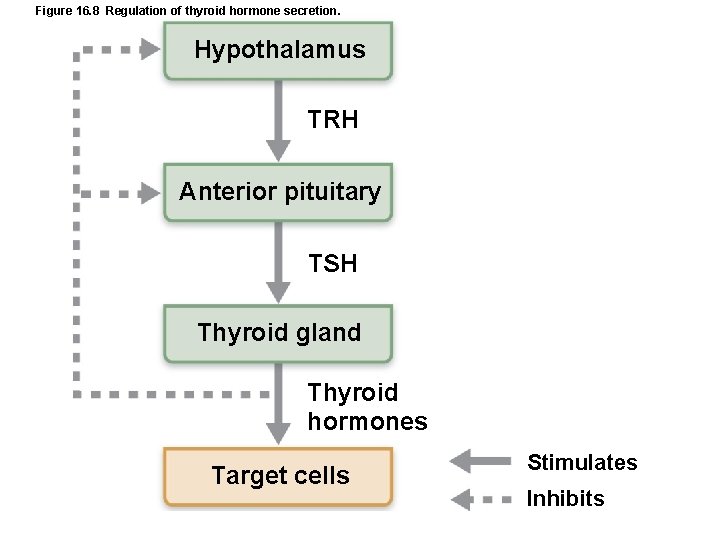
Figure 16. 8 Regulation of thyroid hormone secretion. Hypothalamus TRH Anterior pituitary TSH Thyroid gland Thyroid hormones Target cells Stimulates Inhibits
Homeostatic Imbalances of TH • Hyposecretion in adults—myxedema; goiter if due to lack of iodine • Hyposecretion in infants—cretinism • Hypersecretion—Graves' disease
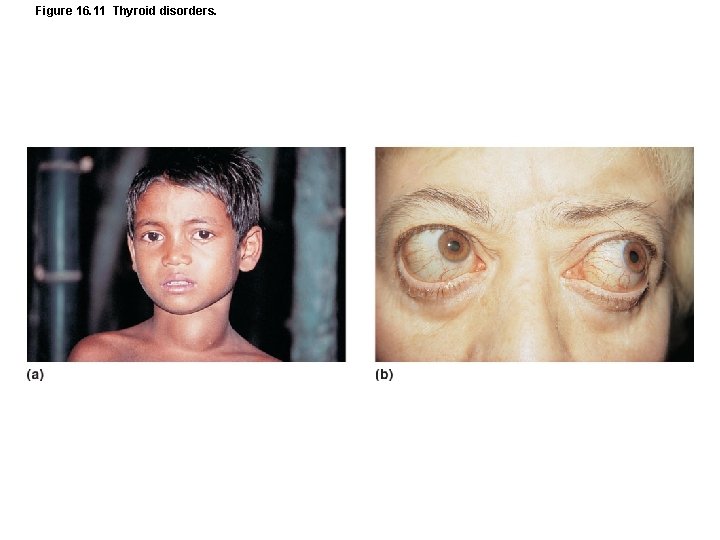
Figure 16. 11 Thyroid disorders.
Calcitonin • • Produced by parafollicular (C) cells No known physiological role in humans Antagonist to parathyroid hormone (PTH) At higher than normal doses – Stimulates Ca 2+ uptake and incorporation into bone matrix
Parathyroid Glands • Four to eight tiny glands embedded in posterior aspect of thyroid • Contain parathyroid cells that secrete parathyroid hormone (PTH) or parathormone • PTH—most important hormone in Ca 2+ homeostasis
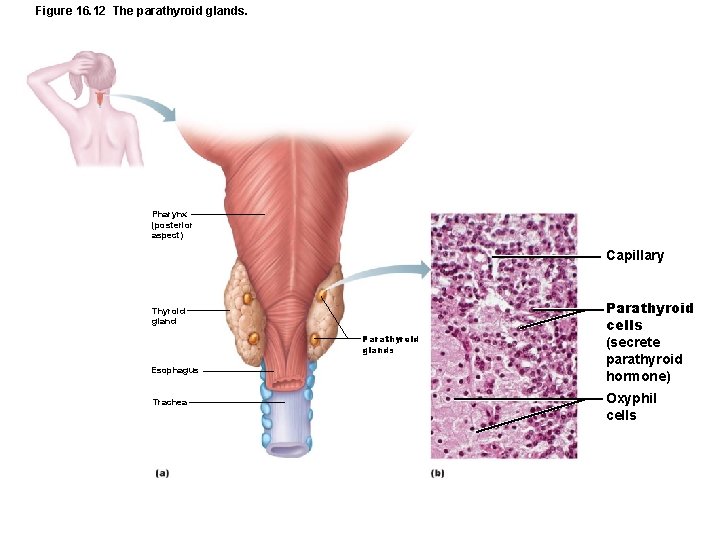
Figure 16. 12 The parathyroid glands. Pharynx (posterior aspect) Capillary Thyroid gland Parathyroid glands Esophagus Trachea Parathyroid cells (secrete parathyroid hormone) Oxyphil cells
Parathyroid Hormone • Functions – Stimulates release of Ca 2+ from bone to blood – Enhances absorption of Ca 2+ from small intestine – Promotes activation of vitamin D
Homeostatic Imbalances of PTH • Hyperparathyroidism due to tumor – Bones soften and deform – Elevated Ca 2+ depresses nervous system and contributes to formation of kidney stones • Hypoparathyroidism following gland trauma or removal or dietary magnesium deficiency – Results in tetany, respiratory paralysis, and death
Adrenal (Suprarenal) Glands • Paired, pyramid-shaped organs atop kidneys – Adrenal medulla—nervous tissue; part of sympathetic nervous system – Adrenal cortex—three layers of glandular tissue that synthesize and secrete corticosteroids
Adrenal Cortex • Three layers of cortex produce the different corticosteroids – Zona glomerulosa—mineralocorticoids – Zona fasciculata—glucocorticoids – Zona reticularis—gonadocorticoids
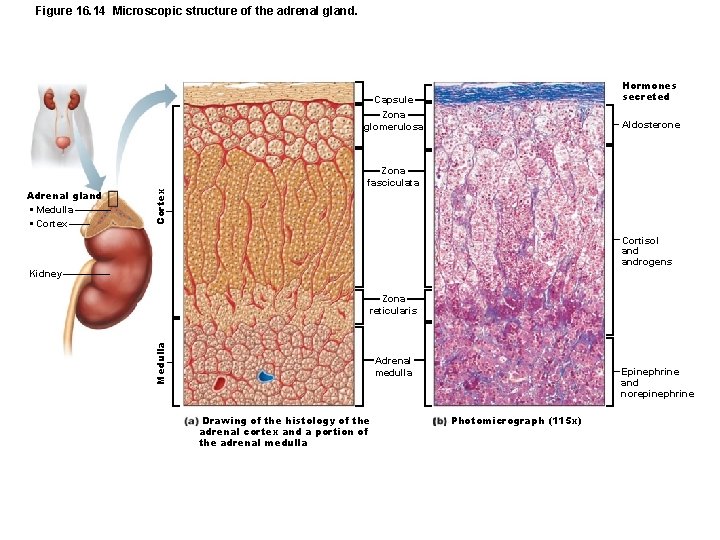
Figure 16. 14 Microscopic structure of the adrenal gland. Hormones secreted Zona glomerulosa Aldosterone Zona fasciculata Cortex Adrenal gland • Medulla • Cortex Capsule Cortisol androgens Kidney Medulla Zona reticularis Adrenal medulla Drawing of the histology of the adrenal cortex and a portion of the adrenal medulla Epinephrine and norepinephrine Photomicrograph (115 x)
Mineralocorticoids • Aldosterone most potent mineralocorticoid – Stimulates Na+ reabsorption and water retention by kidneys; elimination of K+ – Helps in regulating blood pressure. Renin. Angiotensin- Aldosterone mechanism
Glucocorticoids: Cortisol • Released in response to ACTH, patterns of eating and activity, and stress • Prime metabolic effect is gluconeogenesis— formation of glucose from fats and proteins – Promotes rises in blood glucose, fatty acids, and amino acids • "Saves" glucose for brain
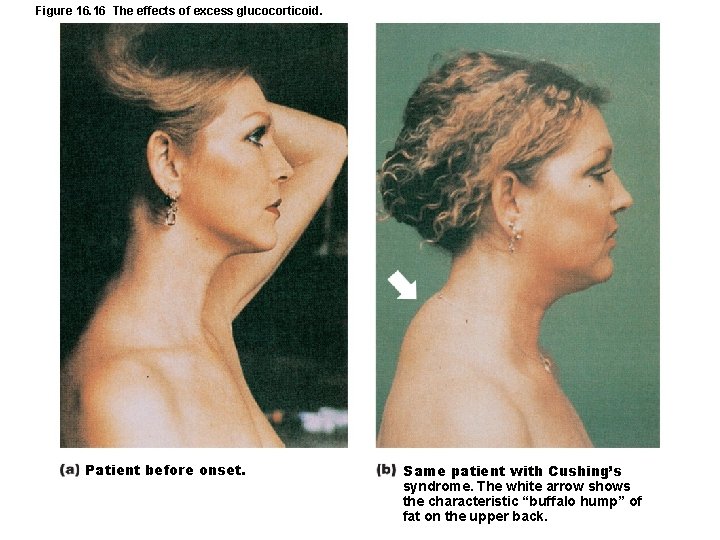
Figure 16. 16 The effects of excess glucocorticoid. Patient before onset. Same patient with Cushing’s syndrome. The white arrow shows the characteristic “buffalo hump” of fat on the upper back.
Gonadocorticoids (Sex Hormones) • Most weak androgens (male sex hormones) converted to testosterone in tissue cells, some to estrogens • May contribute to – Onset of puberty – Appearance of secondary sex characteristics – Estrogens in postmenopausal women
Adrenal Medulla • Medullary cells synthesize epinephrine (80%) and norepinephrine (20%) • Effects – Vasoconstriction – Increased heart rate – Increased blood glucose levels – Blood diverted to brain, heart, and skeletal muscle
Pancreas • Triangular gland partially behind stomach • Has both exocrine and endocrine cells – Acinar cells (exocrine) produce enzyme-rich juice for digestion – Pancreatic islets (islets of Langerhans) contain endocrine cells • Alpha ( ) cells produce glucagon (hyperglycemic hormone) • Beta ( ) cells produce insulin (hypoglycemic hormone)
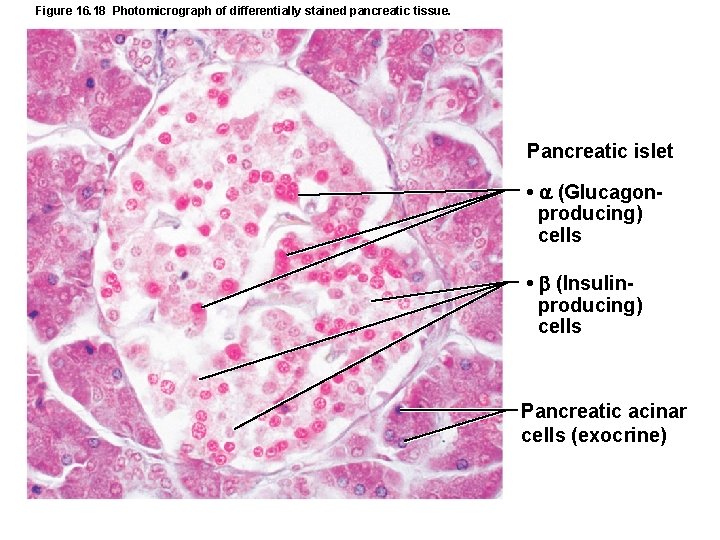
Figure 16. 18 Photomicrograph of differentially stained pancreatic tissue. Pancreatic islet • (Glucagonproducing) cells • (Insulinproducing) cells Pancreatic acinar cells (exocrine)
Glucagon • Major target—liver • Causes increased blood glucose levels • Effects – Glycogenolysis—breakdown of glycogen to glucose – Gluconeogenesis—synthesis of glucose from lactic acid and noncarbohydrates – Release of glucose to blood
Insulin • Effects of insulin – Lowers blood glucose levels – Enhances membrane transport of glucose into fat and muscle cells – Inhibits glycogenolysis and gluconeogenesis – Participates in neuronal development and learning and memory • Not needed for glucose uptake in liver, kidney or brain
Homeostatic Imbalances of Insulin • Diabetes mellitus (DM) – Due to hyposecretion (type 1) or hypoactivity (type 2) of insulin – Blood glucose levels remain high nausea higher blood glucose levels (fight or flight response) – Glycosuria – glucose spilled into urine – Fats used for cellular fuel ketones (ketone bodies) from fatty acid metabolism ketonuria and ketoacidosis

Diabetes Mellitus: Signs • Three cardinal signs of DM – Polyuria—huge urine output • Glucose acts as osmotic diuretic – Polydipsia—excessive thirst • From water loss due to polyuria – Polyphagia—excessive hunger and food consumption • Cells cannot take up glucose; are "starving"
Homeostatic Imbalances of Insulin • Hyperinsulinism: – Excessive insulin secretion – Causes hypoglycemia • Low blood glucose levels • Anxiety, nervousness, disorientation, unconsciousness, even death – Treated by sugar ingestion
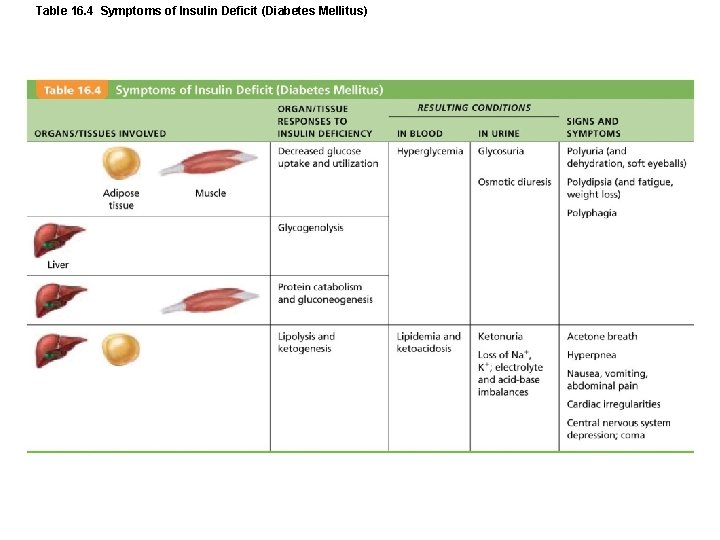
Table 16. 4 Symptoms of Insulin Deficit (Diabetes Mellitus)
Ovaries and Placenta • Gonads produce steroid sex hormones – Same as those of adrenal cortex • Ovaries produce estrogens and progesterone – Estrogen • Maturation of reproductive organs • Appearance of secondary sexual characteristics • With progesterone, causes breast development and cyclic changes in uterine mucosa
Testes • Testes produce testosterone – Initiates maturation of male reproductive organs – Causes appearance of male secondary sexual characteristics and sex drive – Necessary for normal sperm production – Maintains reproductive organs in functional state
Other Hormone-producing Structures • Enteroendocrine cells of gastrointestinal tract – Gastrin stimulates release of HCl – Secretin stimulates liver and pancreas – Cholecystokinin stimulates pancreas, gallbladder, and hepatopancreatic sphincter – Serotonin acts as paracrine
Other Hormone-producing Structures • Heart – Atrial natriuretic peptide (ANP) decreases blood Na+ concentration, therefore blood pressure and blood volume • Kidneys – Erythropoietin signals production of red blood cells – Renin initiates the renin-angiotensinaldosterone mechanism

Thank you
- Slides: 34