
Thyroid gland The thyroid gland is a butterflyshaped
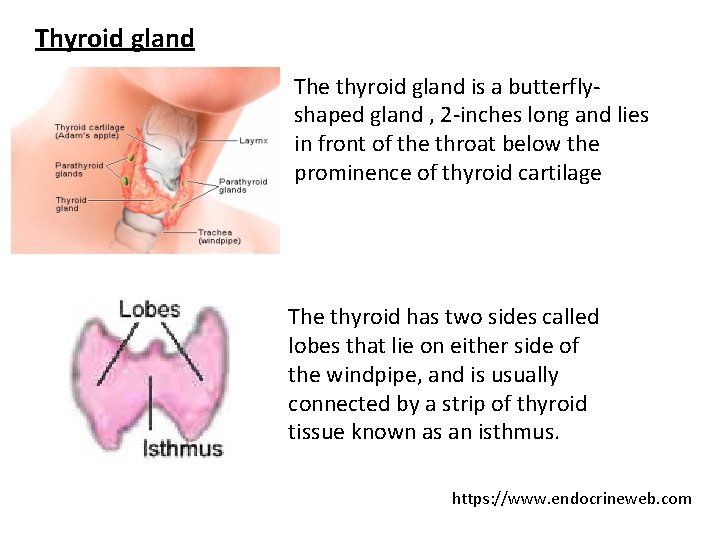
Thyroid gland The thyroid gland is a butterflyshaped gland , 2 -inches long and lies in front of the throat below the prominence of thyroid cartilage The thyroid has two sides called lobes that lie on either side of the windpipe, and is usually connected by a strip of thyroid tissue known as an isthmus. https: //www. endocrineweb. com
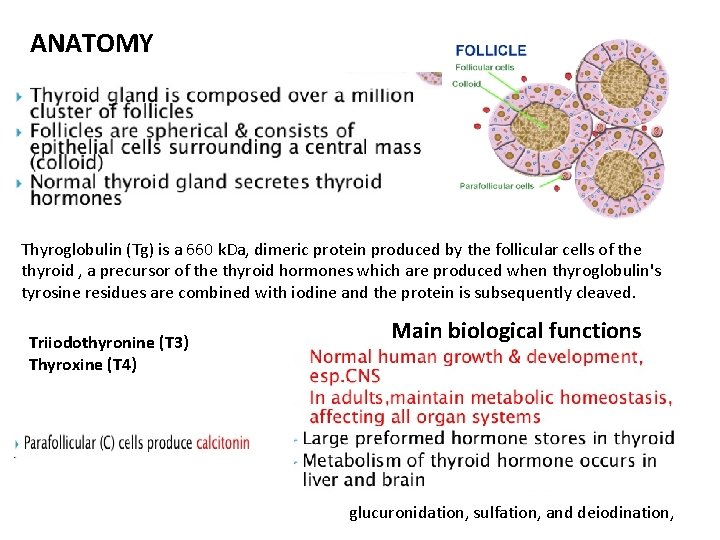
ANATOMY Thyroglobulin (Tg) is a 660 k. Da, dimeric protein produced by the follicular cells of the thyroid , a precursor of the thyroid hormones which are produced when thyroglobulin's tyrosine residues are combined with iodine and the protein is subsequently cleaved. Triiodothyronine (T 3) Thyroxine (T 4) Main biological functions glucuronidation, sulfation, and deiodination,
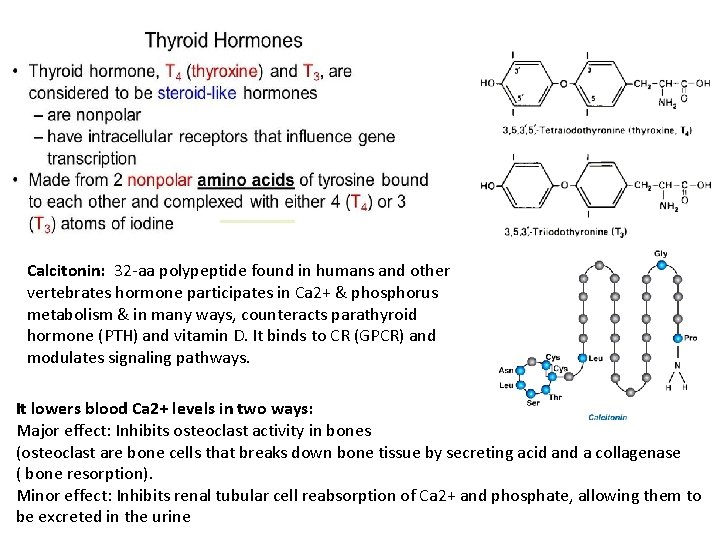
Calcitonin: 32 -aa polypeptide found in humans and other vertebrates hormone participates in Ca 2+ & phosphorus metabolism & in many ways, counteracts parathyroid hormone (PTH) and vitamin D. It binds to CR (GPCR) and modulates signaling pathways. It lowers blood Ca 2+ levels in two ways: Major effect: Inhibits osteoclast activity in bones (osteoclast are bone cells that breaks down bone tissue by secreting acid and a collagenase ( bone resorption). Minor effect: Inhibits renal tubular cell reabsorption of Ca 2+ and phosphate, allowing them to be excreted in the urine

Thyroid Hormone Synthesis Plasma Follicular cells colloid ØThe iodine necessary for the synthesis of these molecules comes from food or iodide supplements. ØIodide ion is actively taken up by and highly concentrated in the thyroid gland, where it is converted to elemental iodine by thyroidal peroxidase. Lysosomal Proteases in FC TBG apical transporter protein called pendrin NIS-Na Iodide symporter ØThe protein thyroglobulin serves as a scaffold for thyroid hormone synthesis. ØTyrosine residues in thyroglobulin are iodinated to form monoiodotyrosine (MIT) or diiodotyrosine (DIT) in a process known as iodine organification. ØWithin thyroglobulin, 2 molecules of DIT combine to form T 4, while 1 molecule each of MIT and DIT combine to form T 3. ØProteolysis of thyroglobulin liberates the T 4 and T 3, which are then released from the thyroid. After release from the gland, T 4 and T 3 are transported in the blood by thyroxinebinding globulin, a protein synthesized in the liver. The bound form is inactive free form in active
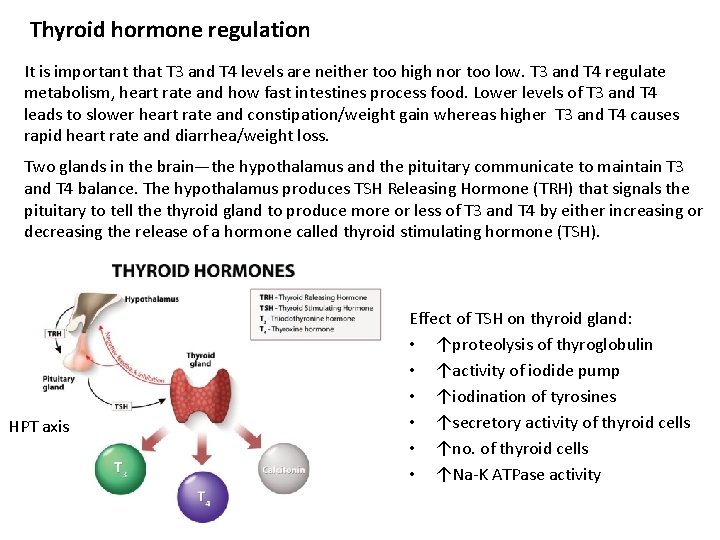
Thyroid hormone regulation It is important that T 3 and T 4 levels are neither too high nor too low. T 3 and T 4 regulate metabolism, heart rate and how fast intestines process food. Lower levels of T 3 and T 4 leads to slower heart rate and constipation/weight gain whereas higher T 3 and T 4 causes rapid heart rate and diarrhea/weight loss. Two glands in the brain—the hypothalamus and the pituitary communicate to maintain T 3 and T 4 balance. The hypothalamus produces TSH Releasing Hormone (TRH) that signals the pituitary to tell the thyroid gland to produce more or less of T 3 and T 4 by either increasing or decreasing the release of a hormone called thyroid stimulating hormone (TSH). HPT axis Effect of TSH on thyroid gland: • ↑proteolysis of thyroglobulin • ↑activity of iodide pump • ↑iodination of tyrosines • ↑secretory activity of thyroid cells • ↑no. of thyroid cells • ↑Na-K ATPase activity
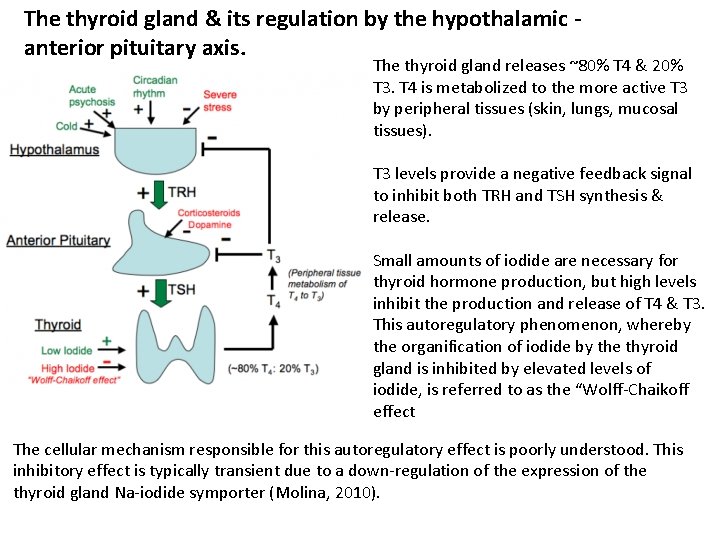
The thyroid gland & its regulation by the hypothalamic anterior pituitary axis. The thyroid gland releases ~80% T 4 & 20% T 3. T 4 is metabolized to the more active T 3 by peripheral tissues (skin, lungs, mucosal tissues). T 3 levels provide a negative feedback signal to inhibit both TRH and TSH synthesis & release. Small amounts of iodide are necessary for thyroid hormone production, but high levels inhibit the production and release of T 4 & T 3. This autoregulatory phenomenon, whereby the organification of iodide by the thyroid gland is inhibited by elevated levels of iodide, is referred to as the “Wolff-Chaikoff effect The cellular mechanism responsible for this autoregulatory effect is poorly understood. This inhibitory effect is typically transient due to a down-regulation of the expression of the thyroid gland Na-iodide symporter (Molina, 2010).
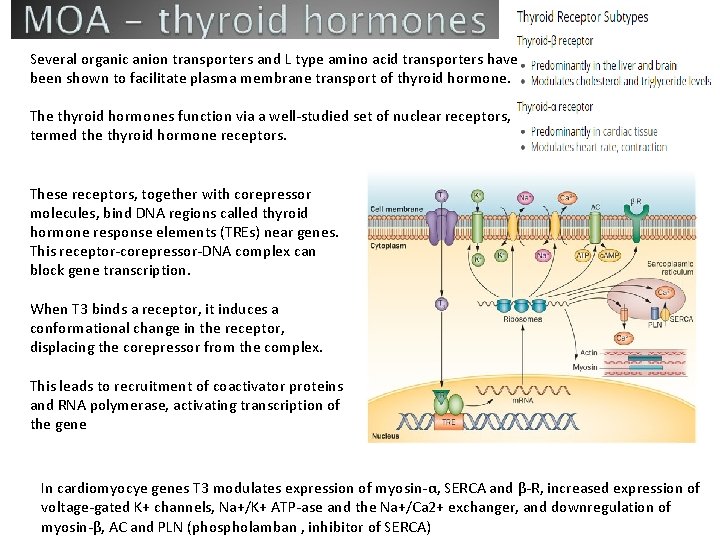
Several organic anion transporters and L type amino acid transporters have been shown to facilitate plasma membrane transport of thyroid hormone. The thyroid hormones function via a well-studied set of nuclear receptors, termed the thyroid hormone receptors. These receptors, together with corepressor molecules, bind DNA regions called thyroid hormone response elements (TREs) near genes. This receptor-corepressor-DNA complex can block gene transcription. When T 3 binds a receptor, it induces a conformational change in the receptor, displacing the corepressor from the complex. This leads to recruitment of coactivator proteins and RNA polymerase, activating transcription of the gene In cardiomyocye genes T 3 modulates expression of myosin-α, SERCA and β-R, increased expression of voltage-gated K+ channels, Na+/K+ ATP-ase and the Na+/Ca 2+ exchanger, and downregulation of myosin-β, AC and PLN (phospholamban , inhibitor of SERCA)
EFFECTS OF THYROID HORMONES Role in growth and development: Thyroxine (T 4) stimulate apoptosis of the cells of the larval gills, tail and fins in amphibian metamorphosis, and stimulate the evolution of their nervous system. In the cells T 4 is deiodinated to form T 3 which performs further activity Effects of triiodothyronine (T 3): Catabolic activity Increases cardiac output Increases heart rate Increases ventilation rate Increases basal metabolic rate Potentiates the effects of catecholamines (i. e. increases sympathetic activity) Potentiates brain development Thickens endometrium in females Increases catabolism of proteins and carbohydrates
Thyroid Hormone Regulation of Metabolism Mullur & Brent, 2014 ØTH is required for normal development as well as regulating metabolism in the adult by TH signaling through TH receptors (differentially expressed). ØLocal activation of T 4 to the active form T 3, by 5′-deiodinase type 2 (D 2) is a key mechanism of TH regulation of metabolism. D 2 is expressed in the hypothalamus, white fat, brown adipose tissue (BAT), and skeletal muscle and is required for adaptive thermogenesis. ØIn addition to TRH/TSH/TH regulation, there is central modulation by nutritional signals, such as leptin (Leptin ↑circulating thyroid hormones, by directly acting on the TRH- secreting neurons of hypothalamus, via receptors), as well as peptides regulating appetite. (PYY, NPY) ØIntegration of TH signaling with the adrenergic nervous system occurs peripherally, in liver, white fat, and BAT, but also centrally, in the hypothalamus. ØTR regulates cholesterol and carbohydrate metabolism through direct actions on gene expression as well as cross-talk with other nuclear receptors, including peroxisome proliferatoractivated receptor (PPAR), liver X receptor (LXR), and bile acid signaling pathways. ØTH modulates hepatic insulin sensitivity, especially important for the suppression of hepatic gluconeogenesis. The role of TH in regulating metabolic pathways has led to several new therapeutic targets for metabolic disorders.
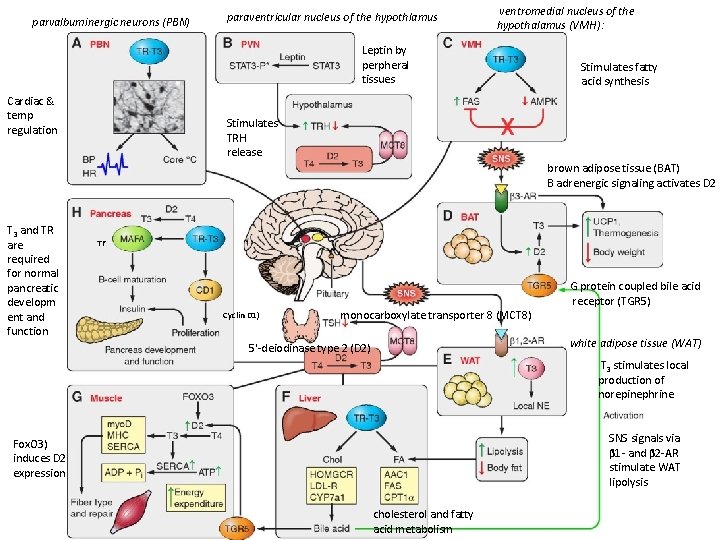
parvalbuminergic neurons (PBN) paraventricular nucleus of the hypothlamus ventromedial nucleus of the hypothalamus (VMH): Leptin by perpheral tissues Cardiac & temp regulation Stimulates fatty acid synthesis Stimulates TRH release brown adipose tissue (BAT) B adrenergic signaling activates D 2 T 3 and TR are required for normal pancreatic developm ent and function TF Cyclin D 1) monocarboxylate transporter 8 (MCT 8) G protein coupled bile acid receptor (TGR 5) white adipose tissue (WAT) 5′-deiodinase type 2 (D 2) T 3 stimulates local production of norepinephrine SNS signals via β 1 - and β 2 -AR stimulate WAT lipolysis Fox. O 3) induces D 2 expression cholesterol and fatty acid metabolism
DISEASES OF THE THYROID Hyperthyroidism (Graves’ disease, Goiter Thyroid nodules) Hypothyroidism ( Hashimoto's disease, Cretinism)
Hyperthyroidism Thyroid gland is overactive, produces too much of its hormone. Hyperthyroidism affects ~1 percent of women (More hormonal leaps) & less common in men. risk factors include stress, pregnancy (fetus takes iodine for its own thyroid gland development), and smoking. Graves’ disease is the most common cause of hyperthyroidism (an autoimmune disorder, an antibody, called thyroid-stimulating immunoglobulin (TSI), with a similar effect to thyroid stimulating hormone (TSH). The disease is hereditary and may develop at any age in men or women, but it’s much more common in women ages 20 to 30. Nodules on the thyroid — a condition called toxic nodular goiter or multinodular goiter — can also cause the gland to overproduce its hormones. Goiter, noncancerous enlargement of the thyroid gland, 90% of goitre cases are caused by iodine deficiency. Hyperplasia of thyroid to compensate for decreased efficacy Excessive thyroid hormone production leads to symptoms such as: Restlessness, nervousness, racing heart, Irritability, increased sweating Shaking, anxiety, trouble sleeping, thin skin, brittle hair and nails muscle weakness, weight loss, bulging eyes (in Graves’ disease), swelling or tightness in the neck, difficulties breathing or swallowing, coughing or wheezing, hoarseness of voice.
Hyperthyroidism diagnosis and treatment A blood test measures levels of thyroid hormone (thyroxine, or T 4) and thyroid-stimulating hormone (TSH) in the blood. High thyroxine and low TSH levels indicate that the thyroid gland is overactive. Radioactive iodine by mouth or as an injection, and then measure how much of it the thyroid gland takes up. Taking in a lot of radioactive iodine is a sign that your thyroid is overactive. The low level of radioactivity resolves quickly and isn’t dangerous for most people. Treatments for hyperthyroidism destroy the thyroid gland or block it from producing its hormones. Ø Antithyroid drugs such as methimazole (Tapazole) prevents iodine and peroxidase from their normal interactions with thyroglobulin to form T 4 and T 3. Ø beta-blockers to control rapid heart rate, anxiety, and sweating Ø A large dose of radioactive iodine damages the thyroid gland. Ø Surgery can be performed to remove thyroid gland.
Hypothyroidism The thyroid gland is underactive, and it can’t produce enough of its hormones. Often caused by Hashimoto’s disease, surgery, or damage from radiation treatment. Most cases of hypothyroidism are mild. Hashimoto’s disease is also known as chronic lymphocytic thyroiditis. It can occur at any age, but it’s most common in middle-aged women (autoimmune, autoantibodies against thyroglobulin and thyroperoxidase. ) Too little thyroid hormone production leads to symptoms such as: Fatigue , dry skin , increased sensitivity to cold , memory problems Constipation, depression , weight gain, weakness , slow heart rate, coma
Hypothyroidism diagnosis and treatment Blood tests to measure TSH and thyroid hormone levels. A high TSH level and low thyroxine level could mean that the thyroid is underactive. These levels could also indicate that the pituitary gland is releasing more TSH to try to stimulate thyroid gland to make its hormone. Hashimoto’s disease is an autoimmune disorder, so the blood test would also show abnormal antibodies that might be attacking the thyroid. The main treatment for hypothyroidism is to take thyroid hormone pills. It’s important to get the dose right, because taking too much thyroid hormone can cause symptoms of hyperthyroidism.
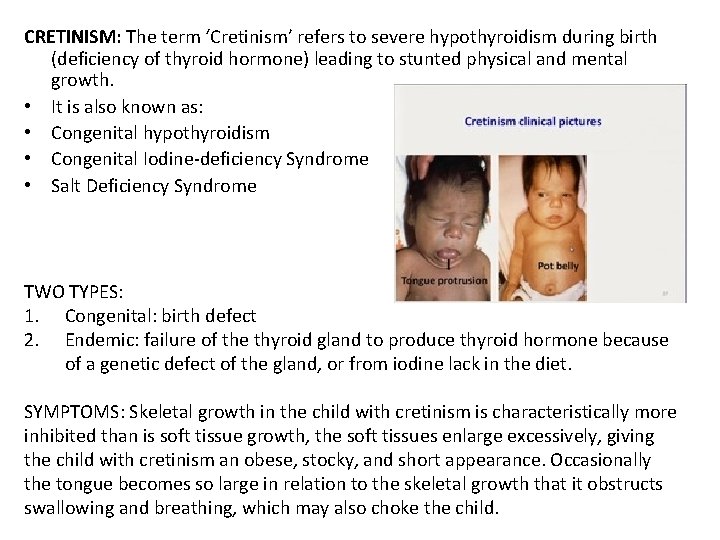
CRETINISM: The term ‘Cretinism’ refers to severe hypothyroidism during birth (deficiency of thyroid hormone) leading to stunted physical and mental growth. • It is also known as: • Congenital hypothyroidism • Congenital Iodine-deficiency Syndrome • Salt Deficiency Syndrome TWO TYPES: 1. Congenital: birth defect 2. Endemic: failure of the thyroid gland to produce thyroid hormone because of a genetic defect of the gland, or from iodine lack in the diet. SYMPTOMS: Skeletal growth in the child with cretinism is characteristically more inhibited than is soft tissue growth, the soft tissues enlarge excessively, giving the child with cretinism an obese, stocky, and short appearance. Occasionally the tongue becomes so large in relation to the skeletal growth that it obstructs swallowing and breathing, which may also choke the child.
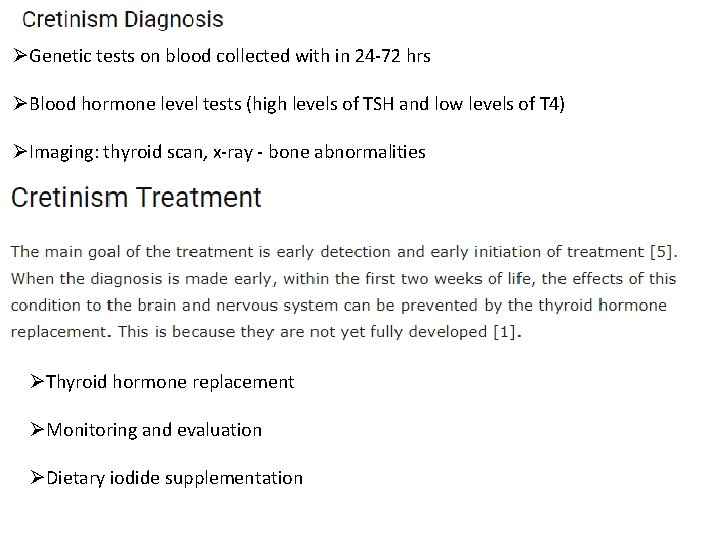
ØGenetic tests on blood collected with in 24 -72 hrs ØBlood hormone level tests (high levels of TSH and low levels of T 4) ØImaging: thyroid scan, x-ray - bone abnormalities ØThyroid hormone replacement ØMonitoring and evaluation ØDietary iodide supplementation
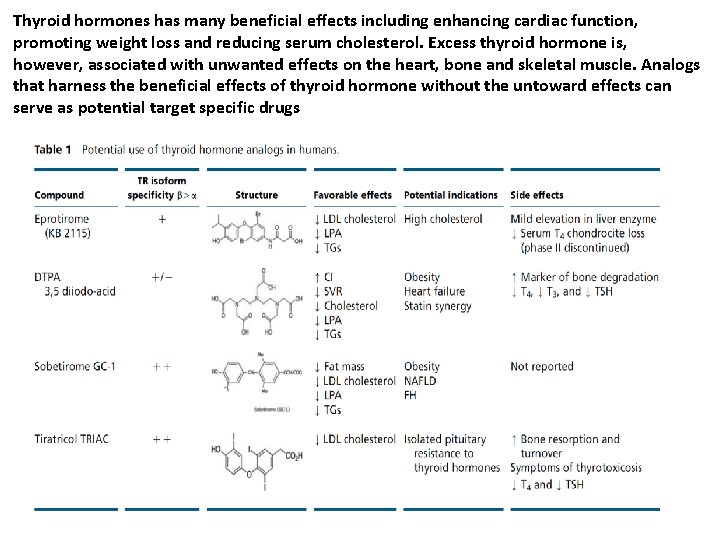
Thyroid hormones has many beneficial effects including enhancing cardiac function, promoting weight loss and reducing serum cholesterol. Excess thyroid hormone is, however, associated with unwanted effects on the heart, bone and skeletal muscle. Analogs that harness the beneficial effects of thyroid hormone without the untoward effects can serve as potential target specific drugs
- Slides: 19