
Thyroid gland Follicles the Functional Units of the
- Slides: 27
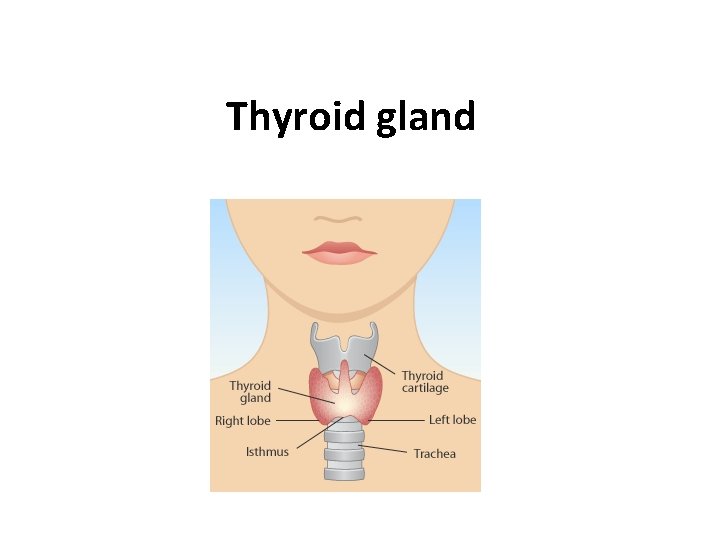
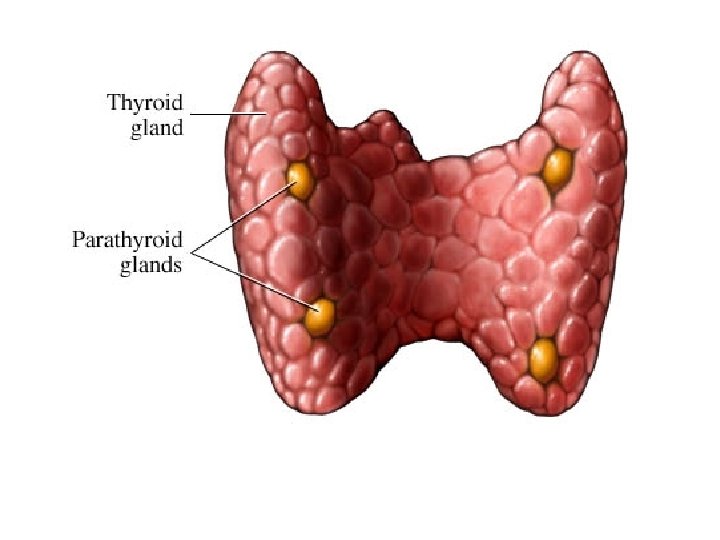
Thyroid gland
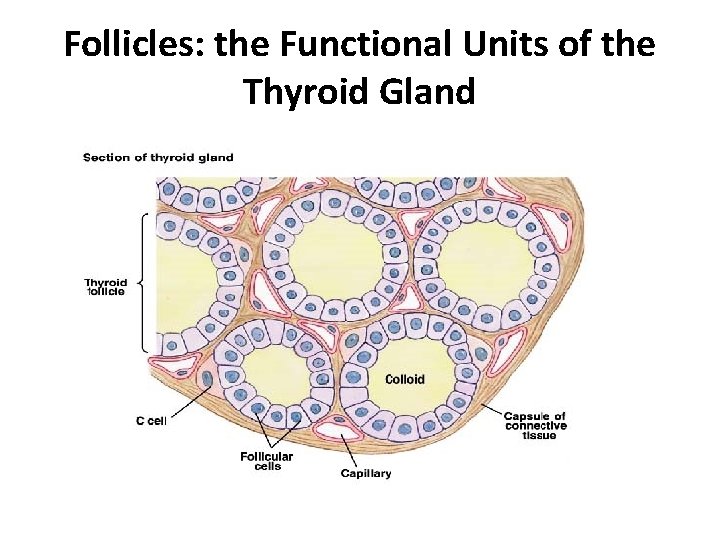
Follicles: the Functional Units of the Thyroid Gland
Thyroid hormones • The thyroid gland secretes three hormones: 1. Thyroxine (T 4) 2. Triiodothyronine (T 3) 3. Calcitonin: a polypeptide hormone secreted by the C cells, functionally unrelated to the other thyroid hormones. • T 3 and T 4: Both are produced by the follicular cells.
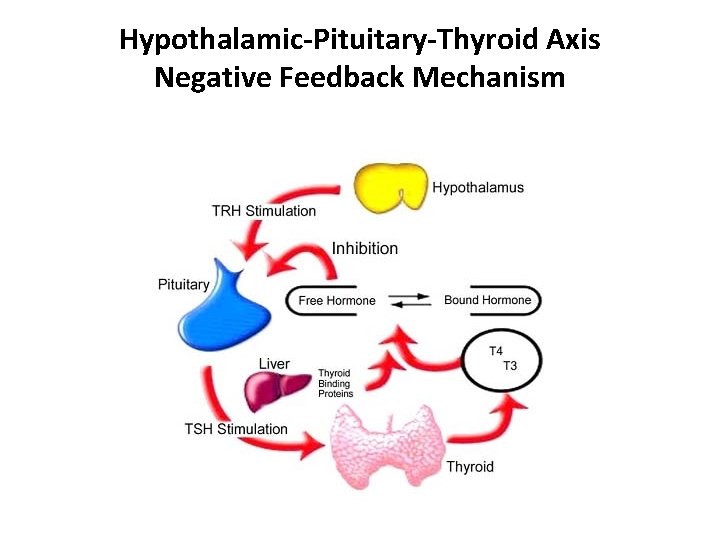
Thyroid-Stimulating Hormone (TSH) • Thyroxine synthesis and release are stimulated by the thyroid stimulating hormone (TSH). • Is regulated by the negative feedback action of T 4 and T 3. • The secretion of TSH is controlled by negative feedback by the thyroid hormones, which modulate the response of the pituitary to the hyothalamus hormone, thyrotropin-releasing hormone (TRH).
• The major product of the thyroid gland is T 4. • Ten times less T 3 is produced. • Most T 3 is derived from T 4 by deiodination in peripheral tissues, particularly the liver, kidneys and muscle.
Hypothalamic-Pituitary-Thyroid Axis Negative Feedback Mechanism
Functions of thyroid hormones – Thyroxine (T 4 ) and triiodothyronine (T 3) • Required for homeostasis of all cells • Influence cell differentiation, growth, and metabolism • Considered the major metabolic hormones because they target virtually every tissue
Thyroid hormones functions • Increases sensitivity of target tissues to catecholamines • Promotes: – Lipolysis – Glycogenolysis – Gluconeogenesis.
Thyroid hormones functions • Metabolism – Increases sensitivity to catecholamines – Increases basal metabolic rate – Increases carbohydrate, protein, and lipid metabolism • Normal growth – Increase bone turnover • Normal development – Especially CNS (Fetal brain and skeletal maturation)
Thyroid hormones in blood • The normal plasma concentrations of T 4 and T 3 are 60 -150 nmol/L and 1. 0 -2. 9 nmol/L, respectively. • Both hormones are extensively protein bound, Principally to a specific thyroxinebinding globulin (TBG) and to a lesser extent, to prealbumin and albumin. • Only the free, non-protein-bound, thyroid hormones are physiologically active.
Tests of the thyroid gland • Most laboratories offer a standard profile of thyroid function tests. (TSH and free T 4 (FT)4 ). • t. T 3 and t. T 4 are dependent on the concentration of binding proteins in plasma and their measurement has been largely superseded by measurements of free T 3 (f. T 3) • TRH test: is occasionally used to help identify secondary hypothyroidism (hypothyroidism due to pituitary problems) and tertiary hypothyroidism (hypothyroidism due to hypothalamic disorder).
Disorders of the thyroid gland • • • Hyperthyrodism Hypothyrodism Subclinical hypothyrodism Thyroiditis Goitre Thyroid cancer
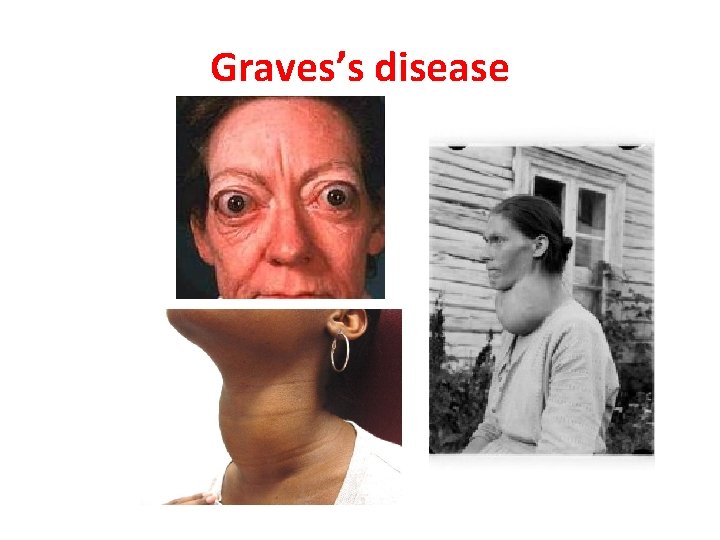
Hyperthyroidism • Is a condition in which the thyroid gland makes too much thyroid hormone. The condition is often referred to as an "overactive thyroid. " • Primary hyperthyroidism is more common than secondary hyperthyroidism. • The commonest cause is Graves disease, an autoimmune disease characterized by the presence Thyroid stimulating antibodies in the blood. • Theses autoantibodies bind to TSH receptors in the thyroid and stimulate them in the same way as TSH
Graves’s disease
Hypothyroidism • Hypothyroidism is a condition in which the thyroid gland does not make enough thyroid hormone.
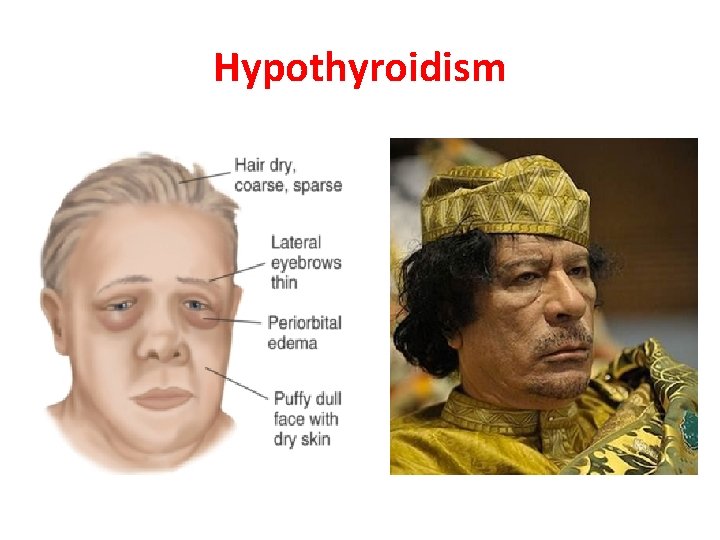
Hypothyroidism
Subclinical hypothyroidism • It is unusual to find patients whose plasma TSH concentration is elevated though with free thyroxine within reference range. • This may be associated with a history of treated hyperthyroidism and in elderly. • In the absence of clinical features of hypothyroidism, this is termed subclinical hypothyroidism.
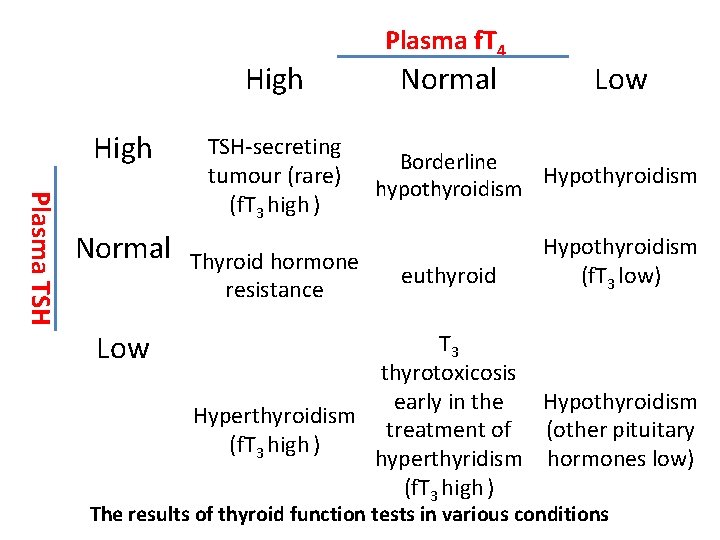
Case study 1 • TSH > 100 m. U/L ( 0. 3 -4. 0) • f. T 4 3. 9 pmol/L (9 -26) • What is your diagnosis?
Case study 2 • TSH 8 m. U/L ( 0. 3 - 4. 0) • f. T 4 12 pmol/L (9 - 26) • What is your diagnosis?
Case Study 3 • TSH 0. 2 m. U/L ( 0. 3 - 4. 0) • f. T 4 40 pmol/L (9 - 26) • What is your diagnosis?
Thyroiditis • Inflamation of the thyroid, or thyroiditis, may be a result of infection (usually viral) or autoimmune disease. • The inflamation results in a release in the concentration of thyroid hormones. • It may be associated with either hypo- or hyperthyroidism. • Hashimoto’s thyroiditis, an autoimmune condition, has been mentioned as a cause of hypothyroidism. It is a chronic condition related to the production of antibodies that target the thyroid and cause inflammation and damage.
Goiter • The term Goiter refers to the abnormal enlargement of the thyroid gland. • It can occur in patients with hyperthyroidism (e. g. Grave’s disease) , hypothyroidism (e. g. Hashimoto’s disease) and euthyroid individuals with benign and malignant tumors.
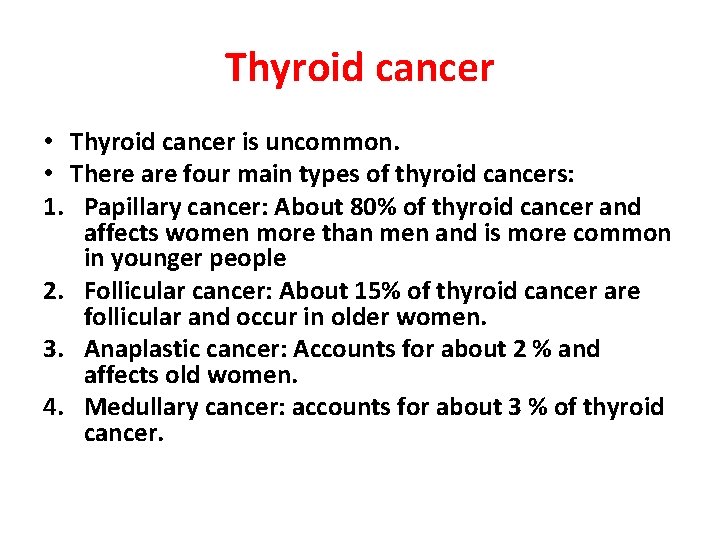
Thyroid cancer • Thyroid cancer is uncommon. • There are four main types of thyroid cancers: 1. Papillary cancer: About 80% of thyroid cancer and affects women more than men and is more common in younger people 2. Follicular cancer: About 15% of thyroid cancer are follicular and occur in older women. 3. Anaplastic cancer: Accounts for about 2 % and affects old women. 4. Medullary cancer: accounts for about 3 % of thyroid cancer.
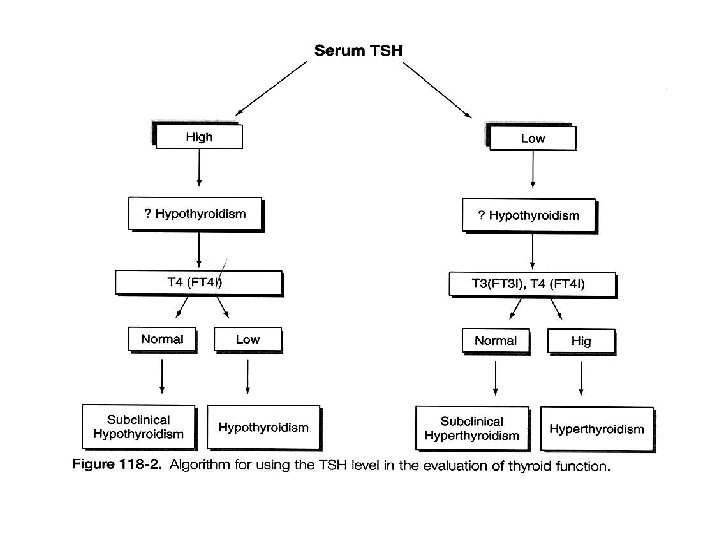
High Plasma TSH Normal Low TSH-secreting tumour (rare) (f. T 3 high ) Thyroid hormone resistance Plasma f. T 4 Normal Low Borderline Hypothyroidism hypothyroidism euthyroid Hypothyroidism (f. T 3 low) T 3 thyrotoxicosis early in the Hypothyroidism Hyperthyroidism treatment of (other pituitary (f. T 3 high ) hyperthyridism hormones low) (f. T 3 high ) The results of thyroid function tests in various conditions
References • Marshall, W. and Bangert, S. (2008). Clinical chemistry (6 th ed. ). Edinburgh, London: Mosby Elsevier. ISBN 0723434557 (chapter 9) • Gaw, A. et al. (2004). Clinical Biochemistry (3 rd ed. ) • Beckett, G. et al. (2008). Clinical Biochemistry (8 th ed. ) • Bishop. , et al. (2000). Clinical Chemistry (4 th ed. ) • http: //labtestsonline. org/understanding/conditions/thyroid/start/1