
Thyroid Diseases Anatomy Consist of two lobes joined
Thyroid Diseases
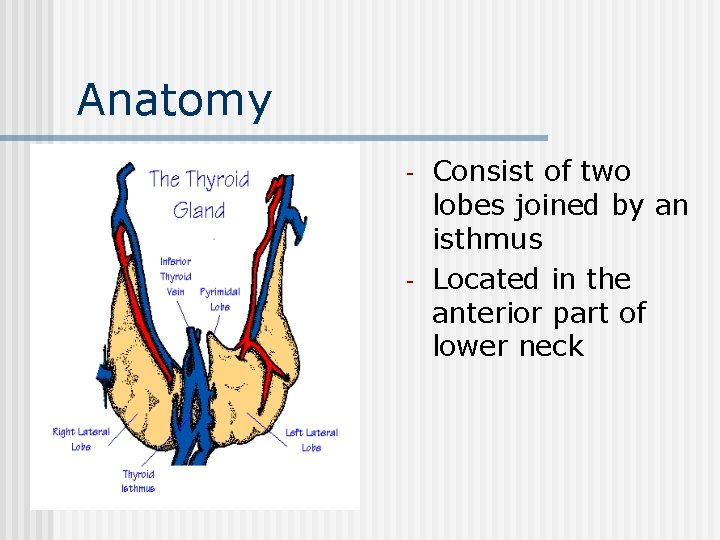
Anatomy - - Consist of two lobes joined by an isthmus Located in the anterior part of lower neck
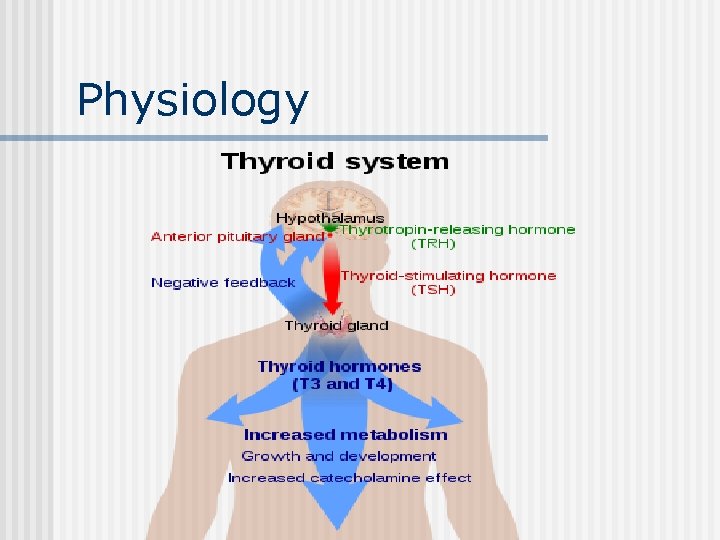
Physiology
Topics will be discused Hyperthyroidism n Hypothyroidism n Thyroiditis n
Hyperthyroidism
Hyperthyroidism Symptoms n n n n Hyperactivity/ irritability/ anxiety Heat intolerance and sweating Palpitations Fatigue and weakness Weight loss with increase of appetite Diarrhoea Polyuria Oligomenorrhoea, loss of libido
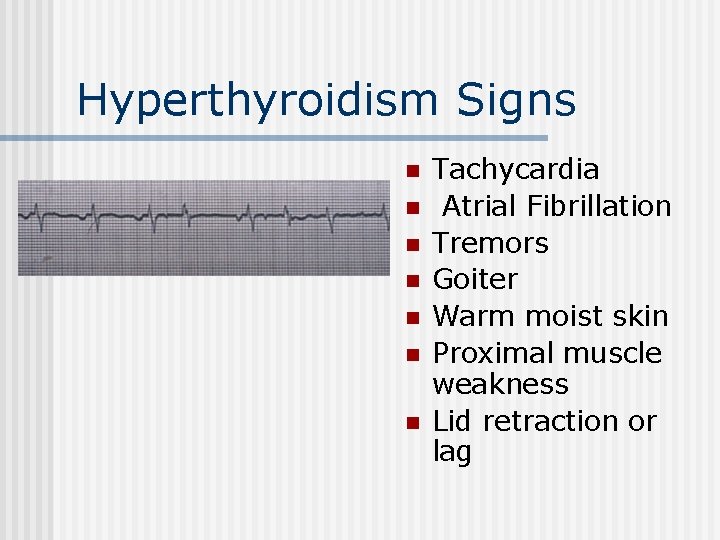
Hyperthyroidism Signs n n n n Tachycardia Atrial Fibrillation Tremors Goiter Warm moist skin Proximal muscle weakness Lid retraction or lag
Causes of Hyperthyroidism Most common causes n n n Graves disease Toxic multinodular goiter Toxic Adenoma Rarer causes n n Thyroiditis or other causes of destruction Thyrotoxicosis factitia Struma ovarii Secondary causes (TSH or ßHCG)
Graves Disease Autoimmune disorder n Antibodies directed against TSH receptor with intrinsic activity. Thyroid and fibroblasts n Responsible for 60 -80% of Thyrotoxicosis n More common in women n
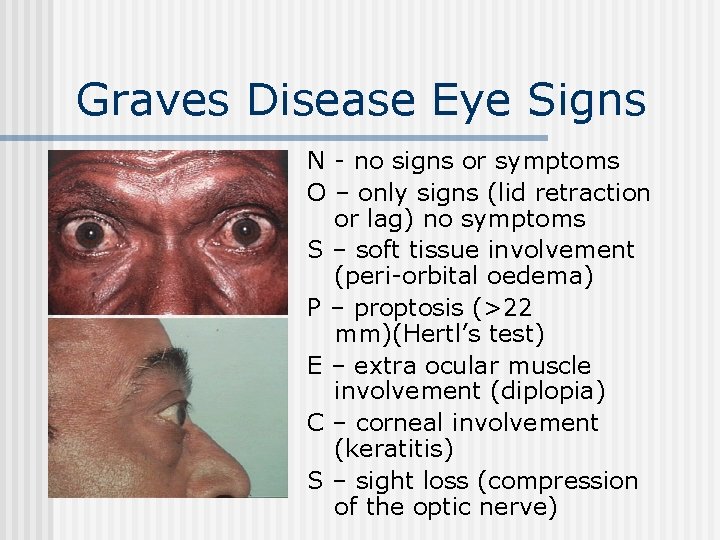
Graves Disease Eye Signs N - no signs or symptoms O – only signs (lid retraction or lag) no symptoms S – soft tissue involvement (peri-orbital oedema) P – proptosis (>22 mm)(Hertl’s test) E – extra ocular muscle involvement (diplopia) C – corneal involvement (keratitis) S – sight loss (compression of the optic nerve)
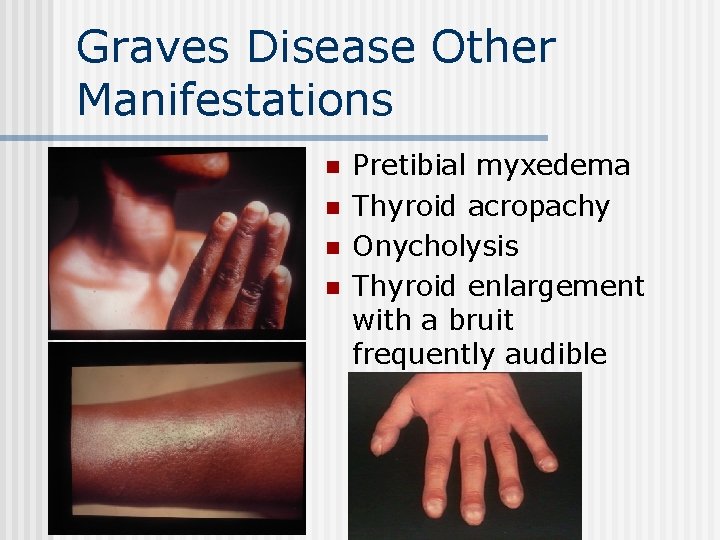
Graves Disease Other Manifestations n n Pretibial myxedema Thyroid acropachy Onycholysis Thyroid enlargement with a bruit frequently audible over the thyroid
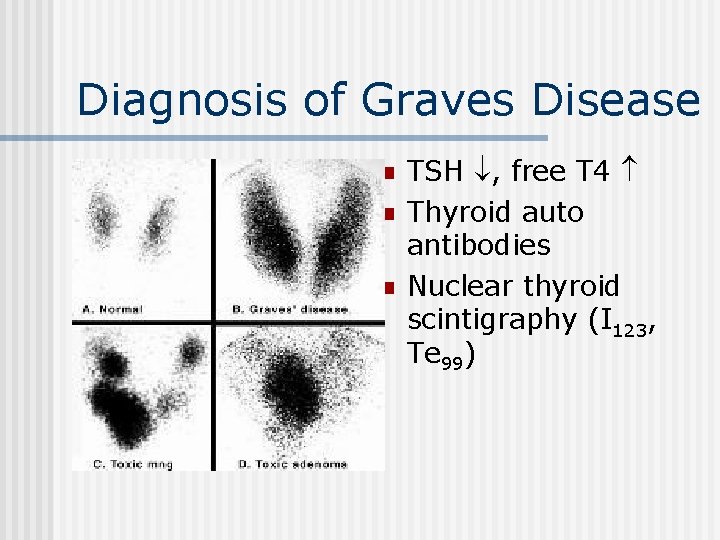
Diagnosis of Graves Disease n n n TSH , free T 4 Thyroid auto antibodies Nuclear thyroid scintigraphy (I 123, Te 99)
Treatment of Graves Disease n Reduce thyroid hormone production or reduce the amount of thyroid tissue n n Antithyroid drugs: propyl-thiouracil, Methimazole Radioiodine Subtotal thyroidectomy Symptomatic treatment n B-blocker (Propranolol): improve tachycardia, tremors, anxiety
Hypothyroidism
Causes of Hypothyroidism n n Autoimmune hypothyroidism (Hashimoto’s, atrophic thyroiditis) Iatrogenic (I 123 treatment, thyroidectomy, external irradiation of the neck) n n n Drugs: iodine excess, lithium, antithyroid drugs, etc Iodine deficiency Infiltrative disorders of the thyroid: amyloidosis, sarcoidosis, haemochr omatosis, scleroderma
Hypothyroidism Symptoms n n n Tiredness and weakness Dry skin Feeling cold Hair loss Difficulty in concentrating and poor memory Constipation n n Weight gain with poor appetite Hoarse voice Menorrhagia, later oligo and amenorrhoea Paresthesias
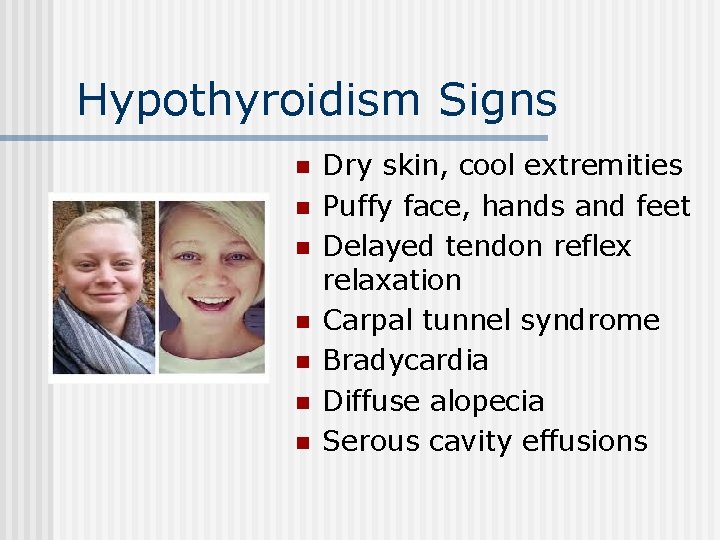
Hypothyroidism Signs n n n n Dry skin, cool extremities Puffy face, hands and feet Delayed tendon reflex relaxation Carpal tunnel syndrome Bradycardia Diffuse alopecia Serous cavity effusions
Lab Investigations of Hypothyroidism n n n TSH , free T 4 Anti thyroid antibodies s-Chol, s-Trigliseride Normochromic or macrocytic anemia ECG: Bradycardia with small QRS complexes
Treatment of Hypothyroidism n Levothyroxine n n n If no residual thyroid function 1. 5 μg/kg/day Patients under age 60, without cardiac disease can be started on 50 – 100 μg/day. Dose adjusted according to TSH levels In elderly especially those with CAD the starting dose should be much less (12. 5 – 25 μg/day)
Thyroiditis

Thyroiditis Acute: rare and due to suppurative infection of the thyroid n Sub acute: also termed de Quervains thyroiditis/ granulomatous thyroiditis – mostly viral origin n Chronic thyroiditis: mostly autoimmune (Hashimoto’s) n
Acute Thyroiditis Bacterial – Staph, Strep n Fungal – Aspergillus, Candida, Histoplasma, Pneumocystis n Radiation thyroiditis n Amiodarone (acute/ sub acute) Painful thyroid, ESR usually elevated, thyroid function normal n
Sub Acute Thyroiditis Viral (granulomatous) – Mumps, coxsackie, influenza, adeno and echoviruses Mostly affects middle aged women, Three phases, painful enlarged thyroid, usually complete resolution Rx: NSAIDS and glucocorticoids if necessary
Sub Acute Thyroiditis (cont) Silent thyroiditis No tenderness of thyroid Occur mostly 3 – 6 months after pregnancy 3 phases: hyper hypo resolution, last 12 to 20 weeks ESR normal, TPO antibody also present Usually no treatment necessary
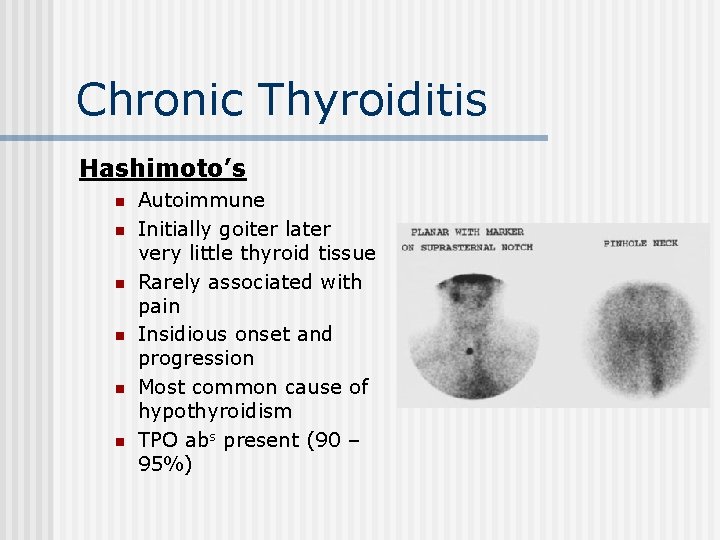
Chronic Thyroiditis Hashimoto’s n n n Autoimmune Initially goiter later very little thyroid tissue Rarely associated with pain Insidious onset and progression Most common cause of hypothyroidism TPO abs present (90 – 95%)
Chronic Thyroiditis Reidel’s Rare n Middle aged women n Insidious painless n Symptoms due to compression n Dense fibrosis develop n Usually no thyroid function impairment n
Thyroiditis The most common form of thyroiditis is Hashimoto thyroiditis, this is also the most common cause of long term hypothyroidism n The outcome of all other types of thyroiditis is good with eventual return to normal thyroid function n
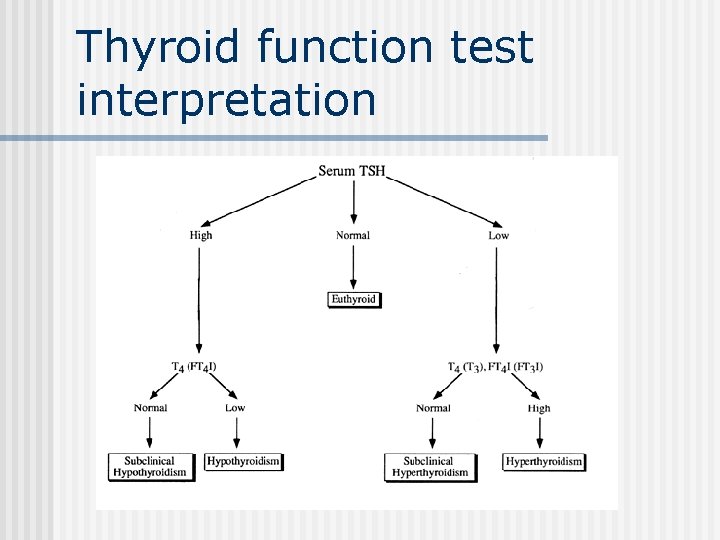
Thyroid function test interpretation

Thank You
- Slides: 30