
Thyroid Disease What is the thyroid and what
- Slides: 16
Thyroid Disease
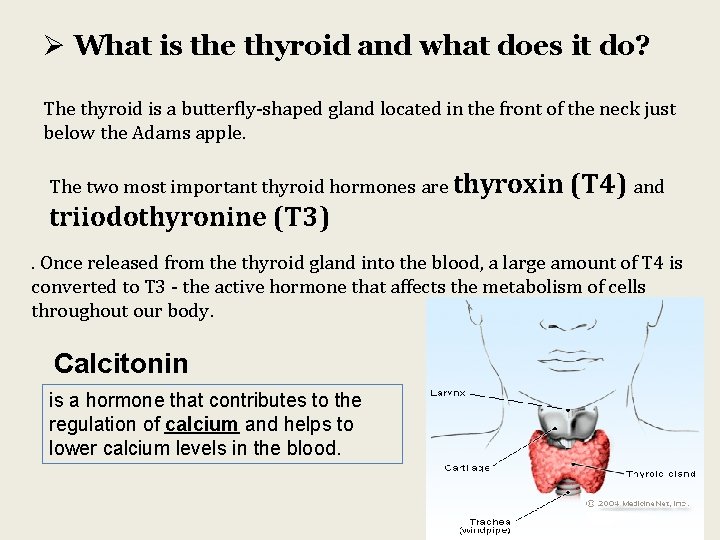
Ø What is the thyroid and what does it do? The thyroid is a butterfly-shaped gland located in the front of the neck just below the Adams apple. The two most important thyroid hormones are thyroxin (T 4) and triiodothyronine (T 3). Once released from the thyroid gland into the blood, a large amount of T 4 is converted to T 3 - the active hormone that affects the metabolism of cells throughout our body. Calcitonin is a hormone that contributes to the regulation of calcium and helps to lower calcium levels in the blood.
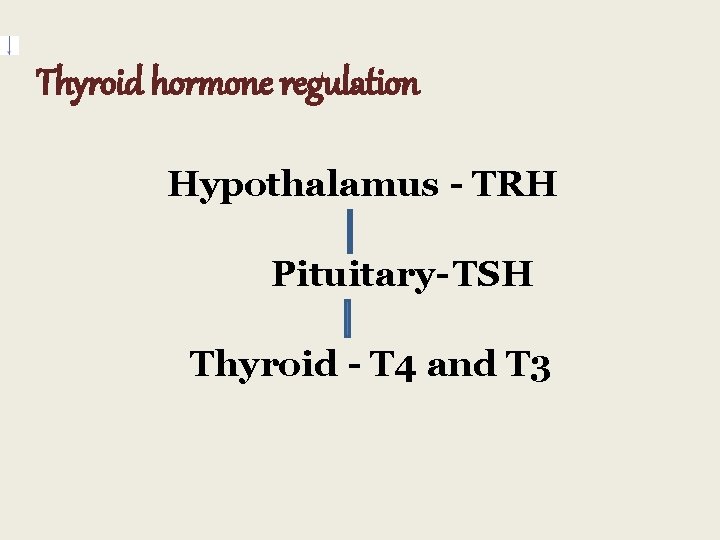
Thyroid hormone regulation Hypothalamus - TRH Pituitary- TSH Thyroid - T 4 and T 3
thyroid disease is a medical condition impairing the function of the thyroid What types of thyroid disease can occur when the function of the thyroid is affected? ? Ø Hypothyroidism If the thyroid itself is under-active, or if the regulators of the thyroid gland are not functioning properly, hypothyroidism can result
causes 1 - Hashimotos thyroiditis(autoimmune thyroiditis) 2 - Postpartum thyroiditis (inflammation of the thyroid gland after pregnancy) 3 - Acute thyroiditis 4 -Silent thyroiditis 5 - Thyroid hormone resistance 6 - Medications that affect thyroid function such as amidarone (Cordarone)
signs and symptoms • fatigue • mental fogginess and forgetfulness • feeling excessively cold • constipation • dry skin • fluid retention • non specific aches and stiffness in muscles and joints • excessive or prolonged menstrual bleeding (menorrhagia) • depression
hyperthyroidism If the thyroid is overactive, or if the regulators of the thyroid gland are pushing the thyroid to produce too much hormone, hyperthyroidism can result. causes • Graves disease • toxic multinodular goiter • Toxic nodule ("hot" nodule) • Excessive intake of iodine • Medications (ingesting thyroid hormone)
signs and symptoms • Excessive sweating • Heat intolerance • Increased bowel movements • Tremor (usually a fine shake) • Nervousness; agitation • Rapid heart rate • weight loss • Fatigue • Irregular and scant menstrual flow
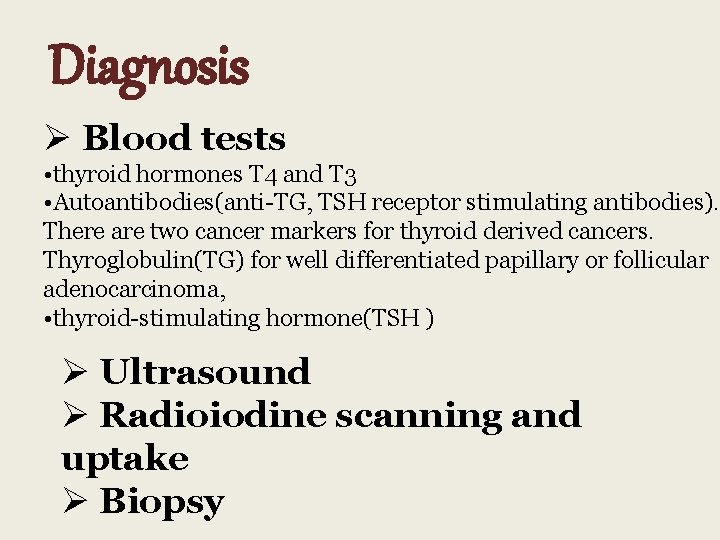
Diagnosis Ø Blood tests • thyroid hormones T 4 and T 3 • Autoantibodies(anti-TG, TSH receptor stimulating antibodies). There are two cancer markers for thyroid derived cancers. Thyroglobulin(TG) for well differentiated papillary or follicular adenocarcinoma, • thyroid-stimulating hormone(TSH ) Ø Ultrasound Ø Radioiodine scanning and uptake Ø Biopsy
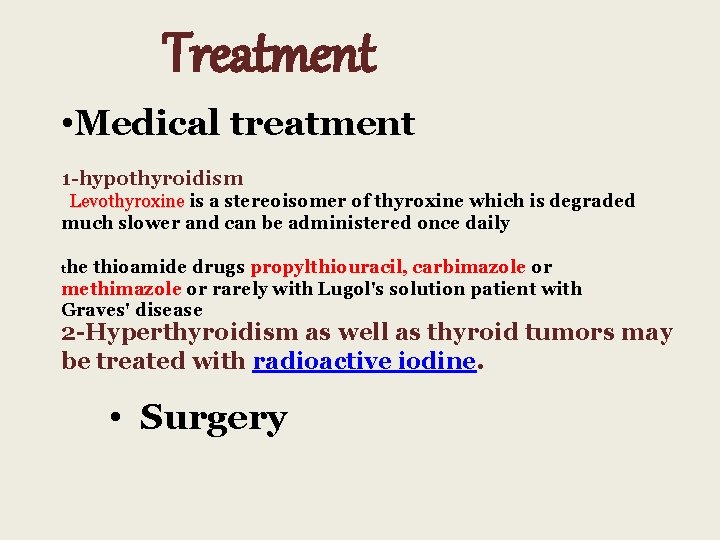
Treatment • Medical treatment 1 -hypothyroidism Levothyroxine is a stereoisomer of thyroxine which is degraded much slower and can be administered once daily he thioamide drugs propylthiouracil, carbimazole or methimazole or rarely with Lugol's solution patient with Graves' disease t 2 -Hyperthyroidism as well as thyroid tumors may be treated with radioactive iodine. • Surgery
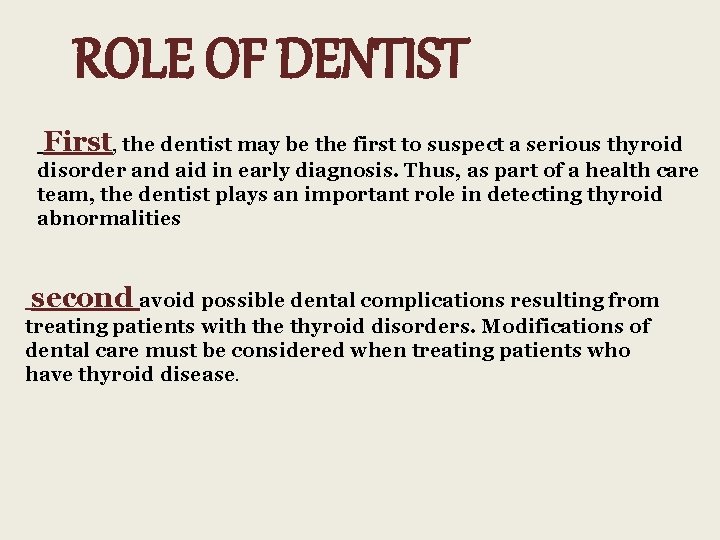
ROLE OF DENTIST First, the dentist may be the first to suspect a serious thyroid disorder and aid in early diagnosis. Thus, as part of a health care team, the dentist plays an important role in detecting thyroid abnormalities second avoid possible dental complications resulting from treating patients with the thyroid disorders. Modifications of dental care must be considered when treating patients who have thyroid disease.
Dental management hypothyroidism 1 The potential problem of those patients with severe hypothyroidism may develop hypothyroidism ( myxedema) coma which is precipitated by : Surgical procedure, trauma. , infection. So, to prevent those complications we have to do the following: 2 Identification of the patient by history and clinical examination. 3 If the patient is untreated or poorly controlled: a. Avoid the tranquilizers, barbiturates, and narcotic analgesics, because the patient is sensitive to the effect of those drugs. b. Control the pain non-narcotic analgesics. c. Avoid the precipitation of hypothyroidism, so we should avoid surgical procedure and treat the acute oral infection conservatively and antibiotic.
myxedema coma--Hypothermia – Bradycardia -Hypotension 1 -Hydrocortisone I. V 100 -300 mg. 2 -Cardio-pulmonary resuscitation is indicated in these cases.
Dental management hyperthyroidism Identification of patient by history and clinical examination. In order to avoid the complication. q If the patient is uncontrolled, we have to refer him to physician and take the following points in consideration: a. Avoid surgical procedure. because the Thyrotoxic crisis is precipitated by the surgical procedure, trauma, stress, and infection. b. If the patient has un odontogenic infection, he should be treated conservatively and give the patient an effective antibiotic c. We should avoid local anesthesia with adrenalin. q Patient with good medical control a- We can do any indicated dental treatment. q
If the patient developed a thyrotoxic crisis which is characterized by: Extreme restlessness, nausea, vomiting, professed sweating, marked tachycardia, congestive heart failure developed then coma hypotension, and finally death may occur. The treatment of thyrotoxic crisis is by: a- Ice packs b- Hydrocortisone I. V 100 – 300 mg. c- I. V Glucose