
Thyroid Disease Sejal Nirban FY 1 Objectives To
Thyroid Disease Sejal Nirban FY 1
Objectives To understand basic thyroid axis physiology To know the common causes of hypo and hyperthyroidism To recognise the signs and symptoms associated with hypo and hyperthyroidism To understand TFT interpretation To know the management for hypo and hyperthyroidism Important complications associated with these Thyroid cancers
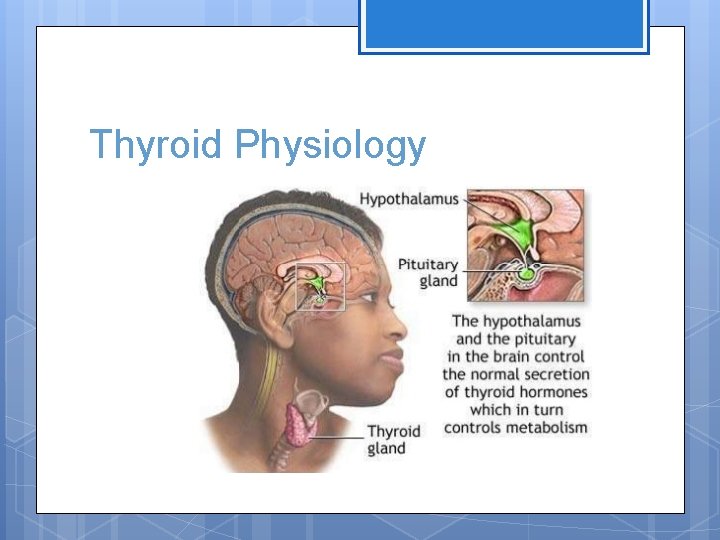
Thyroid Physiology
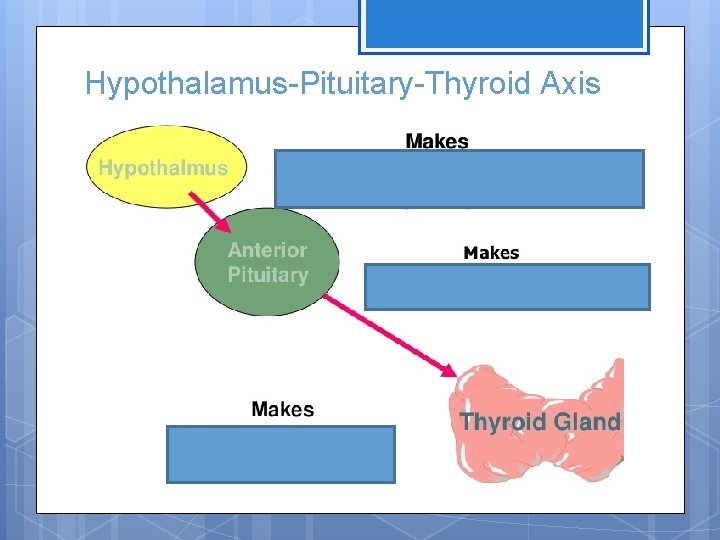
Hypothalamus-Pituitary-Thyroid Axis
Thyroid hormone synthesis, metabolism and action Iodine enters thyroid gland is used for T 3 and T 4 production Hormones are released from the thyroid and vast majority are protein bound (TBG) and deposited in peripheral cells T 4 T 3 has 4 iodine atoms, removal of one produces Total= Bound to TBG Free= Unbound
T 3 & T 4 Facilitate normal growth and development Increase metabolism Increase catecholamine effects TSH Most useful marker of thyroid hormone function Released in a pulsatile diurnal rhythm- highest at night
Hypothyroidism Insufficient 1. 2. 3. thyroid hormone Primary: thyroid gland failure Secondary: pituitary gland failure Tertiary: hypothalamus failure
Hypothyroidism Causes Primary hypothyroidism Iodine deficiency- most common cause worldwide Congenital Autoimmune mediated Hashimoto’s thyroiditis- B lymphocytes invade thyroid Iatrogenic- post-thyroidectomy or radio-iodine treatment Drug-induced – Anti-thyroid, lithium, amiodarone Severe infection Trauma to thyroid/pituitary/hypothalamus Pituitary tumour
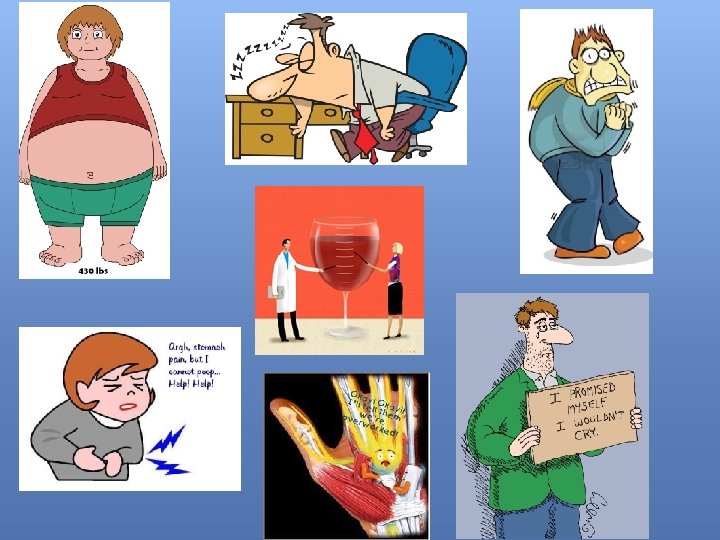
Hypothyroidism Symptoms
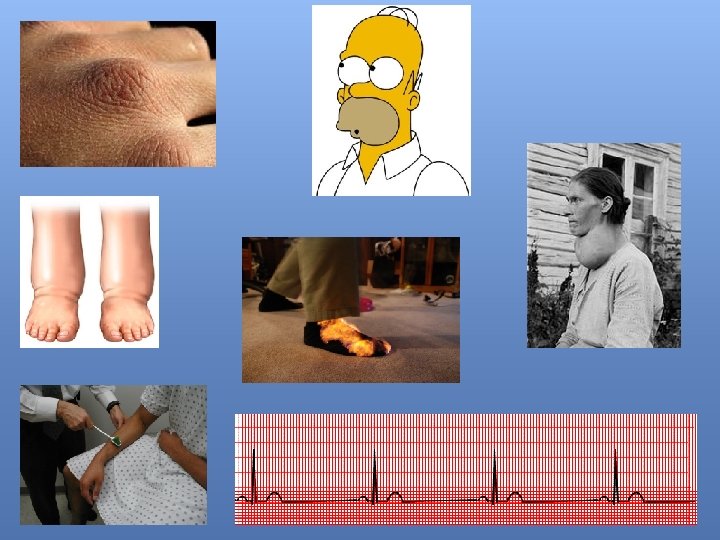
Hypothyroidism Signs
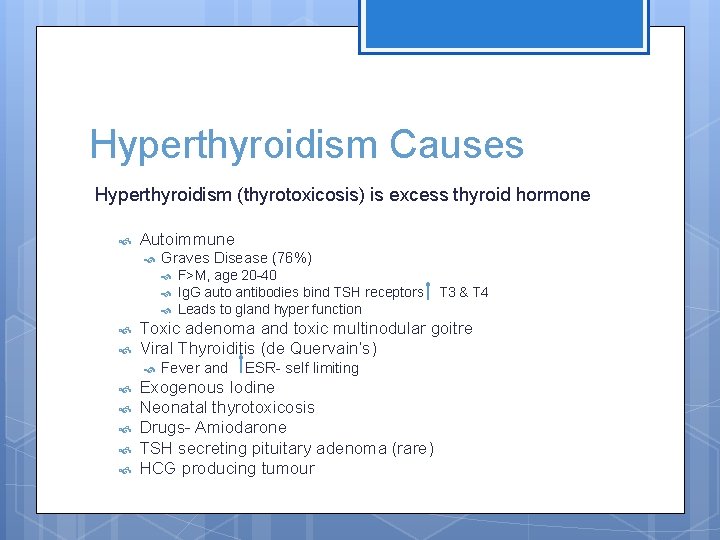
Hyperthyroidism Causes Hyperthyroidism (thyrotoxicosis) is excess thyroid hormone Autoimmune Graves Disease (76%) T 3 & T 4 Toxic adenoma and toxic multinodular goitre Viral Thyroiditis (de Quervain’s) F>M, age 20 -40 Ig. G auto antibodies bind TSH receptors Leads to gland hyper function Fever and ESR- self limiting Exogenous Iodine Neonatal thyrotoxicosis Drugs- Amiodarone TSH secreting pituitary adenoma (rare) HCG producing tumour
Hyperthyroid Symptoms
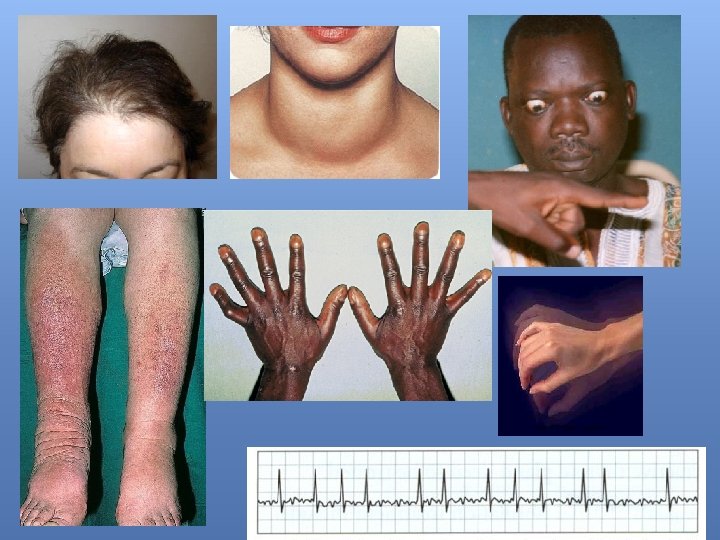
Hyperthyroid Signs
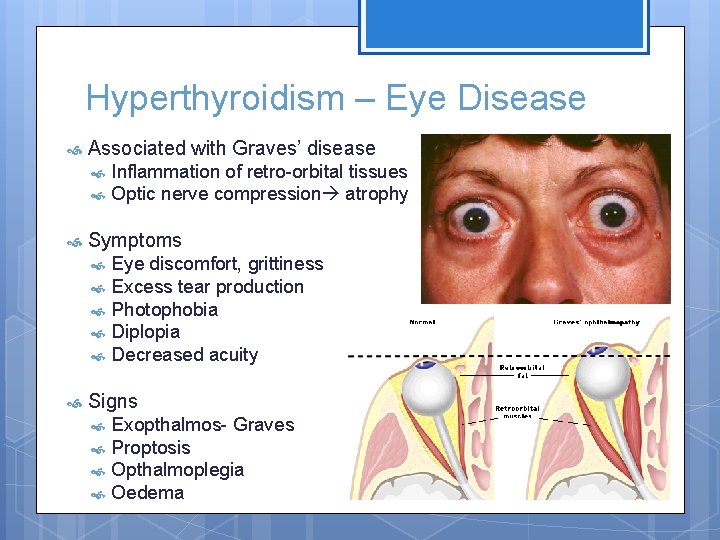
Hyperthyroidism – Eye Disease Associated with Graves’ disease Symptoms Inflammation of retro-orbital tissues Optic nerve compression atrophy Eye discomfort, grittiness Excess tear production Photophobia Diplopia Decreased acuity Signs Exopthalmos- Graves Proptosis Opthalmoplegia Oedema
Investigating Thyroid Disease TSH- first thing you assess range 0. 5 -5 U/ml Supressed= Hyperthyroid Elevated= Hypothyroid Normal If TSH abnormal request Free T 4 Elevated= Hyperthyroid Suppressed= Hypothyroid
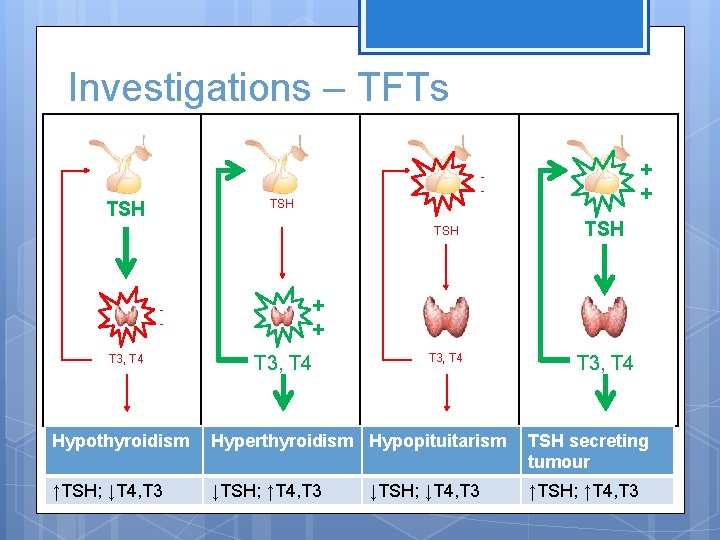
Investigations – TFTs TSH T 3, T 4 + + T 3, T 4 Hypothyroidism Hyperthyroidism Hypopituitarism TSH secreting tumour ↑TSH; ↓T 4, T 3 ↓TSH; ↑T 4, T 3 ↑TSH; ↑T 4, T 3 ↓TSH; ↓T 4, T 3
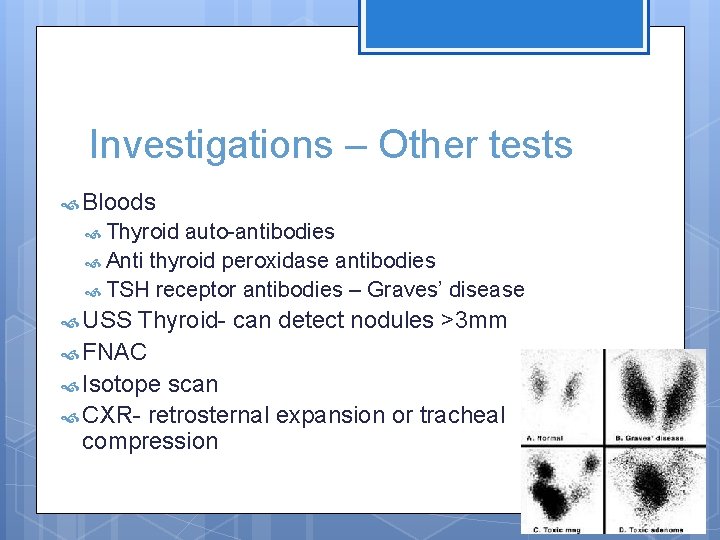
Investigations – Other tests Bloods Thyroid auto-antibodies Anti thyroid peroxidase antibodies TSH receptor antibodies – Graves’ disease USS Thyroid- can detect nodules >3 mm FNAC Isotope scan CXR- retrosternal expansion or tracheal compression
Hypothyroidism - Management Conservative Lifestyle - smoking cessation, weight loss Medical Levothyroxine (T 4) Repeat TSH in 6/52 Adjust dose according to clinical response and normalisation of TSH Caution in patients with IHD- risk of exacerbation of MI Clinical improvement may not begin for 2/52 Symptom resolution 6/12 if not consider +T 3 Surgical Symptomatic – carpal tunnel decompression, thyroidectomy if compression of local structures
Hyperthyroidism - Management Conservative Smoking cessation – especially with Graves’s ophthalmology, associated with worse prognosis Medical Symptomatic – β-blockers Carbimazole, propylthiouracil (50% relapse) Risk of agranulocytosis Radio-iodine treatment –avoid contact with pregnant women and small children Long term likely to become hypothyroid
Hyperthyroidism - Management Surgical Subtotal/total thyroidectomy Orbital decompression if thyroid eye disease causing compression of optic nerve Complications of thyroid surgery Immediate Short term Haemorrhage Infection Long term Damage to laryngeal nerve Hypothyroidism Transient hypocalcaemia Hypoparathyroidism
Complications of Thyroid Disease
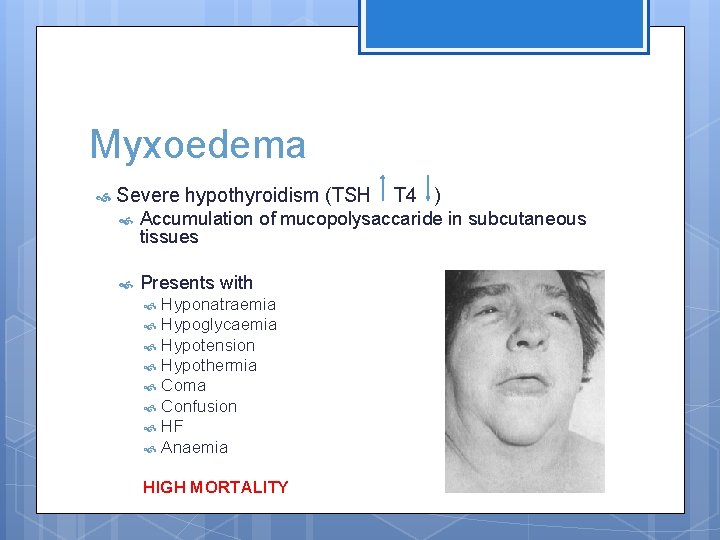
Myxoedema Severe hypothyroidism (TSH T 4 ) Accumulation of mucopolysaccaride in subcutaneous tissues Presents with Hyponatraemia Hypoglycaemia Hypotension Hypothermia Coma Confusion HF Anaemia HIGH MORTALITY
Thyroid Storm Life threatening emergency (rare) – 30% mortality even with early recognition and management Exacerbation of thyrotoxicosis precipitated by stress i. e. Surgery Infection Trauma Signs Fever Agitation and confusion Tachycardia +/- AF
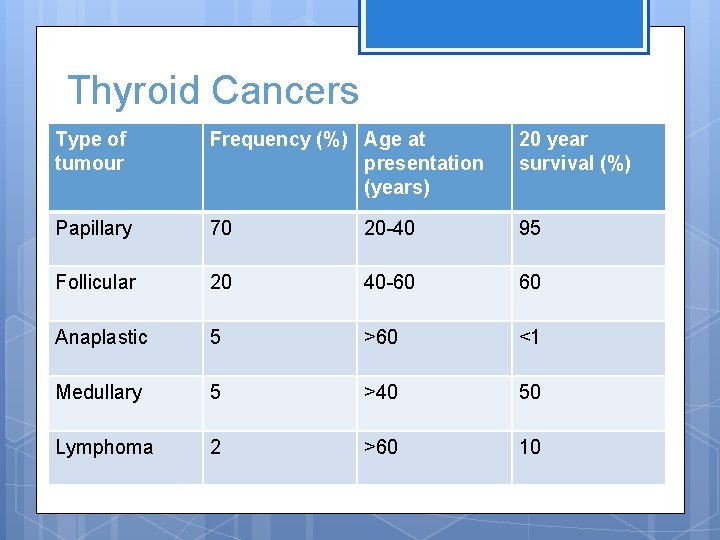
Thyroid Cancers Type of tumour Frequency (%) Age at presentation (years) 20 year survival (%) Papillary 70 20 -40 95 Follicular 20 40 -60 60 Anaplastic 5 >60 <1 Medullary 5 >40 50 Lymphoma 2 >60 10
Investigating Thyroid cancers Serum calcitonin & CEA in Medullary cancer Radioactive iodine scan Ultrasound FNA CT scan- detects metastases MRI and PET scans- distant metastases Treatment: Total thyroidectomy & wide LN clearance RAI ablation for papillary & follicular
Further topics to cover Thyroid Anatomy Cellular structure and function Blood supply Thyroid physiology Production of T 3 and T 4 in thyroid follicles Transport of T 3 and T 4 (protein binding) Peripheral conversion of T 4 to T 3 Further TFT results and their significance Differentials for lumps in the neck Impact of Amiodarone on the thyroid – complex, can cause both hypo and hyperthyroidism Details of thyroid malignancy Management of thyroid disease in pregnancy
- Slides: 30