
Thursday November th 10 Miss Brawley Do Now

Thursday, November th 10 Miss Brawley
Do Now: 1. How many steps are there in the cell cycle? 2. How many steps are in Mitosis? 3. The two key parts of the cell cycle are ____ and division. 4. What is the end result of the cell cycle?
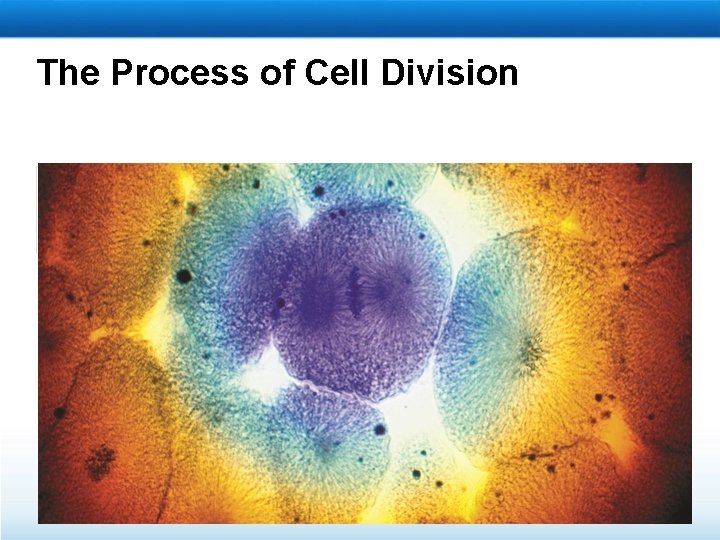
The Process of Cell Division
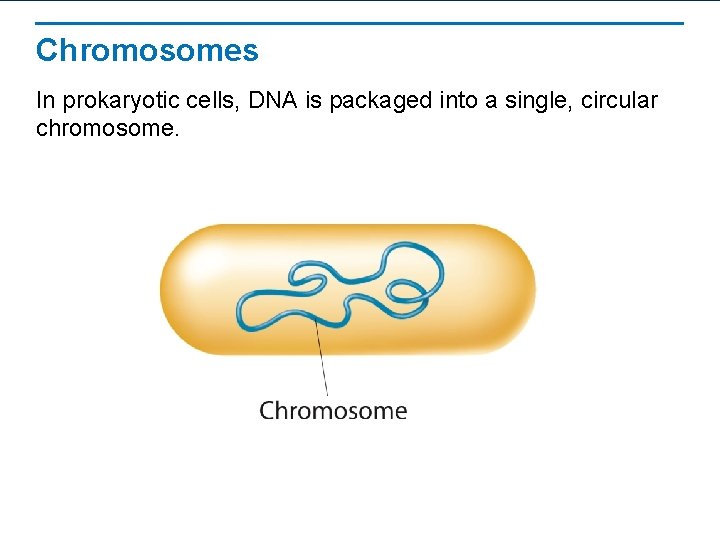
Chromosomes In prokaryotic cells, DNA is packaged into a single, circular chromosome.
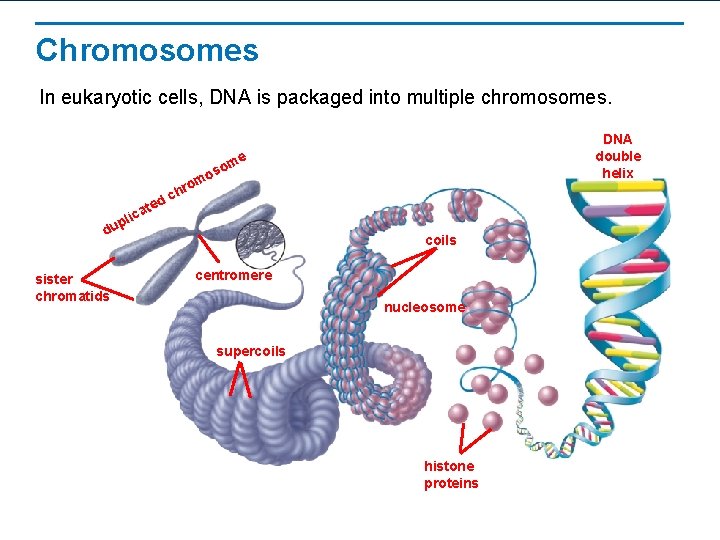
Chromosomes In eukaryotic cells, DNA is packaged into multiple chromosomes. DNA double helix me o s mo o r ch d e at c pli du sister chromatids coils centromere nucleosome supercoils histone proteins
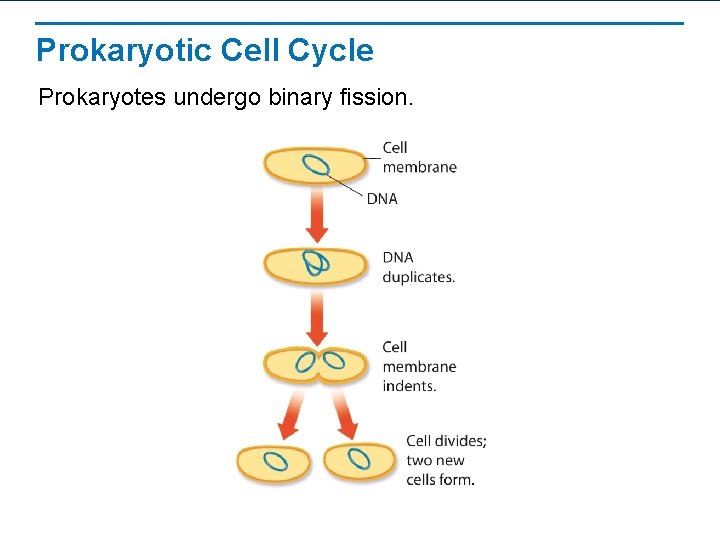
Prokaryotic Cell Cycle Prokaryotes undergo binary fission.
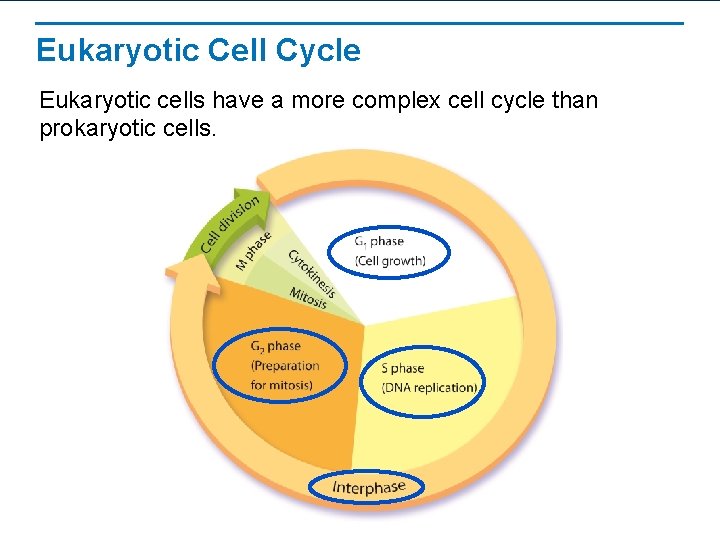
Eukaryotic Cell Cycle Eukaryotic cells have a more complex cell cycle than prokaryotic cells.
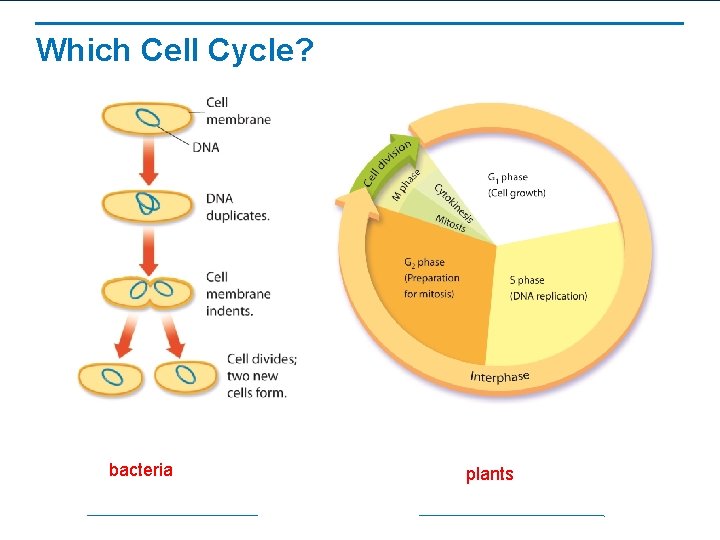
Which Cell Cycle? bacteria plants
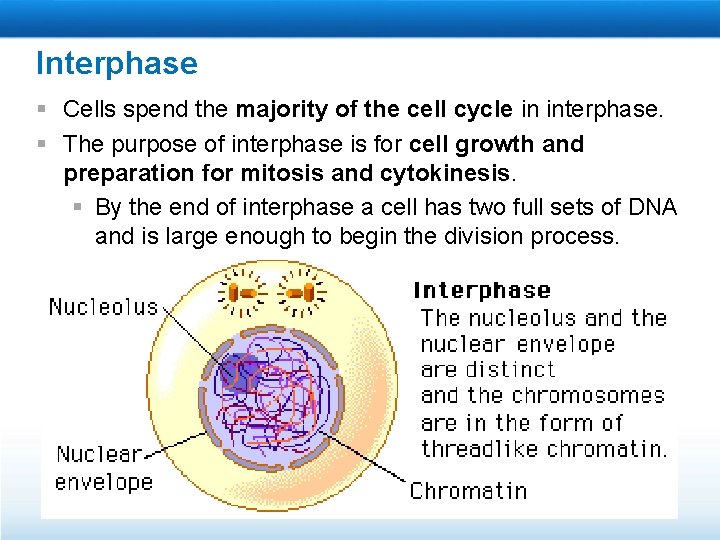
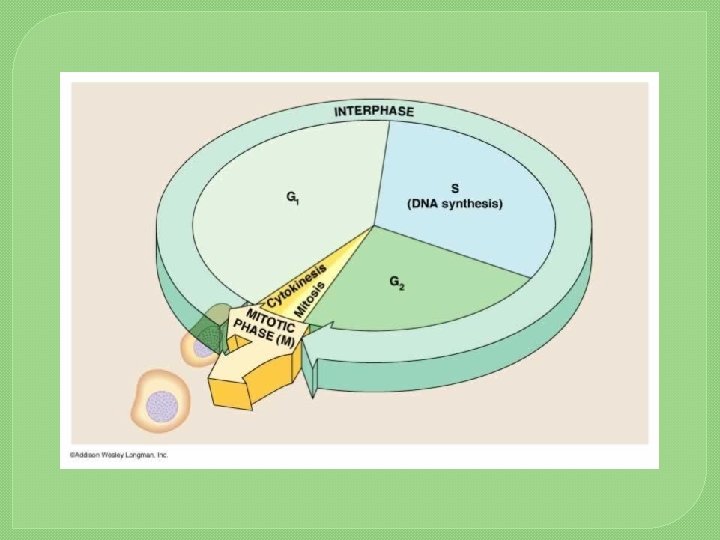
Interphase § Cells spend the majority of the cell cycle in interphase. § The purpose of interphase is for cell growth and preparation for mitosis and cytokinesis. § By the end of interphase a cell has two full sets of DNA and is large enough to begin the division process.
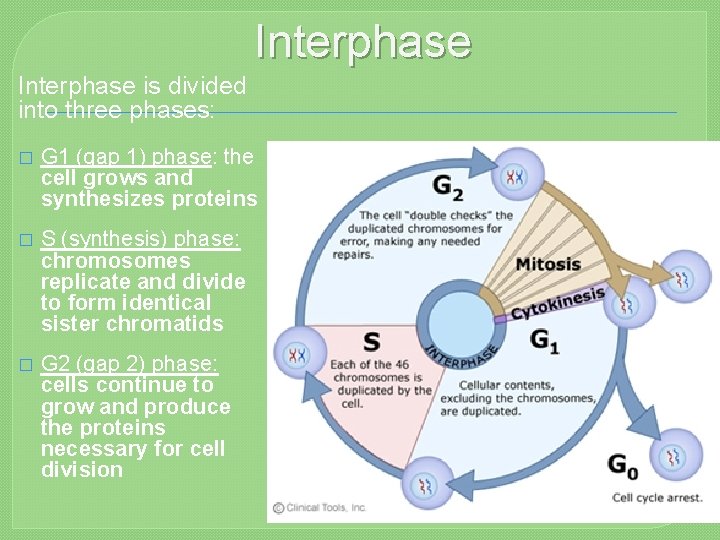
Interphase is divided into three phases: � G 1 (gap 1) phase: the cell grows and synthesizes proteins � S (synthesis) phase: chromosomes replicate and divide to form identical sister chromatids � G 2 (gap 2) phase: cells continue to grow and produce the proteins necessary for cell division
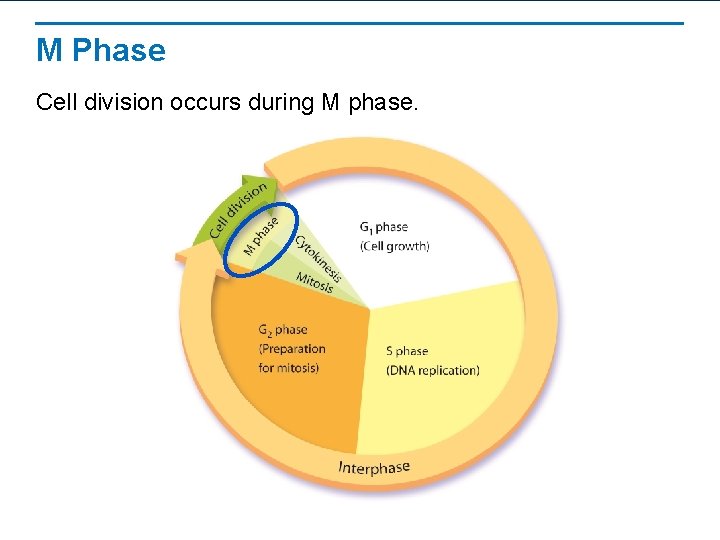
M Phase Cell division occurs during M phase.
Mitosis � The purpose of mitosis is the division of the nucleus: making two identical nuclei, each with the same number of chromosomes. • The result of mitosis is two identical daughter cells. This is a form of asexual reproduction. • Mitosis, which follows Interphase, is divided into four phases. Each phase is characterized by specific processes involving different structures.
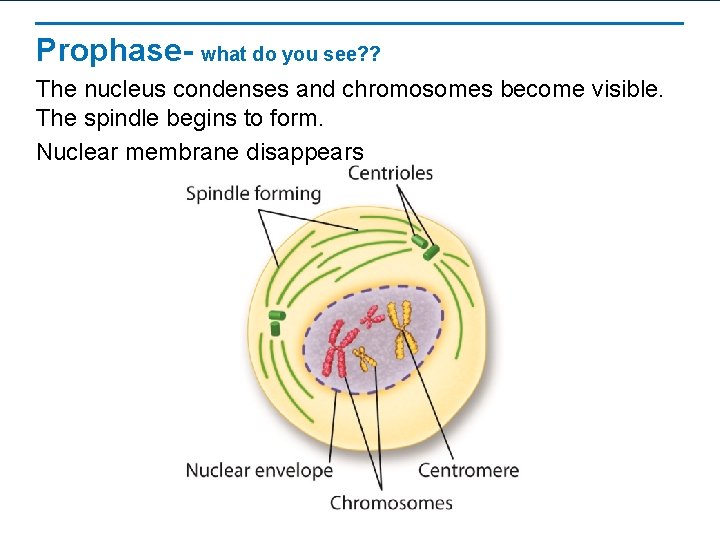
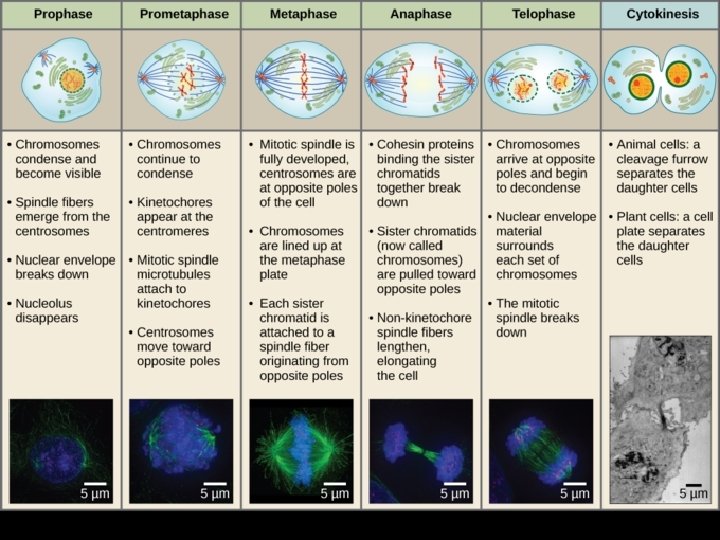
Prophase- what do you see? ? The nucleus condenses and chromosomes become visible. The spindle begins to form. Nuclear membrane disappears
Prophase �By the end of prophase, the centrosomes (organelles that produce spindle fibers) have separated and have moved to opposite poles of the cell.
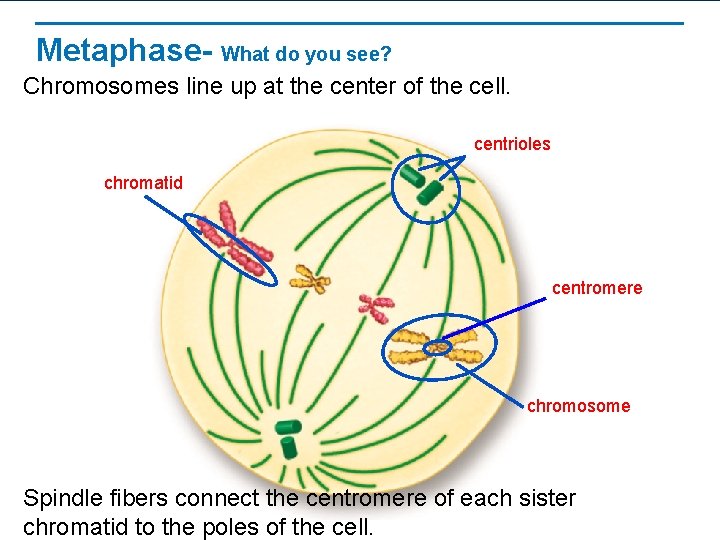
Metaphase- What do you see? Chromosomes line up at the center of the cell. centrioles chromatid centromere chromosome Spindle fibers connect the centromere of each sister chromatid to the poles of the cell.
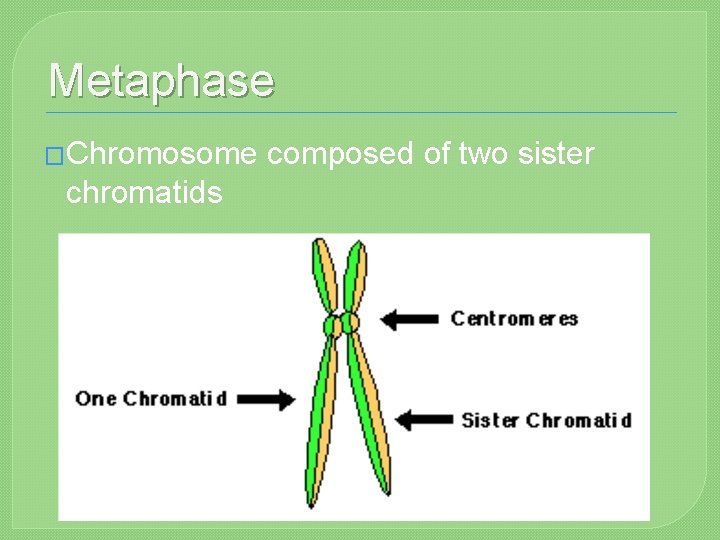
Metaphase �Chromosome chromatids composed of two sister
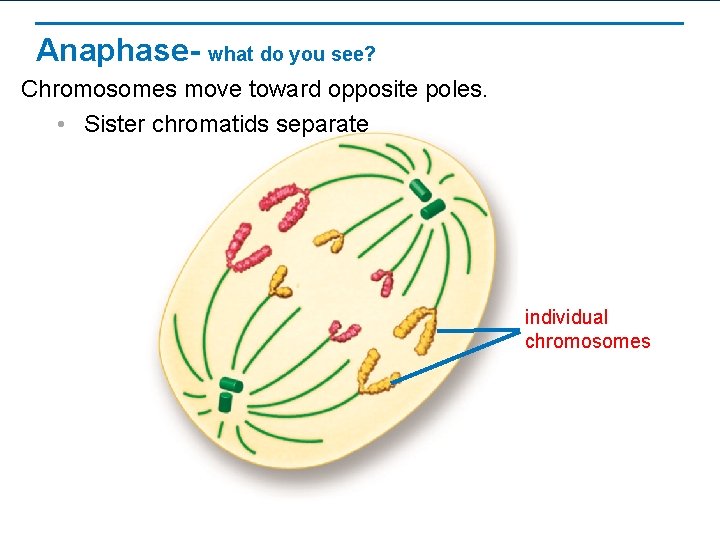
Anaphase- what do you see? Chromosomes move toward opposite poles. • Sister chromatids separate individual chromosomes
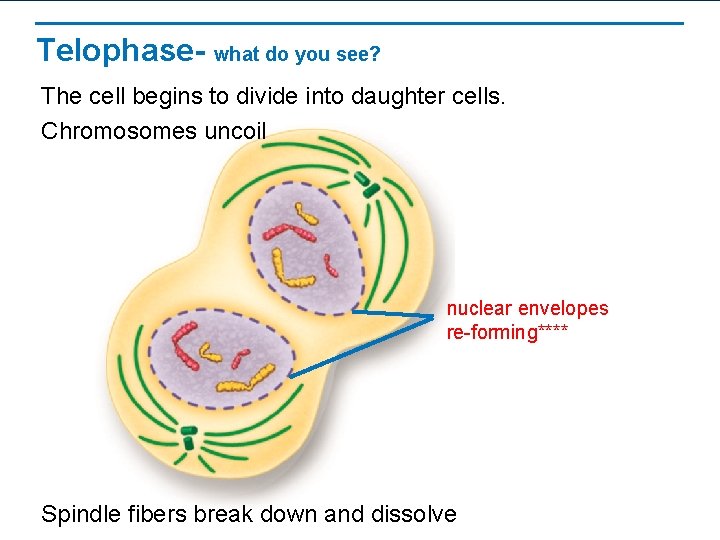
Telophase- what do you see? The cell begins to divide into daughter cells. Chromosomes uncoil nuclear envelopes re-forming**** Spindle fibers break down and dissolve
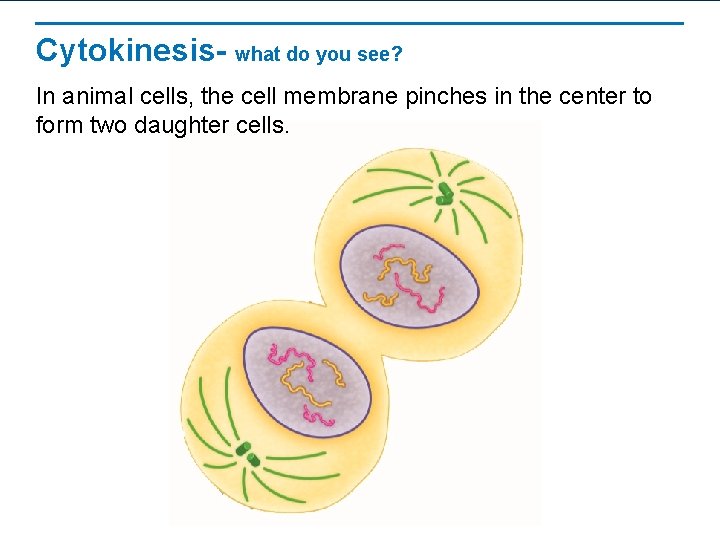
Cytokinesis- what do you see? In animal cells, the cell membrane pinches in the center to form two daughter cells.
Cytokinesis �Cytokinesis is the division of the cytoplasm into two individual cells. �The process of cytokinesis differs somewhat in plant and animal cells.
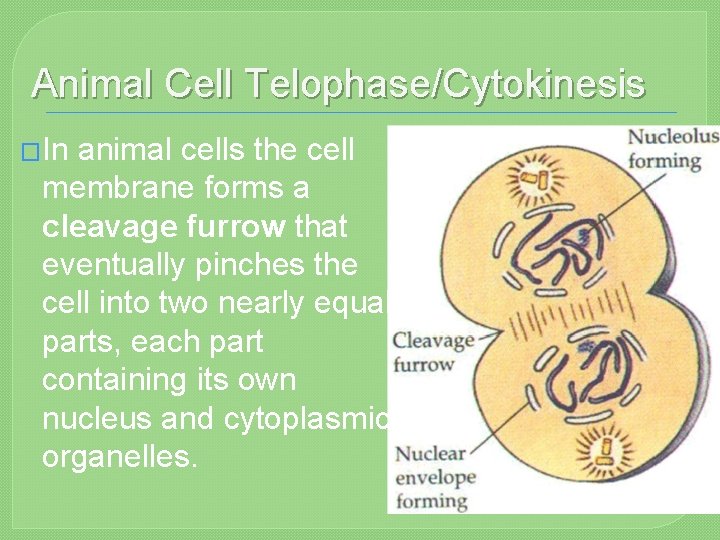
Animal Cell Telophase/Cytokinesis �In animal cells the cell membrane forms a cleavage furrow that eventually pinches the cell into two nearly equal parts, each part containing its own nucleus and cytoplasmic organelles.
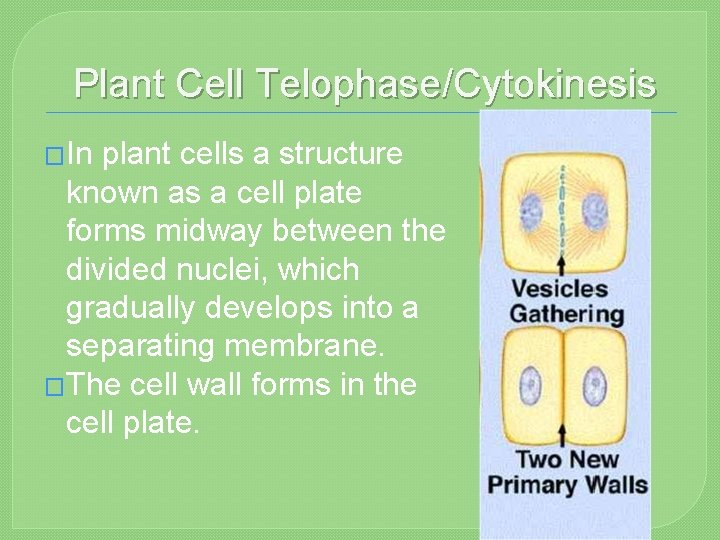
Plant Cell Telophase/Cytokinesis �In plant cells a structure known as a cell plate forms midway between the divided nuclei, which gradually develops into a separating membrane. �The cell wall forms in the cell plate.
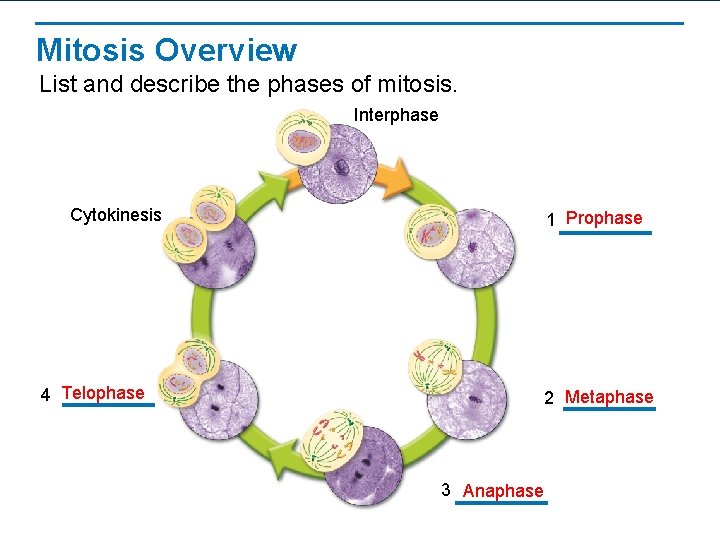
Mitosis Overview List and describe the phases of mitosis. Interphase Cytokinesis 1 Prophase 4 Telophase 2 Metaphase 3 Anaphase
Mitosis Worksheet

Revisit Workbook
- Slides: 27