
Thursday 41615 Aim How is blood type determined
Thursday 4/16/15 Aim: How is blood type determined? Do Now: 1. How are blood types determined by investigators? 2. In detail explain what would happen if a person with blood type A received a transfusion from blood type B? 3. What would happen if a person who is Rh- received a transfusion from Rh+? HW: questions 9 and 10 on page 329
1. If a person has O - blood, which blood types can they receive? 2. If a person has A+ blood, which blood types can they receive?
Friday 4/16/15 • AIM: how are blood stains analyzed? • DO NOW:
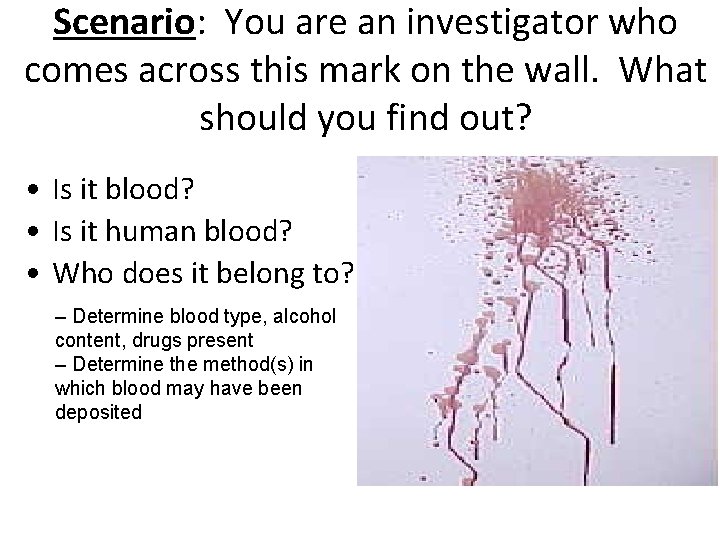
Scenario: You are an investigator who comes across this mark on the wall. What should you find out? • Is it blood? • Is it human blood? • Who does it belong to? – Determine blood type, alcohol content, drugs present – Determine the method(s) in which blood may have been deposited
Blood Evidence • Bloodstains may look like purple paint, grease stains, ketchup stains, and many other things besides blood. A.
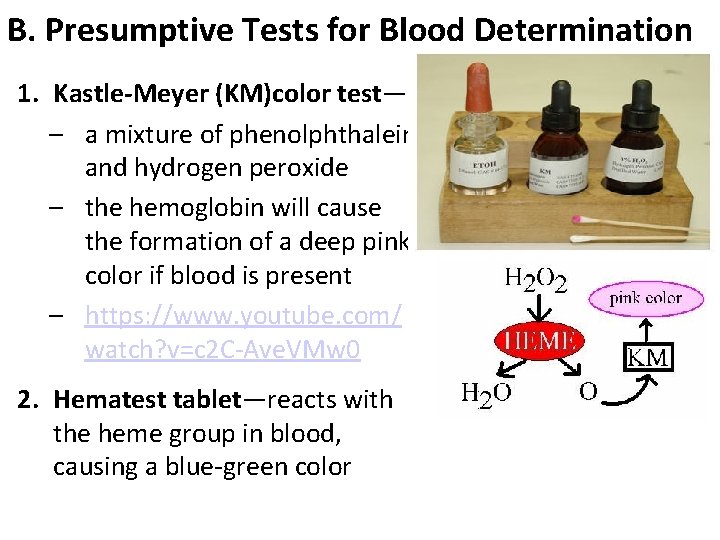
B. Presumptive Tests for Blood Determination 1. Kastle-Meyer (KM)color test— – a mixture of phenolphthalein and hydrogen peroxide – the hemoglobin will cause the formation of a deep pink color if blood is present – https: //www. youtube. com/ watch? v=c 2 C-Ave. VMw 0 2. Hematest tablet—reacts with the heme group in blood, causing a blue-green color
https: //www. youtube. com/watch? v=Rr. NUAXc. Meus Hemastix Test - You. Tube
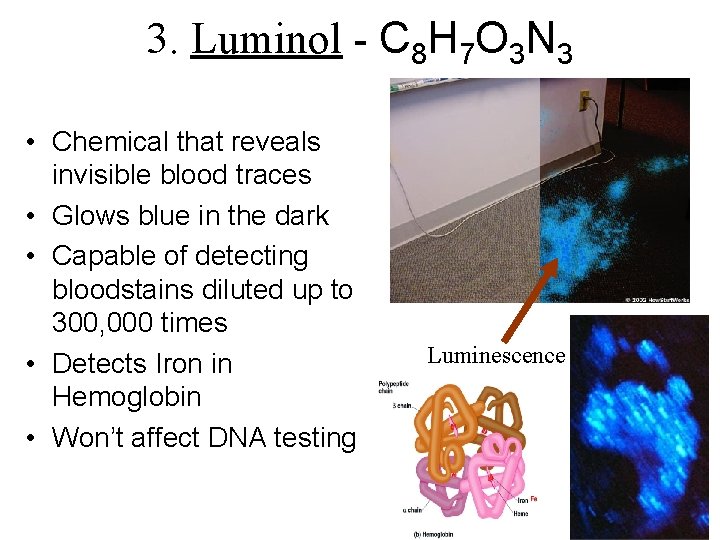
3. Luminol - C 8 H 7 O 3 N 3 • Chemical that reveals invisible blood traces • Glows blue in the dark • Capable of detecting bloodstains diluted up to 300, 000 times • Detects Iron in Hemoglobin • Won’t affect DNA testing Luminescence
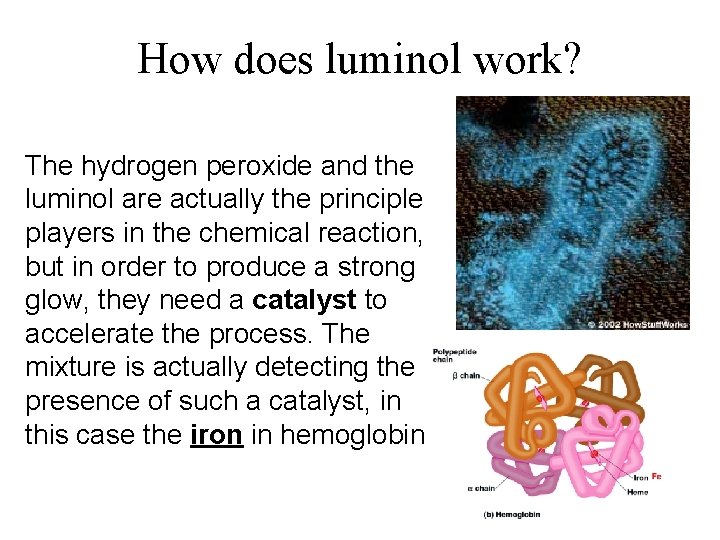
How does luminol work? The hydrogen peroxide and the luminol are actually the principle players in the chemical reaction, but in order to produce a strong glow, they need a catalyst to accelerate the process. The mixture is actually detecting the presence of such a catalyst, in this case the iron in hemoglobin
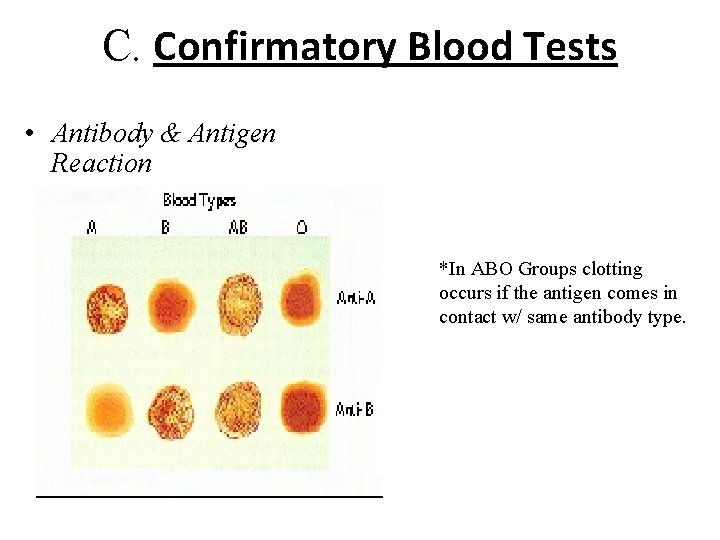
C. Confirmatory Blood Tests • Antibody & Antigen Reaction *In ABO Groups clotting occurs if the antigen comes in contact w/ same antibody type.
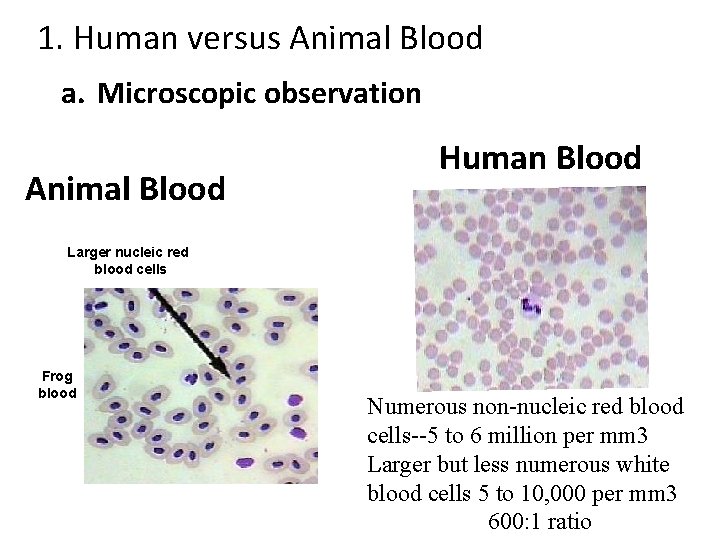
1. Human versus Animal Blood a. Microscopic observation Animal Blood Human Blood Larger nucleic red blood cells Frog blood Numerous non-nucleic red blood cells--5 to 6 million per mm 3 Larger but less numerous white blood cells 5 to 10, 000 per mm 3 600: 1 ratio
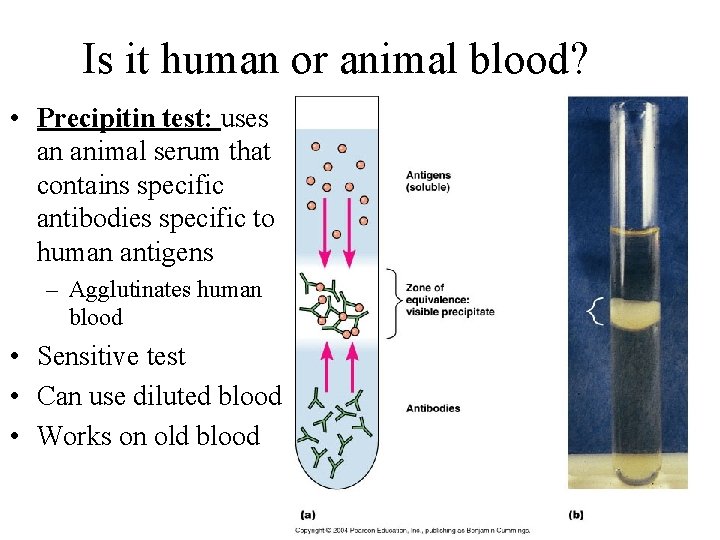
Is it human or animal blood? • Precipitin test: uses an animal serum that contains specific antibodies specific to human antigens – Agglutinates human blood • Sensitive test • Can use diluted blood • Works on old blood
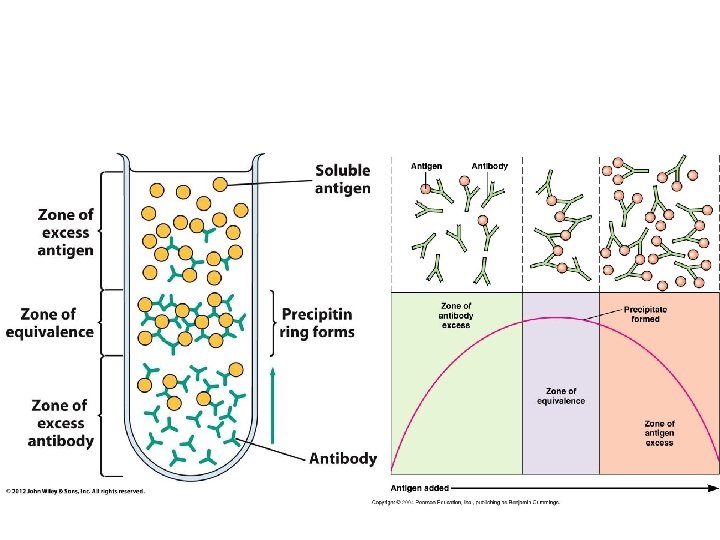
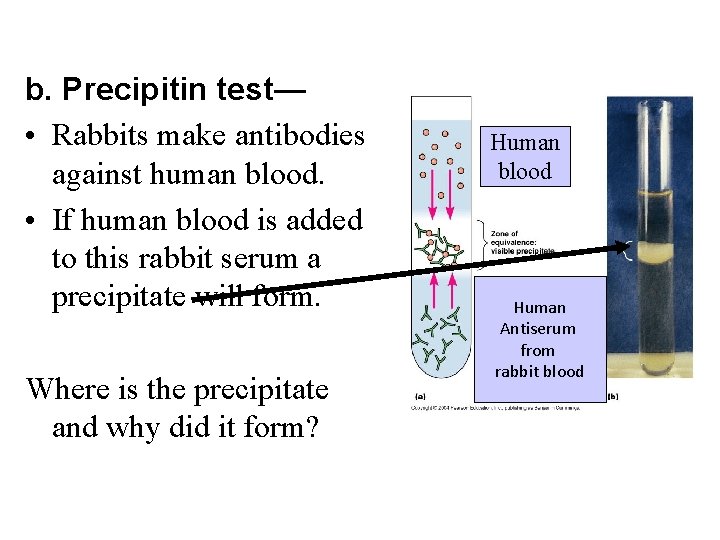
b. Precipitin test— • Rabbits make antibodies against human blood. • If human blood is added to this rabbit serum a precipitate will form. Where is the precipitate and why did it form? Human blood Human Antiserum from rabbit blood
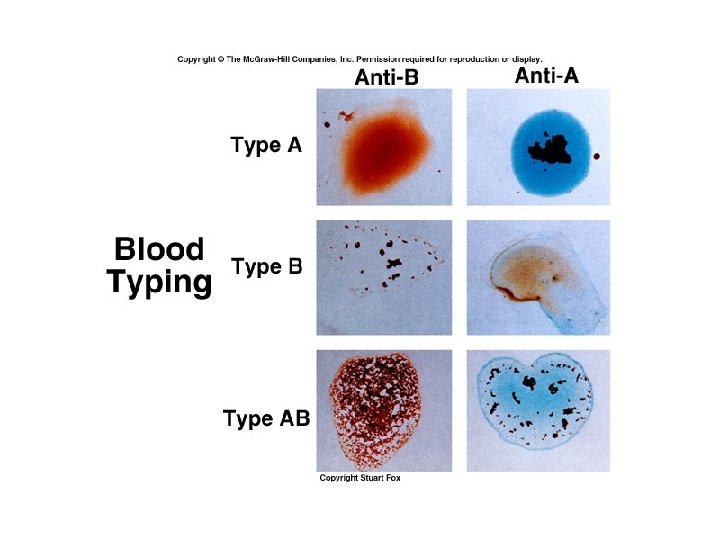
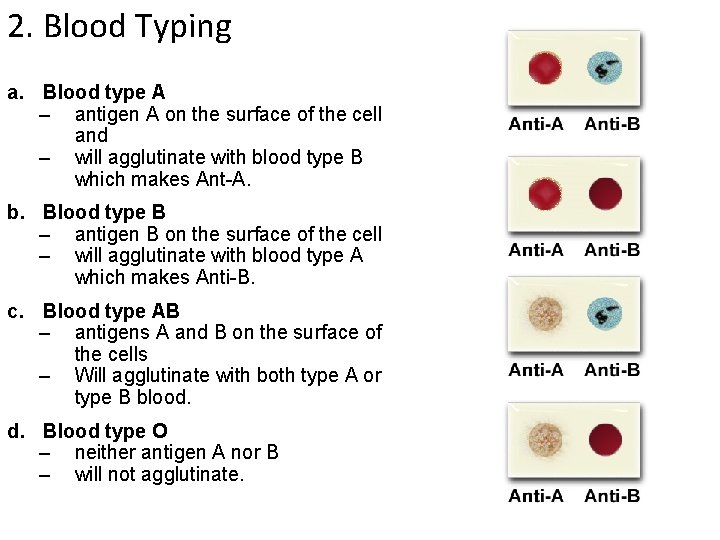
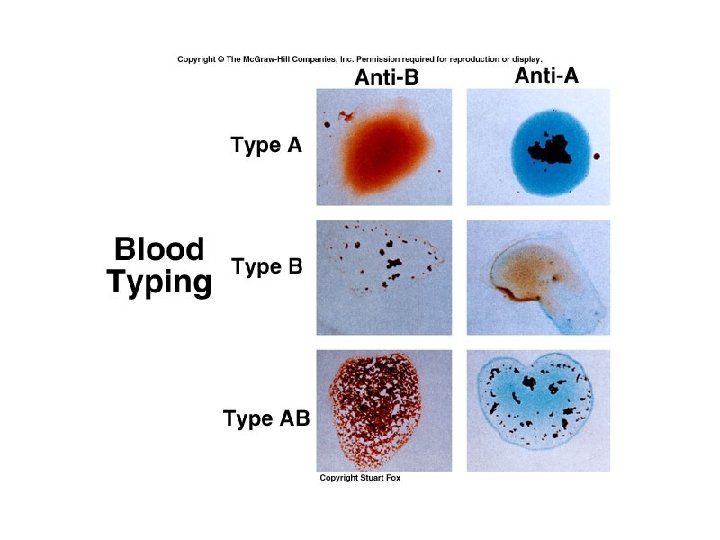
2. Blood Typing a. Blood type A – antigen A on the surface of the cell and – will agglutinate with blood type B which makes Ant-A. b. Blood type B – antigen B on the surface of the cell – will agglutinate with blood type A which makes Anti-B. c. Blood type AB – antigens A and B on the surface of the cells – Will agglutinate with both type A or type B blood. d. Blood type O – neither antigen A nor B – will not agglutinate.
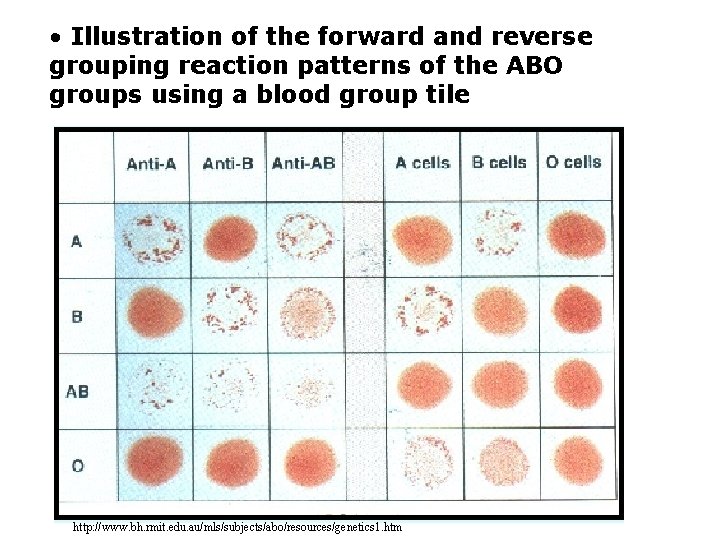
• Illustration of the forward and reverse grouping reaction patterns of the ABO groups using a blood group tile http: //www. bh. rmit. edu. au/mls/subjects/abo/resources/genetics 1. htm
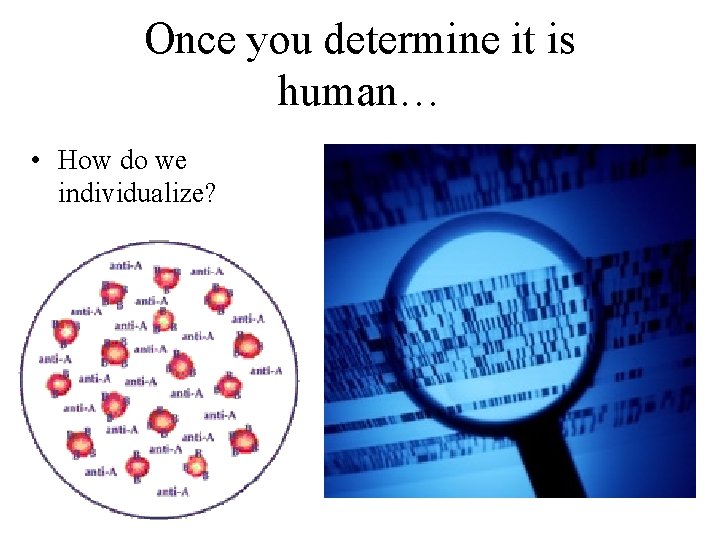
Once you determine it is human… • How do we individualize?
Summary • When an investigator comes upon a red mark at a crime scene what are 3 questions that he needs answered about the stain. • List 2 tests that are used to determine if a red mark is blood • Describe one of these tests in detail. • List 1 test used to determine if the blood stain is human blood.
- Slides: 20