
THROMBOSIS Dr Nisreen Abu Shahin Assistant Professor of
THROMBOSIS Dr. Nisreen Abu Shahin Assistant Professor of Pathology Department University of Jordan
NORMAL BLOOD VESSEL HISTOLOGY
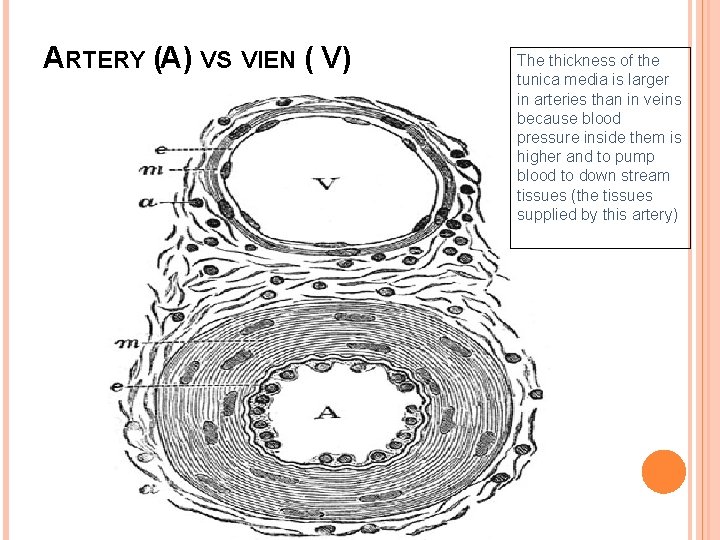
ARTERY (A) VS VIEN ( V) The thickness of the tunica media is larger in arteries than in veins because blood pressure inside them is higher and to pump blood to down stream tissues (the tissues supplied by this artery)
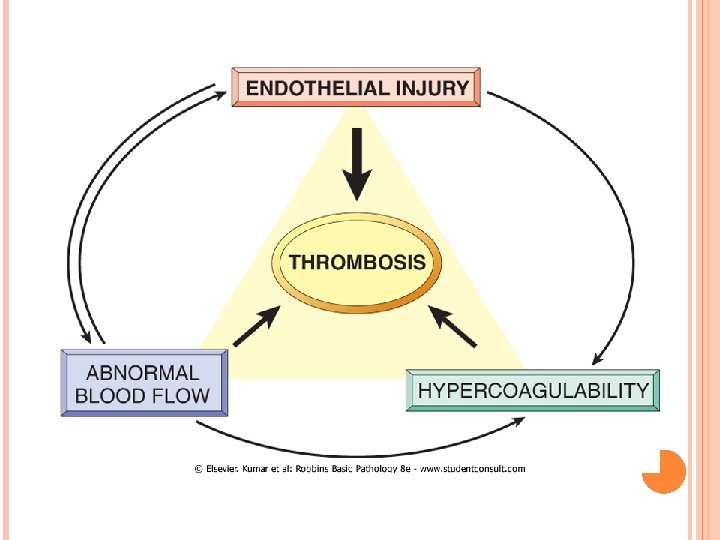
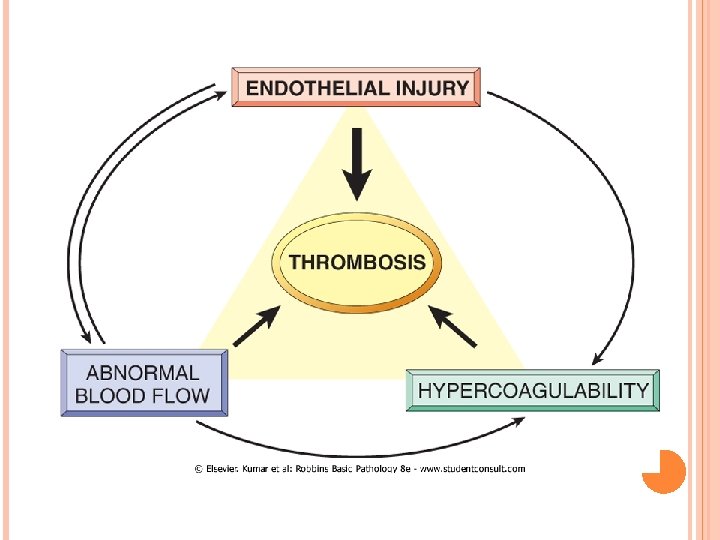
** the doc. read everything in the slides A THROMBOSIS Pathogenesis (called Virchow's triad): 1. Endothelial* Injury ( Heart, Arteries) 2. Stasis (abnormal blood flow) 3. Blood Hypercoagulability Some of them might result in the activation of the other and they are often found in combinations. * Endothelial cells are special type of cells that cover the inside surface of blood vessels and heart (including the valves). -They are not a type of blood cells. -Their function (when healthy and not injured) is protection against thrombosis by secreting and controlling certain mediators that prevent the formation of blood clot and when formed they help to lyse it
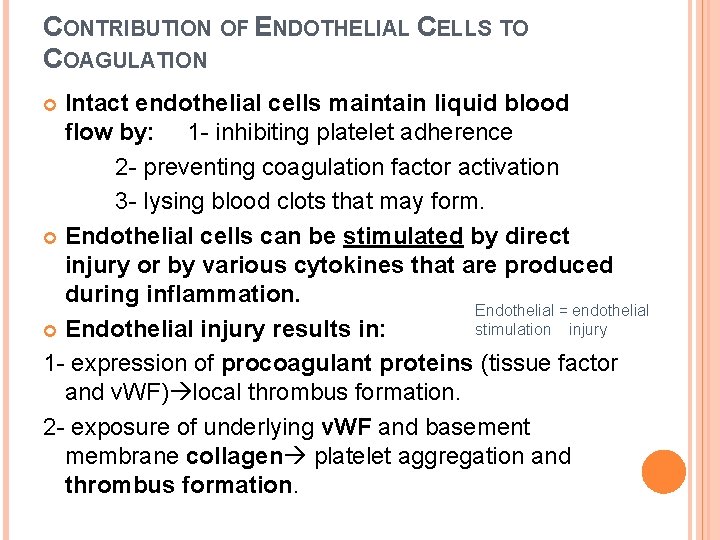
CONTRIBUTION OF ENDOTHELIAL CELLS TO COAGULATION Intact endothelial cells maintain liquid blood flow by: 1 - inhibiting platelet adherence 2 - preventing coagulation factor activation 3 - lysing blood clots that may form. Endothelial cells can be stimulated by direct injury or by various cytokines that are produced during inflammation. Endothelial = endothelial stimulation injury Endothelial injury results in: 1 - expression of procoagulant proteins (tissue factor and v. WF) local thrombus formation. 2 - exposure of underlying v. WF and basement membrane collagen platelet aggregation and thrombus formation.

Endothelial Cell Injury and exposure of subendothelial collagen Adherence of platelets Release of tissue factor
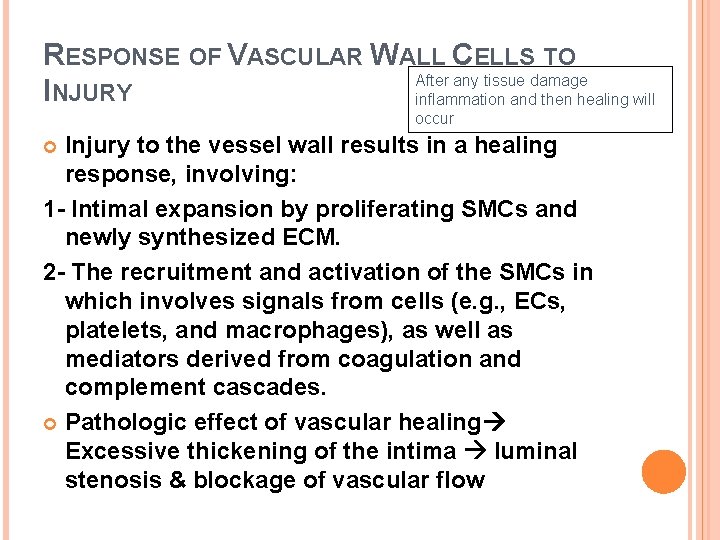
RESPONSE OF VASCULAR WALL CELLS TO After any tissue damage INJURY inflammation and then healing will occur Injury to the vessel wall results in a healing response, involving: 1 - Intimal expansion by proliferating SMCs and newly synthesized ECM. 2 - The recruitment and activation of the SMCs in which involves signals from cells (e. g. , ECs, platelets, and macrophages), as well as mediators derived from coagulation and complement cascades. Pathologic effect of vascular healing Excessive thickening of the intima luminal stenosis & blockage of vascular flow
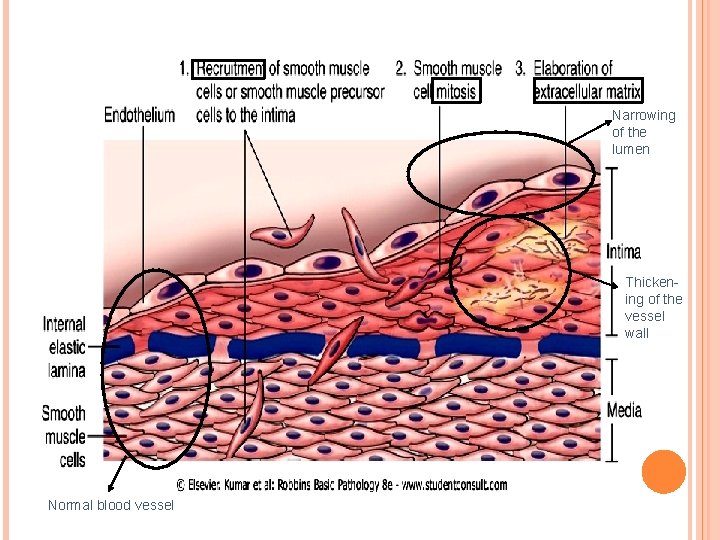
Narrowing of the lumen Thickening of the vessel wall Normal blood vessel
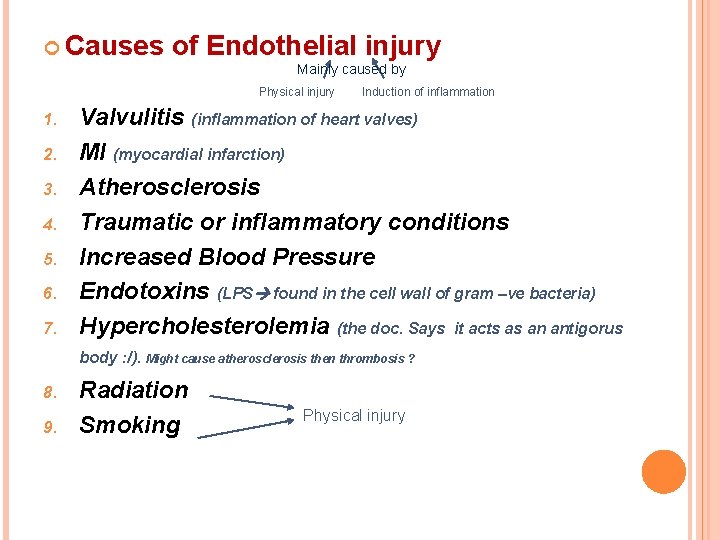
Causes of Endothelial injury Mainly caused by Physical injury 1. 2. 3. 4. 5. 6. 7. Induction of inflammation Valvulitis (inflammation of heart valves) MI (myocardial infarction) Atherosclerosis Traumatic or inflammatory conditions Increased Blood Pressure Endotoxins (LPS found in the cell wall of gram –ve bacteria) Hypercholesterolemia (the doc. Says it acts as an antigorus body : /). Might cause atherosclerosis then thrombosis ? 8. 9. Radiation Smoking Physical injury
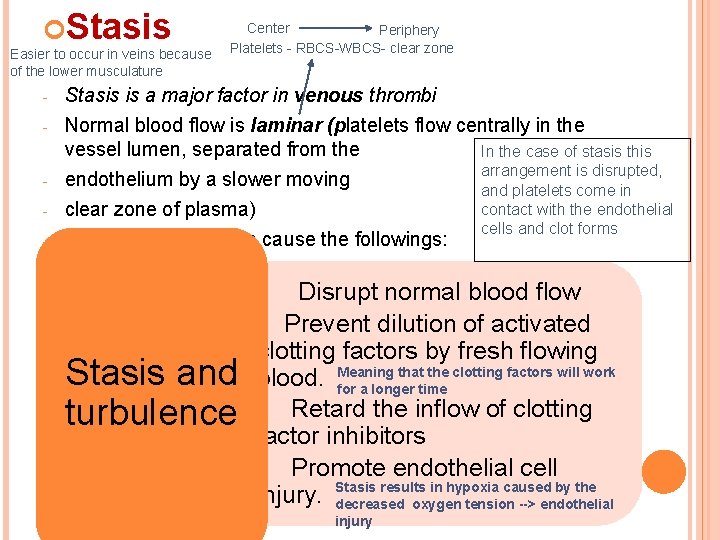
Stasis Easier to occur in veins because of the lower musculature - - Center Periphery Platelets - RBCS-WBCS- clear zone Stasis is a major factor in venous thrombi Normal blood flow is laminar (platelets flow centrally in the vessel lumen, separated from the In the case of stasis this arrangement is disrupted, endothelium by a slower moving and platelets come in contact with the endothelial clear zone of plasma) cells and clot forms Stasis and turbulence cause the followings: • • Disrupt normal blood flow Prevent dilution of activated clotting factors by fresh flowing that the clotting factors will work Stasis and blood. Meaning for a longer time turbulence • Retard the inflow of clotting factor inhibitors • Promote endothelial cell results in hypoxia caused by the injury. Stasis decreased oxygen tension --> endothelial injury
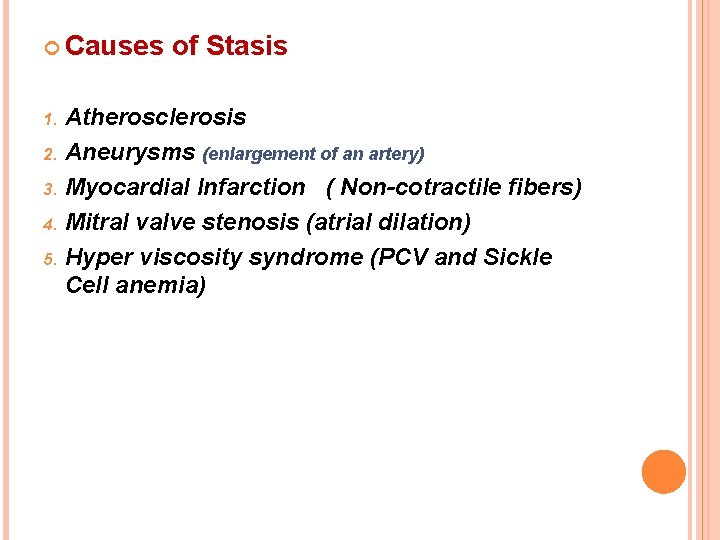
Causes of Stasis Atherosclerosis 2. Aneurysms (enlargement of an artery) 3. Myocardial Infarction ( Non-cotractile fibers) 4. Mitral valve stenosis (atrial dilation) 5. Hyper viscosity syndrome (PCV and Sickle Cell anemia) 1.
Hypercoagulability Mutations In clotting factors ( have increased activity) or clotting factors inhibitors(have decreased activity) A. Genetic (primary): - mutations in the factor V gene and the prothrombin gene are the most common B. Acquired (secondary): - multifactorial and is therefore more complicated - causes include: Immobilization, MI, causes AF, surgery, fractures, burns, Cancer, Prosthetic cardiac valves …etc Might be due to thrombus formation when they metastasize, Or clotting factors production (paraneoplastic syndrome)
MORPHOLOGY OF THROMBI Can develop anywhere in the CVS (e. g. , in cardiac chambers, valves, arteries, veins, or capillaries). Arterial or cardiac thrombi begin at sites of endothelial injury or turbulence; and are usually superimposed on an atherosclerotic plaque Venous thrombi occur at sites of stasis. Most commonly the veins of the lower extremities (90%) Thrombi are focally attached to the underlying vascular surface. The propagating portion of a thrombus is poorly attached fragmentation and embolus formation
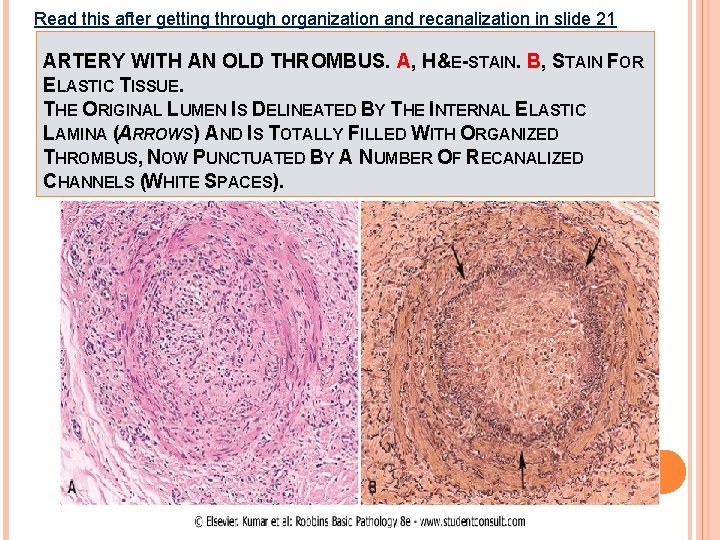
Read this after getting through organization and recanalization in slide 21 ARTERY WITH AN OLD THROMBUS. A, H&E-STAIN. B, STAIN FOR ELASTIC TISSUE. THE ORIGINAL LUMEN IS DELINEATED BY THE INTERNAL ELASTIC LAMINA (ARROWS) AND IS TOTALLY FILLED WITH ORGANIZED THROMBUS, NOW PUNCTUATED BY A NUMBER OF RECANALIZED CHANNELS (WHITE SPACES).
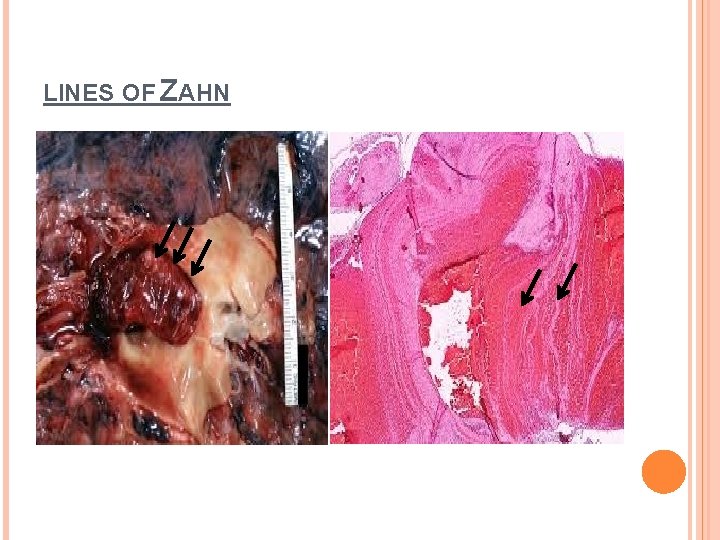
LINES OF ZAHN Thrombi can have grossly (and microscopically) apparent laminations called lines of Zahn; these represent pale platelet and fibrin layers alternating with darker erythrocyte-rich layers. Such lines are significant in that they represent thrombosis of flowing blood (can potentially distinguish antemortem thrombosis from postmortem clots) postmortem blood clots are bland non-laminated clots (no lines of Zahn) They appear in antemortem blood clots, and only used to differentiae between ante- and post-mortem clots in forensics
LINES OF ZAHN
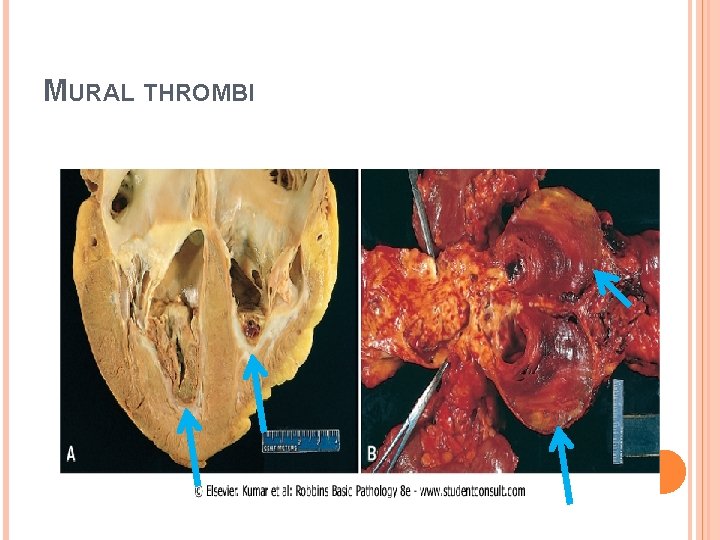
Mural thrombi Thrombi occurring in heart chambers or in the aortic lumen. Causes include: Abnormal myocardial contraction (e. g. arrhythmias, dilated cardiomyopathy, or MI) or endomyocardial injury (caused by myocarditis, catheter trauma) Vegetations Thrombi on heart valves are called vegetations: Types: 1 - infectious (Bacterial or fungal blood-borne infections) (e. g. infective endocarditis, ). 2 -Non-bacterial thrombotic endocarditis occur on sterile valves.
MURAL THROMBI
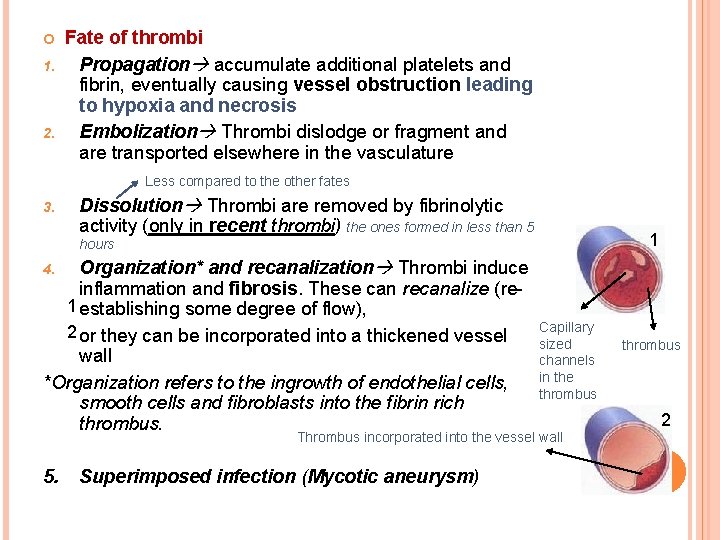
1. 2. Fate of thrombi Propagation accumulate additional platelets and fibrin, eventually causing vessel obstruction leading to hypoxia and necrosis Embolization Thrombi dislodge or fragment and are transported elsewhere in the vasculature Less compared to the other fates 3. Dissolution Thrombi are removed by fibrinolytic activity (only in recent thrombi) the ones formed in less than 5 1 hours Organization* and recanalization Thrombi induce inflammation and fibrosis. These can recanalize (re 1 establishing some degree of flow), 5. 2 or they can be incorporated into a thickened vessel wall *Organization refers to the ingrowth of endothelial cells, smooth cells and fibroblasts into the fibrin rich thrombus. 4. Capillary sized channels in the thrombus Thrombus incorporated into the vessel wall 5. Superimposed infection (Mycotic aneurysm) thrombus 2
Venous thrombi (veins of the legs) are most common a. Superficial: e. g. Saphenous veins. - can cause local congestion, swelling, pain, and tenderness along the course of the involved vein, but they rarely embolize a. Deep: e. g. Popliteal, Femoral and iliac vein. more serious because they may embolize can occur with stasis or in a variety of hypercoagulable states
- Slides: 22