
THREE WAYS OF BEING WHITE AN EDUCATORS GUIDE
THREE WAYS OF BEING WHITE: AN EDUCATORS’ GUIDE TOWARDS MULTICULTURAL GROWTH Dr. Sarah Broman Miller Fort Hays State University
TRUTH • YOU’VE HEARD IT SAID THAT THE TRUTH WILL SET YOU FREE. • IT WILL ALWAYS MAKE YOU ANGRY BEFORE IT SETS YOU FREE. • THAT IS WHY I WAS ANGRY WHEN I DISCOVERED THAT I AM A RECOVERING RACIST.
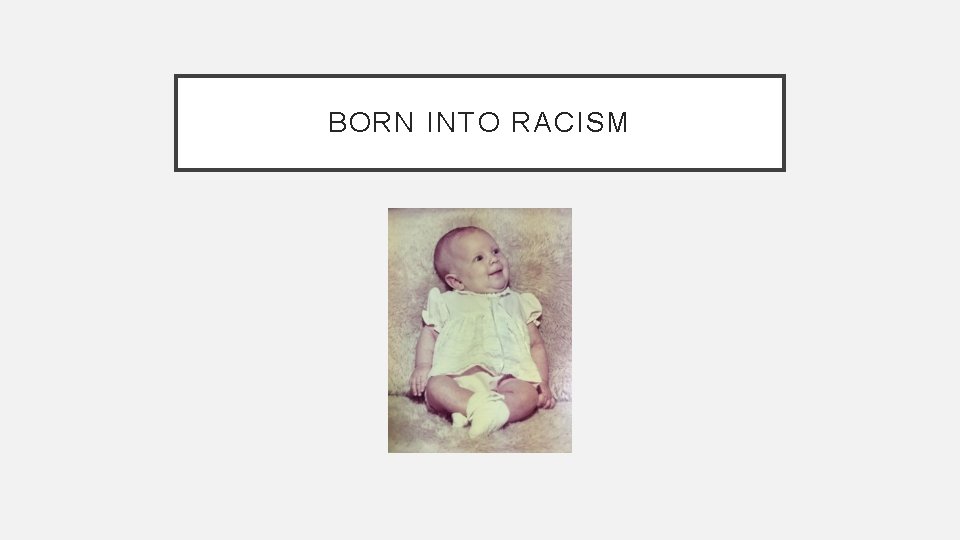
BORN INTO RACISM
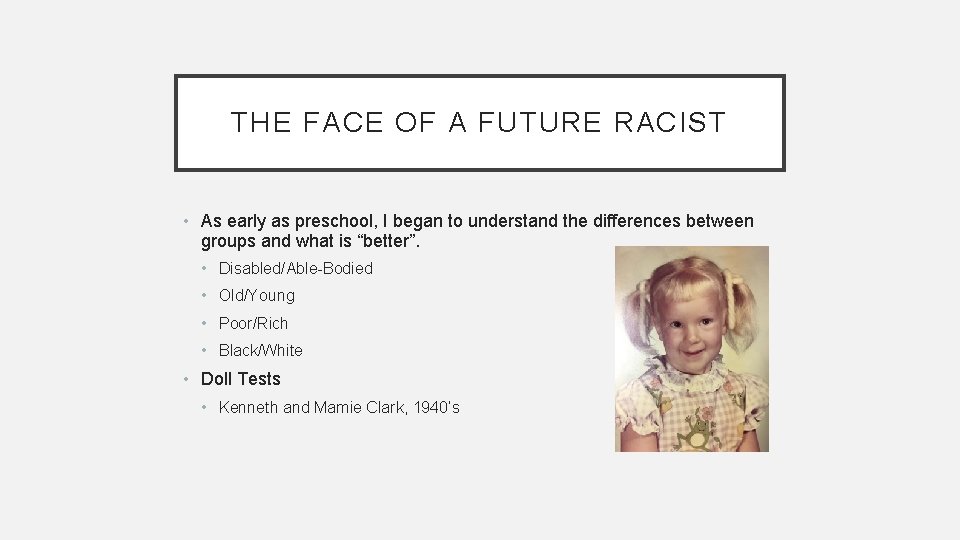
THE FACE OF A FUTURE RACIST • As early as preschool, I began to understand the differences between groups and what is “better”. • Disabled/Able-Bodied • Old/Young • Poor/Rich • Black/White • Doll Tests • Kenneth and Mamie Clark, 1940’s
A SHELTERED LIFE • I never considered myself a racist. • Consider how I talked about the White neighborhood where I grew up: • Good, safe, sheltered, clean, desirable
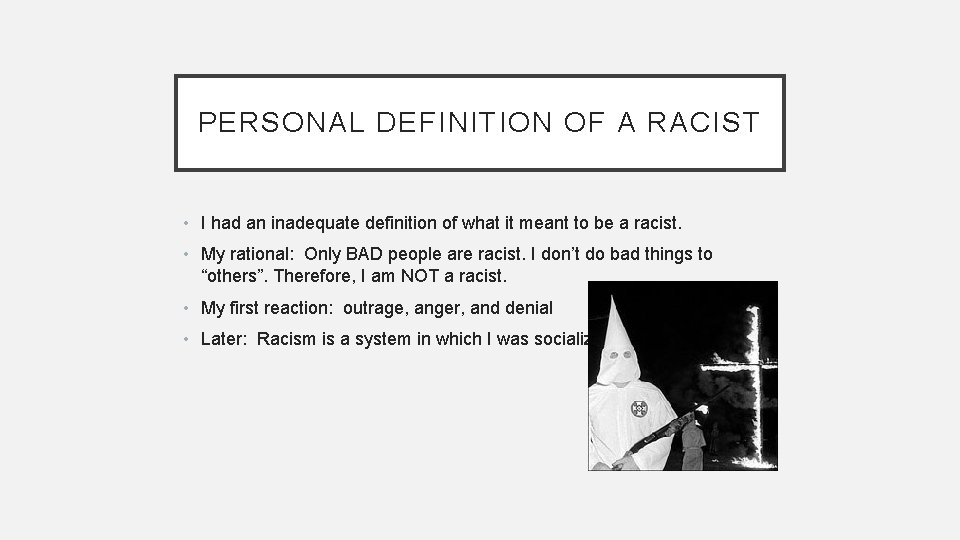
PERSONAL DEFINITION OF A RACIST • I had an inadequate definition of what it meant to be a racist. • My rational: Only BAD people are racist. I don’t do bad things to “others”. Therefore, I am NOT a racist. • My first reaction: outrage, anger, and denial • Later: Racism is a system in which I was socialized.
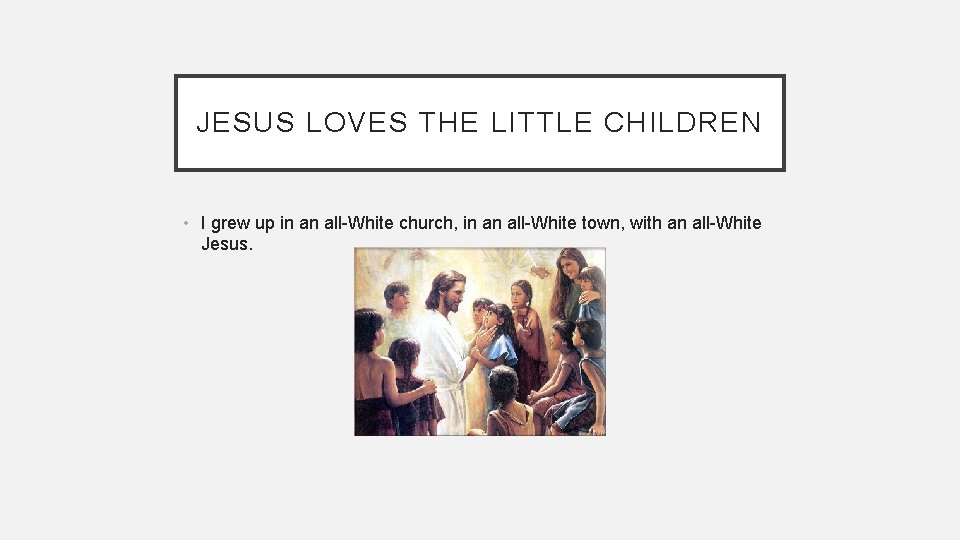
JESUS LOVES THE LITTLE CHILDREN • I grew up in an all-White church, in an all-White town, with an all-White Jesus.
LOVE IS COLORBLIND • Most millennials believe this. • It perpetuates racism. • If I am colorblind, then racism doesn’t exist.
RACIAL SLURS
PARENTING • “Mom! There’s my BLACK friend!” • Why is naming this person’s race impolite? • What is so shameful about being Black that we pretend to notice?
WHITE PRIVILEGE • Never heard about this until my early thirties. • ANGER, DEFENSIVE, ARGUMENTATITVE • I grew up poor. How could I be privileged? • Why isn’t there a White History month? • Individualism and meritocracy
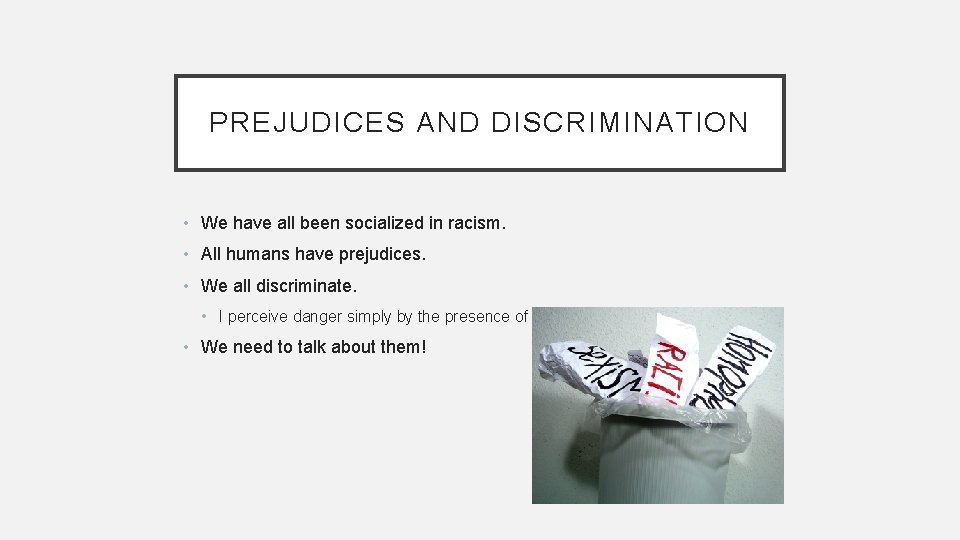
PREJUDICES AND DISCRIMINATION • We have all been socialized in racism. • All humans have prejudices. • We all discriminate. • I perceive danger simply by the presence of Black people. • We need to talk about them!
WHITE RACIAL FRAME • Cultural information passed on from one person to the next, one group to the next, one generation to the next. • Questions I asked myself: • What percentage of the United States population is African American? • When was I aware other racial groups existed? • Did your parents tell you that race didn’t matter and everyone was equal? • Did they have many friends of color? • Did you often have teachers the same race as your own?

WHITE IDENTITY ORIENTATIONS GARY R. HOWARD, 1990 TEACHERS COLLEGE, COLUMBIA UNIVERSITY, 1999 Modalities of Growth THINKING FUNDAMENTALIST INTEGRATIONIST TRANSFORMIST CONSTRUCTION OF TRUTH • • Acknowledge diverse perspectives Interest in broader truths Continued defense of Western superiority • Beginning awareness Some self-interrogation Dissonance • • CONSTRUCTION OF WHITENESS • • • CONSTRUCTIONOF DONIMANCE • • • Literal and fixed Single-dimensional truth Western-centric • • Supremacist /White is right Ignorance/avoidance Confusion • • • Legitimize/perpetuate dominance Rationalize Deny/ignore • • • Victim’s perspective Personal rather than instructional critique of dominance • • • Legitimacy of diverse perspectives Truth as dynamic/changing Actively seeking divergent truths Self-reflective critique Deep interrogation of Whiteness Affirming authentic/positive/ nonracist identity Acknowledge complicity Holistic critique of oppression Comprehensive analysis of dominance

WHITE IDENTITY ORIENTATIONS GARY R. HOWARD, 1990 TEACHERS COLLEGE, COLUMBIA UNIVERSITY, 1999 MODALITIES OF GROWTH: FEELING FUNDAMENTALIST LEVEL OF SELFAWARENESS • INTEGRATIONIST TRANSFORMATIONIST • My perspective is right-the • only one Self-esteem linked to • supremacy Threatened by differences • EMOTIONAL RESPONSE TO DIFFERENCES • • • Fear/hostility/avoidance Judgement Colorblindness • • • Interest Beginning awareness Cultural voyeurism/curiosity • • • Appreciation/respect Enthusiasm/ joy Honesty EMOTIONAL RESPONSE TO DISCUSSIONS OF RACISM • • • Anger Denial Defensiveness/avoidance • • • Shame/guilt/confusion Missionary zeal Externalized as someone else’s problem • Acknowledgment and empathy Enlightened aversion to oppression Responsibility without guilt • My perspective is one of many Self-esteem linked to “helping” others “Wannabe” phenomenon • • • My perspective is changing Self-esteem is linked to growth and change I am enhanced by connection to different groups
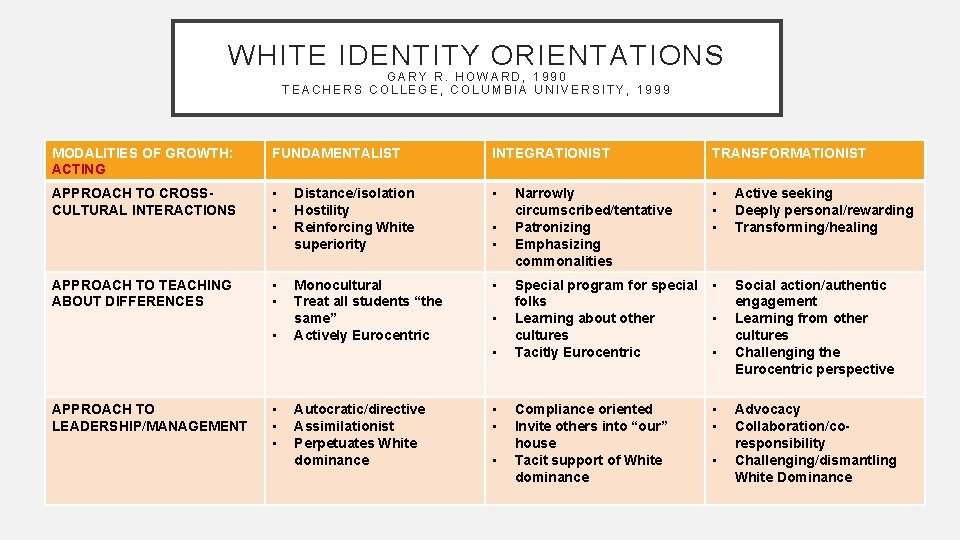
WHITE IDENTITY ORIENTATIONS GARY R. HOWARD, 1990 TEACHERS COLLEGE, COLUMBIA UNIVERSITY, 1999 MODALITIES OF GROWTH: ACTING FUNDAMENTALIST INTEGRATIONIST TRANSFORMATIONIST APPROACH TO CROSSCULTURAL INTERACTIONS • • • Distance/isolation Hostility Reinforcing White superiority • Narrowly circumscribed/tentative Patronizing Emphasizing commonalities • • • Active seeking Deeply personal/rewarding Transforming/healing • • Monocultural Treat all students “the same” Actively Eurocentric • Special program for special folks Learning about other cultures Tacitly Eurocentric • Social action/authentic engagement Learning from other cultures Challenging the Eurocentric perspective Compliance oriented Invite others into “our” house Tacit support of White dominance • • APPROACH TO TEACHING ABOUT DIFFERENCES • • • APPROACH TO LEADERSHIP/MANAGEMENT • • • Autocratic/directive Assimilationist Perpetuates White dominance • • • Advocacy Collaboration/coresponsibility Challenging/dismantling White Dominance
MY APOLOGIES
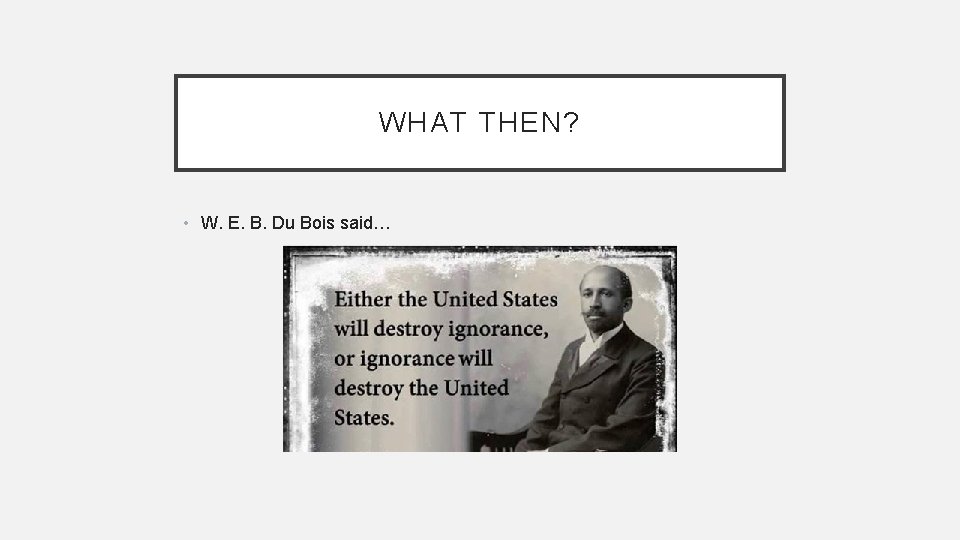
WHAT THEN? • W. E. B. Du Bois said…
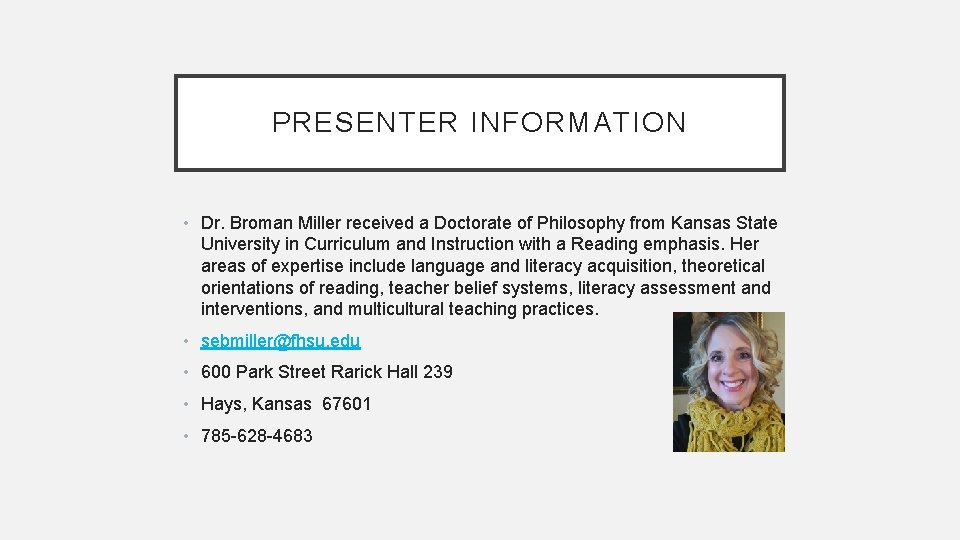
PRESENTER INFORMATION • Dr. Broman Miller received a Doctorate of Philosophy from Kansas State University in Curriculum and Instruction with a Reading emphasis. Her areas of expertise include language and literacy acquisition, theoretical orientations of reading, teacher belief systems, literacy assessment and interventions, and multicultural teaching practices. • sebmiller@fhsu. edu • 600 Park Street Rarick Hall 239 • Hays, Kansas 67601 • 785 -628 -4683
REFERENCES • Diangelo, R. , (2018) White Fragility: Why It’s So Hard for White People to Talk about Racism. Boston, MA: Beacon Press. • Dilworth, M. E. (2018) Millennial Teachers of Color. Cambridge, MA: Harvard Education Press. • Howard, G. R. , (1999) We Can’t Teach What We Don’t Know. New York, NY: Teachers College Press
- Slides: 20