
THREE TYPES OF ELEMENTS Metals nonmetals and metalloids
- Slides: 7
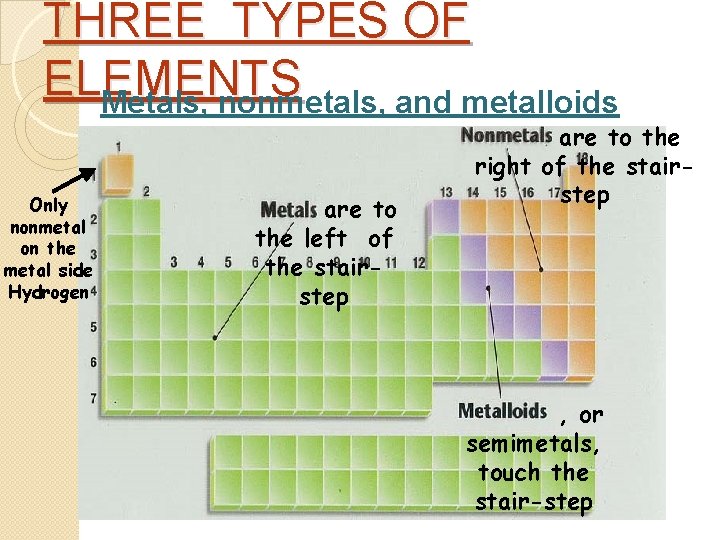
THREE TYPES OF ELEMENTS Metals, nonmetals, and metalloids Only nonmetal on the metal side Hydrogen are to the left of the stairstep are to the right of the stairstep , or semimetals, touch the stair-step
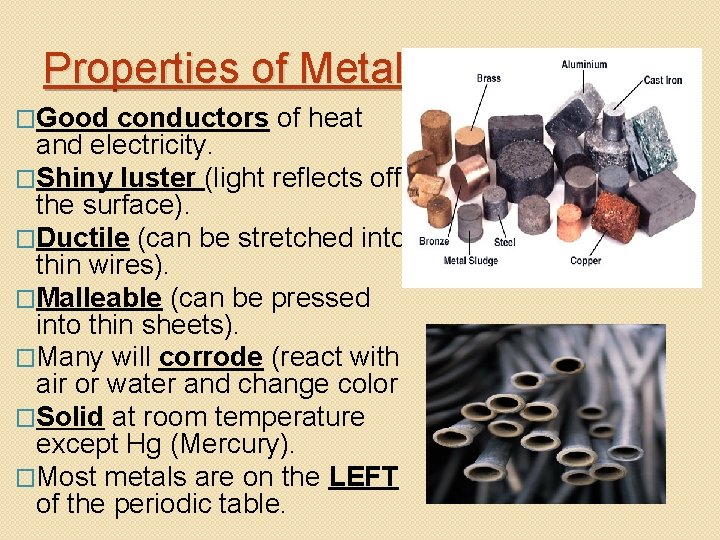
Properties of Metals �Good conductors of heat and electricity. �Shiny luster (light reflects off the surface). �Ductile (can be stretched into thin wires). �Malleable (can be pressed into thin sheets). �Many will corrode (react with air or water and change color �Solid at room temperature except Hg (Mercury). �Most metals are on the LEFT of the periodic table.
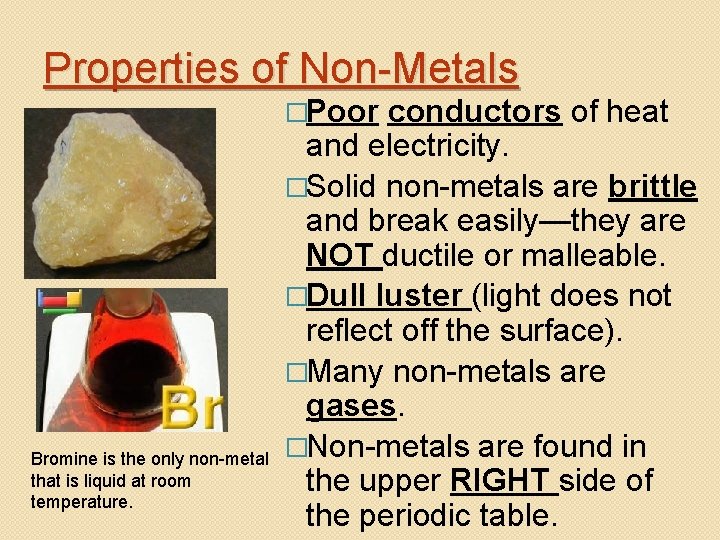
Properties of Non-Metals �Poor Bromine is the only non-metal that is liquid at room temperature. conductors of heat and electricity. �Solid non-metals are brittle and break easily—they are NOT ductile or malleable. �Dull luster (light does not reflect off the surface). �Many non-metals are gases. �Non-metals are found in the upper RIGHT side of the periodic table.
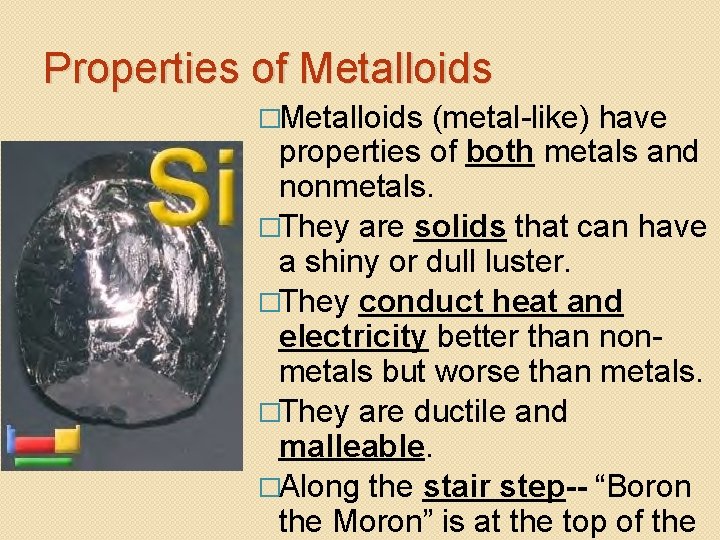
Properties of Metalloids �Metalloids (metal-like) have properties of both metals and nonmetals. �They are solids that can have a shiny or dull luster. �They conduct heat and electricity better than nonmetals but worse than metals. �They are ductile and malleable. �Along the stair step-- “Boron the Moron” is at the top of the
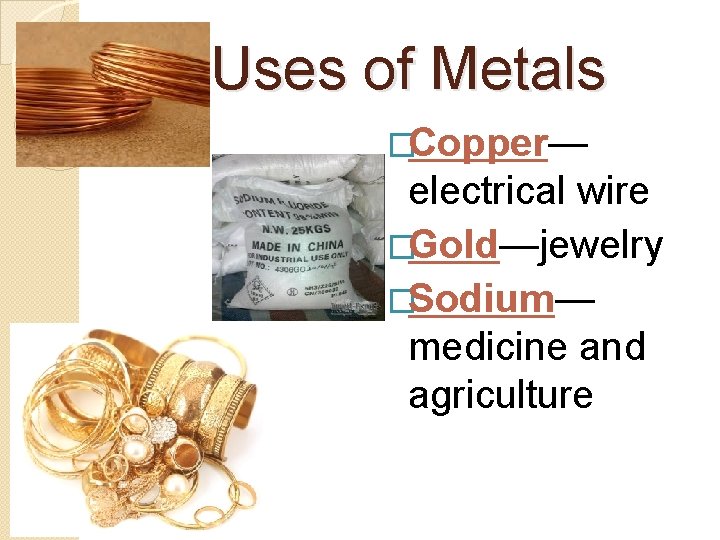
Uses of Metals �Copper— electrical wire �Gold—jewelry �Sodium— medicine and agriculture
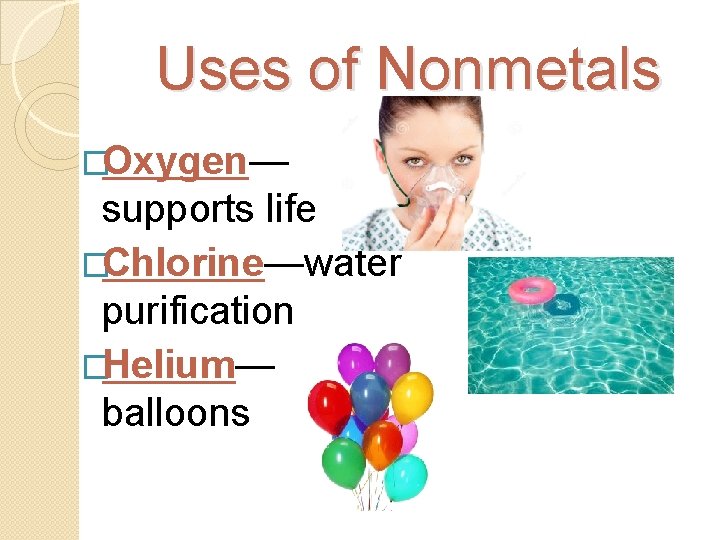
Uses of Nonmetals �Oxygen— supports life �Chlorine—water purification �Helium— balloons
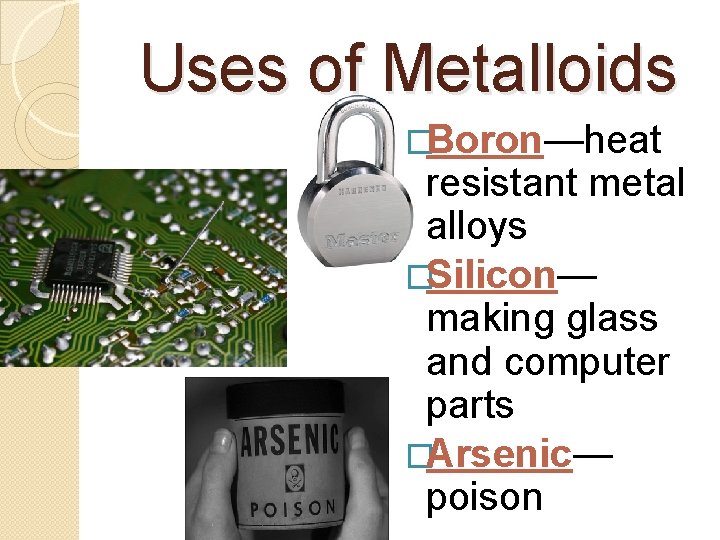
Uses of Metalloids �Boron—heat resistant metal alloys �Silicon— making glass and computer parts �Arsenic— poison