
Three Sections of the Cell Cell Basic unit
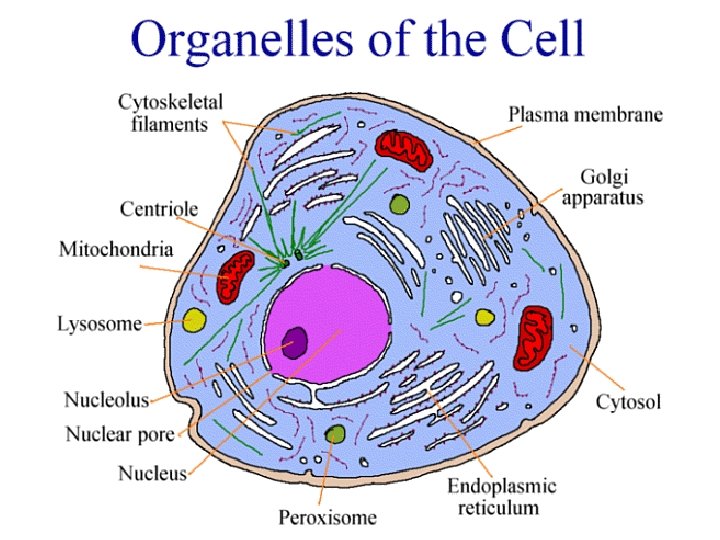
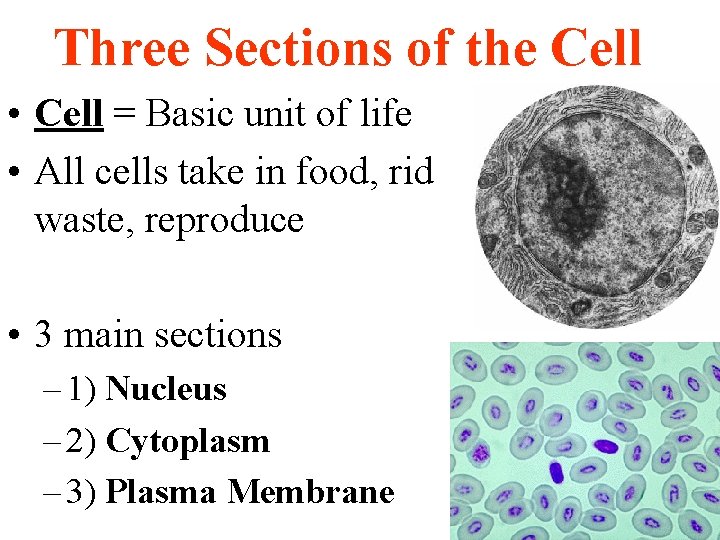
Three Sections of the Cell • Cell = Basic unit of life • All cells take in food, rid waste, reproduce • 3 main sections – 1) Nucleus – 2) Cytoplasm – 3) Plasma Membrane
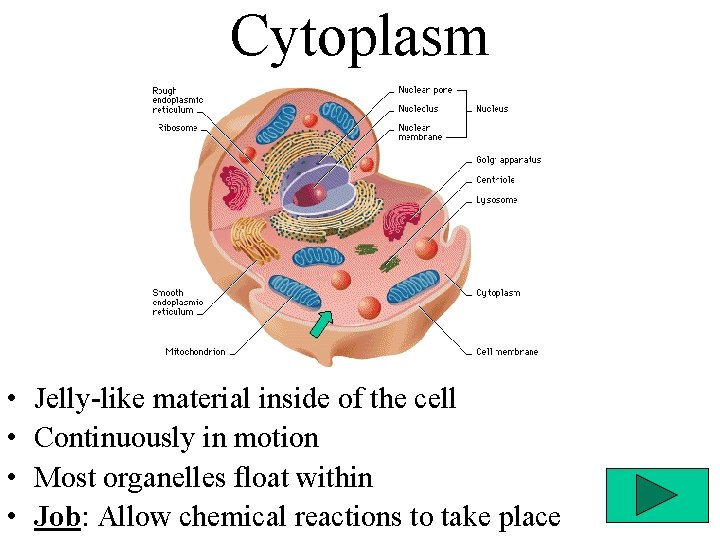
Cytoplasm • • Jelly-like material inside of the cell Continuously in motion Most organelles float within Job: Allow chemical reactions to take place
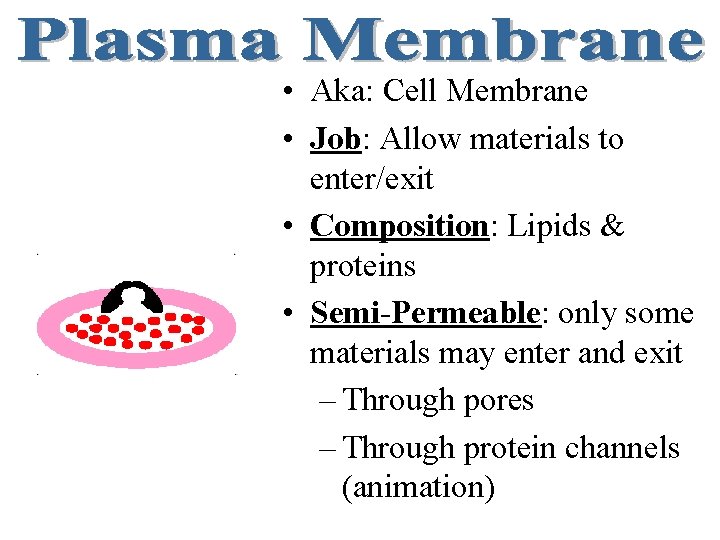
• Aka: Cell Membrane • Job: Allow materials to enter/exit • Composition: Lipids & proteins • Semi-Permeable: only some materials may enter and exit – Through pores – Through protein channels (animation)
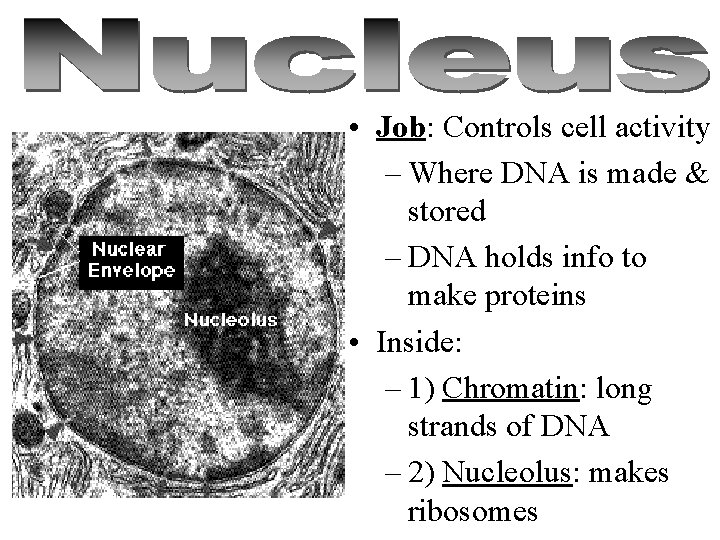
• Job: Controls cell activity – Where DNA is made & stored – DNA holds info to make proteins • Inside: – 1) Chromatin: long strands of DNA – 2) Nucleolus: makes ribosomes
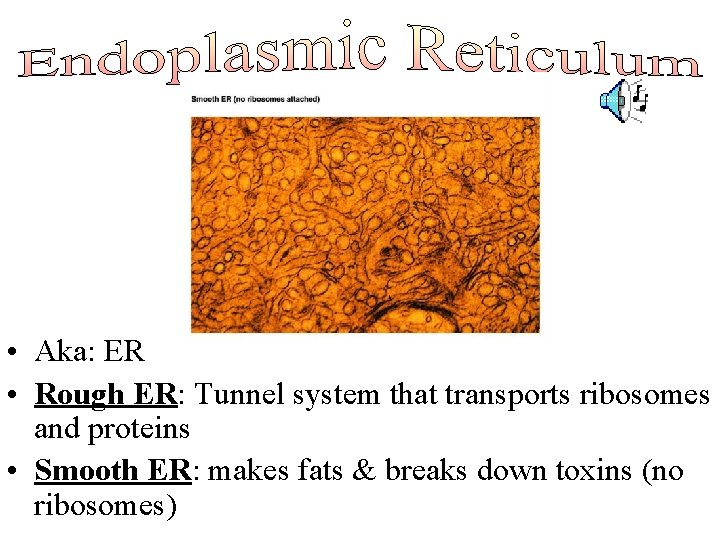
• Aka: ER • Rough ER: Tunnel system that transports ribosomes and proteins • Smooth ER: makes fats & breaks down toxins (no ribosomes)
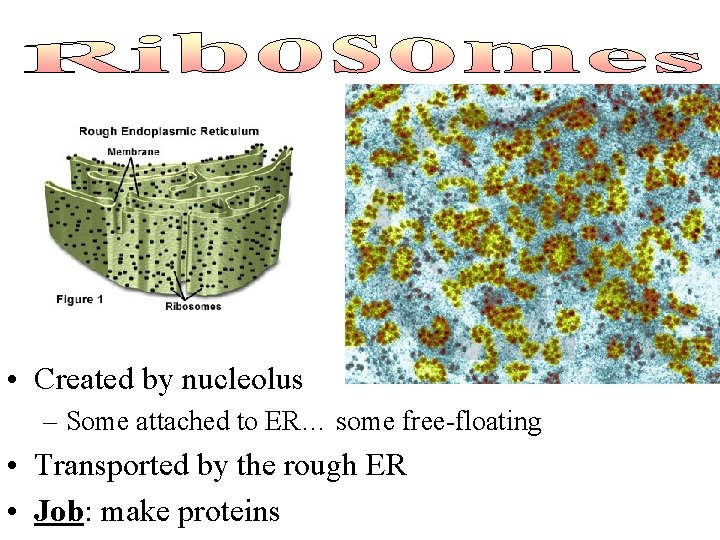
• Created by nucleolus – Some attached to ER… some free-floating • Transported by the rough ER • Job: make proteins
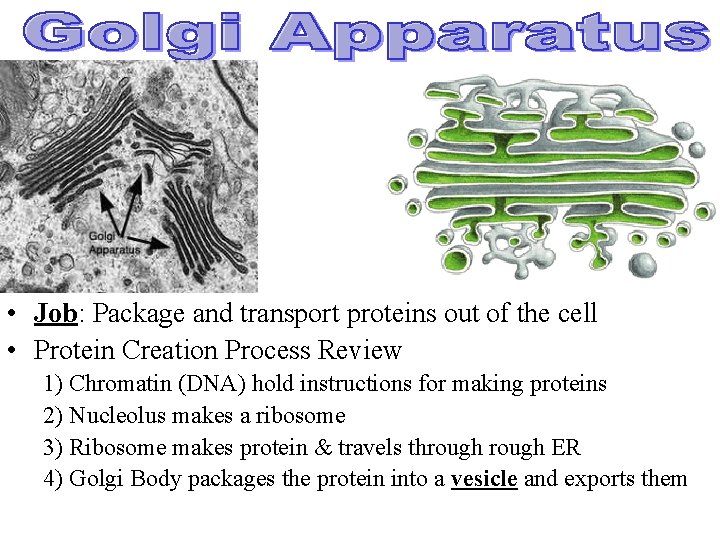
• Job: Package and transport proteins out of the cell • Protein Creation Process Review 1) Chromatin (DNA) hold instructions for making proteins 2) Nucleolus makes a ribosome 3) Ribosome makes protein & travels through ER 4) Golgi Body packages the protein into a vesicle and exports them
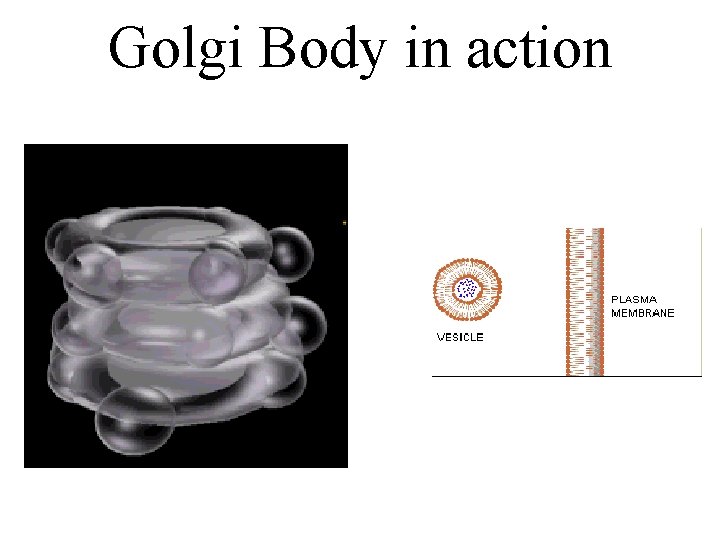
Golgi Body in action
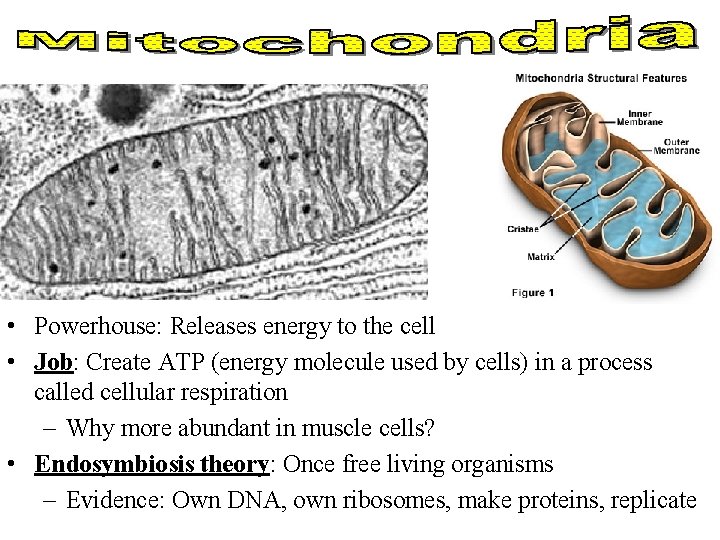
• Powerhouse: Releases energy to the cell • Job: Create ATP (energy molecule used by cells) in a process called cellular respiration – Why more abundant in muscle cells? • Endosymbiosis theory: Once free living organisms – Evidence: Own DNA, own ribosomes, make proteins, replicate
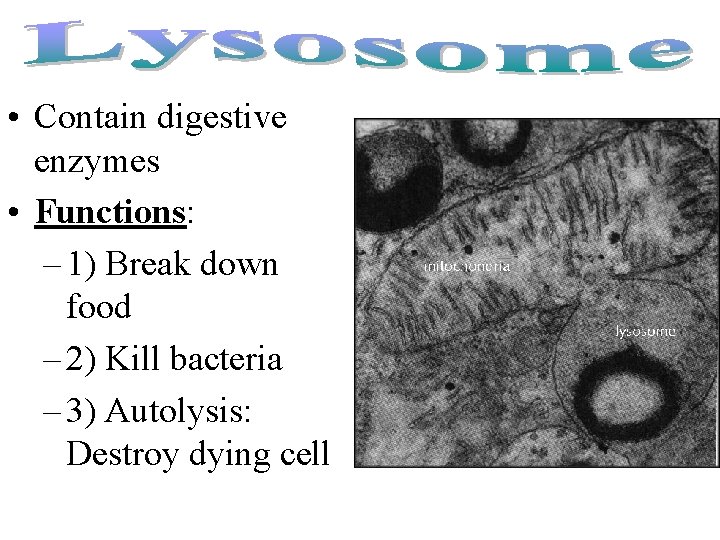
• Contain digestive enzymes • Functions: – 1) Break down food – 2) Kill bacteria – 3) Autolysis: Destroy dying cell
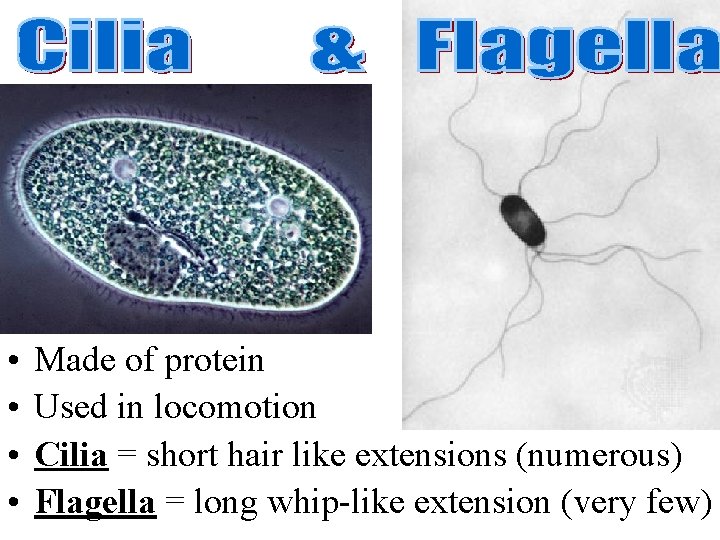
• • Made of protein Used in locomotion Cilia = short hair like extensions (numerous) Flagella = long whip-like extension (very few)
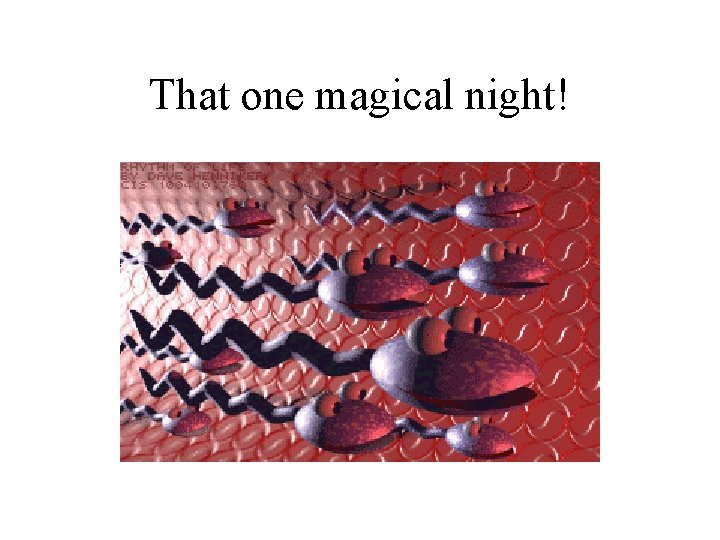
That one magical night!
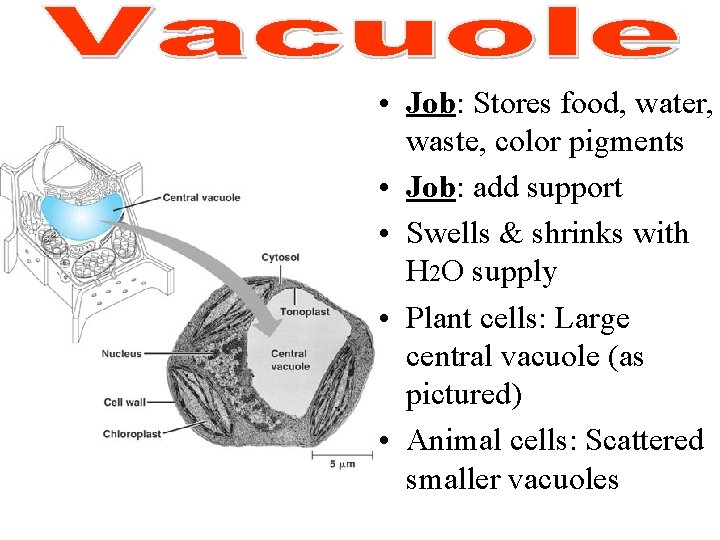
• Job: Stores food, water, waste, color pigments • Job: add support • Swells & shrinks with H 2 O supply • Plant cells: Large central vacuole (as pictured) • Animal cells: Scattered smaller vacuoles
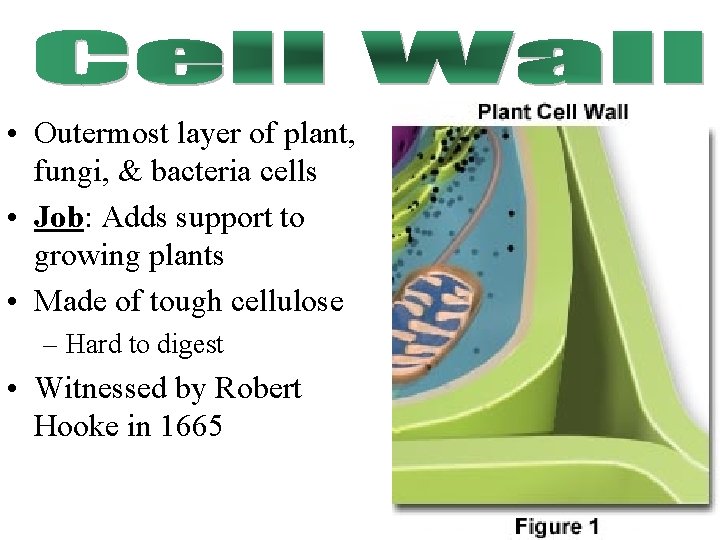
• Outermost layer of plant, fungi, & bacteria cells • Job: Adds support to growing plants • Made of tough cellulose – Hard to digest • Witnessed by Robert Hooke in 1665
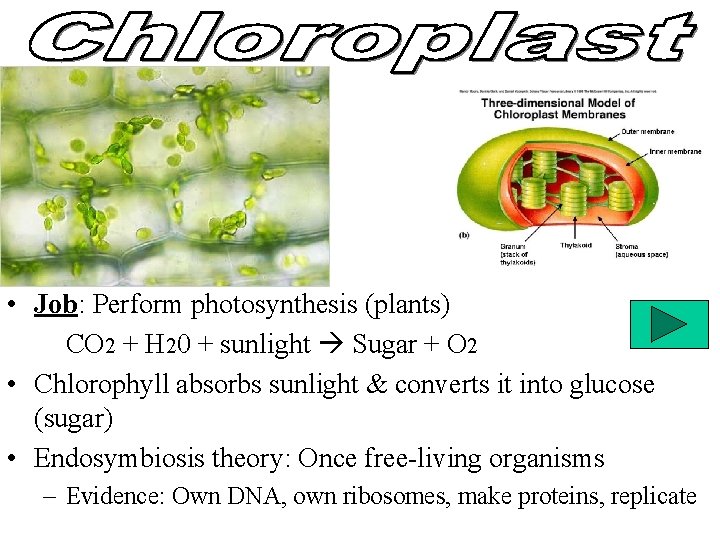
• Job: Perform photosynthesis (plants) CO 2 + H 20 + sunlight Sugar + O 2 • Chlorophyll absorbs sunlight & converts it into glucose (sugar) • Endosymbiosis theory: Once free-living organisms – Evidence: Own DNA, own ribosomes, make proteins, replicate
Kobe Kuiz 1) Pick an organelle…any organelle. Describe its function. 2) Name 7 organelles that can be found within the cytoplasm. 3) Describe the pathway that proteins travel from creation to exportation. 4) List various reasons to help support theory of endosymbiosis. 5) Name two organelles that plant cells have an animal cells do not. 6) Which organelle creates ATP energy for cells? 7) Which organelle converts sunlight into sugar? 8) Which organelle creates ribosomes? 9) Which organelle fuses with the cell membrane to release proteins? 10)Which molecule holds the information to make a protein?
- Slides: 19