
Three Primary Domains of Reading and Writing Oral
- Slides: 45
Three Primary Domains of Reading and Writing Oral Language • Phonological Processing Print Knowledge Literacy How, Inc. 1
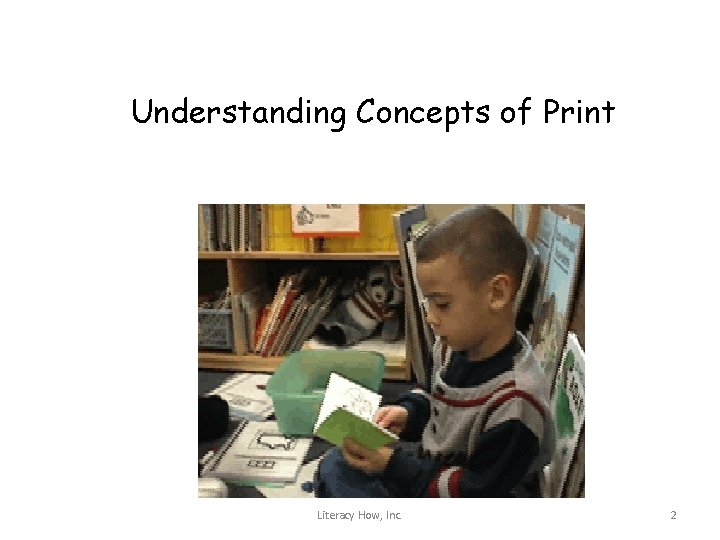
Understanding Concepts of Print Literacy How, Inc. 2
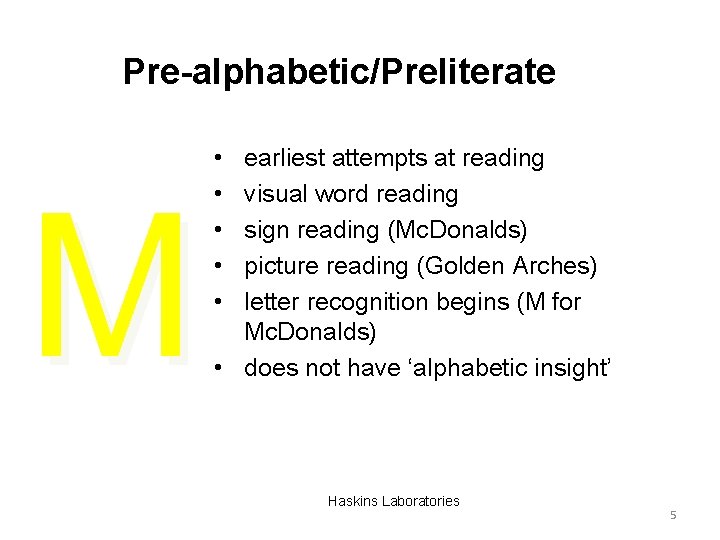
EMERGENT READERS • • • earliest attempts at reading visual word reading cue word recognition sign reading (Mc. Donalds) picture reading (Golden Arches) letter recognition begins Literacy How, Inc. 3
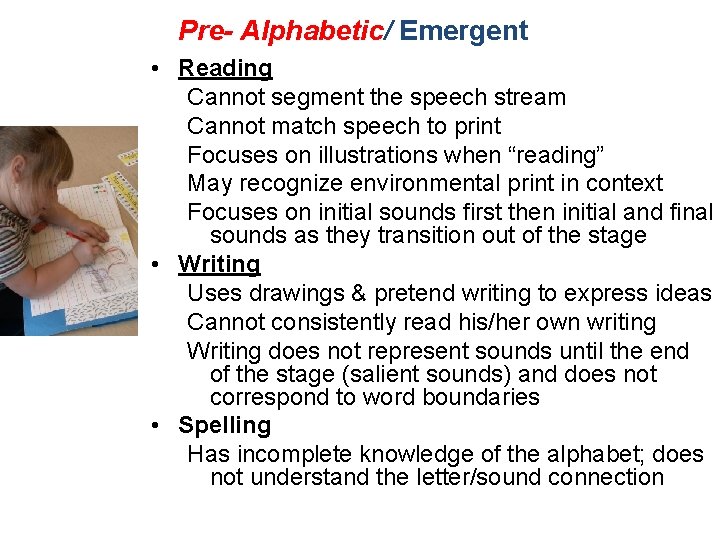
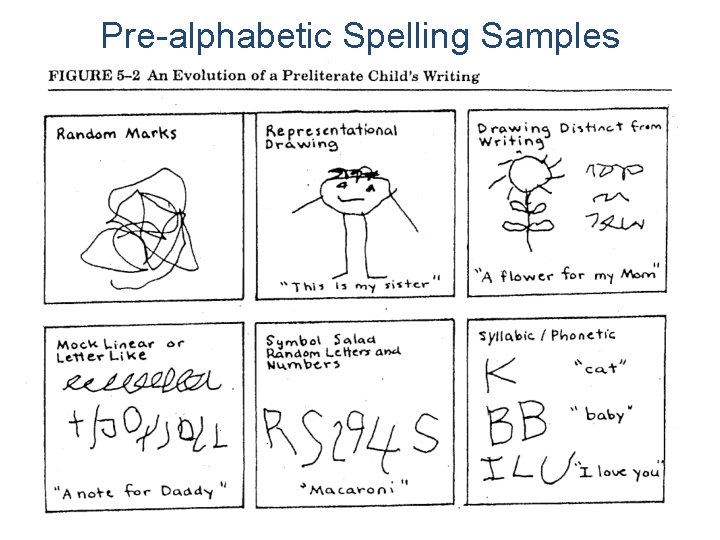
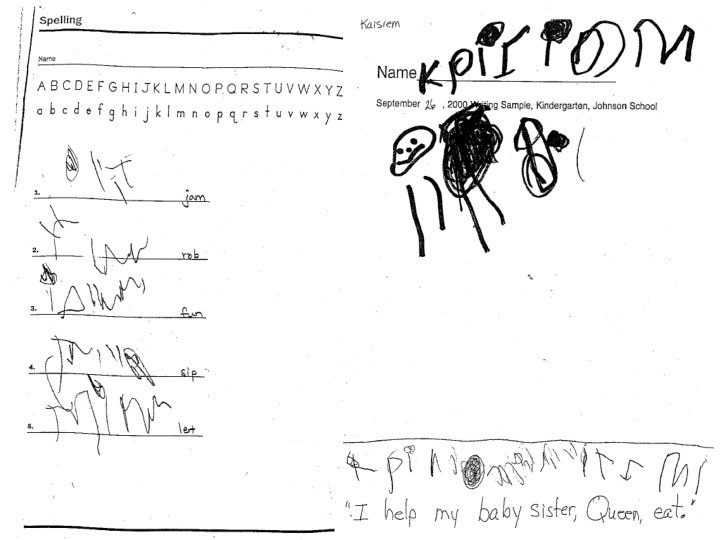
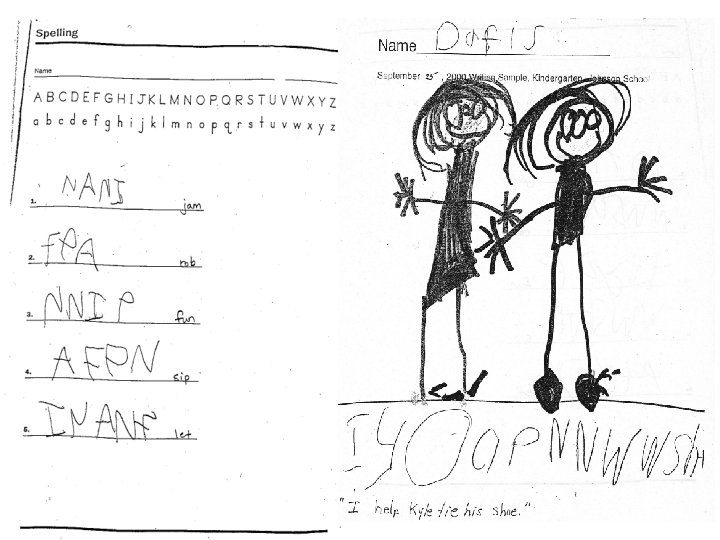
Pre- Alphabetic/ Emergent • Reading Cannot segment the speech stream Cannot match speech to print Focuses on illustrations when “reading” May recognize environmental print in context Focuses on initial sounds first then initial and final sounds as they transition out of the stage • Writing Uses drawings & pretend writing to express ideas Cannot consistently read his/her own writing Writing does not represent sounds until the end of the stage (salient sounds) and does not correspond to word boundaries • Spelling Has incomplete knowledge of the alphabet; does not understand the letter/sound connection
Pre-alphabetic/Preliterate M • • • earliest attempts at reading visual word reading sign reading (Mc. Donalds) picture reading (Golden Arches) letter recognition begins (M for Mc. Donalds) • does not have ‘alphabetic insight’ Haskins Laboratories 5
Pre-alphabetic Spelling Samples
• What are students at the emergergent level/pre-alphabetic level of reading ready to learn? Literacy How, Inc. 9
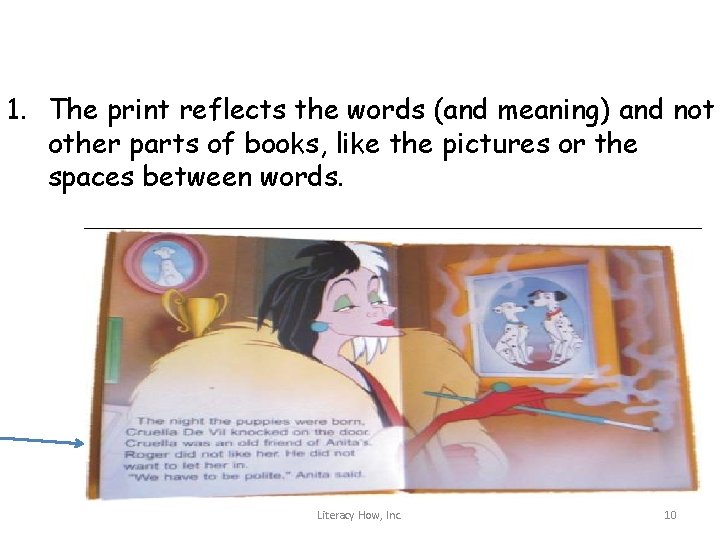
1. The print reflects the words (and meaning) and not other parts of books, like the pictures or the spaces between words. Literacy How, Inc. 10
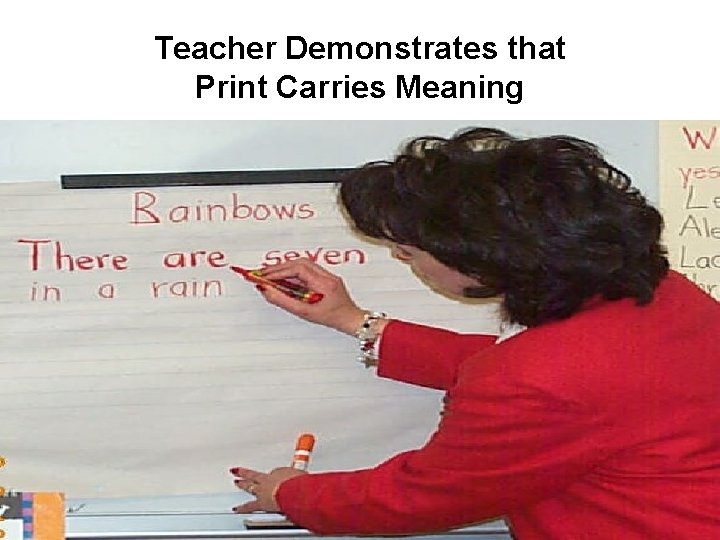
Teacher Demonstrates that Print Carries Meaning Literacy How, Inc. 11
The Role of Environmental Print 14 0002 • . . . Using environmental print to teach children to read may form a bridge from the known to the new that helps them more readily invoke the entire contents of their knowledge of printed language and word analysis strategies to read in a variety of new situations and contexts. Reutzel, Fawson, Young, Morrison, & Wilcox, 2003 New Known Literacy How, Inc. 12
Literacy How, Inc. 13
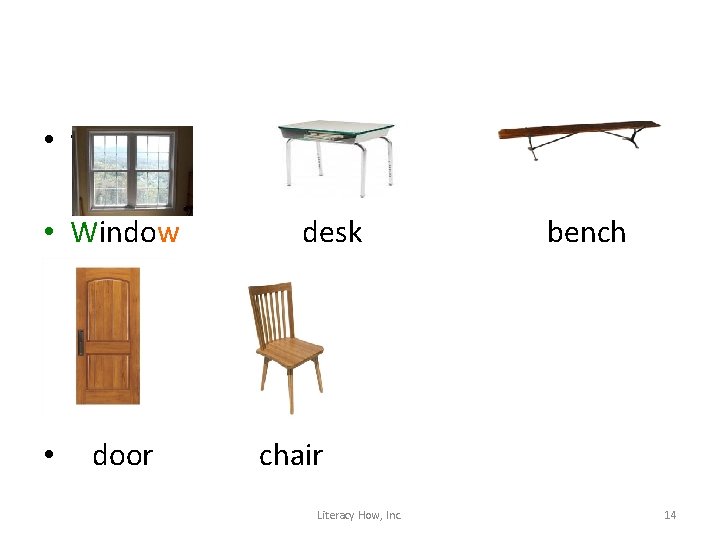
• window desk • Window desk • door bench chair Literacy How, Inc. 14
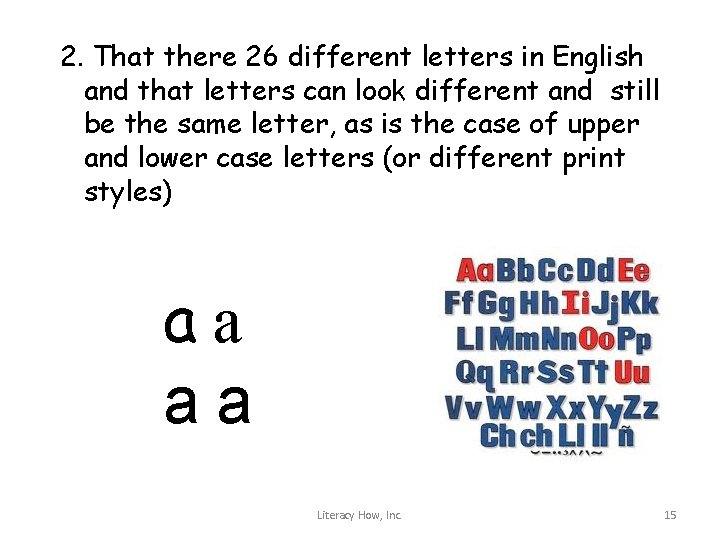
2. That there 26 different letters in English and that letters can look different and still be the same letter, as is the case of upper and lower case letters (or different print styles) aa aa Literacy How, Inc. 15
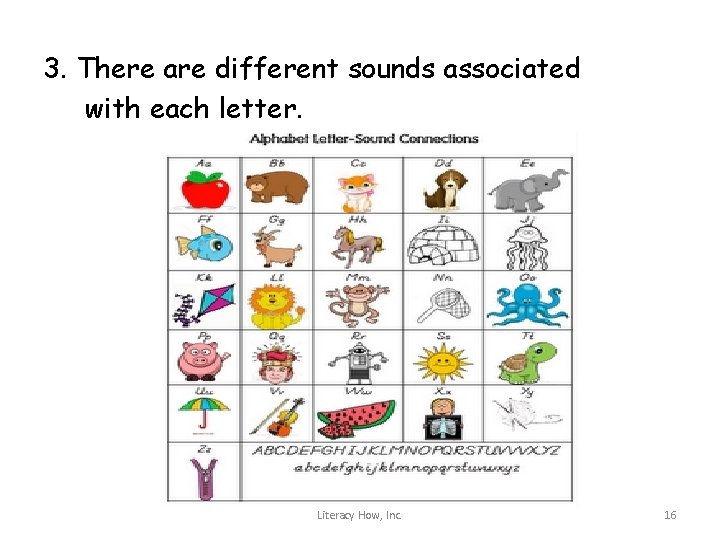
3. There are different sounds associated with each letter. Literacy How, Inc. 16
Research • Some students enter school already possessing a knowledge of how print and text works, while others do not (Yaden & Templeton, 1986). • Many young children have limited access to text and learning opportunities around books (Neuman, 1999; Neuman& Celano, 2001). Literacy How, Inc. 17
Research • Concepts of print knowledge plays a critical role in early reading development (Hiebert, Pearson, Taylor, Richardson, & Paris, 1998). • Learning concepts of print early on influences children’s language development, phonemic awareness, phonics, word reading, and reading/writing development (Morris, 1993; Roberts, 1992). Literacy How, Inc. 18
Research • How important is print awareness to early reading achievement? • Johns (1980) found that beginning kindergarten print awareness was highly predictive of end- of- first--grade reading achievement. • The NRP Report (2000) ranked print awareness among the best predictors of early reading achievement. Literacy How, Inc. 19
Can print awareness be taught? YES! Children can be taught how and what to look at in print. – –(Reutzel, Oda& Moore, 1989) • Literacy How, Inc. 20
3. Book Knowledge Instruction • Model how to read and handle books. • Discuss parts of books. • Teach concepts of print. Literacy How, Inc. 21
Book Handling Front of the Book Knows book title Knows that print contains the author’s message Knows where to start reading Knows which way to go when reading Return sweep to the left Literacy How, Inc. 6 0002 22
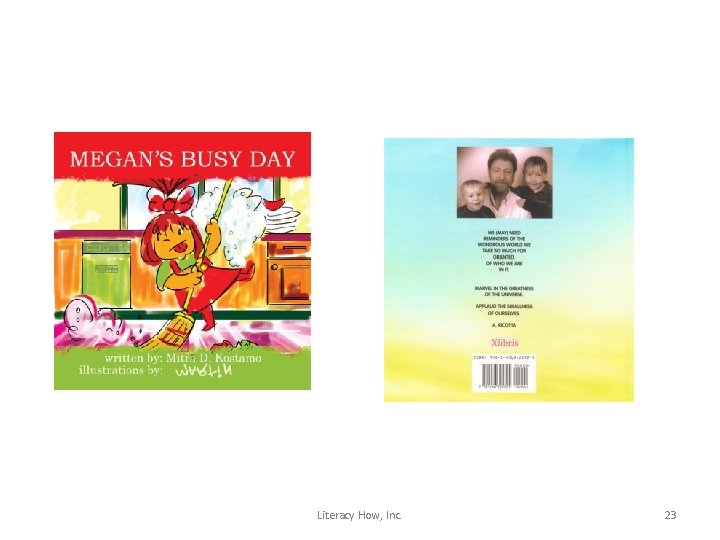
Literacy How, Inc. 23
Print Awareness Instruction Q: Where does print awareness instruction fit in early reading instruction? A: Print awareness should be fostered in pre-school, kindergarten, and first grade. It should be taught in connection with oral language, vocabulary, reading aloud, phonemic awareness, and learning letters. Literacy How, Inc. 24
Concepts of Print (continued) Word by word matching First and last concepts Bottom of the page Left page before right Points out beginning, middle, end of a book adapted from Teaching Children to Read. Reutzel, Ray and Cooter, Robert B. Literacy How, Inc. Prentice Hall, 2004. 25
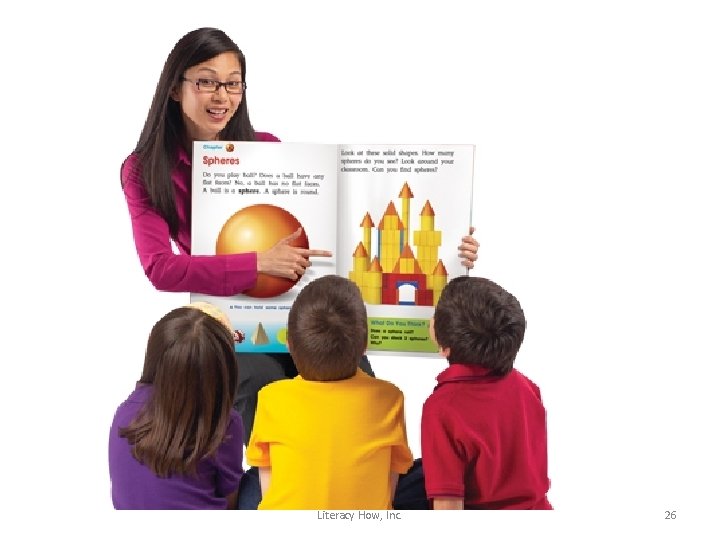
Literacy How, Inc. 26
Shared Reading Experience The teacher can. . . -finger point at text to reinforce the concept of word and word boundaries as well as directionality. Literacy How, Inc. 27
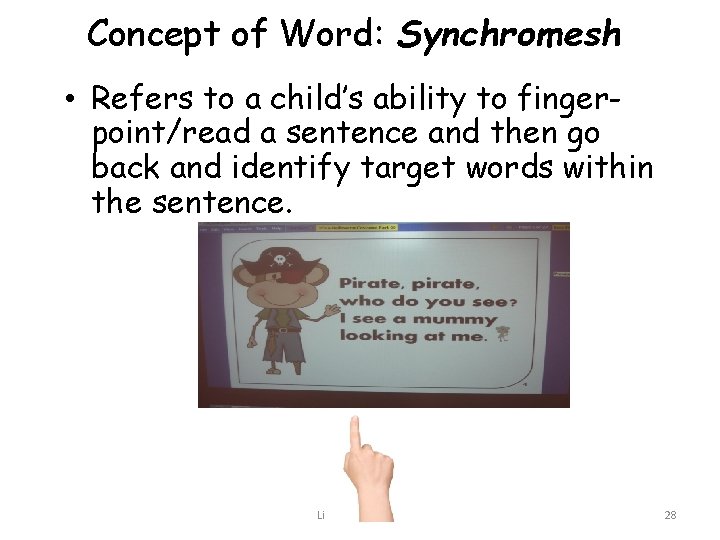
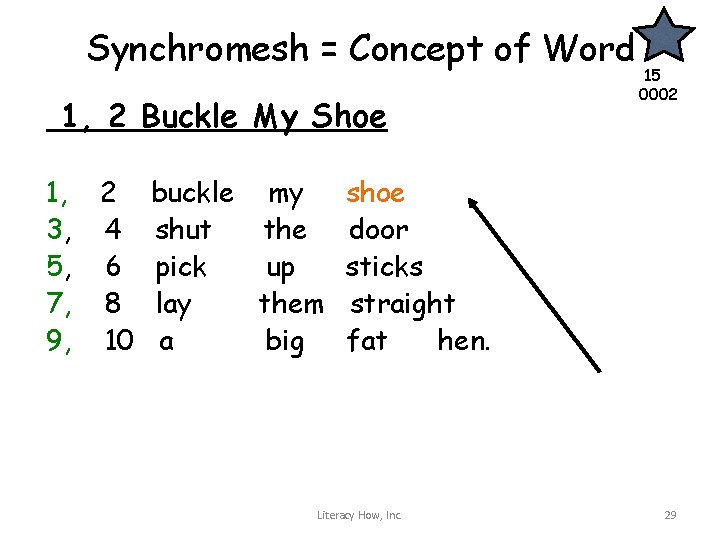
Concept of Word: Synchromesh • Refers to a child’s ability to fingerpoint/read a sentence and then go back and identify target words within the sentence. Literacy How, Inc. 28
Synchromesh = Concept of Word 1, 2 Buckle My Shoe 1, 3, 5, 7, 9, 2 4 6 8 10 15 0002 buckle my shoe shut the door pick up sticks lay them straight a big fat hen. Literacy How, Inc. 29
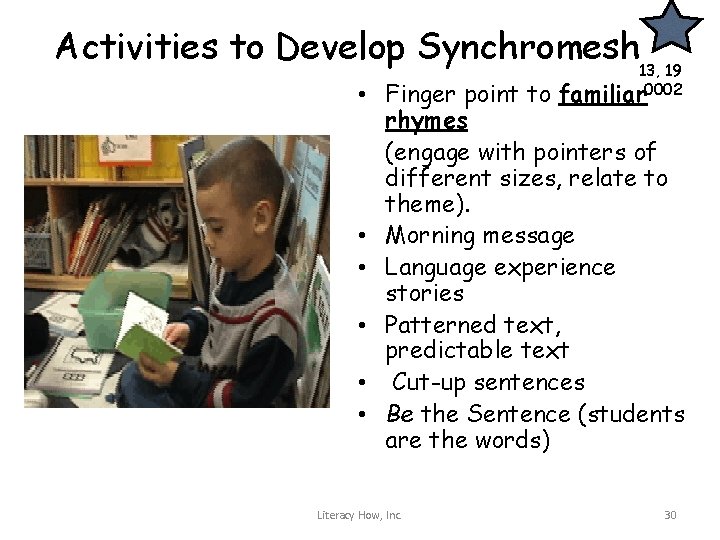
Activities to Develop Synchromesh 13, 19 • Finger point to familiar 0002 rhymes (engage with pointers of different sizes, relate to theme). • Morning message • Language experience stories • Patterned text, predictable text • Cut-up sentences • Be the Sentence (students are the words) Literacy How, Inc. 30
Literacy How, Inc. 31
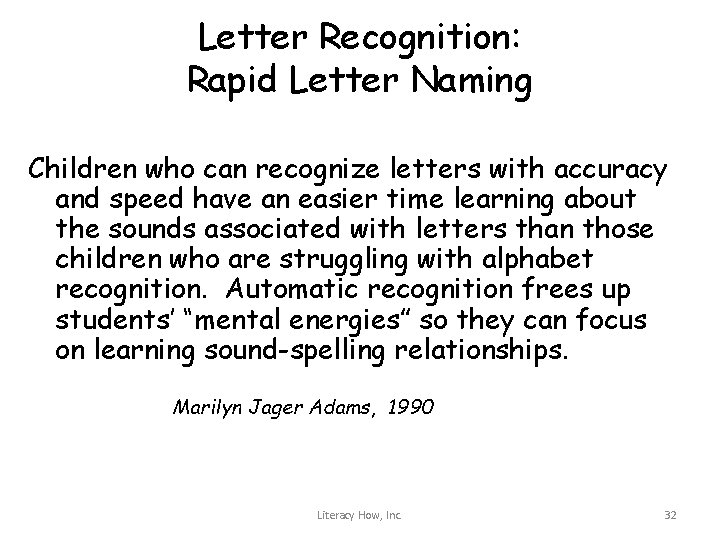
Letter Recognition: Rapid Letter Naming Children who can recognize letters with accuracy and speed have an easier time learning about the sounds associated with letters than those children who are struggling with alphabet recognition. Automatic recognition frees up students’ “mental energies” so they can focus on learning sound-spelling relationships. Marilyn Jager Adams, 1990 Literacy How, Inc. 32
Letter Knowledge If students cannot recognize and discriminate one letter shape from another teaching phonics will make little sense. Literacy How, Inc. 33
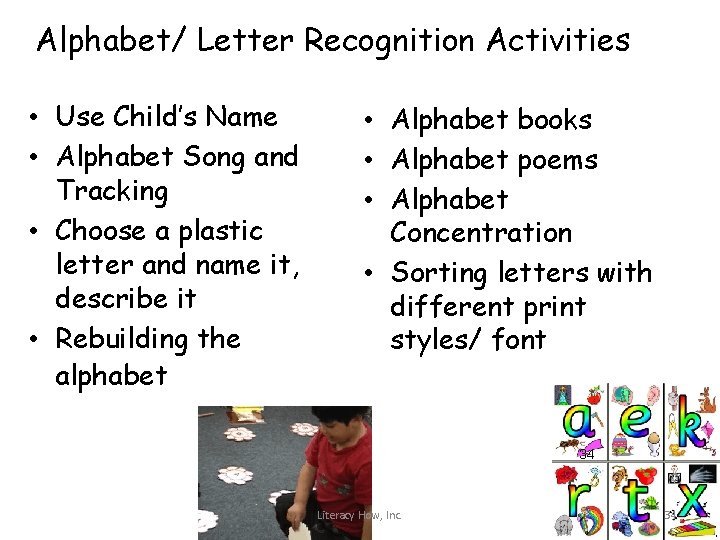
Alphabet/ Letter Recognition Activities • Use Child’s Name • Alphabet Song and Tracking • Choose a plastic letter and name it, describe it • Rebuilding the alphabet • Alphabet books • Alphabet poems • Alphabet Concentration • Sorting letters with different print styles/ font 34 Literacy How, Inc. 34
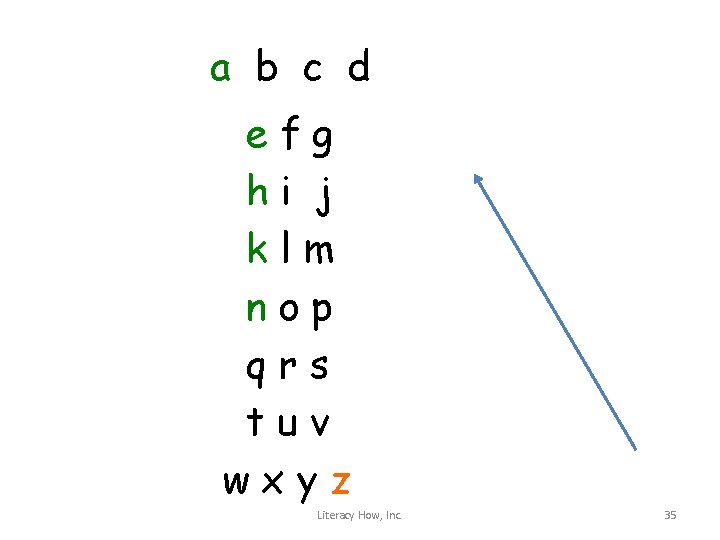
a b c d efg hi j klm nop qrs tuv wxyz Literacy How, Inc. 35
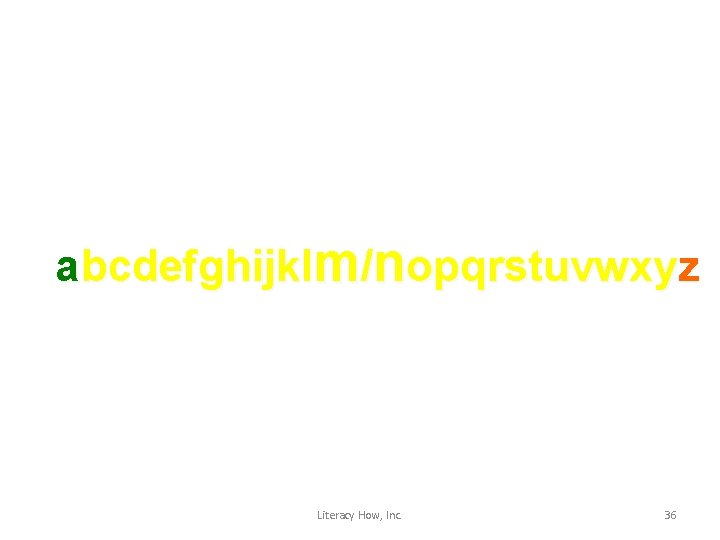
abcdefghijklm/nopqrstuvwxyz Literacy How, Inc. 36
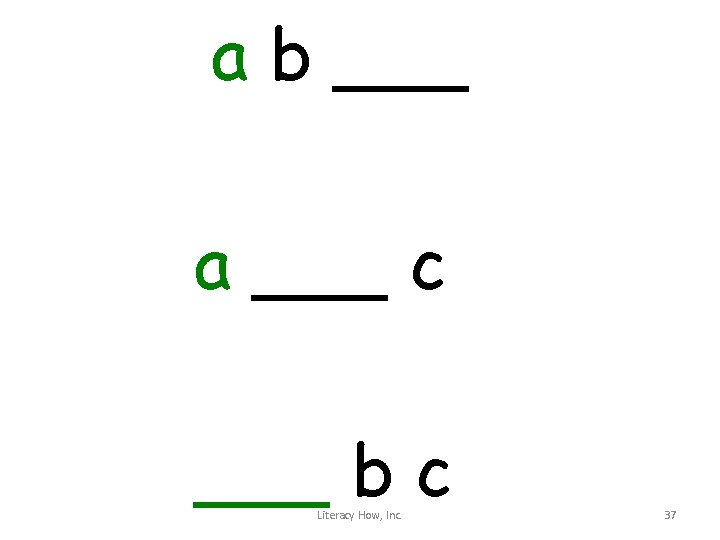
a b ___ a ___ c ___ b c Literacy How, Inc. 37
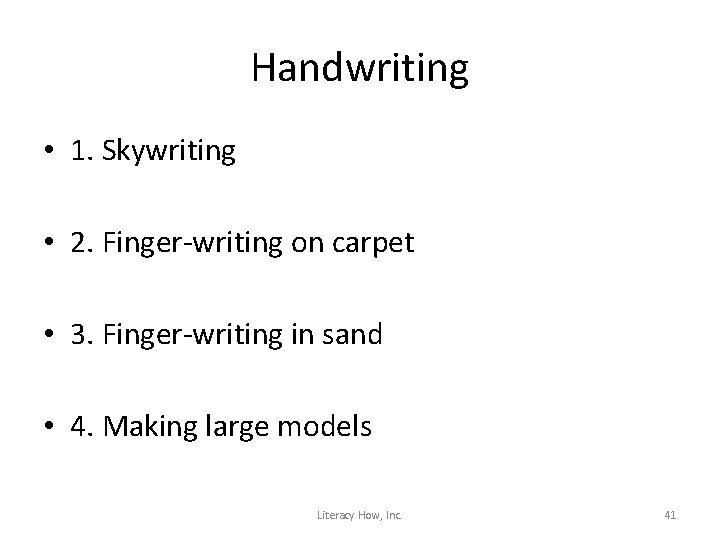
Handwriting • Teaching students to form letters is the best way to help them recognize letters because it is multi-sensory? Literacy How, Inc. 38
Begin Writing Instruction Early Writing plays a role in the beginning reader’s ability to recognize letters. Practice in writing letters focuses student’s attention on the particular features of the letter shape and thus helps reinforce letter recognition (Adams, 1990 a). Literacy How, Inc. 39
Letter Formation 17, 18 0002 When teaching the names of the letter, begin with sky writing the letter to assist children to focus on the shape of the letters. As explicit instruction in letter sound connection begins, handwriting is an important component to include. Literacy How, Inc. 40
Handwriting • 1. Skywriting • 2. Finger-writing on carpet • 3. Finger-writing in sand • 4. Making large models Literacy How, Inc. 41
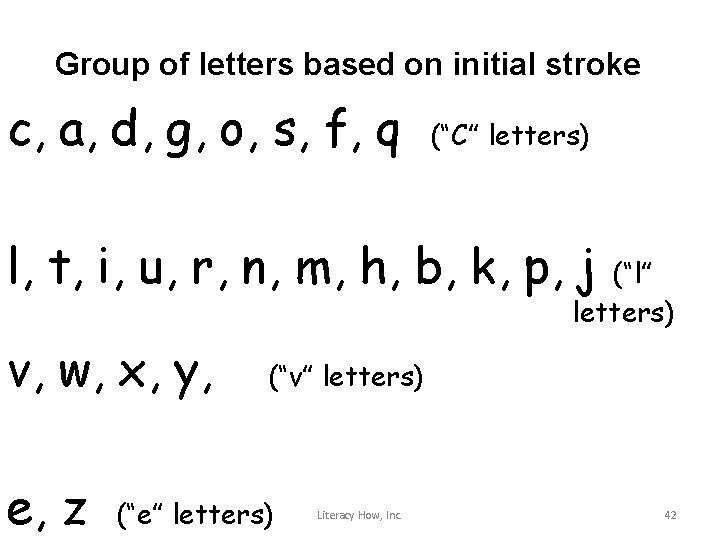
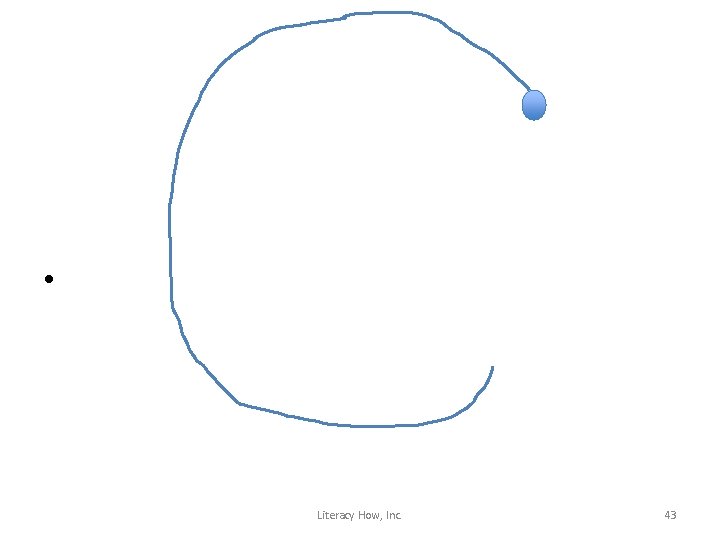
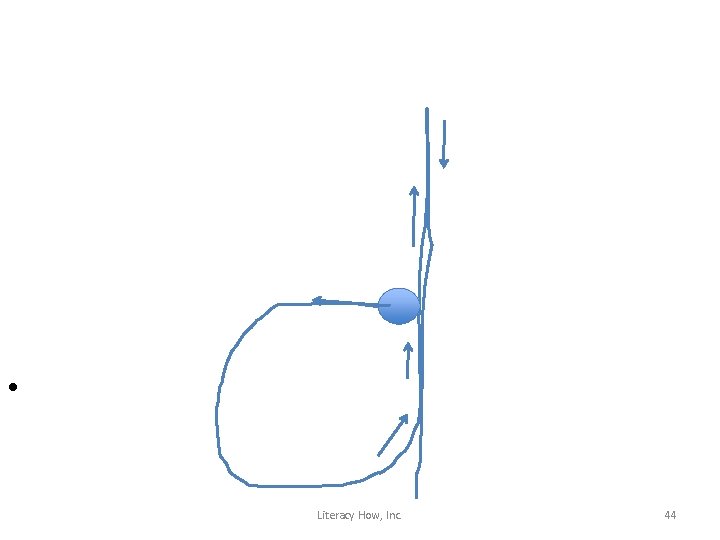
Group of letters based on initial stroke c, a, d, g, o, s, f, q (“C” letters) l, t, i, u, r, n, m, h, b, k, p, j (“l” letters) v, w, x, y, e, z (“v” letters) (“e” letters) Literacy How, Inc. 42
• Literacy How, Inc. 43
• Literacy How, Inc. 44
Writing Instruction in Kindergarten “If children laboriously form letters during text production, they often forget what they are trying to communicate through the writing process, because attentional resources are consumed by the working memory required simply to write letters and produce text. ” Graham et al. , 2000 Literacy How, Inc. 45