
Three Domains of Life Archaea prokaryotes living in
- Slides: 42
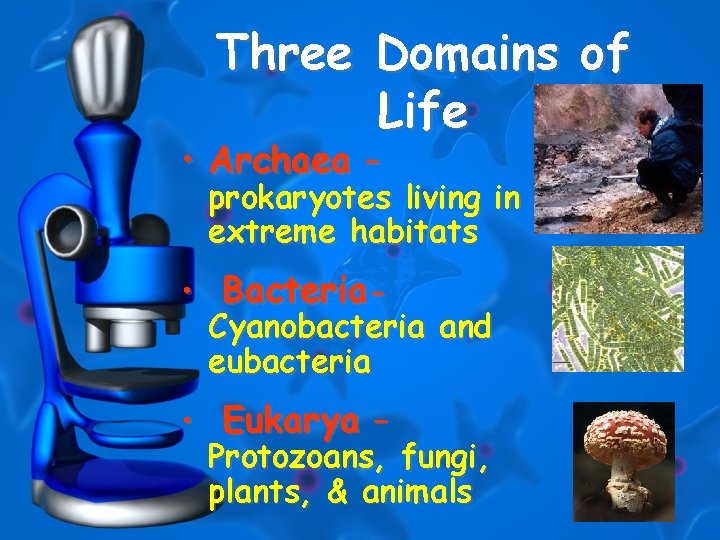
Three Domains of Life • Archaea – prokaryotes living in extreme habitats • Bacteria. Cyanobacteria and eubacteria • Eukarya – Protozoans, fungi, plants, & animals 1
Eubacteria Structure and Function 2
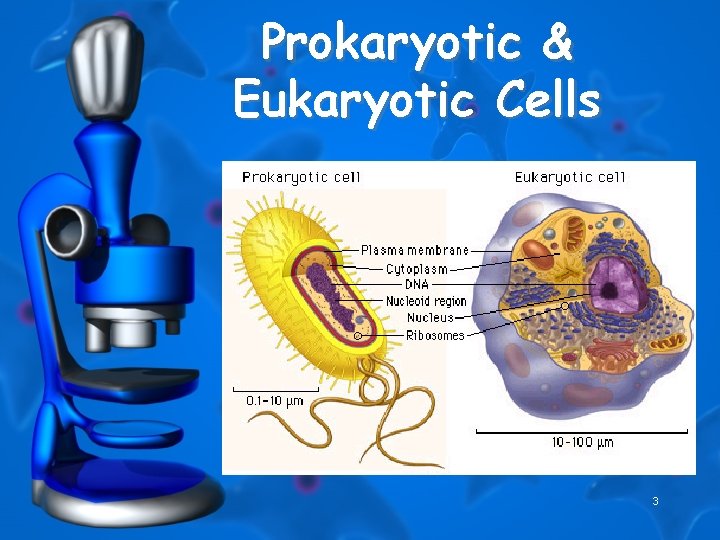
Prokaryotic & Eukaryotic Cells 3
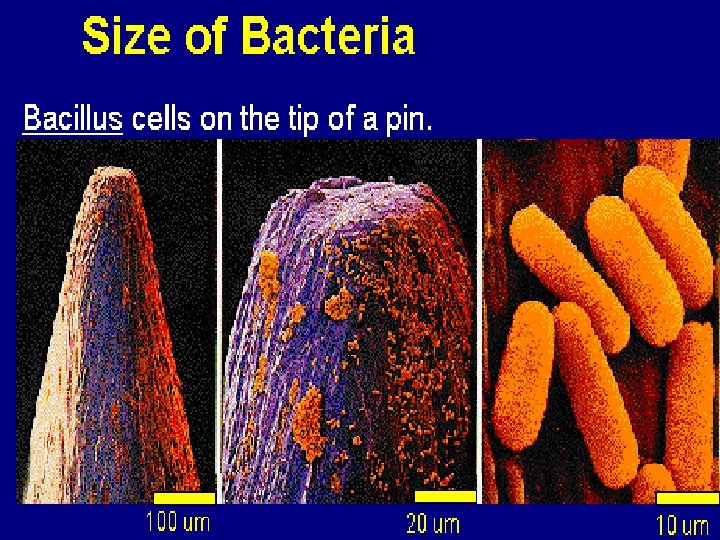
4
Characteristics of Bacteria 5
Bacterial Structure • • Microscopic prokaryotes No nucleus or membranebound organelles Contain ribosomes Single, circular chromosome in nucleoid region 6
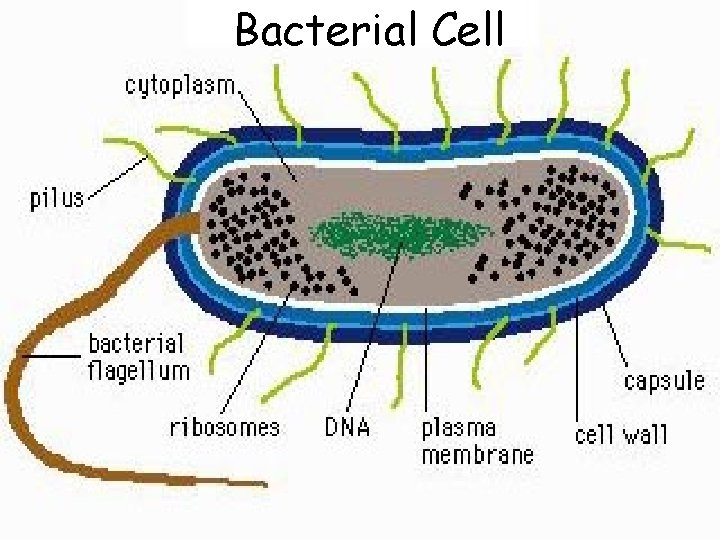
Bacterial Cell 7
Protection • Cell Wall made of Peptidoglycan • May have a sticky coating called the Capsule for attachment to host or other bacteria 8
Characteristics • Unicellular • Most are heterotrophic (can’t make their own food) • May be aerobic or anaerobic • Identified by Gram staining 9
Gram Staining • Developed in 1884 by Hans Gram • Bacteria treated with purple Crystal Violet & red Safranin stains • Cell walls either stain purple or reddish pink 10
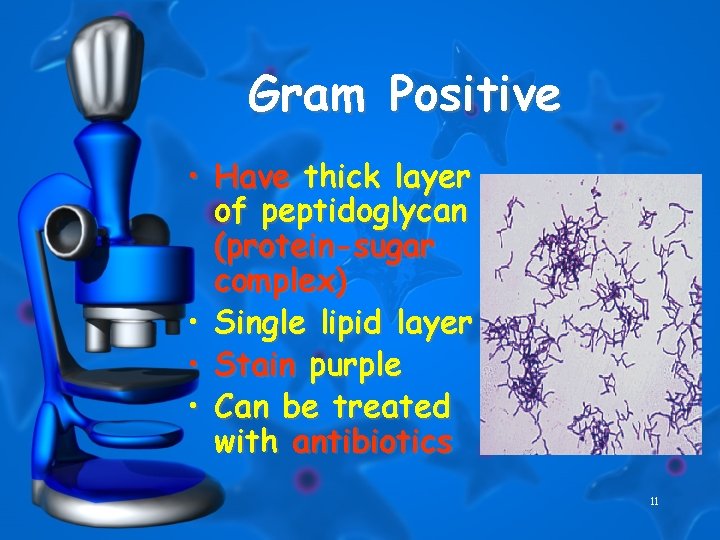
Gram Positive • Have thick layer of peptidoglycan (protein-sugar complex) • Single lipid layer • Stain purple • Can be treated with antibiotics 11
Gram Positive Bacteria ü Lactobacilli (makes yogurt & buttermilk) ü Actinomycetes (make antibiotics) ü Clostridium (lockjaw bacteria) ü Streptococcus (strep throat) ü Staphylococcus (staph infections) 12
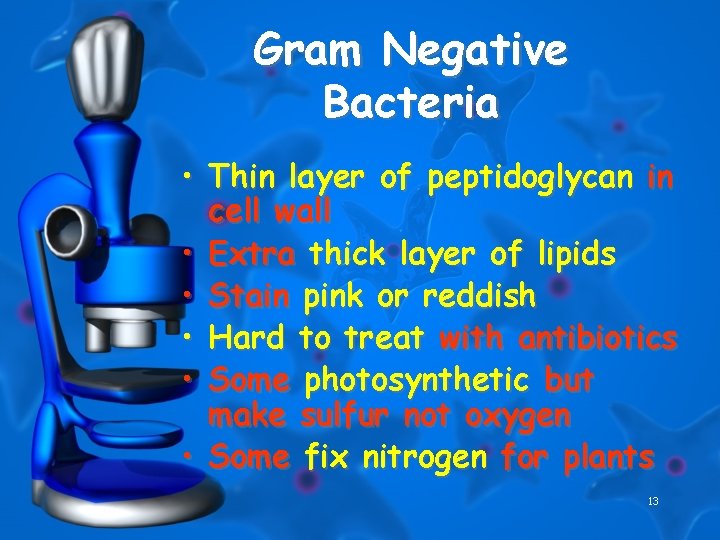
Gram Negative Bacteria • Thin layer of peptidoglycan in cell wall • Extra thick layer of lipids • Stain pink or reddish • Hard to treat with antibiotics • Some photosynthetic but make sulfur not oxygen • Some fix nitrogen for plants 13
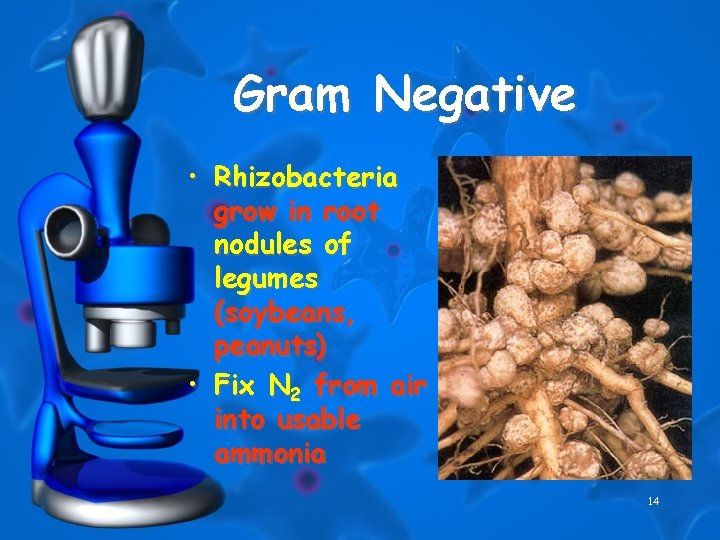
Gram Negative • Rhizobacteria grow in root nodules of legumes (soybeans, peanuts) • Fix N 2 from air into usable ammonia 14
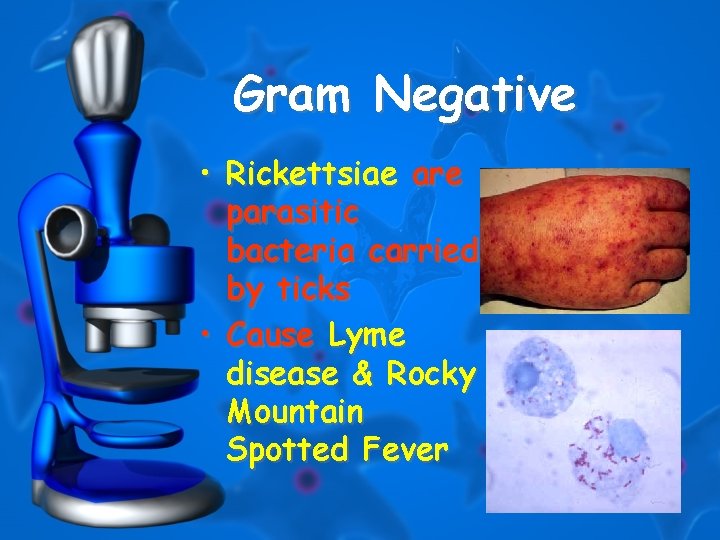
Gram Negative • Rickettsiae are parasitic bacteria carried by ticks • Cause Lyme disease & Rocky Mountain Spotted Fever 15
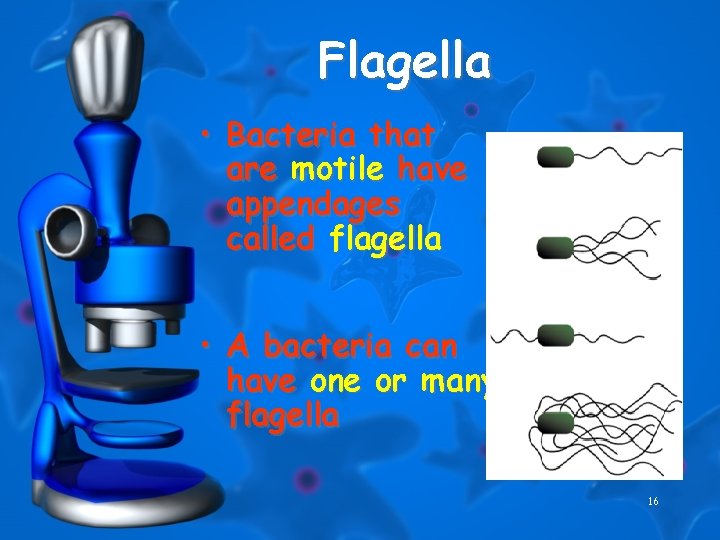
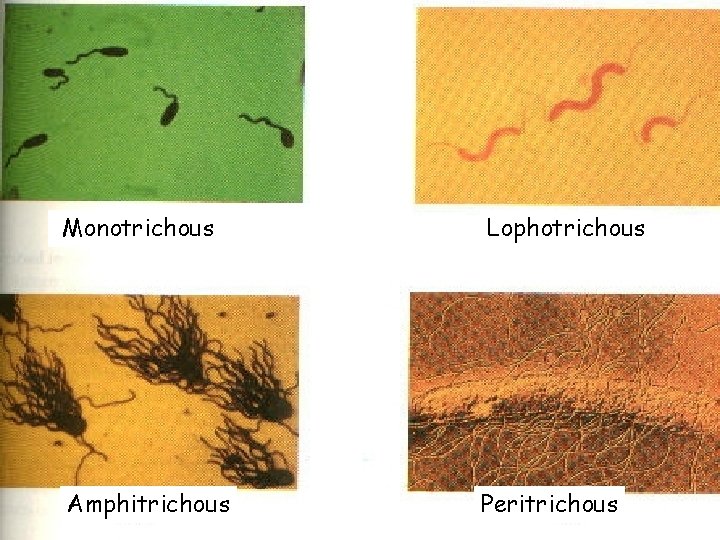
Flagella • Bacteria that are motile have appendages called flagella • A bacteria can have one or many flagella 16
Monotrichous Lophotrichous Amphitrichous Peritrichous 17
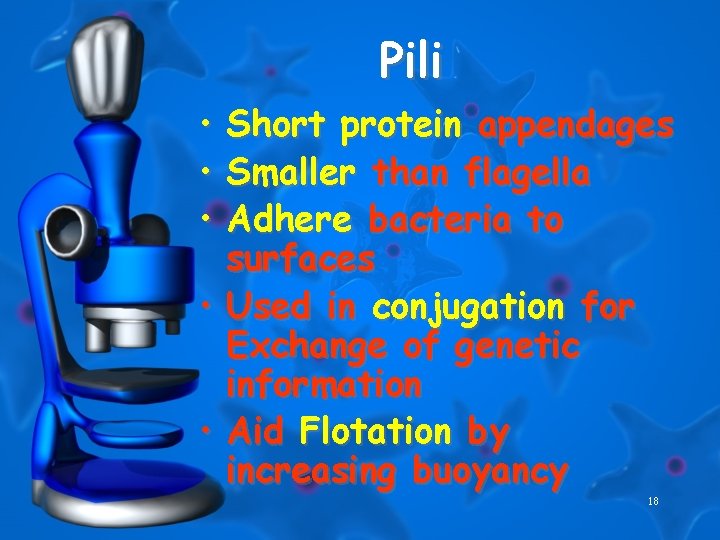
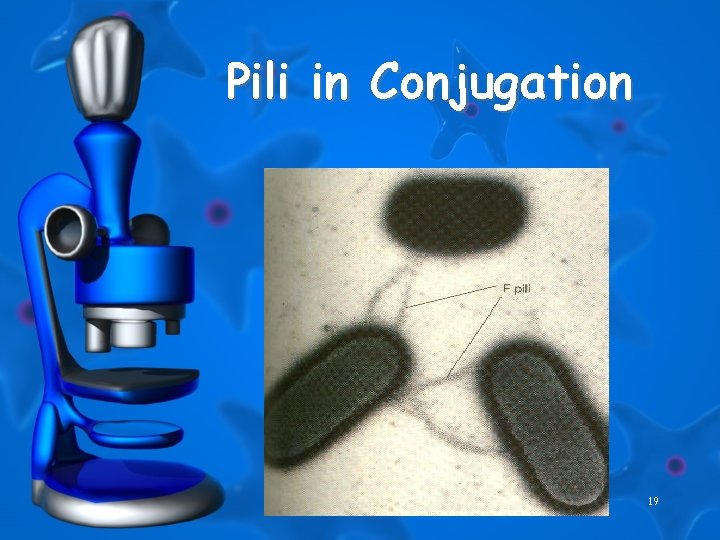
Pili • • • Short protein appendages Smaller than flagella Adhere bacteria to surfaces • Used in conjugation for Exchange of genetic information • Aid Flotation by increasing buoyancy 18
Pili in Conjugation 19
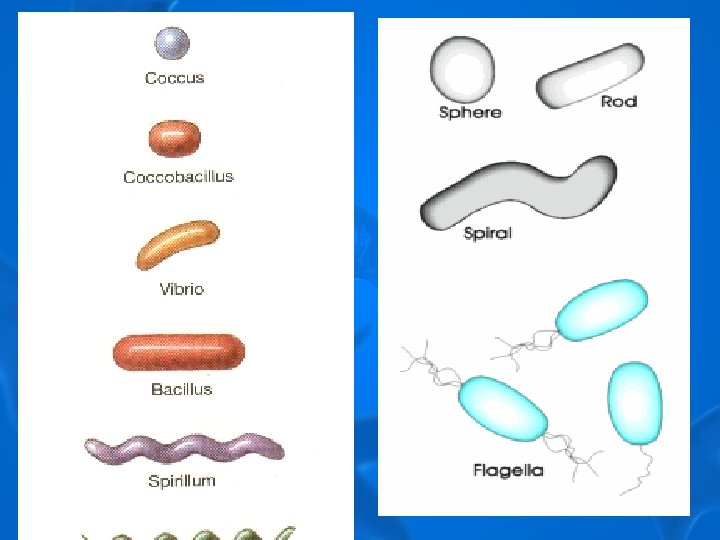
Bacterial Shapes 20
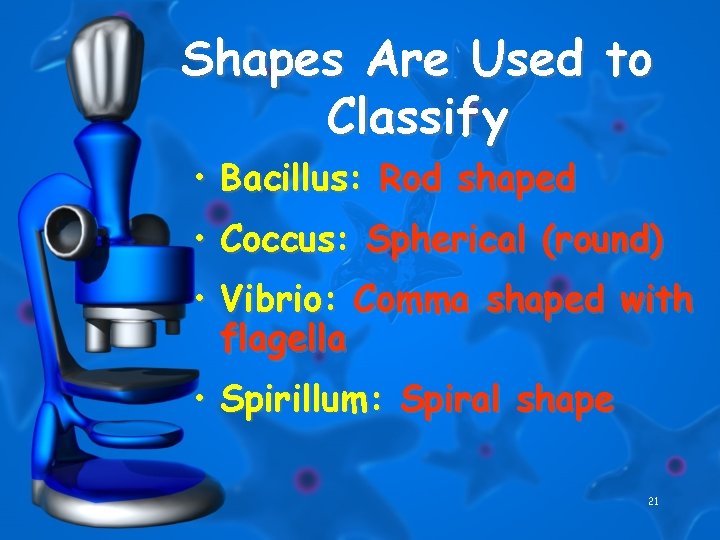
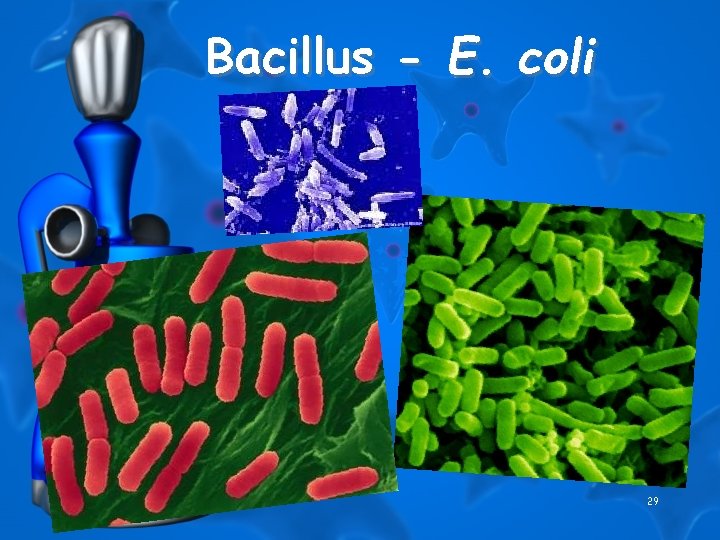
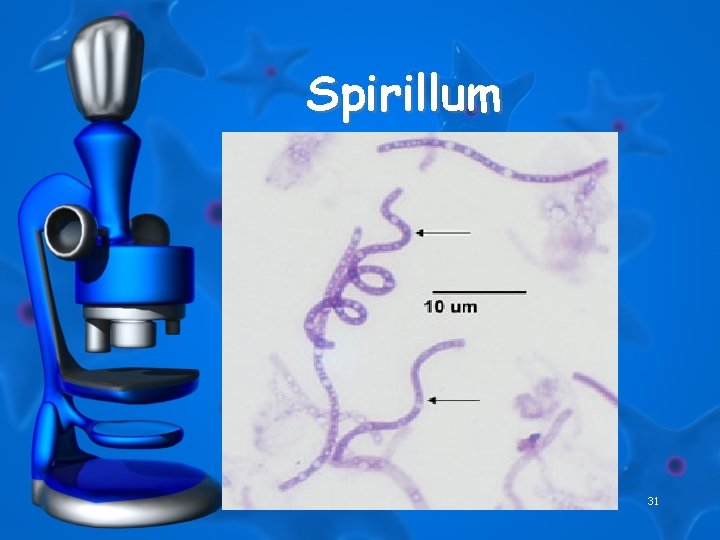
Shapes Are Used to Classify • Bacillus: Rod shaped • Coccus: Spherical (round) • Vibrio: Comma shaped with flagella • Spirillum: Spiral shape 21
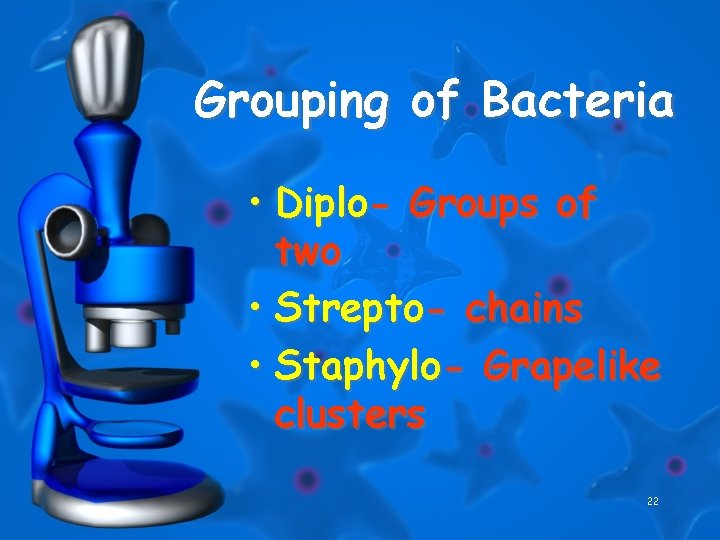
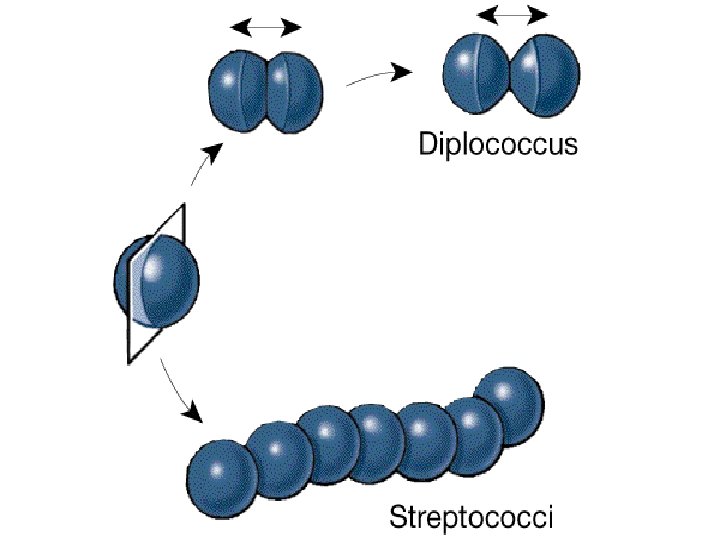
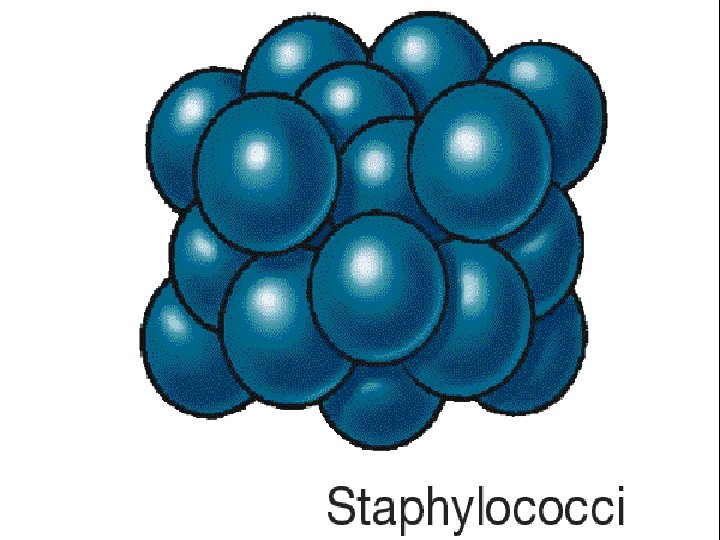
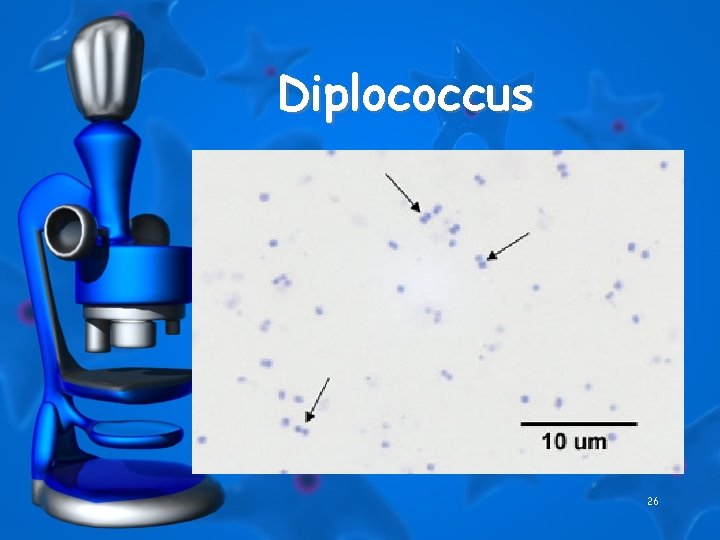
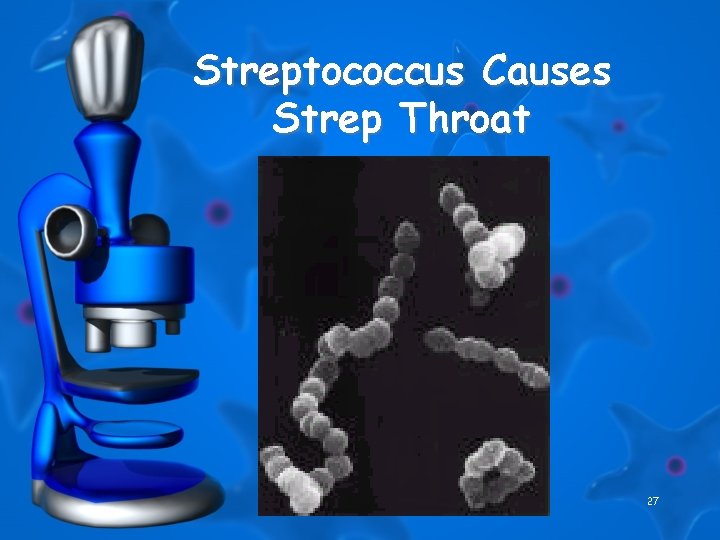
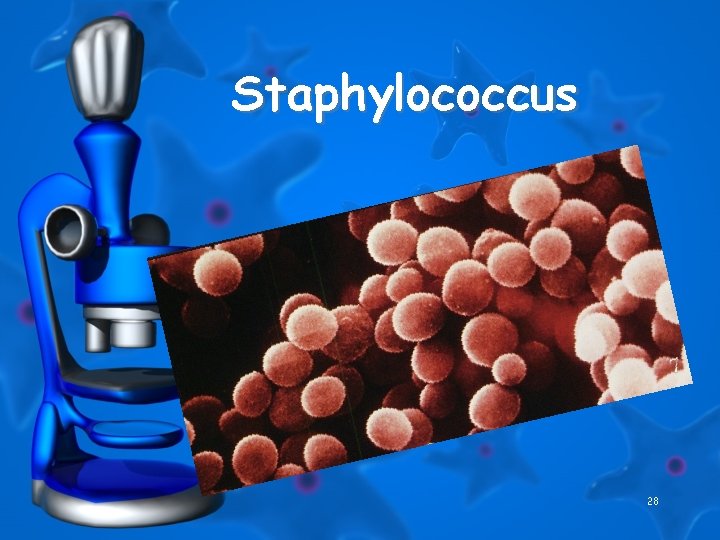
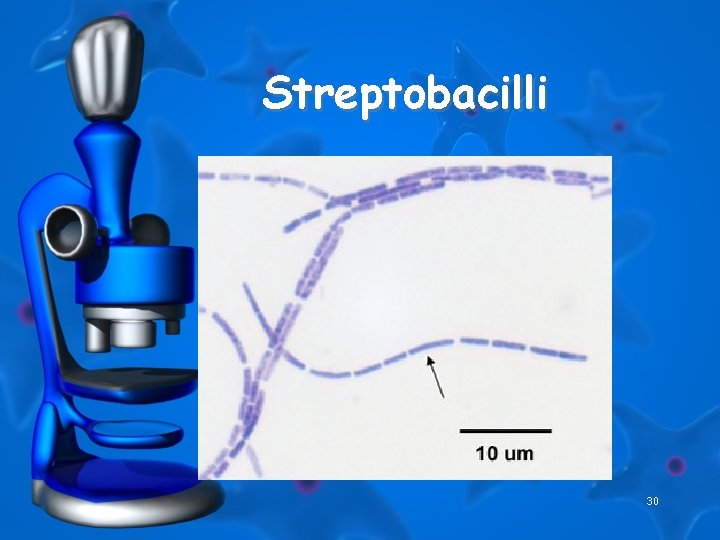
Grouping of Bacteria • Diplo- Groups of two • Strepto- chains • Staphylo- Grapelike clusters 22
23
24
25
Diplococcus 26
Streptococcus Causes Strep Throat 27
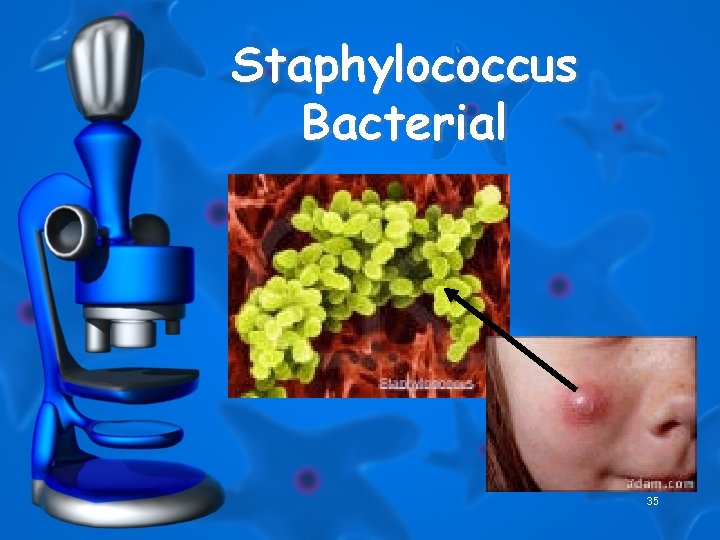
Staphylococcus 28
Bacillus - E. coli 29
Streptobacilli 30
Spirillum 31
Helpful & Harmful • Many act as decomposers recycling nutrients • Used as a host to make medicines • Some cause disease 32
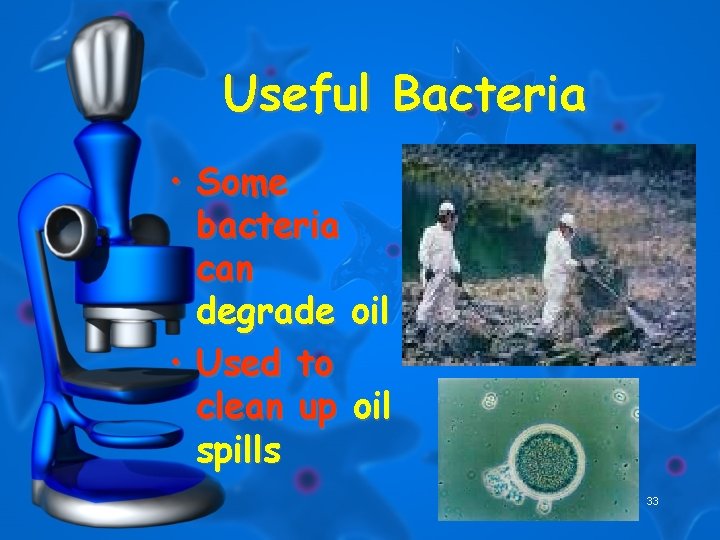
Useful Bacteria • Some bacteria can degrade oil • Used to clean up oil spills 33
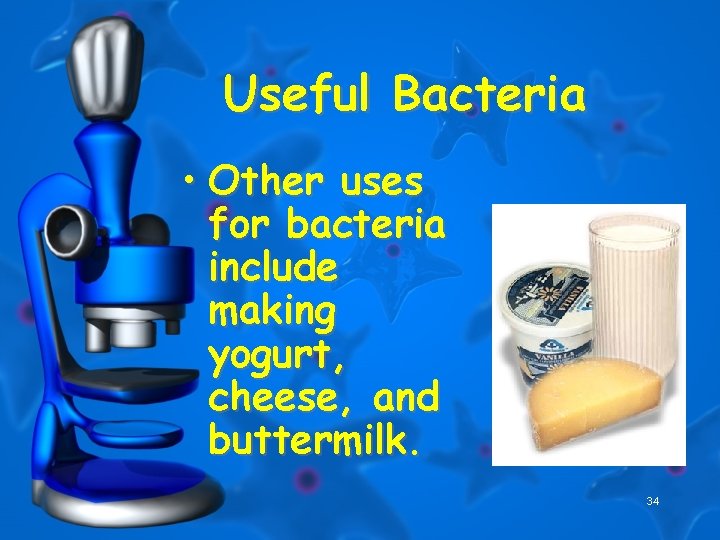
Useful Bacteria • Other uses for bacteria include making yogurt, cheese, and buttermilk. 34
Staphylococcus Bacterial 35
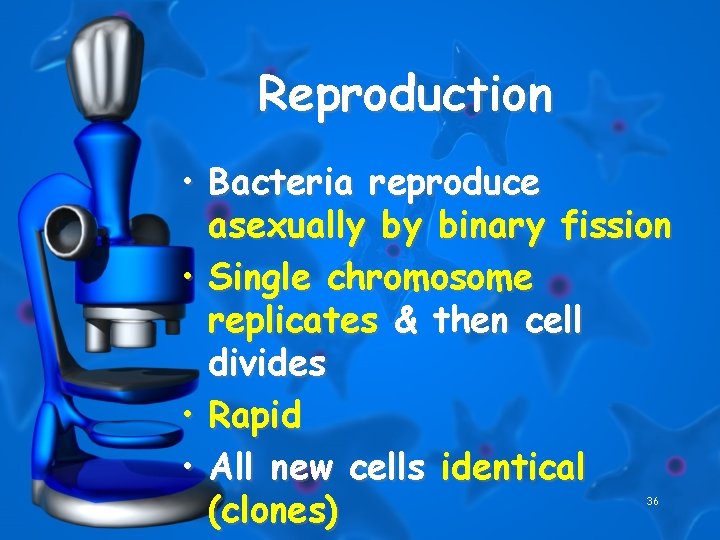
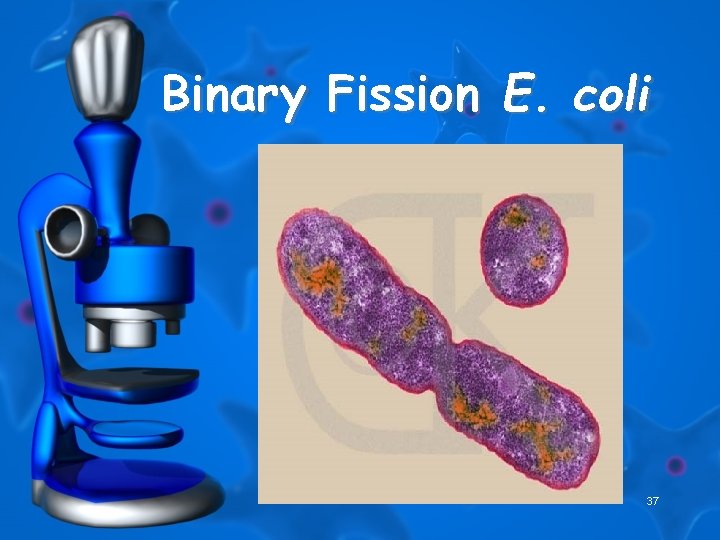
Reproduction • Bacteria reproduce asexually by binary fission • Single chromosome replicates & then cell divides • Rapid • All new cells identical (clones) 36
Binary Fission E. coli 37
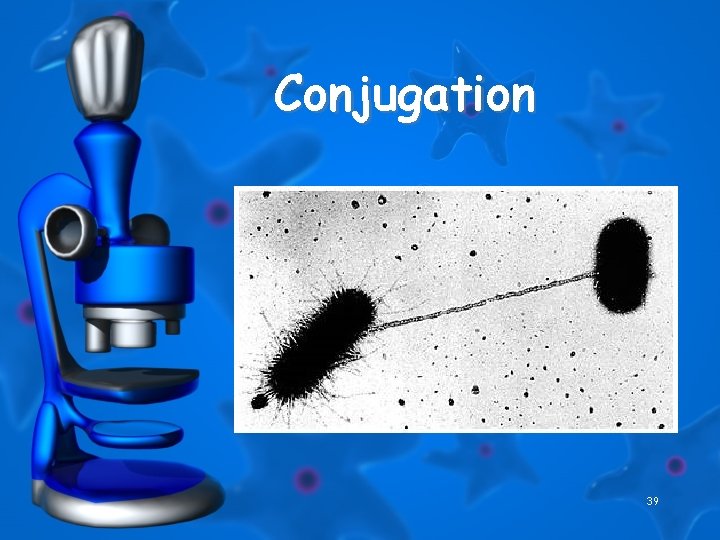
Reproduction • Bacteria reproduce sexually by Conjugation • Form a tube between 2 bacteria to exchange genetic material • Held together by pili • New cells NOT identical 38
Conjugation 39
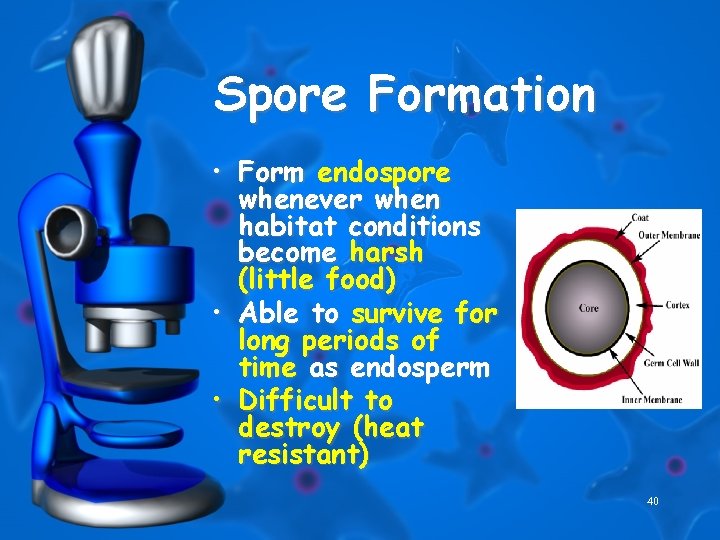
Spore Formation • Form endospore whenever when habitat conditions become harsh (little food) • Able to survive for long periods of time as endosperm • Difficult to destroy (heat resistant) 40
Mutations • Genetic change in bacteria • May become antibiotic resistant 41
Identifing Bacteria • Use the dichotomous key to identify 11 different colonies of bacteria. 42