
Three data analysis problems Andreas Zezas University of
Three data analysis problems Andreas Zezas University of Crete Cf. A
Two types of problems: • Fitting • Source Classification
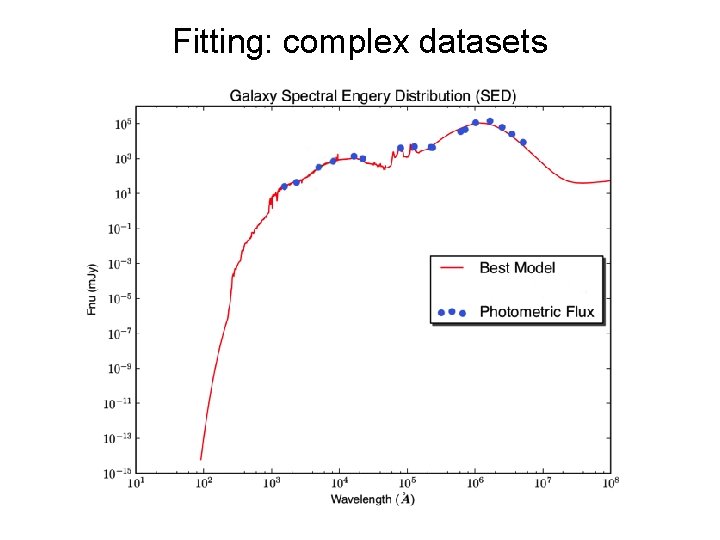
Fitting: complex datasets
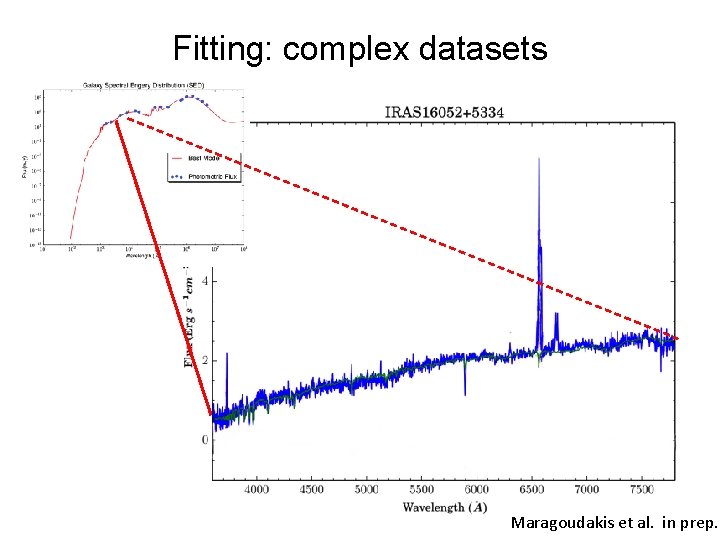
Fitting: complex datasets Maragoudakis et al. in prep.
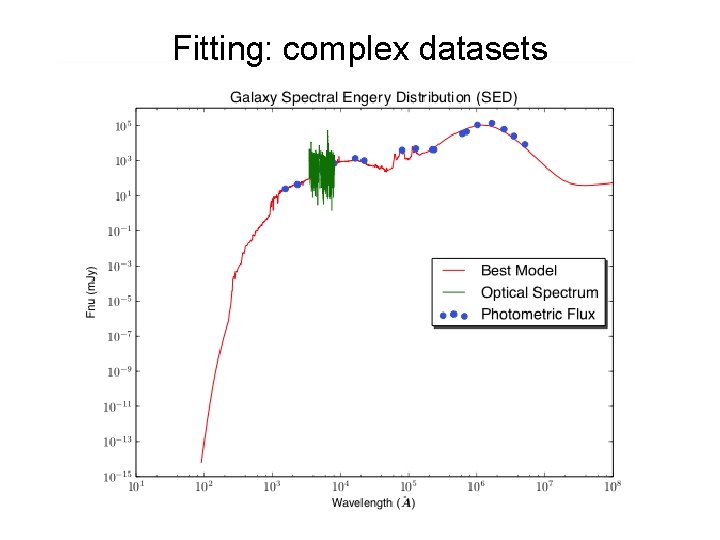
Fitting: complex datasets
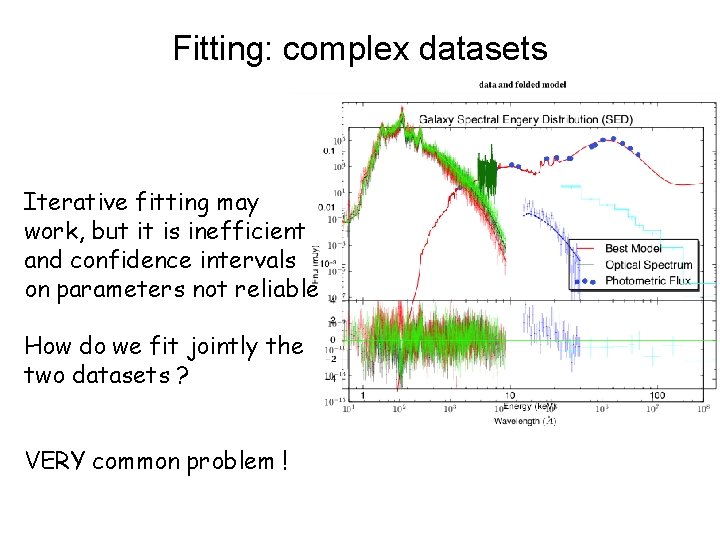
Fitting: complex datasets Iterative fitting may work, but it is inefficient and confidence intervals on parameters not reliable How do we fit jointly the two datasets ? VERY common problem !
Problem 2 Model selection in 2 D fits of images
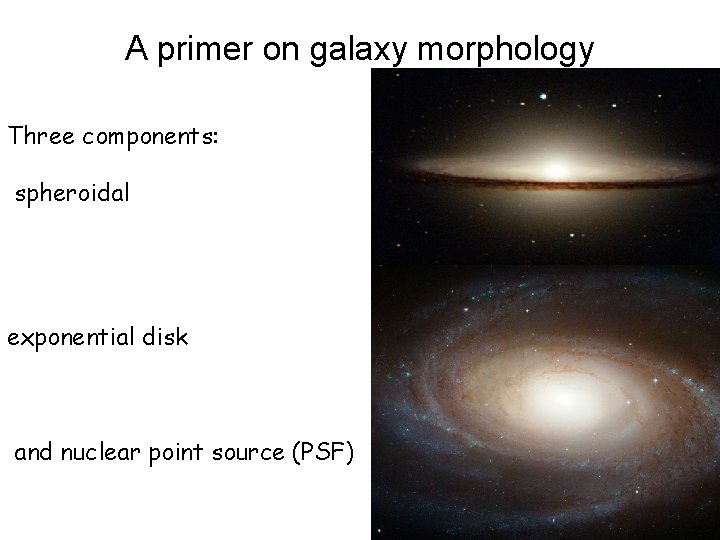
A primer on galaxy morphology Three components: spheroidal exponential disk and nuclear point source (PSF)
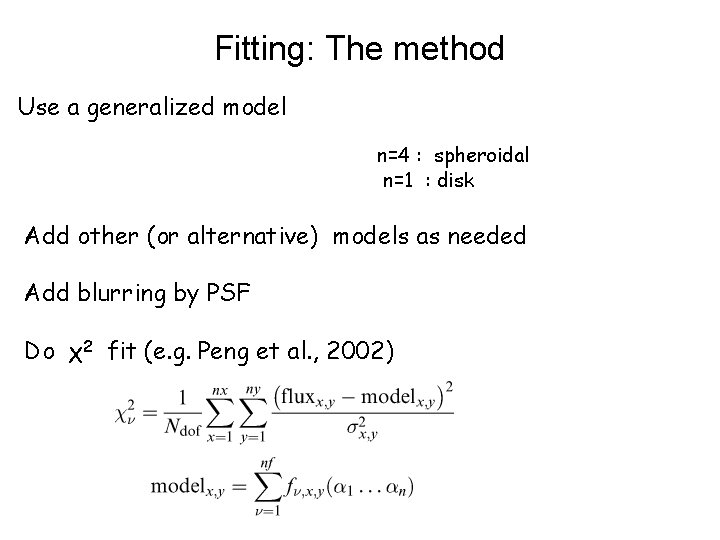
Fitting: The method Use a generalized model n=4 : spheroidal n=1 : disk Add other (or alternative) models as needed Add blurring by PSF Do χ2 fit (e. g. Peng et al. , 2002)
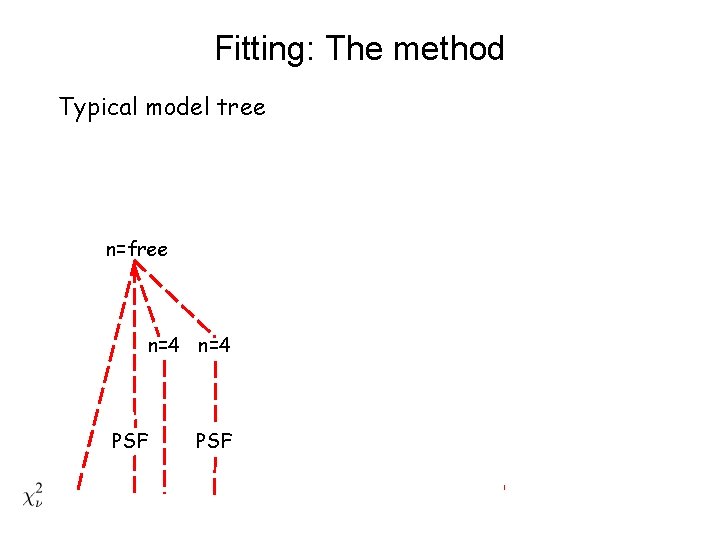
Fitting: The method Typical model tree n=free n=4 n=1 n=4 PSF PSF
Fitting: Discriminating between models Generally χ2 works BUT: Combinations of different models may give similar χ2 How to select the best model ? Models not nested: cannot use standard methods Look at the residuals
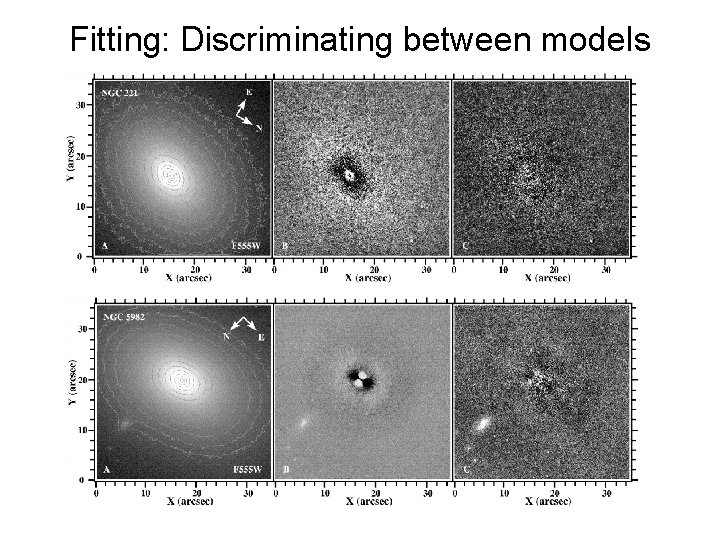
Fitting: Discriminating between models
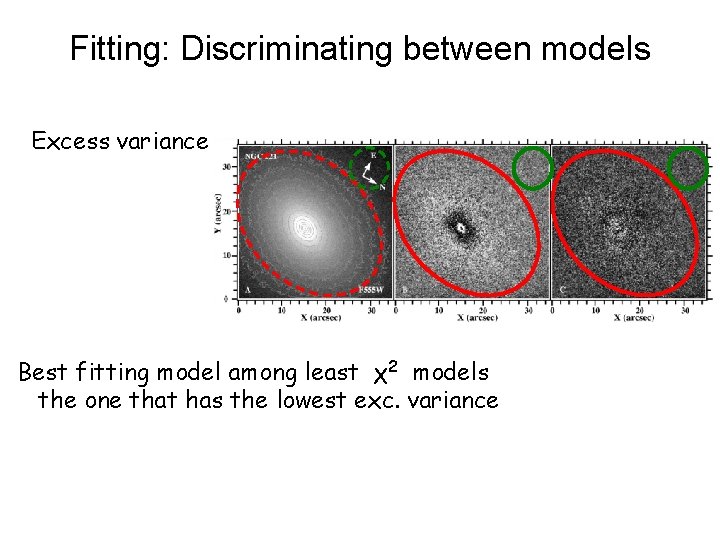
Fitting: Discriminating between models Excess variance Best fitting model among least χ2 models the one that has the lowest exc. variance
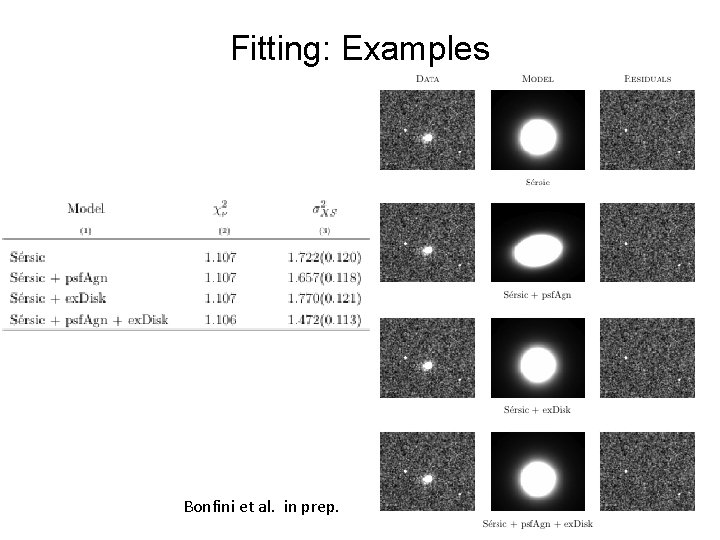
Fitting: Examples Bonfini et al. in prep.
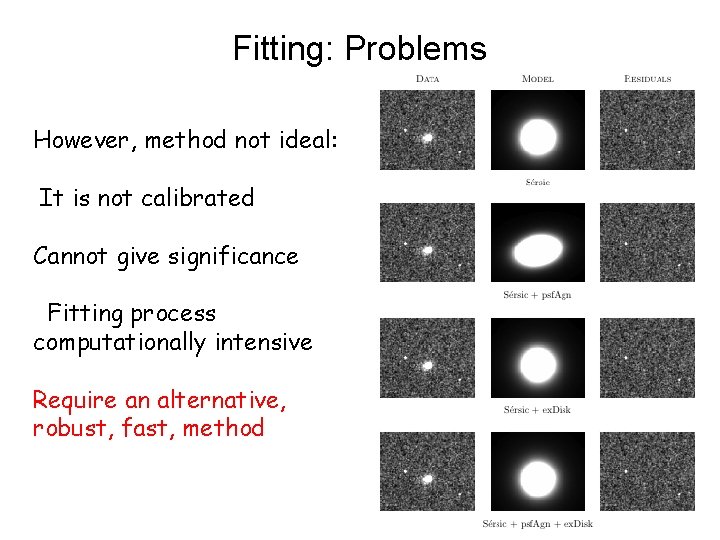
Fitting: Problems However, method not ideal: It is not calibrated Cannot give significance Fitting process computationally intensive Require an alternative, robust, fast, method
Problem 3 Source Classification (a) Stars
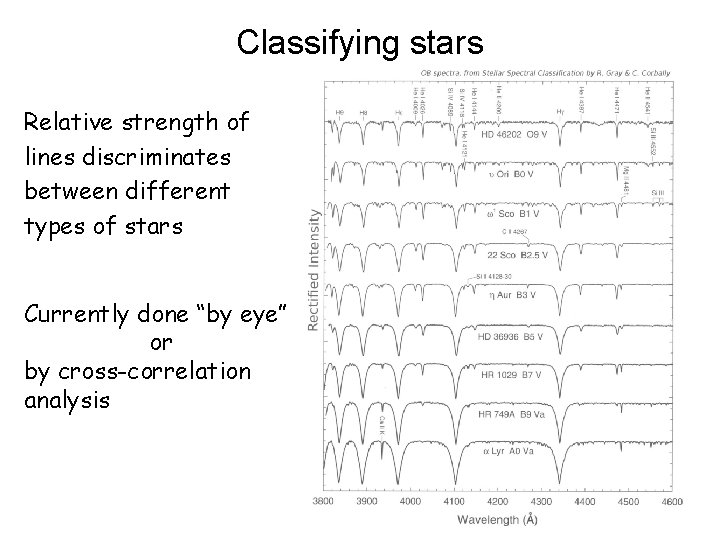
Classifying stars Relative strength of lines discriminates between different types of stars Currently done “by eye” or by cross-correlation analysis
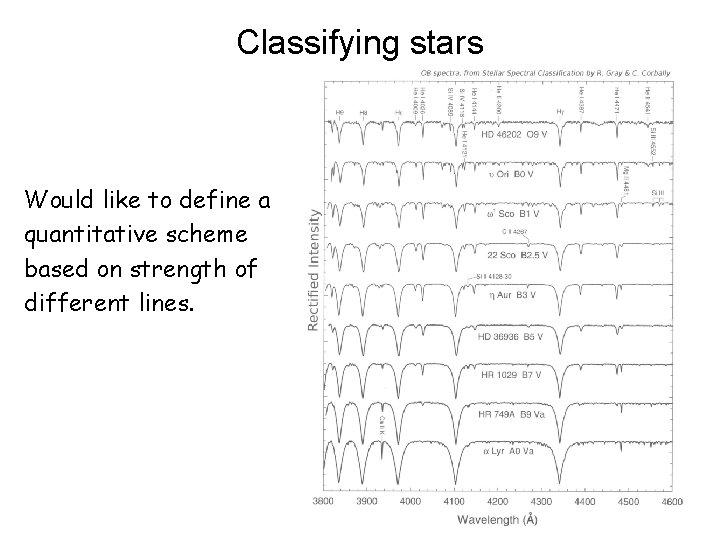
Classifying stars Would like to define a quantitative scheme based on strength of different lines.
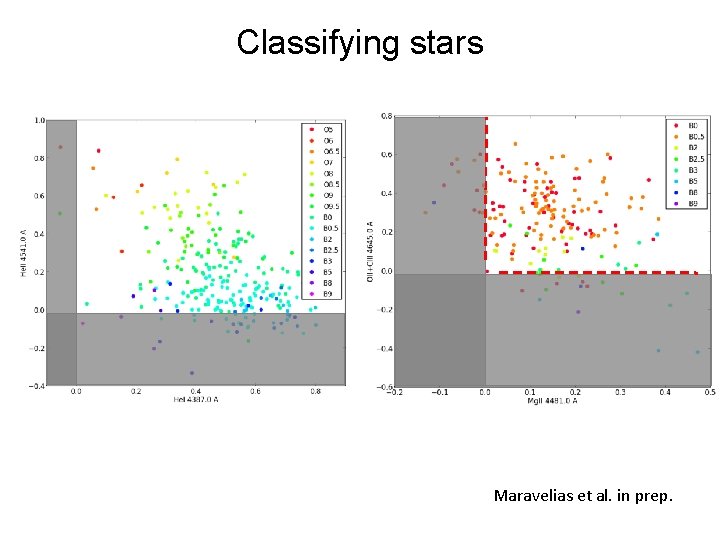
Classifying stars Maravelias et al. in prep.
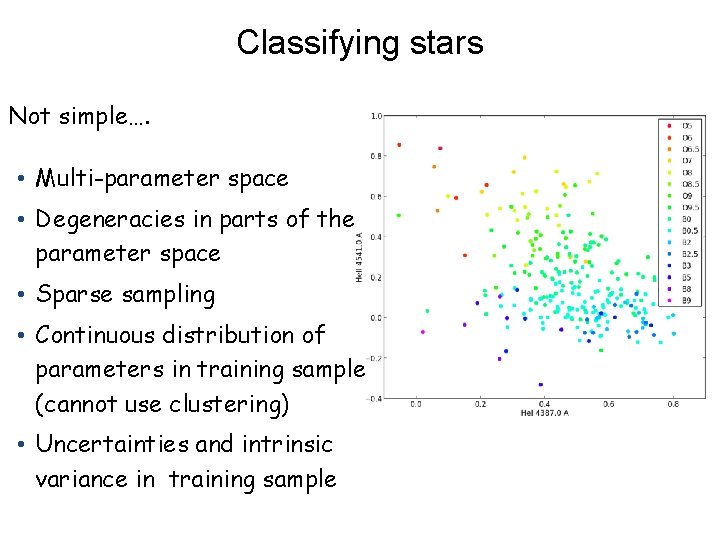
Classifying stars Not simple…. • Multi-parameter space • Degeneracies in parts of the parameter space • Sparse sampling • Continuous distribution of parameters in training sample (cannot use clustering) • Uncertainties and intrinsic variance in training sample
Problem 3 Source Classification (b) Galaxies
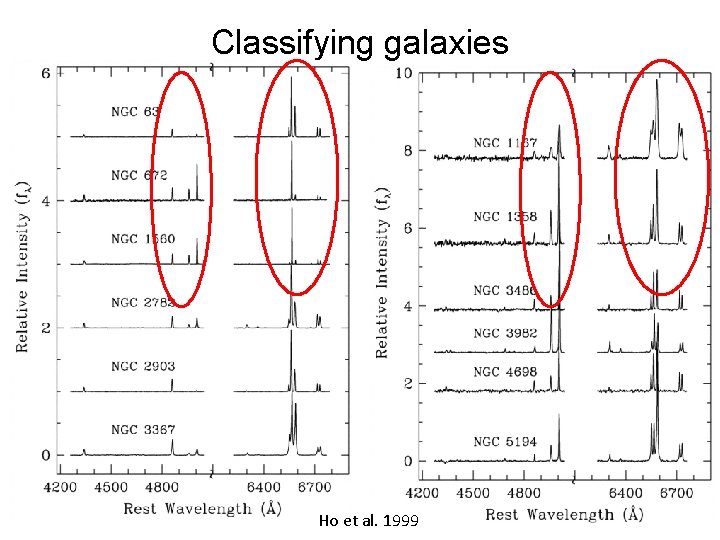
Classifying galaxies Ho et al. 1999
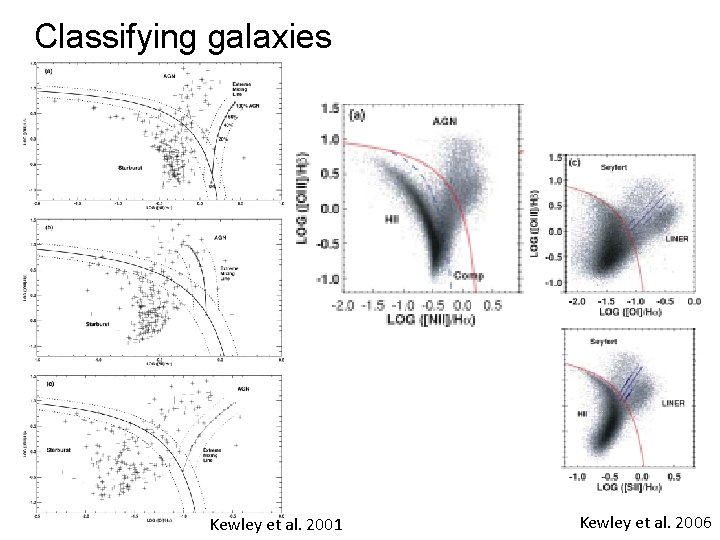
Classifying galaxies Kewley et al. 2001 Kewley et al. 2006
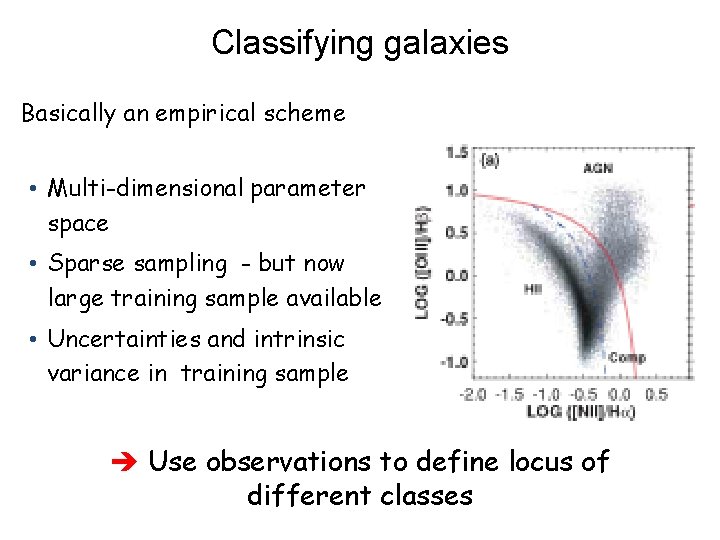
Classifying galaxies Basically an empirical scheme • Multi-dimensional parameter space • Sparse sampling - but now large training sample available • Uncertainties and intrinsic variance in training sample Use observations to define locus of different classes
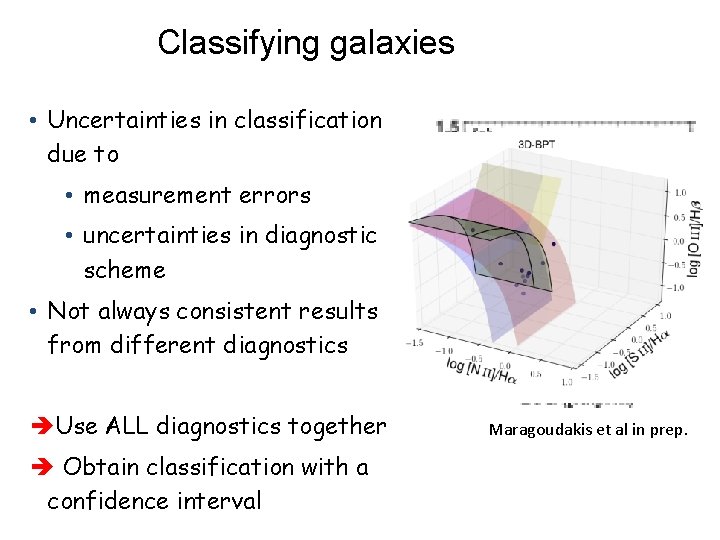
Classifying galaxies • Uncertainties in classification due to • measurement errors • uncertainties in diagnostic scheme • Not always consistent results from different diagnostics Use ALL diagnostics together Obtain classification with a confidence interval Maragoudakis et al in prep.
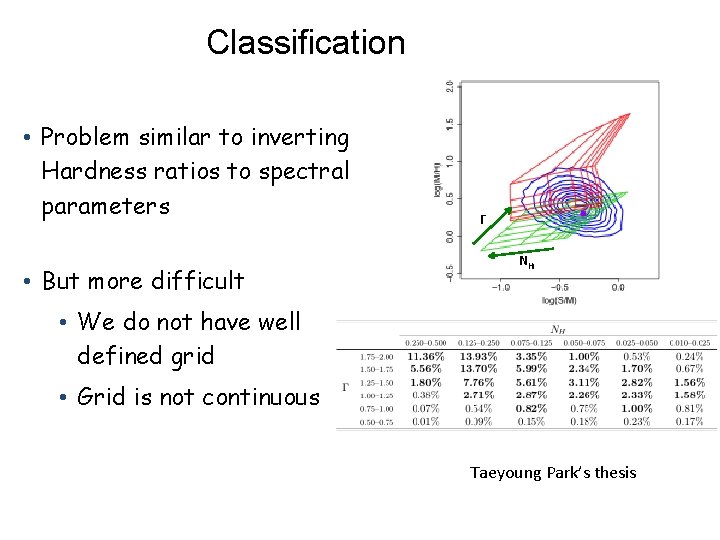
Classification • Problem similar to inverting Hardness ratios to spectral parameters • But more difficult Γ NH • We do not have well defined grid • Grid is not continuous Taeyoung Park’s thesis
Summary • Model selection in multi-component 2 D image fits • Joint fits of datasets of different sizes • Classification in multi-parameter space • Definition of the locus of different source types based on sparse data with uncertainties • Characterization of objects given uncertainties in classification scheme and measurement errors All are challenging problems related to very common data analysis tasks. Any volunteers ?
- Slides: 27