
Three Basic Types of Energy kinetic energy of
Three Basic Types of Energy • kinetic – energy of motion • potential – stored energy; e. g. , chemical, gravitational, electrical, etc. • radiative – energy transported by light (electromagetic radiation)
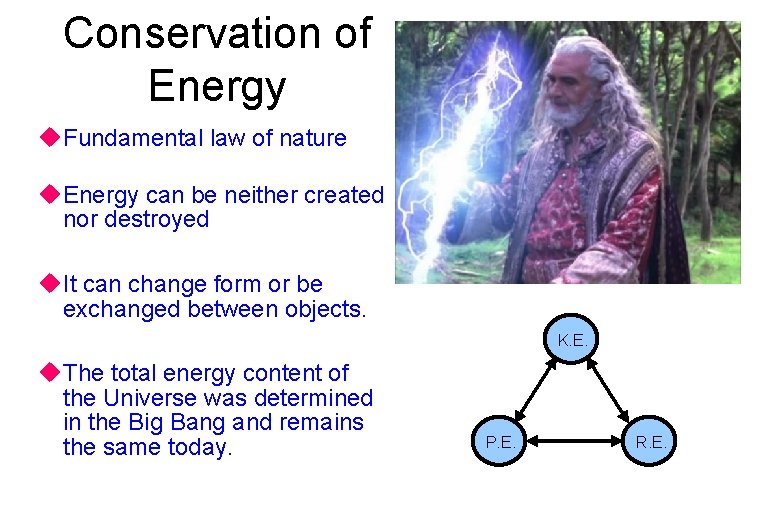
Conservation of Energy u Fundamental law of nature u Energy can be neither created nor destroyed u It can change form or be exchanged between objects. K. E. u The total energy content of the Universe was determined in the Big Bang and remains the same today. P. E. R. E.
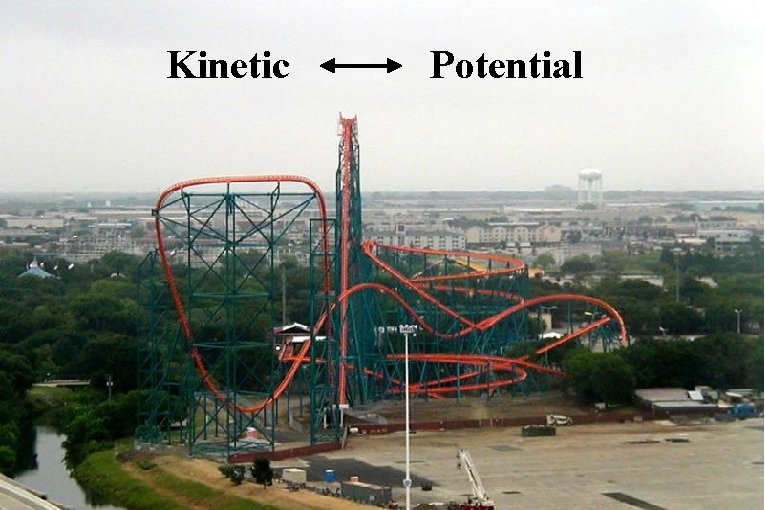
Kinetic Potential
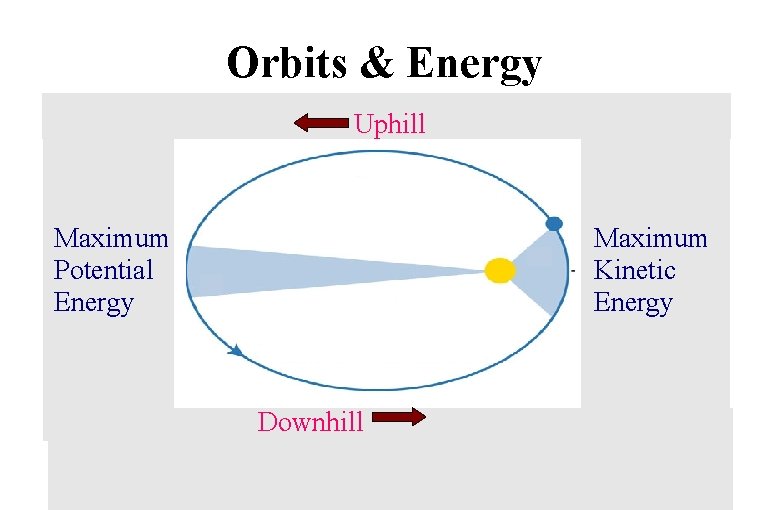
Orbits & Energy Uphill Maximum Potential Energy Maximum Kinetic Energy Downhill
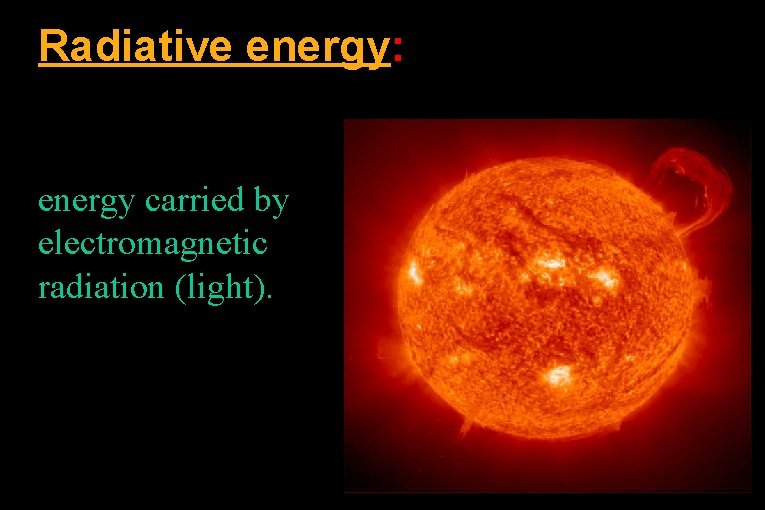
Radiative energy: energy carried by electromagnetic radiation (light).
Light A vibration in an electromagnetic field through which energy is transported. Light as a wave Light as a particle (photon)
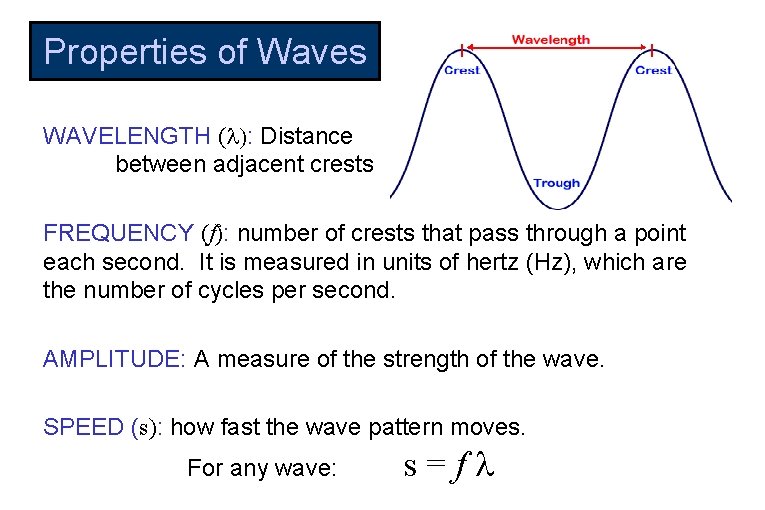
Properties of Waves WAVELENGTH ( : Distance between adjacent crests FREQUENCY (f): number of crests that pass through a point each second. It is measured in units of hertz (Hz), which are the number of cycles per second. AMPLITUDE: A measure of the strength of the wave. SPEED (s): how fast the wave pattern moves. For any wave: s=f
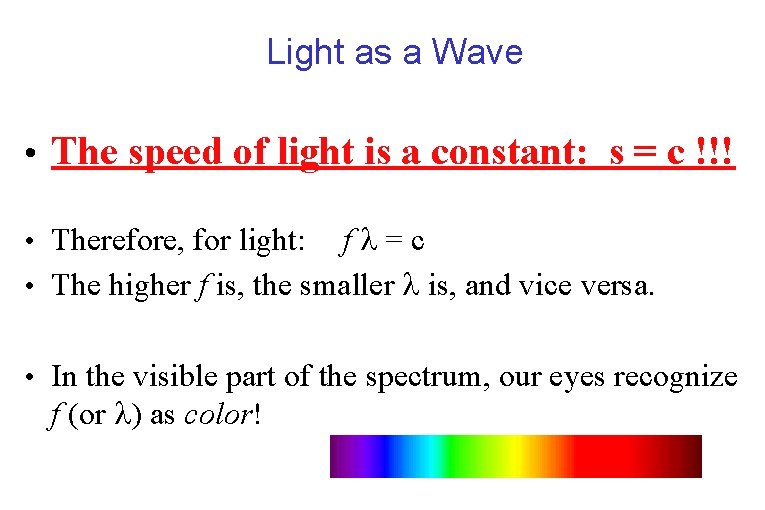
Light as a Wave • The speed of light is a constant: s = c !!! f =c • The higher f is, the smaller is, and vice versa. • Therefore, for light: • In the visible part of the spectrum, our eyes recognize f (or ) as color!
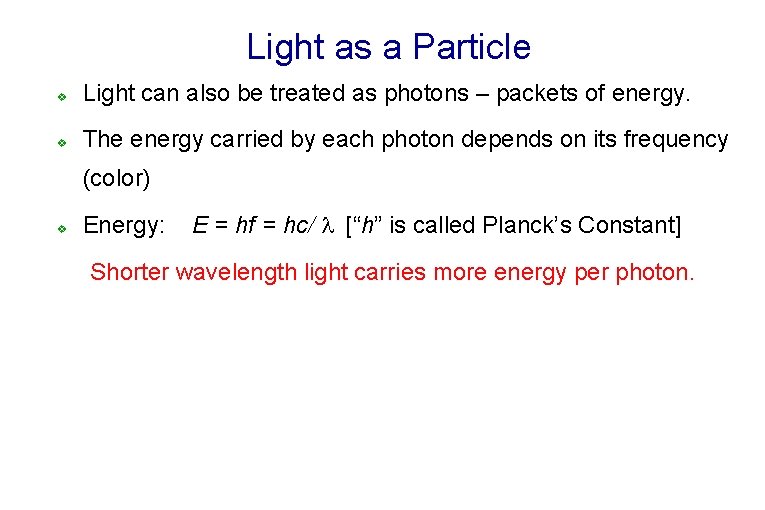
Light as a Particle v Light can also be treated as photons – packets of energy. v The energy carried by each photon depends on its frequency (color) v Energy: E = hf = hc/ [“h” is called Planck’s Constant] Shorter wavelength light carries more energy per photon.
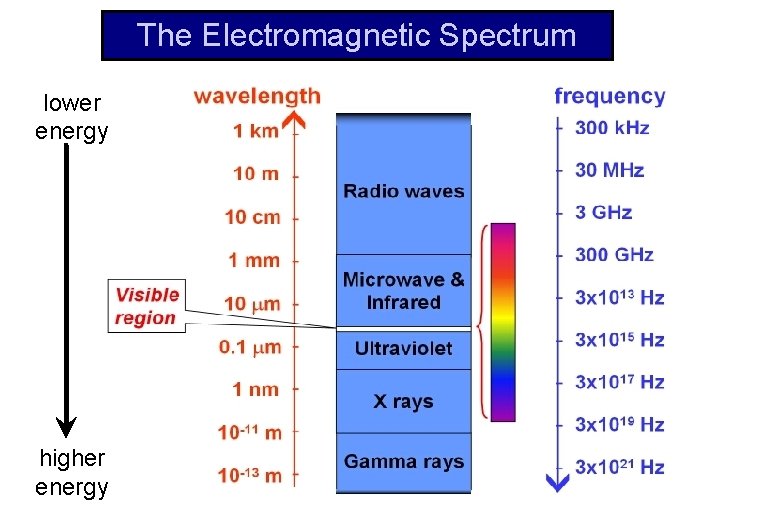
The Electromagnetic Spectrum lower energy higher energy
Light as Information Bearer Spectrum: light separated into its different wavelengths. Spectroscopy: The quantitative analysis of spectra The spectrum of an object can reveal the object’s: Composition Temperature Velocity

“Matter” and Light
Four Ways in Which Light can Interact with Matter 1. emission – matter releases energy as light 2. absorption – matter takes energy from light 3. transmission – matter allows light to pass through it 4. reflection – matter reflects light

Emission, absorption, transmission, reflection The type of interaction between light and matter is determined by characteristics of the “matter” and by the wavelength of light.
A Brief Review of “Matter”
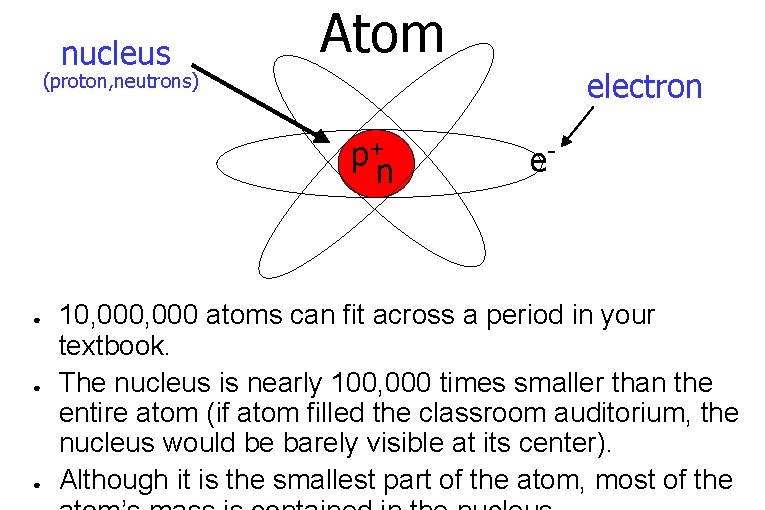
nucleus Atom electron (proton, neutrons) p+ n ● ● ● e- 10, 000 atoms can fit across a period in your textbook. The nucleus is nearly 100, 000 times smaller than the entire atom (if atom filled the classroom auditorium, the nucleus would be barely visible at its center). Although it is the smallest part of the atom, most of the
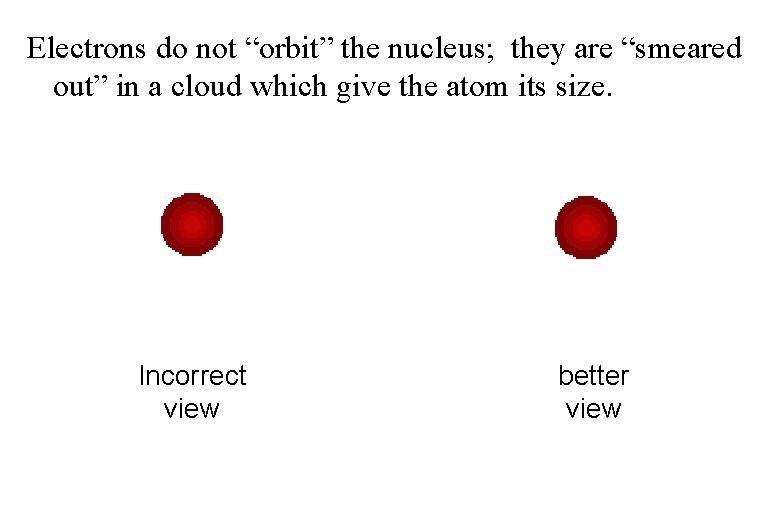
Electrons do not “orbit” the nucleus; they are “smeared out” in a cloud which give the atom its size. Incorrect view better view
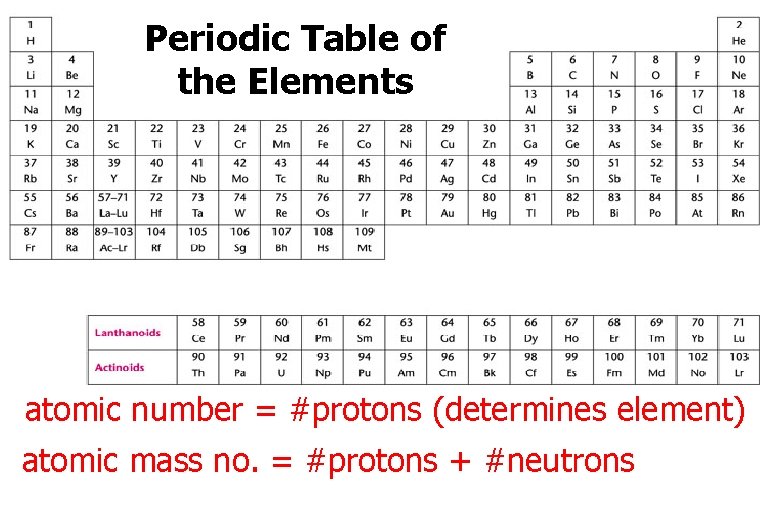
Periodic Table of the Elements atomic number = #protons (determines element) atomic mass no. = #protons + #neutrons
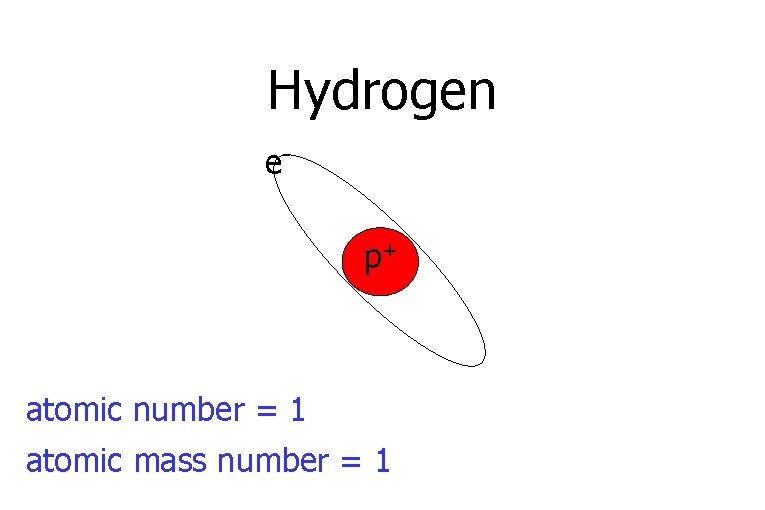
Hydrogen ep+ atomic number = 1 atomic mass number = 1
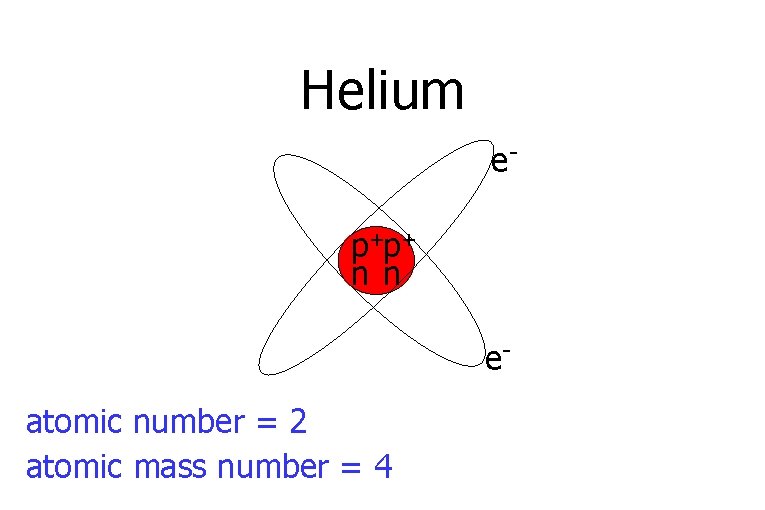
Helium ep+p+ n n eatomic number = 2 atomic mass number = 4
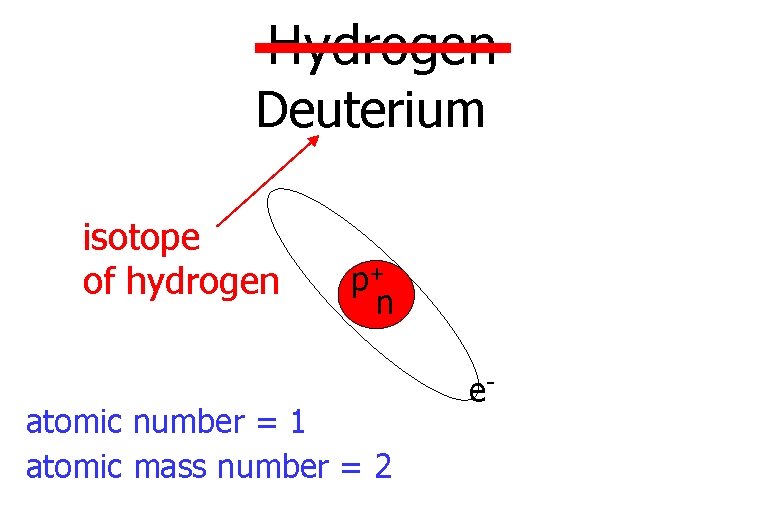
Hydrogen Deuterium isotope of hydrogen p+ n atomic number = 1 atomic mass number = 2 e-
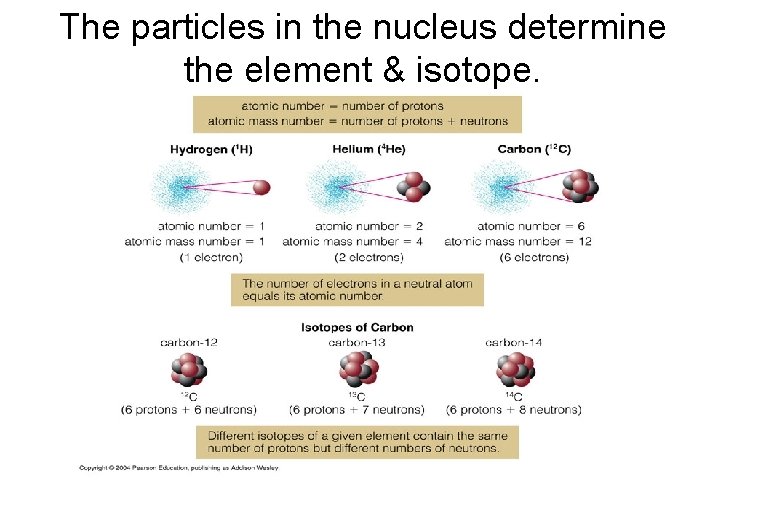
The particles in the nucleus determine the element & isotope.
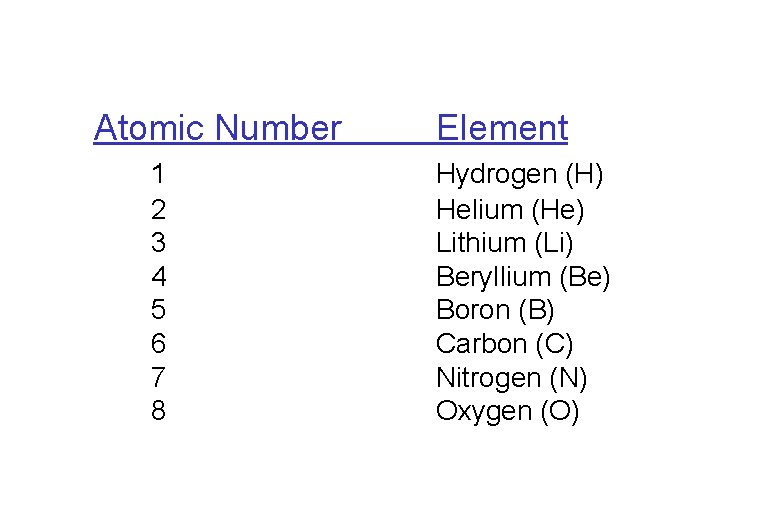
Atomic Number 1 2 3 4 5 6 7 8 Element Hydrogen (H) Helium (He) Lithium (Li) Beryllium (Be) Boron (B) Carbon (C) Nitrogen (N) Oxygen (O)
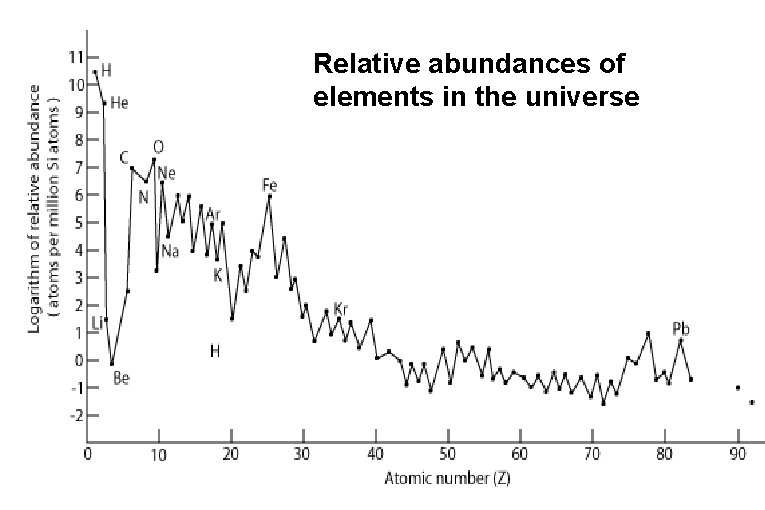
Relative abundances of elements in the universe
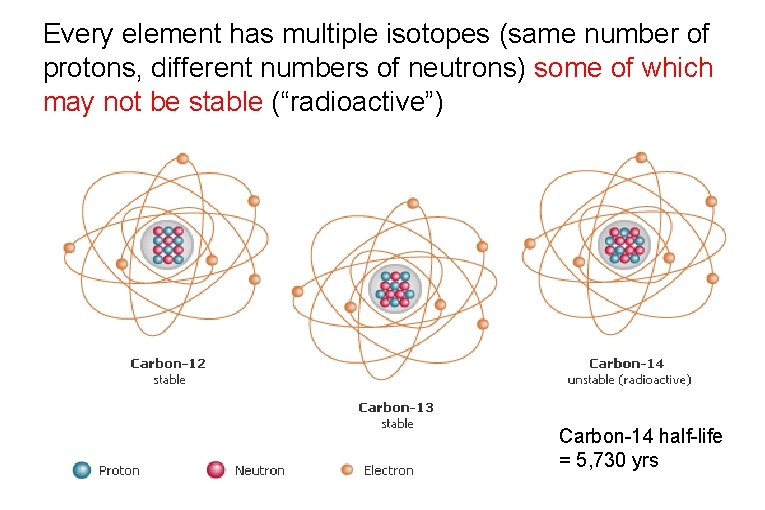
Every element has multiple isotopes (same number of protons, different numbers of neutrons) some of which may not be stable (“radioactive”) Carbon-14 half-life = 5, 730 yrs
Unstable (“radioactive”) isotopes “decay”, producing a new type of atom, i. e. , an atom of a different element, or a different isotope of the original element. One half of the atoms of an unstable isotope decay in one “half-life” of that isotope.
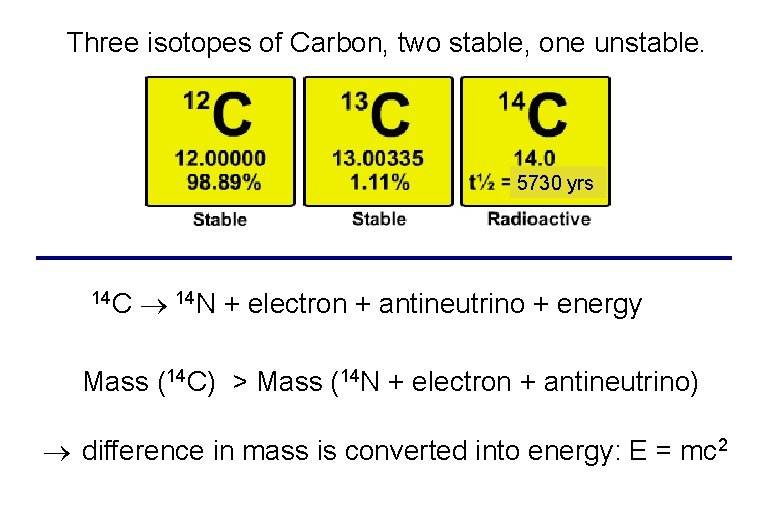
Three isotopes of Carbon, two stable, one unstable. 5730 yrs 14 C 14 N + electron + antineutrino + energy Mass (14 C) > Mass (14 N + electron + antineutrino) difference in mass is converted into energy: E = mc 2
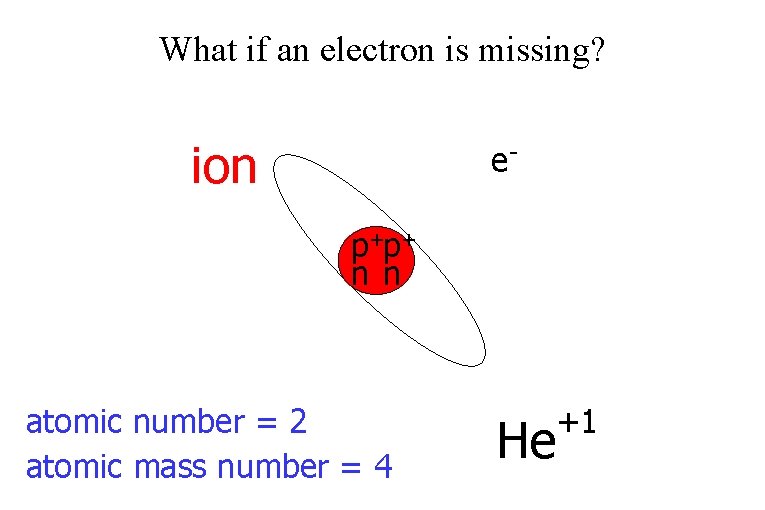
What if an electron is missing? ion ep+p+ n n atomic number = 2 atomic mass number = 4 He +1

What if two or more atoms combine to form a particle? molecule H 2 O (water) p+ Sharing of electrons (chemistry) is involved in the construction of molecules 8 p+ 8 n p+
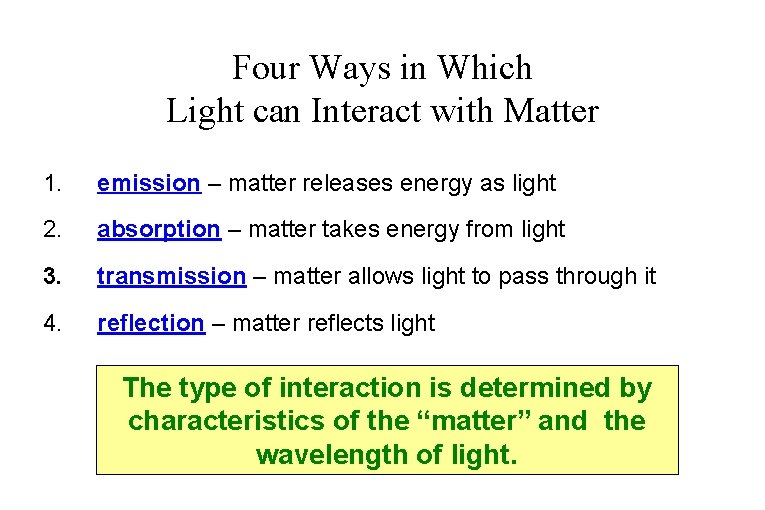
Four Ways in Which Light can Interact with Matter 1. emission – matter releases energy as light 2. absorption – matter takes energy from light 3. transmission – matter allows light to pass through it 4. reflection – matter reflects light The type of interaction is determined by characteristics of the “matter” and the wavelength of light.
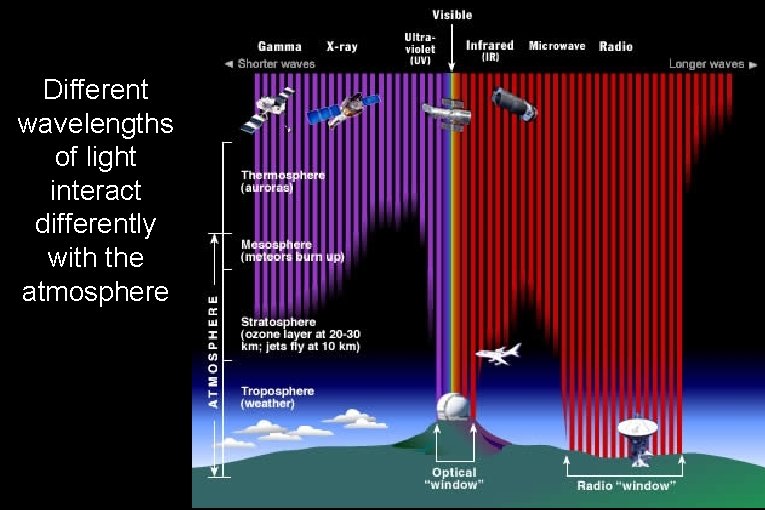
Different wavelengths of light interact differently with the atmosphere
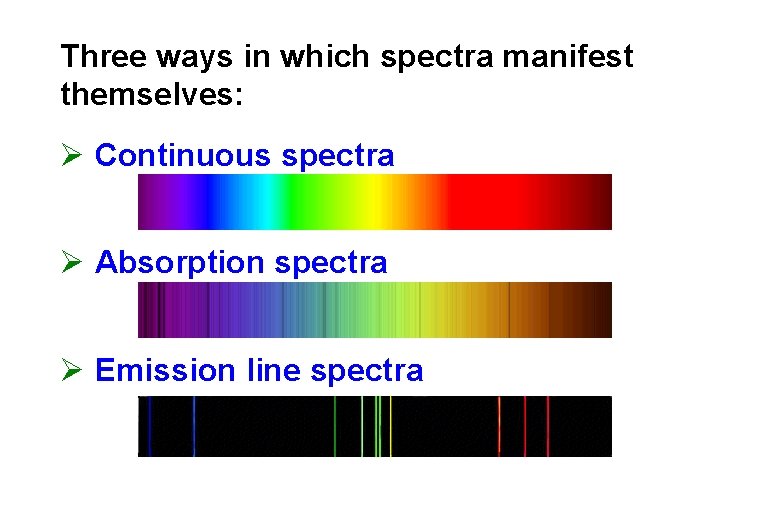
Three ways in which spectra manifest themselves: Ø Continuous spectra Ø Absorption spectra Ø Emission line spectra
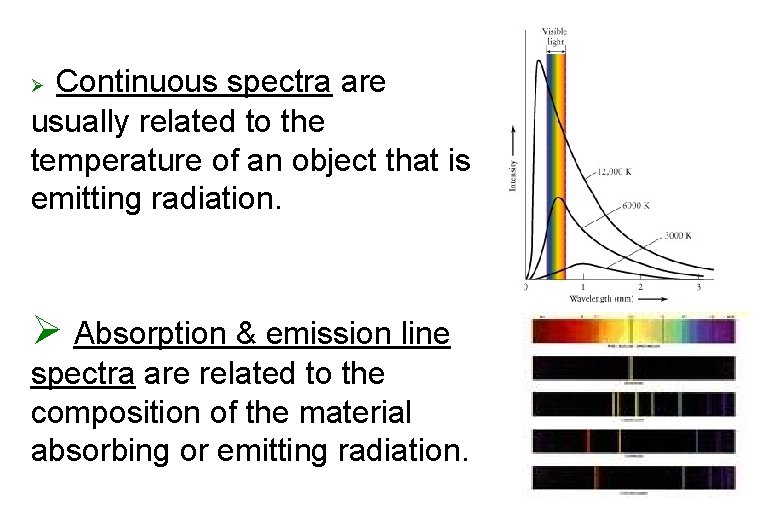
Continuous spectra are usually related to the temperature of an object that is emitting radiation. Ø Ø Absorption & emission line spectra are related to the composition of the material absorbing or emitting radiation.
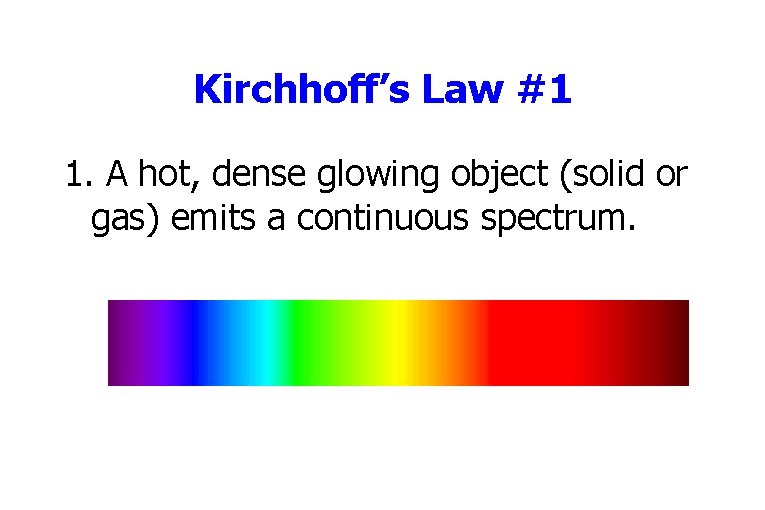
Kirchhoff’s Law #1 1. A hot, dense glowing object (solid or gas) emits a continuous spectrum.

Rules for Thermal Emission by Opaque Objects 1. Hotter objects emit more total radiation per unit surface area. 2. Hotter objects have their peak radiation at shorter wavelengths (they will appear “bluer”)
The sun emits peak radiation in the yellow portion of the visible spectrum At “room temperature”, or “bodytemperature”, an object emits peak radiation in the infrared.
- Slides: 36