
Three Approaches to Distance Learning Support Services New
- Slides: 24
Three Approaches to Distance Learning Support Services New River Community College of Health Sciences Virginia Tech Copyright Bridget Moore and Mark Raby 2002. This work is the intellectual property of the author. Permission is granted for this material to be shared for non-commercial, educational purposes, provided that this copyright appears on the reproduced materials and notice is given that the copying is by permission of the author. To disseminate otherwise or to republish requires written permission from the author.
New River Community College • For information: – http: //idl. nr. vccs. edu/de/ – Kathy Kleppin (nrklepk@nr. vccs. edu)
College of Health Sciences • • • Located in Roanoke, Virginia Small, private, single-purpose institution Allied health and nursing Baccalaureate, associate and certificates Approximately 650 FTEs
Distance Learning at CHS • Distance learning program established 1999 • Primary delivery system--online utilizing Blackboard • To date over 2600 enrollments • Offer over 30 different courses • 1. 5 FTE staff for DL program
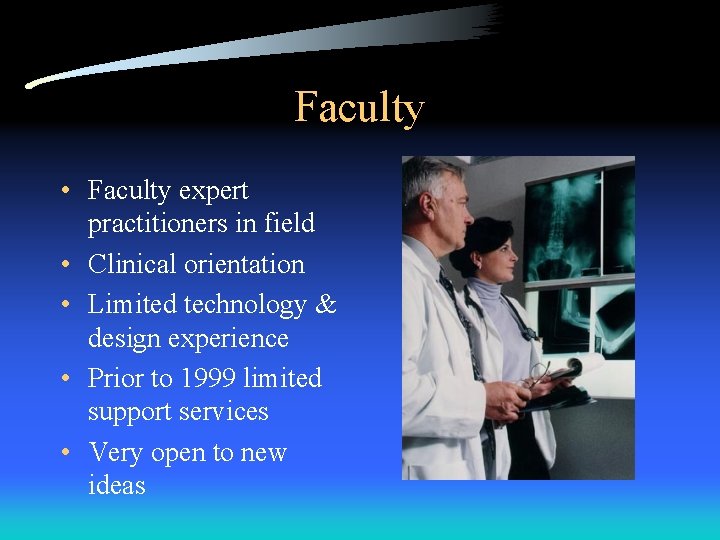
Faculty • Faculty expert practitioners in field • Clinical orientation • Limited technology & design experience • Prior to 1999 limited support services • Very open to new ideas
Faculty Support Services • First courses – Program specific – High faculty interest – Some technology experience • Developed five year plan emphasis on faculty support
Faculty Support Services • Overviews of Distance Learning – Captive audience • In-services • Department meetings – Success to date – Not about technology
Intensive Training • Winter Workshop – End of Fall Semester • Spring Seminar – Between Spring/Summer Semesters
Intensive Training • 2 1/2 days • Hands-on – Mornings - presentation of materials – Afternoons- application • Begin course development • Outside experts & faculty experts • Limited enrollment
Monthly Training Sessions • First Fridays – One hour sessions on specific topics – Distance learning focus • Fourth Fridays for Faculty – Expanded to include other topics – Sponsored by Faculty Senate
Other Support • Training conducted using Blackboard – Faculty as students – Model courses • Faculty Development Area – Variety of technology – Staff assistance available
Other Support • Faculty experts • Distance learning staff as teaching assistant • Distance Learning Faculty Guide – Print and Online • e-Educator Newsletter
Other Support • • • Staff support located in same area as faculty Semester DL Faculty Meetings Annual Excellence in e-Teaching Award Workload compensation first time taught Additional compensation for high enrollment
Faculty Involvement • Spring 1999 – One course/One faculty • Fall 2002 – 22 courses/17 faculty • 60% of full-time faculty involved • 15 different adjunct faculty
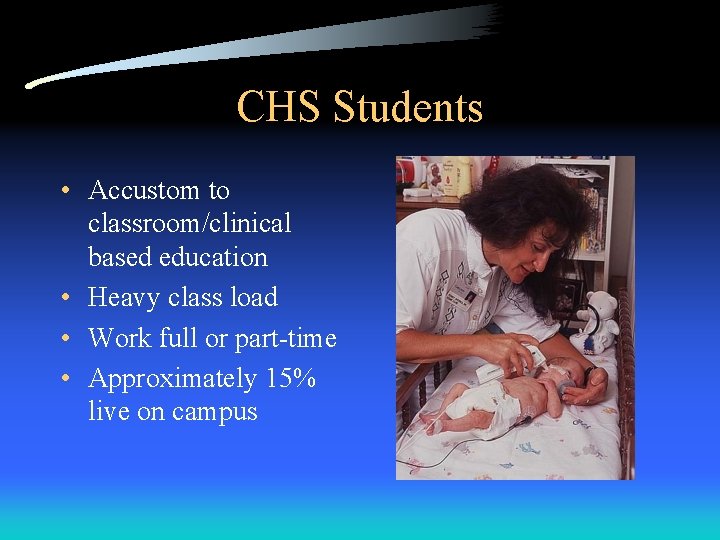
CHS Students • Accustom to classroom/clinical based education • Heavy class load • Work full or part-time • Approximately 15% live on campus
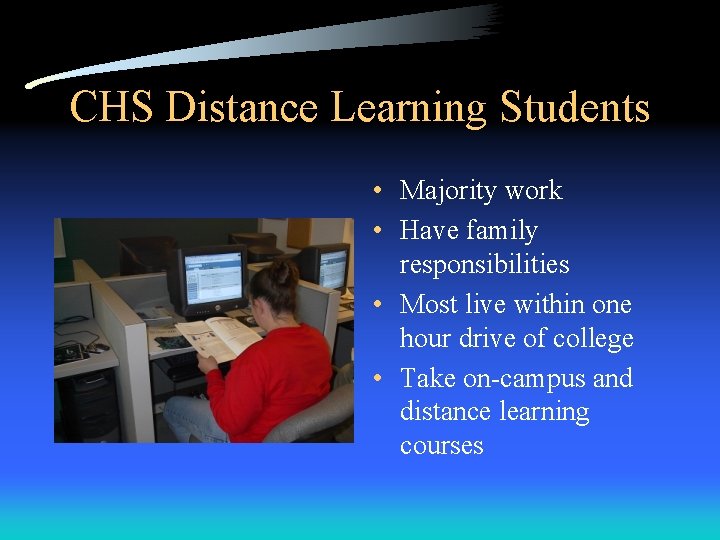
CHS Distance Learning Students • Majority work • Have family responsibilities • Most live within one hour drive of college • Take on-campus and distance learning courses
Student Support Services • Orientation Sessions – Face-to-face – Technical information – Course information --met faculty – Hands-on time
Student Support Services • DL Help Desk – Phone support 8: 00 a. m. - 6: 00 p. m. – Email support --24 hour turnaround – Link to help desk within each course
Student Support Services • Blackboard Online Help • Links within Blackboard to other support – Counseling – Financial Aid – LRC
Student Support Services • Learning Resource Center – Web page – Online catalog – Online access to resources – Access to health system resources – Library Rep. for distance learning – Computer Lab
Student Support Services • Educational Technology Center (ETC) – Open 24/7 – Staffed during specific hours – Variety of software/hardware – Testing Center
Student Support Services • College Email Address • Student Guide to Distance Learning – Print and online • e-Learner Newsletter • Student Seminars • Feedback opportunities -- act on
Student Response • Evaluation Results – 95% agreed they were satisfied with the experience of taking course – 95% agreed the would take another distance learning course
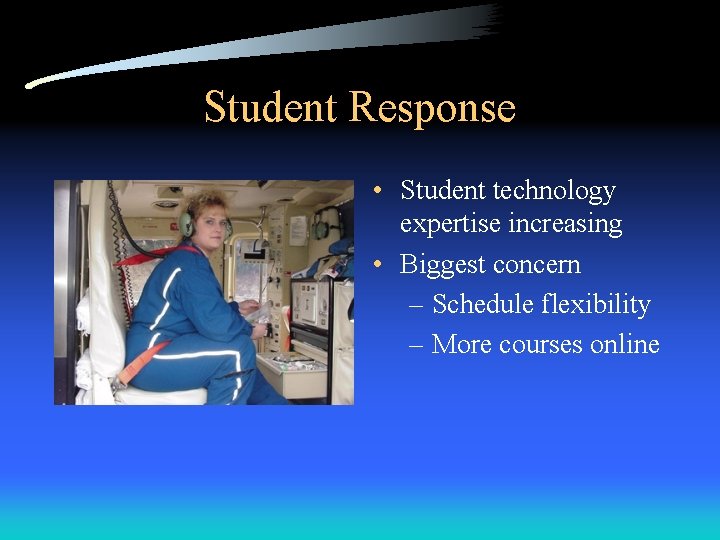
Student Response • Student technology expertise increasing • Biggest concern – Schedule flexibility – More courses online