
Threatbased Flammability Requirements for Military Vehicle Interior Ceilings
Threat-based Flammability Requirements for Military Vehicle Interior Ceilings J. G. Quintiere, C. Houston, L. Speitel, S. Crowley, R. Lyon, H. Guo Sponsored by United States Army Tank Automotive Research Development and Engineering Center (TARDEC)
Objectives • A test protocol to measure the fire thermal and toxicity hazard of ceiling cushioning materials • For the occupant compartment of an armored military vehicle subject to accidental or war fire ignition incidents. • The ignition threat should not be of significant hazard to the occupants, and • Material acceptance criteria must be established with a foundational rationale.
Approach • Not adopt standard relative ranking test without relevance to scenario • Use material fire properties • Extensive listings in reference texts • Basis for modeling • Underlie material performance in fire • Establish ignition threat and toxicity exposure
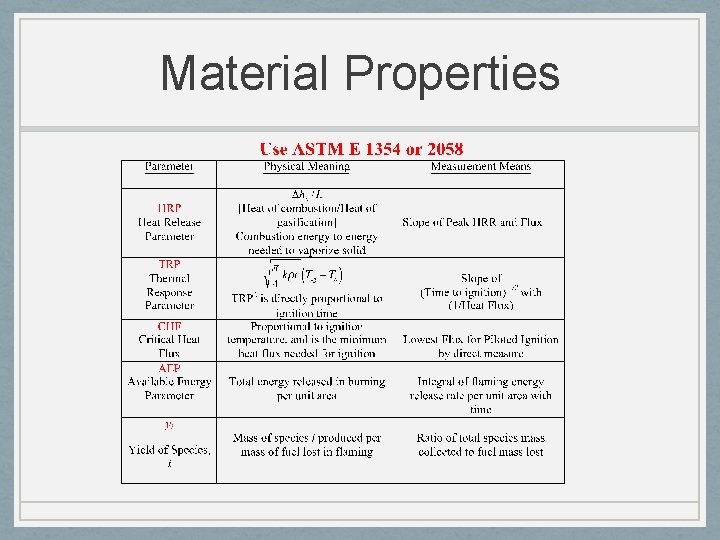
Material Properties
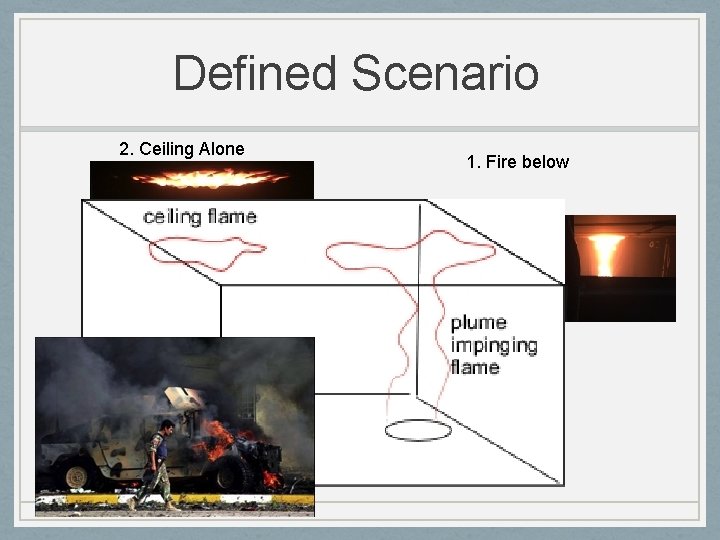
Defined Scenario 2. Ceiling Alone 1. Fire below
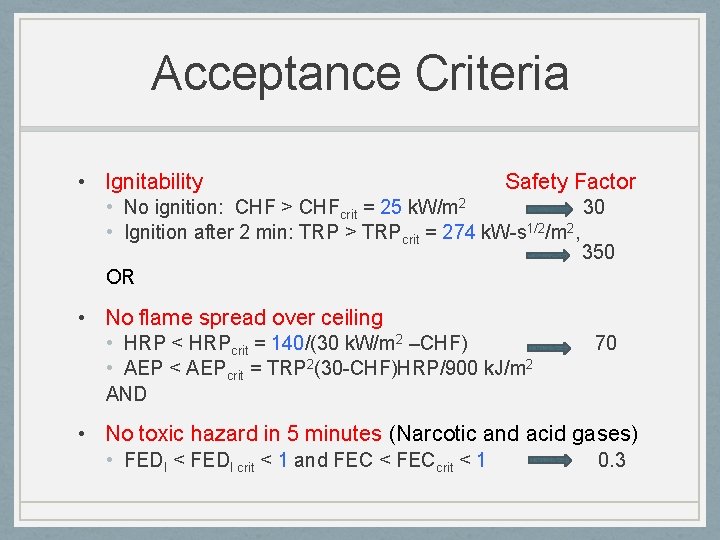
Acceptance Criteria • Ignitability Safety Factor • No ignition: CHF > CHFcrit = 25 k. W/m 2 30 • Ignition after 2 min: TRP > TRPcrit = 274 k. W-s 1/2/m 2, 350 OR • No flame spread over ceiling • HRP < HRPcrit = 140/(30 k. W/m 2 –CHF) 70 • AEP < AEPcrit = TRP 2(30 -CHF)HRP/900 k. J/m 2 AND • No toxic hazard in 5 minutes (Narcotic and acid gases) • FEDI < FEDI crit < 1 and FEC < FECcrit < 1 0. 3
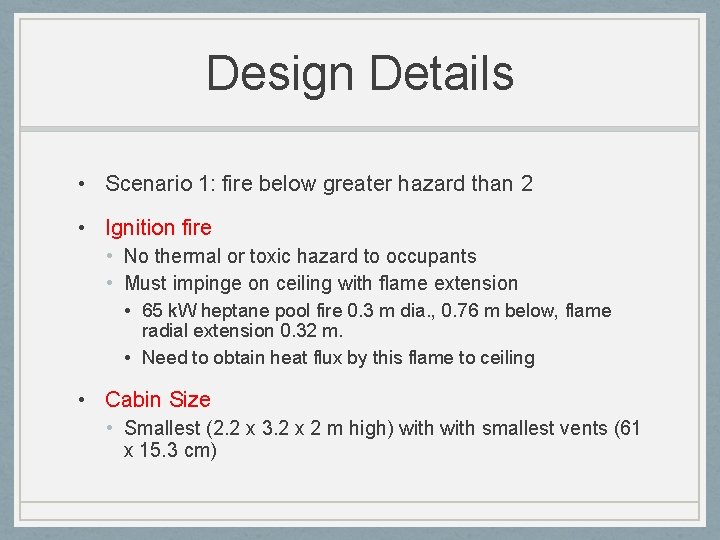
Design Details • Scenario 1: fire below greater hazard than 2 • Ignition fire • No thermal or toxic hazard to occupants • Must impinge on ceiling with flame extension • 65 k. W heptane pool fire 0. 3 m dia. , 0. 76 m below, flame radial extension 0. 32 m. • Need to obtain heat flux by this flame to ceiling • Cabin Size • Smallest (2. 2 x 3. 2 x 2 m high) with smallest vents (61 x 15. 3 cm)
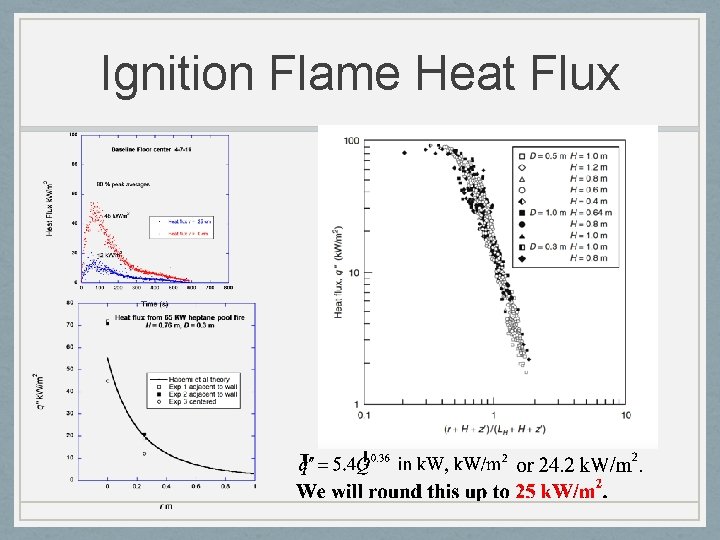
Ignition Flame Heat Flux
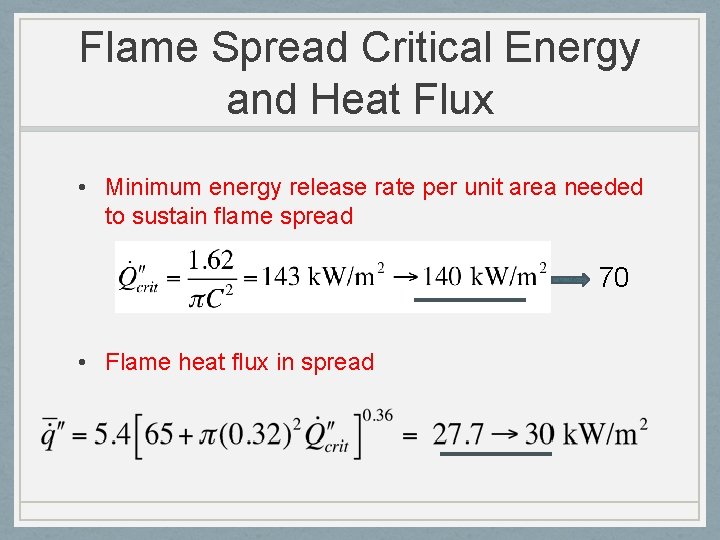
Flame Spread Critical Energy and Heat Flux • Minimum energy release rate per unit area needed to sustain flame spread 70 • Flame heat flux in spread
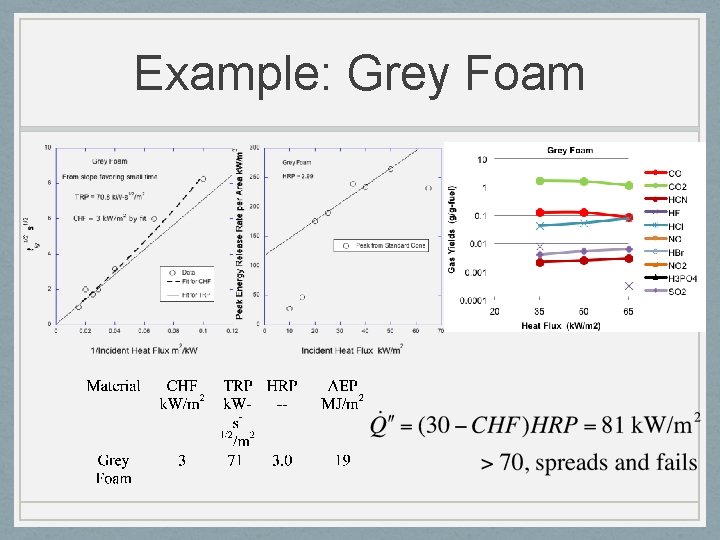
Example: Grey Foam
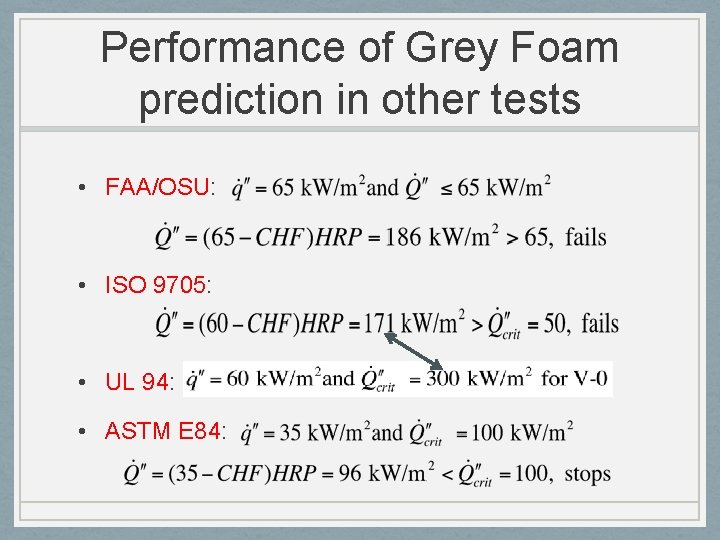
Performance of Grey Foam prediction in other tests • FAA/OSU: • ISO 9705: • UL 94: • ASTM E 84:
Conclusions • Engineering design of test protocol for fire hazard. • Rationale for test performance is transparent. • Methodology can be improved with new knowledge. • Material fire properties can be used to judge performance in a fire scenario. • This process is superior to existing fire tests and regulations.
- Slides: 12