
Threads SMP and Microkernels Chapter 4 1 Process
- Slides: 52
Threads, SMP, and Microkernels Chapter 4 1
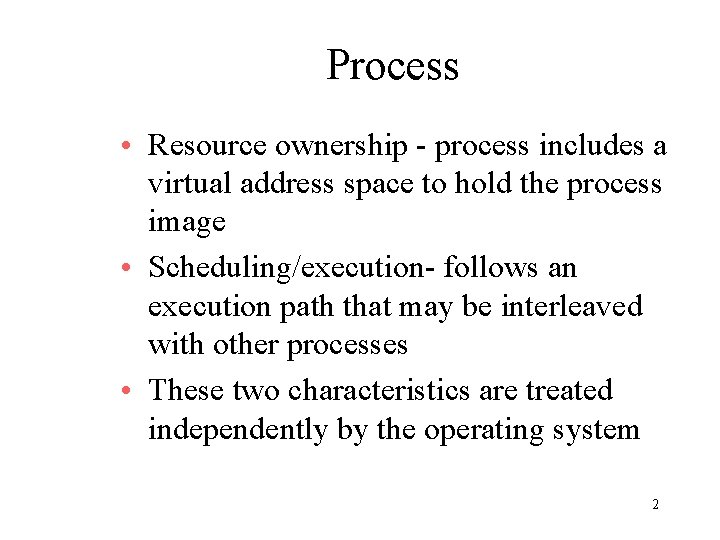
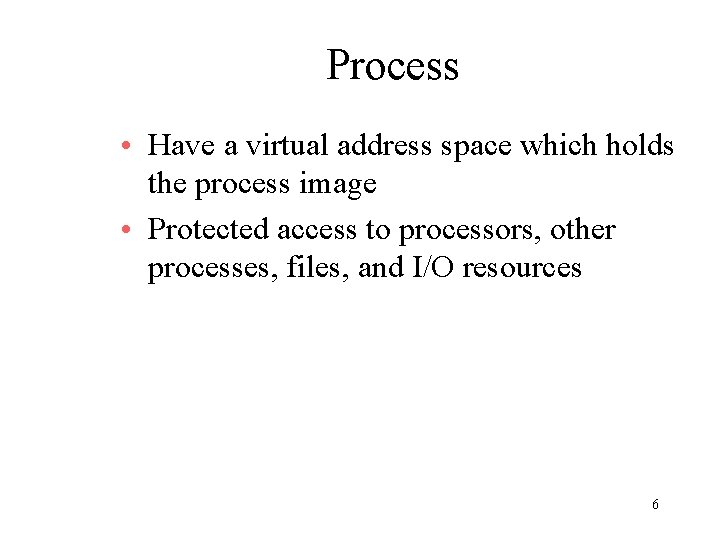
Process • Resource ownership - process includes a virtual address space to hold the process image • Scheduling/execution- follows an execution path that may be interleaved with other processes • These two characteristics are treated independently by the operating system 2
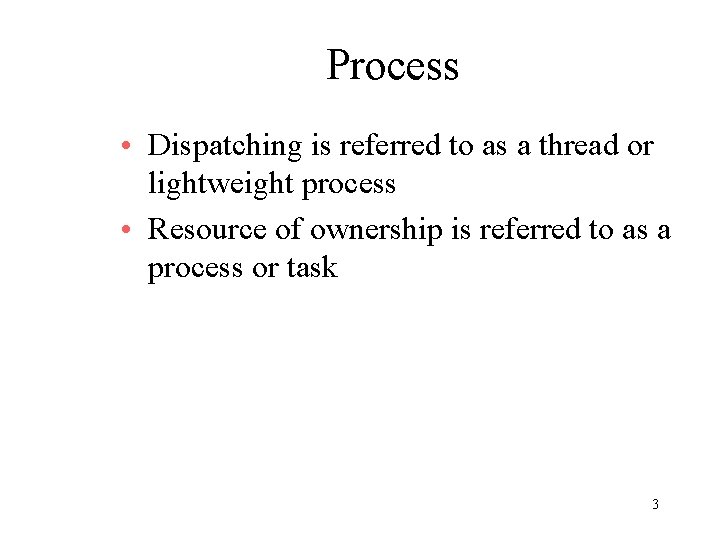
Process • Dispatching is referred to as a thread or lightweight process • Resource of ownership is referred to as a process or task 3
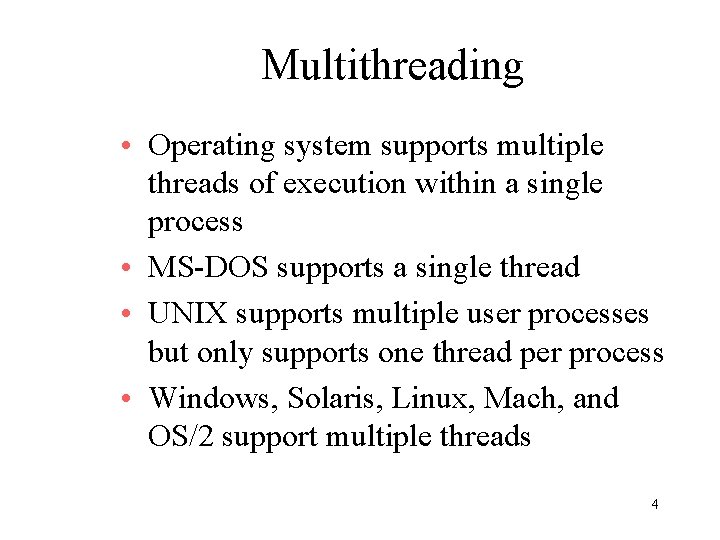
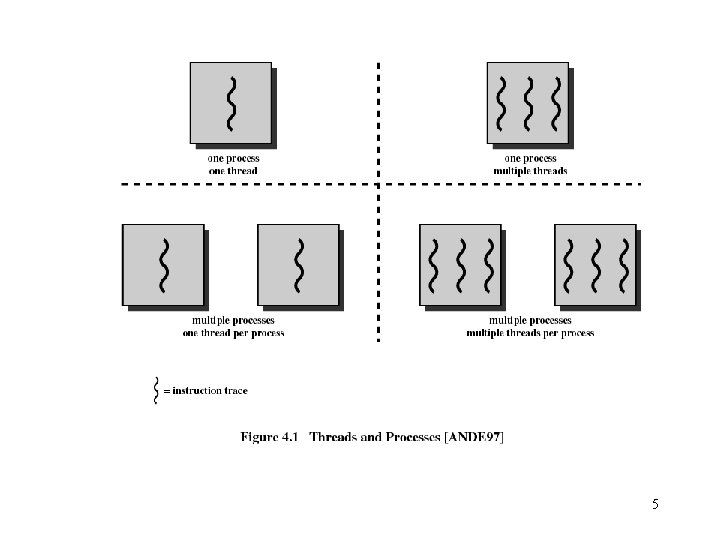
Multithreading • Operating system supports multiple threads of execution within a single process • MS-DOS supports a single thread • UNIX supports multiple user processes but only supports one thread per process • Windows, Solaris, Linux, Mach, and OS/2 support multiple threads 4
5
Process • Have a virtual address space which holds the process image • Protected access to processors, other processes, files, and I/O resources 6
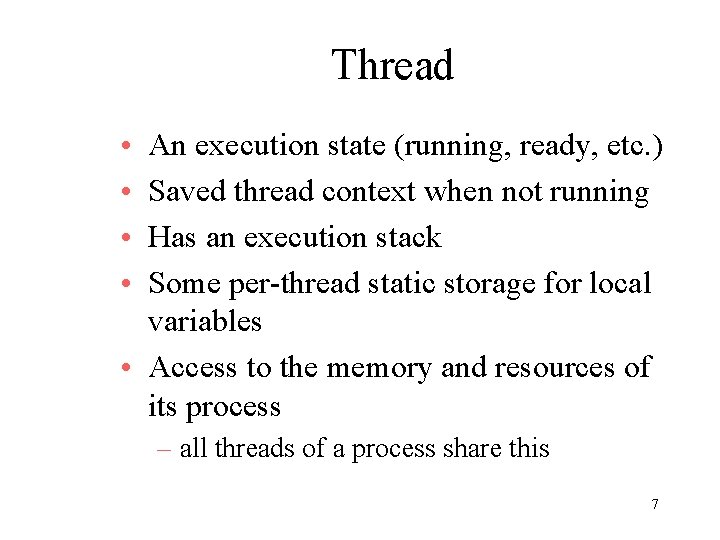
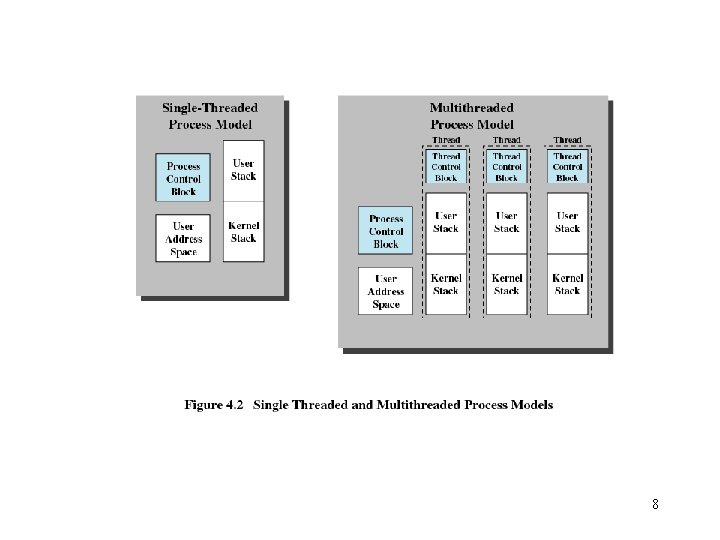
Thread • • An execution state (running, ready, etc. ) Saved thread context when not running Has an execution stack Some per-thread static storage for local variables • Access to the memory and resources of its process – all threads of a process share this 7
8
Benefits of Threads • Takes less time to create a new thread than a process • Less time to terminate a thread than a process • Less time to switch between two threads within the same process • Since threads within the same process share memory and files, they can communicate with each other without invoking the kernel 9
Uses of Threads in a Single. User Multiprocessing System • • Foreground to background work Asynchronous processing Speed of execution Modular program structure 10
Threads • Suspending a process involves suspending all threads of the process since all threads share the same address space • Termination of a process, terminates all threads within the process 11
Thread States • States associated with a change in thread state – Spawn • Spawn another thread – Block – Unblock – Finish • Deallocate register context and stacks 12
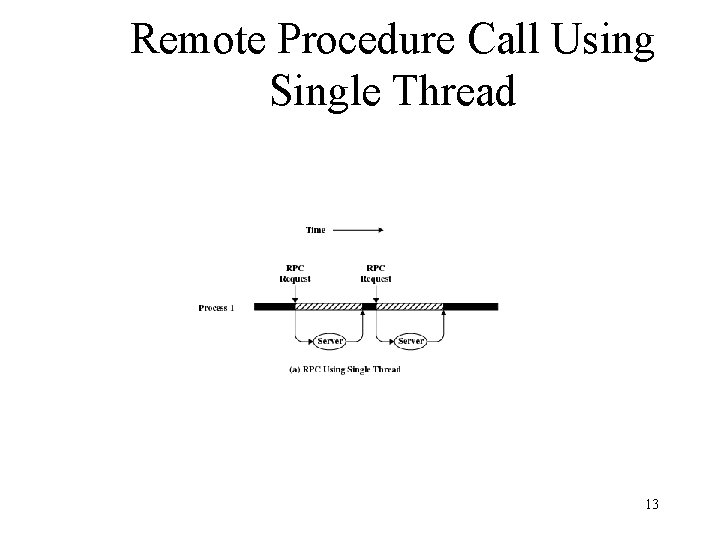
Remote Procedure Call Using Single Thread 13
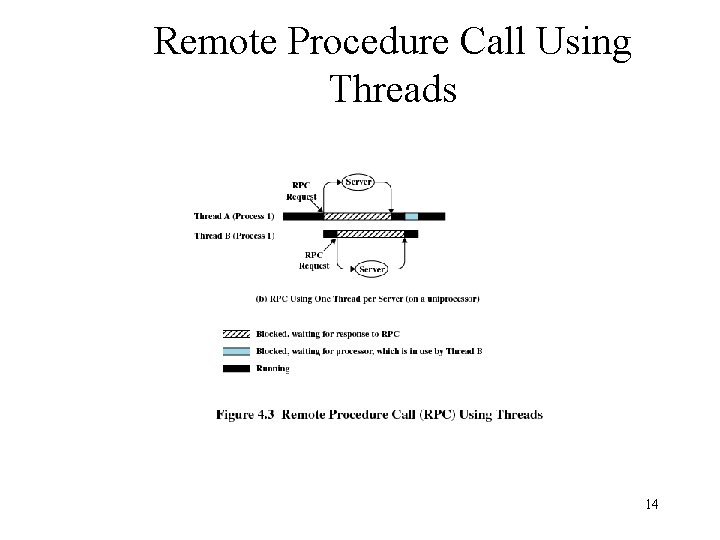
Remote Procedure Call Using Threads 14
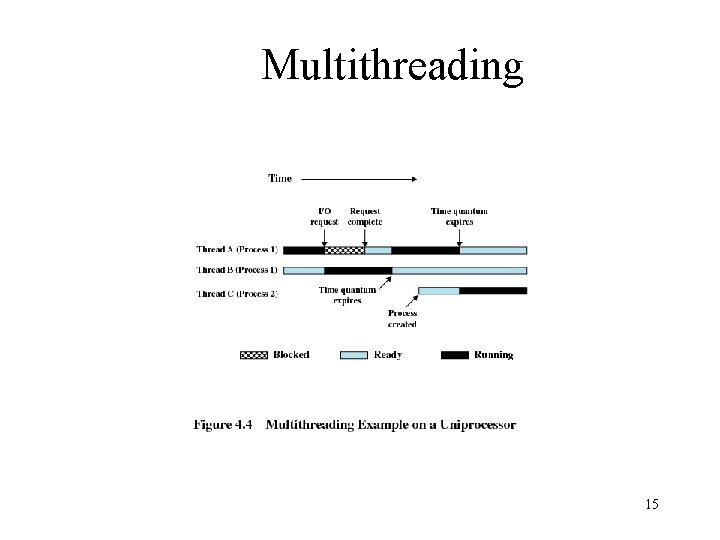
Multithreading 15
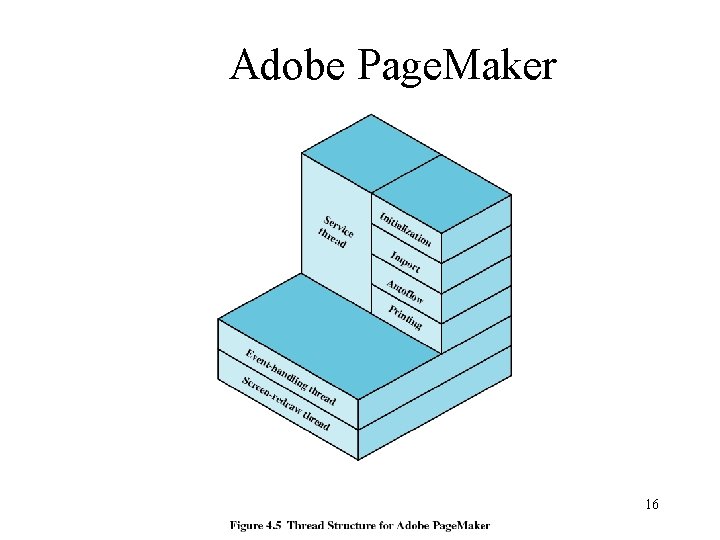
Adobe Page. Maker 16
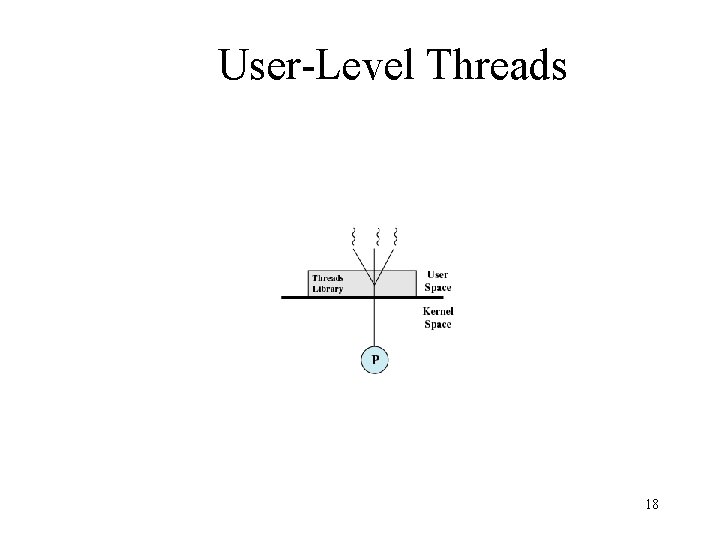
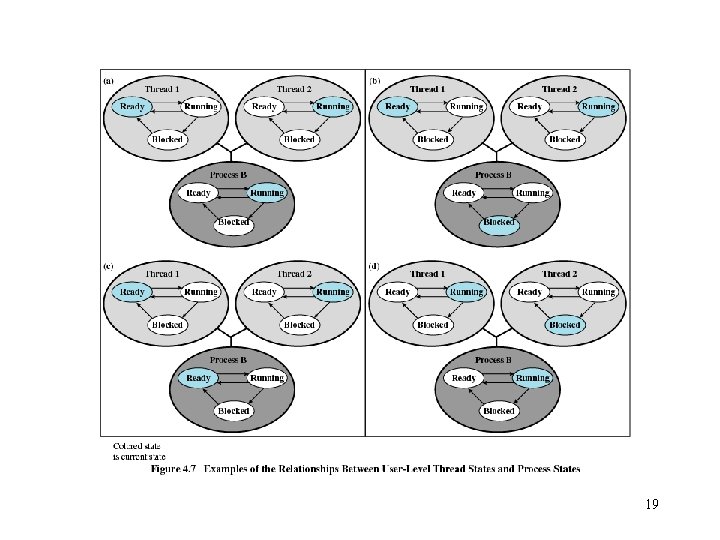
User-Level Threads • All thread management is done by the application • The kernel is not aware of the existence of threads 17
User-Level Threads 18
19
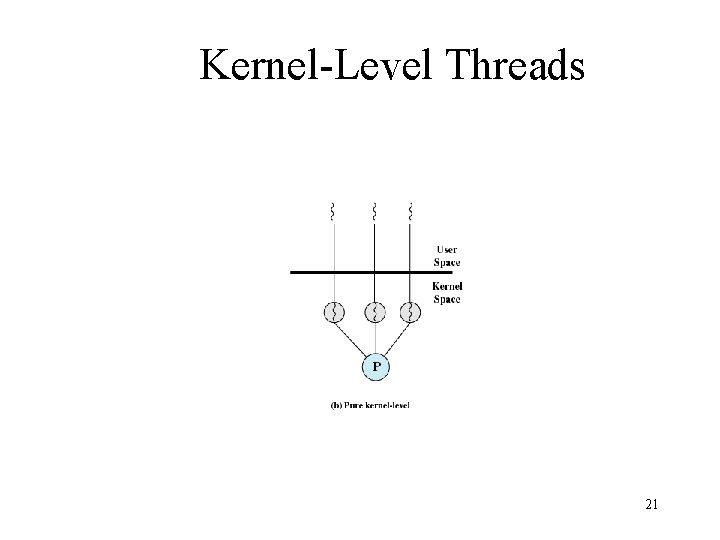
Kernel-Level Threads • Windows is an example of this approach • Kernel maintains context information for the process and the threads • Scheduling is done on a thread basis 20
Kernel-Level Threads 21
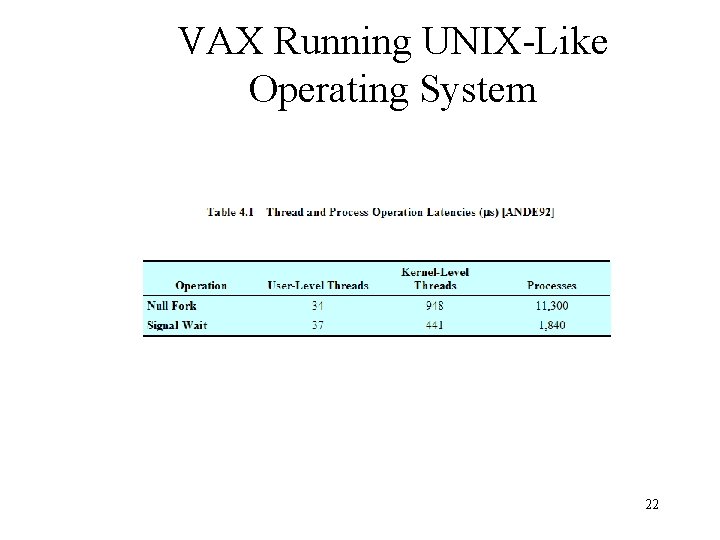
VAX Running UNIX-Like Operating System 22
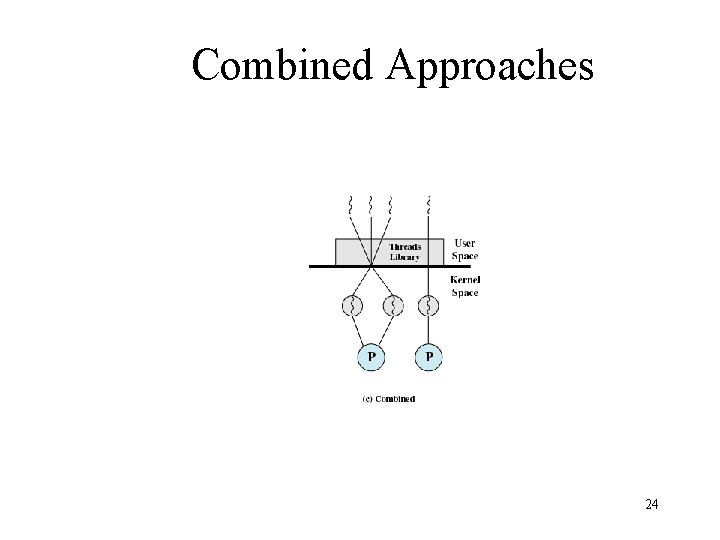
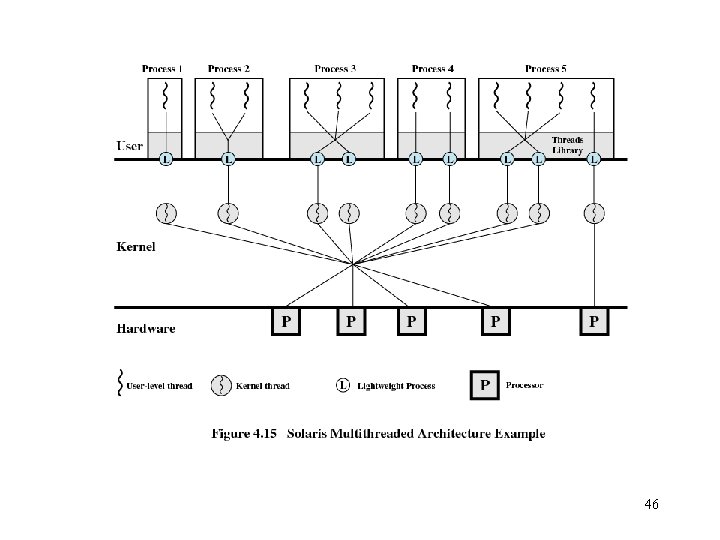
Combined Approaches • Example is Solaris • Thread creation done in the user space • Bulk of scheduling and synchronization of threads within application 23
Combined Approaches 24
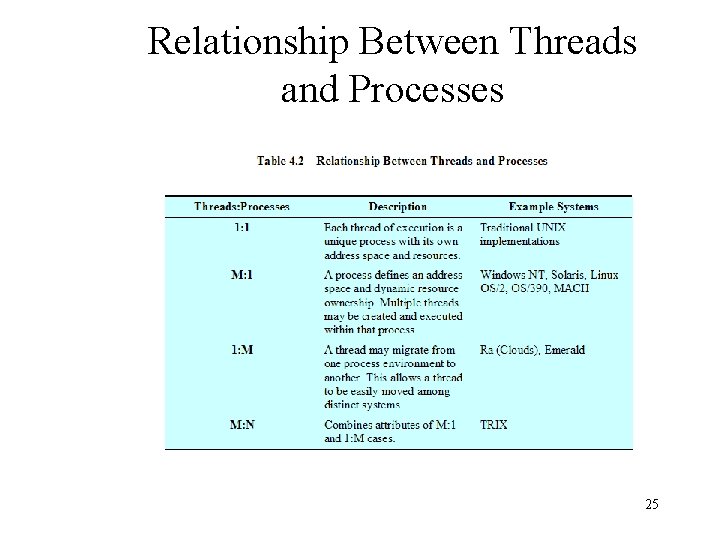
Relationship Between Threads and Processes 25
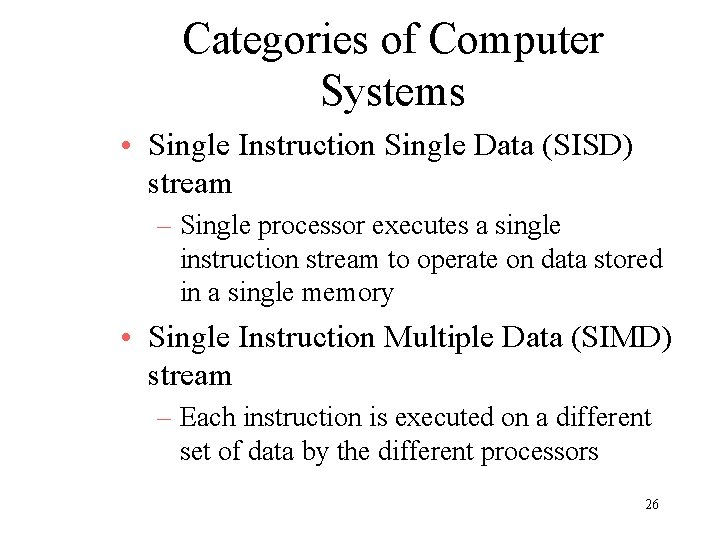
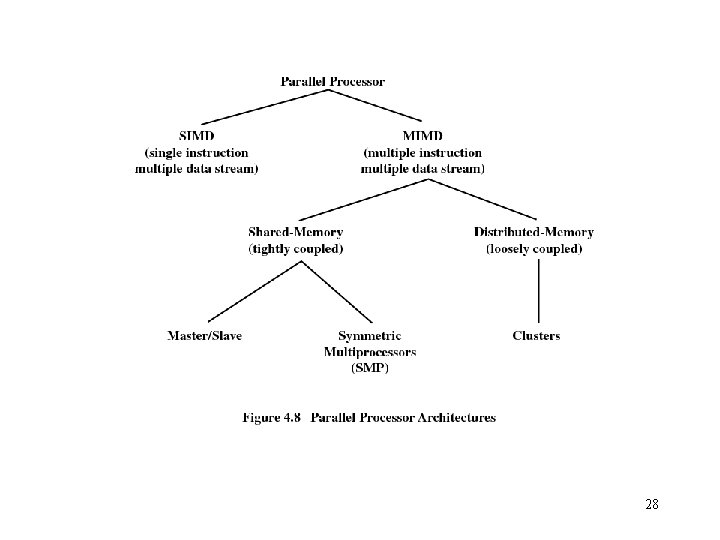
Categories of Computer Systems • Single Instruction Single Data (SISD) stream – Single processor executes a single instruction stream to operate on data stored in a single memory • Single Instruction Multiple Data (SIMD) stream – Each instruction is executed on a different set of data by the different processors 26
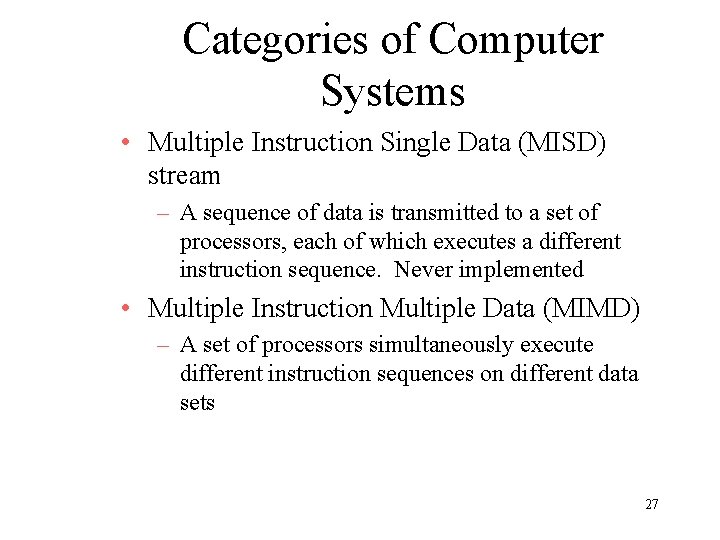
Categories of Computer Systems • Multiple Instruction Single Data (MISD) stream – A sequence of data is transmitted to a set of processors, each of which executes a different instruction sequence. Never implemented • Multiple Instruction Multiple Data (MIMD) – A set of processors simultaneously execute different instruction sequences on different data sets 27
28
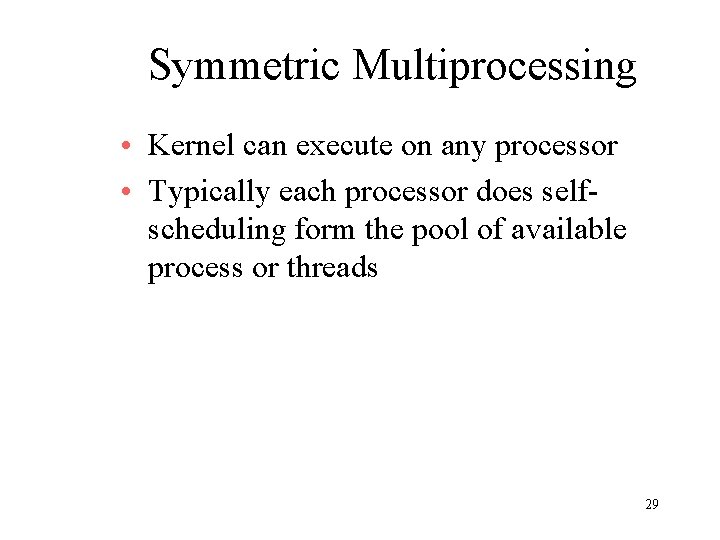
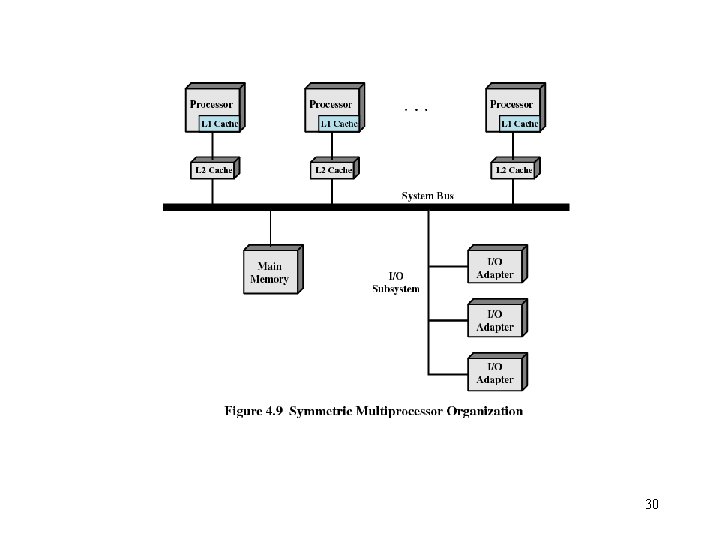
Symmetric Multiprocessing • Kernel can execute on any processor • Typically each processor does selfscheduling form the pool of available process or threads 29
30
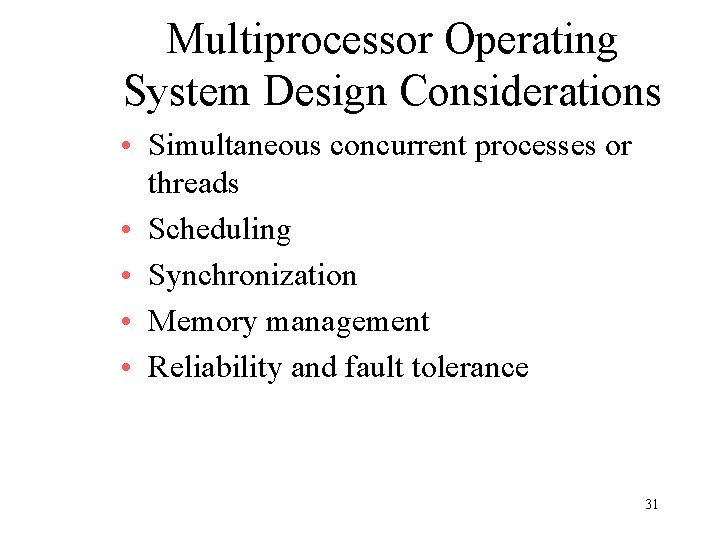
Multiprocessor Operating System Design Considerations • Simultaneous concurrent processes or threads • Scheduling • Synchronization • Memory management • Reliability and fault tolerance 31
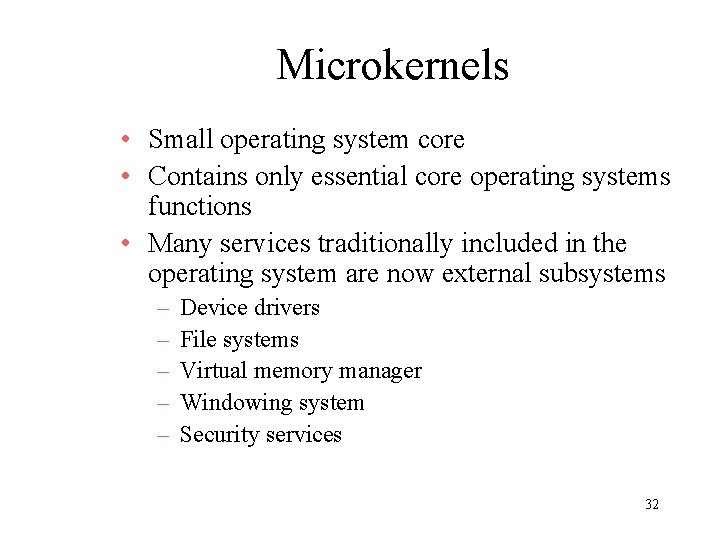
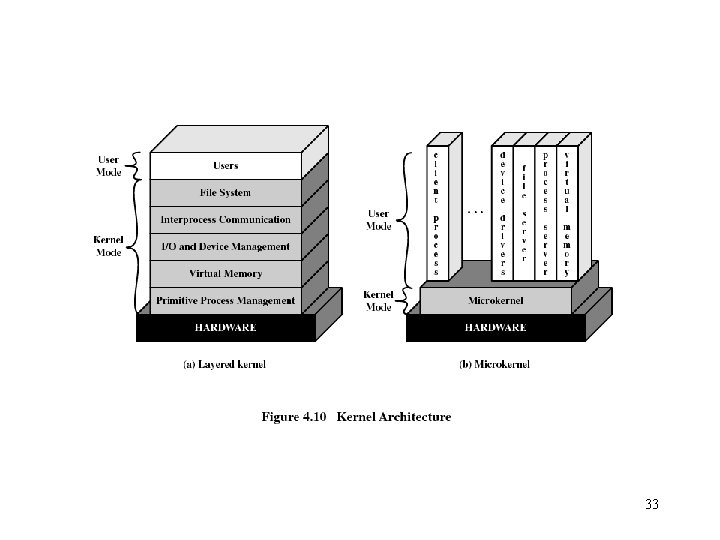
Microkernels • Small operating system core • Contains only essential core operating systems functions • Many services traditionally included in the operating system are now external subsystems – – – Device drivers File systems Virtual memory manager Windowing system Security services 32
33
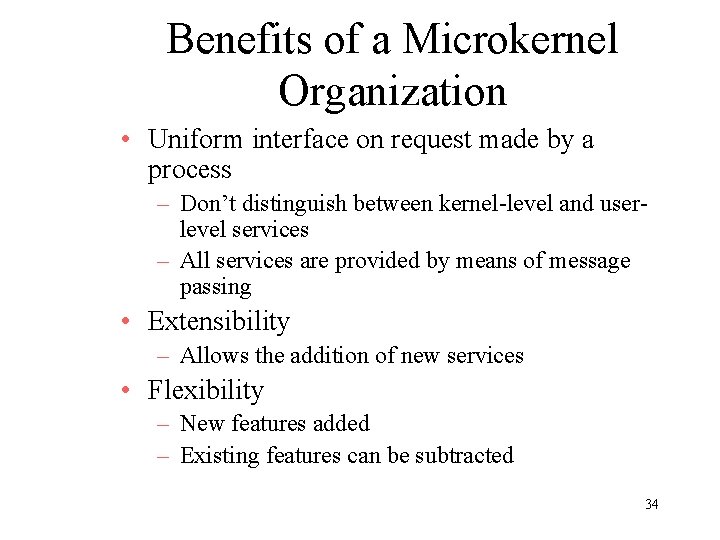
Benefits of a Microkernel Organization • Uniform interface on request made by a process – Don’t distinguish between kernel-level and userlevel services – All services are provided by means of message passing • Extensibility – Allows the addition of new services • Flexibility – New features added – Existing features can be subtracted 34
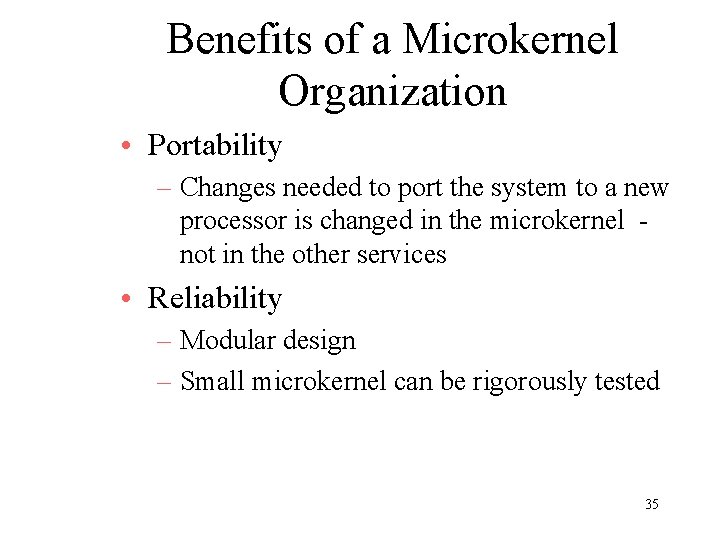
Benefits of a Microkernel Organization • Portability – Changes needed to port the system to a new processor is changed in the microkernel not in the other services • Reliability – Modular design – Small microkernel can be rigorously tested 35
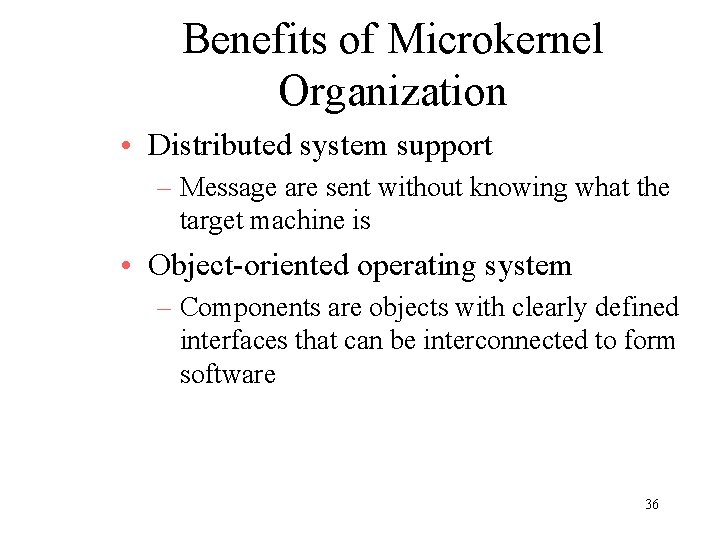
Benefits of Microkernel Organization • Distributed system support – Message are sent without knowing what the target machine is • Object-oriented operating system – Components are objects with clearly defined interfaces that can be interconnected to form software 36
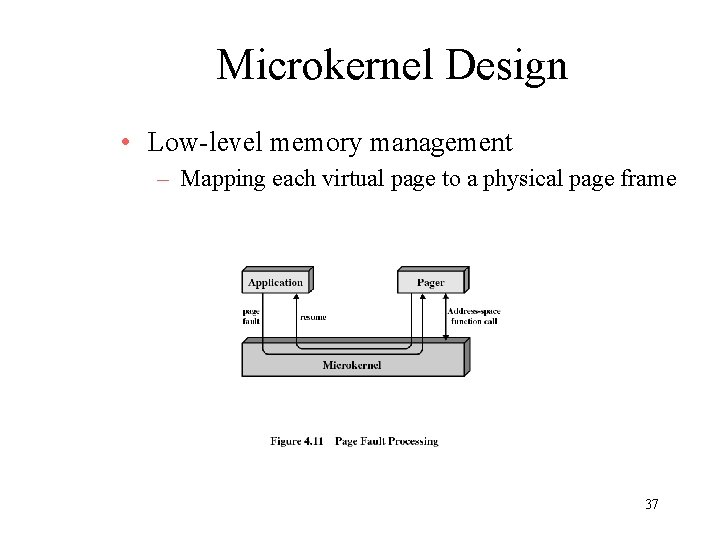
Microkernel Design • Low-level memory management – Mapping each virtual page to a physical page frame 37
Microkernel Design • Interprocess communication • I/O and interrupt management 38
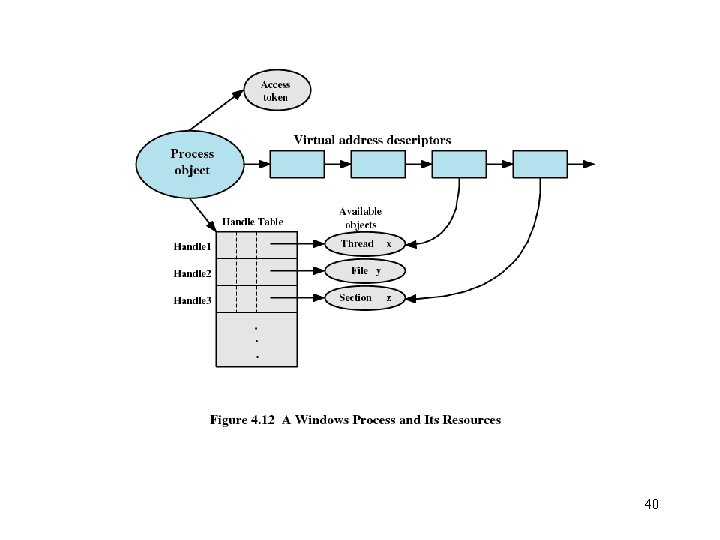
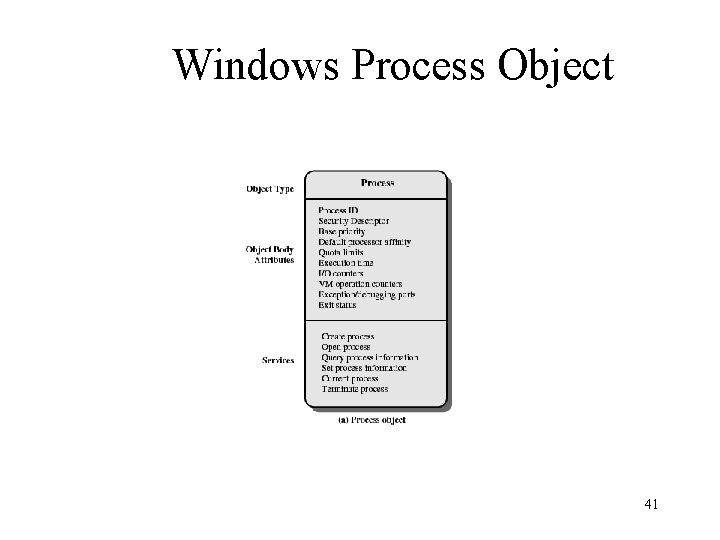
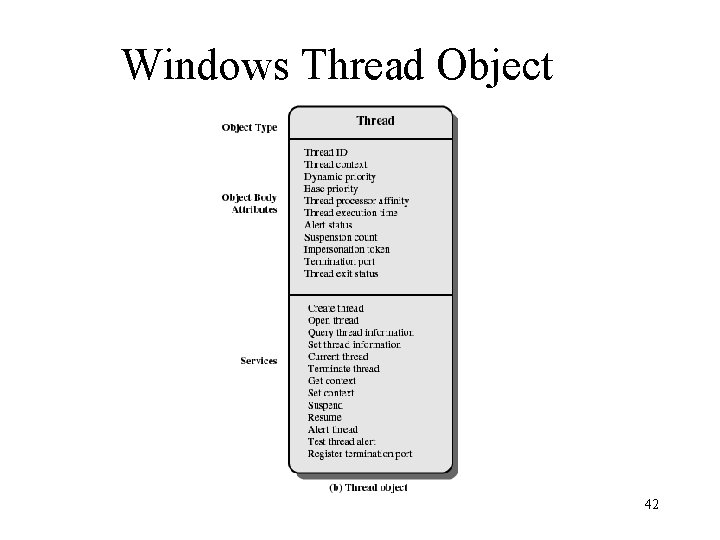
Windows Processes • Implemented as objects • An executable process may contain one or more threads • Both processes and thread objects have built-in synchronization capabilities 39
40
Windows Process Object 41
Windows Thread Object 42
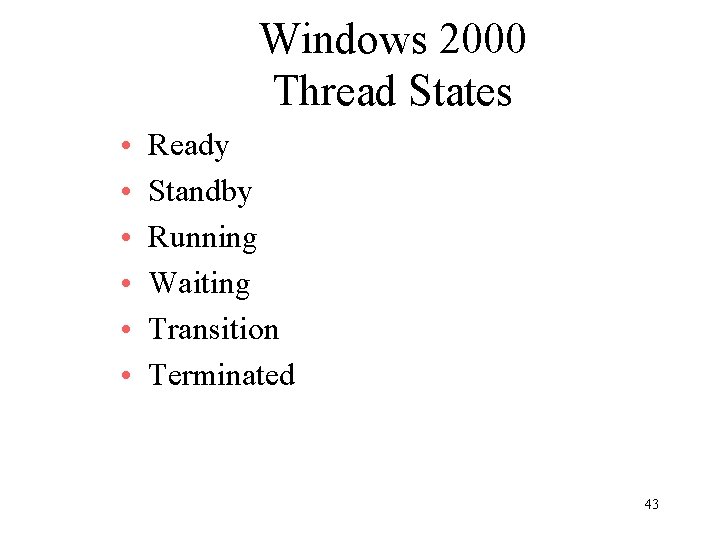
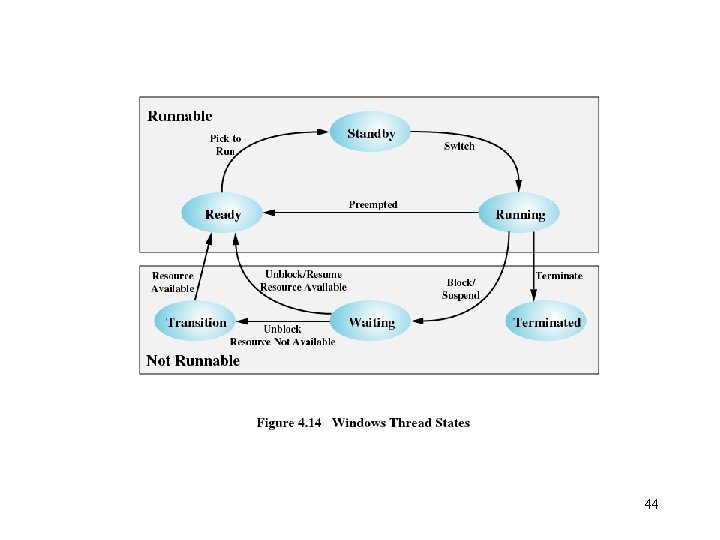
Windows 2000 Thread States • • • Ready Standby Running Waiting Transition Terminated 43
44
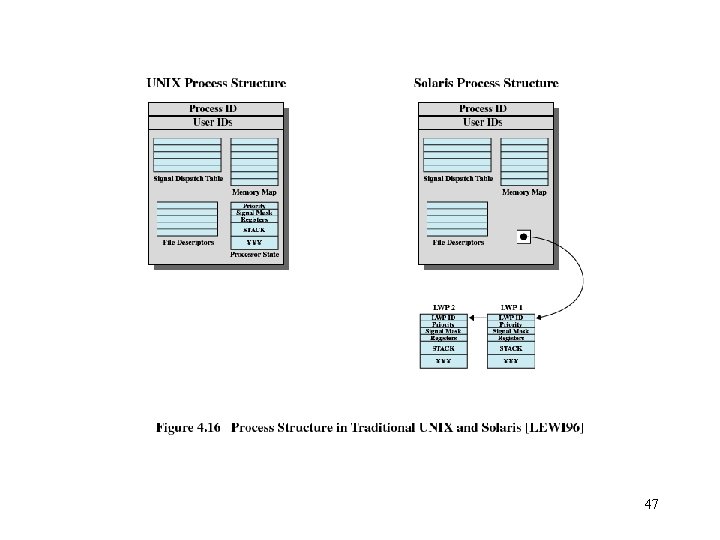
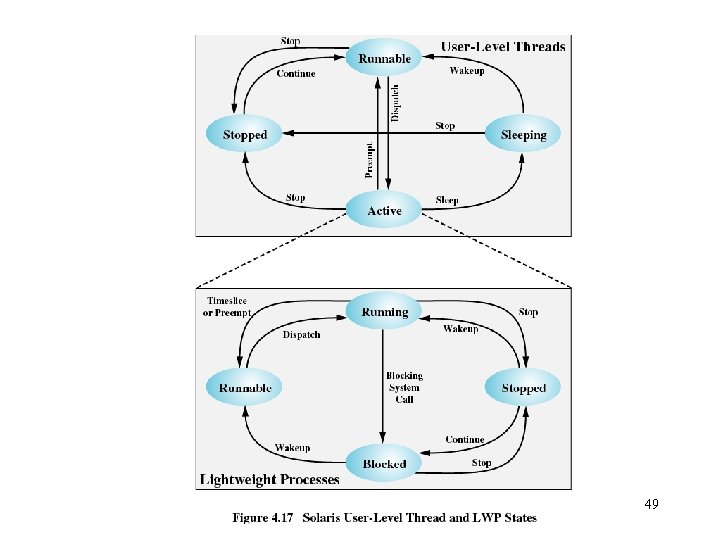
Solaris • Process includes the user’s address space, stack, and process control block • User-level threads • Lightweight processes (LWP) • Kernel threads 45
46
47
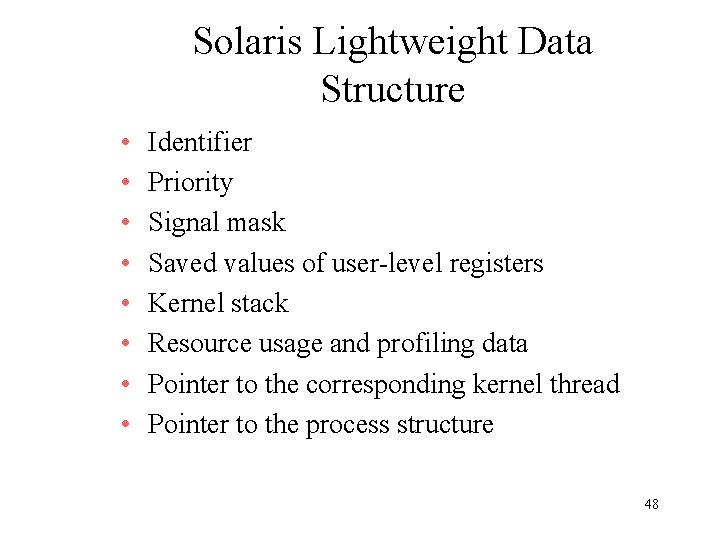
Solaris Lightweight Data Structure • • Identifier Priority Signal mask Saved values of user-level registers Kernel stack Resource usage and profiling data Pointer to the corresponding kernel thread Pointer to the process structure 48
49
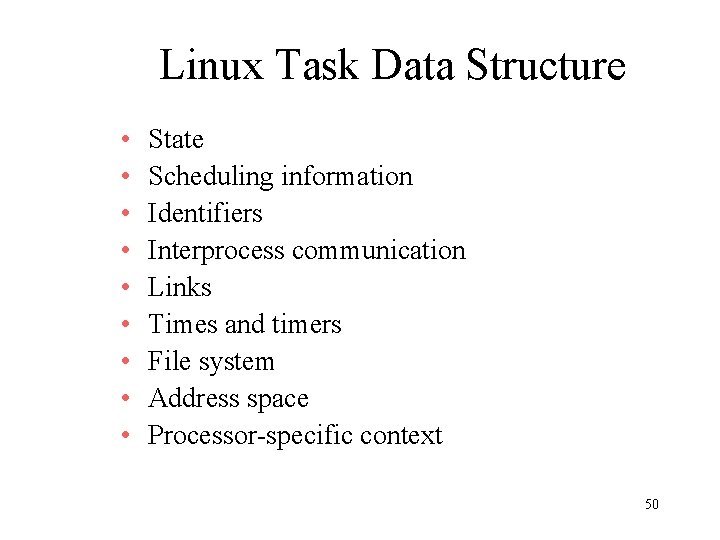
Linux Task Data Structure • • • State Scheduling information Identifiers Interprocess communication Links Times and timers File system Address space Processor-specific context 50
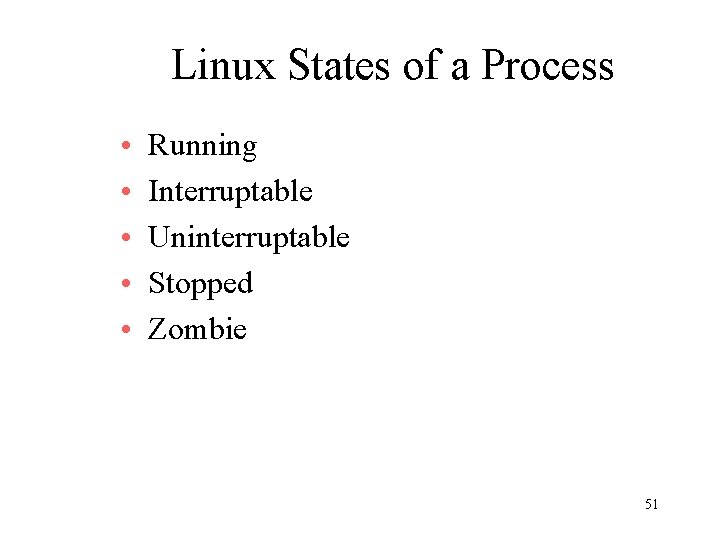
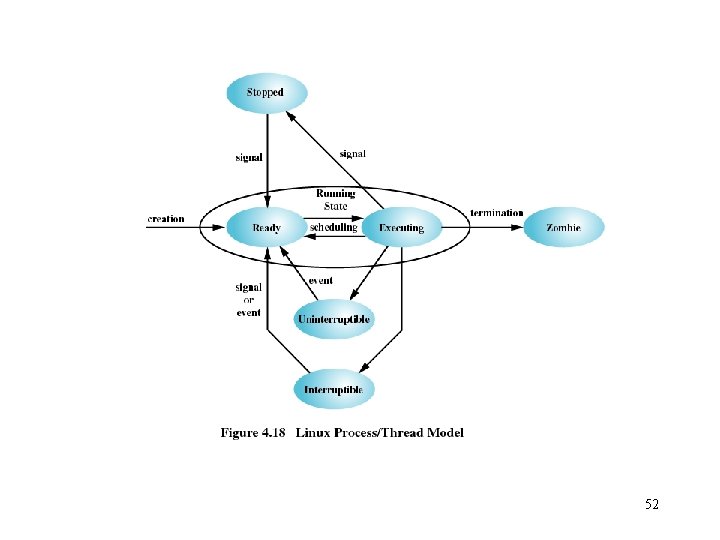
Linux States of a Process • • • Running Interruptable Uninterruptable Stopped Zombie 51
52