
Threads For CSIT Single and multiple threaded Process
- Slides: 23
Threads -For CSIT
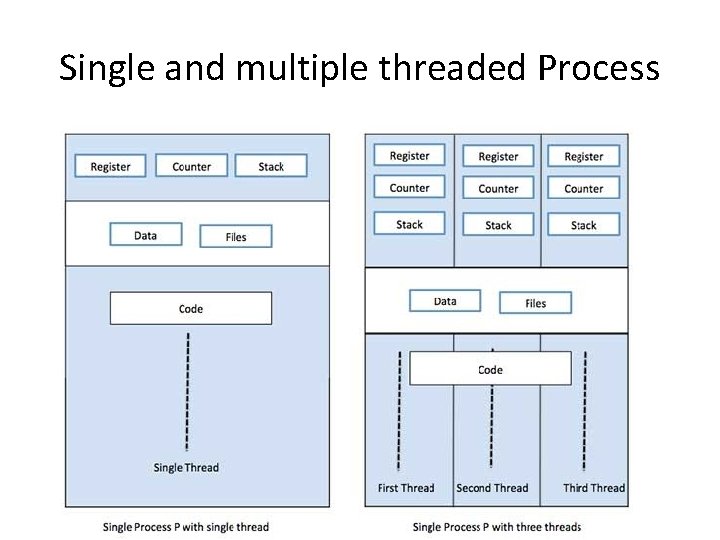
Single and multiple threaded Process
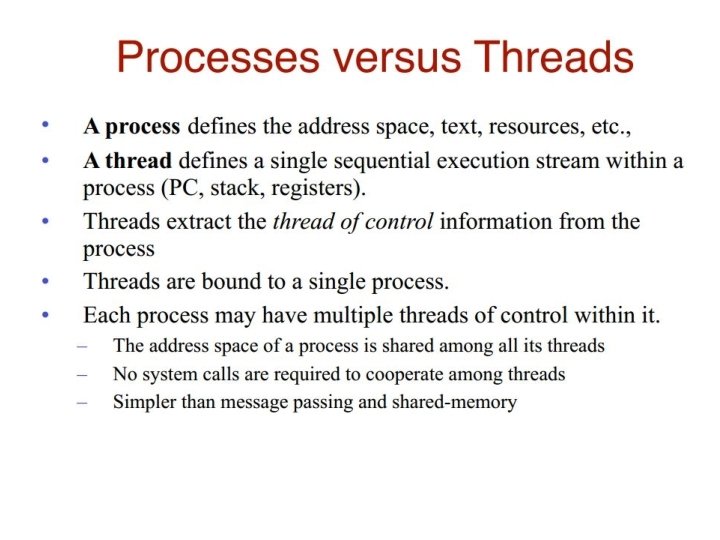
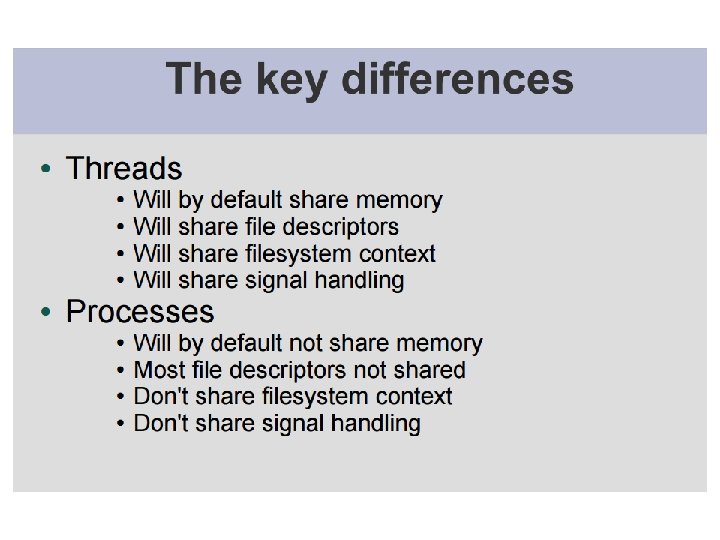
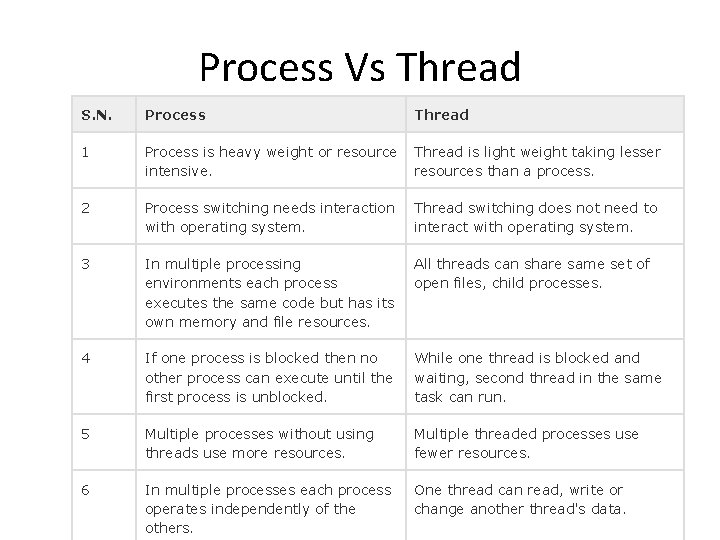
Process Vs Thread S. N. Process Thread 1 Process is heavy weight or resource intensive. Thread is light weight taking lesser resources than a process. 2 Process switching needs interaction with operating system. Thread switching does not need to interact with operating system. 3 In multiple processing environments each process executes the same code but has its own memory and file resources. All threads can share same set of open files, child processes. 4 If one process is blocked then no other process can execute until the first process is unblocked. While one thread is blocked and waiting, second thread in the same task can run. 5 Multiple processes without using threads use more resources. Multiple threaded processes use fewer resources. 6 In multiple processes each process operates independently of the others. One thread can read, write or change another thread's data.
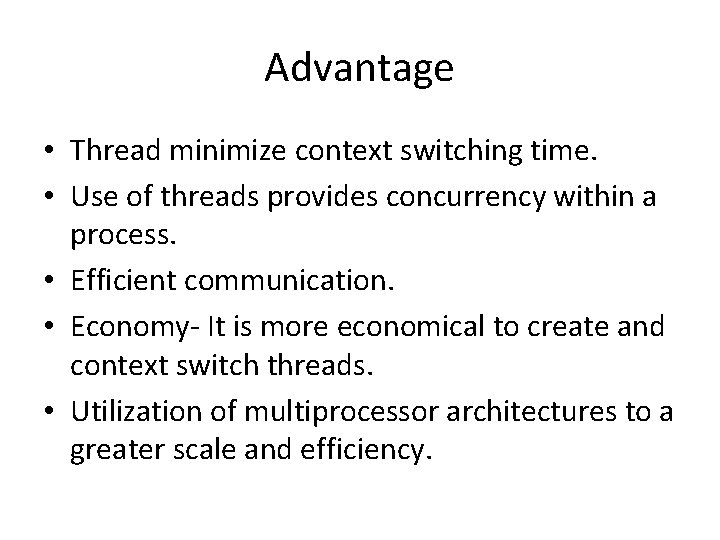
Advantage • Thread minimize context switching time. • Use of threads provides concurrency within a process. • Efficient communication. • Economy- It is more economical to create and context switch threads. • Utilization of multiprocessor architectures to a greater scale and efficiency.
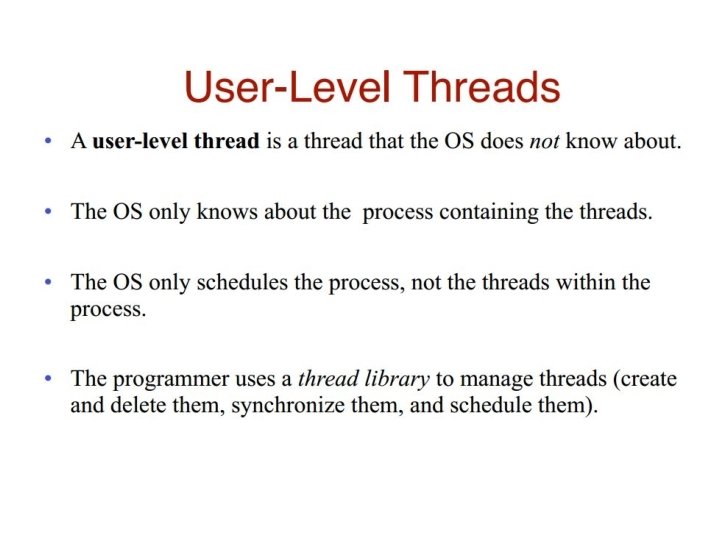
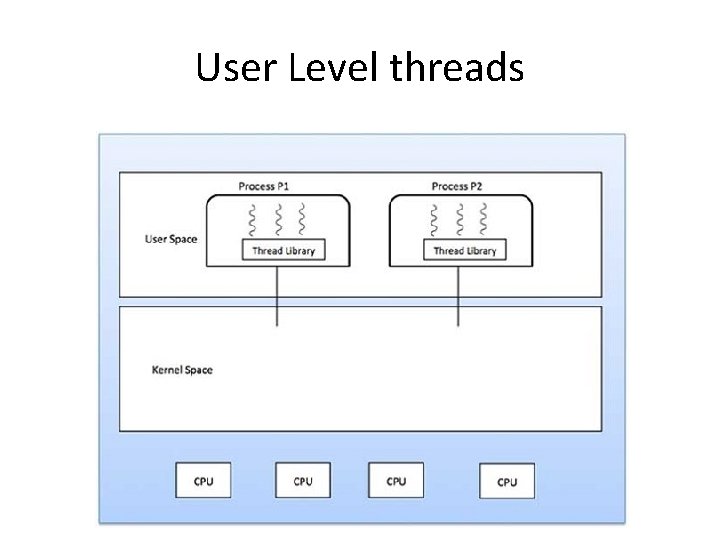
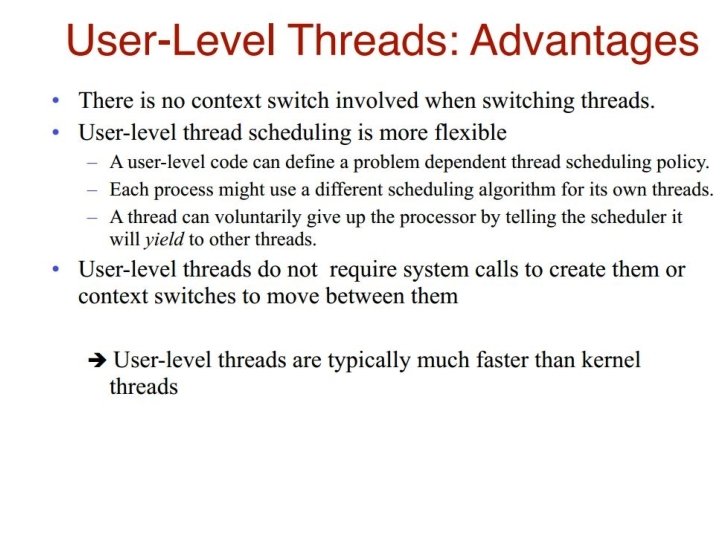
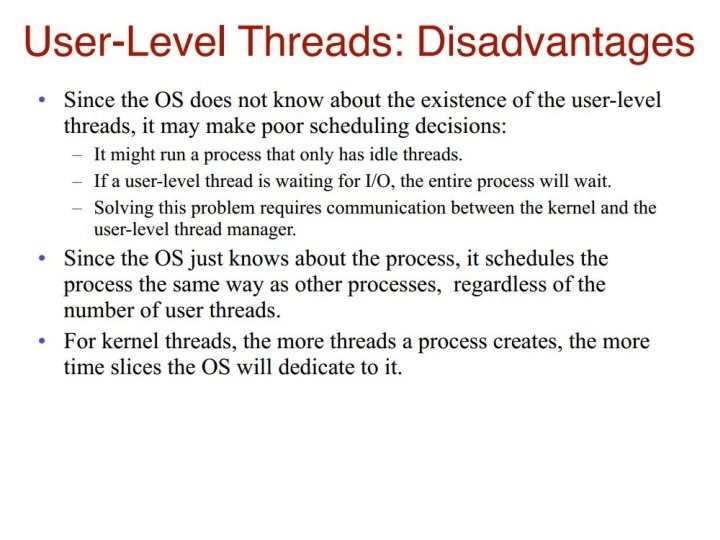
User Level threads
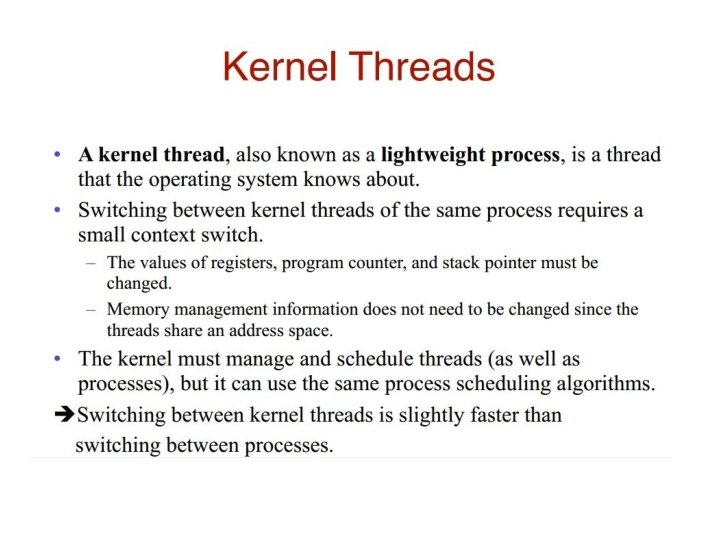
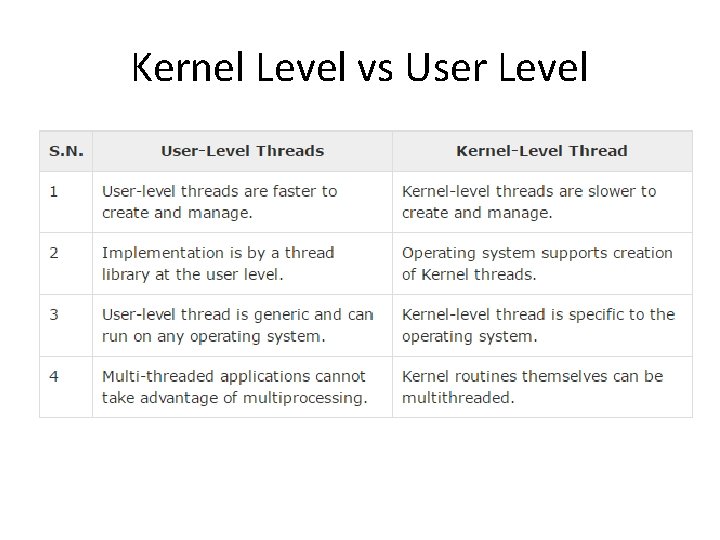
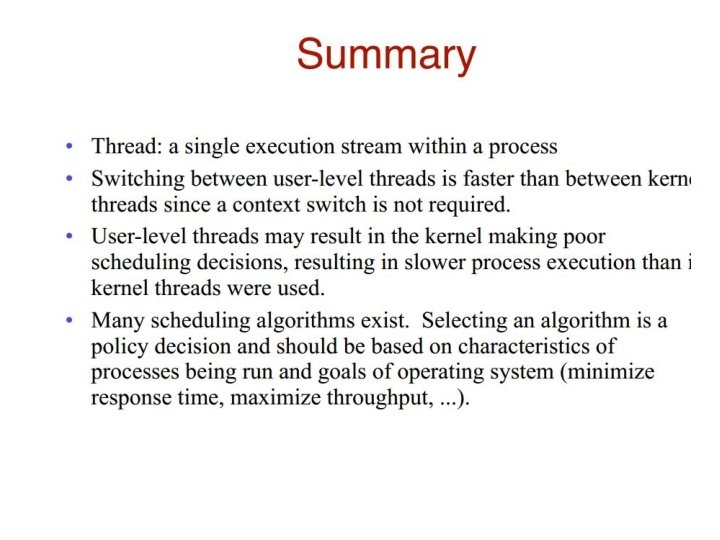
Kernel Level vs User Level
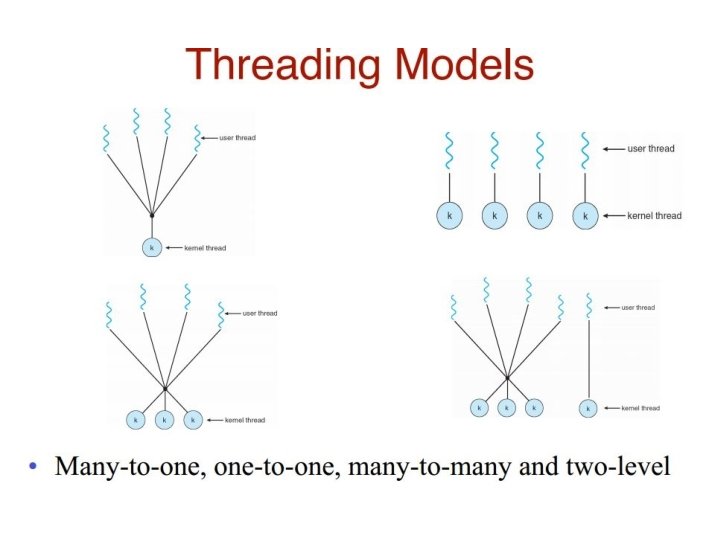
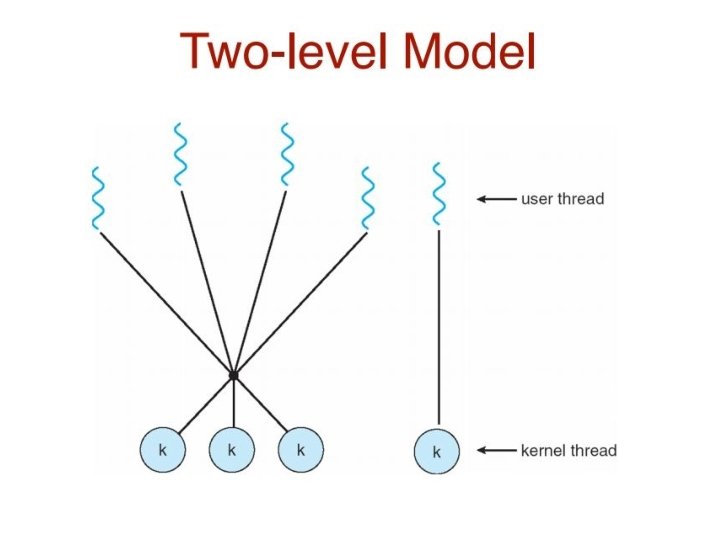
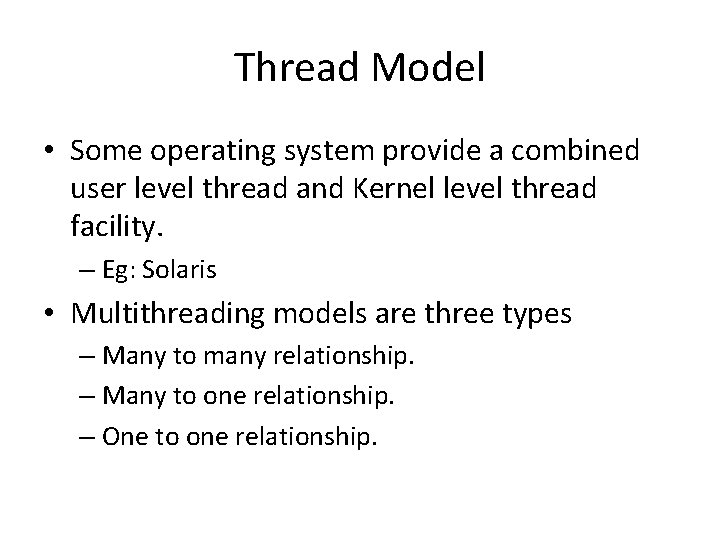
Thread Model • Some operating system provide a combined user level thread and Kernel level thread facility. – Eg: Solaris • Multithreading models are three types – Many to many relationship. – Many to one relationship. – One to one relationship.
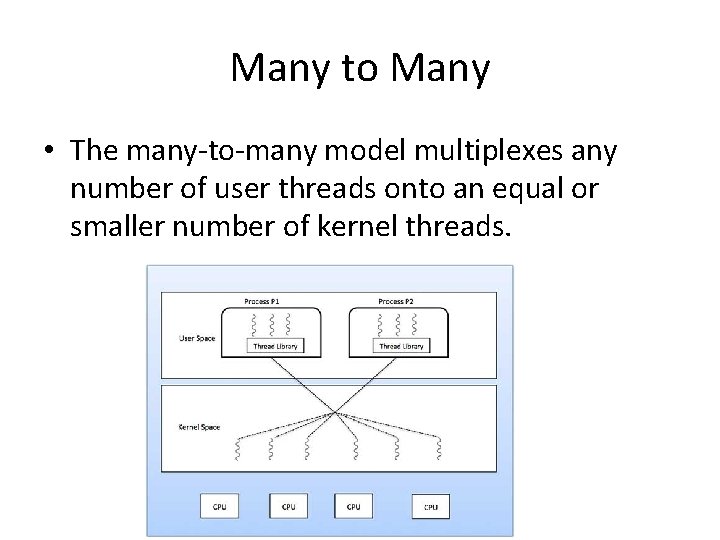
Many to Many • The many-to-many model multiplexes any number of user threads onto an equal or smaller number of kernel threads.
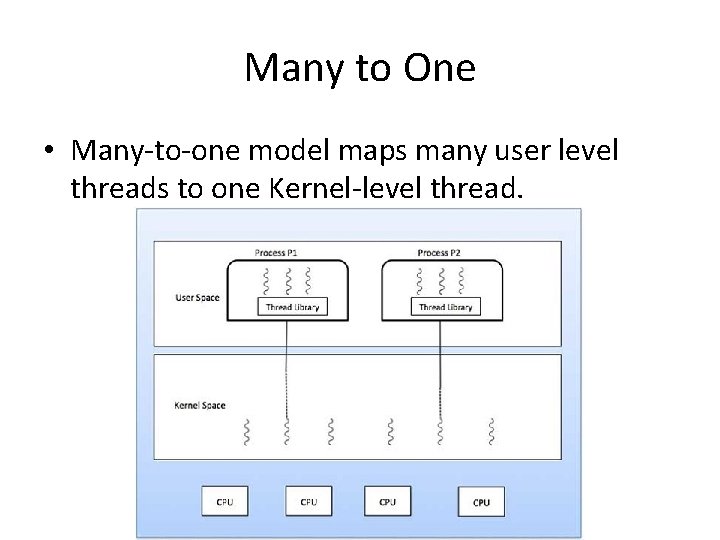
Many to One • Many-to-one model maps many user level threads to one Kernel-level thread.
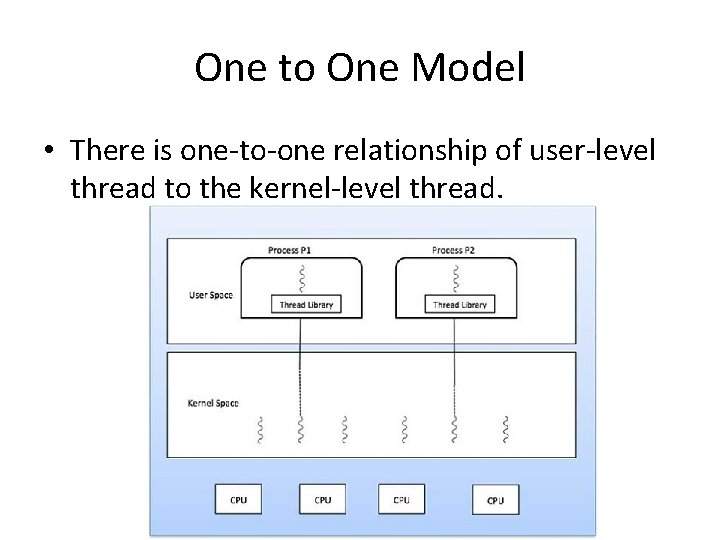
One to One Model • There is one-to-one relationship of user-level thread to the kernel-level thread.
Reference • Video lecture and lecture notes of Prashant Shenoy • Tutorial. Points