
Threads CSE 2431 Introduction to Operating Systems Instructor
- Slides: 35
Threads CSE 2431: Introduction to Operating Systems Instructor: Adam C. Champion, Ph. D. Reading: Chapter 4, [OSC] (except Section 4. 5) 1
Contents • What Are Threads? • Why Use Threads? • Thread Usage • Thread Review • Thread Implementations • Issues Making Single-Threaded Code Multi-threaded 2
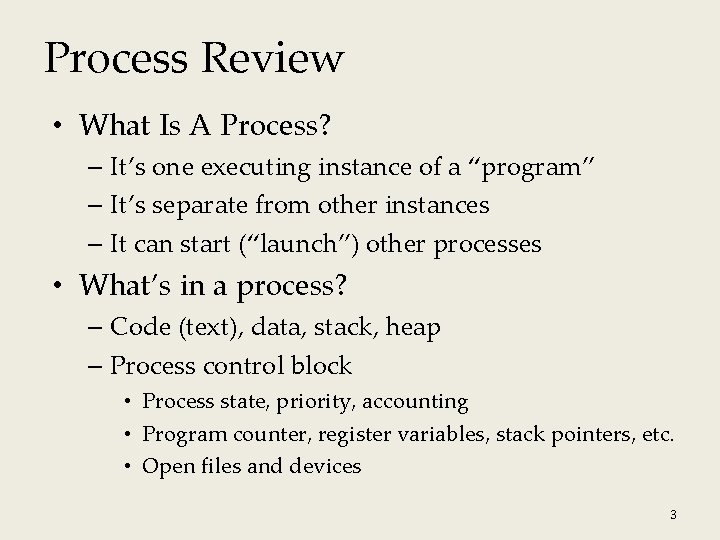
Process Review • What Is A Process? – It’s one executing instance of a “program” – It’s separate from other instances – It can start (“launch”) other processes • What’s in a process? – Code (text), data, stack, heap – Process control block • Process state, priority, accounting • Program counter, register variables, stack pointers, etc. • Open files and devices 3
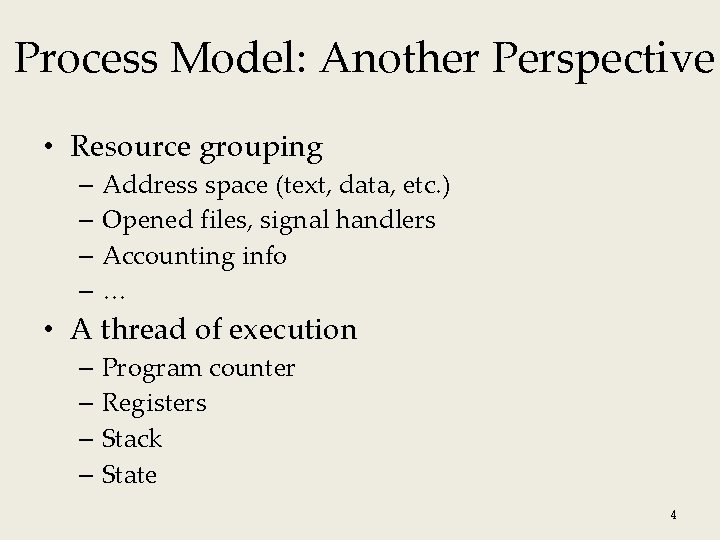
Process Model: Another Perspective • Resource grouping – Address space (text, data, etc. ) – Opened files, signal handlers – Accounting info –… • A thread of execution – Program counter – Registers – Stack – State 4
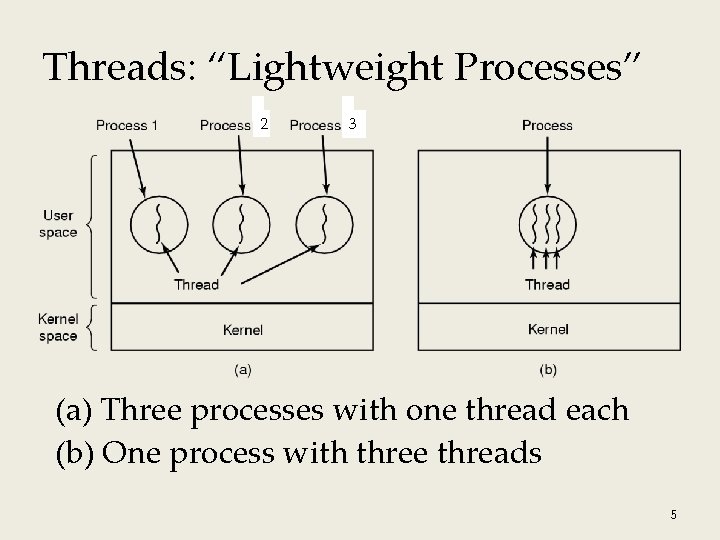
Threads: “Lightweight Processes” 2 3 (a) Three processes with one thread each (b) One process with three threads 5
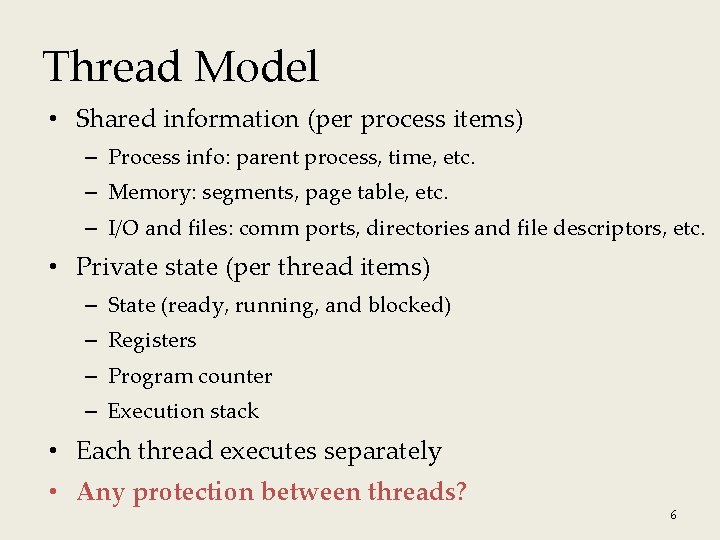
Thread Model • Shared information (per process items) – Process info: parent process, time, etc. – Memory: segments, page table, etc. – I/O and files: comm ports, directories and file descriptors, etc. • Private state (per thread items) – State (ready, running, and blocked) – Registers – Program counter – Execution stack • Each thread executes separately • Any protection between threads? 6
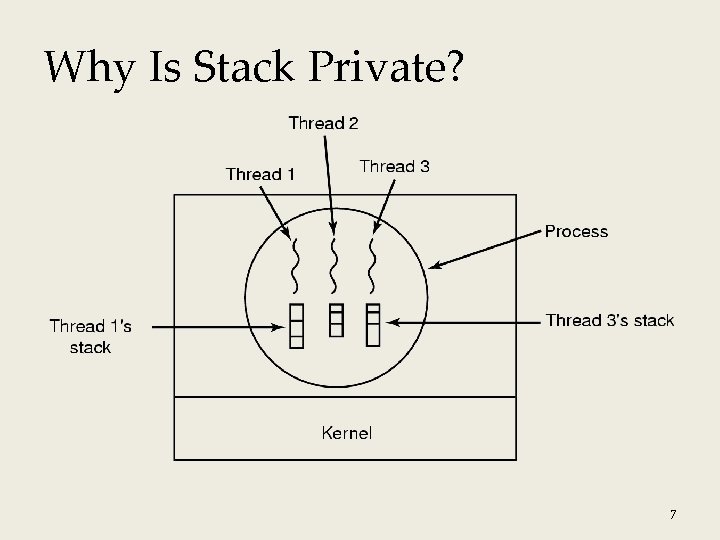
Why Is Stack Private? 7
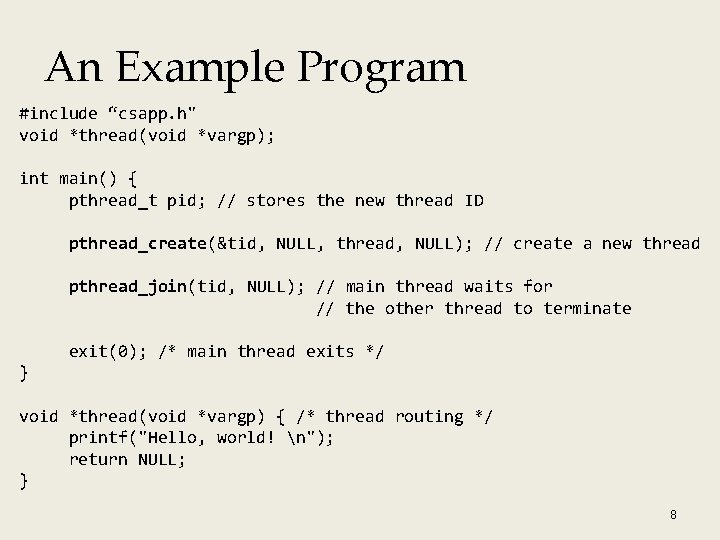
An Example Program #include “csapp. h" void *thread(void *vargp); int main() { pthread_t pid; // stores the new thread ID pthread_create(&tid, NULL, thread, NULL); // create a new thread pthread_join(tid, NULL); // main thread waits for // the other thread to terminate exit(0); /* main thread exits */ } void *thread(void *vargp) { /* thread routing */ printf("Hello, world! n"); return NULL; } 8
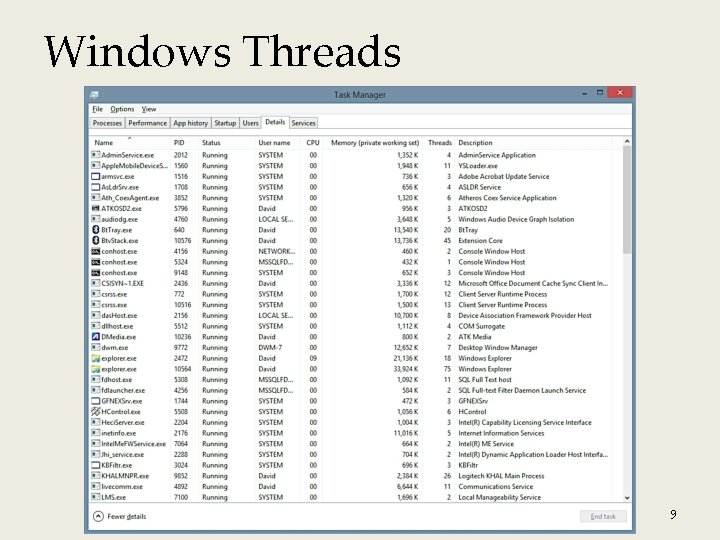
Windows Threads 9
Discussion • Processes vs. Threads – Similarities – Differences • Real life analogies? 10
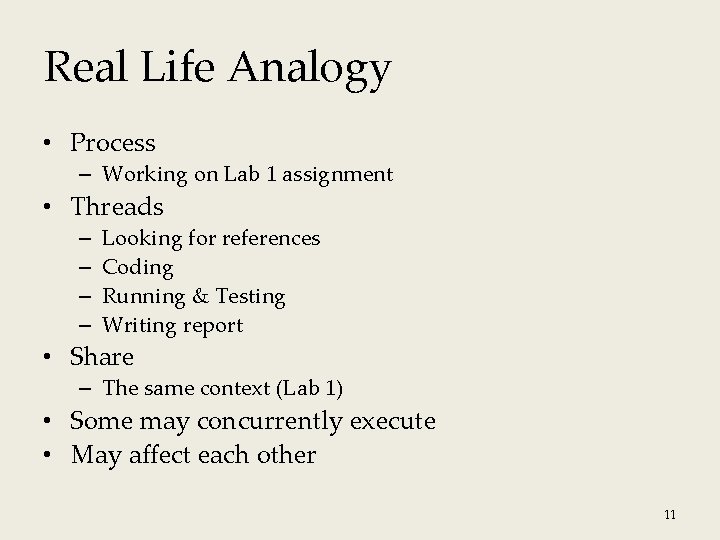
Real Life Analogy • Process – Working on Lab 1 assignment • Threads – – Looking for references Coding Running & Testing Writing report • Share – The same context (Lab 1) • Some may concurrently execute • May affect each other 11
Contents • What Are Threads? • Why Use Threads? • Thread Usage • Thread Review • Thread Implementations • Issues Making Single-Threaded Code Multi-threaded 12
Why Threads? • Good things about threads – Light-weight – Easy for sharing • Thread usage examples – Word processor – Web server 13
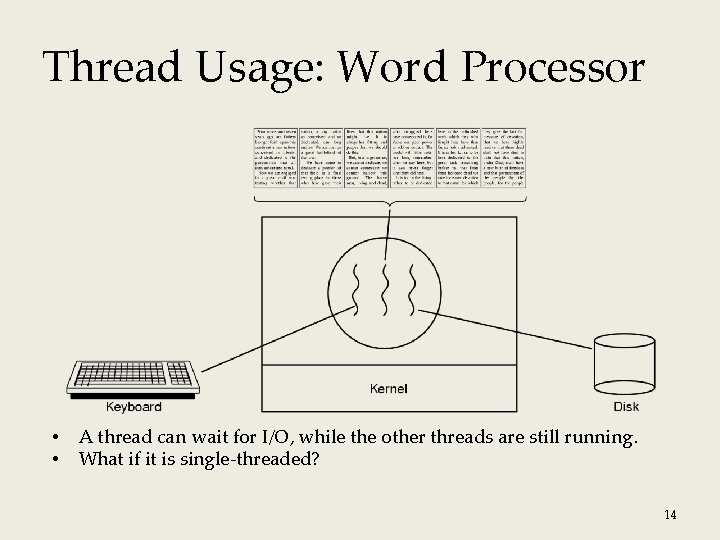
Thread Usage: Word Processor • • A thread can wait for I/O, while the other threads are still running. What if it is single-threaded? 14
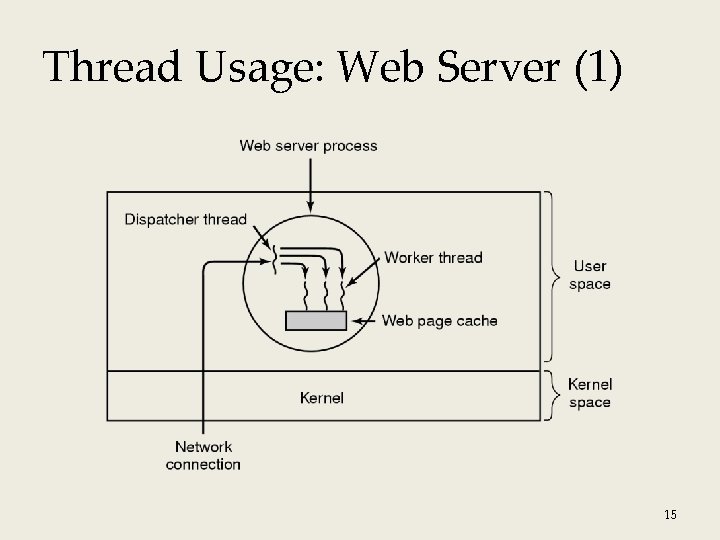
Thread Usage: Web Server (1) 15
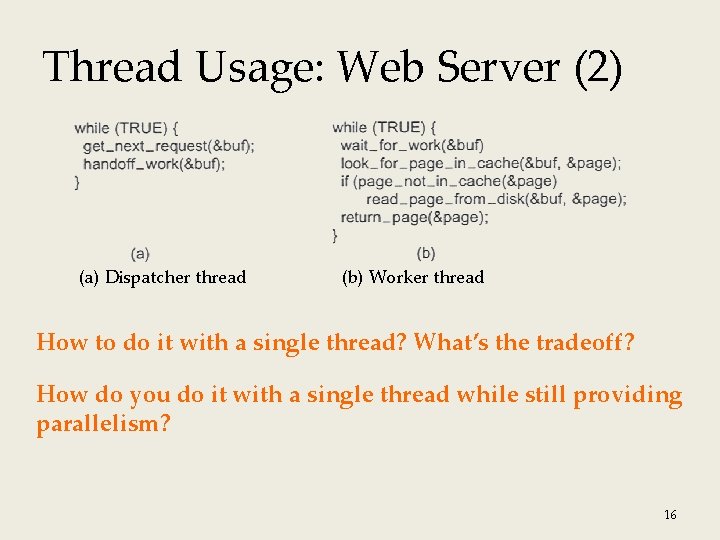
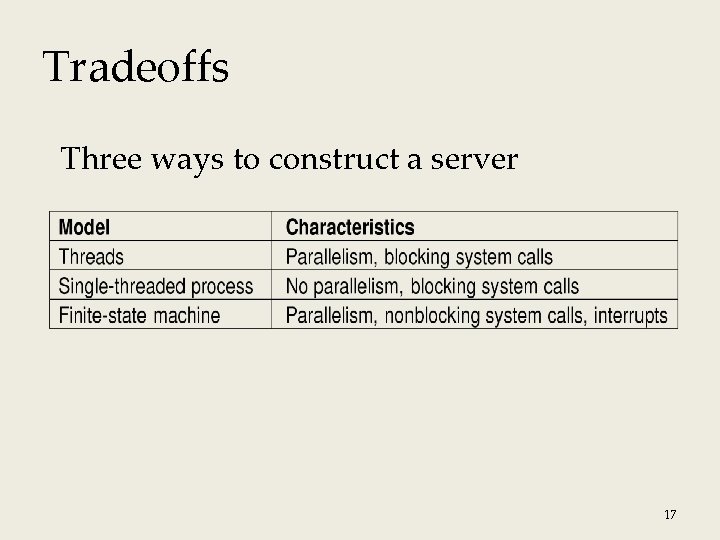
Thread Usage: Web Server (2) (a) Dispatcher thread (b) Worker thread How to do it with a single thread? What’s the tradeoff? How do you do it with a single thread while still providing parallelism? 16
Tradeoffs Three ways to construct a server 17
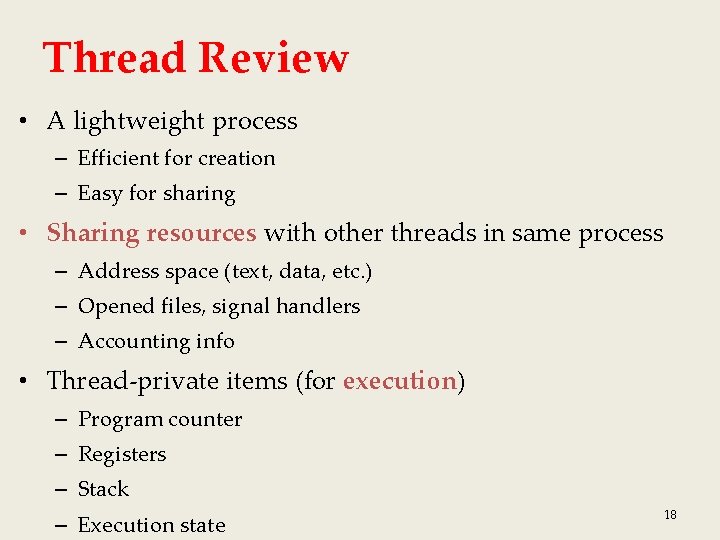
Thread Review • A lightweight process – Efficient for creation – Easy for sharing • Sharing resources with other threads in same process – Address space (text, data, etc. ) – Opened files, signal handlers – Accounting info • Thread-private items (for execution) – Program counter – Registers – Stack – Execution state 18
Contents • What Are Threads? • Why Use Threads? • Thread Usage • Thread Implementations • Issues Making Single-Threaded Code Multi-threaded 19
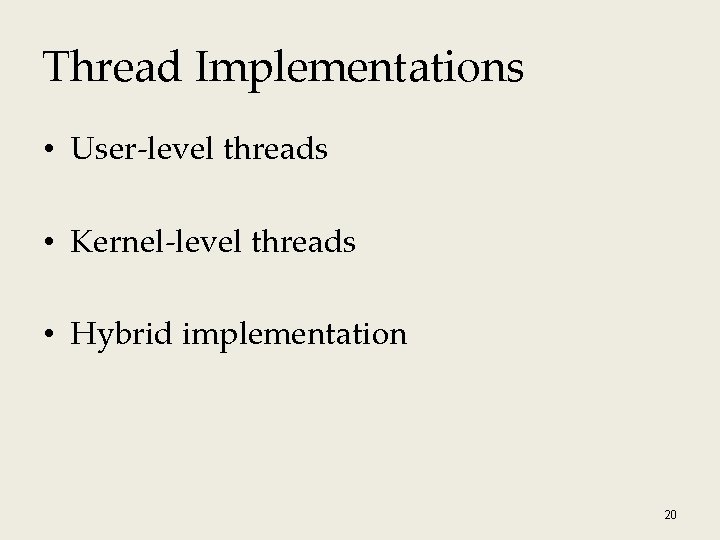
Thread Implementations • User-level threads • Kernel-level threads • Hybrid implementation 20
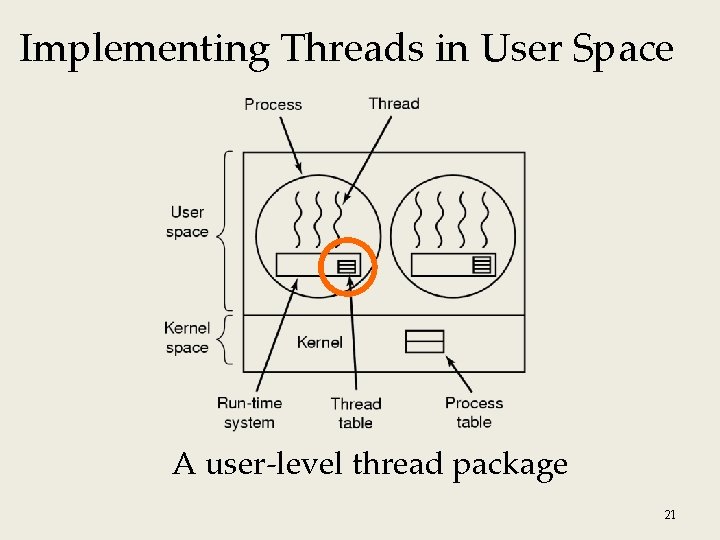
Implementing Threads in User Space A user-level thread package 21
Challenges • How to implement a thread package at user-level (without modifying the OS)? • Is your implementation most efficient? Any performance problem? How to address it? – Blocking I/O? – Page faults? – Infinite loop? 22
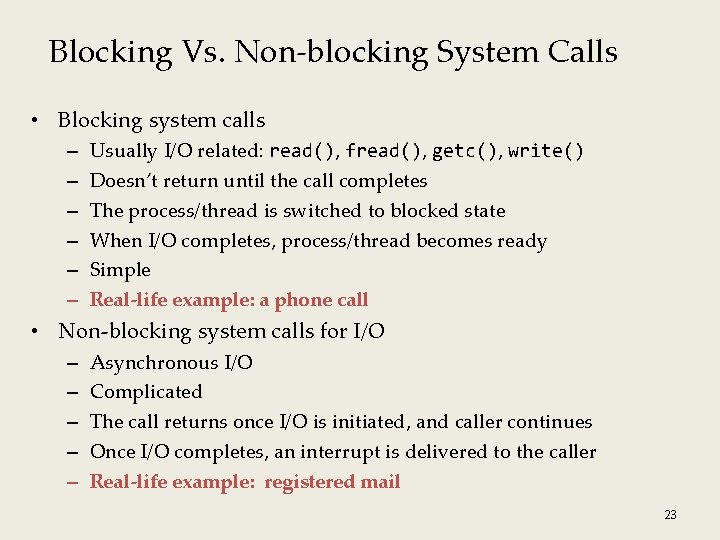
Blocking Vs. Non-blocking System Calls • Blocking system calls – – – Usually I/O related: read(), fread(), getc(), write() Doesn’t return until the call completes The process/thread is switched to blocked state When I/O completes, process/thread becomes ready Simple Real-life example: a phone call • Non-blocking system calls for I/O – – – Asynchronous I/O Complicated The call returns once I/O is initiated, and caller continues Once I/O completes, an interrupt is delivered to the caller Real-life example: registered mail 23
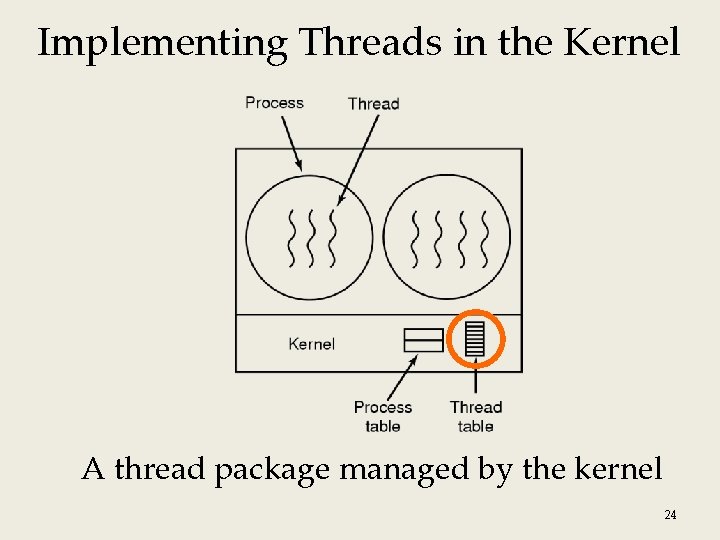
Implementing Threads in the Kernel A thread package managed by the kernel 24
User-Level vs. Kernel-Level • What is the difference between user-level and kernel-level threads? • What are the tradeoffs? – When a user-level thread is blocked on an I/O event, the whole process is blocked – A context switch of kernel-level threads is expensive • Can we do better? 25
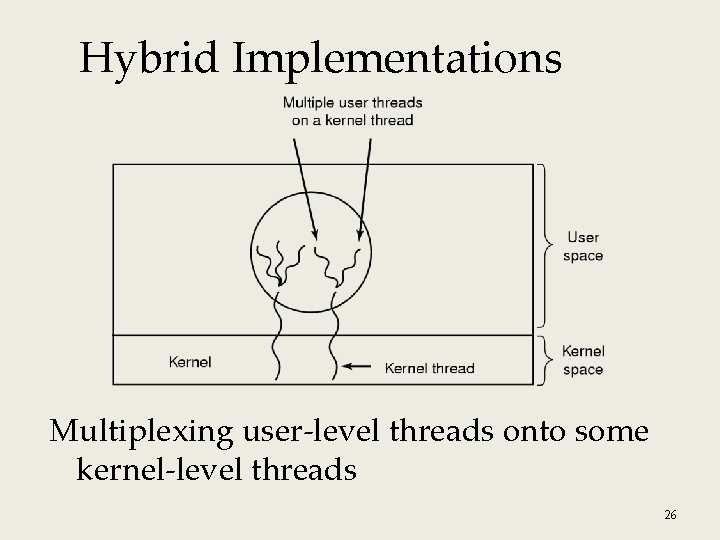
Hybrid Implementations Multiplexing user-level threads onto some kernel-level threads 26
Scheduler Activations • Another way to combine advantages of user-level, kernellevel threads • A little complicated – Involving upcalls – Violating some fundamental principles • Read Section 4. 4. 6 or: T. Anderson, B. Bershad, E. Lazowska, and H. Levy. “Scheduler Activations: Effective Kernel Support for the User-Level Management of Parallelism”. In ACM Trans. on Computer Systems, 10(1), Feb. 1992, pp. 53 -79. 27
Contents • What Are Threads? • Why Use Threads? • Thread Usage • Thread Review • Thread Implementations • Issues Making Single-Threaded Code Multi-threaded 28
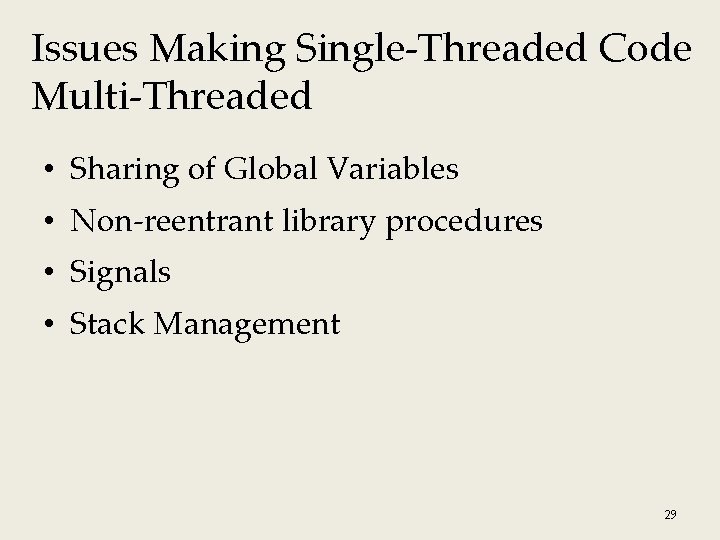
Issues Making Single-Threaded Code Multi-Threaded • Sharing of Global Variables • Non-reentrant library procedures • Signals • Stack Management 29
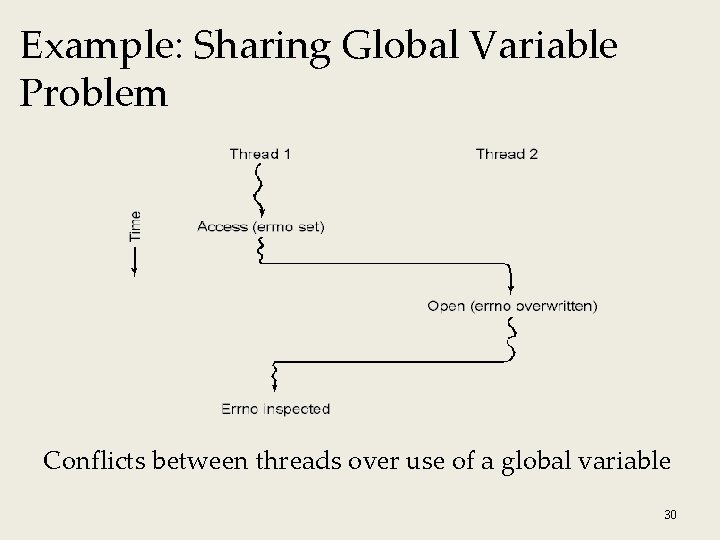
Example: Sharing Global Variable Problem Conflicts between threads over use of a global variable 30
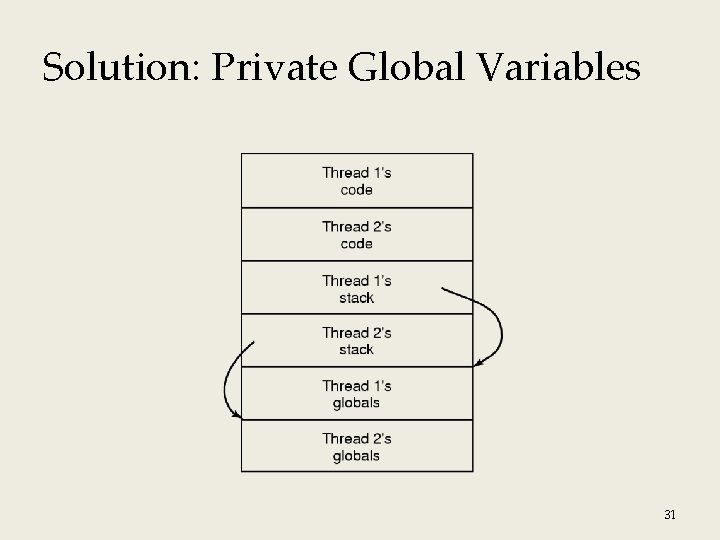
Solution: Private Global Variables 31
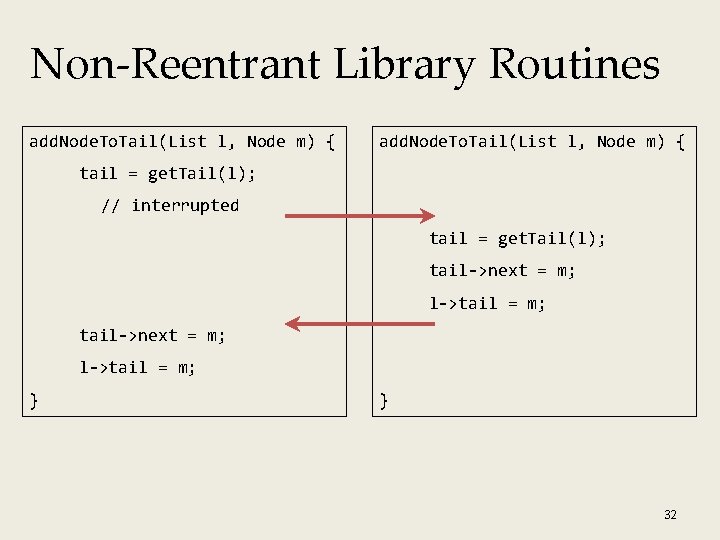
Non-Reentrant Library Routines add. Node. To. Tail(List l, Node m) { tail = get. Tail(l); // interrupted tail = get. Tail(l); tail->next = m; l->tail = m; } } 32
Signals • Delivered the signal to – One thread? – A set of threads? – All threads? • Confliction of signal handler registration 33
Stack Management • Single-threaded process – Automatically grow once the stack overflows (until some point) • How about multi-threaded process? – Kernel may not be aware of multiple threads in one process 34
Summary • What Is Thread? • Why Thread? • Thread Usages • Thread Review • Thread Implementations • Issues Making Single-Threaded Code Multi-threaded 35