
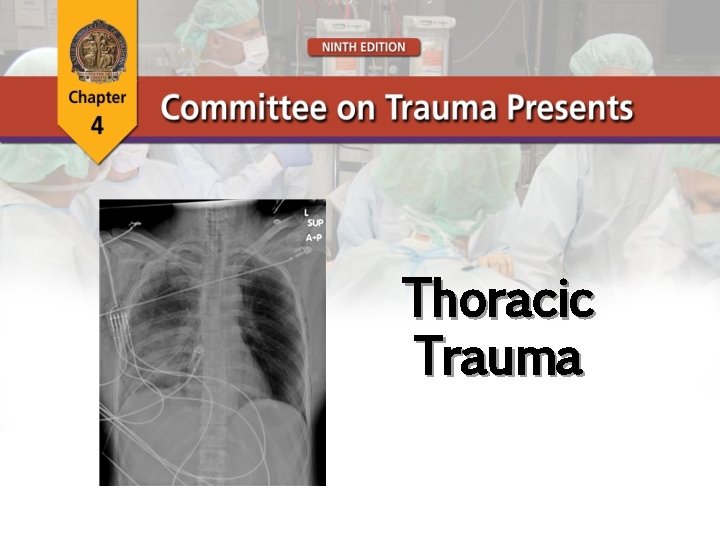
Thoracic Trauma Initial Assessment and Management Chapter Statement
- Slides: 35
Thoracic Trauma Initial Assessment and Management
Chapter Statement Thoracic injury is common in the poly-trauma patient and can pose life-threatening problems if not promptly identified during the primary survey.
Case Scenario ● 27 -year-old male was unrestrained driver in high-speed, frontal-impact collision ● Blood pressure: 90/70; heart rate: 110; respiratory rate: 36 ● Initial assessment: GCS score 15, patent airway What leads you to suspect thoracic injury in this patient? How would you evaluate this patient for potential thoracic injuries?
Objectives 1. Identify and initiate treatment during the primary survey of injuries that affect the airway. • • • Airway obstruction Tension or open pneumothorax Flail chest and pulmonary contusion Massive hemothorax Cardiac tamponade 2. Identify and initiate treatment during the secondary survey of the eight potentially life-threatening injuries. 3. Describe the significance and treatment of subcutaneous emphysema, thoracic crush injuries, and sternal, rib, and clavicular fractures.
Thoracic Trauma • Significant cause of mortality • Blunt: < 10% require operation • Penetrating: 15 -30% require operation • Majority: Require simple procedures • Most life-threatening injuries are identified during the primary survey
Thoracic Trauma What are the immediately lifethreatening chest injuries?
Thoracic Trauma What are the immediately lifethreatening chest injuries? • Laryngeotracheal injury / Airway obstruction • Tension pneumothorax • Open pneumothorax • Flail chest and pulmonary contusion • Massive hemothorax • Cardiac tamponade
Thoracic Trauma What are the pathophysiologic consequences of these chest injuries?
Thoracic Trauma What are the pathophysiologic consequences of these chest injuries? • Hypoxia • Hypoventilation • Acidosis • • Respiratory Metabolic • Inadequate tissue perfusion Manage in the primary survey as they are identified
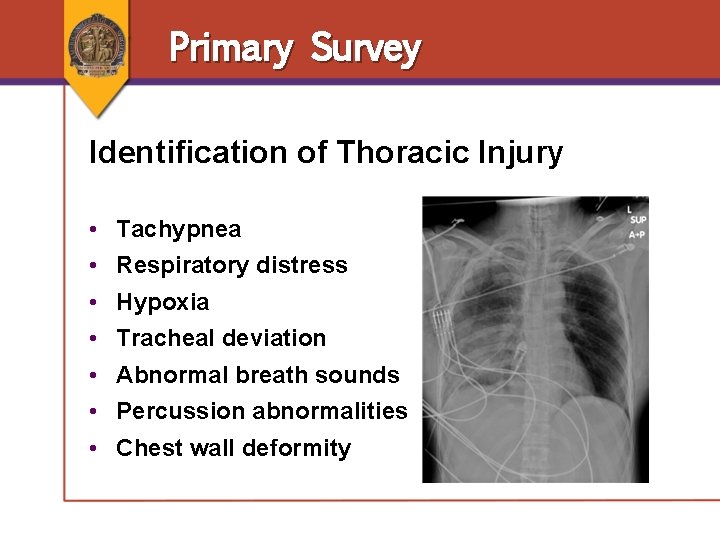
Primary Survey Identification of Thoracic Injury • • Tachypnea Respiratory distress Hypoxia Tracheal deviation Abnormal breath sounds Percussion abnormalities Chest wall deformity
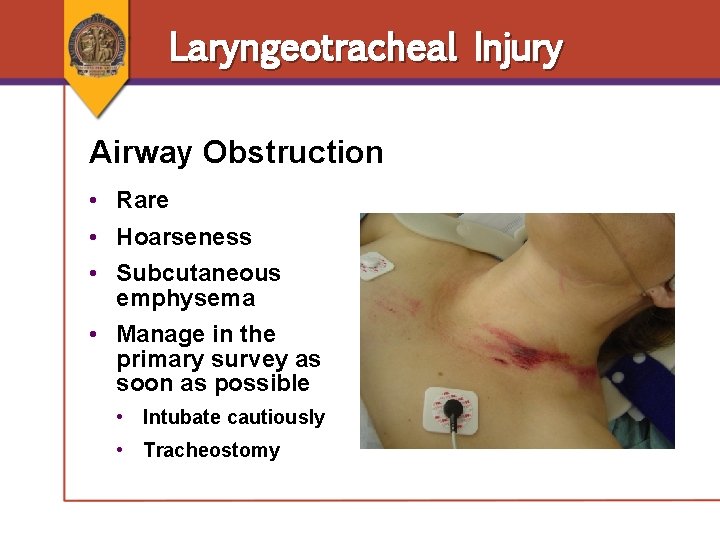
Laryngeotracheal Injury Airway Obstruction • Rare • Hoarseness • Subcutaneous emphysema • Manage in the primary survey as soon as possible • Intubate cautiously • Tracheostomy
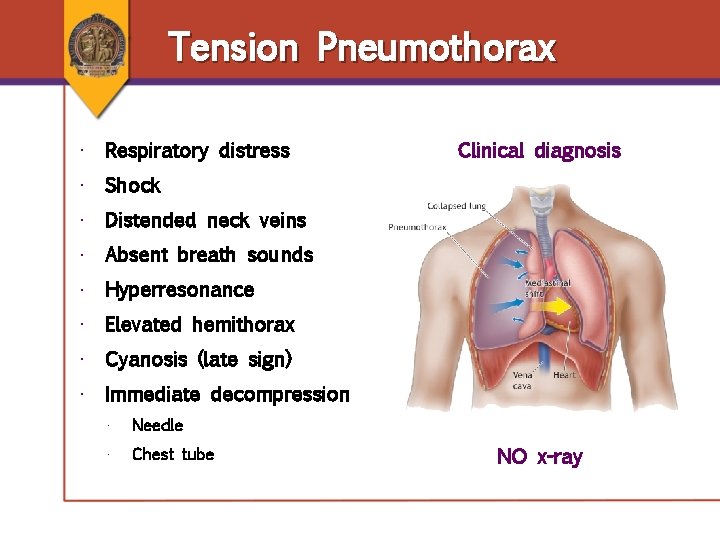
Tension Pneumothorax • Respiratory distress Clinical diagnosis • Shock • Distended neck veins • Absent breath sounds • Hyperresonance • Elevated hemithorax • Cyanosis (late sign) • Immediate decompression • Needle • Chest tube NO x-ray
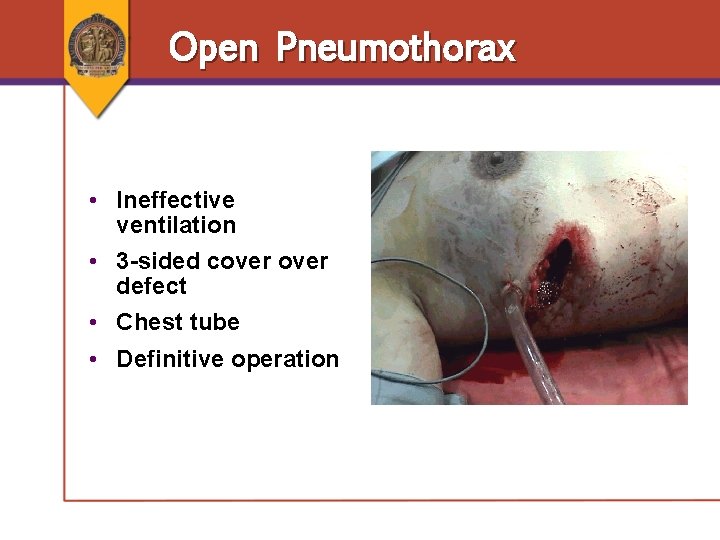
Open Pneumothorax • Ineffective ventilation • 3 -sided cover defect • Chest tube • Definitive operation
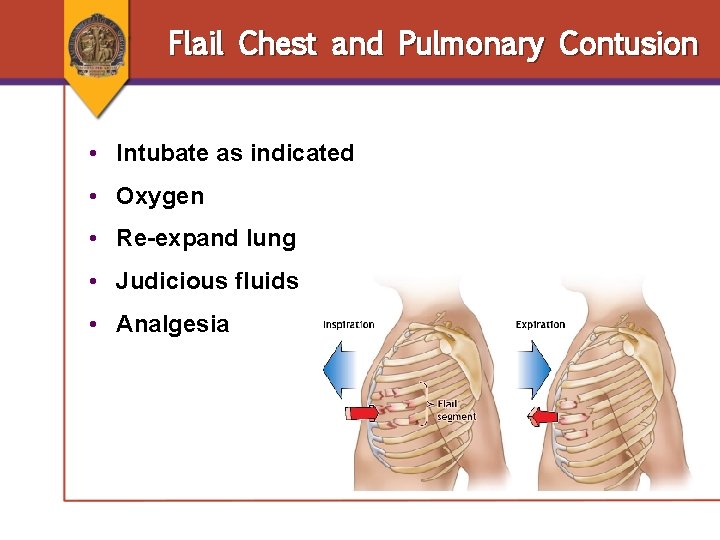
Flail Chest and Pulmonary Contusion • Intubate as indicated • Oxygen • Re-expand lung • Judicious fluids • Analgesia
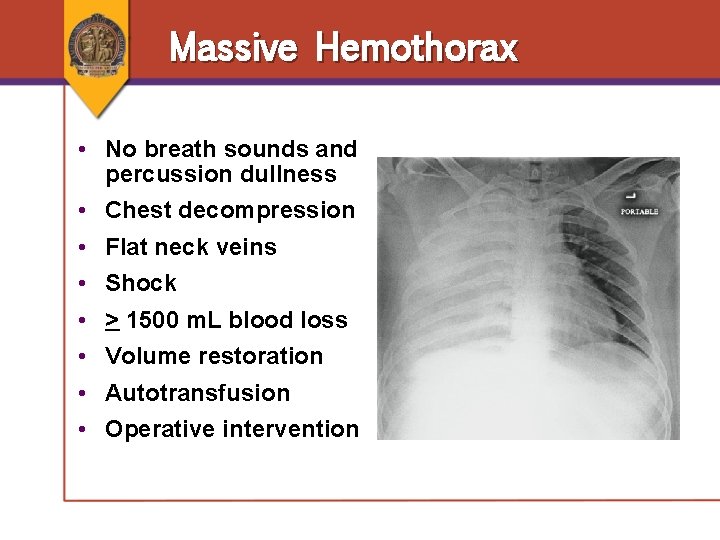
Massive Hemothorax • No breath sounds and percussion dullness • Chest decompression • Flat neck veins • Shock • > 1500 m. L blood loss • Volume restoration • Autotransfusion • Operative intervention
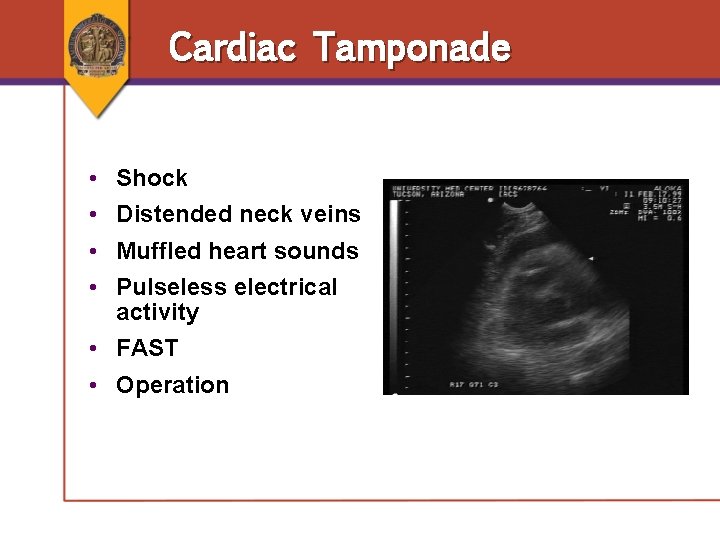
Cardiac Tamponade • • Shock Distended neck veins Muffled heart sounds Pulseless electrical activity • FAST • Operation
Resuscitative Thoracotomy When to Consider Resuscitative Thoracotomy • Patients with penetrating thoracic injury arriving with PEA • When a surgeon with appropriate skills is present • Resuscitative thoracotomy is not indicated in blunt trauma with PEA
Thoracic Trauma Secondary Survey: Potentially Lifethreatening Chest Injuries • Tracheobroncial tree injury • Simple pneumothorax • Pulmonary contusion • Hemothorax • Blunt cardiac injury • Traumatic aortic disruption • Blunt esophageal rupture • Traumatic diaphragmatic injury
Thoracic Trauma What adjunctive tests are used during the secondary survey to allow complete evaluation for potentially life-threatening thoracic injuries?
Thoracic Trauma What adjunctive tests are used during the secondary survey to allow complete evaluation for potentially life-threatening thoracic injuries? • • • Chest x-ray FAST ABG ECG Pulse oximetry
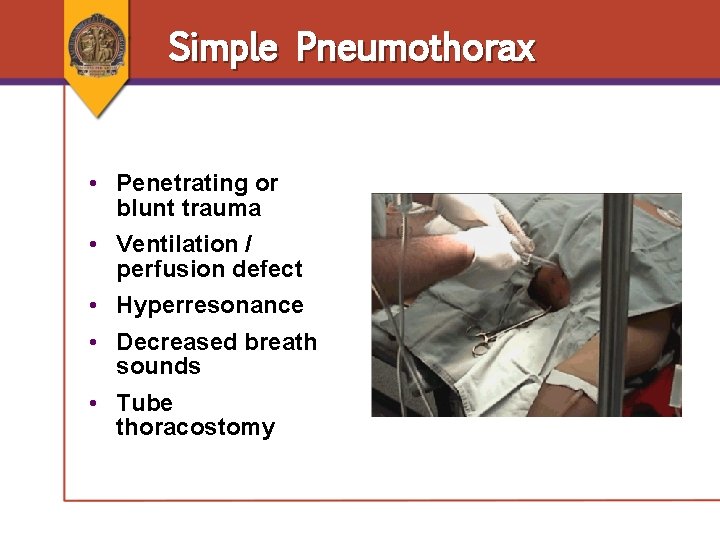
Simple Pneumothorax • Penetrating or blunt trauma • Ventilation / perfusion defect • Hyperresonance • Decreased breath sounds • Tube thoracostomy
Tracheobronchial Tree Injury • Often missed • Penetrating or blunt trauma • Persistent pneumothorax or persistent air leak • Bronchoscopy • Treatment • Airway and ventilation • Tube thoracostomy • Operation
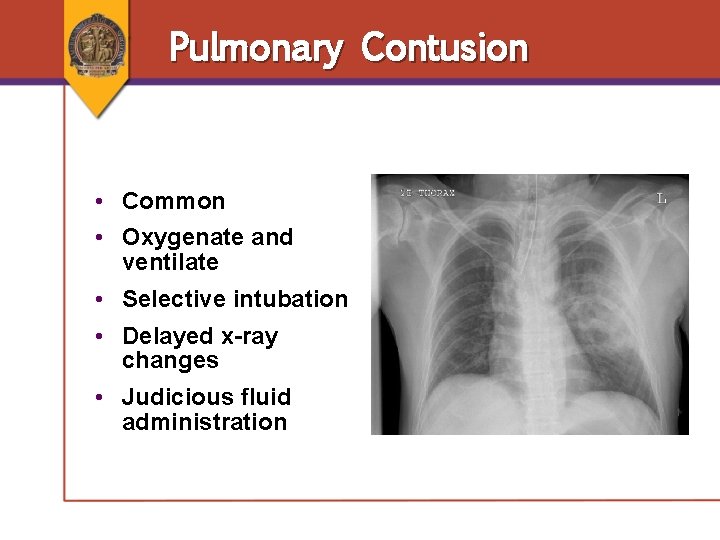
Pulmonary Contusion • Common • Oxygenate and ventilate • Selective intubation • Delayed x-ray changes • Judicious fluid administration
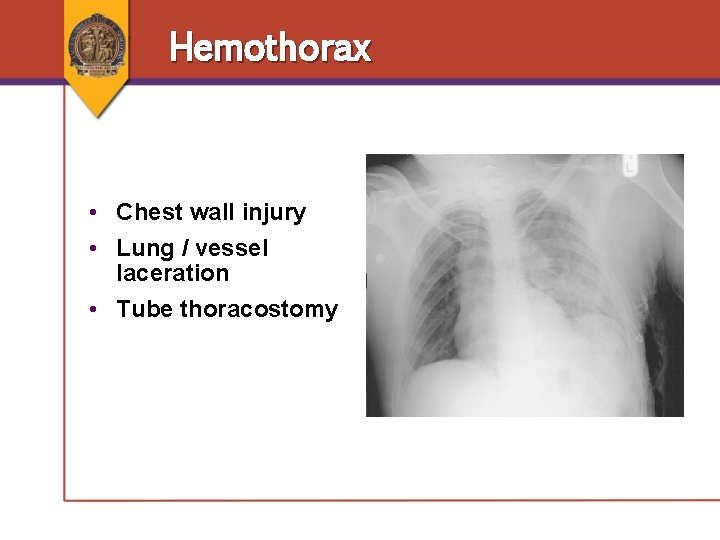
Hemothorax • Chest wall injury • Lung / vessel laceration • Tube thoracostomy
Blunt Cardiac Injury • Spectrum of injury • Abnormal ECG / monitor changes • Echocardiography if hemodynamic consequences • Treat • Dysrhythmias • Perfusion • Complications
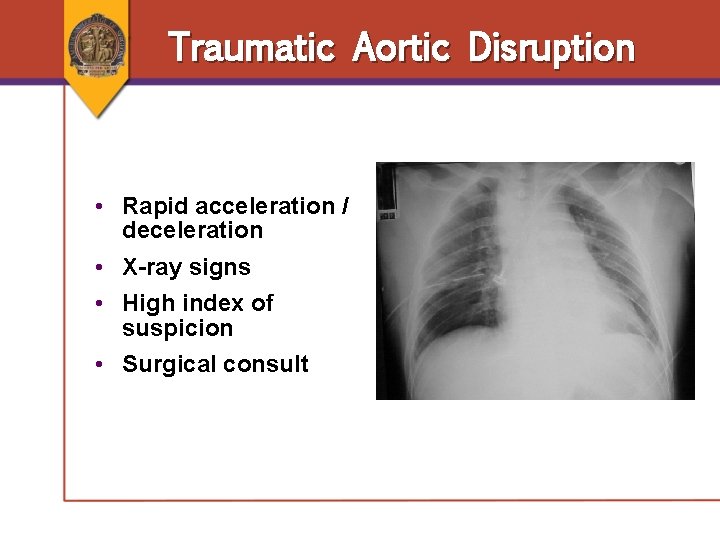
Traumatic Aortic Disruption • Rapid acceleration / deceleration • X-ray signs • High index of suspicion • Surgical consult
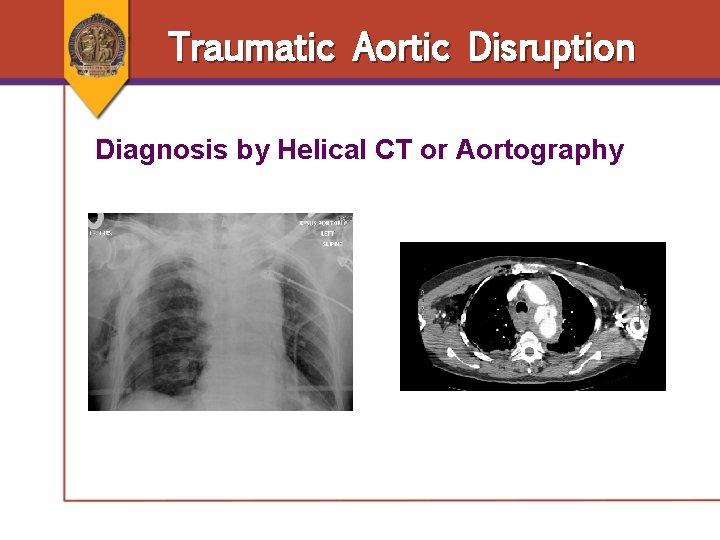
Traumatic Aortic Disruption Diagnosis by Helical CT or Aortography
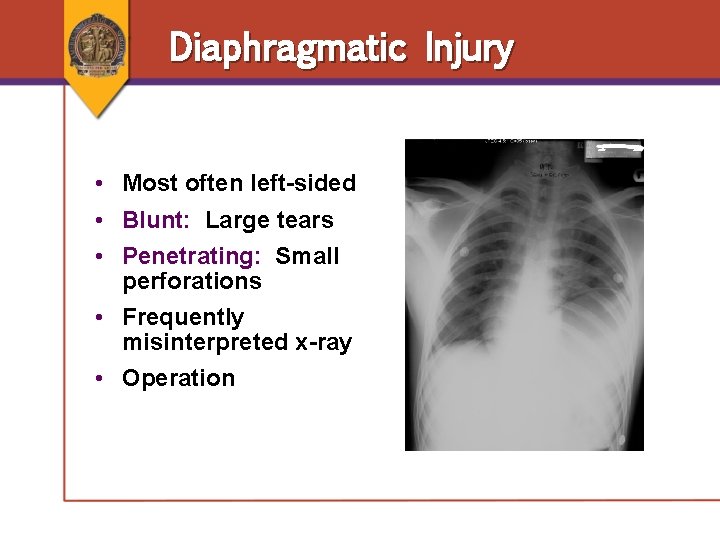
Diaphragmatic Injury • Most often left-sided • Blunt: Large tears • Penetrating: Small perforations • Frequently misinterpreted x-ray • Operation
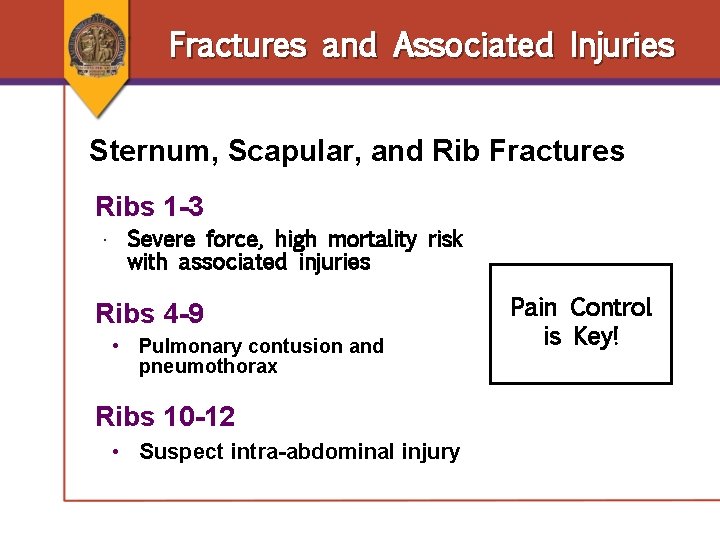
Fractures and Associated Injuries Sternum, Scapular, and Rib Fractures Ribs 1 -3 • Severe force, high mortality risk with associated injuries Ribs 4 -9 • Pulmonary contusion and pneumothorax Ribs 10 -12 • Suspect intra-abdominal injury Pain Control is Key!
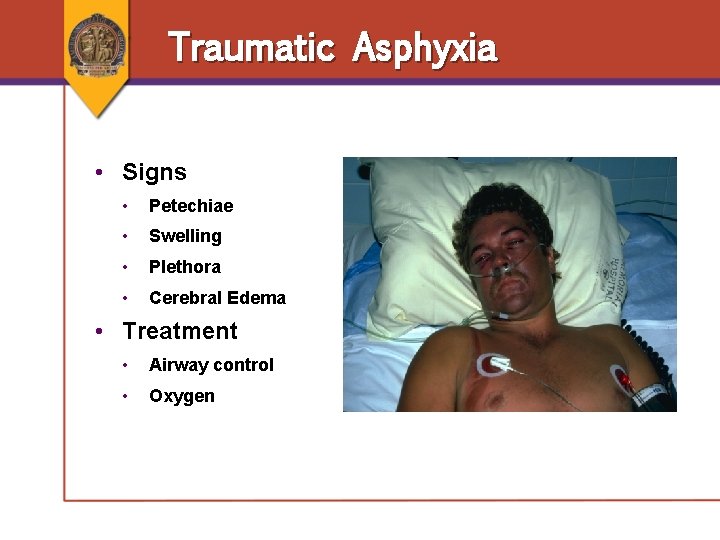
Traumatic Asphyxia • Signs • Petechiae • Swelling • Plethora • Cerebral Edema • Treatment • Airway control • Oxygen
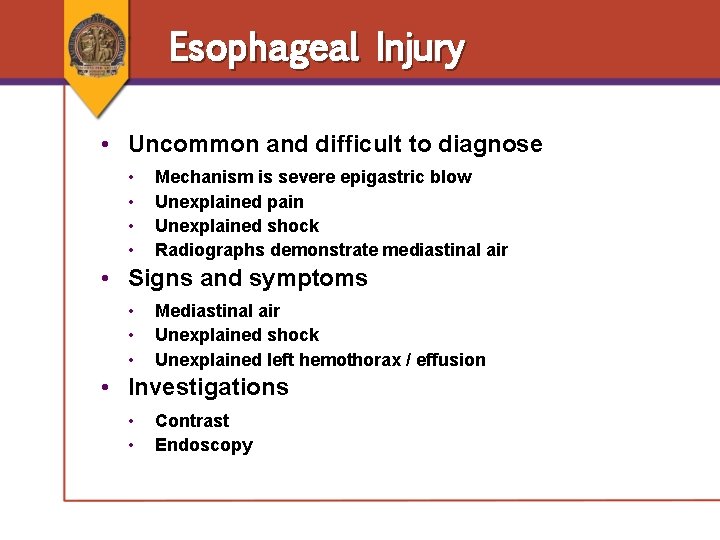
Esophageal Injury • Uncommon and difficult to diagnose • • Mechanism is severe epigastric blow Unexplained pain Unexplained shock Radiographs demonstrate mediastinal air • Signs and symptoms • • • Mediastinal air Unexplained shock Unexplained left hemothorax / effusion • Investigations • • Contrast Endoscopy
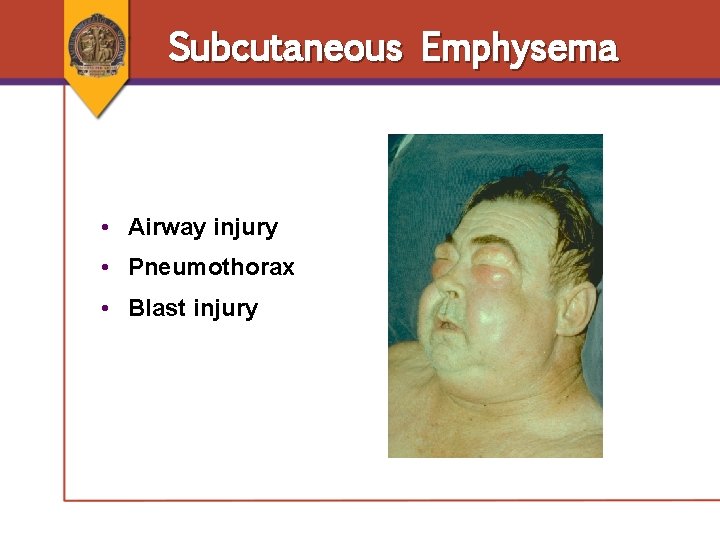
Subcutaneous Emphysema • Airway injury • Pneumothorax • Blast injury
Pitfalls • Simple pneumothorax converts to tension pneumothorax • Retained hemothorax • Diaphragmatic injury • Inadequate pain control • Extremes of age • Over-resuscitation • Misplaced chest tube
Case Scenario ● 27 -year-old male was unrestrained driver in high-speed, frontal-impact collision ● Blood pressure: 90/70; heart rate: 110; respiratory rate: 36 ● Initial assessment: GCS score 15, patent airway What leads you to suspect thoracic injury in this patient? How would you evaluate this patient for potential thoracic injuries?
Summary ● Chest injuries are common in the multiply injured patient. ● The ABCDE approach is used to identify lifethreatening and potentially life-threatening injuries. ● Initial stabilization requires simple maneuvers, e. g. , endotracheal intubation and tube thoracostomy. ● The goal of treating patients with chest injuries is to establish normal gas exchange and normal hemodynamics.