
This week Introduction Chapter 1 to counseling psychotherapy
- Slides: 20
This week � Introduction ◦ Chapter 1 to counseling & psychotherapy
Types of Mental Health Professionals l l l Psychologist Psychiatrist Professional Counselor Psychiatric Nurse Family Therapists Social Worker
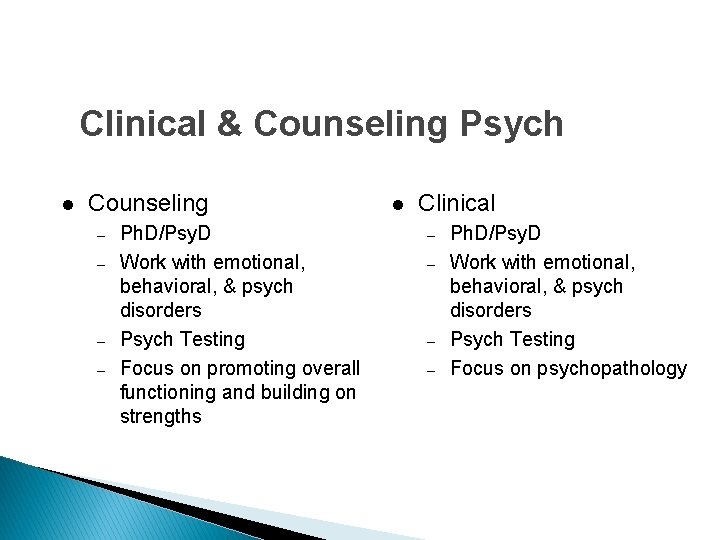
Clinical & Counseling Psych l Counseling – – Ph. D/Psy. D Work with emotional, behavioral, & psych disorders Psych Testing Focus on promoting overall functioning and building on strengths l Clinical – – Ph. D/Psy. D Work with emotional, behavioral, & psych disorders Psych Testing Focus on psychopathology
Professional counselor � Usually a master’s degree � Work with emotional, behavioral, and psychological disorders � Focus on prevention, remediation, and education
What is psychotherapy? The client and therapist collaborate in coconstructing solutions to problems
Interviewing l l Most basic helping process Often involves answer question process Used to gather info, problem solve, and giving advice Relatively brief; 1 -2 sessions – – Nurse interviews a patients about health problems Career counselor interviews a student about interests
Counseling l l l Activity designed to help an individual manage a problem Relationship (group, family, individual) constructed to promote trust Deals with human feelings, thoughts, and behaviors
Psychotherapy l l l A more intensive process of helping Focus on more complex emotional, behavioral and psychological problems Will use interviewing and counseling throughout Theory based processes Many mental health professionals provide psychotherapy – Counselors, social workers, psychologists
What is Psychotherapy? • • A formal interactive process between two parties Purpose is distress reduction Therapist has a theory of personality and related method of treatment Therapist has professional and legal approval to be in their role • Do not ignore the factor of therapist’s own personal growth
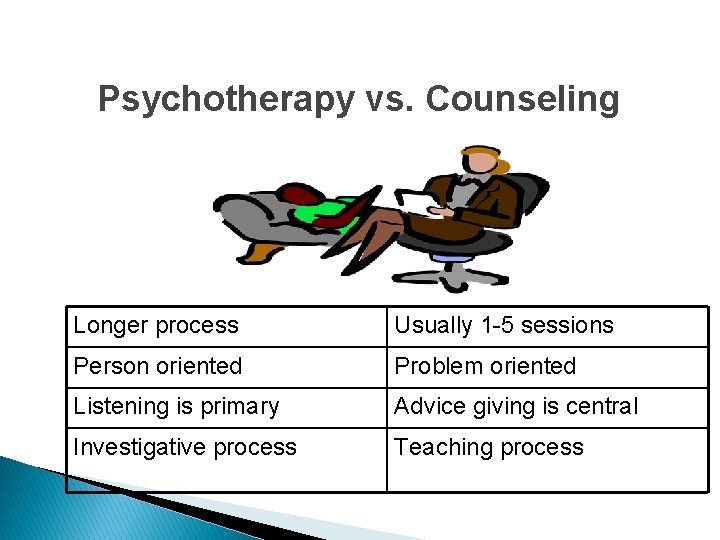
Psychotherapy vs. Counseling Longer process Usually 1 -5 sessions Person oriented Problem oriented Listening is primary Advice giving is central Investigative process Teaching process
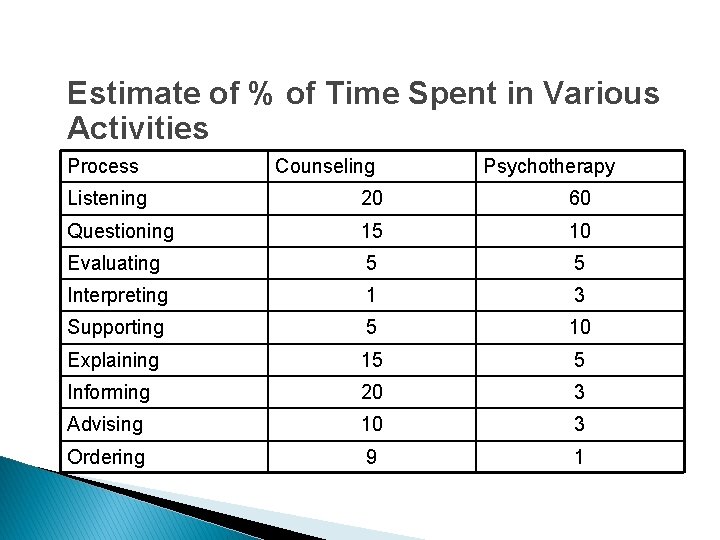
Estimate of % of Time Spent in Various Activities Process Counseling Psychotherapy Listening 20 60 Questioning 15 10 Evaluating 5 5 Interpreting 1 3 Supporting 5 10 Explaining 15 5 Informing 20 3 Advising 10 3 Ordering 9 1
Is Psychotherapy Scientific? Karl Popper’s basic premises: • Theories are easy to confirm; the challenge is to refute them • Therefore, theories that can’t be proven wrong are bad
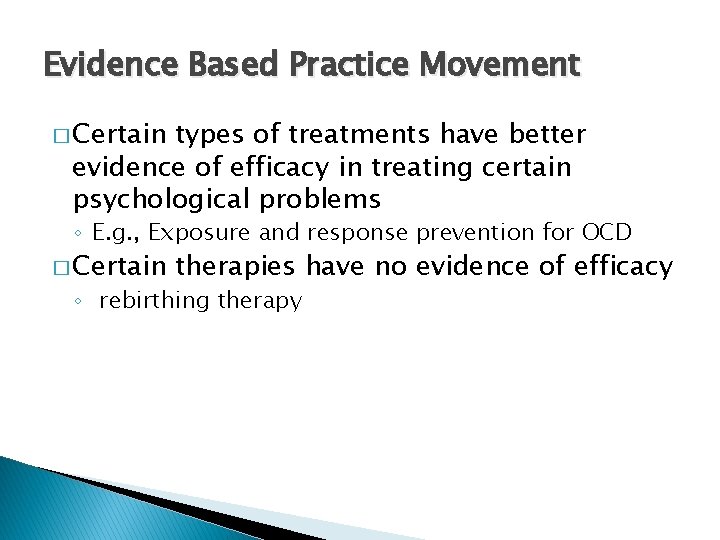
Evidence Based Practice Movement � Certain types of treatments have better evidence of efficacy in treating certain psychological problems ◦ E. g. , Exposure and response prevention for OCD � Certain therapies have no evidence of efficacy ◦ rebirthing therapy
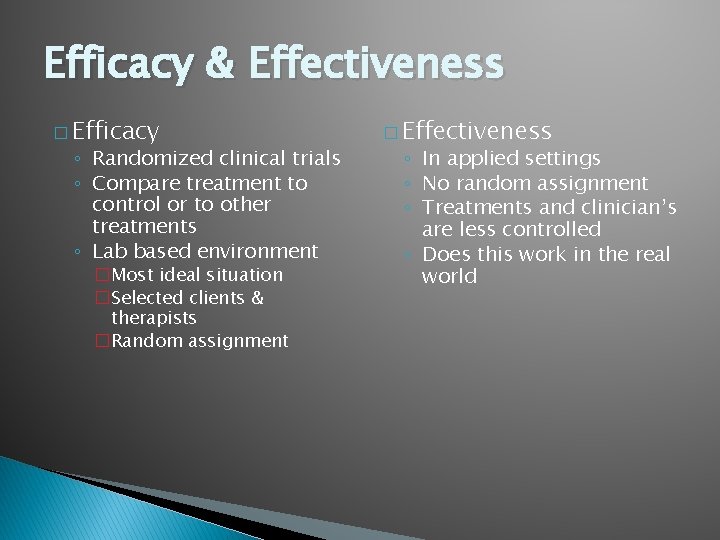
Efficacy & Effectiveness � Efficacy ◦ Randomized clinical trials ◦ Compare treatment to control or to other treatments ◦ Lab based environment �Most ideal situation �Selected clients & therapists �Random assignment � Effectiveness ◦ In applied settings ◦ No random assignment ◦ Treatments and clinician’s are less controlled ◦ Does this work in the real world
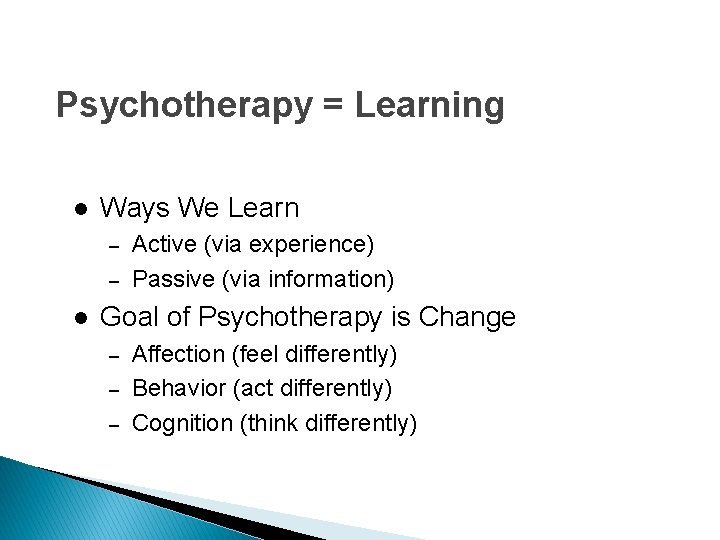
Psychotherapy = Learning l Ways We Learn – – l Active (via experience) Passive (via information) Goal of Psychotherapy is Change – – – Affection (feel differently) Behavior (act differently) Cognition (think differently)
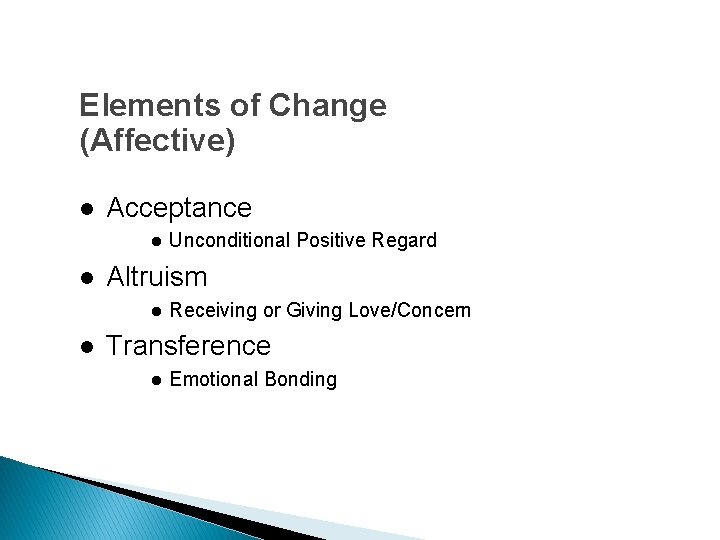
Elements of Change (Affective) l Acceptance l l Altruism l l Unconditional Positive Regard Receiving or Giving Love/Concern Transference l Emotional Bonding
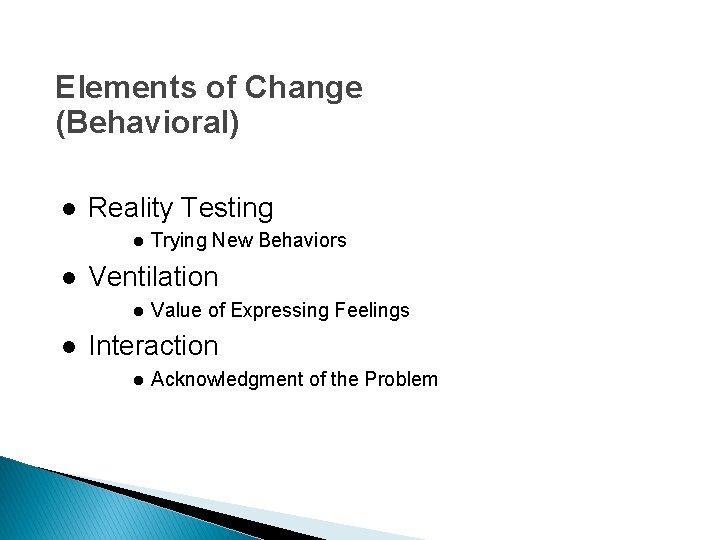
Elements of Change (Behavioral) l Reality Testing l l Ventilation l l Trying New Behaviors Value of Expressing Feelings Interaction l Acknowledgment of the Problem
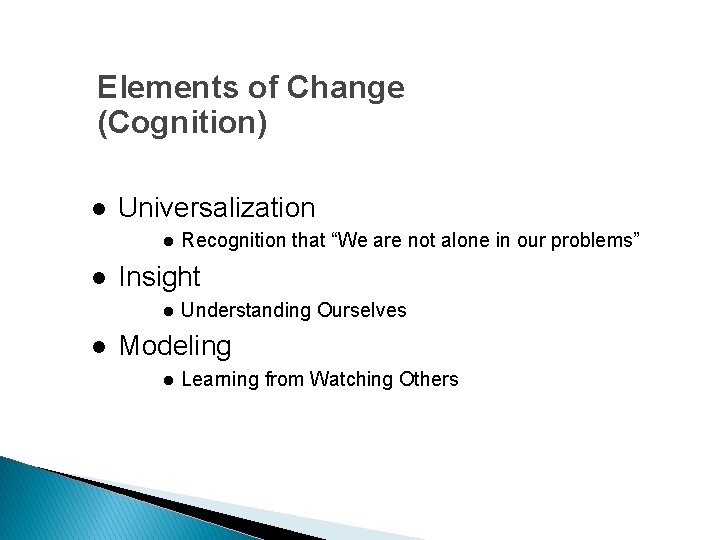
Elements of Change (Cognition) l Universalization l l Insight l l Recognition that “We are not alone in our problems” Understanding Ourselves Modeling l Learning from Watching Others
Raises the question of treatment matching � What treatment � Works for what clients � With whom providing it � In what situations We are always learning more about this
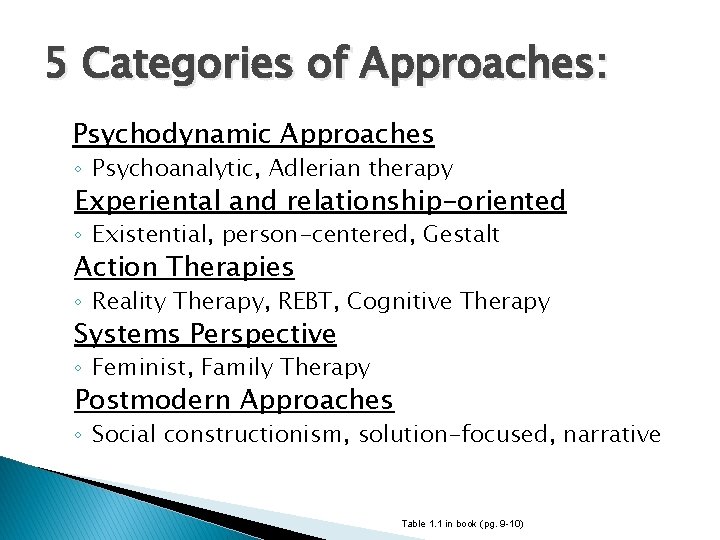
5 Categories of Approaches: Psychodynamic Approaches ◦ Psychoanalytic, Adlerian therapy Experiental and relationship-oriented ◦ Existential, person-centered, Gestalt Action Therapies ◦ Reality Therapy, REBT, Cognitive Therapy Systems Perspective ◦ Feminist, Family Therapy Postmodern Approaches ◦ Social constructionism, solution-focused, narrative Table 1. 1 in book (pg. 9 -10)