
This Week Biogeochemical Cycles Hydrologic Cycle Carbon Cycle
This Week: Biogeochemical Cycles Hydrologic Cycle Carbon Cycle
Announcements • Reading: Chapters 4 (p. 74 – 81) and 8 • Another Problem Set (Due next Tuesday) • Exam 2: Friday Feb 29 • My office hours today and next week rescheduled to Thurs 3 - 4 pm

Water Cycle “Box Model” Burden: amount of material in reservoir Source/Sink: flow rate into/out of reservoir Reservoir: region where material stored; each box
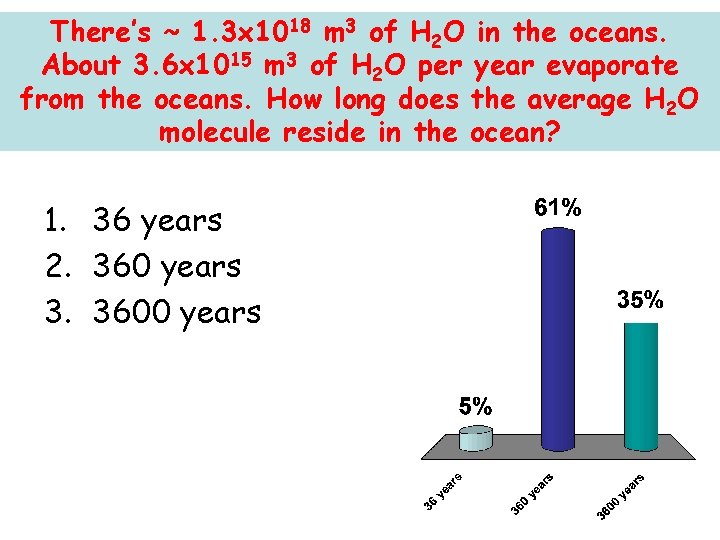
There’s ~ 1. 3 x 10¹⁸ m 3 of H 2 O in the oceans. About 3. 6 x 10¹⁵ m 3 of H 2 O per year evaporate from the oceans. How long does the average H 2 O molecule reside in the ocean? 1. 36 years 2. 360 years 3. 3600 years
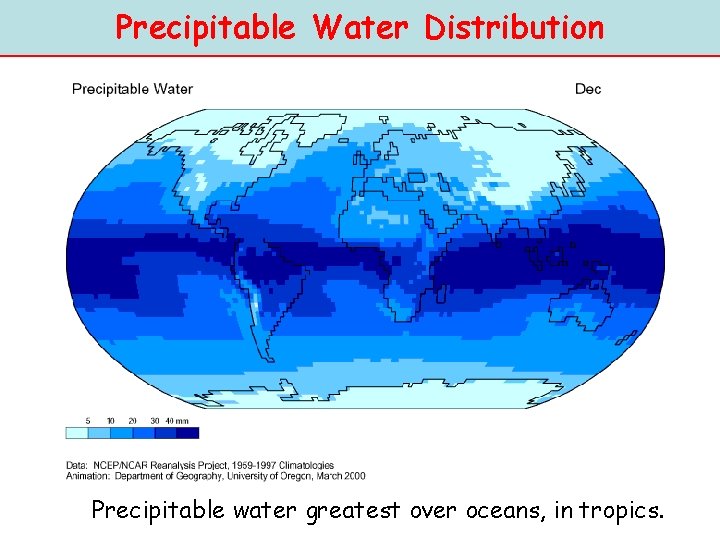
Precipitable Water Distribution Precipitable water greatest over oceans, in tropics.

Spatially Resolved Precipitation Rate Subsiding branches of Hadley Cells
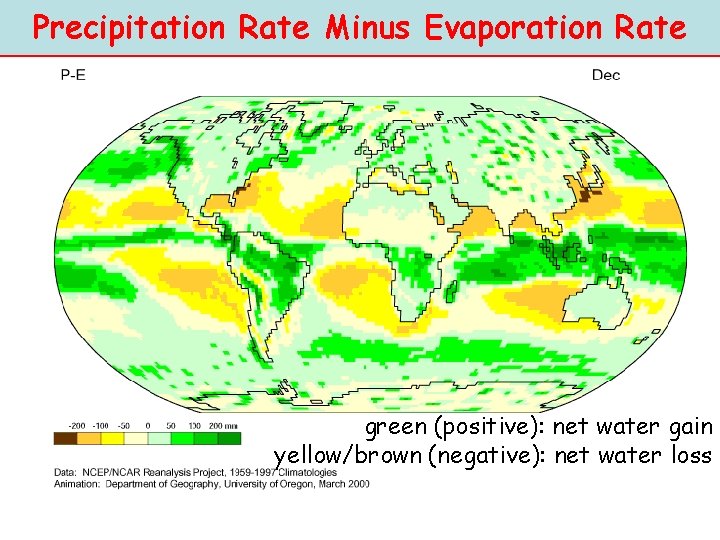
Precipitation Rate Minus Evaporation Rate green (positive): net water gain yellow/brown (negative): net water loss
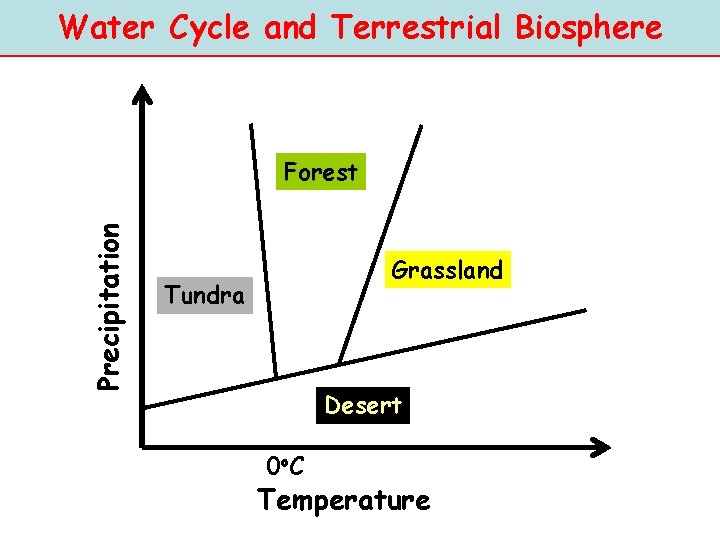
Water Cycle and Terrestrial Biosphere Precipitation Forest Grassland Tundra Desert 0 o C Temperature
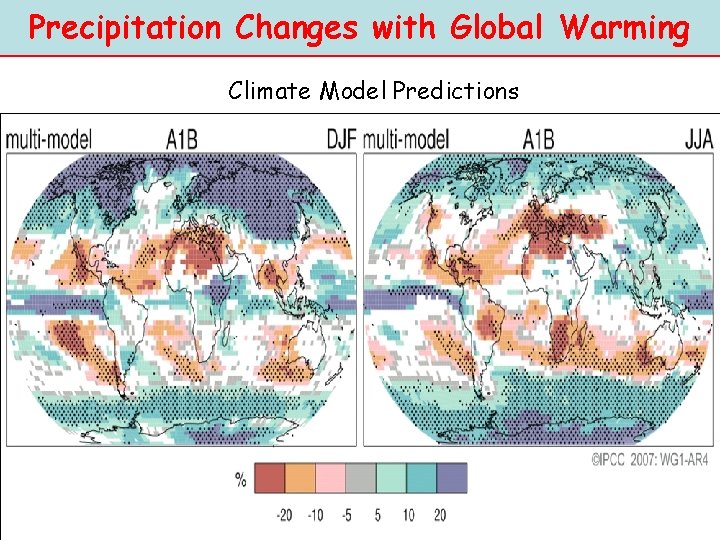
Precipitation Changes with Global Warming Climate Model Predictions

Announcements • Problem Set 4 Due Tuesday Feb 26 • Group Choices by Friday • Seminar on Thursday 12: 30 310 c ATG
Carbon Cycle • Short-term biosphere-driven cycle – Terrestrial biosphere – Marine biosphere • Long-term inorganic cycle – Weathering-volcanism thermostat
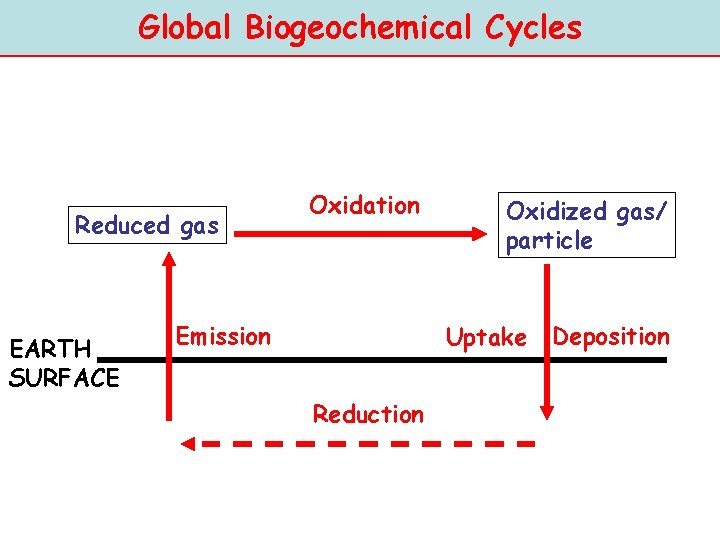
Global Biogeochemical Cycles Reduced gas EARTH SURFACE Oxidation Emission Oxidized gas/ particle Uptake Reduction Deposition
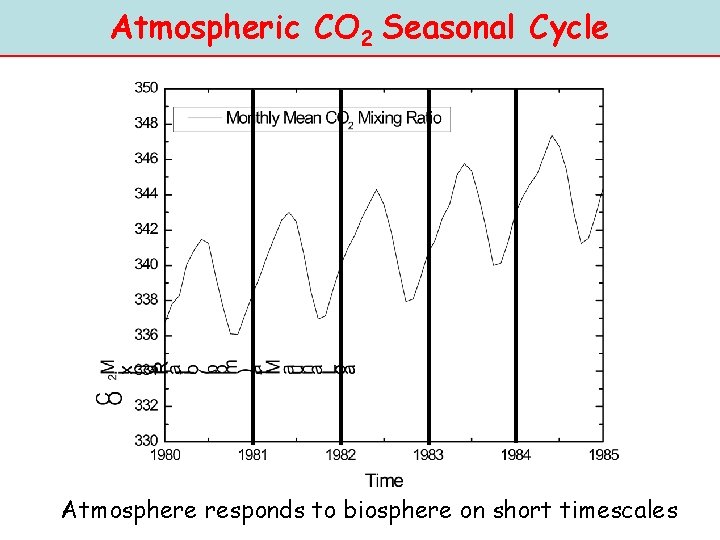
Atmospheric CO 2 Seasonal Cycle Atmosphere responds to biosphere on short timescales
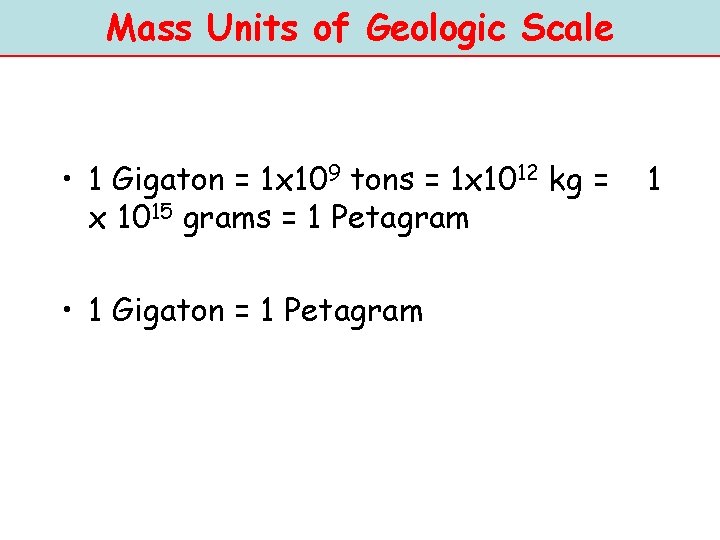
Mass Units of Geologic Scale • 1 Gigaton = 1 x 10⁹ tons = 1 x 10¹² kg = x 1015 grams = 1 Petagram • 1 Gigaton = 1 Petagram 1
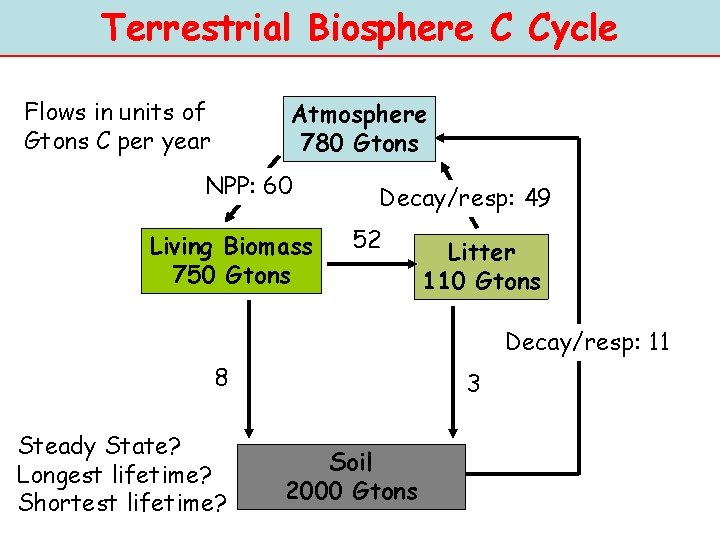
Terrestrial Biosphere C Cycle Flows in units of Gtons C per year Atmosphere 780 Gtons NPP: 60 Living Biomass 750 Gtons Decay/resp: 49 52 Litter 110 Gtons Decay/resp: 11 8 Steady State? Longest lifetime? Shortest lifetime? 3 Soil 2000 Gtons

The effect of deforestation on atmospheric CO 2 is 1. to increase it (source) 2. to decrease it (sink) 3. negligible
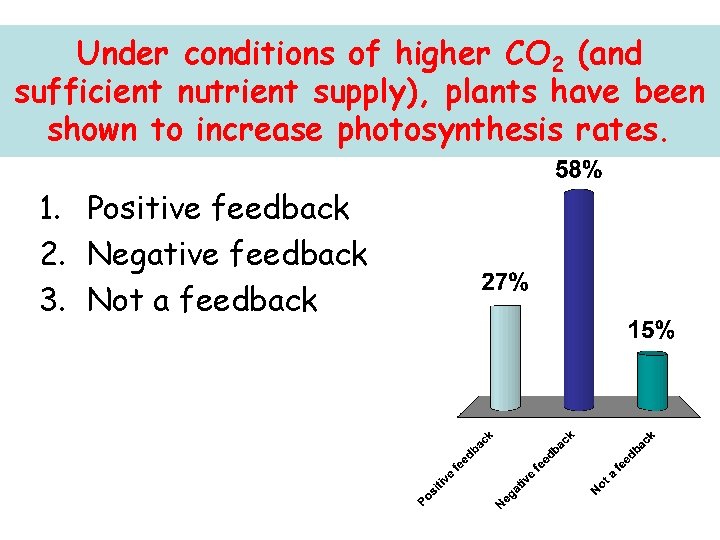
Under conditions of higher CO 2 (and sufficient nutrient supply), plants have been shown to increase photosynthesis rates. 1. Positive feedback 2. Negative feedback 3. Not a feedback
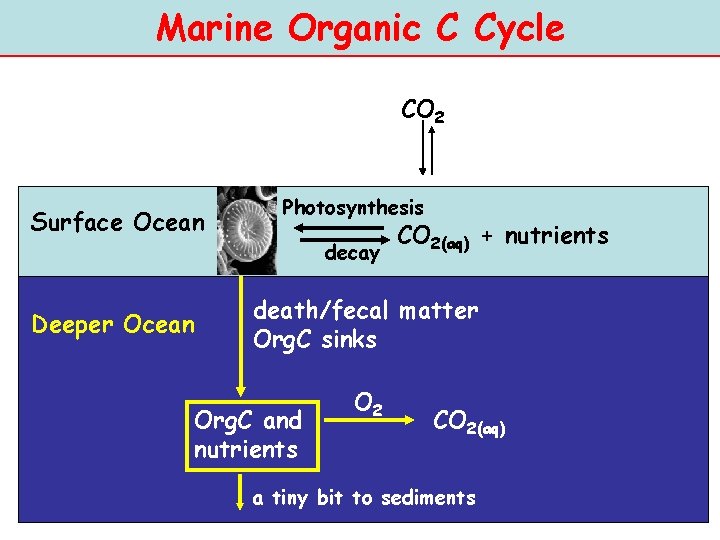
Marine Organic C Cycle CO 2 Surface Ocean Deeper Ocean Photosynthesis decay CO 2(aq) + nutrients death/fecal matter Org. C sinks Org. C and nutrients O 2 CO 2(aq) a tiny bit to sediments
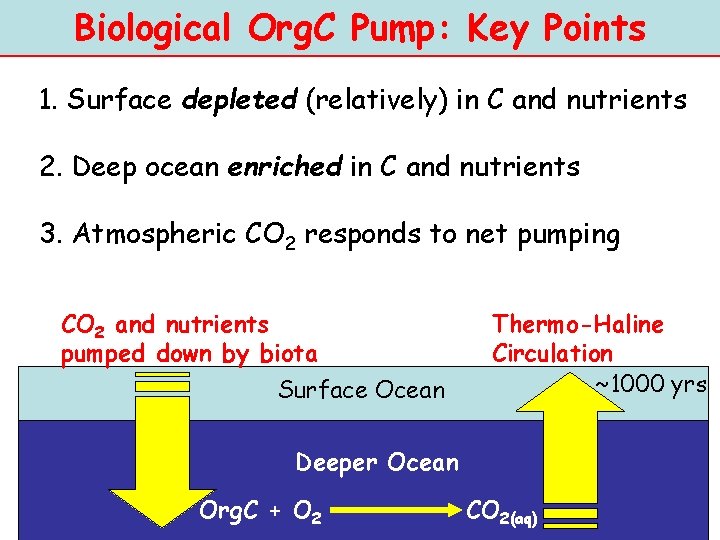
Biological Org. C Pump: Key Points 1. Surface depleted (relatively) in C and nutrients 2. Deep ocean enriched in C and nutrients 3. Atmospheric CO 2 responds to net pumping CO 2 and nutrients pumped down by biota Surface Ocean Thermo-Haline Circulation ~1000 yrs Deeper Ocean Org. C + O 2 CO 2(aq)
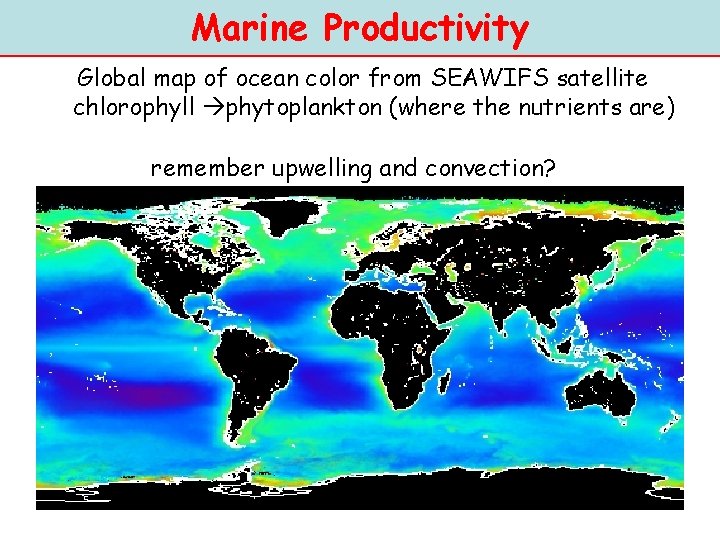
Marine Productivity Global map of ocean color from SEAWIFS satellite chlorophyll phytoplankton (where the nutrients are) remember upwelling and convection?
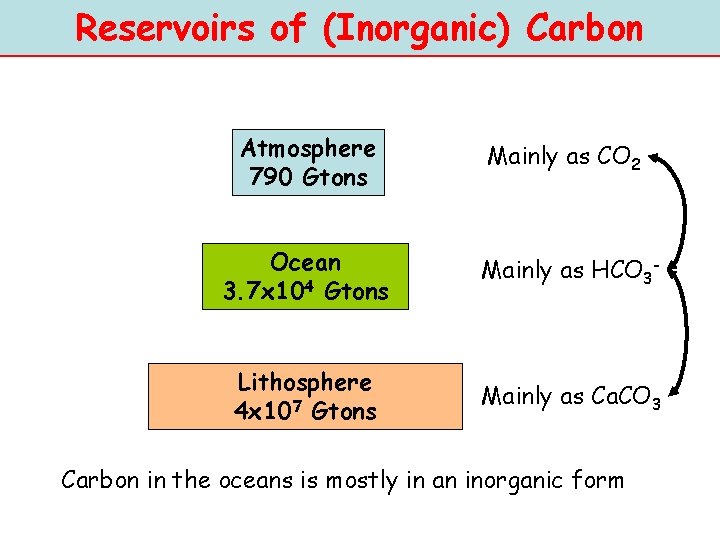
Reservoirs of (Inorganic) Carbon Atmosphere 790 Gtons Mainly as CO 2 Ocean 3. 7 x 10⁴ Gtons Mainly as HCO 3 - Lithosphere 4 x 10⁷ Gtons Mainly as Ca. CO 3 Carbon in the oceans is mostly in an inorganic form
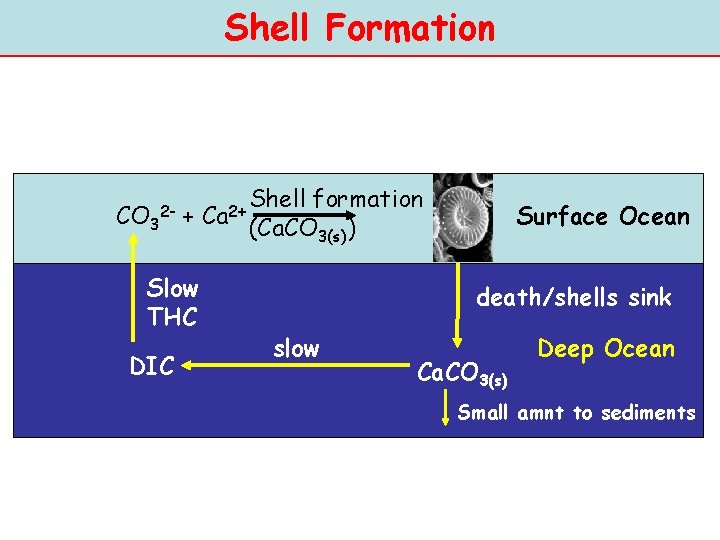
Shell Formation CO 3 + 2 - Slow THC DIC Ca 2+ Shell formation (Ca. CO 3(s)) Surface Ocean death/shells sink slow Ca. CO 3(s) Deep Ocean Small amnt to sediments
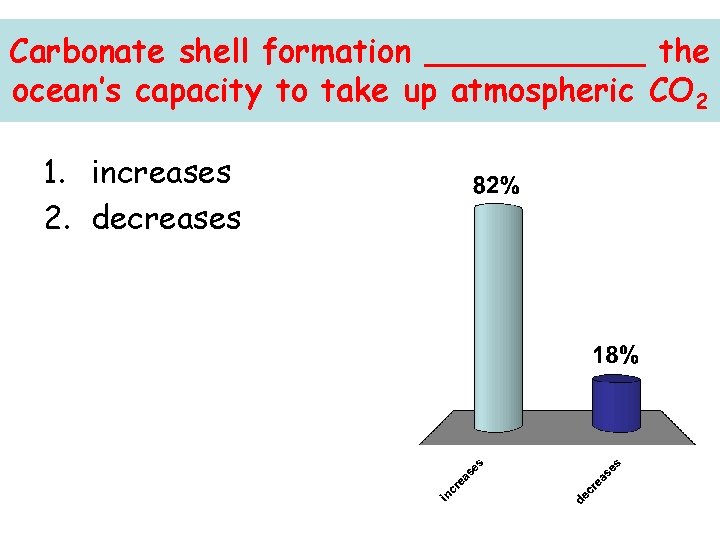
Carbonate shell formation ______ the ocean’s capacity to take up atmospheric CO 2 1. increases 2. decreases
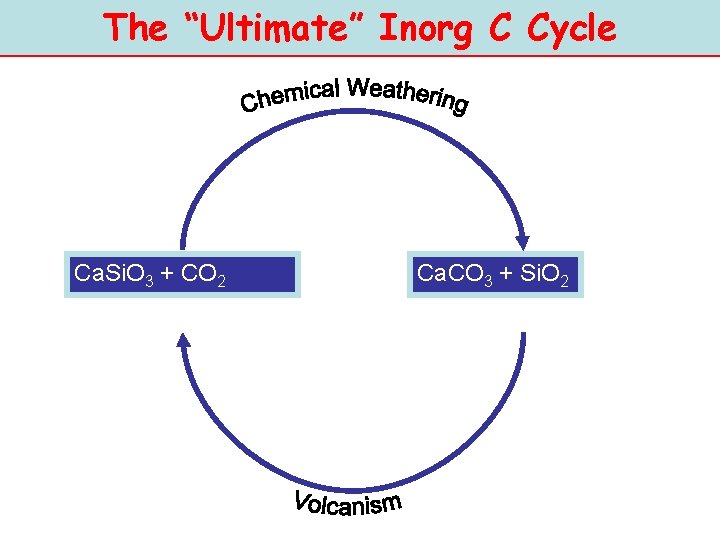
The “Ultimate” Inorg C Cycle Ca. Si. O 3 + CO 2 Ca. CO 3 + Si. O 2
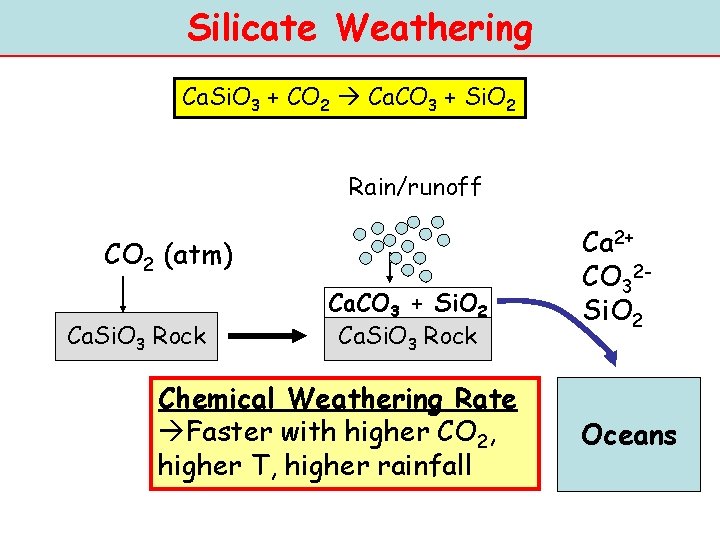
Silicate Weathering Ca. Si. O 3 + CO 2 Ca. CO 3 + Si. O 2 Rain/runoff CO 2 (atm) Ca. Si. O 3 Rock Ca. CO 3 + Si. O 2 Ca. Si. O 3 Rock Chemical Weathering Rate Faster with higher CO 2, higher T, higher rainfall Ca 2+ CO 32 Si. O 2 Oceans
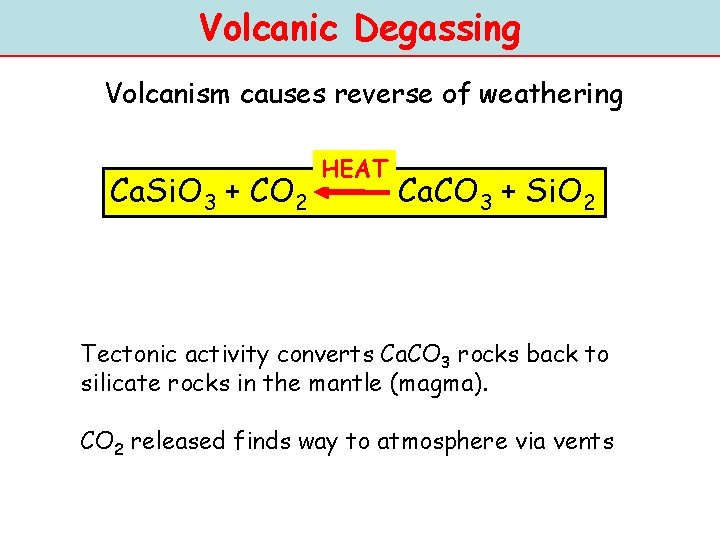
Volcanic Degassing Volcanism causes reverse of weathering Ca. Si. O 3 + CO 2 HEAT Ca. CO 3 + Si. O 2 Tectonic activity converts Ca. CO 3 rocks back to silicate rocks in the mantle (magma). CO 2 released finds way to atmosphere via vents
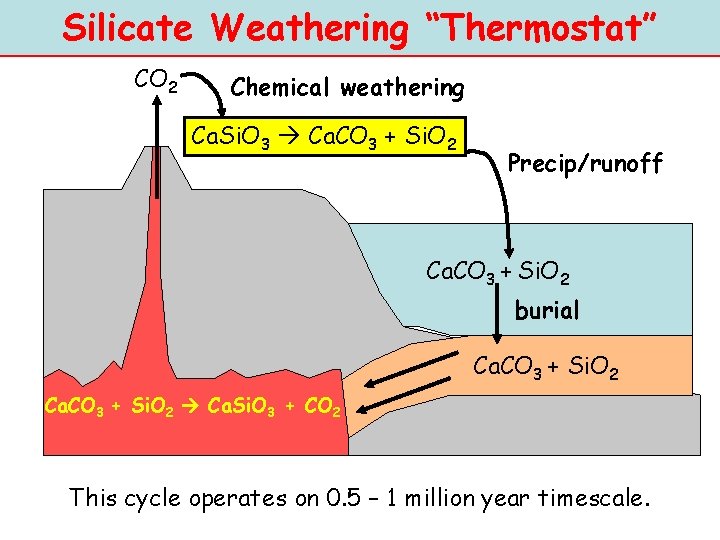
Silicate Weathering “Thermostat” CO 2 Chemical weathering Ca. Si. O 3 Ca. CO 3 + Si. O 2 Precip/runoff Ca. CO 3 + Si. O 2 burial Ca. CO 3 + Si. O 2 Ca. Si. O 3 + CO 2 This cycle operates on 0. 5 – 1 million year timescale.
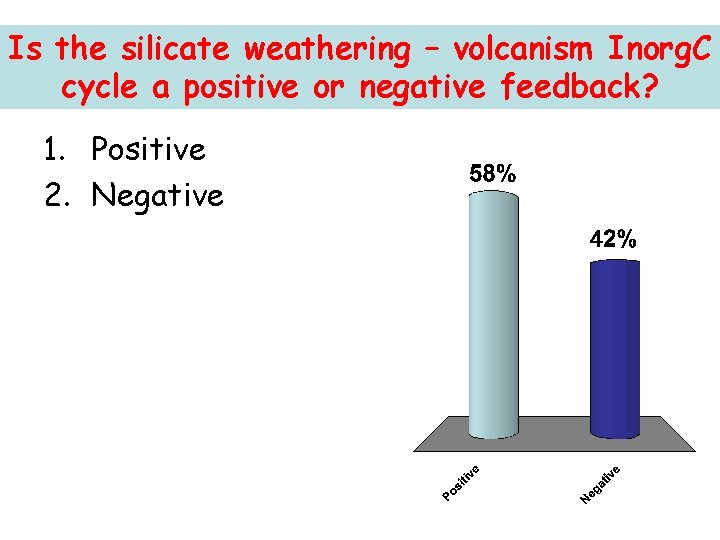
Is the silicate weathering – volcanism Inorg. C cycle a positive or negative feedback? 1. Positive 2. Negative
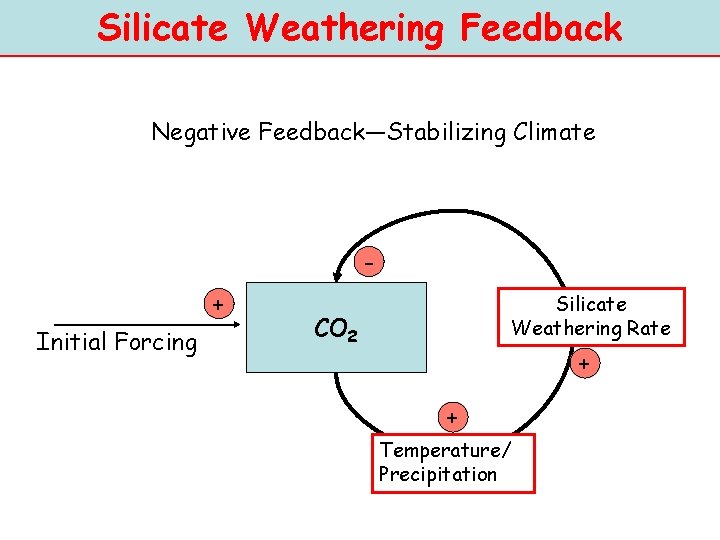
Silicate Weathering Feedback Negative Feedback—Stabilizing Climate + Initial Forcing Silicate Weathering Rate CO 2 + + Temperature/ Precipitation
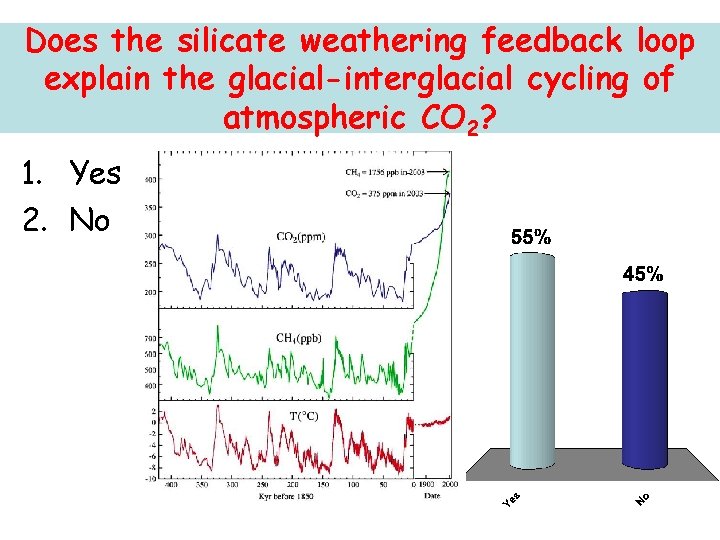
Does the silicate weathering feedback loop explain the glacial-interglacial cycling of atmospheric CO 2? 1. Yes 2. No
- Slides: 30