
This slide set is licensed under a Creative







- Slides: 54
This slide set is licensed under a Creative Commons license: Educational Taxonomy & Pattern Approach Are There Benefits for Educational Scenarios from Exploring Alexander's fifteen properties of living centers? Peter Baumgartner Reinhard Bauer Danube University Krems
Outline Patterns and Pedagogical Patterns What is a taxonomy and why do we need it? Alexander's 15 properties & their implication for education
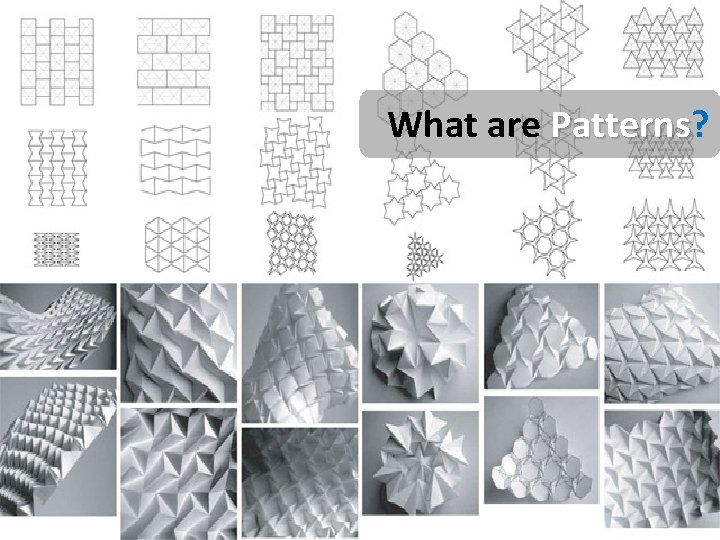
What are Patterns? Patterns
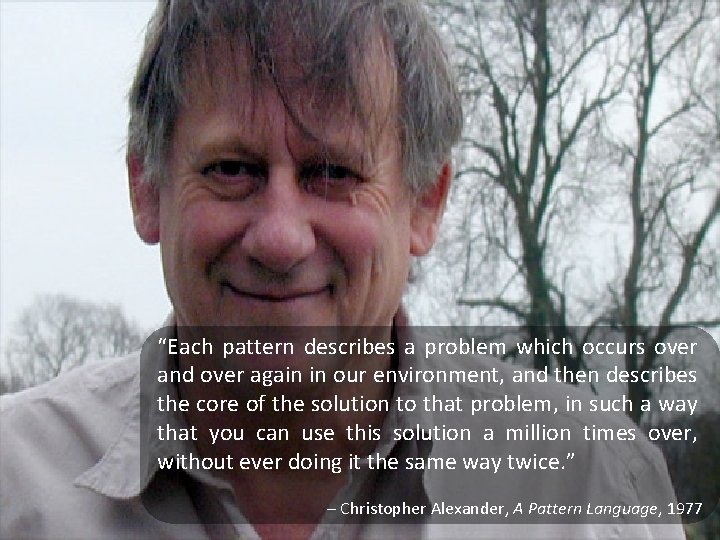
“Each pattern describes a problem which occurs over and over again in our environment, and then describes the core of the solution to that problem, in such a way that you can use this solution a million times over, without ever doing it the same way twice. ” – Christopher Alexander, A Pattern Language, 1977
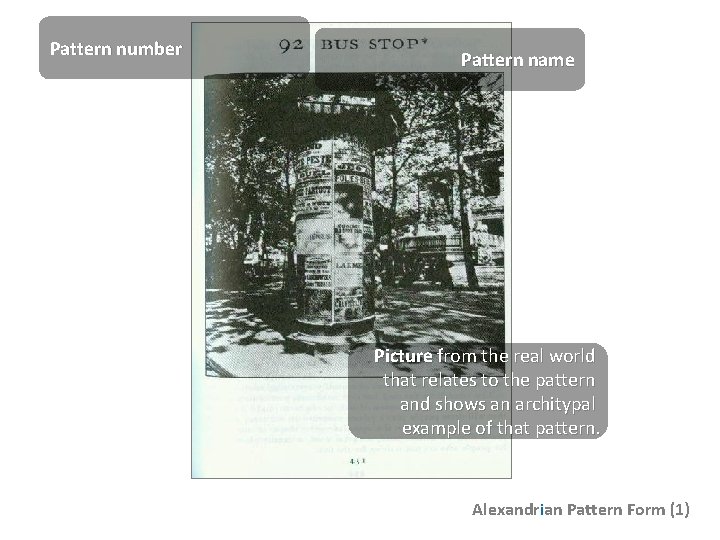
Pattern number Pattern name Picture from the real world that relates to the pattern and shows an architypal example of that pattern. Alexandrian Pattern Form (1)
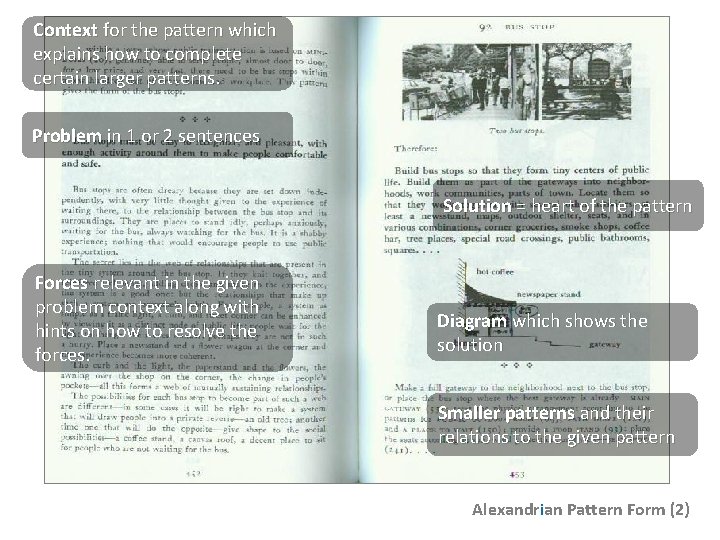
Context for the pattern which explains how to complete certain larger patterns. Problem in 1 or 2 sentences Solution = heart of the pattern Forces relevant in the given problem context along with hints on how to resolve the forces. Diagram which shows the solution Smaller patterns and their relations to the given pattern Alexandrian Pattern Form (2)
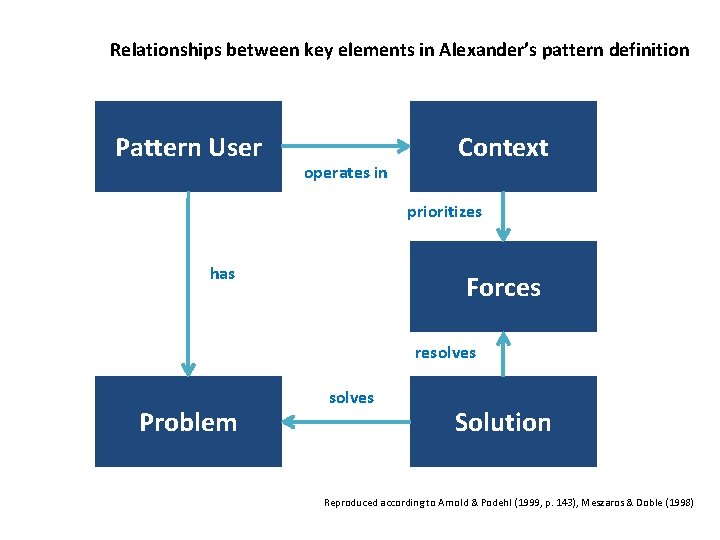
Relationships between key elements in Alexander’s pattern definition Pattern User operates in Context prioritizes has Forces resolves Problem solves Solution Reproduced according to Arnold & Podehl (1999, p. 143), Meszaros & Doble (1998)
What are Pedagogical Patterns? Patterns
“Pedagogical patterns try to capture expert knowledge of the practice of teaching and learning. The intent is to capture the essence of the practice in a compact form that can be easily communicated to those who need the knowledge. Presenting this information in a coherent and accessible form can mean the difference between every new instructor needing to relearn what is known by senior faculty and easy transference of knowledge of teaching within the community. . ” – http: //www. pedagogicalpatterns. org/
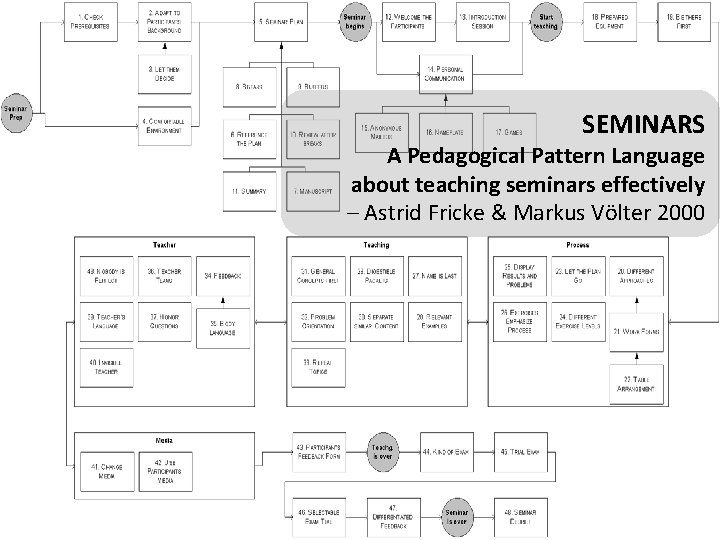
SEMINARS A Pedagogical Pattern Language about teaching seminars effectively – Astrid Fricke & Markus Völter 2000
Why do they need a taxonomy?
What is a taxonomy? I understand taxonomy as a classification schema built by a system of consistent generative principles, procedures and rules guided by a functional logic appropriate for reflecting the (assumed) mechanism of action of the classified object. Baumgartner, 2009
A critical finding. . . Pedagogy has not succeeded so far in establishing a consistent taxonomy of educational scenarios.
Advantages of a taxonomy Integration Orientation Information Cost reduction Transfer Innovation Heuristics
Troubles with a taxonomy Categories Operationalization Structuring Granularity
What is an educational scenario?
Definition As a first approximation, we can perceive it as a representation of an educational setting, which comprises of an arrangement (configuration) of social, spatial, content-related, and temporal variables (= action patterns). This definition includes both, abstracting unnecessary details of action situation and characterizing necessary conditions and environments for the implementation.
Educational Stratification Model
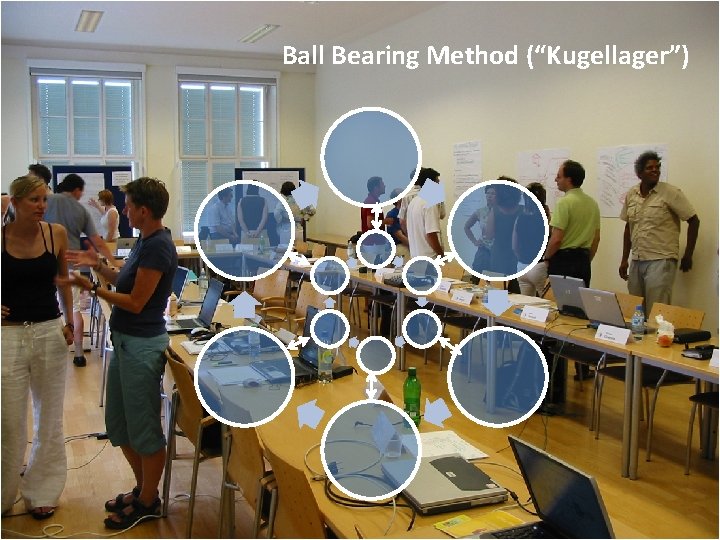
Ball Bearing Method (“Kugellager”)
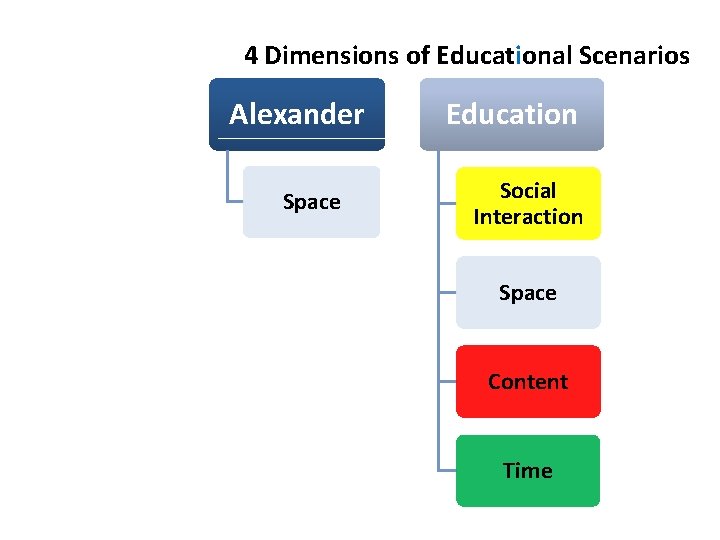
4 Dimensions of Educational Scenarios Alexander Space Education Social Interaction Space Content Time
Alexander's 15 Properties & Their Implication for Education
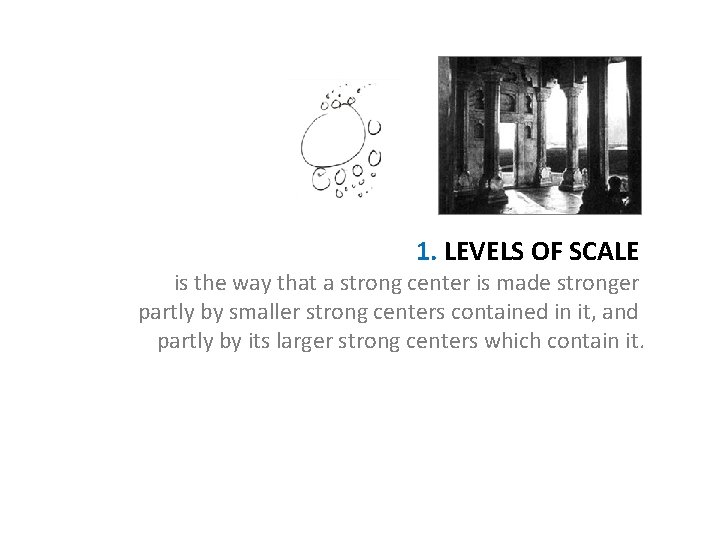
1. LEVELS OF SCALE is the way that a strong center is made stronger partly by smaller strong centers contained in it, and partly by its larger strong centers which contain it.
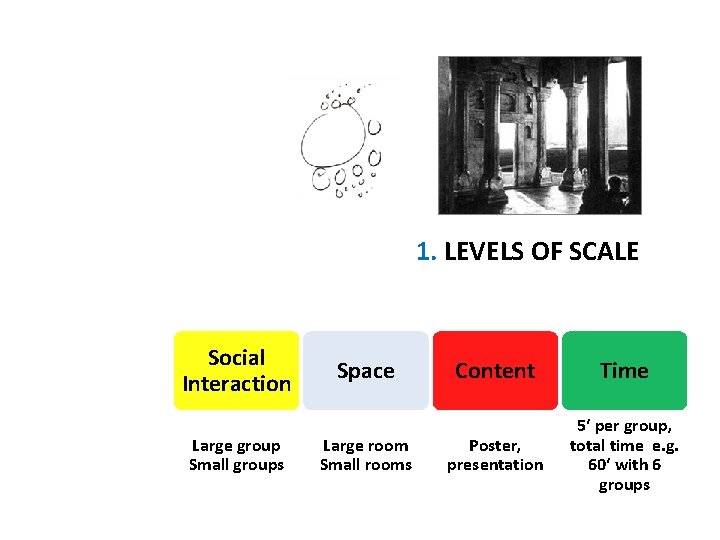
1. LEVELS OF SCALE Social Interaction Large group Small groups Space Large room Small rooms Content Time Poster, presentation 5‘ per group, total time e. g. 60‘ with 6 groups
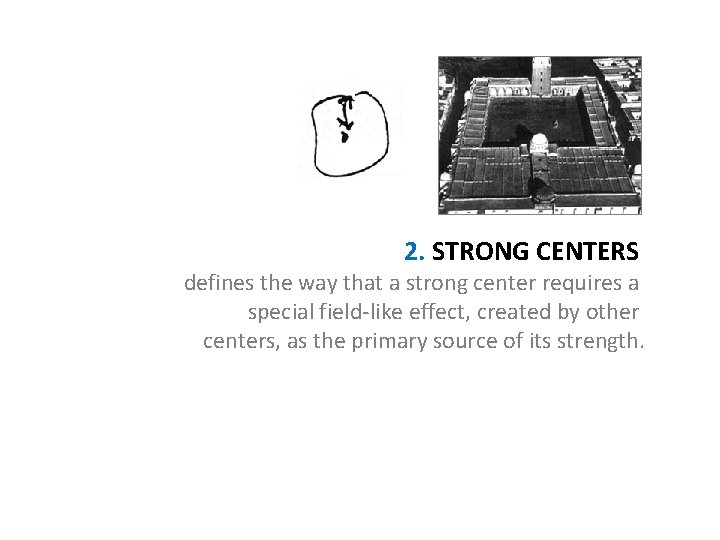
2. STRONG CENTERS defines the way that a strong center requires a special field-like effect, created by other centers, as the primary source of its strength.
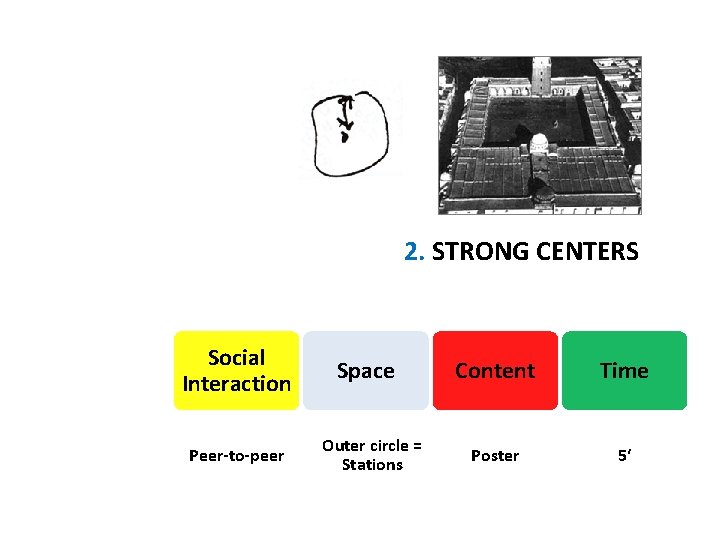
2. STRONG CENTERS Social Interaction Peer-to-peer Space Outer circle = Stations Content Time Poster 5‘
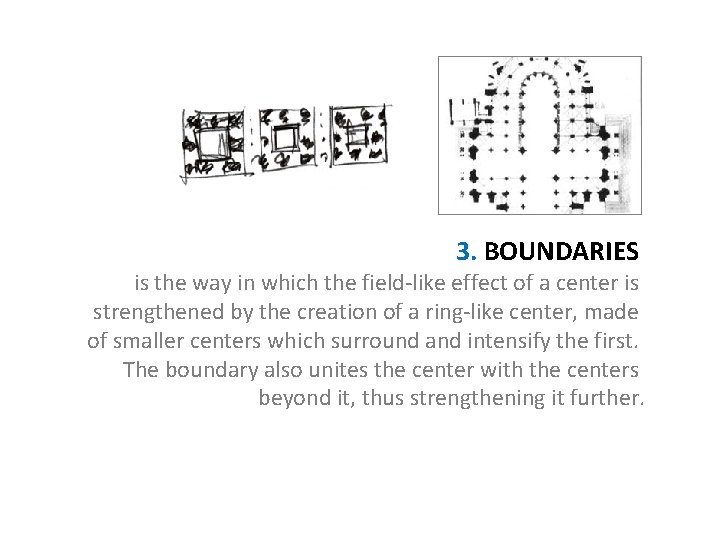
3. BOUNDARIES is the way in which the field-like effect of a center is strengthened by the creation of a ring-like center, made of smaller centers which surround and intensify the first. The boundary also unites the center with the centers beyond it, thus strengthening it further.
3. BOUNDARIES Social Interaction Inner/Outer Student group Space Inner/Outer circle Content Time Headline, frame of graphs, (web-) pages Bell = Signal for rotation
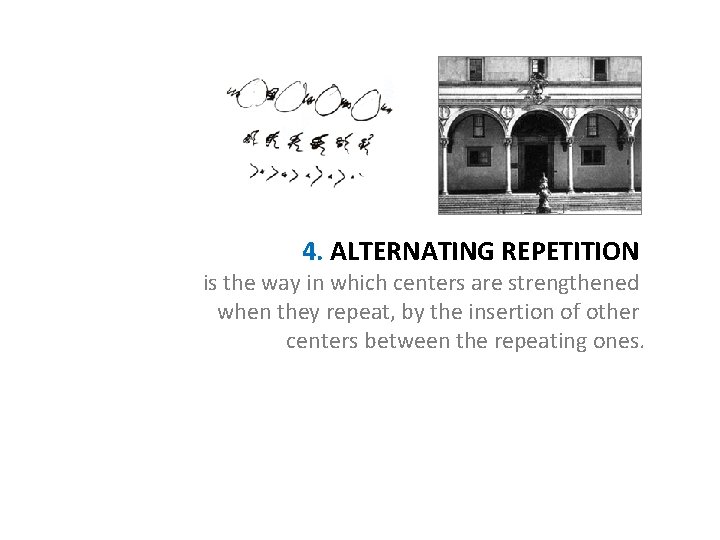
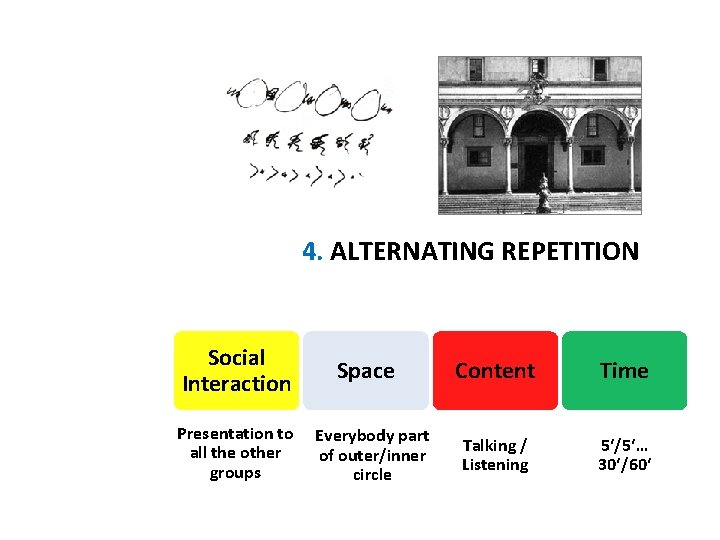
4. ALTERNATING REPETITION is the way in which centers are strengthened when they repeat, by the insertion of other centers between the repeating ones.
4. ALTERNATING REPETITION Social Interaction Presentation to all the other groups Space Everybody part of outer/inner circle Content Time Talking / Listening 5‘/5‘… 30‘/60‘
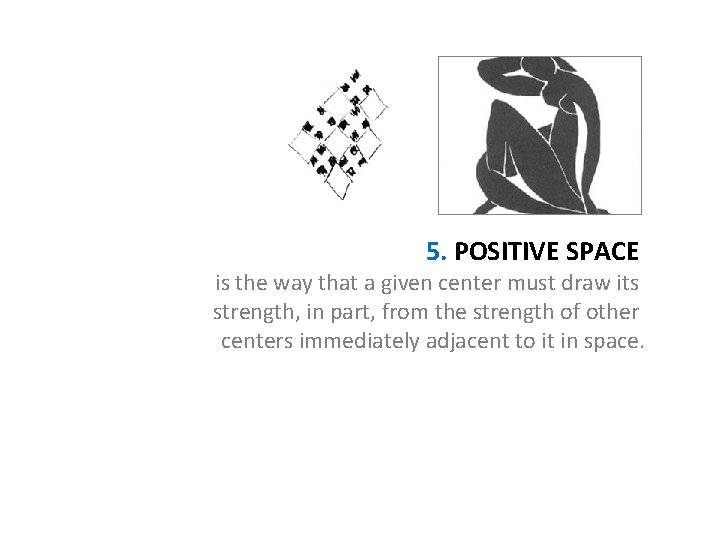
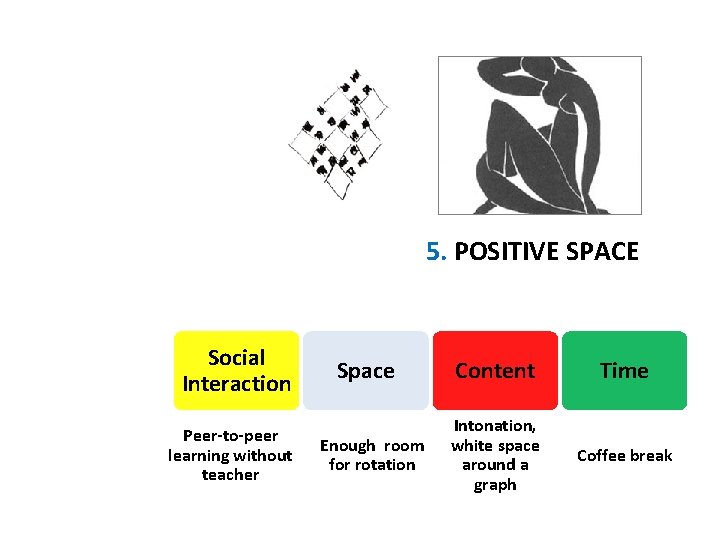
5. POSITIVE SPACE is the way that a given center must draw its strength, in part, from the strength of other centers immediately adjacent to it in space.
5. POSITIVE SPACE Social Interaction Peer-to-peer learning without teacher Space Enough room for rotation Content Time Intonation, white space around a graph Coffee break
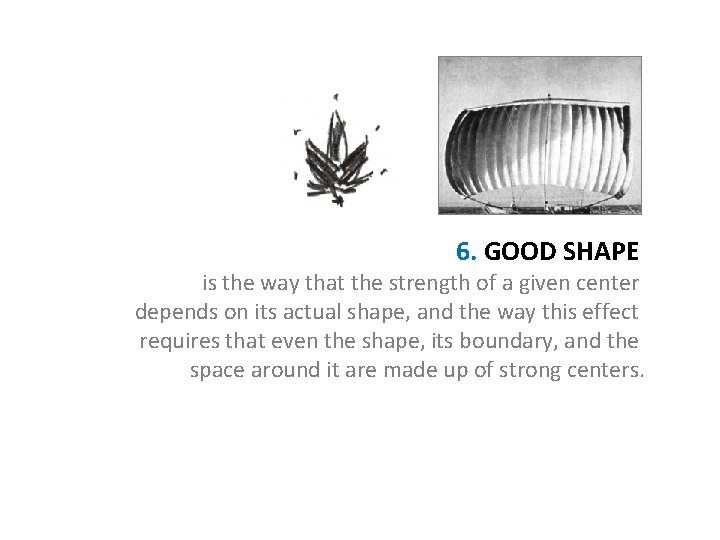
6. GOOD SHAPE is the way that the strength of a given center depends on its actual shape, and the way this effect requires that even the shape, its boundary, and the space around it are made up of strong centers.
6. GOOD SHAPE Social Interaction Same group size Space Content Time Sufficient room Same level of Adequate time for necessary difficulties and frame for each activities details round
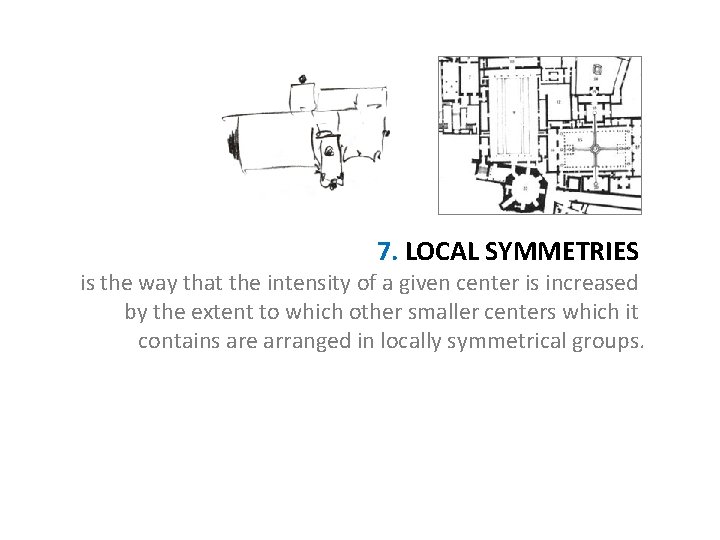
7. LOCAL SYMMETRIES is the way that the intensity of a given center is increased by the extent to which other smaller centers which it contains are arranged in locally symmetrical groups.
7. LOCAL SYMMETRIES Social Interaction Peer-to-peer work, twinning Space Inner/Outer circle Content Time 1 Poster for every group Every presentation same time frame
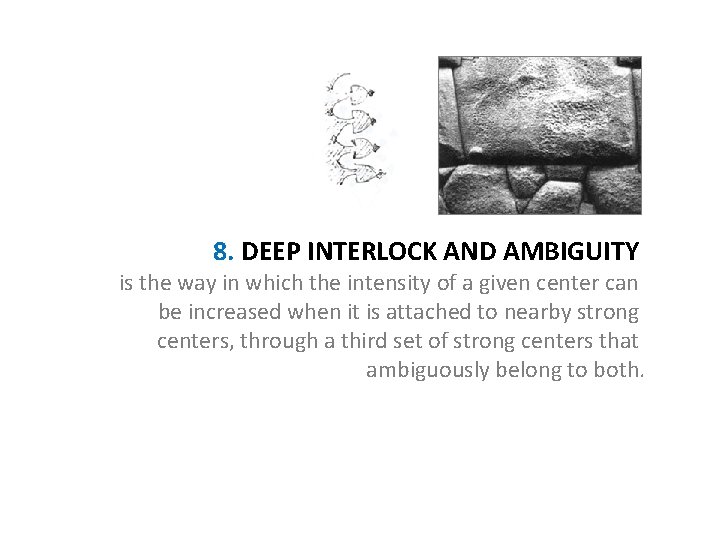
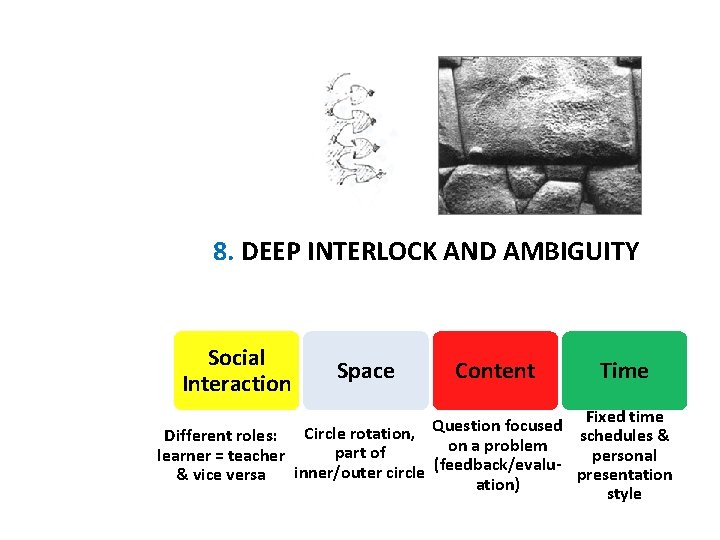
8. DEEP INTERLOCK AND AMBIGUITY is the way in which the intensity of a given center can be increased when it is attached to nearby strong centers, through a third set of strong centers that ambiguously belong to both.
8. DEEP INTERLOCK AND AMBIGUITY Social Interaction Space Content Time Fixed time Question focused Different roles: Circle rotation, schedules & on a problem part of learner = teacher personal (feedback/evaluinner/outer circle presentation & vice versa ation) style
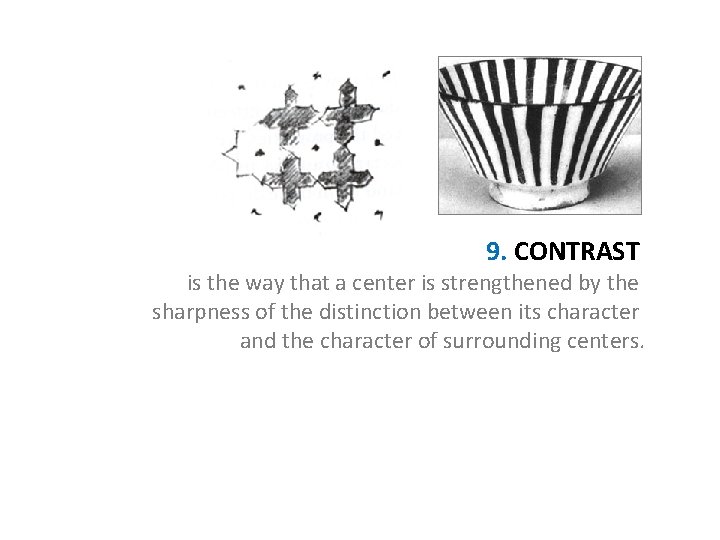
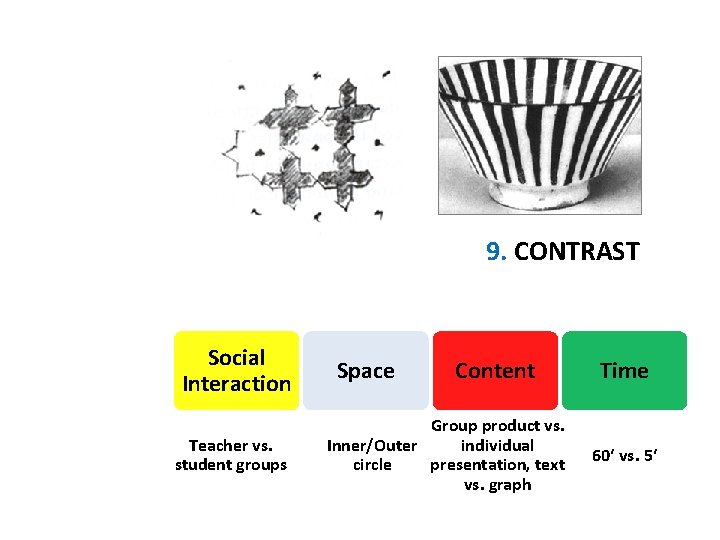
9. CONTRAST is the way that a center is strengthened by the sharpness of the distinction between its character and the character of surrounding centers.
9. CONTRAST Social Interaction Teacher vs. student groups Space Content Group product vs. Inner/Outer individual circle presentation, text vs. graph Time 60‘ vs. 5‘
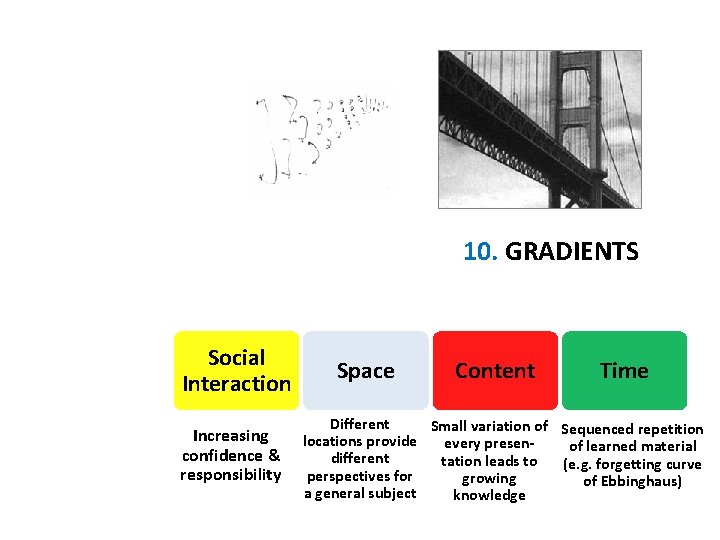
10. GRADIENTS is the way in which a center is strengthened by a graded series of different sized centers which then “point” to the new center and intensify its field effect.
10. GRADIENTS Social Interaction Increasing confidence & responsibility Space Content Time Different Small variation of Sequenced repetition locations provide every presenof learned material different tation leads to (e. g. forgetting curve perspectives for growing of Ebbinghaus) a general subject knowledge
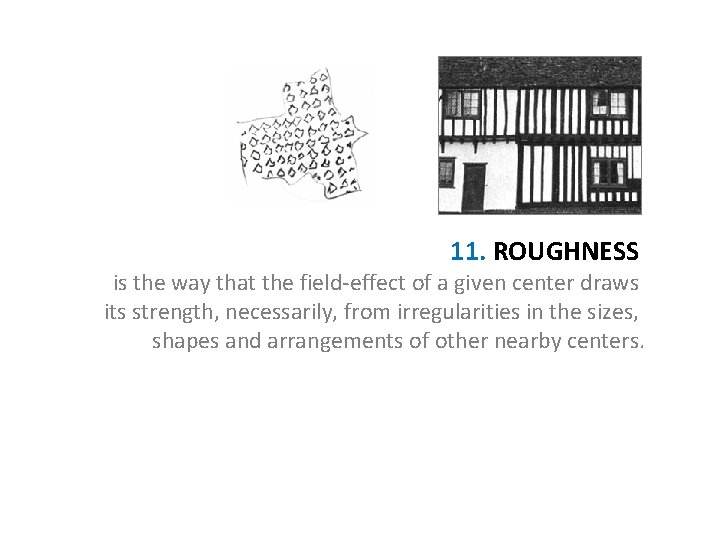
11. ROUGHNESS is the way that the field-effect of a given center draws its strength, necessarily, from irregularities in the sizes, shapes and arrangements of other nearby centers.
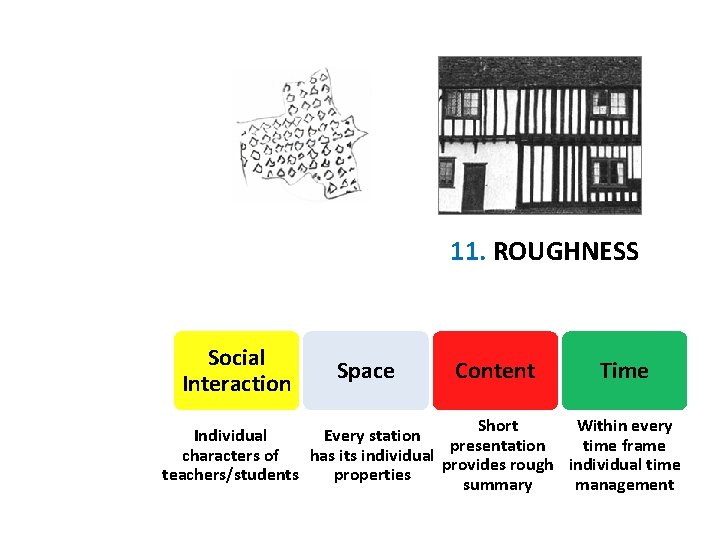
11. ROUGHNESS Social Interaction Space Content Time Short Within every Individual Every station presentation time frame characters of has its individual provides rough individual time teachers/students properties summary management
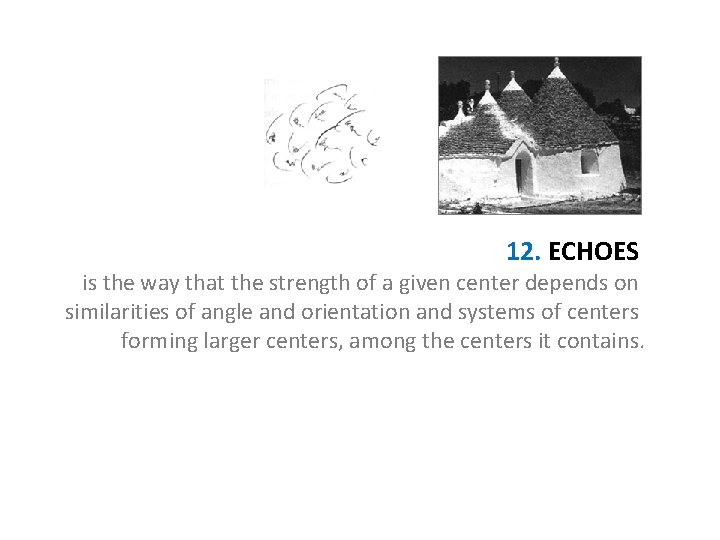
12. ECHOES is the way that the strength of a given center depends on similarities of angle and orientation and systems of centers forming larger centers, among the centers it contains.
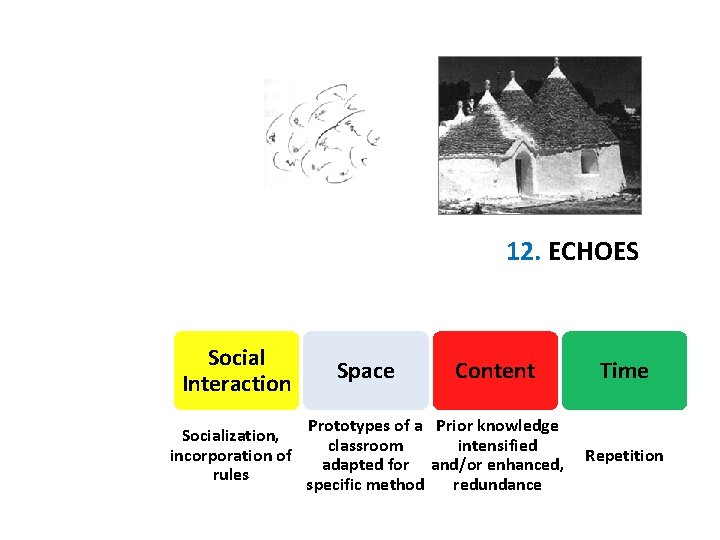
12. ECHOES Social Interaction Socialization, incorporation of rules Space Content Prototypes of a Prior knowledge classroom intensified adapted for and/or enhanced, specific method redundance Time Repetition
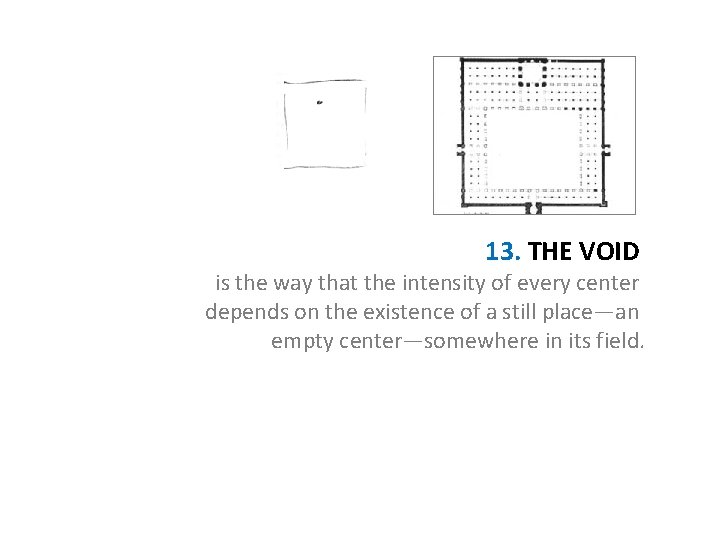
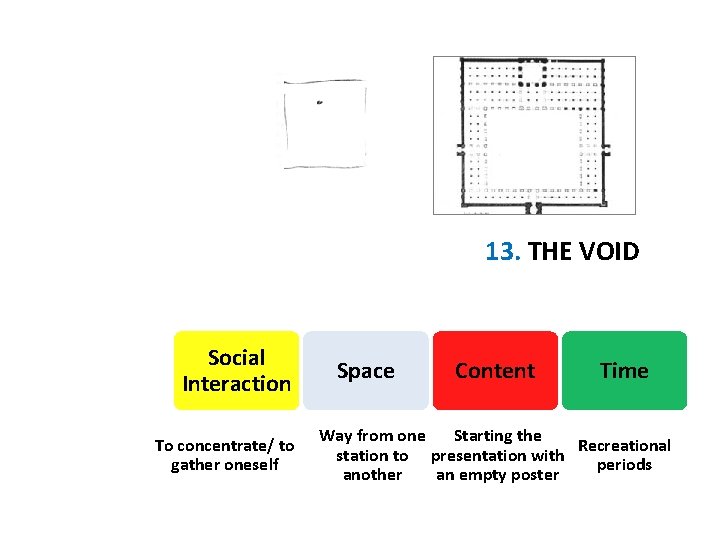
13. THE VOID is the way that the intensity of every center depends on the existence of a still place—an empty center—somewhere in its field.
13. THE VOID Social Interaction To concentrate/ to gather oneself Space Content Time Way from one Starting the Recreational station to presentation with periods another an empty poster
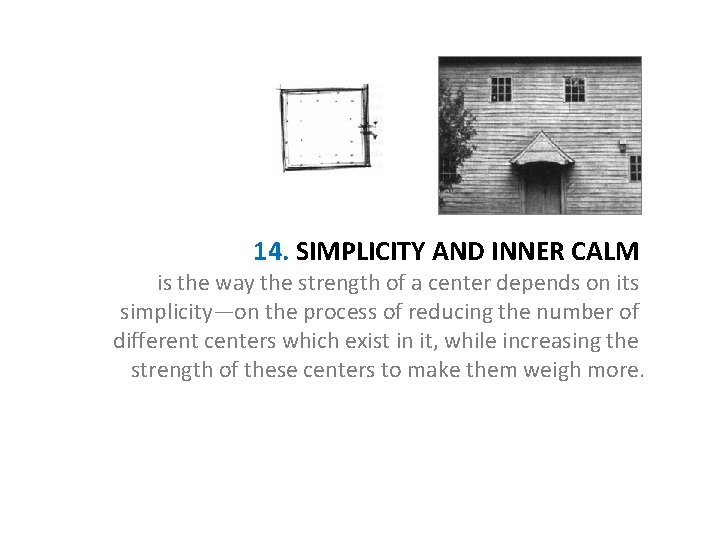
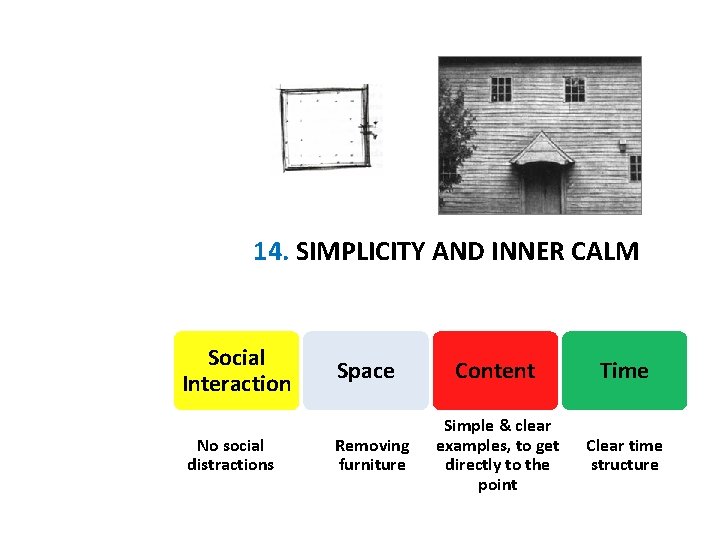
14. SIMPLICITY AND INNER CALM is the way the strength of a center depends on its simplicity—on the process of reducing the number of different centers which exist in it, while increasing the strength of these centers to make them weigh more.
14. SIMPLICITY AND INNER CALM Social Interaction No social distractions Space Removing furniture Content Time Simple & clear examples, to get directly to the point Clear time structure
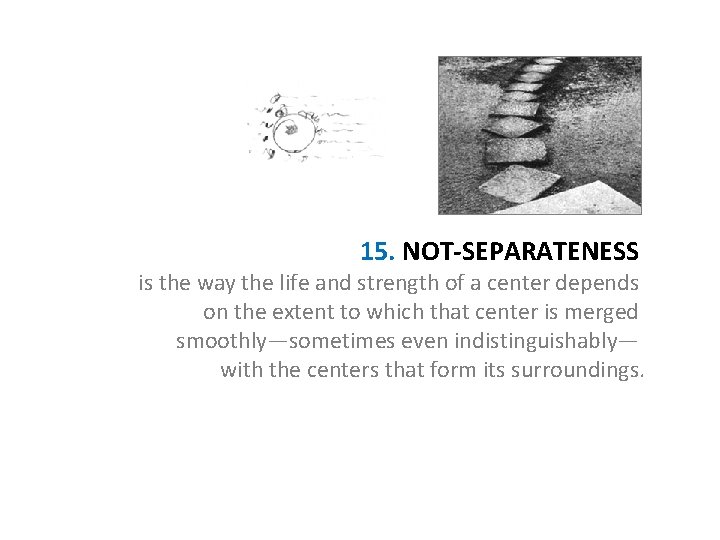
15. NOT-SEPARATENESS is the way the life and strength of a center depends on the extent to which that center is merged smoothly—sometimes even indistinguishably— with the centers that form its surroundings.
15. NOT-SEPARATENESS Social Interaction Awareness of being part of a group/a larger social system Space Content Classroom as a Embedded in a part of larger learning spatial structure objective (e. g. school) Time Scenario as a part of curricula
“The Timeless Way of Building” is an early, intentionally vague attempt to suggest the “Quality without a name” and “The Nature of Order” is a later, more refined attempt to not only name it but to describe its taxonomy. So talking about Pedagogical Pattern Language requires thinking about and describing its taxonomy too.
Playing with Alexander’s 15 properties forms the basis for a new educational taxonomy.
This slide set is licensed under a Creative Commons license: Thank you! peter. baumgartner@donau-uni. ac. at reinhard. bauer@donau-uni. ac. at http: //www. donau-uni. ac. at/imb http: //www. peter. baumgartner. name Twitter: @pbaumgartner | @rebauer | @imb_duk