
This power point is made available as an

This power point is made available as an educational resource or study aid for your use only. This presentation may not be duplicated for others and should not be redistributed or posted anywhere on the internet or on any personal websites. Your use of this resource is with the acknowledgment and acceptance of those restrictions.
Basal Ganglia MHD – Neuroanatomy Module February 2, 2016 Gregory Gruener, MD, MBA Vice Dean for Education, SSOM Professor & Associate Chair, Department of Neurology LUHS/Trinity Health and Catholic Health East
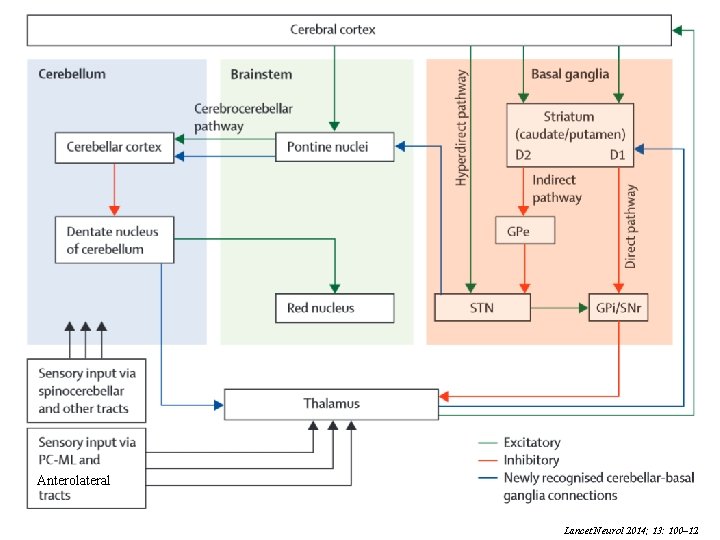
Anterolateral Lancet Neurol 2014; 13: 100– 12
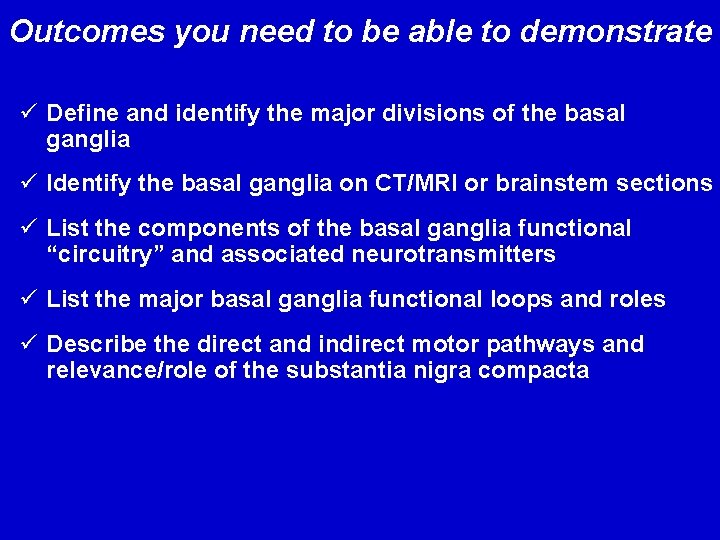
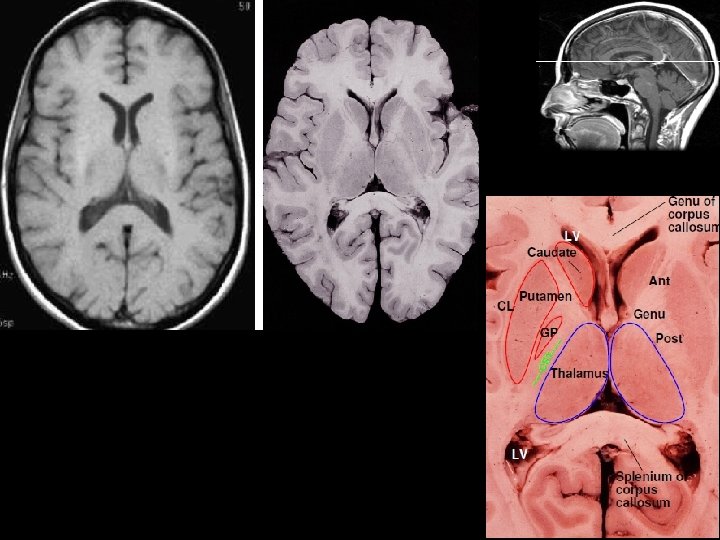
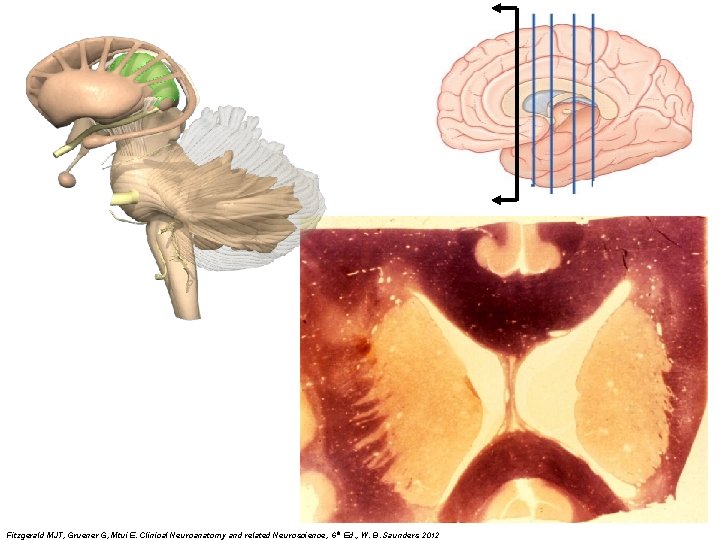
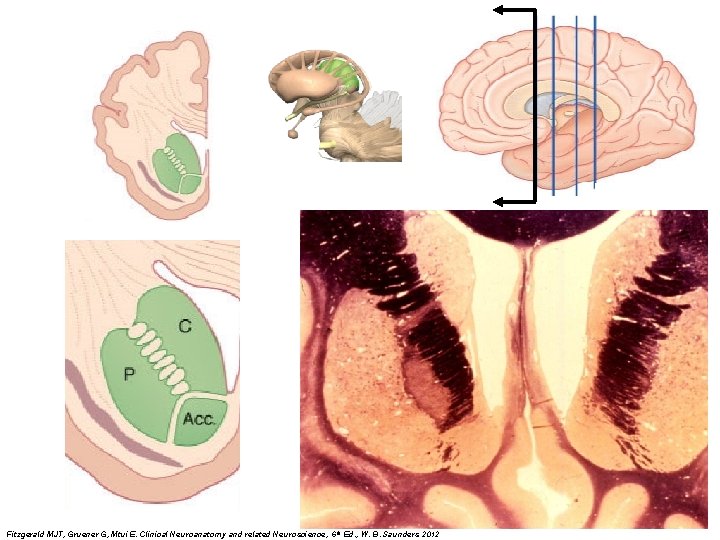
Outcomes you need to be able to demonstrate ü Define and identify the major divisions of the basal ganglia ü Identify the basal ganglia on CT/MRI or brainstem sections ü List the components of the basal ganglia functional “circuitry” and associated neurotransmitters ü List the major basal ganglia functional loops and roles ü Describe the direct and indirect motor pathways and relevance/role of the substantia nigra compacta
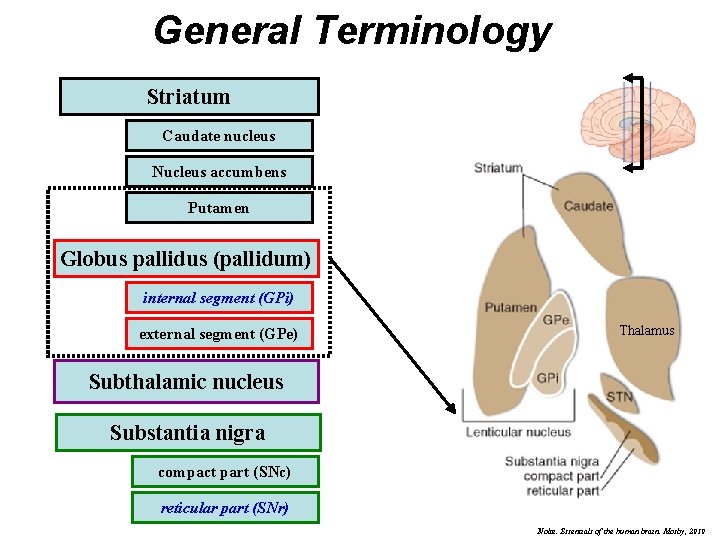
General Terminology Striatum Caudate nucleus Nucleus accumbens Putamen Globus pallidus (pallidum) internal segment (GPi) external segment (GPe) Thalamus Subthalamic nucleus Substantia nigra compact part (SNc) reticular part (SNr) Nolte. Essentials of the human brain. Mosby, 2010
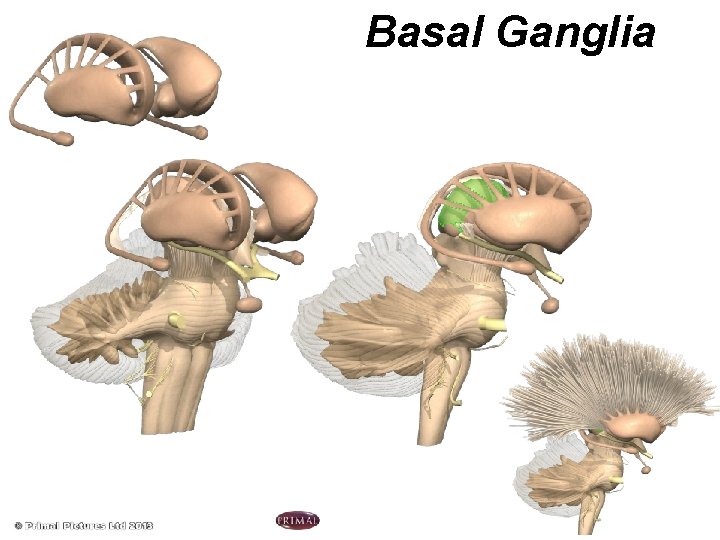
Basal Ganglia
Fitzgerald MJT, Gruener G, Mtui E. Clinical Neuroanatomy and related Neuroscience, 6 th Ed. , W. B. Saunders 2012
Fitzgerald MJT, Gruener G, Mtui E. Clinical Neuroanatomy and related Neuroscience, 6 th Ed. , W. B. Saunders 2012
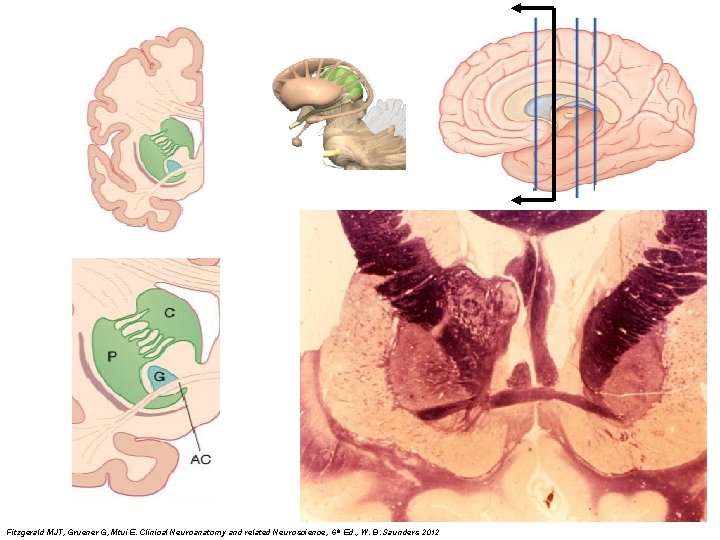
Fitzgerald MJT, Gruener G, Mtui E. Clinical Neuroanatomy and related Neuroscience, 6 th Ed. , W. B. Saunders 2012
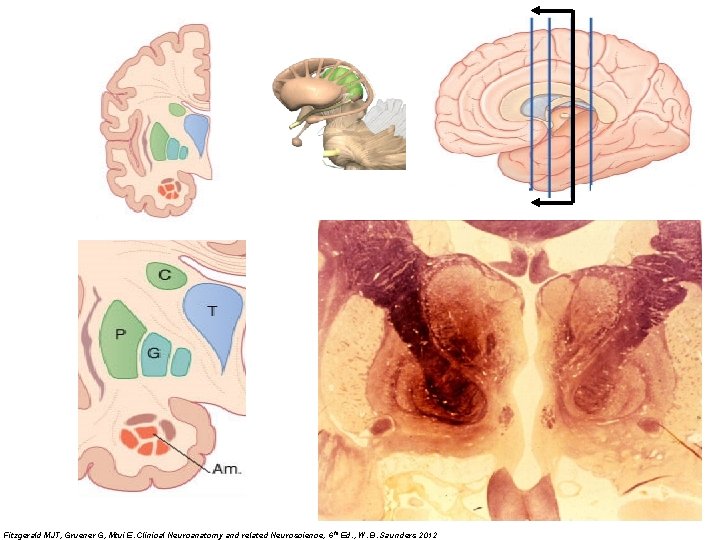
Fitzgerald MJT, Gruener G, Mtui E. Clinical Neuroanatomy and related Neuroscience, 6 th Ed. , W. B. Saunders 2012
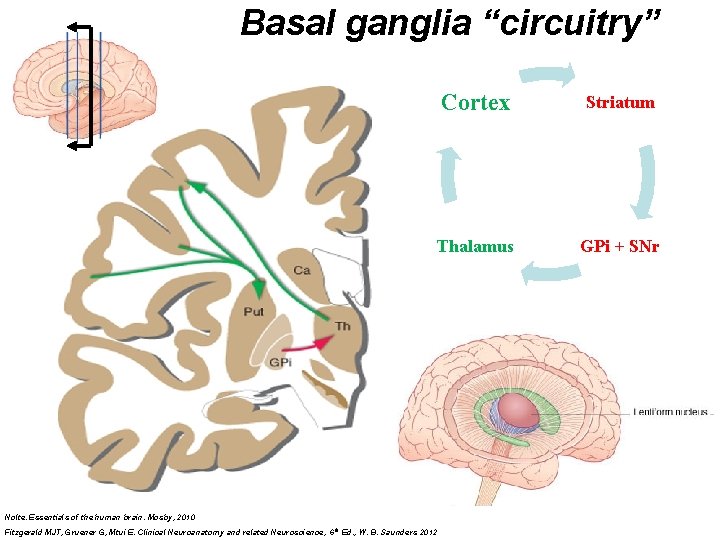
Basal ganglia “circuitry” Cortex Striatum Thalamus GPi + SNr Nolte. Essentials of the human brain. Mosby, 2010 Fitzgerald MJT, Gruener G, Mtui E. Clinical Neuroanatomy and related Neuroscience, 6 th Ed. , W. B. Saunders 2012
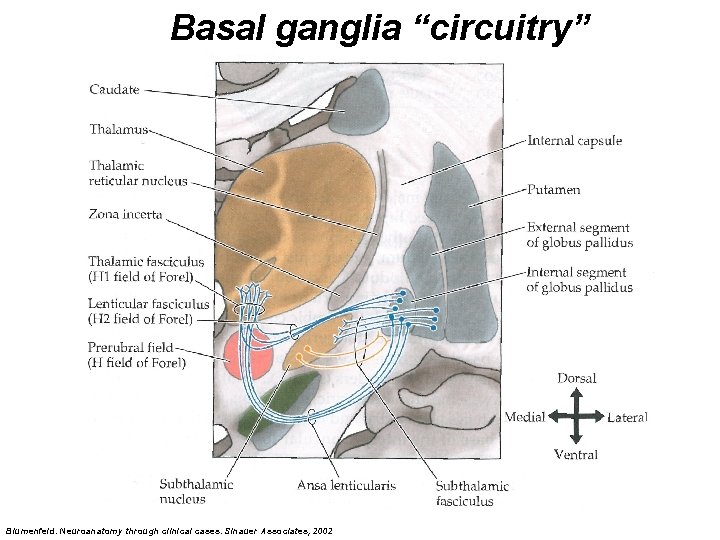
Basal ganglia “circuitry” Blumenfeld. Neuroanatomy through clinical cases. Sinauer Associates, 2002
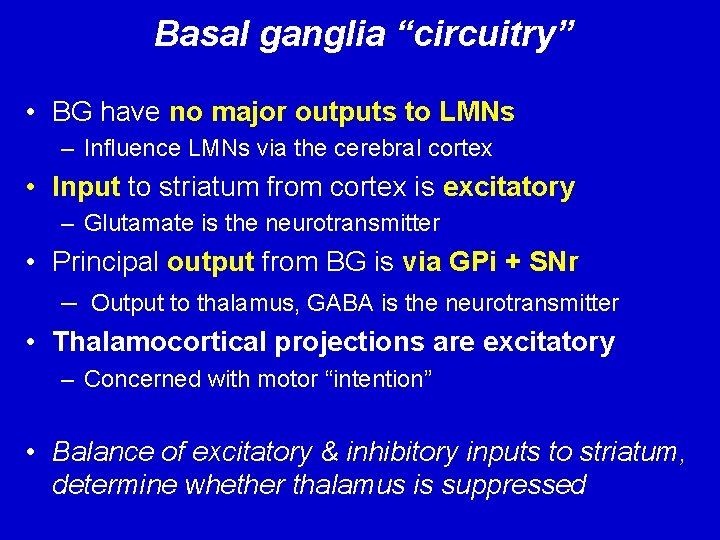
Basal ganglia “circuitry” • BG have no major outputs to LMNs – Influence LMNs via the cerebral cortex • Input to striatum from cortex is excitatory – Glutamate is the neurotransmitter • Principal output from BG is via GPi + SNr – Output to thalamus, GABA is the neurotransmitter • Thalamocortical projections are excitatory – Concerned with motor “intention” • Balance of excitatory & inhibitory inputs to striatum, determine whether thalamus is suppressed
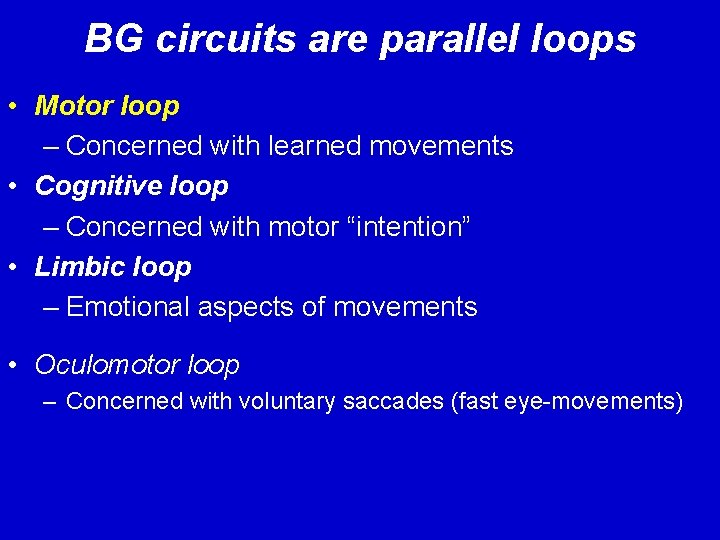
BG circuits are parallel loops • Motor loop – Concerned with learned movements • Cognitive loop – Concerned with motor “intention” • Limbic loop – Emotional aspects of movements • Oculomotor loop – Concerned with voluntary saccades (fast eye-movements)
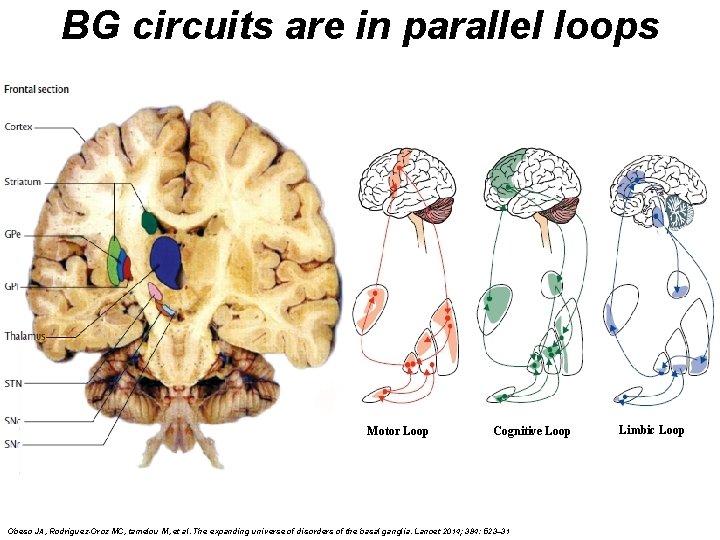
BG circuits are in parallel loops Motor Loop Cognitive Loop Obeso JA, Rodriguez-Oroz MC, tamelou M, et al. The expanding universe of disorders of the basal ganglia. Lancet 2014; 384: 523– 31 Limbic Loop
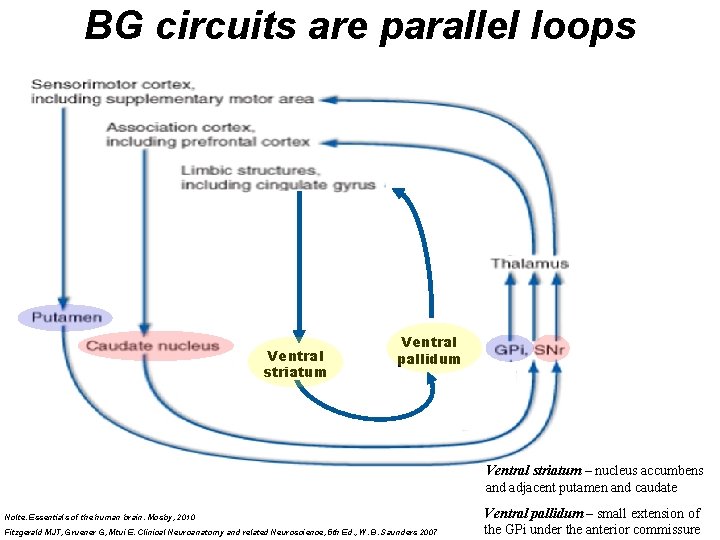
BG circuits are parallel loops Ventral striatum Ventral pallidum Ventral striatum – nucleus accumbens and adjacent putamen and caudate Nolte. Essentials of the human brain. Mosby, 2010 Fitzgerald MJT, Gruener G, Mtui E. Clinical Neuroanatomy and related Neuroscience, 5 th Ed. , W. B. Saunders 2007 Ventral pallidum – small extension of the GPi under the anterior commissure
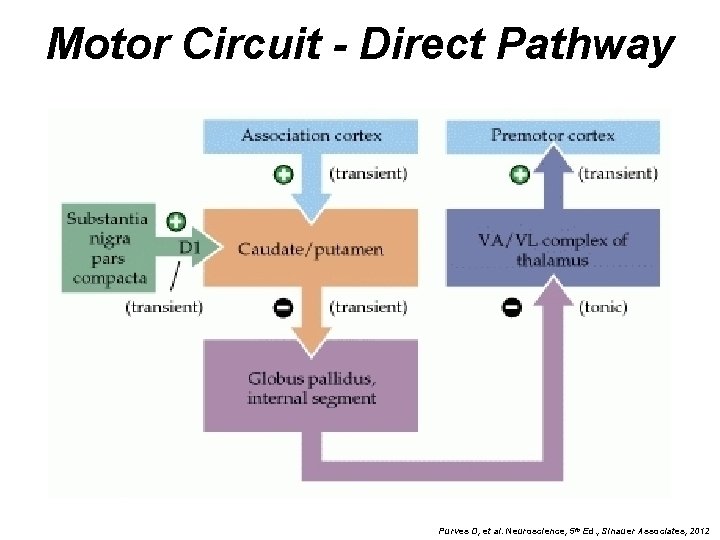
Motor Circuit - Direct Pathway Purves D, et al. Neuroscience, 5 th Ed. , Sinauer Associates, 2012
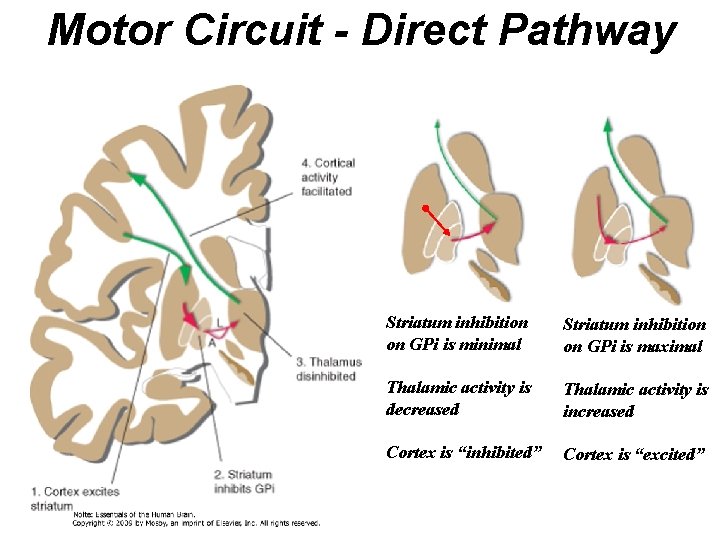
Motor Circuit - Direct Pathway Striatum inhibition on GPi is minimal Striatum inhibition on GPi is maximal Thalamic activity is decreased Thalamic activity is increased Cortex is “inhibited” Cortex is “excited”
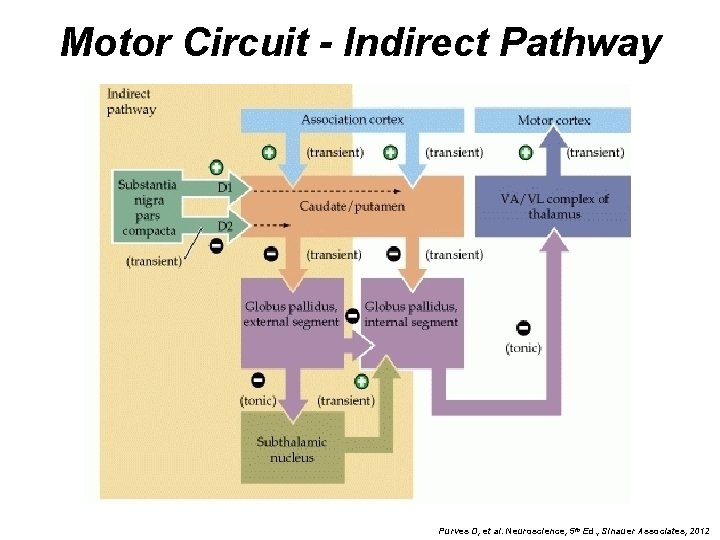
Motor Circuit - Indirect Pathway Purves D, et al. Neuroscience, 5 th Ed. , Sinauer Associates, 2012
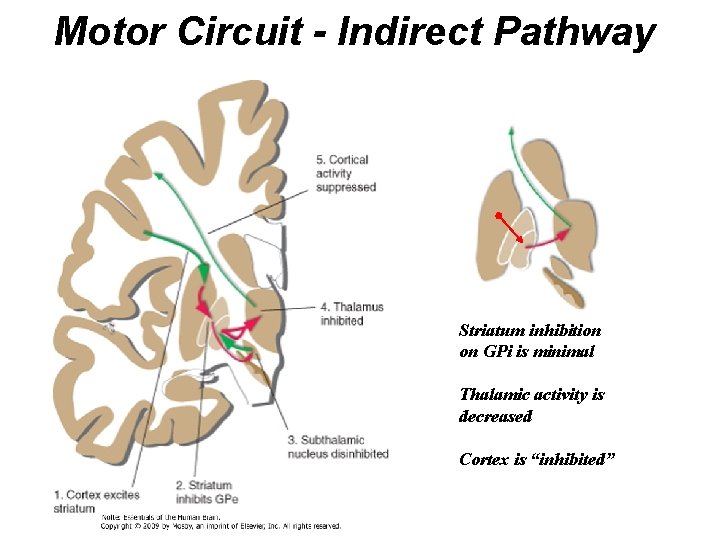
Motor Circuit - Indirect Pathway Striatum inhibition on GPi is minimal Thalamic activity is decreased Cortex is “inhibited”
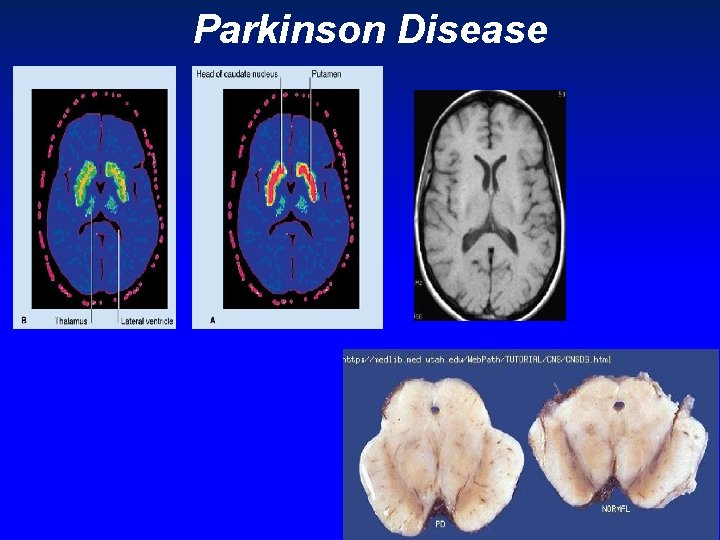
Parkinson Disease
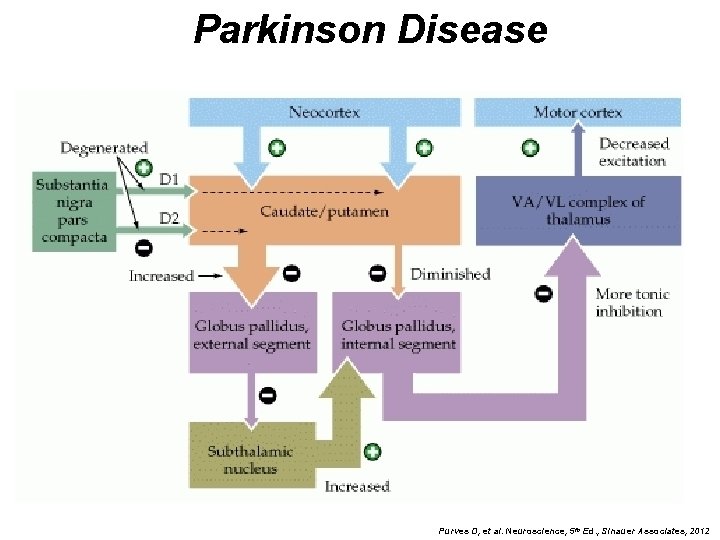
Parkinson Disease Purves D, et al. Neuroscience, 5 th Ed. , Sinauer Associates, 2012
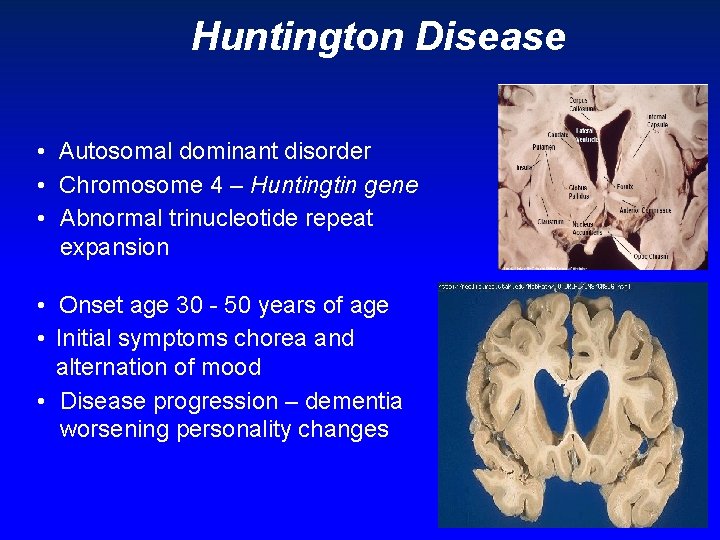
Huntington Disease • Autosomal dominant disorder • Chromosome 4 – Huntingtin gene • Abnormal trinucleotide repeat expansion • Onset age 30 - 50 years of age • Initial symptoms chorea and alternation of mood • Disease progression – dementia worsening personality changes
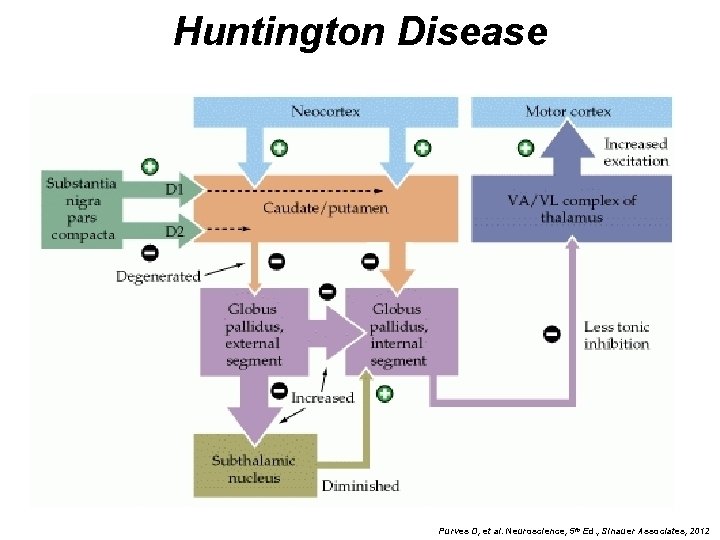
Huntington Disease Purves D, et al. Neuroscience, 5 th Ed. , Sinauer Associates, 2012
- Slides: 25