
This map shows Global Population Distribution Maps can
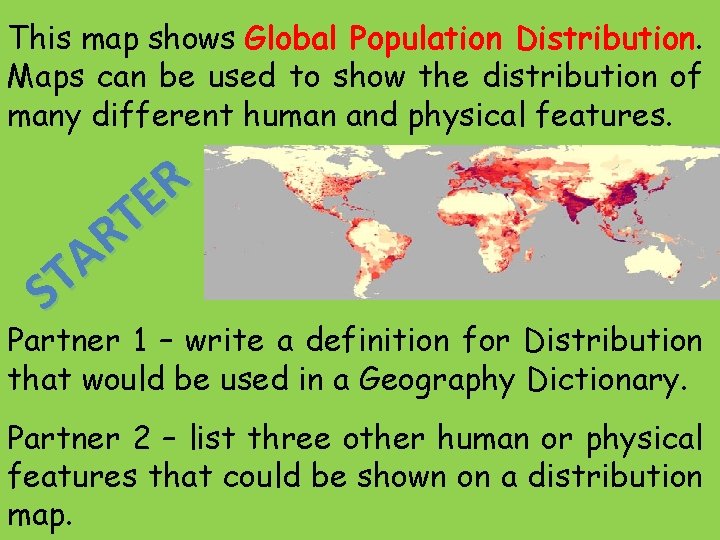
This map shows Global Population Distribution. Maps can be used to show the distribution of many different human and physical features. R E T R A T S Partner 1 – write a definition for Distribution that would be used in a Geography Dictionary. Partner 2 – list three other human or physical features that could be shown on a distribution map.
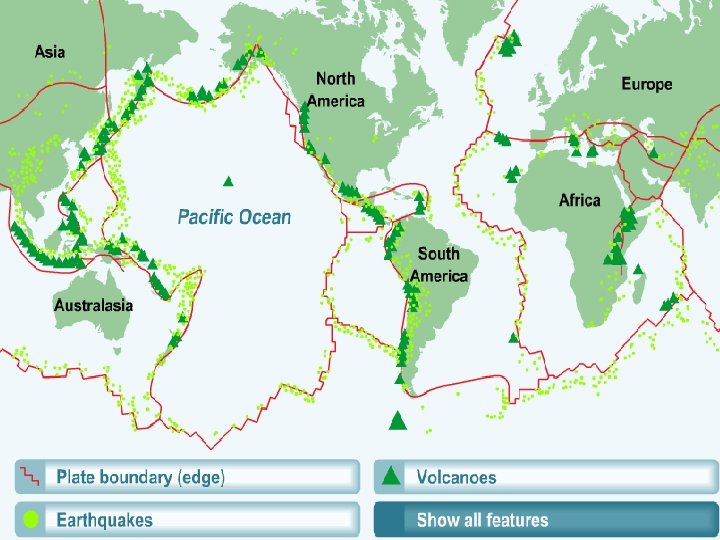
E V Assess each other and I T S C R identify opportunities E E L F RN E and achievements. R EA L Is there a pattern of the World distribution of Earthquakes and Volcanoes? LEARNING OBJECTIVE To be able to understand information shown on maps.
LEARNING OUTCOMES 1) To know how to describe patterns in detail. (Grade C) 2) To be able to explain patterns with links to evidence. (Grade B) 3) Accurately use a range of evidence to answer GCSE questions. (Grade A-A*)
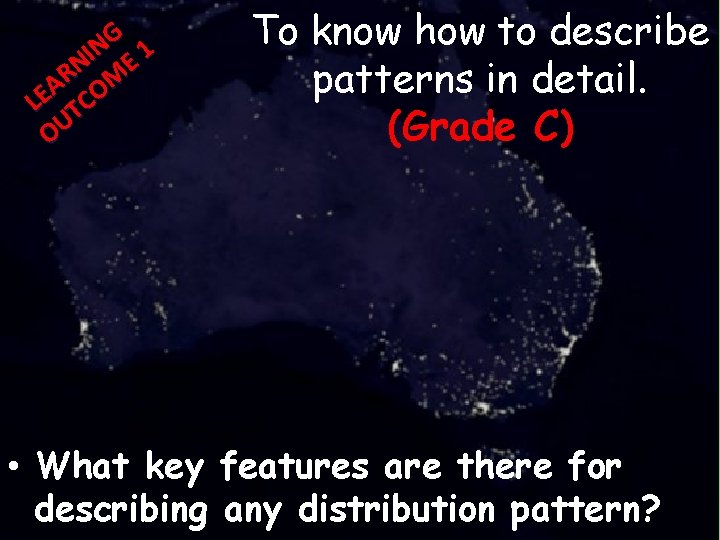
G N 1 I N E R M A O LE TC OU To know how to describe patterns in detail. (Grade C) • What key features are there for describing any distribution pattern?
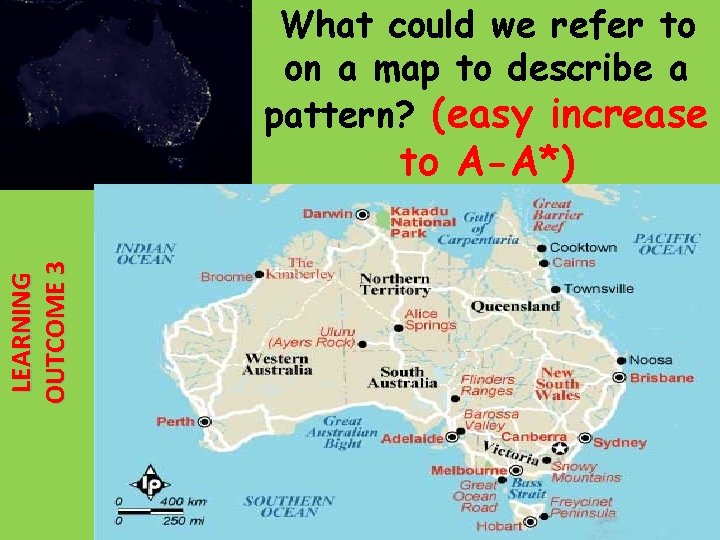
What could we refer to on a map to describe a pattern? (easy increase LEARNING OUTCOME 3 to A-A*)
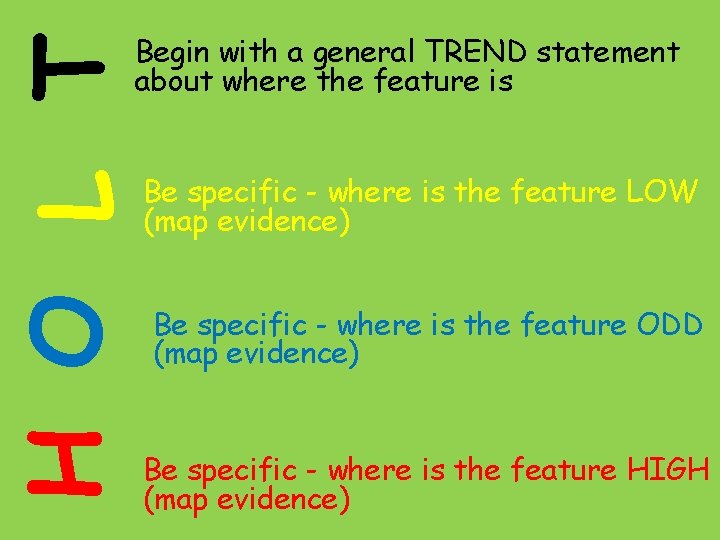
H O L T Begin with a general TREND statement about where the feature is Be specific - where is the feature LOW (map evidence) Be specific - where is the feature ODD (map evidence) Be specific - where is the feature HIGH (map evidence)
G N 2 I E N R M A O E L TC U O The explanation is all to do with position and movement of t_____ p____, relative to each other. To be able to explain patterns with links to evidence. (Grade B) Hand exercise.
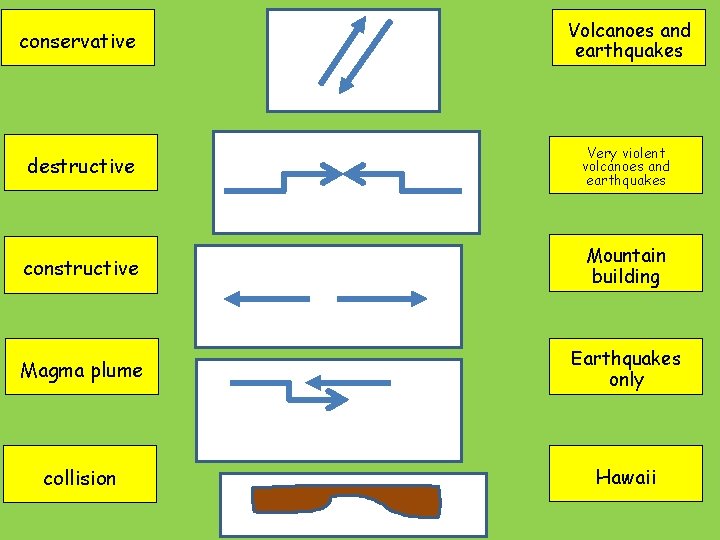
conservative Volcanoes and earthquakes destructive Very violent volcanoes and earthquakes constructive Mountain building Magma plume Earthquakes only collision Hawaii
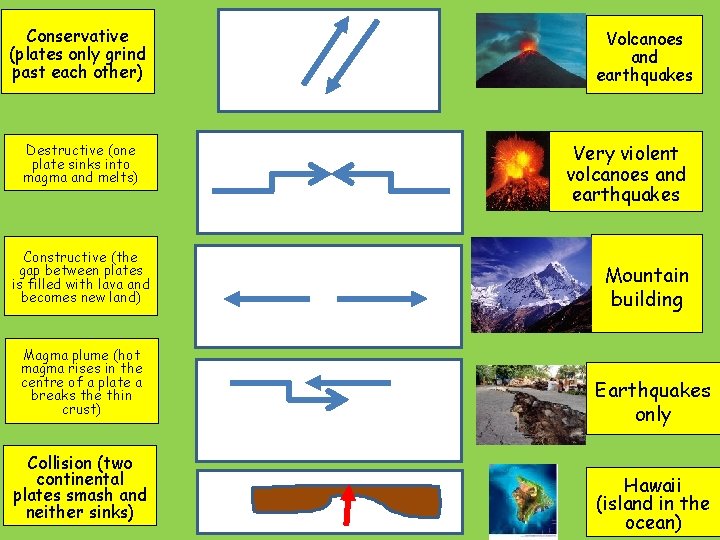
Conservative (plates only grind past each other) Destructive (one plate sinks into magma and melts) Constructive (the gap between plates is filled with lava and becomes new land) Magma plume (hot magma rises in the centre of a plate a breaks the thin crust) Collision (two continental plates smash and neither sinks) Volcanoes and earthquakes Very violent volcanoes and earthquakes Mountain building Earthquakes only Hawaii (island in the ocean)
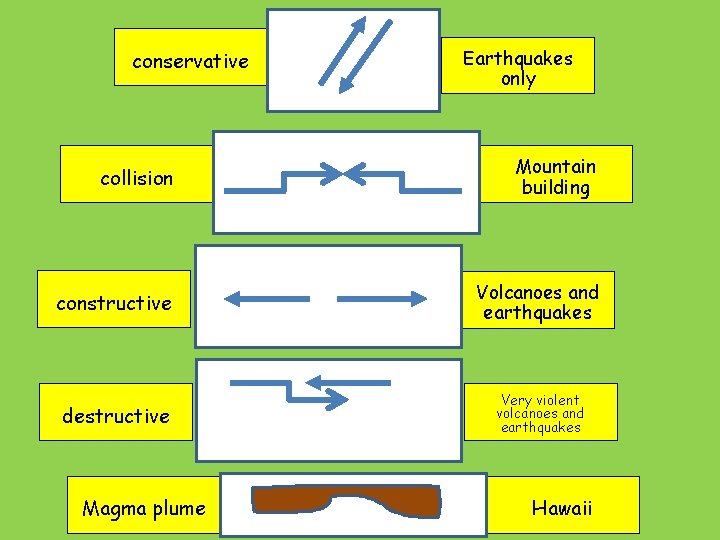
conservative Earthquakes only collision Mountain building constructive Volcanoes and earthquakes destructive Very violent volcanoes and earthquakes Magma plume Hawaii
• Complete the exam questions NG NI E AR OM LE TC OU 3 Accurately use a range of evidence to answer GCSE questions. (Grade A-A*)
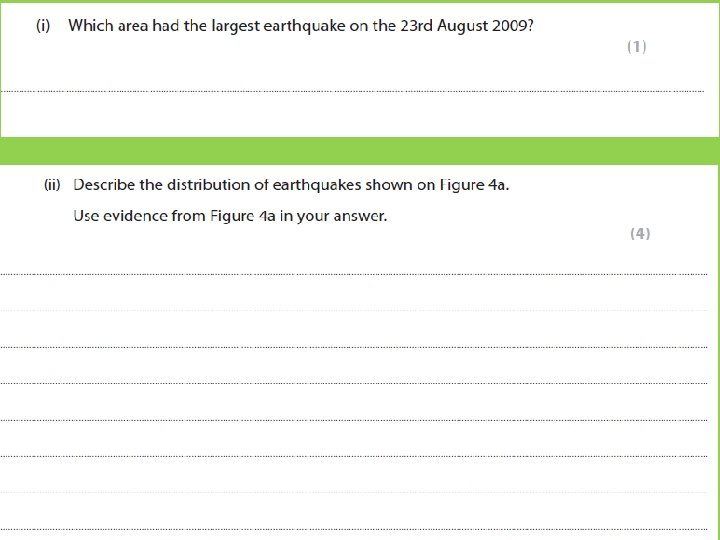
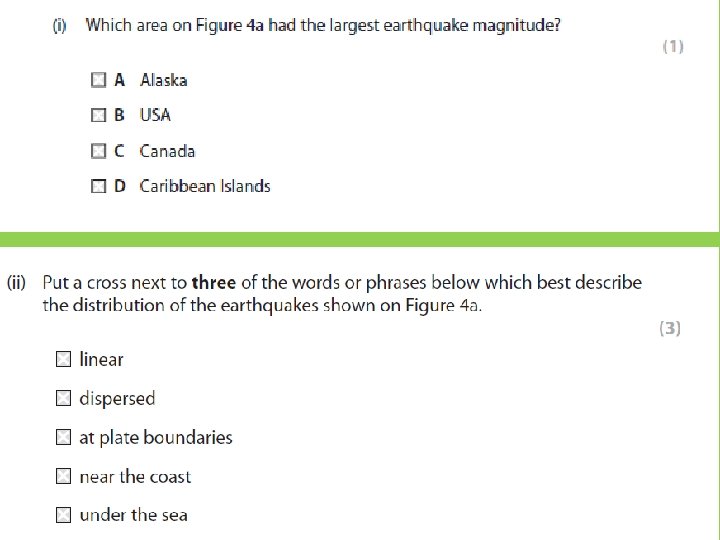
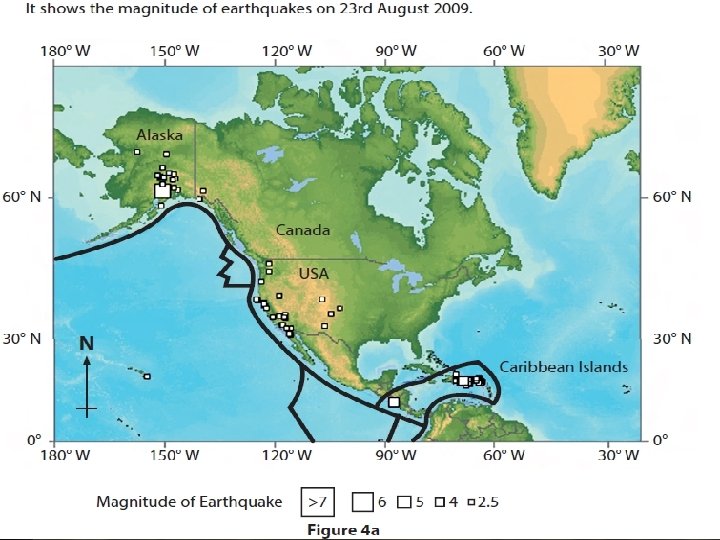
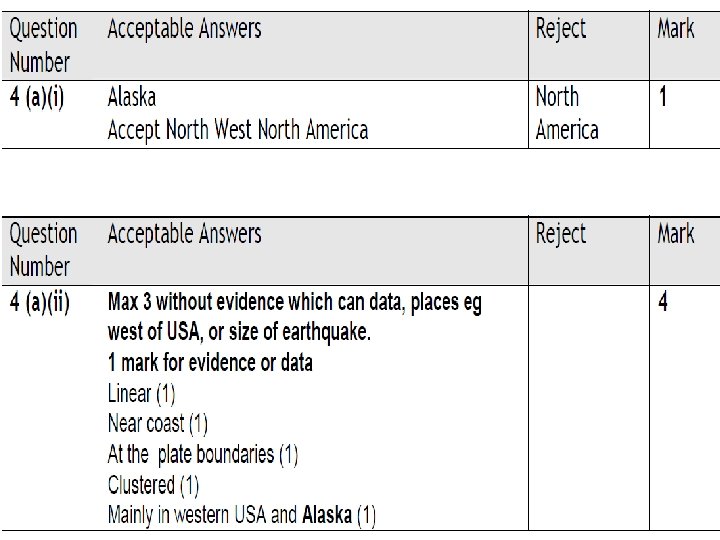
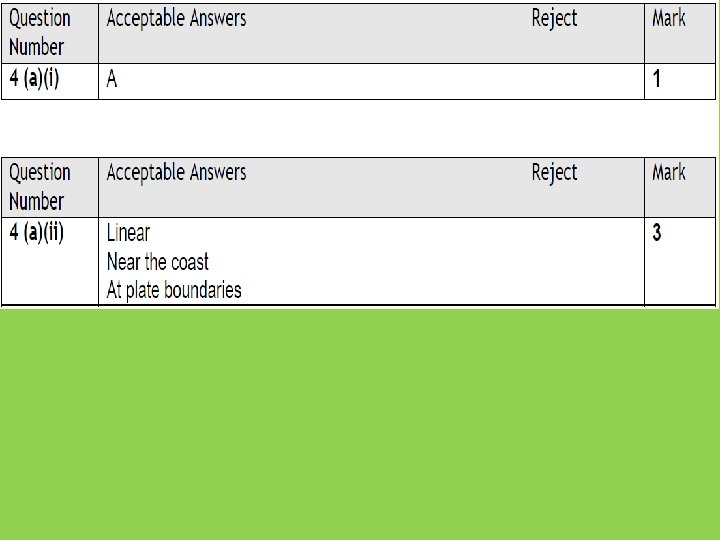
Y R A N E L P Mark the exam question using the following mark schemes.
E M K O H OR W 1 Set your own homework to review any areas for development from today’s lesson. 2 Tell a non-geographer about one of your key learning strengths from today’s lesson.
- Slides: 19