
This is Your Brain This Is How It
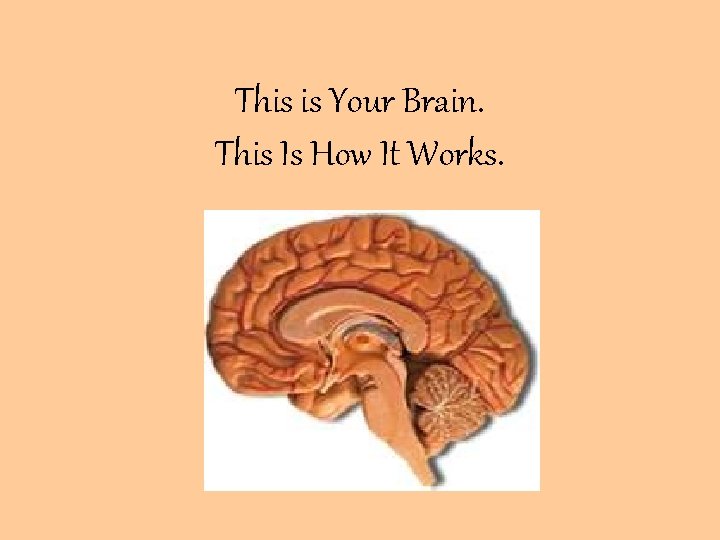
This is Your Brain. This Is How It Works. •
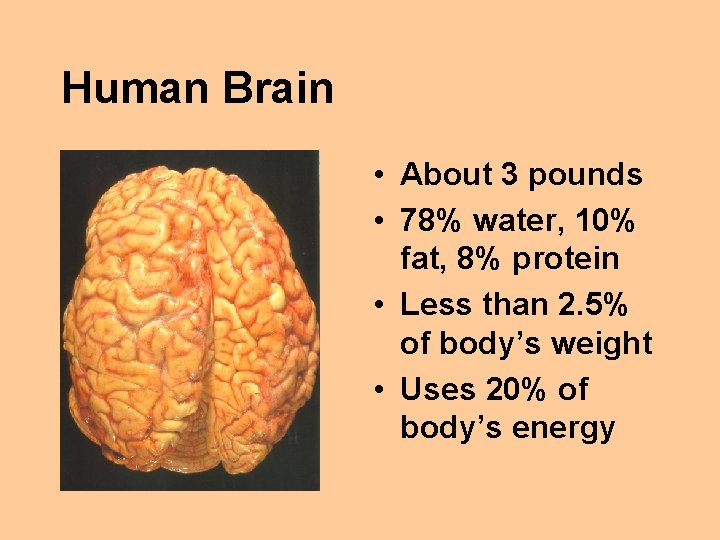
Human Brain • About 3 pounds • 78% water, 10% fat, 8% protein • Less than 2. 5% of body’s weight • Uses 20% of body’s energy
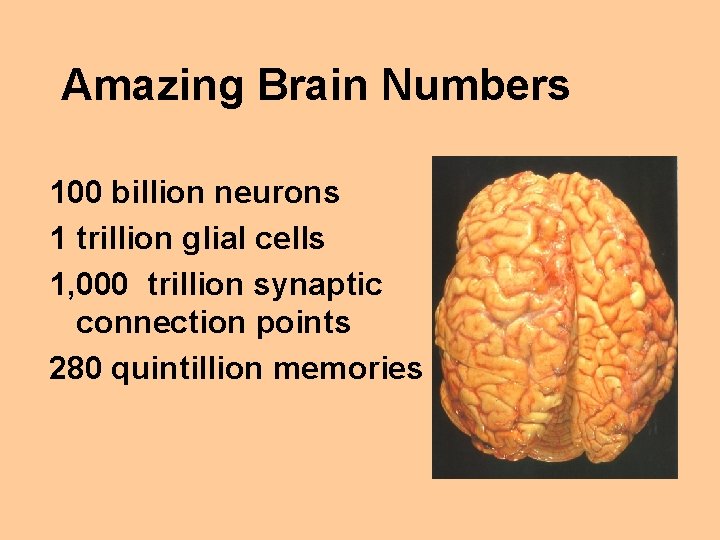
Amazing Brain Numbers 100 billion neurons 1 trillion glial cells 1, 000 trillion synaptic connection points 280 quintillion memories
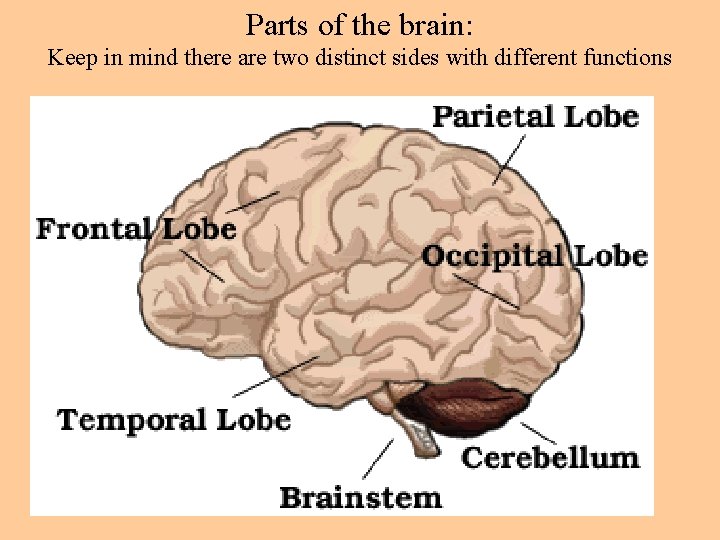
Parts of the brain: Keep in mind there are two distinct sides with different functions
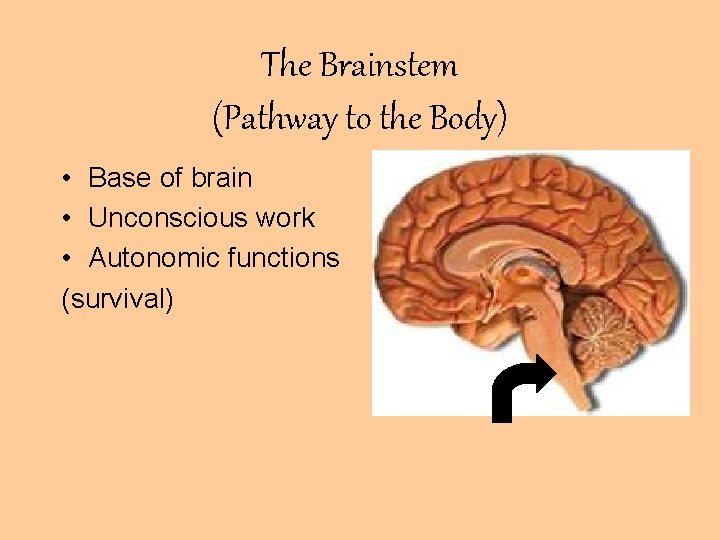
The Brainstem (Pathway to the Body) • Base of brain • Unconscious work • Autonomic functions (survival)
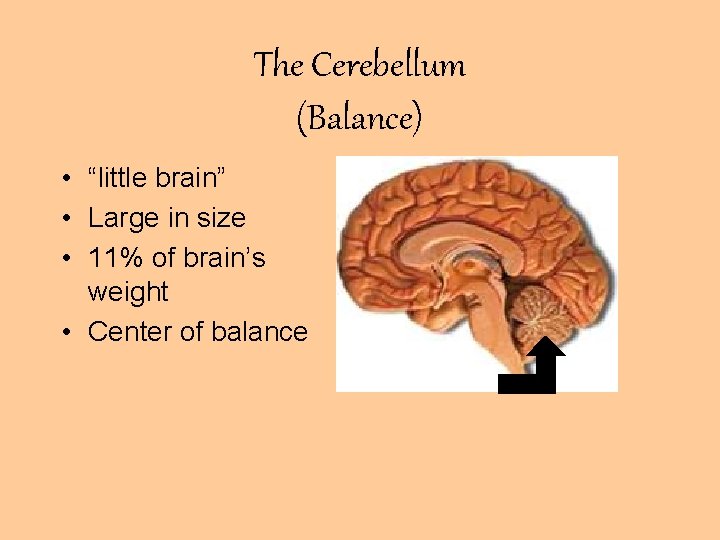
The Cerebellum (Balance) • “little brain” • Large in size • 11% of brain’s weight • Center of balance
The brain has 4 areas called lobes • Frontal • Parietal • Temporal • Occiptal
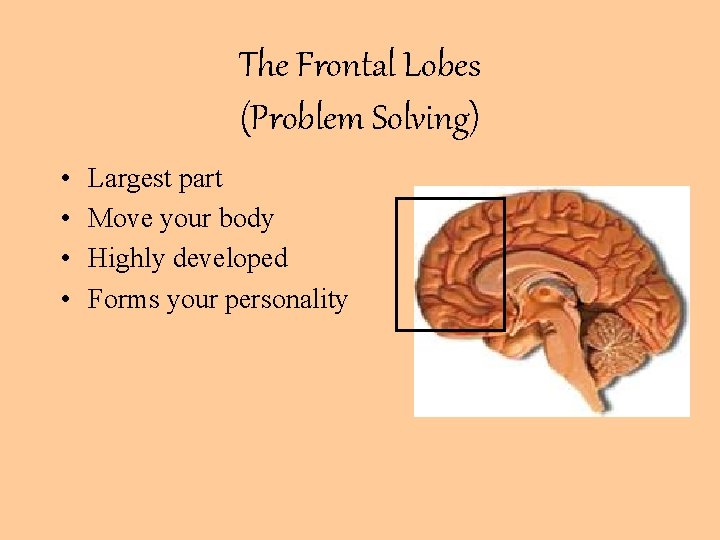
The Frontal Lobes (Problem Solving) • • Largest part Move your body Highly developed Forms your personality
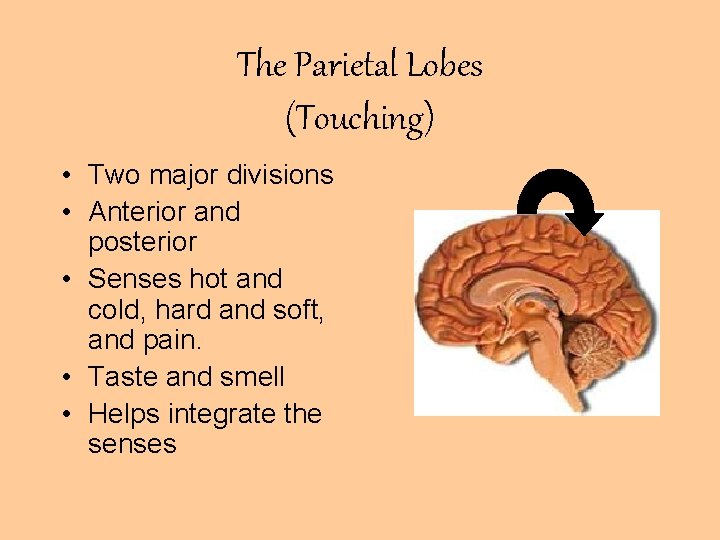
The Parietal Lobes (Touching) • Two major divisions • Anterior and posterior • Senses hot and cold, hard and soft, and pain. • Taste and smell • Helps integrate the senses
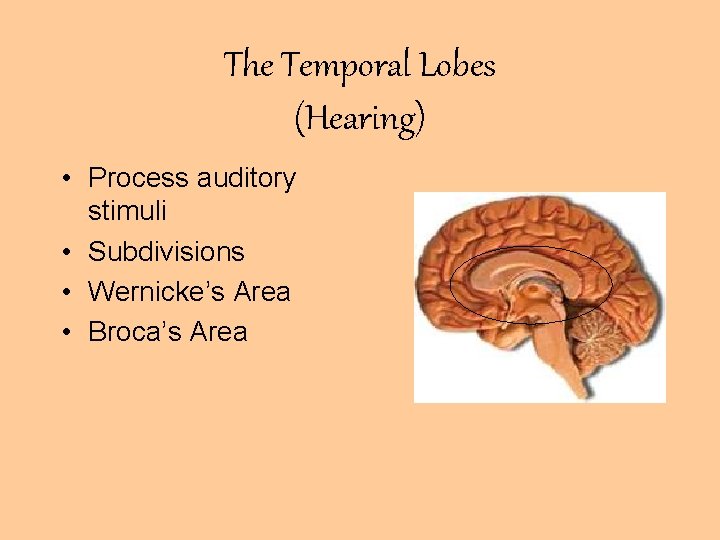
The Temporal Lobes (Hearing) • Process auditory stimuli • Subdivisions • Wernicke’s Area • Broca’s Area
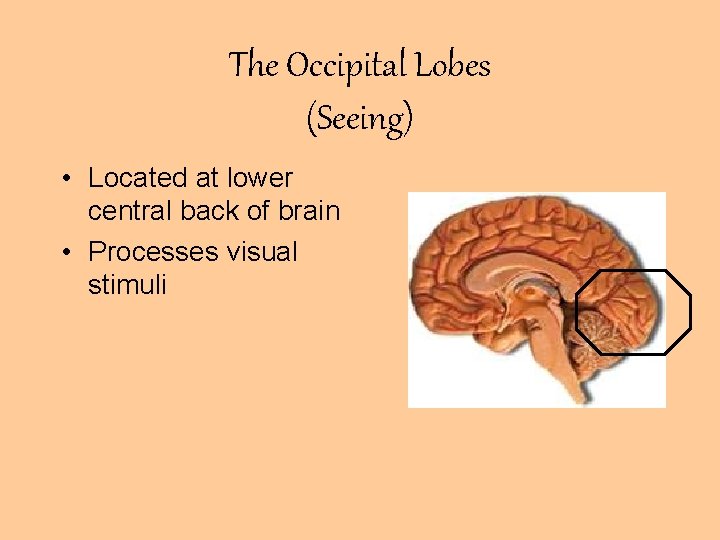
The Occipital Lobes (Seeing) • Located at lower central back of brain • Processes visual stimuli
Taking sides…. two sides that is! • Two sides or hemispheres of the brain: LEFT and RIGHT • We have two cerebral hemispheres connected by the corpus callosum. This is a bundle of nerves that allows each side of the brain to communicate with each other. • Each side of the brain processes things differently. • It is an outdated assumption that “artsy” type people are right-brained.
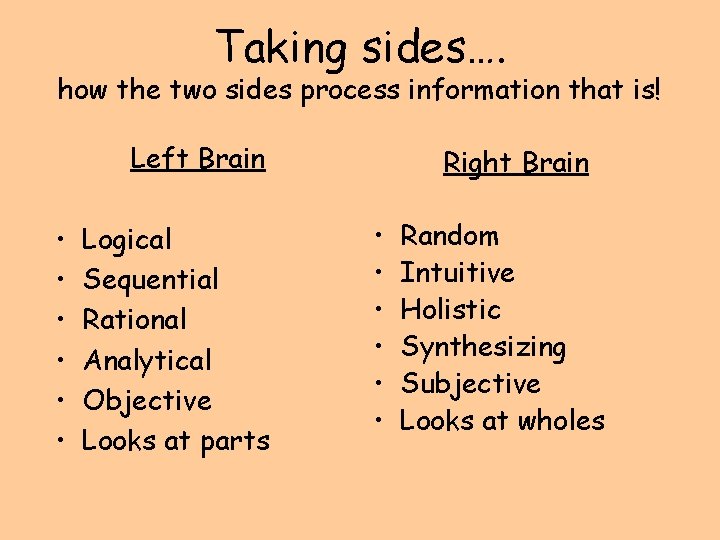
Taking sides…. how the two sides process information that is! Left Brain • • • Logical Sequential Rational Analytical Objective Looks at parts Right Brain • • • Random Intuitive Holistic Synthesizing Subjective Looks at wholes
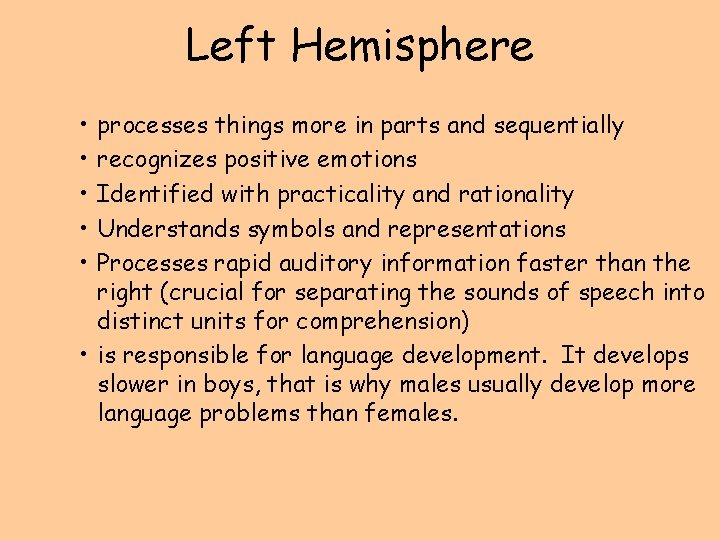
Left Hemisphere • • • processes things more in parts and sequentially recognizes positive emotions Identified with practicality and rationality Understands symbols and representations Processes rapid auditory information faster than the right (crucial for separating the sounds of speech into distinct units for comprehension) • is responsible for language development. It develops slower in boys, that is why males usually develop more language problems than females.
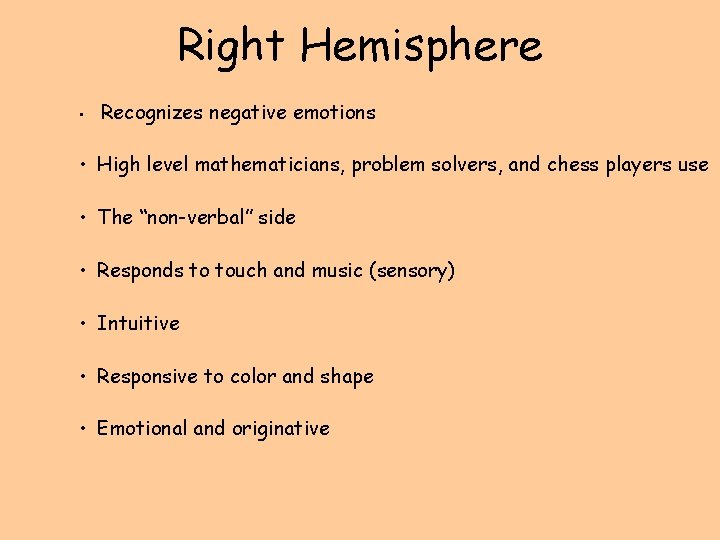
Right Hemisphere • Recognizes negative emotions • High level mathematicians, problem solvers, and chess players use • The “non-verbal” side • Responds to touch and music (sensory) • Intuitive • Responsive to color and shape • Emotional and originative
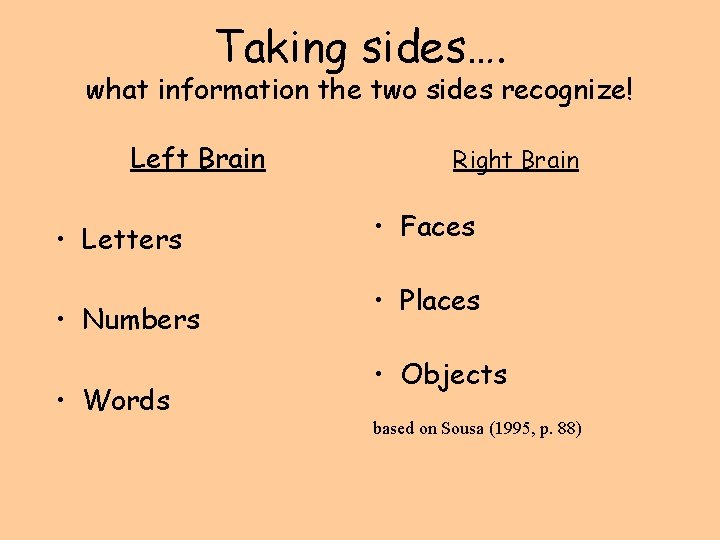
Taking sides…. what information the two sides recognize! Left Brain • Letters • Numbers • Words Right Brain • Faces • Places • Objects based on Sousa (1995, p. 88)

Memory Processes
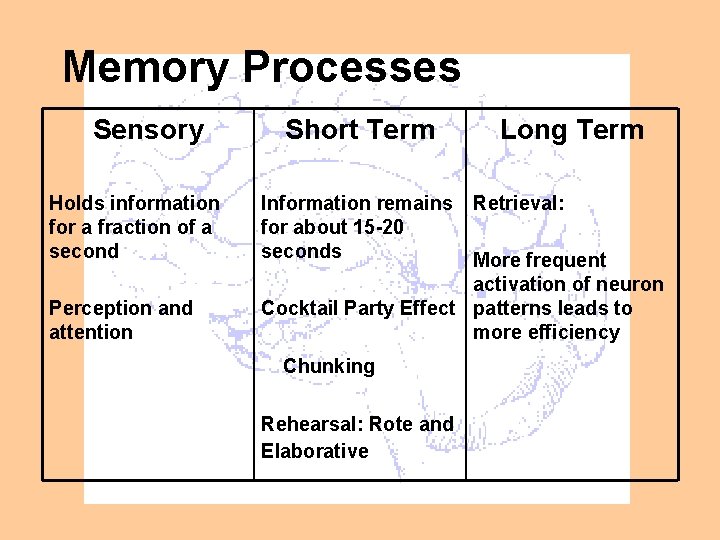
Memory Processes Sensory Holds information for a fraction of a second Perception and attention Short Term Long Term Information remains Retrieval: for about 15 -20 seconds More frequent activation of neuron Cocktail Party Effect patterns leads to more efficiency Chunking Rehearsal: Rote and Elaborative
Modern Myths… • • People only use 10% of their brain People are either right-brained or leftbrained which explains their natural abilities Everything people have ever experienced is stored somewhere in their brain At birth people have all the neurons that they will ever have Adapted from Pat Wolfe, 2001
Effective Instruction Research • Teach for understanding (D. Perkins) • Understanding by design & uncoverage (G. Wiggins and J. Tighe) • Non-threatening, emotionally safe learning environments (R. Sylwester) • Integration of curriculum (J. Beane, H. H. Jacobs, S. Kovalik) • Multiple intelligences (H. Gardner) • Differentiated curriculum & instruction (C. Tomlinson)
Engaging the Brain Attention § The brain is much more like a sieve than a sponge… (Sousa, 1995) § Approximately 99% of all information entering through the senses is dropped (Wolfe, 2001) § Factors that influence attention are meaning and emotion
Brain Structures are impacted when environments… • Are learner centered • Focus on “making meaning” • Connect what is being learned to what is already known
Emotion Ways to get learner attention 1. Create an emotional ‘hook’ 2. Provide appropriate level of intensity
Questions?
- Slides: 24