
This is the Inconvenient Truth What Is Global
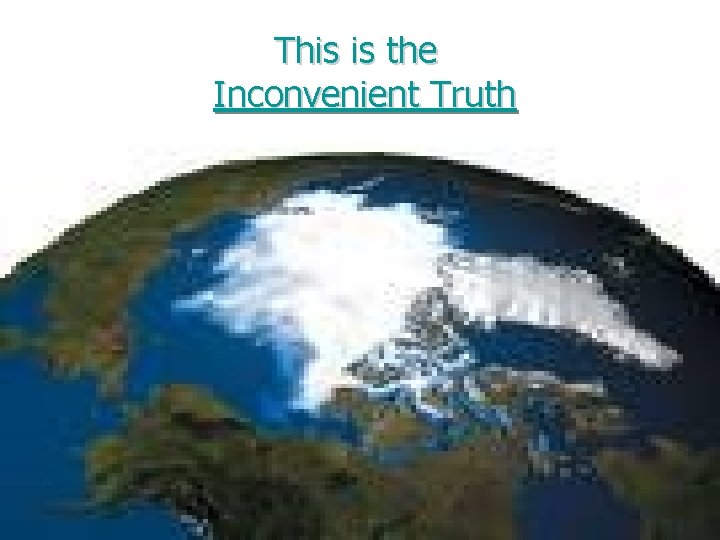
This is the Inconvenient Truth
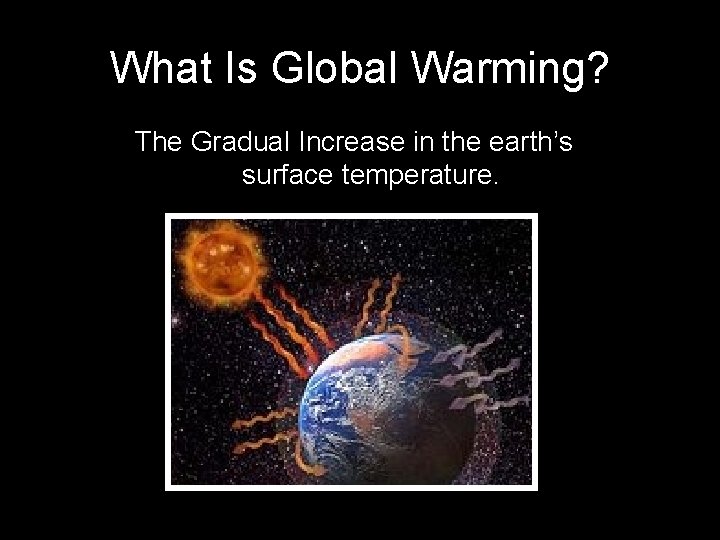
What Is Global Warming? The Gradual Increase in the earth’s surface temperature.
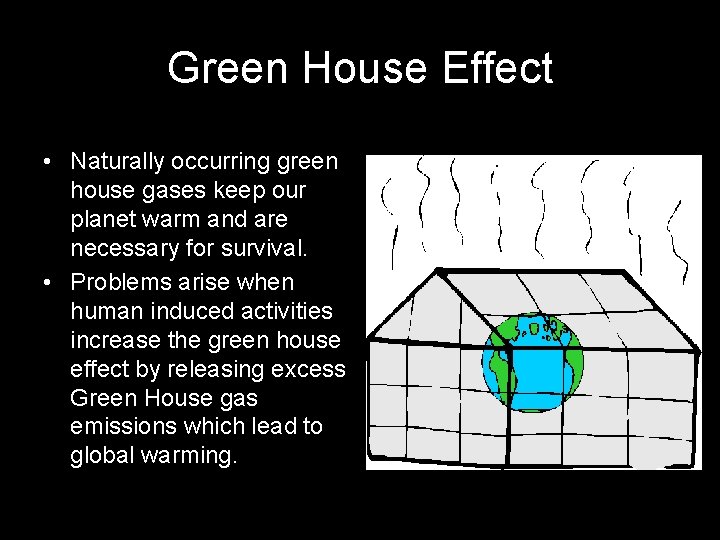
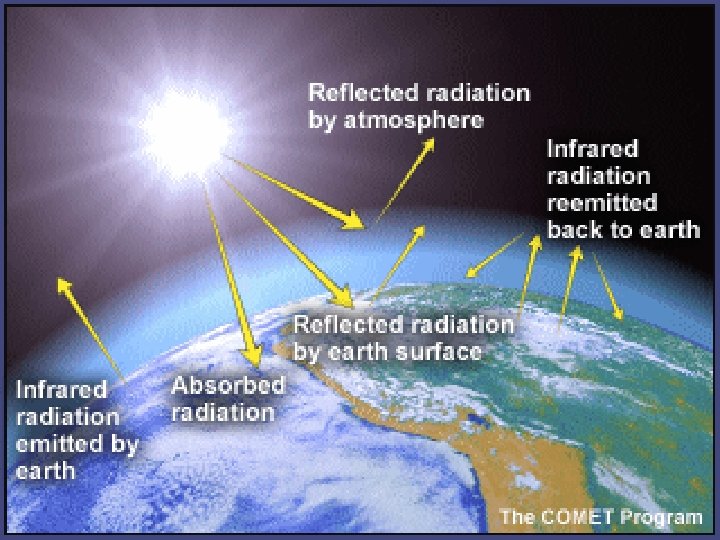
Green House Effect • Naturally occurring green house gases keep our planet warm and are necessary for survival. • Problems arise when human induced activities increase the green house effect by releasing excess Green House gas emissions which lead to global warming.
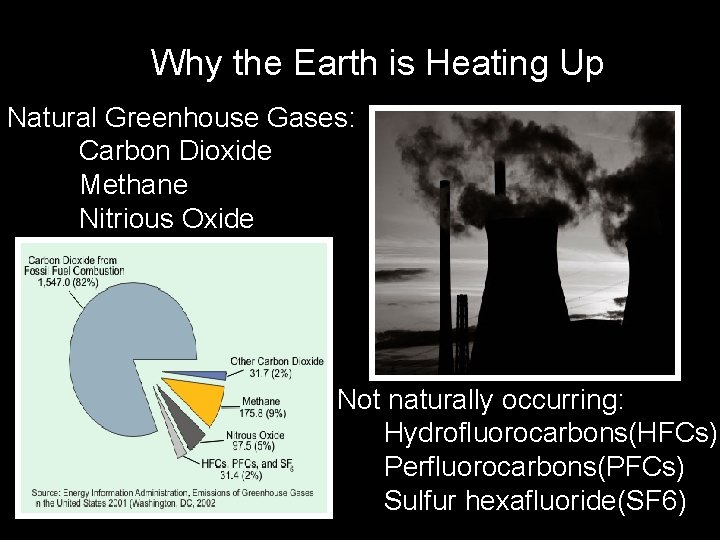
Why the Earth is Heating Up Natural Greenhouse Gases: Carbon Dioxide Methane Nitrious Oxide Not naturally occurring: Hydrofluorocarbons(HFCs) Perfluorocarbons(PFCs) Sulfur hexafluoride(SF 6)
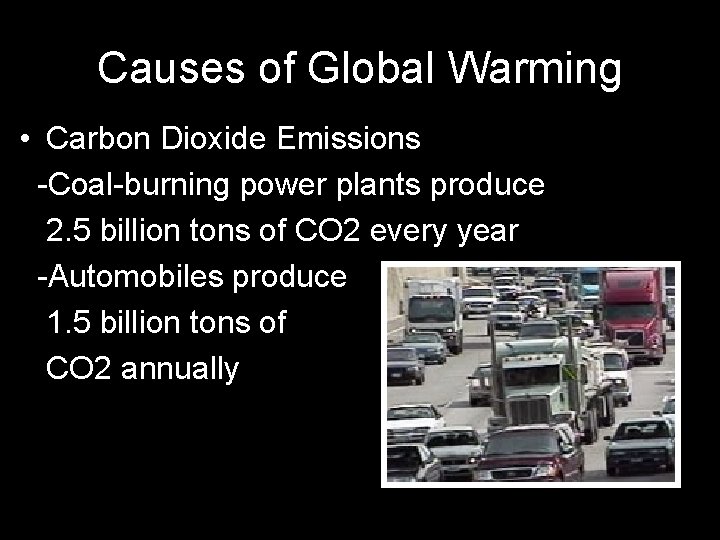
Causes of Global Warming • Carbon Dioxide Emissions -Coal-burning power plants produce 2. 5 billion tons of CO 2 every year -Automobiles produce 1. 5 billion tons of CO 2 annually
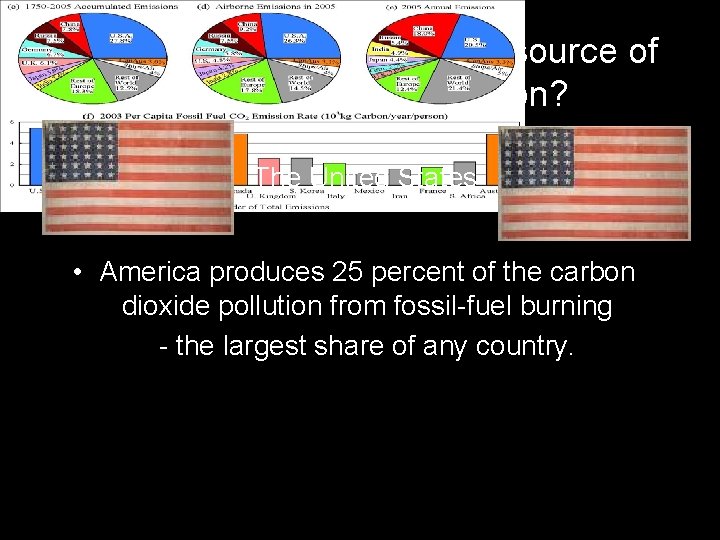
What country is the largest source of global warming pollution? The United States • America produces 25 percent of the carbon dioxide pollution from fossil-fuel burning - the largest share of any country.

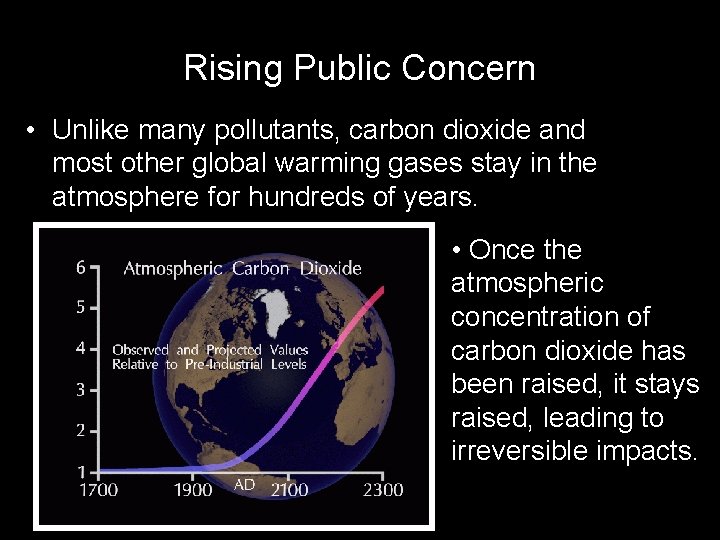
Rising Public Concern • Unlike many pollutants, carbon dioxide and most other global warming gases stay in the atmosphere for hundreds of years. • Once the atmospheric concentration of carbon dioxide has been raised, it stays raised, leading to irreversible impacts.
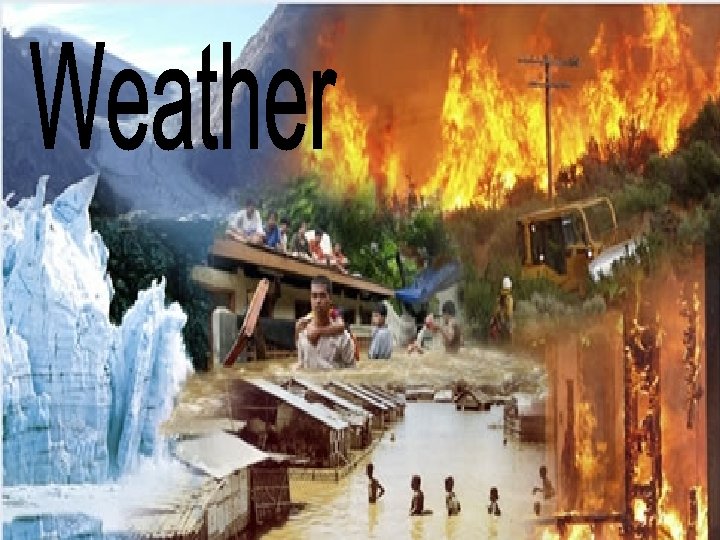
Weather
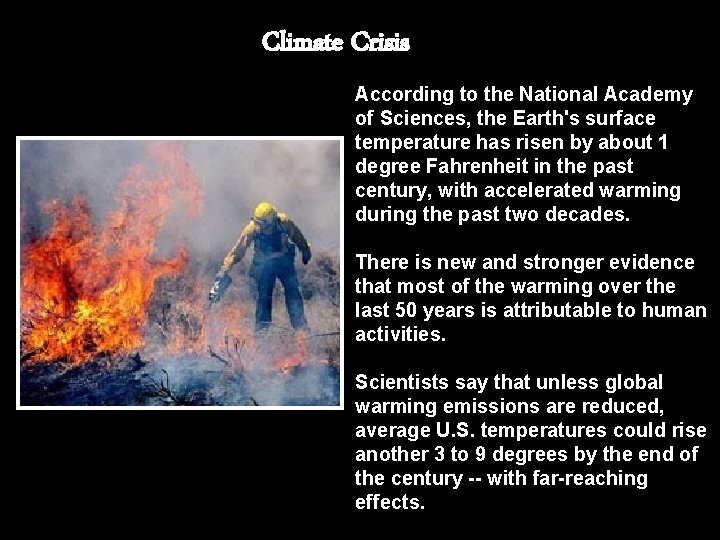
Climate Crisis According to the National Academy of Sciences, the Earth's surface temperature has risen by about 1 degree Fahrenheit in the past century, with accelerated warming during the past two decades. There is new and stronger evidence that most of the warming over the last 50 years is attributable to human activities. Scientists say that unless global warming emissions are reduced, average U. S. temperatures could rise another 3 to 9 degrees by the end of the century -- with far-reaching effects.
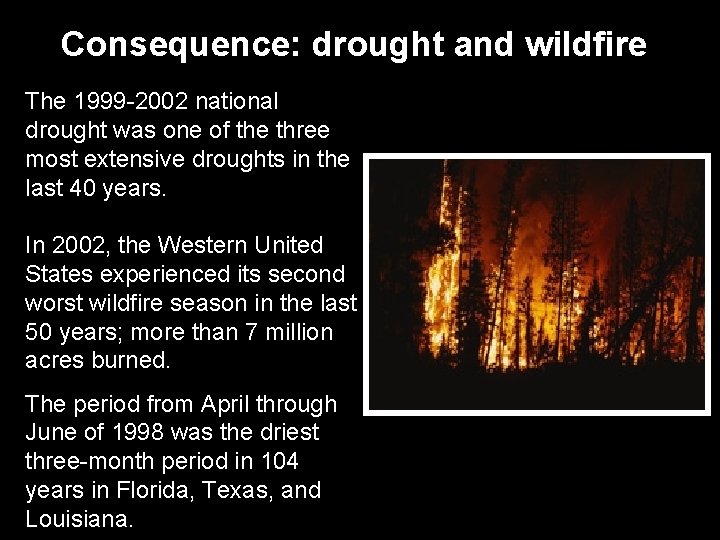
Consequence: drought and wildfire The 1999 -2002 national drought was one of the three most extensive droughts in the last 40 years. In 2002, the Western United States experienced its second worst wildfire season in the last 50 years; more than 7 million acres burned. The period from April through June of 1998 was the driest three-month period in 104 years in Florida, Texas, and Louisiana.
Consequence: more intense rainstorms National annual precipitation has increased between 5 and 10 percent since the early 20 th century, largely the result of heavy downpours in some areas. Vermont, New Hampshire, Rhode Island, and Massachusetts each got more than double their normal monthly rainfall in June 1998. Severe flooding in Texas, Montana, and North Dakota during the summer of 2002 caused hundreds of millions of dollars in damage.
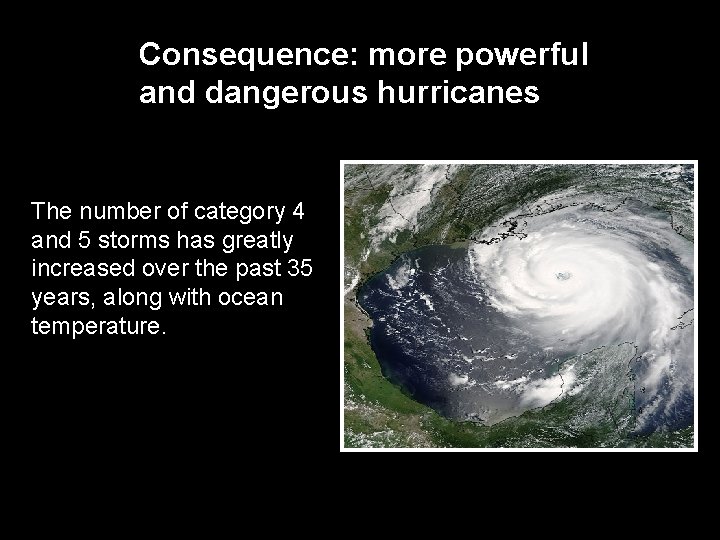
Consequence: more powerful and dangerous hurricanes The number of category 4 and 5 storms has greatly increased over the past 35 years, along with ocean temperature.
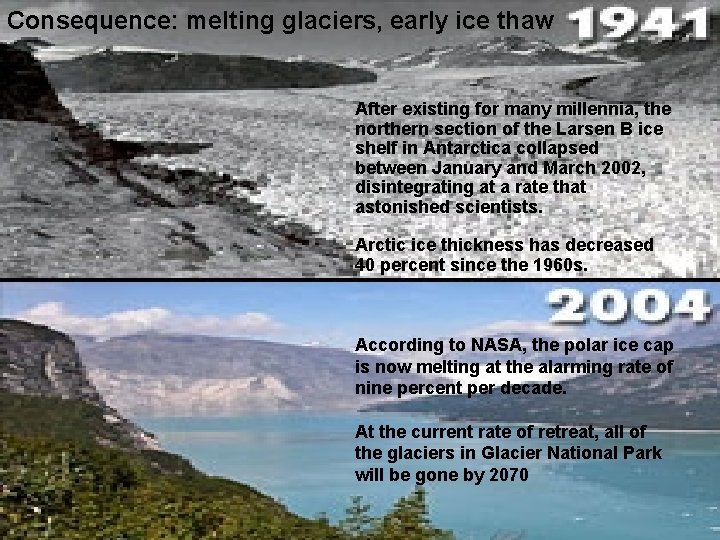
Consequence: melting glaciers, early ice thaw After existing for many millennia, the northern section of the Larsen B ice shelf in Antarctica collapsed between January and March 2002, disintegrating at a rate that astonished scientists. Arctic ice thickness has decreased 40 percent since the 1960 s. According to NASA, the polar ice cap is now melting at the alarming rate of nine percent per decade. At the current rate of retreat, all of the glaciers in Glacier National Park will be gone by 2070
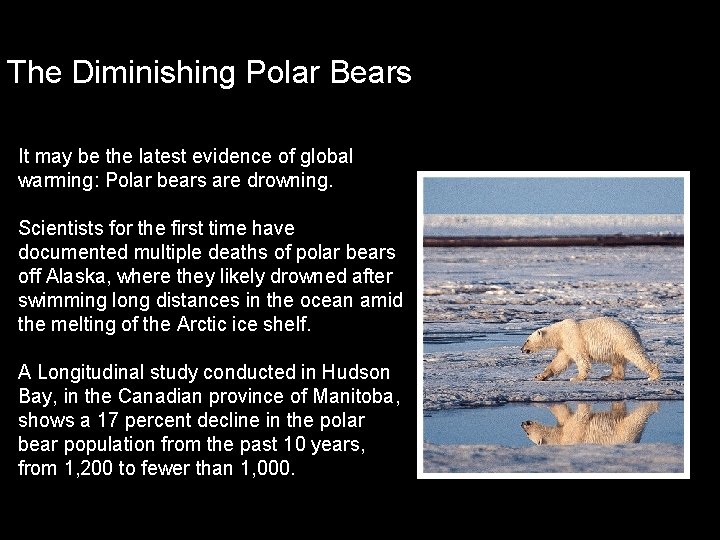
The Diminishing Polar Bears It may be the latest evidence of global warming: Polar bears are drowning. Scientists for the first time have documented multiple deaths of polar bears off Alaska, where they likely drowned after swimming long distances in the ocean amid the melting of the Arctic ice shelf. A Longitudinal study conducted in Hudson Bay, in the Canadian province of Manitoba, shows a 17 percent decline in the polar bear population from the past 10 years, from 1, 200 to fewer than 1, 000.
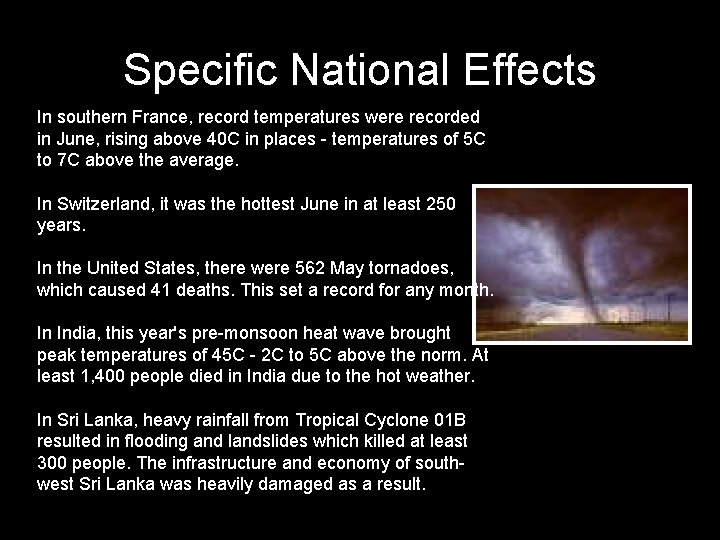
Specific National Effects In southern France, record temperatures were recorded in June, rising above 40 C in places - temperatures of 5 C to 7 C above the average. In Switzerland, it was the hottest June in at least 250 years. In the United States, there were 562 May tornadoes, which caused 41 deaths. This set a record for any month. In India, this year's pre-monsoon heat wave brought peak temperatures of 45 C - 2 C to 5 C above the norm. At least 1, 400 people died in India due to the hot weather. In Sri Lanka, heavy rainfall from Tropical Cyclone 01 B resulted in flooding and landslides which killed at least 300 people. The infrastructure and economy of southwest Sri Lanka was heavily damaged as a result.
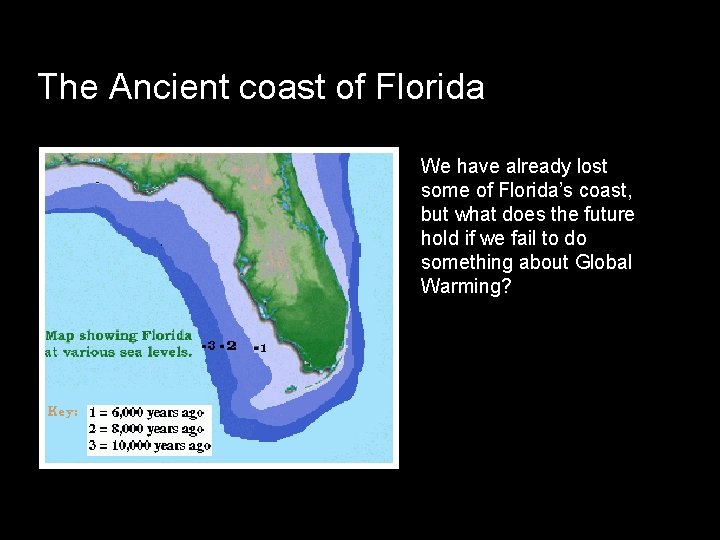
The Ancient coast of Florida We have already lost some of Florida’s coast, but what does the future hold if we fail to do something about Global Warming?
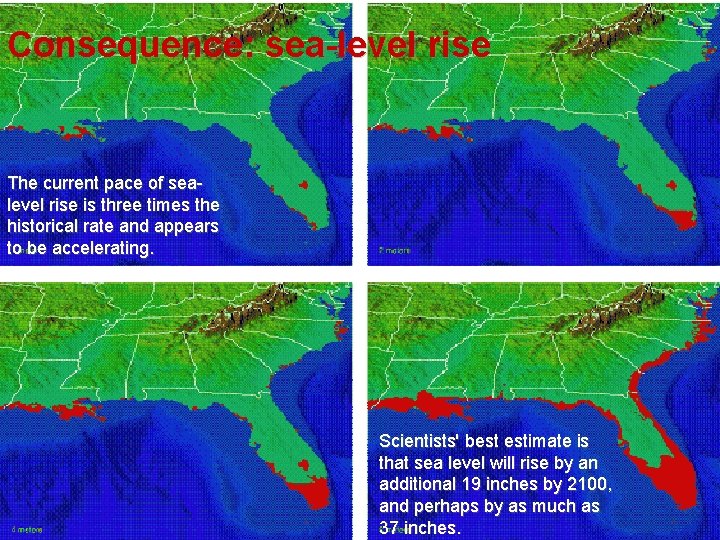
Consequence: sea-level rise The current pace of sealevel rise is three times the historical rate and appears to be accelerating. Scientists' best estimate is that sea level will rise by an additional 19 inches by 2100, and perhaps by as much as 37 inches.
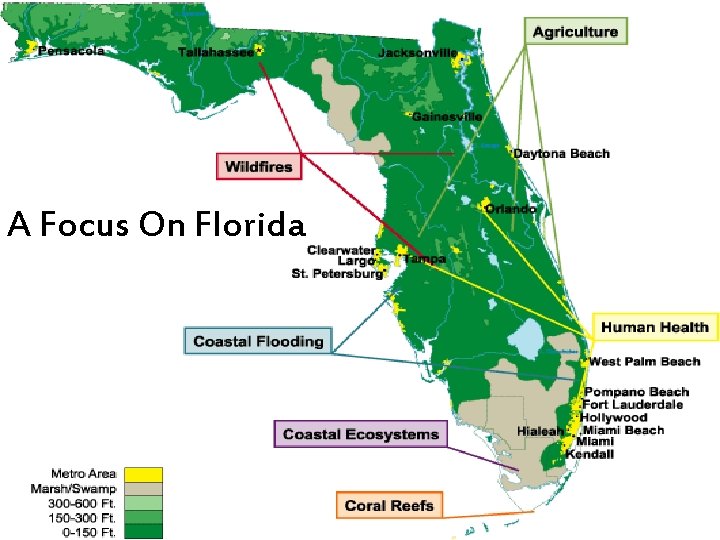
A Focus On Florida
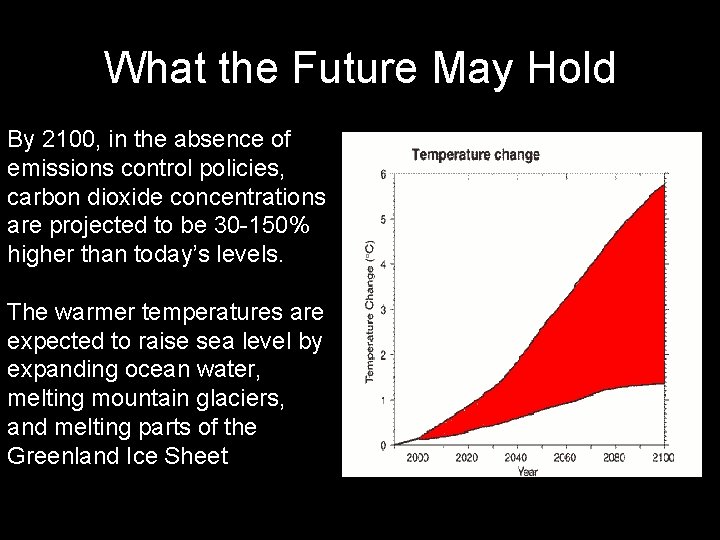
What the Future May Hold By 2100, in the absence of emissions control policies, carbon dioxide concentrations are projected to be 30 -150% higher than today’s levels. The warmer temperatures are expected to raise sea level by expanding ocean water, melting mountain glaciers, and melting parts of the Greenland Ice Sheet
Global Warming and Your Health
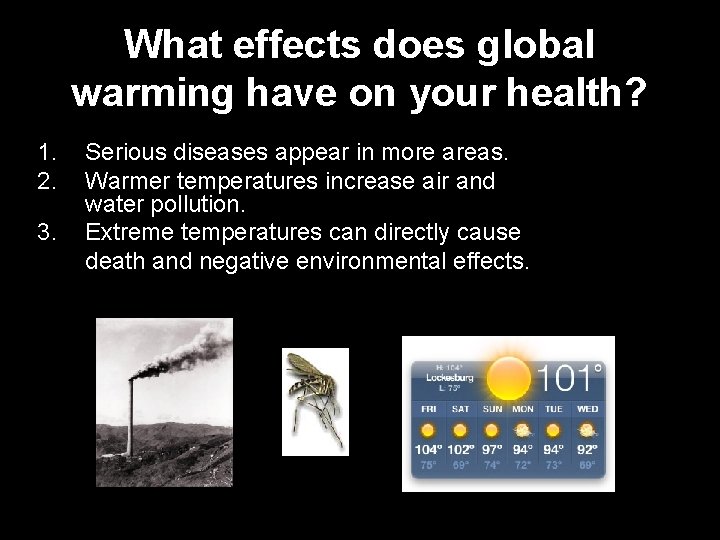
What effects does global warming have on your health? 1. 2. 3. Serious diseases appear in more areas. Warmer temperatures increase air and water pollution. Extreme temperatures can directly cause death and negative environmental effects.
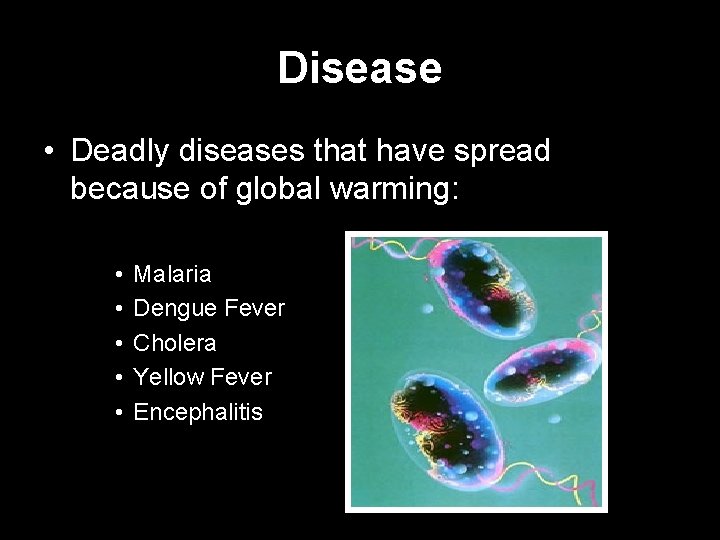
Disease • Deadly diseases that have spread because of global warming: • • • Malaria Dengue Fever Cholera Yellow Fever Encephalitis
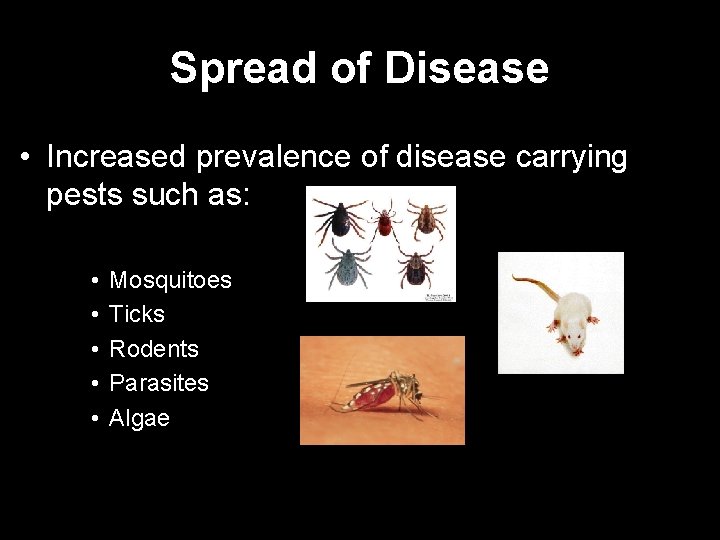
Spread of Disease • Increased prevalence of disease carrying pests such as: • • • Mosquitoes Ticks Rodents Parasites Algae
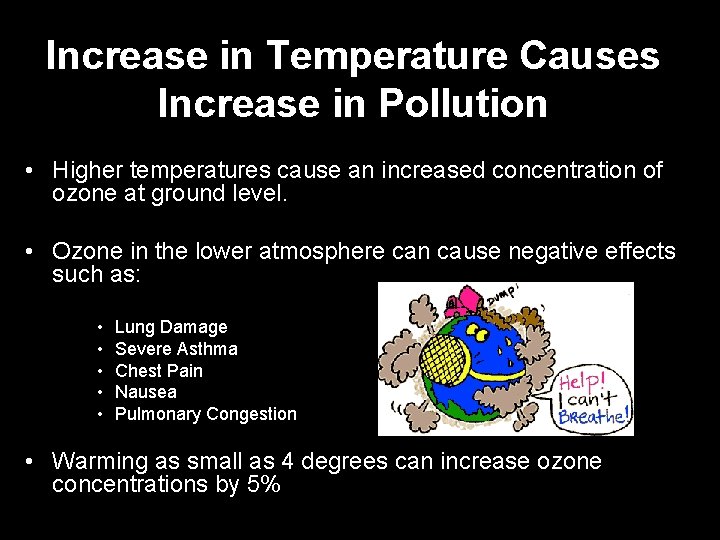
Increase in Temperature Causes Increase in Pollution • Higher temperatures cause an increased concentration of ozone at ground level. • Ozone in the lower atmosphere can cause negative effects such as: • • • Lung Damage Severe Asthma Chest Pain Nausea Pulmonary Congestion • Warming as small as 4 degrees can increase ozone concentrations by 5%
Pollution and Your Health • It is estimated that air pollution causes several hundred thousand deaths a year around the world. • The leading cause of air pollution death (respiratory failure) is from particulate matter: – Soot – Dirt particles
Water Pollution • Increased rainfall, flooding, and warmer surface water are all causes of water pollution. – Extreme floods and droughts may threaten availability and supply of safe drinking water. • Hurricanes and storms – Diseases associated with flooding could affect millions each year. • Cryptosporidiosis (parasite)
Heat Wave • High temperatures directly cause loss of life – Heart problems – Heat exhaustion – Respiratory problems – Death rates increase on very hot days • Population displacement – Migration and crowding – Increase risk of disease/injury

How can you help?
At Home • RECYCLE! paper, plastic, metal, glass • Use Compact Fluorescent Light bulbs • Clean or replace air filters • Run dishwasher only when full
Also At Home • Caulk and weather-strip around windows and doors • Wash clothes in warm or cold water • Adjust thermostat 2 degrees lower in winter and 2 degrees higher in summer • Plant trees around your house
On The Go • Walk, bike, carpool, or use mass transit • Check cars’ tires regularly • Change air filters • Buy hybrid cars • Avoid flying

Government Level • Work/Volunteer for a clean energy candidate in your state • Invite your US Senator to come talk about global warming with your community group, school, or faith group. • Write to your elected officials
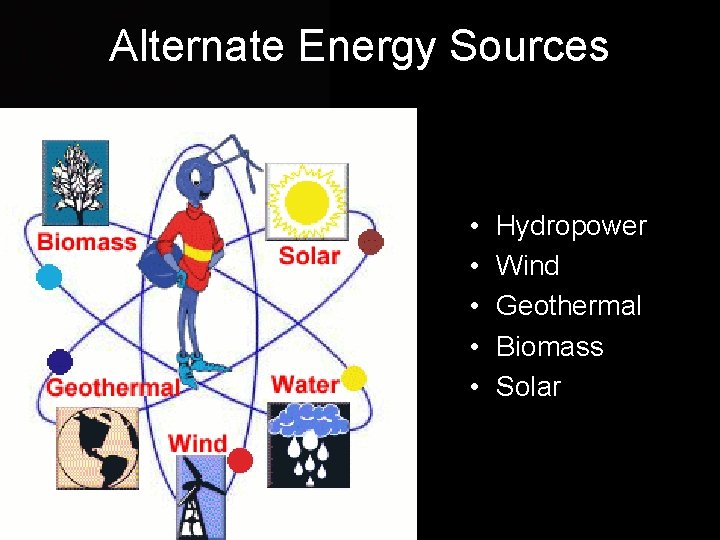
Alternate Energy Sources • • • Hydropower Wind Geothermal Biomass Solar
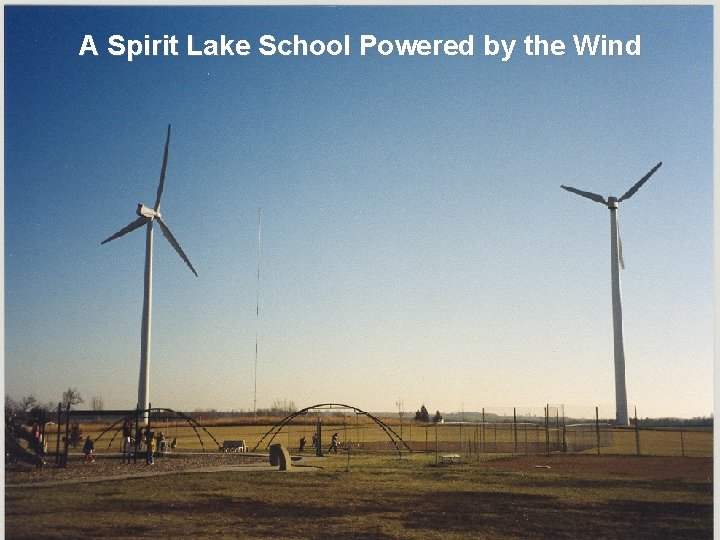
A Spirit Lake School Powered by the Wind

• SPREAD THE WORD • SHARE THE LEARNING
- Slides: 37