
Third year Pediatric Nursing Clinical Lecture CPR Neonatal








- Slides: 44
Third year Pediatric Nursing Clinical Lecture CPR (Neonatal Resuscitation) Prepared by: Fatma Abdellah Mohamed
Neonatal Resuscitation
Out lines:
• Definition • Risk Factors Associated with the Need for Resuscitation • Equipment • Initial steps in resuscitation
Objectives
At the end of this lecture , the learners will be able to do the following : • Define neonatal resuscitation • Enumerate Risk Factors Associated with the Need for Resuscitation • Identify equipment. • Discuss initial steps in resuscitation
Introduction
• Approximately 90% of newborns make smooth transition from intrauterine to extra uterine life requiring little or no assistance, 10% of newborns need some assistance, and only 1% requires extensive resuscitation.
Definition of resuscitation
Is the method in which body can maintain cardiopulmonary function. the
Risk Factors Associated with the Need for Resuscitation
• Antepartum (before labor and delivery) • Intrapartum (during labor and delivery)
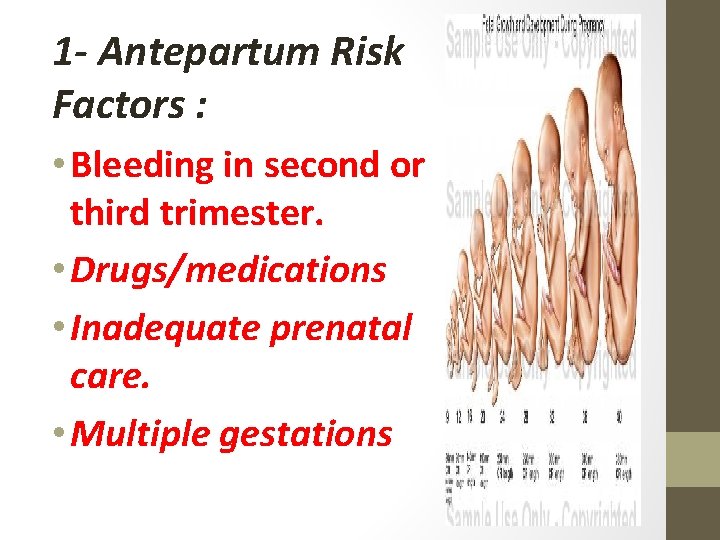
1 - Antepartum Risk Factors : • Bleeding in second or third trimester. • Drugs/medications • Inadequate prenatal care. • Multiple gestations
• Mother‘s age Less than age 16 or more than 35 • Post-term gestation. • Previous Rh sensitization. • Previous still birth • Toxemia, hypertension, diabetes. • Oligo- hydramnions
2 -Intrapartum Risk Factors • Abraptio placenta. • Abnormal presentation. • Bleeding. • Emergency C. S.
• Meconium-stained amniotic fluid. • Prolonged labor or precipitous delivery (prolonged than 24 hrs. ). • Prolonged second stage of labor (greater than 2 hrs. ) • Prolapsed cord.
• Placenta previa. • Premature labor • Rupture of membranes greater than 24 hours before delivery • Use of narcotics within 4 hours of delivery. • Uterine tetany.
Equipment
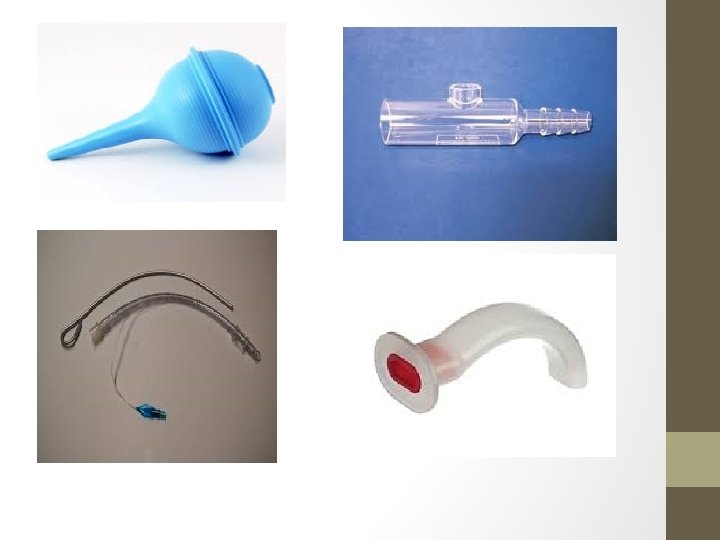
1 -Suction equipment: • Bulb syringe. • Mechanical suction. • Suction catheters 5, 6 Fr. • Meconium aspirator
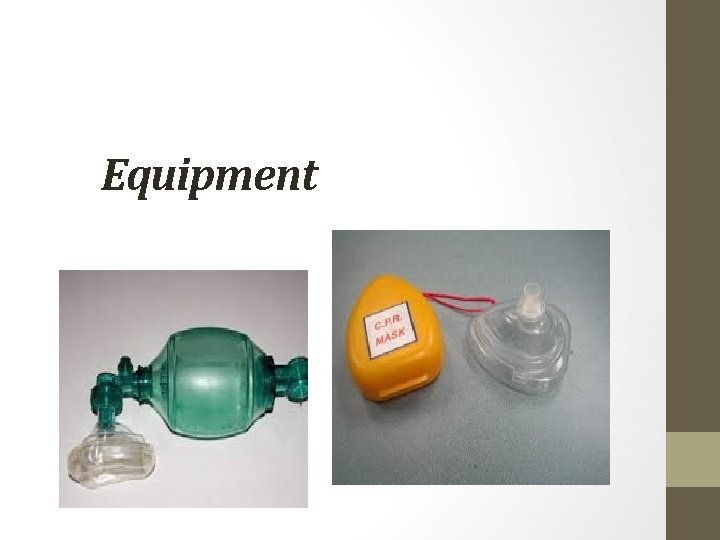
2 -Bag and mask equipment: • Neonate resuscitation bag (AMPO bag) • Face mask • Oxygen with flow meter and tubing. • Oral airway
3 -Intubations equipment: • Laryngoscope with straight blades. No 0 (P. T) and No. 1 (F. T). • Battery for laryngoscope • Endotracheal tubes sizes 2. 5, 3, 3. 5, 4 mm. • Scissors – Gloves – stylet.
4 - Drugs: • Epinephrine • Volume Expanders • Naloxone • Sodium bicarbonate
5 - Miscellaneous • Radiant warmer-stethoscopetape-Syringe-needle-alcoholumbilical catheter, towel
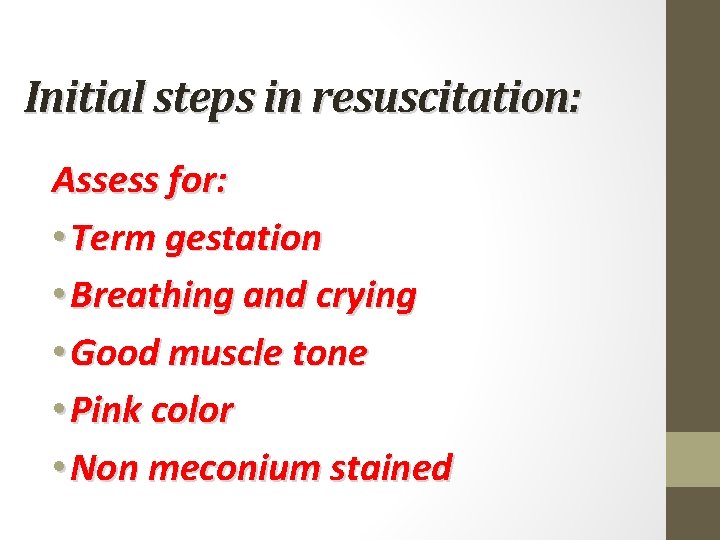
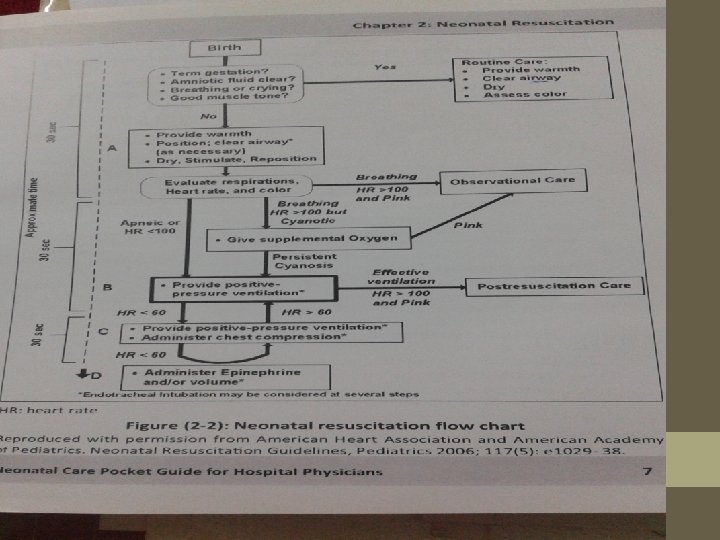
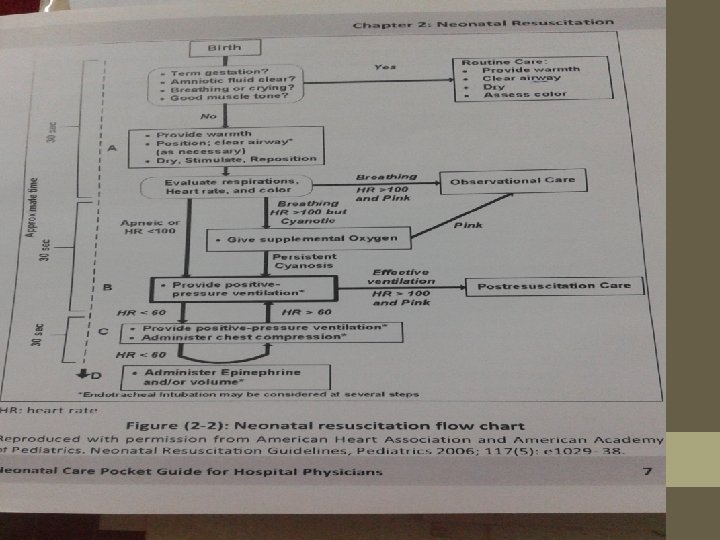
Initial steps in resuscitation: Assess for: • Term gestation • Breathing and crying • Good muscle tone • Pink color • Non meconium stained
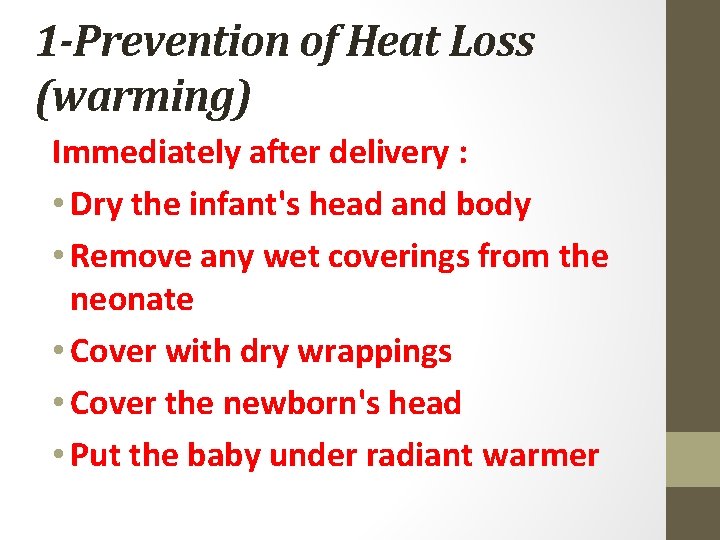
1 -Prevention of Heat Loss (warming) Immediately after delivery : • Dry the infant's head and body • Remove any wet coverings from the neonate • Cover with dry wrappings • Cover the newborn's head • Put the baby under radiant warmer
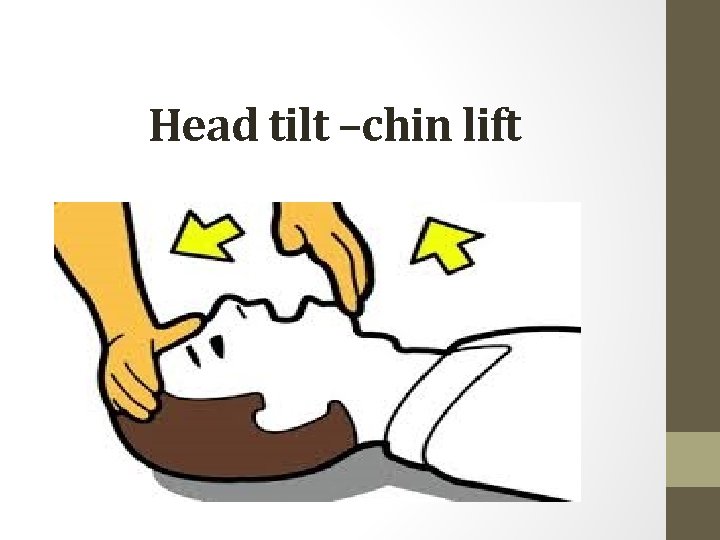
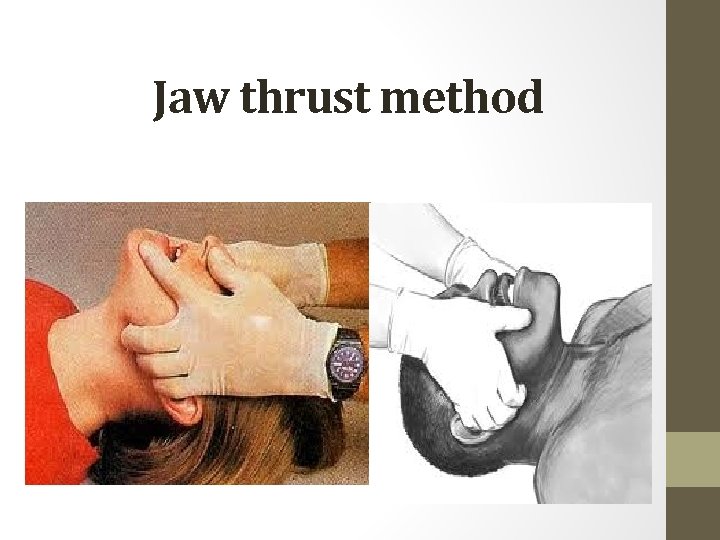
2 -Opening the Airway by positioning
Head tilt –chin lift
Jaw thrust method
Suction
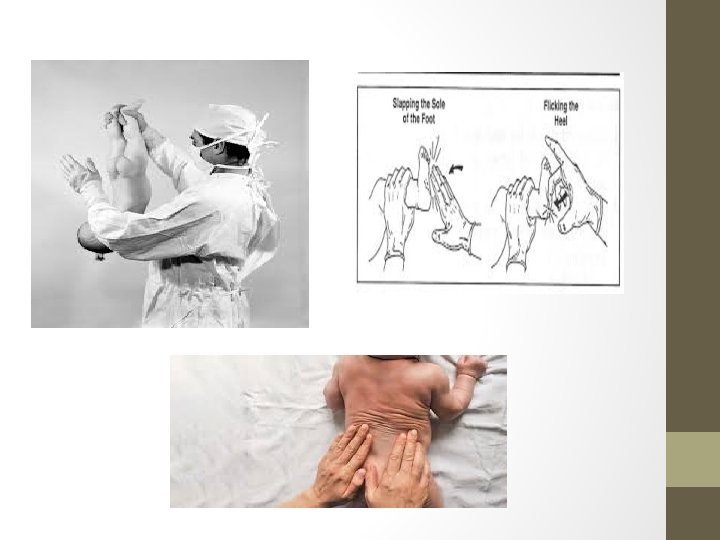
Provision of Tactile Stimulation
Three Items are assessed every 30 seconds • Heart rate (Pulse) • Respiration (Breathing) • Circulation (colour)
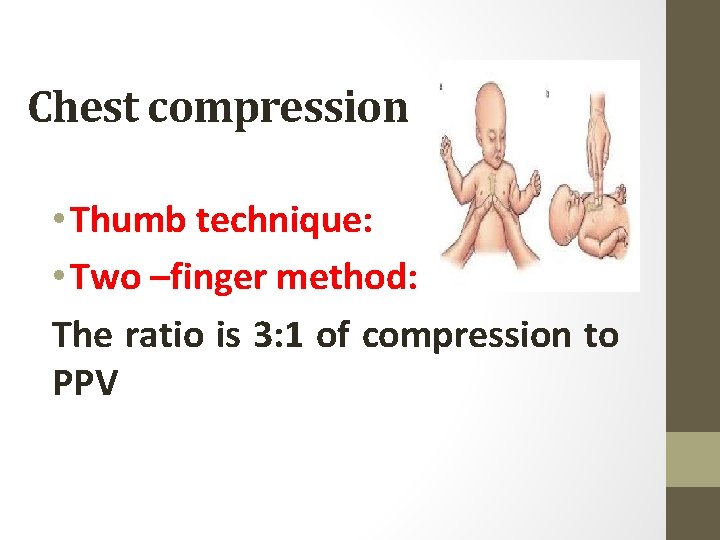
Chest compression • Thumb technique: • Two –finger method: The ratio is 3: 1 of compression to PPV
• Evaluate Heart Rate • HR decreasing HR less than 100 b/m start PPV • HR decreasing HR less than 80 b/m continue PPV and start compression • HR increasing HR more than 80 b/m continue PPV and stop compression • If HR remains less than 60 b/m continue compression and PPV and consider medication and consider intubation
Medications
Epinephrine • Route: IV (through the umbilical vein). Endotracheal administration may be considered while IV access is being established. • Dose: 0. 1 -0. 3 ml/kg (consider higher dose, 0. 3 -1 ml/kg, for endotracheal route only); dose • can be repeated after 3 -5 minutes. • Preparation: 1: 10, 000 solution. • Rate: rapidly, as quickly as possible
Volume expansion • blood loss (e. g. , extensive vaginal bleeding, abruptio placentae, placenta previa, , …etc). • Recommended volume expander is normal saline, Ringer's lactate, or O Rh-negative • blood packed RBCs. • Route: umbilical vein. • Dose: 10 ml/kg (another dose may be needed). • Rate: slowly (over 5 -10 minutes).
Sodium bicarbonate • it may be indicated for correction of documented severe metabolic acidosis. • Do not give sodium bicarbonate unless the lungs are being adequately ventilated. • Route: umbilical vein. • Dose: 2 m. Eq/kg (8. 4% concentration). • Preparation: diluted 1: 1 with appropriate diluent (glucose 5% or sterile water • Rate: slowly, no faster than a rate of 1 m. Eq/kg/minute (to minimize the risk of intraventricular hemorrhage).
Naloxone Hydrochloride • If a mother has recently received narcotics within 4 hrs of delivery and her infant fails to breathe, first assist ventilation with positive pressure, and then consider giving • naloxone to the infant (0. 1 mg/kg, 1 mg/ml solution, I. V. or I. M).