
THIRD PARTIES IN US AP Government Mrs Lacks
- Slides: 10
THIRD PARTIES IN US AP Government: Mrs. Lacks
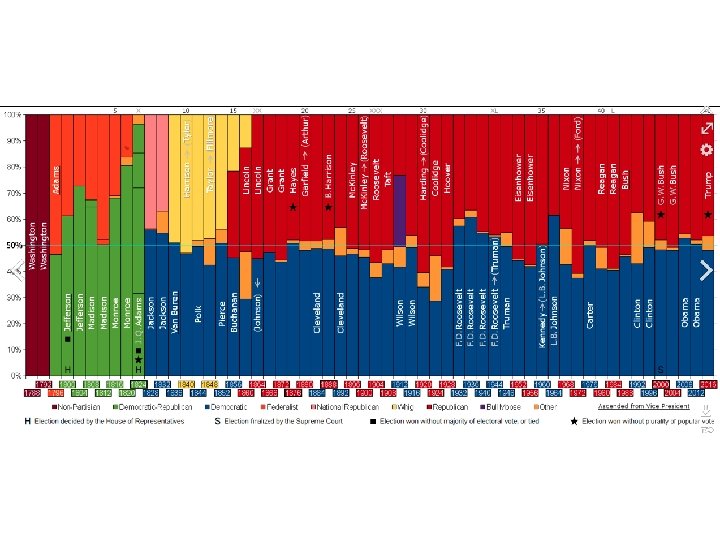
Third Parties Third or minor parties DO exist in US elections major 3 rd party candidates that changed elections Election of 1912: Teddy Roosevelt (Bull Moose or Progressive Party) Election of 1992: Ross Perot (Independent Party)
Third Parties Why haven’t any won the presidency? People think their vote won’t count Electoral College works against them (must have 270 electoral votes to win); winner takes all Not all third parties are listed in all states Not all third party candidates are asked to participate in national debates Its hard to raise as much money as the RNC or DNC
Third Parties Some third parties have specific goals and are often short-lived, while others last for decades Political scientists group them into 4 categories Economic protest parties Single issue parties Ideological parties Factional or splinter parties
Economic Protest Parties Seek to accomplish that which changes an economic situation Typically farmers and laborers Examples: Populist Party (1887 – 1908) Greenback Party (1874 – 1884)
Single-Issue Parties Champion a specific goal, focusing on nothing else Examples: Free Soil Party (mid-1800 s) Know-Nothing Party (mid-1800 s) Prohibition Party (early 20 th century) Woman’s Suffrage Party (early 20 th century)
Ideological Parties Typically longest lasting third parties Never have come close to winning an election, but have existed over 100 yrs Examples: Libertarian Party (3 rd largest party today) American Communist Party American Socialist Party
Factional or Splinter Parties Form when a major party experiences factions When the Democratic or Republican party has broken into two sections it becomes weaker and is likely to lose the election Examples: Progressive Party (Election of 1912) Dixiecrats (Election of 1948)
Third Parties Third parties are good because they remind the two major parties they need broad-based coalitions to win (aka be more moderate)