
THIRD EDITION HUMAN PHYSIOLOGY AN INTEGRATED APPROACH Dee

- Slides: 60
THIRD EDITION HUMAN PHYSIOLOGY AN INTEGRATED APPROACH Dee Unglaub Silverthorn, Ph. D. Chapter 17 Mechanics of Breathing Power. Point® Lecture Slide Presentation by Dr. Howard D. Booth, Professor of Biology, Eastern Michigan University Copyright © 2004 Pearson Education, Inc. , publishing as Benjamin Cummings
About this Chapter • Structure and function of the respiratory pumps • How gases are exchanged with blood • The role of pressures and surfactants in rate of exchange • How respiration is regulated Copyright © 2004 Pearson Education, Inc. , publishing as Benjamin Cummings
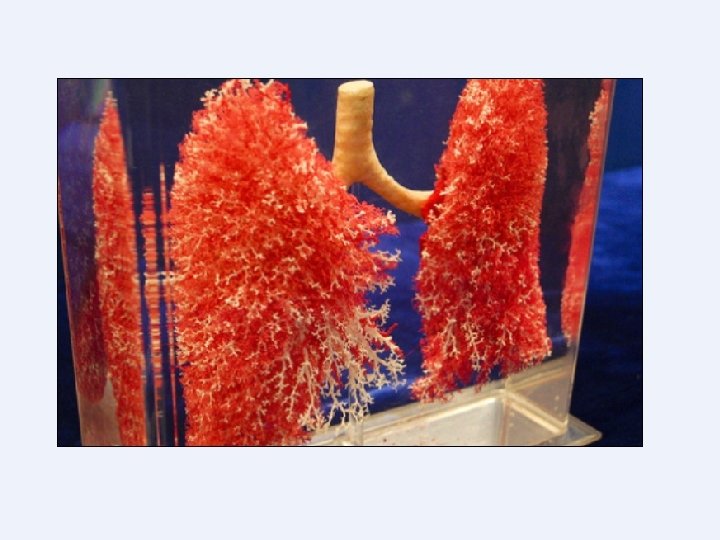
Respiratory System: Overview • Lungs: exchange surface • 75 m 2 • Thin walled • Moist • Ribs & skin protect • Diaphragm & ribs pump air Copyright © 2004 Pearson Education, Inc. , publishing as Benjamin Cummings
Interesting Facts about the Lungs • Each lung contains approximately 150 million alveoli • We lose half a liter of fluid a day from breathing • Normal breathing rate is between 12 -16 breaths per minute, but women and children breathe faster than men • Breathing rate may to increase to 60 after exercise • The capillaries in the lung would extend approximately 1000 miles if laid end to end • Approximately 1500 miles of airways are found in the lungs • A typical sneeze travels at a velocity of 100 miles per hour • The right lung is larger than the left lung and has three lobes as compared to 2 for the left • Every minute we breathe 13 pints of air or 6. 15 Liters/min • We inhale and exhale approximately 22, 000 times/day Copyright © 2004 Pearson Education, Inc. , publishing as Benjamin Cummings
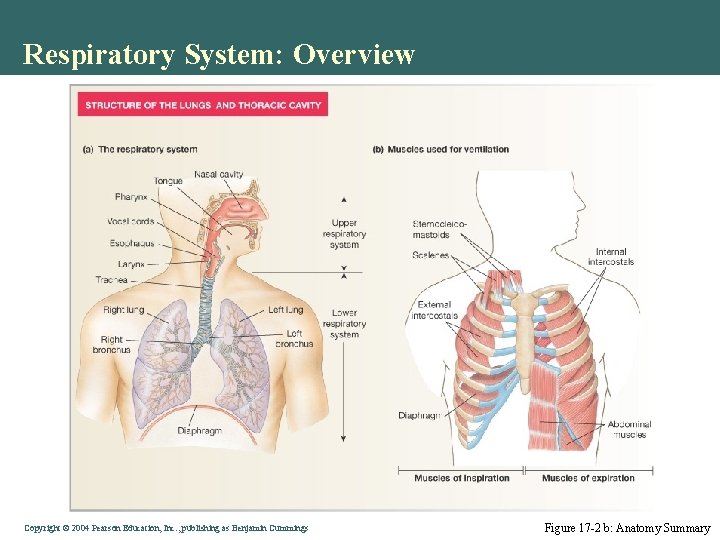
Respiratory System: Overview Copyright © 2004 Pearson Education, Inc. , publishing as Benjamin Cummings Figure 17 -2 b: Anatomy Summary
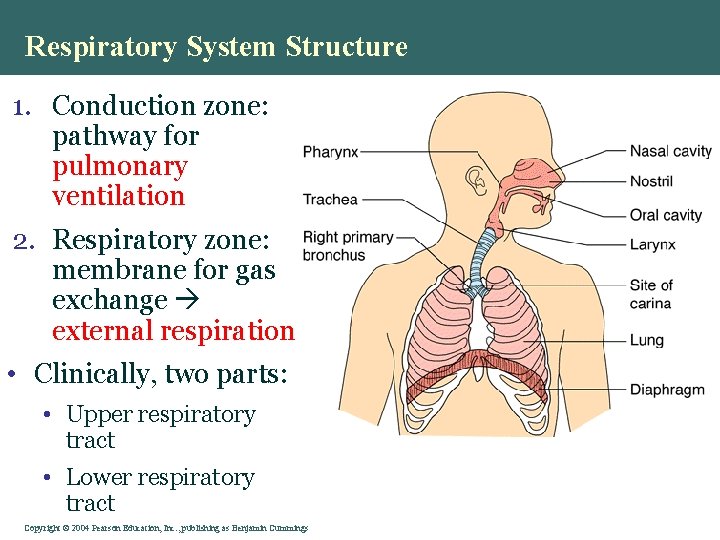
Respiratory System Structure 1. Conduction zone: pathway for pulmonary ventilation 2. Respiratory zone: membrane for gas exchange external respiration • Clinically, two parts: • Upper respiratory tract • Lower respiratory tract Copyright © 2004 Pearson Education, Inc. , publishing as Benjamin Cummings
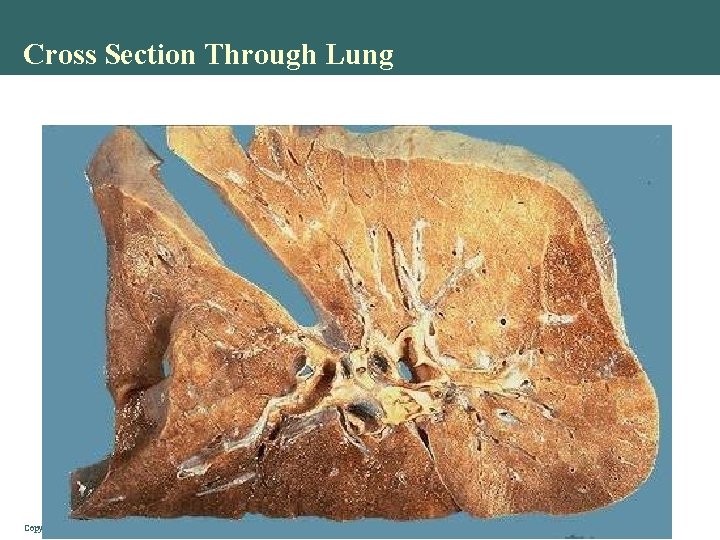
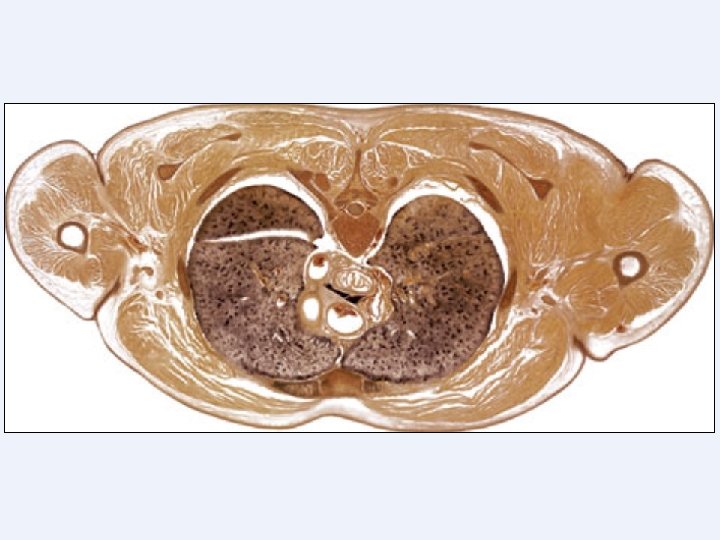
Cross Section Through Lung Copyright © 2004 Pearson Education, Inc. , publishing as Benjamin Cummings
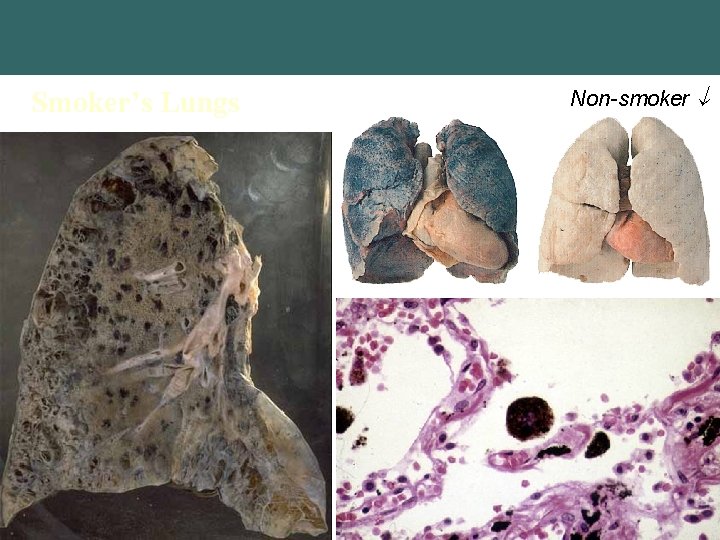
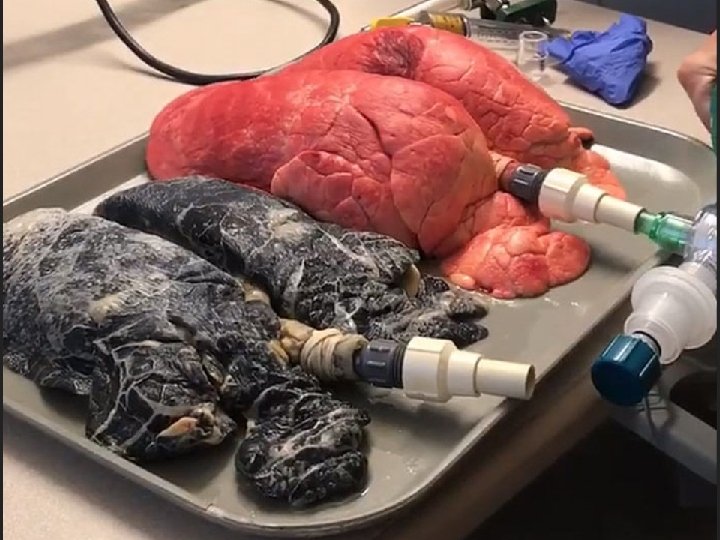
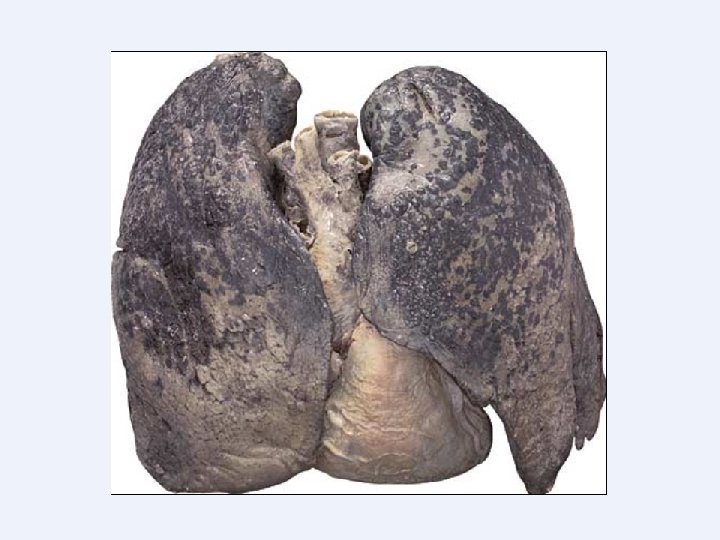
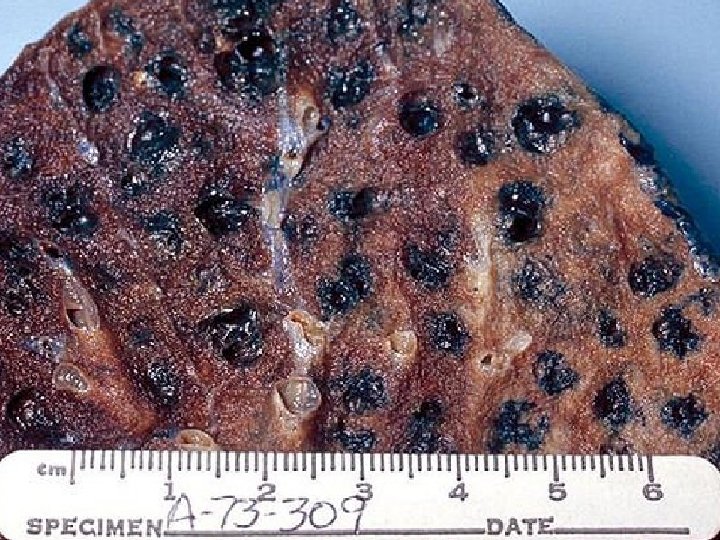
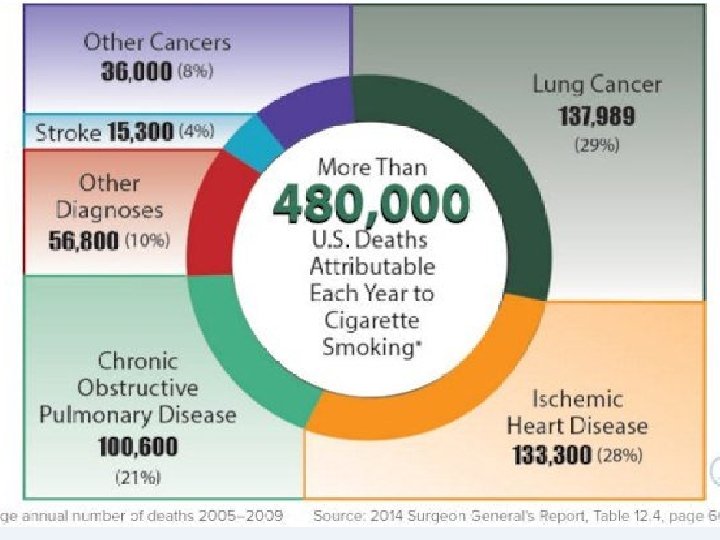
Smoker’s Lungs Copyright © 2004 Pearson Education, Inc. , publishing as Benjamin Cummings Non-smoker
Copyright © 2004 Pearson Education, Inc. , publishing as Benjamin Cummings
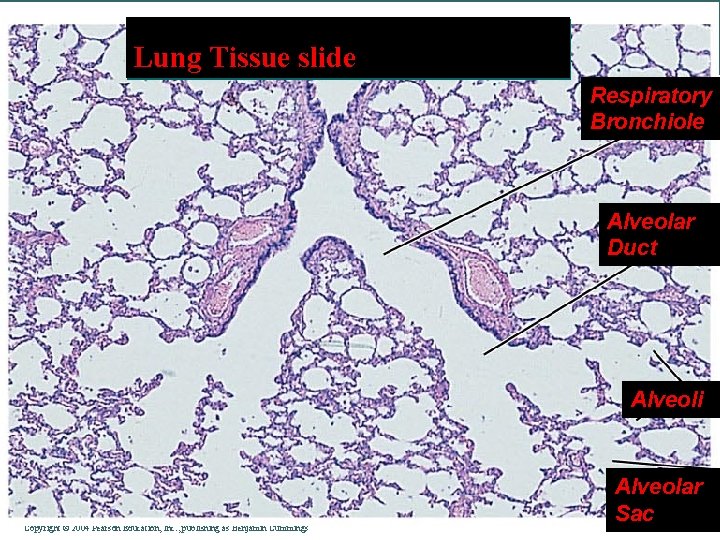
Lung Tissue slide Respiratory Bronchiole Alveolar Duct Alveoli Copyright © 2004 Pearson Education, Inc. , publishing as Benjamin Cummings Alveolar Sac
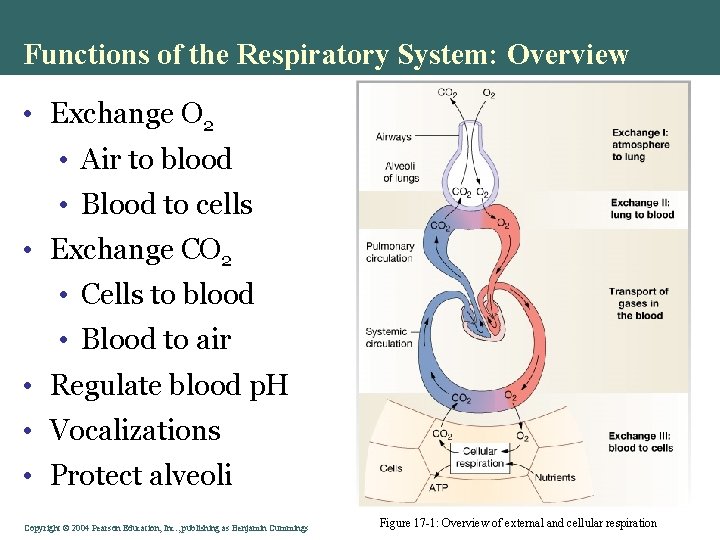
Functions of the Respiratory System: Overview • Exchange O 2 • Air to blood • Blood to cells • Exchange CO 2 • Cells to blood • Blood to air • Regulate blood p. H • Vocalizations • Protect alveoli Copyright © 2004 Pearson Education, Inc. , publishing as Benjamin Cummings Figure 17 -1: Overview of external and cellular respiration
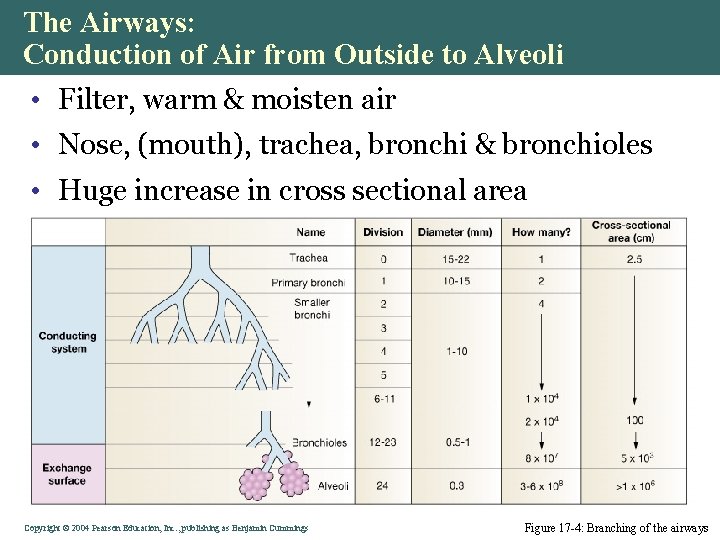
The Airways: Conduction of Air from Outside to Alveoli • Filter, warm & moisten air • Nose, (mouth), trachea, bronchi & bronchioles • Huge increase in cross sectional area Copyright © 2004 Pearson Education, Inc. , publishing as Benjamin Cummings Figure 17 -4: Branching of the airways
Key Gas Laws Reviewed • Gas is compressible & flow with resistance • Air is a mix of gases, each diffuses independently Copyright © 2004 Pearson Education, Inc. , publishing as Benjamin Cummings
Key Gas Laws Reviewed • Solubility of a gas depends on: • Partial pressure of that gas (example: O 2 =156 mm. Hg) • Temperature • Solubility in a particular solvent • Water: solvent for life • O 2 into water: 0. 1 m moles/L (poor) • CO 2 into water: 3. 0 m mole/L (good) Copyright © 2004 Pearson Education, Inc. , publishing as Benjamin Cummings
Ventilation: The Pumps • Inspiration • Expiration • Diaphragm • Low energy pump • Concavity – flattens • Thorax: ribs & muscles • Pleura: double membrane • Vacuum seal • Fluid-lubrication Copyright © 2004 Pearson Education, Inc. , publishing as Benjamin Cummings
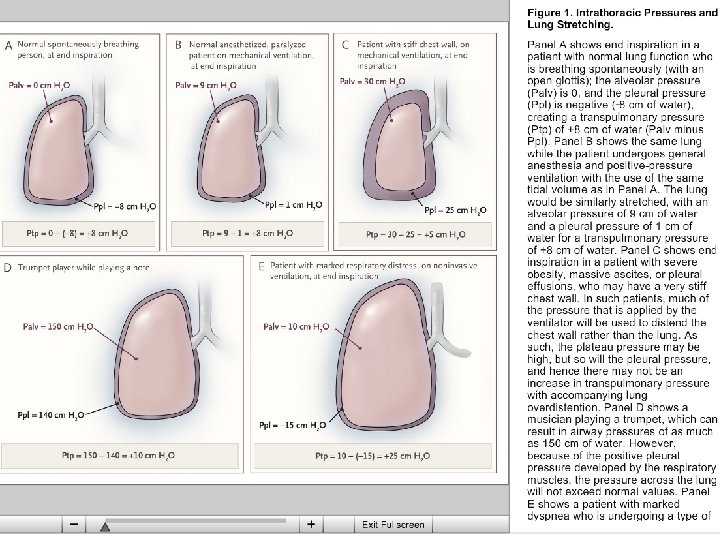
Copyright © 2004 Pearson Education, Inc. , publishing as Benjamin Cummings
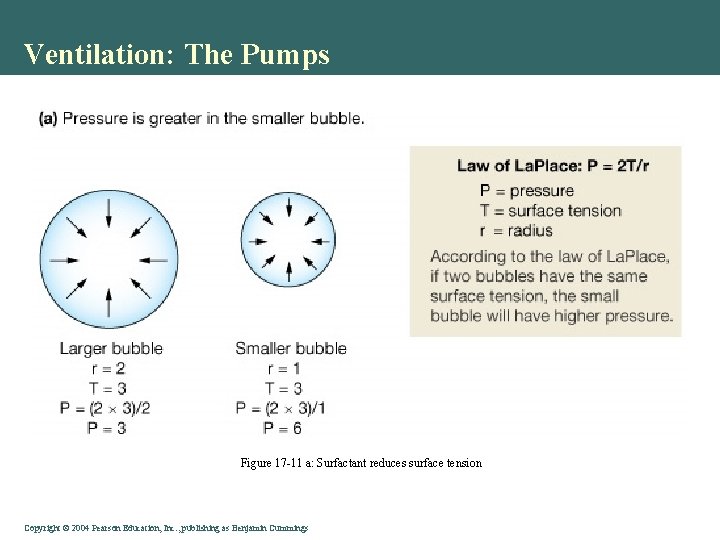
Ventilation: The Pumps Figure 17 -11 a: Surfactant reduces surface tension Copyright © 2004 Pearson Education, Inc. , publishing as Benjamin Cummings
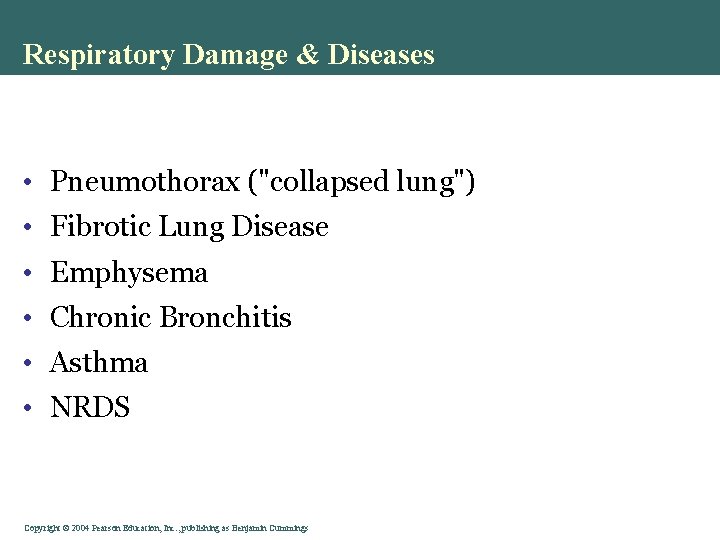
Respiratory Damage & Diseases • Pneumothorax ("collapsed lung") • Fibrotic Lung Disease • Emphysema • Chronic Bronchitis • Asthma • NRDS Copyright © 2004 Pearson Education, Inc. , publishing as Benjamin Cummings
Copyright © 2004 Pearson Education, Inc. , publishing as Benjamin Cummings
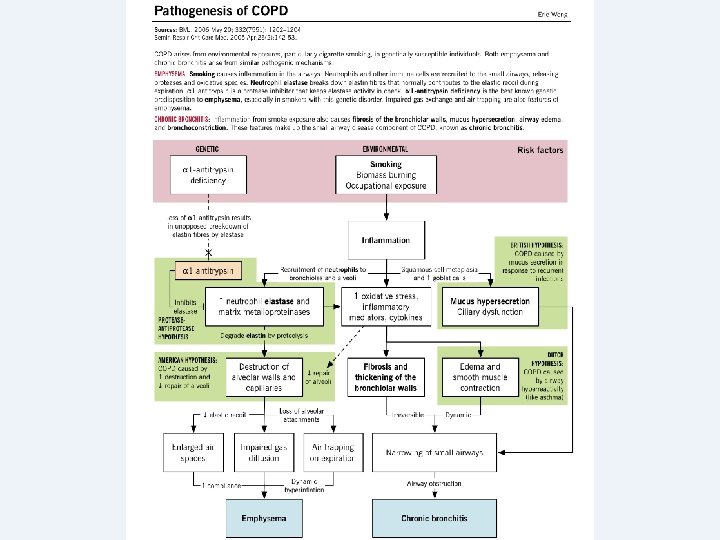
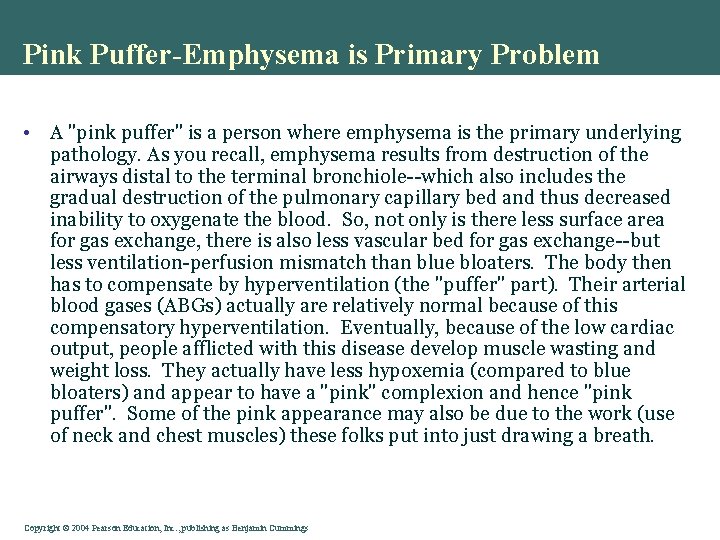
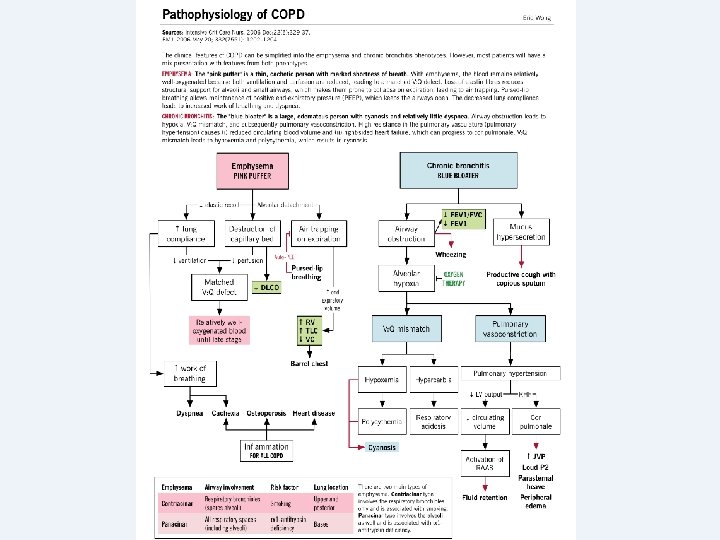
Pink Puffer-Emphysema is Primary Problem • A "pink puffer" is a person where emphysema is the primary underlying pathology. As you recall, emphysema results from destruction of the airways distal to the terminal bronchiole--which also includes the gradual destruction of the pulmonary capillary bed and thus decreased inability to oxygenate the blood. So, not only is there less surface area for gas exchange, there is also less vascular bed for gas exchange--but less ventilation-perfusion mismatch than blue bloaters. The body then has to compensate by hyperventilation (the "puffer" part). Their arterial blood gases (ABGs) actually are relatively normal because of this compensatory hyperventilation. Eventually, because of the low cardiac output, people afflicted with this disease develop muscle wasting and weight loss. They actually have less hypoxemia (compared to blue bloaters) and appear to have a "pink" complexion and hence "pink puffer". Some of the pink appearance may also be due to the work (use of neck and chest muscles) these folks put into just drawing a breath. Copyright © 2004 Pearson Education, Inc. , publishing as Benjamin Cummings
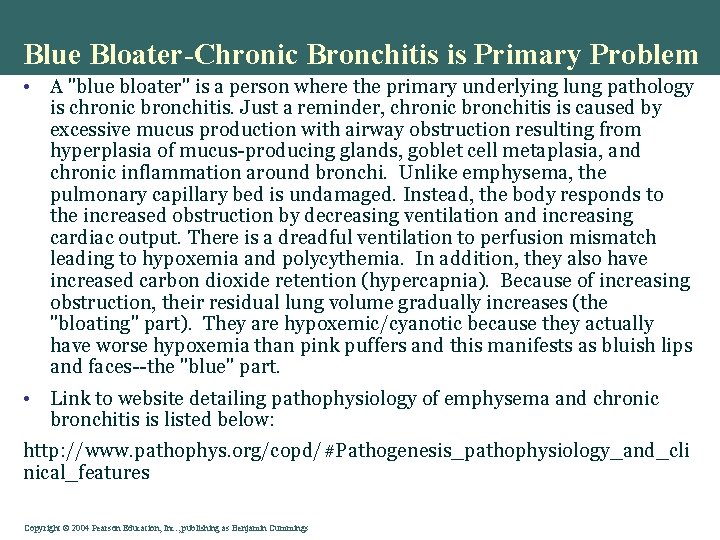
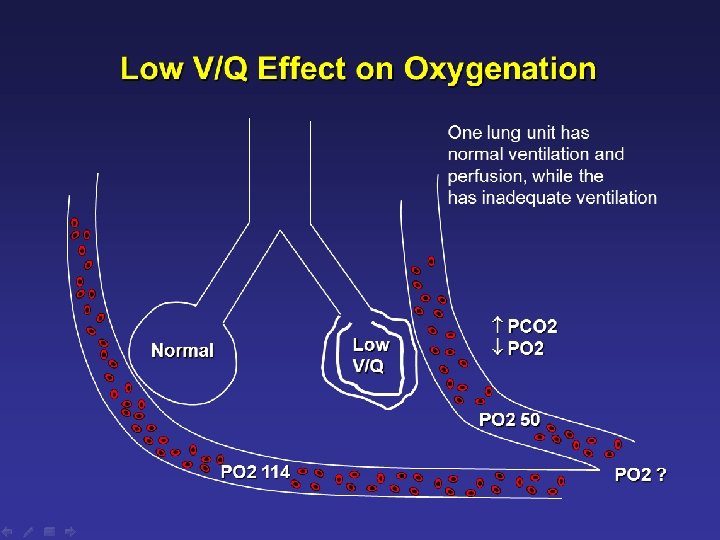
Blue Bloater-Chronic Bronchitis is Primary Problem • A "blue bloater" is a person where the primary underlying lung pathology is chronic bronchitis. Just a reminder, chronic bronchitis is caused by excessive mucus production with airway obstruction resulting from hyperplasia of mucus-producing glands, goblet cell metaplasia, and chronic inflammation around bronchi. Unlike emphysema, the pulmonary capillary bed is undamaged. Instead, the body responds to the increased obstruction by decreasing ventilation and increasing cardiac output. There is a dreadful ventilation to perfusion mismatch leading to hypoxemia and polycythemia. In addition, they also have increased carbon dioxide retention (hypercapnia). Because of increasing obstruction, their residual lung volume gradually increases (the "bloating" part). They are hypoxemic/cyanotic because they actually have worse hypoxemia than pink puffers and this manifests as bluish lips and faces--the "blue" part. • Link to website detailing pathophysiology of emphysema and chronic bronchitis is listed below: http: //www. pathophys. org/copd/#Pathogenesis_pathophysiology_and_cli nical_features Copyright © 2004 Pearson Education, Inc. , publishing as Benjamin Cummings
Copyright © 2004 Pearson Education, Inc. , publishing as Benjamin Cummings
Copyright © 2004 Pearson Education, Inc. , publishing as Benjamin Cummings
Copyright © 2004 Pearson Education, Inc. , publishing as Benjamin Cummings
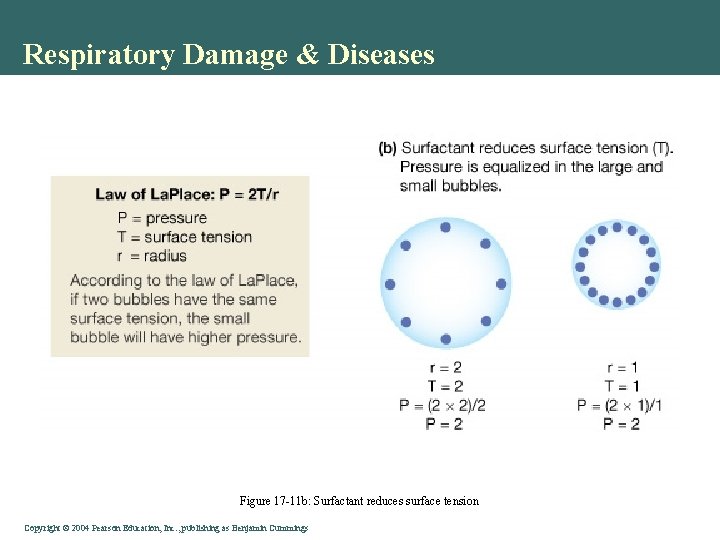
Respiratory Damage & Diseases Figure 17 -11 b: Surfactant reduces surface tension Copyright © 2004 Pearson Education, Inc. , publishing as Benjamin Cummings
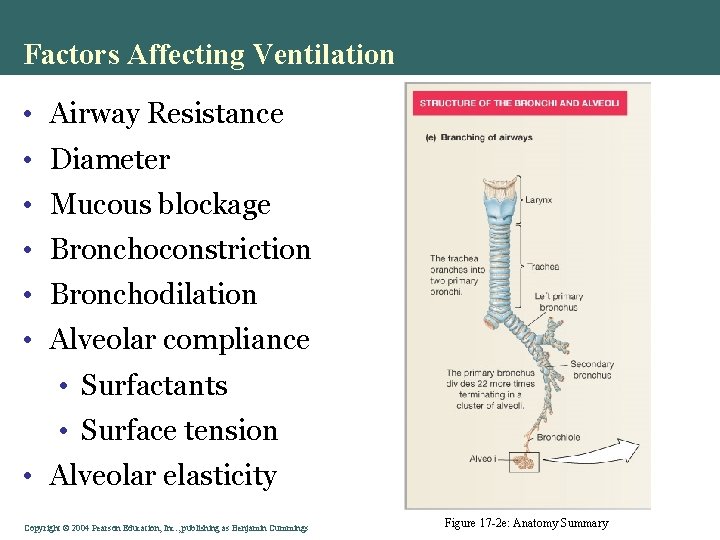
Factors Affecting Ventilation • Airway Resistance • Diameter • Mucous blockage • Bronchoconstriction • Bronchodilation • Alveolar compliance • Surfactants • Surface tension • Alveolar elasticity Copyright © 2004 Pearson Education, Inc. , publishing as Benjamin Cummings Figure 17 -2 e: Anatomy Summary
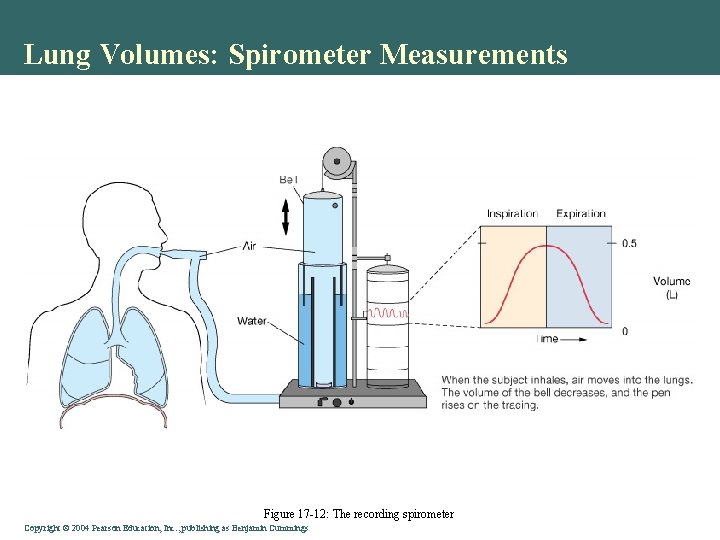
Lung Volumes: Spirometer Measurements Figure 17 -12: The recording spirometer Copyright © 2004 Pearson Education, Inc. , publishing as Benjamin Cummings
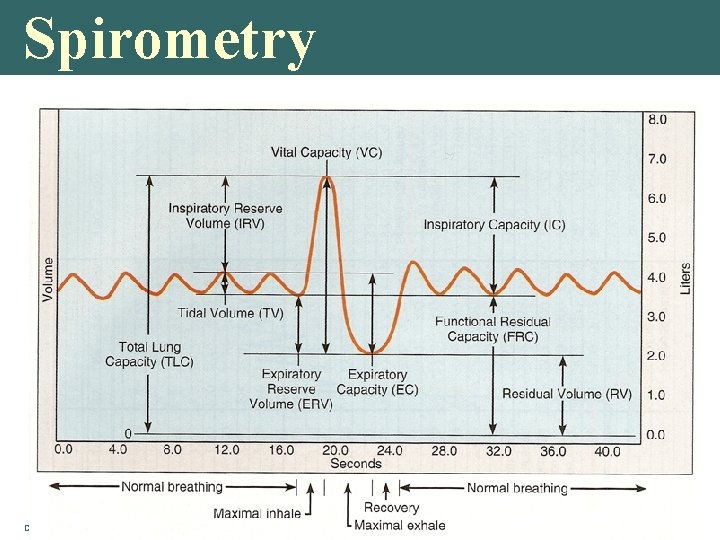
Spirometry Copyright © 2004 Pearson Education, Inc. , publishing as Benjamin Cummings
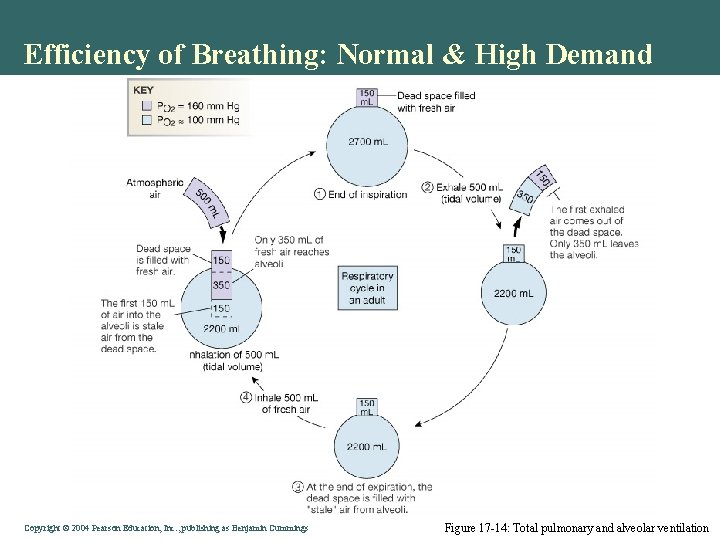
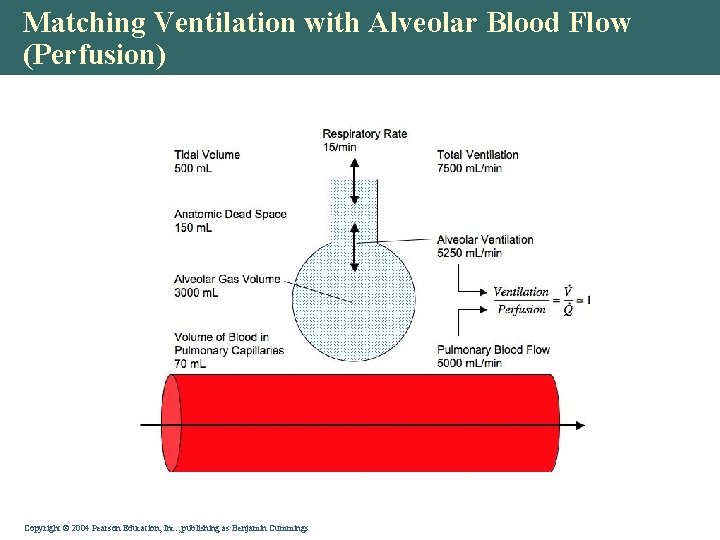
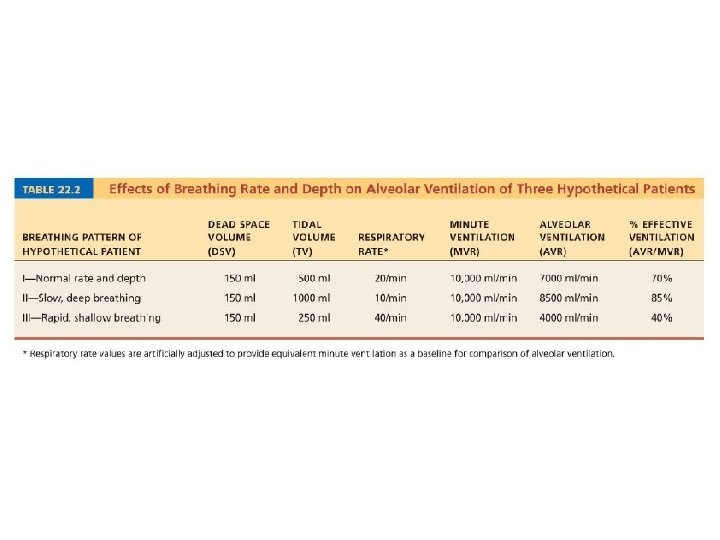
Efficiency of Breathing: Normal & High Demand • Total Pulmonary Ventilation (rate X tidal vol about 6 L/min) • Alveolar ventilation (– dead air space – 4. 5 L/min) • Little variation [O 2] & [CO 2] • Exercise- High Demand • Depth of breathing • Use inspiratory reserve Copyright © 2004 Pearson Education, Inc. , publishing as Benjamin Cummings
Efficiency of Breathing: Normal & High Demand Copyright © 2004 Pearson Education, Inc. , publishing as Benjamin Cummings Figure 17 -14: Total pulmonary and alveolar ventilation
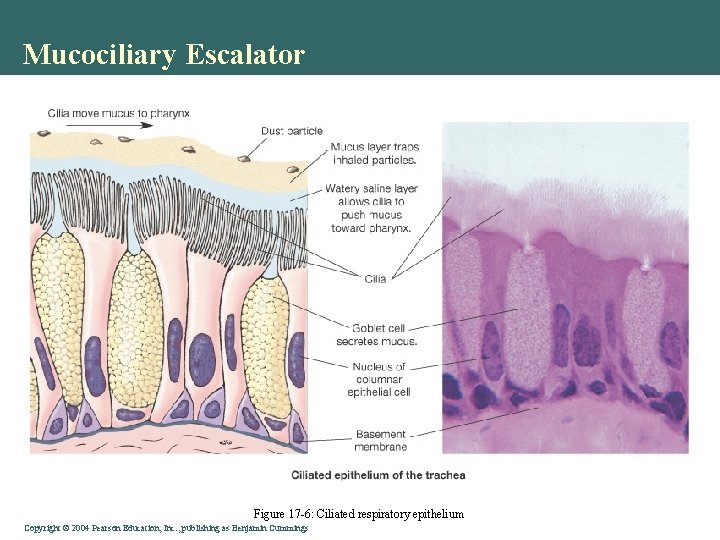
Mucociliary Escalator Figure 17 -6: Ciliated respiratory epithelium Copyright © 2004 Pearson Education, Inc. , publishing as Benjamin Cummings
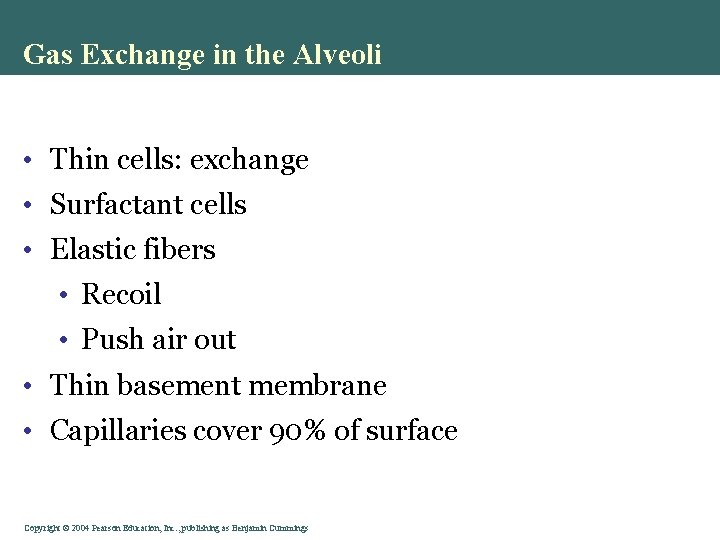
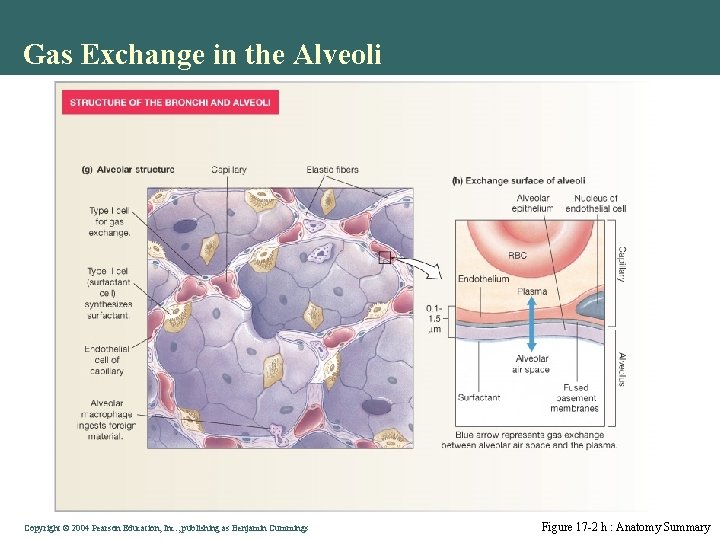
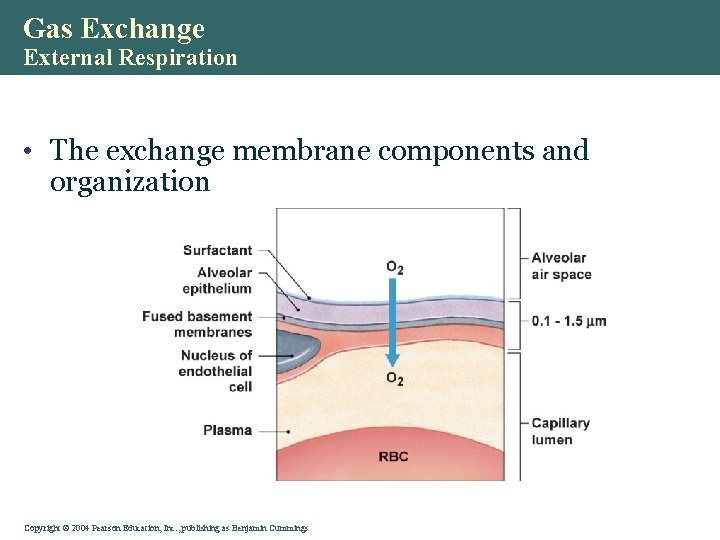
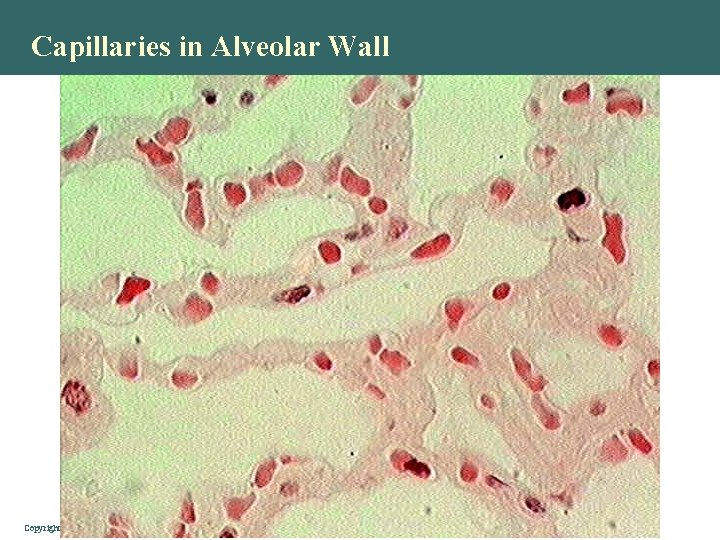
Gas Exchange in the Alveoli • Thin cells: exchange • Surfactant cells • Elastic fibers • Recoil • Push air out • Thin basement membrane • Capillaries cover 90% of surface Copyright © 2004 Pearson Education, Inc. , publishing as Benjamin Cummings
Gas Exchange in the Alveoli Copyright © 2004 Pearson Education, Inc. , publishing as Benjamin Cummings Figure 17 -2 h : Anatomy Summary
Gas Exchange External Respiration • The exchange membrane components and organization Copyright © 2004 Pearson Education, Inc. , publishing as Benjamin Cummings
Capillaries in Alveolar Wall Copyright © 2004 Pearson Education, Inc. , publishing as Benjamin Cummings
Copyright © 2004 Pearson Education, Inc. , publishing as Benjamin Cummings
Copyright © 2004 Pearson Education, Inc. , publishing as Benjamin Cummings
Copyright © 2004 Pearson Education, Inc. , publishing as Benjamin Cummings
Copyright © 2004 Pearson Education, Inc. , publishing as Benjamin Cummings
Copyright © 2004 Pearson Education, Inc. , publishing as Benjamin Cummings
Copyright © 2004 Pearson Education, Inc. , publishing as Benjamin Cummings
Copyright © 2004 Pearson Education, Inc. , publishing as Benjamin Cummings
Copyright © 2004 Pearson Education, Inc. , publishing as Benjamin Cummings
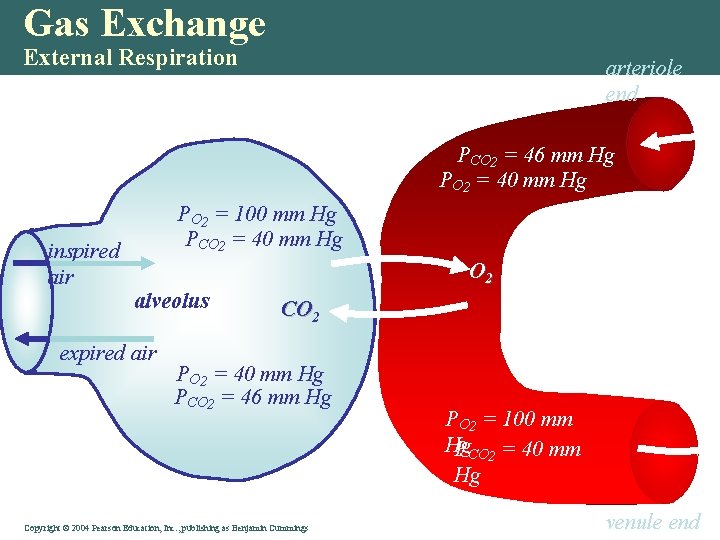
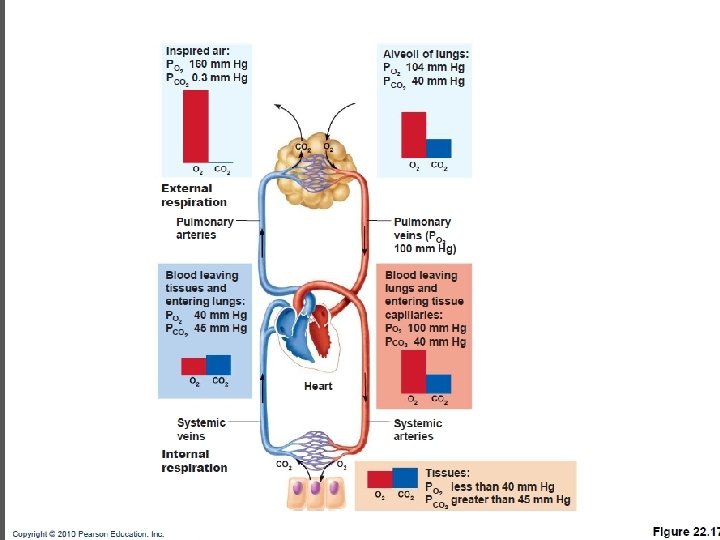
Gas Exchange External Respiration arteriole end PCO 2 = 46 mm Hg PO 2 = 40 mm Hg inspired air PO 2 = 100 mm Hg PCO 2 = 40 mm Hg O 2 alveolus expired air CO 2 PO 2 = 40 mm Hg PCO 2 = 46 mm Hg Copyright © 2004 Pearson Education, Inc. , publishing as Benjamin Cummings pulmonary capillary PO 2 = 100 mm Hg PCO 2 = 40 mm Hg venule end
Copyright © 2004 Pearson Education, Inc. , publishing as Benjamin Cummings
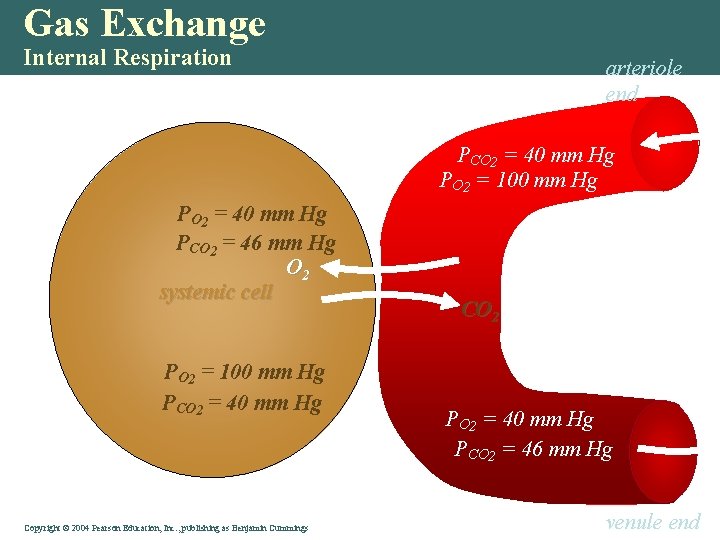
Gas Exchange Internal Respiration arteriole end PCO 2 = 40 mm Hg PO 2 = 100 mm Hg PO 2 = 40 mm Hg PCO 2 = 46 mm Hg O 2 systemic cell PO 2 = 100 mm Hg PCO 2 = 40 mm Hg Copyright © 2004 Pearson Education, Inc. , publishing as Benjamin Cummings systemic CO 2 capillary PO 2 = 40 mm Hg PCO 2 = 46 mm Hg venule end
Copyright © 2004 Pearson Education, Inc. , publishing as Benjamin Cummings
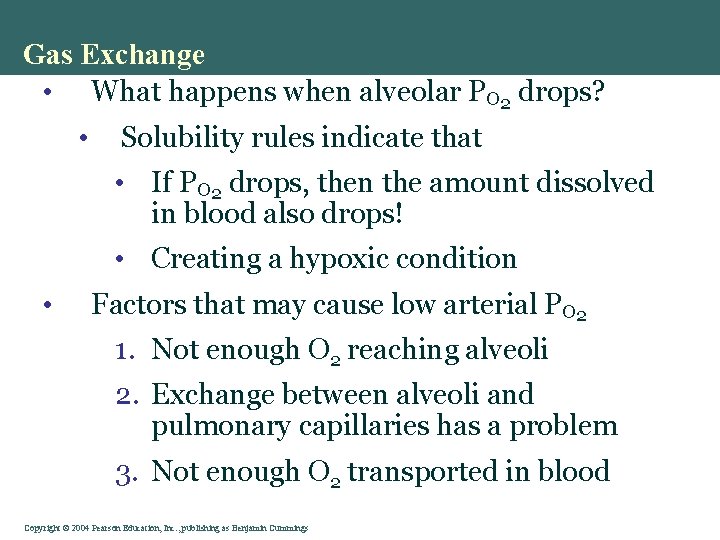
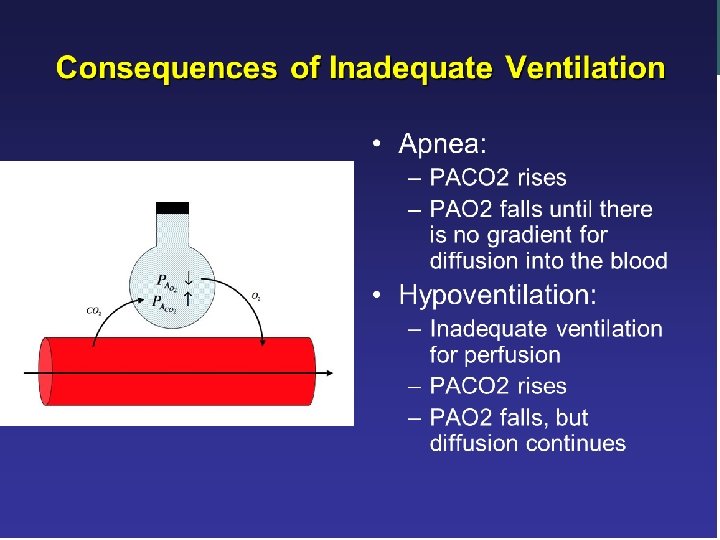
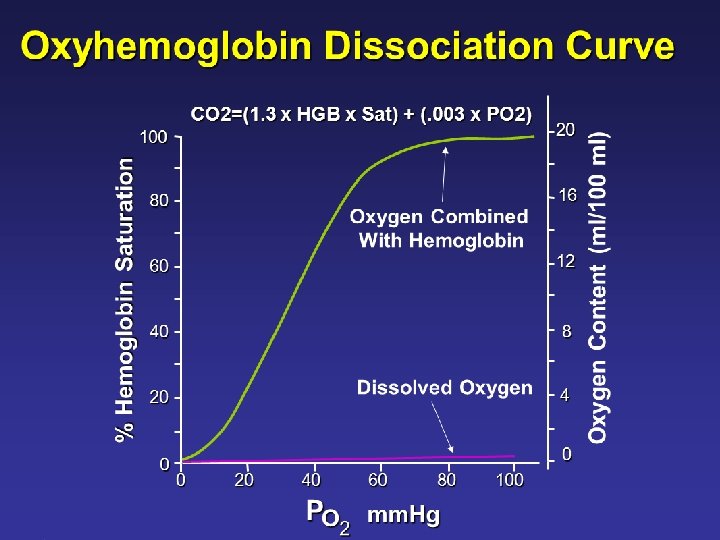
Gas Exchange • What happens when alveolar PO 2 drops? • Solubility rules indicate that • If PO 2 drops, then the amount dissolved in blood also drops! • Creating a hypoxic condition • Factors that may cause low arterial PO 2 1. Not enough O 2 reaching alveoli 2. Exchange between alveoli and pulmonary capillaries has a problem 3. Not enough O 2 transported in blood Copyright © 2004 Pearson Education, Inc. , publishing as Benjamin Cummings
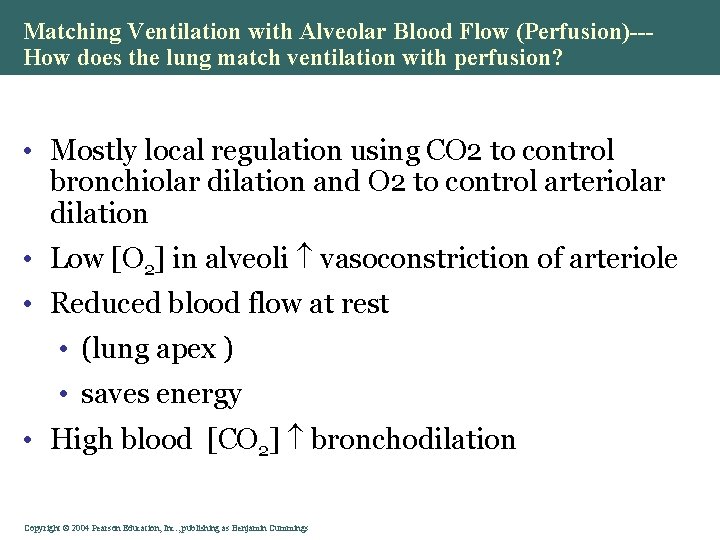
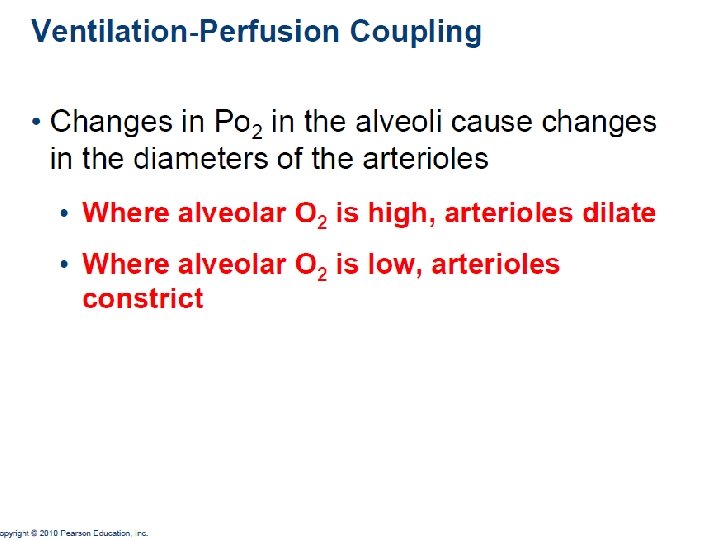
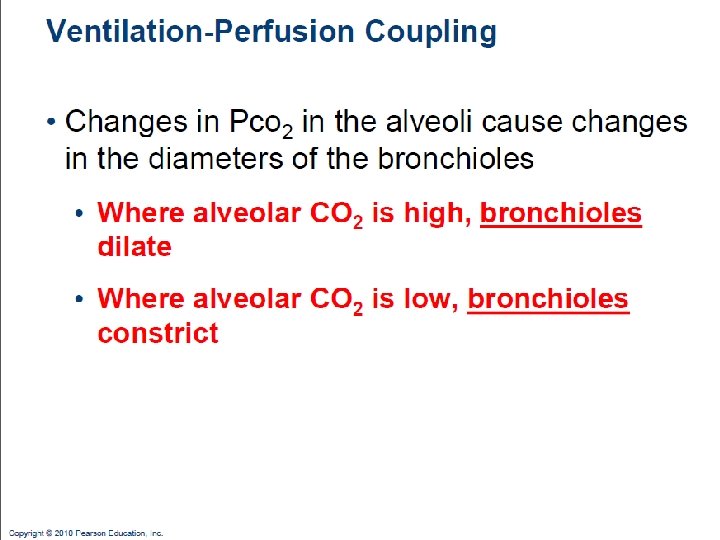
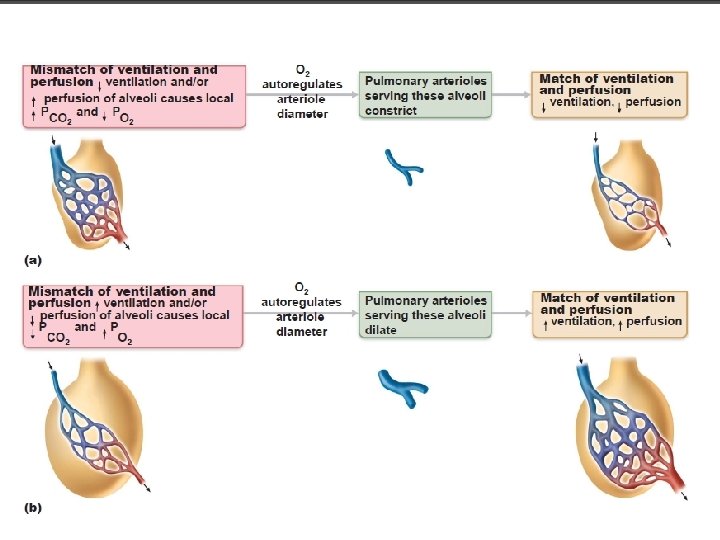
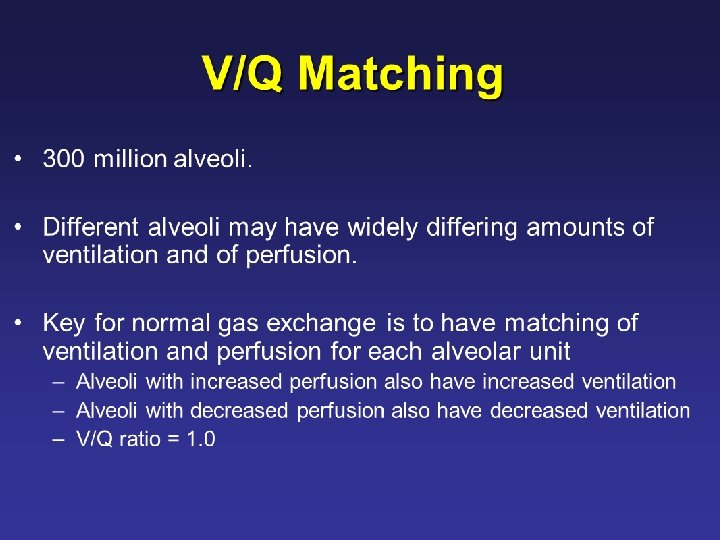
Matching Ventilation with Alveolar Blood Flow (Perfusion)--How does the lung match ventilation with perfusion? • Mostly local regulation using CO 2 to control bronchiolar dilation and O 2 to control arteriolar dilation • Low [O 2] in alveoli vasoconstriction of arteriole • Reduced blood flow at rest • (lung apex ) • saves energy • High blood [CO 2] bronchodilation Copyright © 2004 Pearson Education, Inc. , publishing as Benjamin Cummings
Copyright © 2004 Pearson Education, Inc. , publishing as Benjamin Cummings
Copyright © 2004 Pearson Education, Inc. , publishing as Benjamin Cummings
Copyright © 2004 Pearson Education, Inc. , publishing as Benjamin Cummings
Matching Ventilation with Alveolar Blood Flow (Perfusion) Copyright © 2004 Pearson Education, Inc. , publishing as Benjamin Cummings
Copyright © 2004 Pearson Education, Inc. , publishing as Benjamin Cummings
Copyright © 2004 Pearson Education, Inc. , publishing as Benjamin Cummings
Copyright © 2004 Pearson Education, Inc. , publishing as Benjamin Cummings
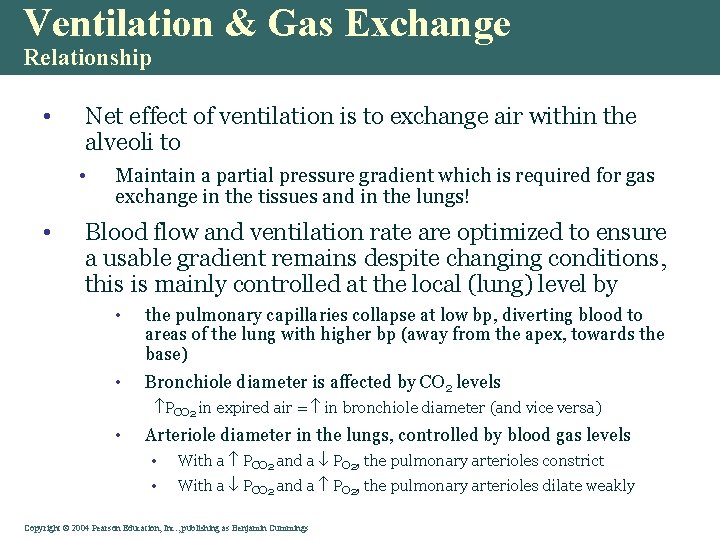
Ventilation & Gas Exchange Relationship • Net effect of ventilation is to exchange air within the alveoli to • • Maintain a partial pressure gradient which is required for gas exchange in the tissues and in the lungs! Blood flow and ventilation rate are optimized to ensure a usable gradient remains despite changing conditions, this is mainly controlled at the local (lung) level by • the pulmonary capillaries collapse at low bp, diverting blood to areas of the lung with higher bp (away from the apex, towards the base) • Bronchiole diameter is affected by CO 2 levels PCO 2 in expired air = in bronchiole diameter (and vice versa) • Arteriole diameter in the lungs, controlled by blood gas levels • With a PCO 2 and a PO 2, the pulmonary arterioles constrict • With a PCO 2 and a PO 2, the pulmonary arterioles dilate weakly Copyright © 2004 Pearson Education, Inc. , publishing as Benjamin Cummings
Copyright © 2004 Pearson Education, Inc. , publishing as Benjamin Cummings
Copyright © 2004 Pearson Education, Inc. , publishing as Benjamin Cummings
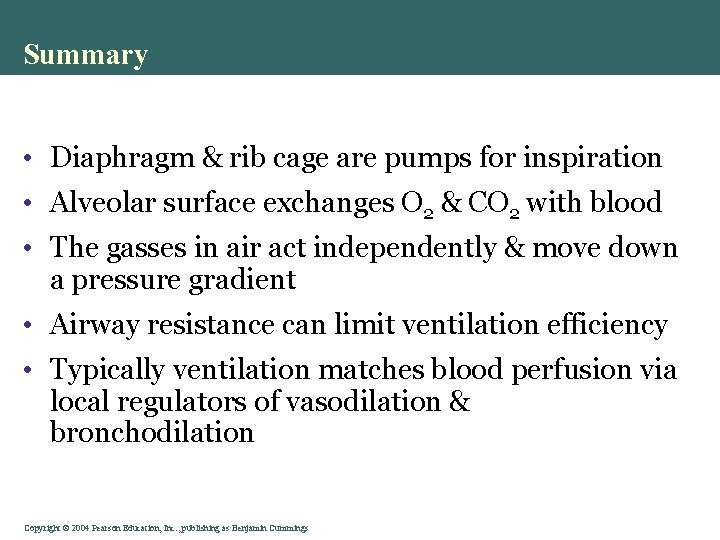
Summary • Diaphragm & rib cage are pumps for inspiration • Alveolar surface exchanges O 2 & CO 2 with blood • The gasses in air act independently & move down a pressure gradient • Airway resistance can limit ventilation efficiency • Typically ventilation matches blood perfusion via local regulators of vasodilation & bronchodilation Copyright © 2004 Pearson Education, Inc. , publishing as Benjamin Cummings