
THIRD EDITION HUMAN PHYSIOLOGY AN INTEGRATED APPROACH Dee

- Slides: 35
THIRD EDITION HUMAN PHYSIOLOGY AN INTEGRATED APPROACH Dee Unglaub Silverthorn, Ph. D. Chapter 11 Efferent Division: Autonomic and Somatic Motor Control Power. Point® Lecture Slide Presentation by Dr. Howard D. Booth, Professor of Biology, Eastern Michigan University Copyright © 2004 Pearson Education, Inc. , publishing as Benjamin Cummings
About this Chapter • Efferent division and what it controls • Pathways receptors and neurotransmitters • Antagonistic controls: sympathetic and parasympathetic • Control of cardiac, smooth muscle, some adipose tissue and glands in homeostasis • CNS control of skeletal muscles through neuromuscular junctions Copyright © 2004 Pearson Education, Inc. , publishing as Benjamin Cummings
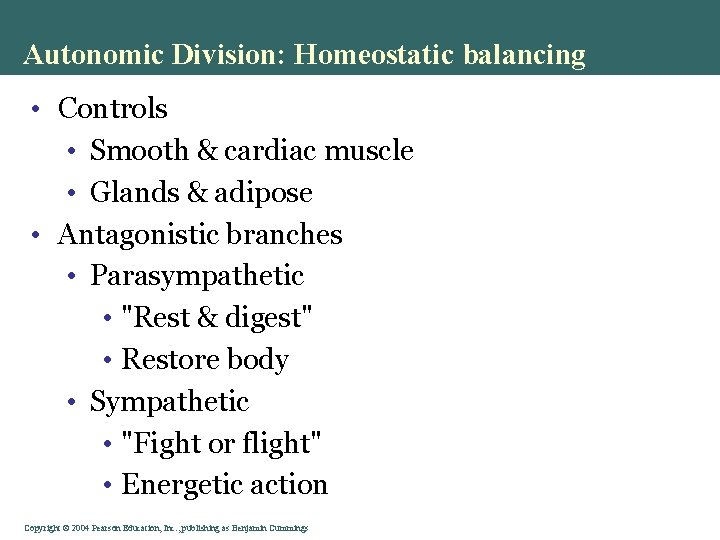
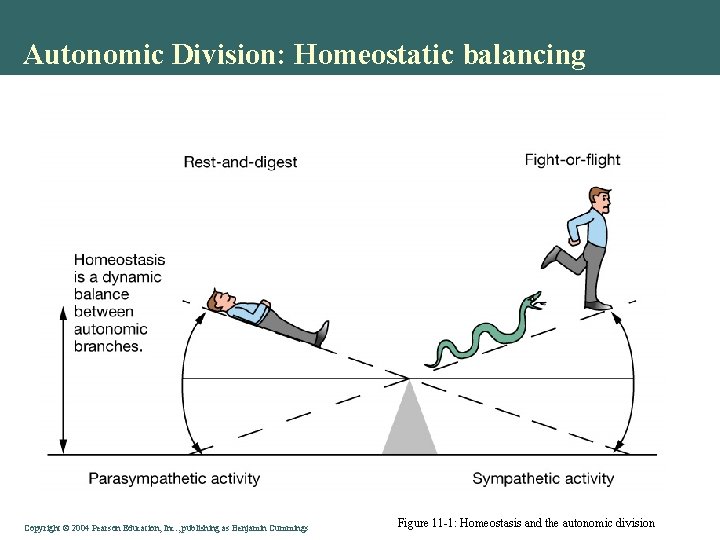
Autonomic Division: Homeostatic balancing • Controls • Smooth & cardiac muscle • Glands & adipose • Antagonistic branches • Parasympathetic • "Rest & digest" • Restore body • Sympathetic • "Fight or flight" • Energetic action Copyright © 2004 Pearson Education, Inc. , publishing as Benjamin Cummings
Autonomic Division: Homeostatic balancing Copyright © 2004 Pearson Education, Inc. , publishing as Benjamin Cummings Figure 11 -1: Homeostasis and the autonomic division
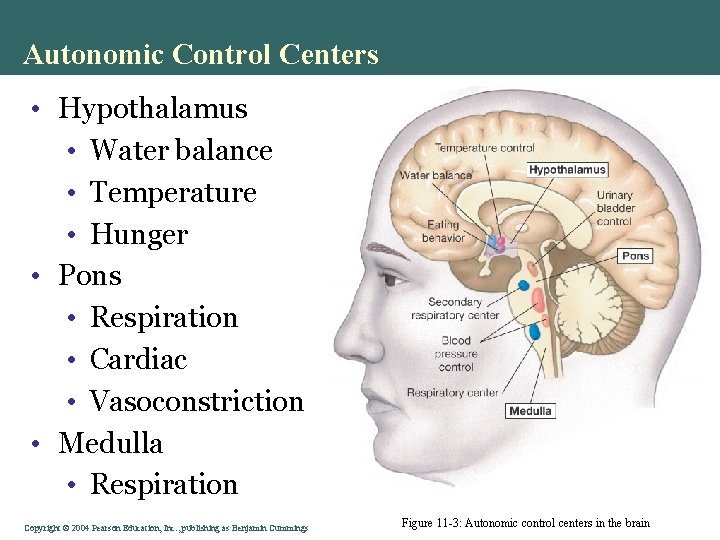
Autonomic Control Centers • Hypothalamus • Water balance • Temperature • Hunger • Pons • Respiration • Cardiac • Vasoconstriction • Medulla • Respiration Copyright © 2004 Pearson Education, Inc. , publishing as Benjamin Cummings Figure 11 -3: Autonomic control centers in the brain
Autonomic Pathways: Communicate to Body • Coordinates homeostatic responses • Autonomic • Endocrine • Behavioral • Blood pressure • Osmolarity • Tonic regulation • Antagonistic control • Receptor directed response Copyright © 2004 Pearson Education, Inc. , publishing as Benjamin Cummings
WHAT IS ROHHAD? • ROHHAD is an acronym for rapid-onset obesity with hypothalamic dysregulation, hypoventilation and autonomic dysregulation. • It affects the part of the nervous system that controls involuntary actions and the endocrine system. • Scientists suspect the condition is genetic but are still unsure. • The disease is incredibly rare, and less than 100 people in the world have been diagnosed with it. • Signs and symptoms: • Dramatic weight gain over a six to 12 -month period • Inability to maintain normal water balance in the body • Inability to regulate body temperature • Slow heartbeat and excessive sweating • Very shallow breathing during sleep • There is currently no cure for ROHHAD, with the average life expectancy being between five and nine, reports suggest. • Because it can affect many different parts of the body, children are often cared for by a team of healthcare providers from various fields. • The weight gain is often hard to control through exercise and diet - but keeping active helps to avoid excess from being piled on. Copyright © 2004 Pearson Education, Inc. , publishing as Benjamin Cummings
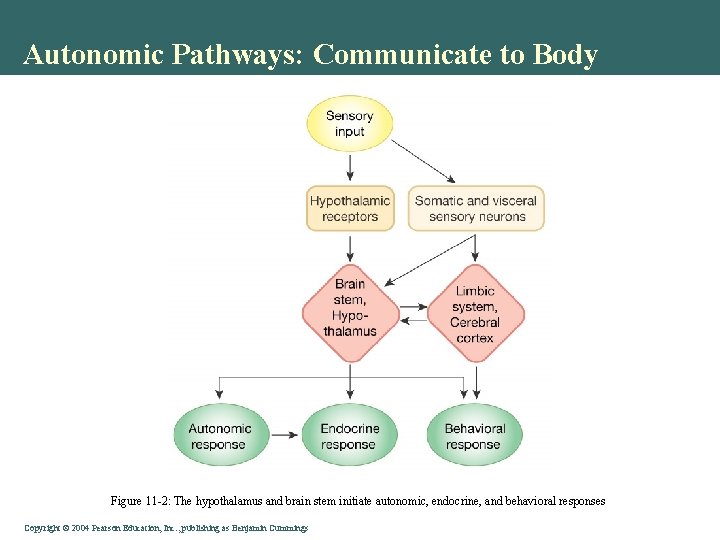
Autonomic Pathways: Communicate to Body Figure 11 -2: The hypothalamus and brain stem initiate autonomic, endocrine, and behavioral responses Copyright © 2004 Pearson Education, Inc. , publishing as Benjamin Cummings
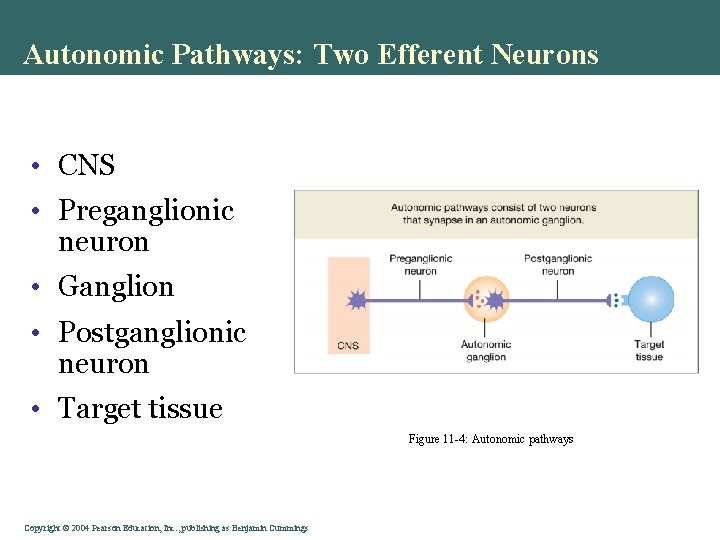
Autonomic Pathways: Two Efferent Neurons • CNS • Preganglionic neuron • Ganglion • Postganglionic neuron • Target tissue Figure 11 -4: Autonomic pathways Copyright © 2004 Pearson Education, Inc. , publishing as Benjamin Cummings
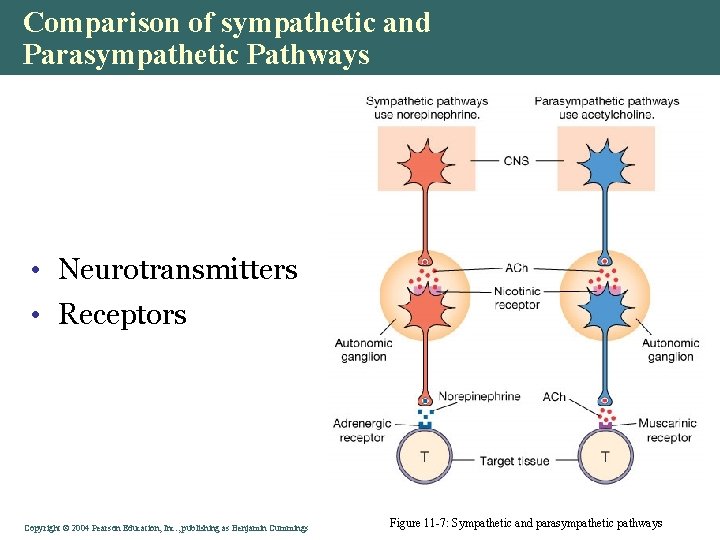
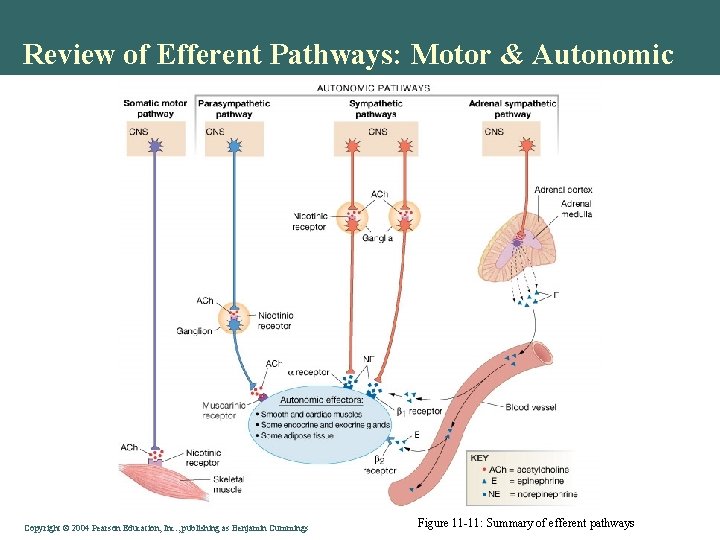
Comparison of sympathetic and Parasympathetic Pathways • Neurotransmitters • Receptors Copyright © 2004 Pearson Education, Inc. , publishing as Benjamin Cummings Figure 11 -7: Sympathetic and parasympathetic pathways
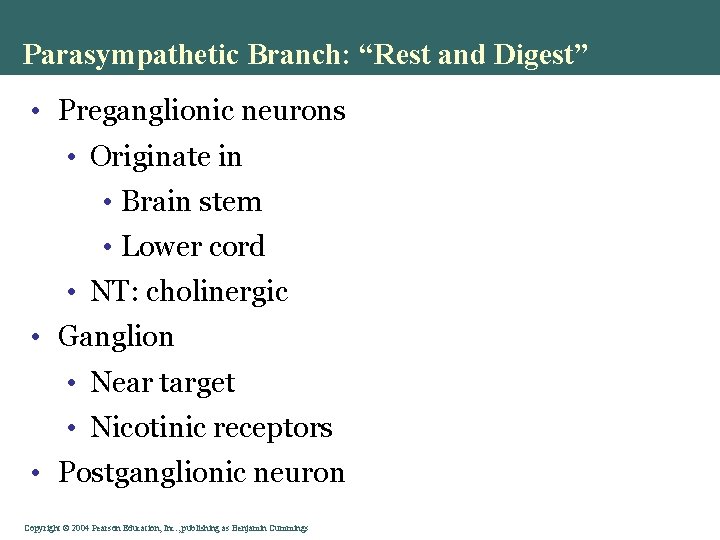
Parasympathetic Branch: “Rest and Digest” • Preganglionic neurons • Originate in • Brain stem • Lower cord • NT: cholinergic • Ganglion • Near target • Nicotinic receptors • Postganglionic neuron Copyright © 2004 Pearson Education, Inc. , publishing as Benjamin Cummings
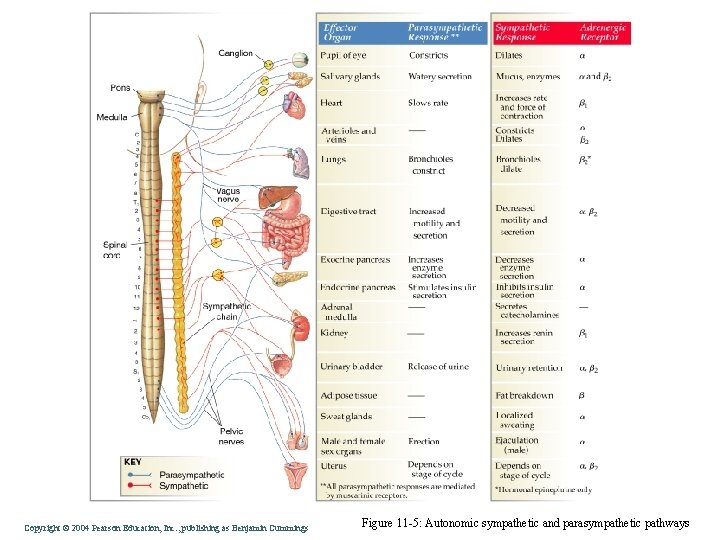
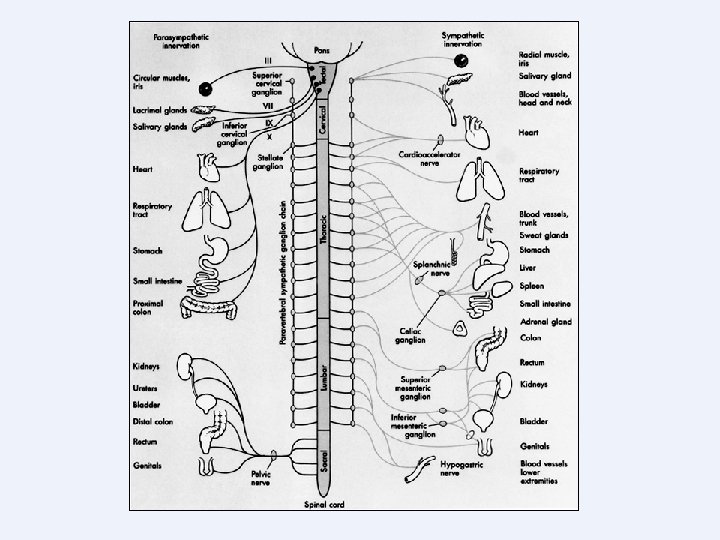
Copyright © 2004 Pearson Education, Inc. , publishing as Benjamin Cummings Figure 11 -5: Autonomic sympathetic and parasympathetic pathways
Copyright © 2004 Pearson Education, Inc. , publishing as Benjamin Cummings
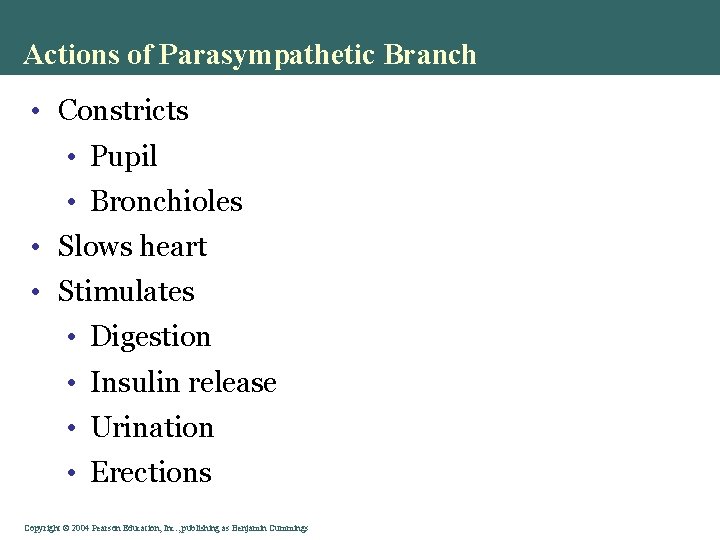
Actions of Parasympathetic Branch • Constricts • Pupil • Bronchioles • Slows heart • Stimulates • Digestion • Insulin release • Urination • Erections Copyright © 2004 Pearson Education, Inc. , publishing as Benjamin Cummings
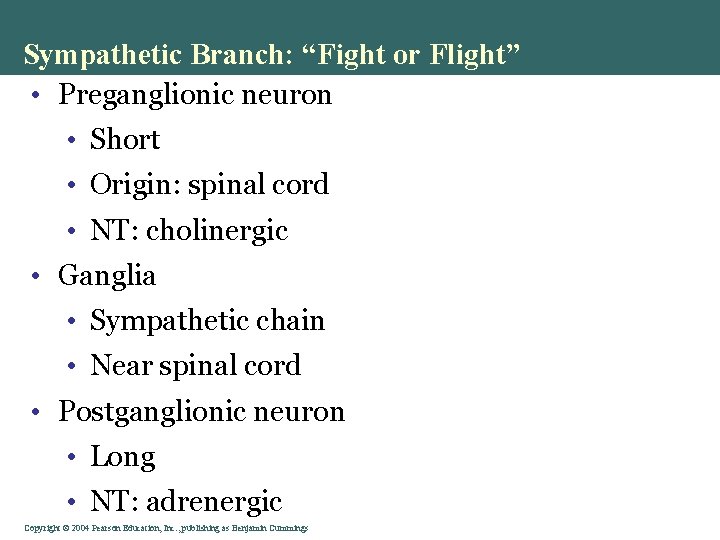
Sympathetic Branch: “Fight or Flight” • Preganglionic neuron • Short • Origin: spinal cord • NT: cholinergic • Ganglia • Sympathetic chain • Near spinal cord • Postganglionic neuron • Long • NT: adrenergic Copyright © 2004 Pearson Education, Inc. , publishing as Benjamin Cummings
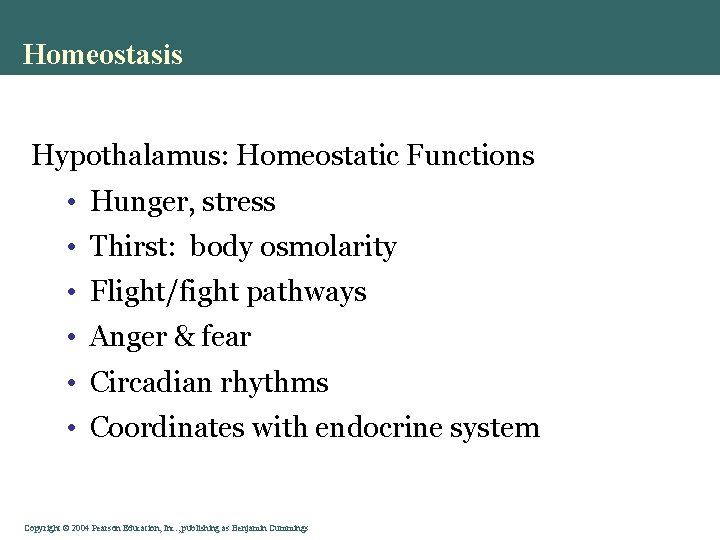
Homeostasis Hypothalamus: Homeostatic Functions • Hunger, stress • Thirst: body osmolarity • Flight/fight pathways • Anger & fear • Circadian rhythms • Coordinates with endocrine system Copyright © 2004 Pearson Education, Inc. , publishing as Benjamin Cummings
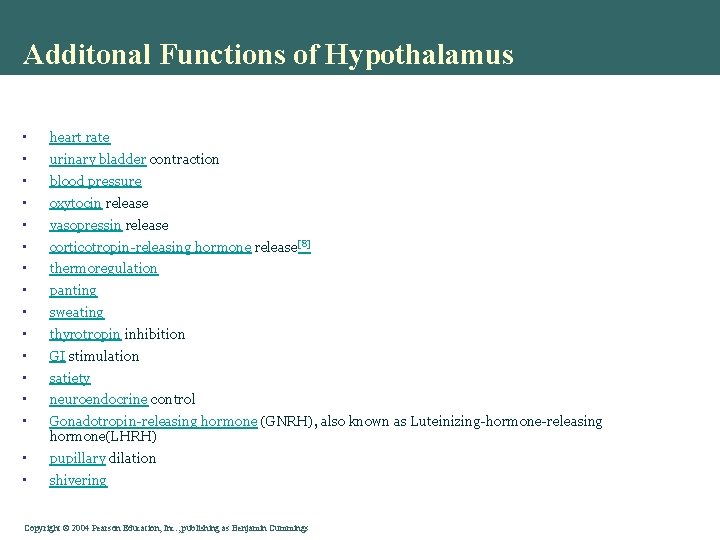
Additonal Functions of Hypothalamus • heart rate • urinary bladder contraction • blood pressure • oxytocin release • vasopressin release • corticotropin-releasing hormone release[8] • thermoregulation • panting • sweating • thyrotropin inhibition • GI stimulation • satiety • neuroendocrine control • Gonadotropin-releasing hormone (GNRH), also known as Luteinizing-hormone-releasing hormone(LHRH) • pupillary dilation • shivering Copyright © 2004 Pearson Education, Inc. , publishing as Benjamin Cummings
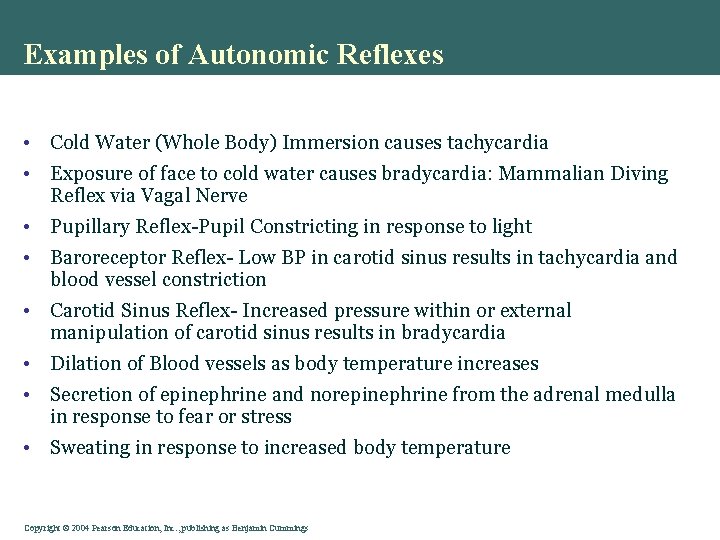
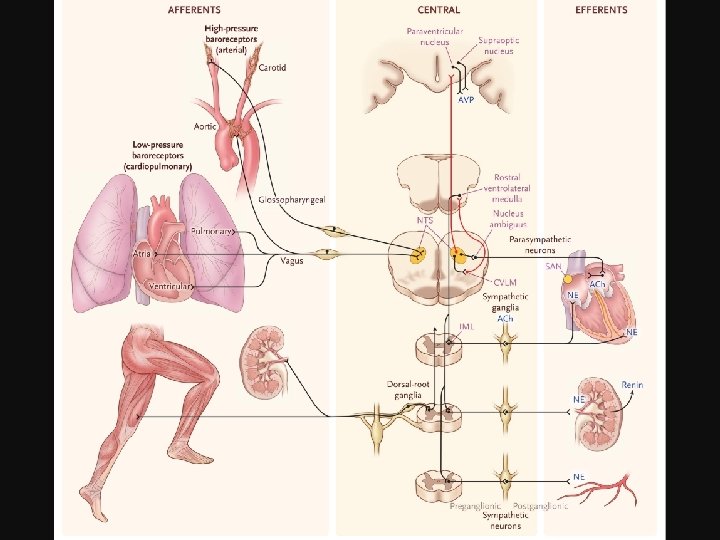
Examples of Autonomic Reflexes • Cold Water (Whole Body) Immersion causes tachycardia • Exposure of face to cold water causes bradycardia: Mammalian Diving Reflex via Vagal Nerve • Pupillary Reflex-Pupil Constricting in response to light • Baroreceptor Reflex- Low BP in carotid sinus results in tachycardia and blood vessel constriction • Carotid Sinus Reflex- Increased pressure within or external manipulation of carotid sinus results in bradycardia • Dilation of Blood vessels as body temperature increases • Secretion of epinephrine and norepinephrine from the adrenal medulla in response to fear or stress • Sweating in response to increased body temperature Copyright © 2004 Pearson Education, Inc. , publishing as Benjamin Cummings
Copyright © 2004 Pearson Education, Inc. , publishing as Benjamin Cummings
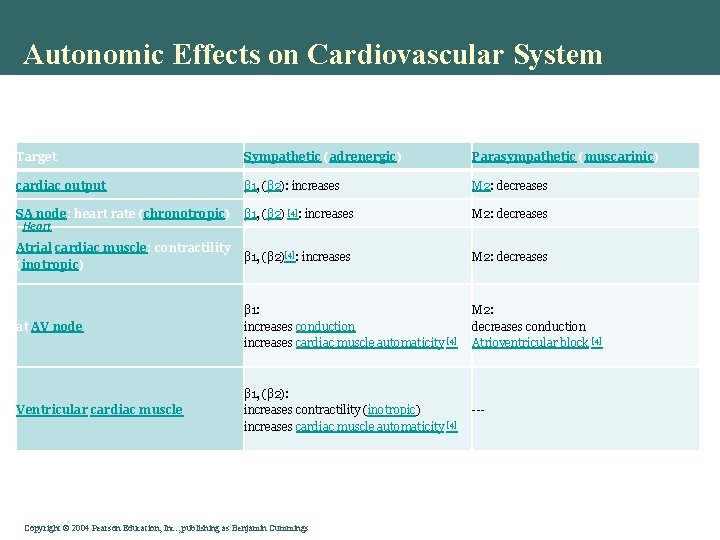
Autonomic Effects on Cardiovascular System Target Sympathetic (adrenergic) Parasympathetic (muscarinic) cardiac output β 1, (β 2): increases M 2: decreases SA node: heart rate (chronotropic) Heart β 1, (β 2) [4]: increases M 2: decreases Atrial cardiac muscle: contractility (inotropic) β 1, (β 2)[4]: increases M 2: decreases at AV node β 1: increases conduction increases cardiac muscle automaticity [4] M 2: decreases conduction Atrioventricular block [4] Ventricular cardiac muscle β 1, (β 2): increases contractility (inotropic) increases cardiac muscle automaticity [4] --- Copyright © 2004 Pearson Education, Inc. , publishing as Benjamin Cummings
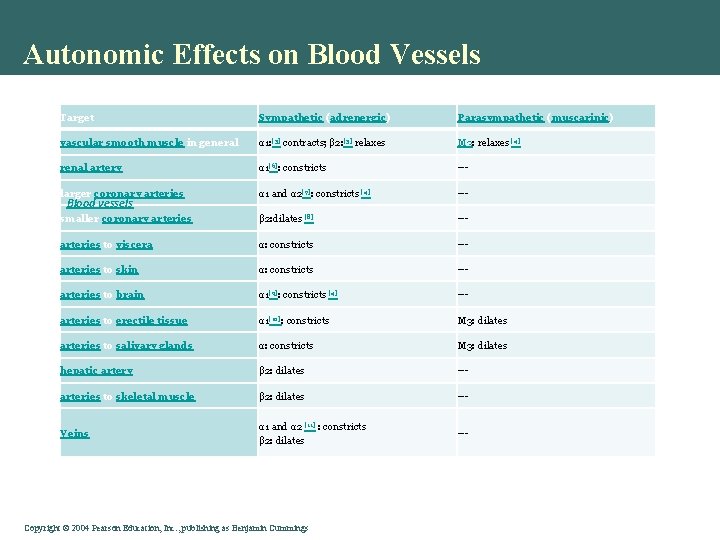
Autonomic Effects on Blood Vessels Target Sympathetic (adrenergic) Parasympathetic (muscarinic) vascular smooth muscle in general α 1: [5] contracts; β 2: [5] relaxes M 3: relaxes [4] renal artery α 1[6]: constricts --- larger coronary arteries α 1 and α 2[7]: constricts [4] --- smaller coronary arteries β 2: dilates [8] --- arteries to viscera α: constricts --- arteries to skin α: constricts --- arteries to brain α 1[9]: constricts [4] --- arteries to erectile tissue α 1[10]: constricts M 3: dilates arteries to salivary glands α: constricts M 3: dilates hepatic artery β 2: dilates --- arteries to skeletal muscle β 2: dilates --- Veins α 1 and α 2 [11] : constricts β 2: dilates --- Blood vessels Copyright © 2004 Pearson Education, Inc. , publishing as Benjamin Cummings
Stimulatory Actions of Sympathetic Branch • Pupil dilation • Salivation • Heart beat & volume • Dilation • Blood vessels • Bronchioles • Catecholamine release • Fat breakdown • Ejaculation Copyright © 2004 Pearson Education, Inc. , publishing as Benjamin Cummings
Inhibitory Actions of Sympathetic Branch • Digestion • Pancreas secretion • Urination Copyright © 2004 Pearson Education, Inc. , publishing as Benjamin Cummings
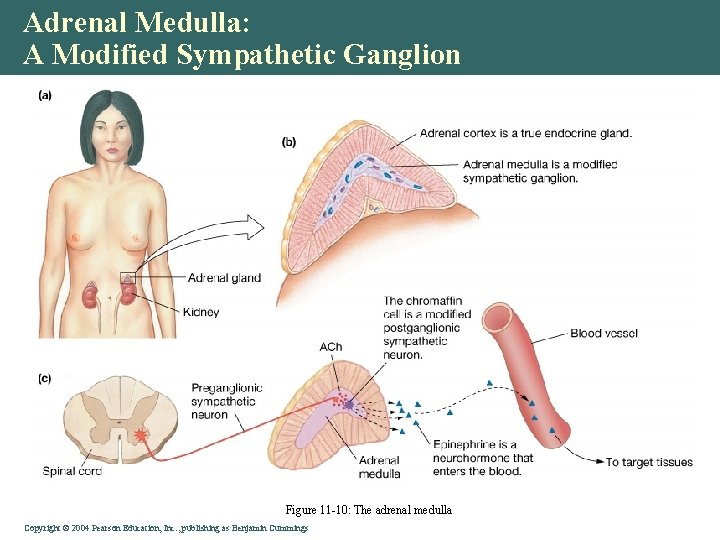
Adrenal Medulla: A Modified Sympathetic Ganglion • Sympathetic stimulation • Catecholamine release to blood • Epinephrine • Norepinephrine • Travel to: • Multiple targets • Distant targets Copyright © 2004 Pearson Education, Inc. , publishing as Benjamin Cummings
Adrenal Medulla: A Modified Sympathetic Ganglion Figure 11 -10: The adrenal medulla Copyright © 2004 Pearson Education, Inc. , publishing as Benjamin Cummings
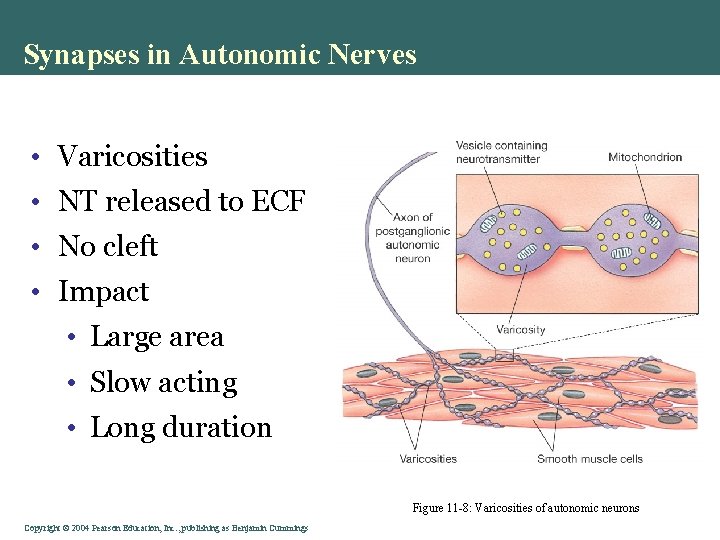
Synapses in Autonomic Nerves • Varicosities • NT released to ECF • No cleft • Impact • Large area • Slow acting • Long duration Figure 11 -8: Varicosities of autonomic neurons Copyright © 2004 Pearson Education, Inc. , publishing as Benjamin Cummings
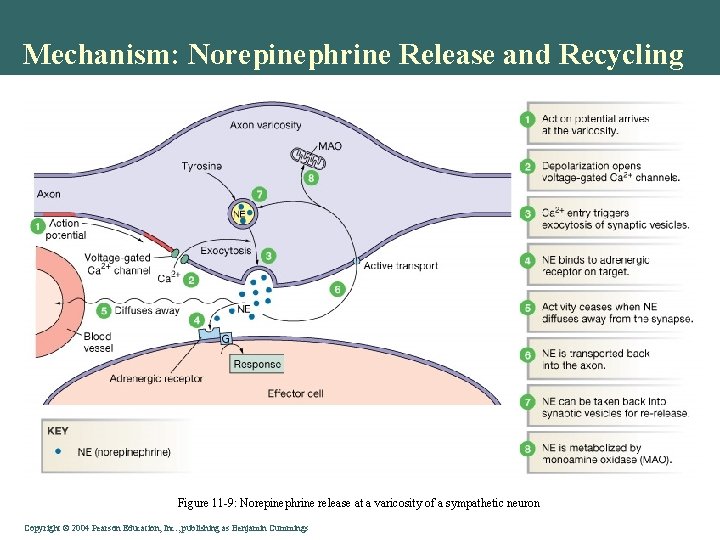
Mechanism: Norepinephrine Release and Recycling Figure 11 -9: Norepinephrine release at a varicosity of a sympathetic neuron Copyright © 2004 Pearson Education, Inc. , publishing as Benjamin Cummings
Review of Efferent Pathways: Motor & Autonomic Copyright © 2004 Pearson Education, Inc. , publishing as Benjamin Cummings Figure 11 -11: Summary of efferent pathways
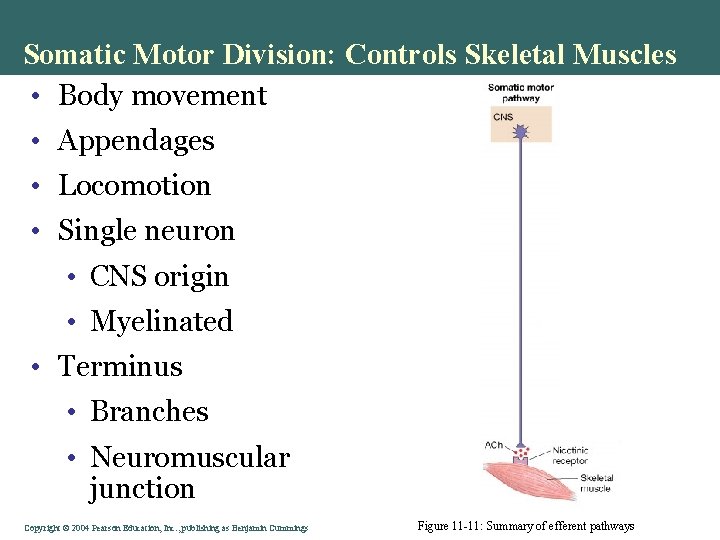
Somatic Motor Division: Controls Skeletal Muscles • Body movement • Appendages • Locomotion • Single neuron • CNS origin • Myelinated • Terminus • Branches • Neuromuscular junction Copyright © 2004 Pearson Education, Inc. , publishing as Benjamin Cummings Figure 11 -11: Summary of efferent pathways
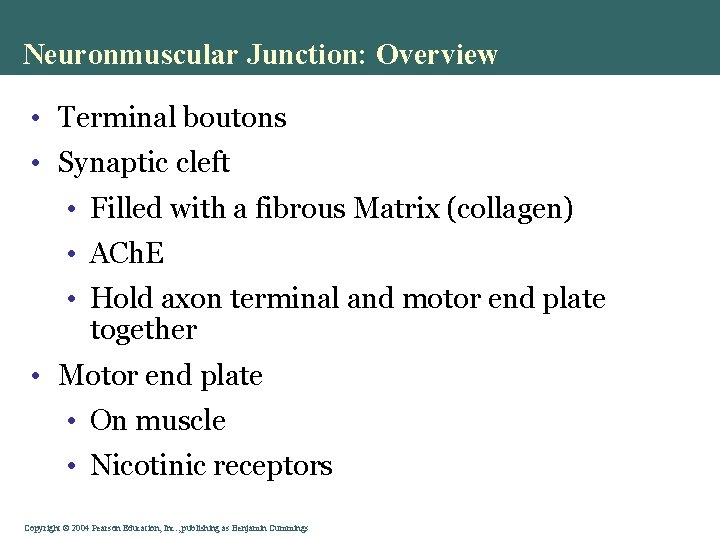
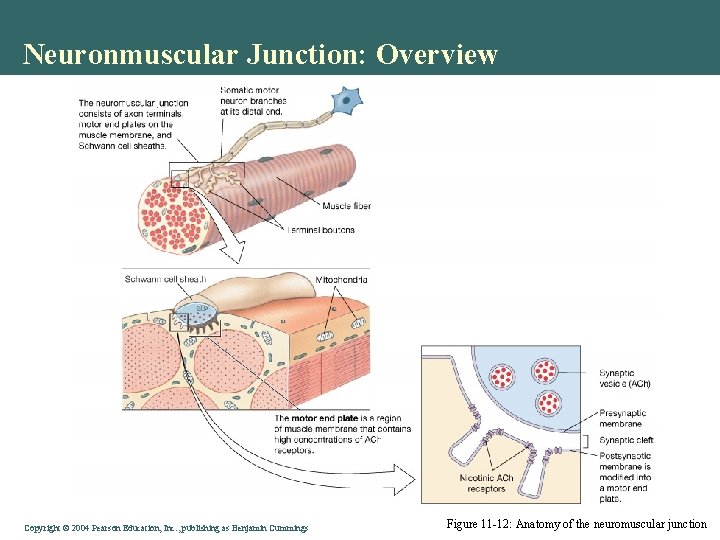
Neuronmuscular Junction: Overview • Terminal boutons • Synaptic cleft • Filled with a fibrous Matrix (collagen) • ACh. E • Hold axon terminal and motor end plate together • Motor end plate • On muscle • Nicotinic receptors Copyright © 2004 Pearson Education, Inc. , publishing as Benjamin Cummings
Neuronmuscular Junction: Overview Copyright © 2004 Pearson Education, Inc. , publishing as Benjamin Cummings Figure 11 -12: Anatomy of the neuromuscular junction
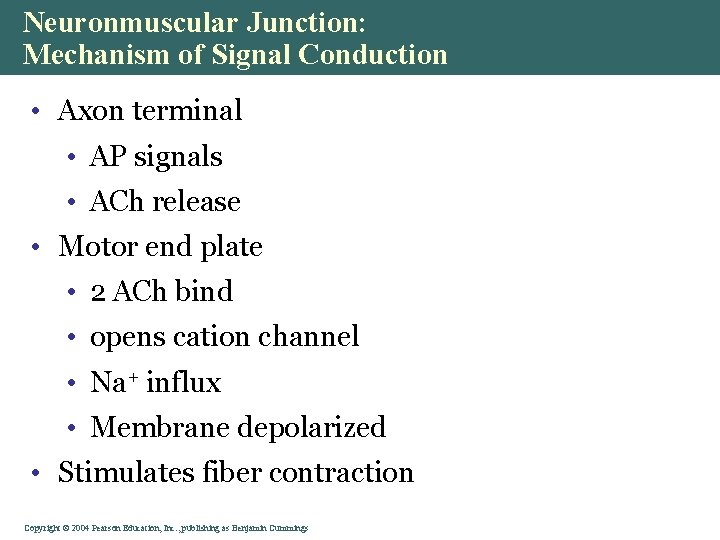
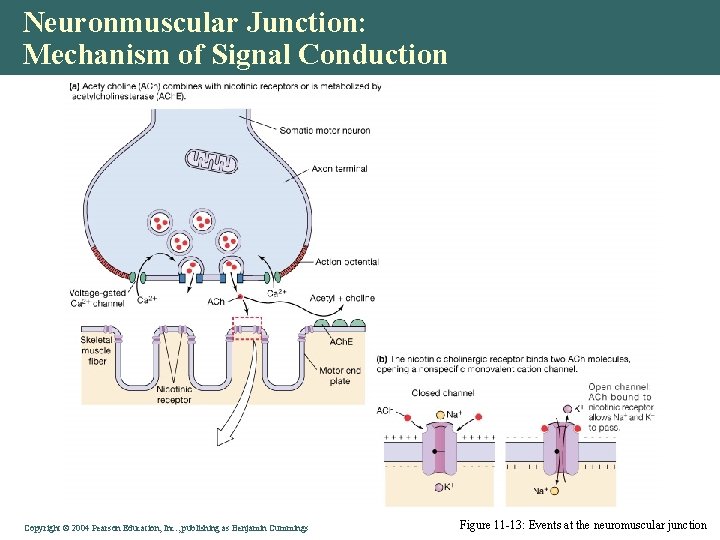
Neuronmuscular Junction: Mechanism of Signal Conduction • Axon terminal • AP signals • ACh release • Motor end plate • 2 ACh bind • opens cation channel • Na+ influx • Membrane depolarized • Stimulates fiber contraction Copyright © 2004 Pearson Education, Inc. , publishing as Benjamin Cummings
Neuronmuscular Junction: Mechanism of Signal Conduction Copyright © 2004 Pearson Education, Inc. , publishing as Benjamin Cummings Figure 11 -13: Events at the neuromuscular junction
Summary • Autonomic branches: sympathetic and parasympathetic • Regulate glands, smooth & cardiac muscles • Team with endocrine to regulate homeostasis • Are regulated by hypothalamus, pons & medulla • Have pathways with 2 neurons and a ganglion • Use varicosities to release NTs • Have diverse receptors: tonic & antagonistic regulation Copyright © 2004 Pearson Education, Inc. , publishing as Benjamin Cummings
Summary • Efferent motor neurons control skeletal muscles • Single long myelinated neuron from CNS • Neuromuscular junction structure & mechanism Copyright © 2004 Pearson Education, Inc. , publishing as Benjamin Cummings