
THIRD EDITION HUMAN PHYSIOLOGY AN INTEGRATED APPROACH Chapter
- Slides: 49
THIRD EDITION HUMAN PHYSIOLOGY AN INTEGRATED APPROACH Chapter 10, part A Sensory Physiology
About this Chapter • What are the senses • How sensory systems work • Body sensors and homeostatic maintenance • Sensing the external environment • Mechanisms and pathways to perception 2
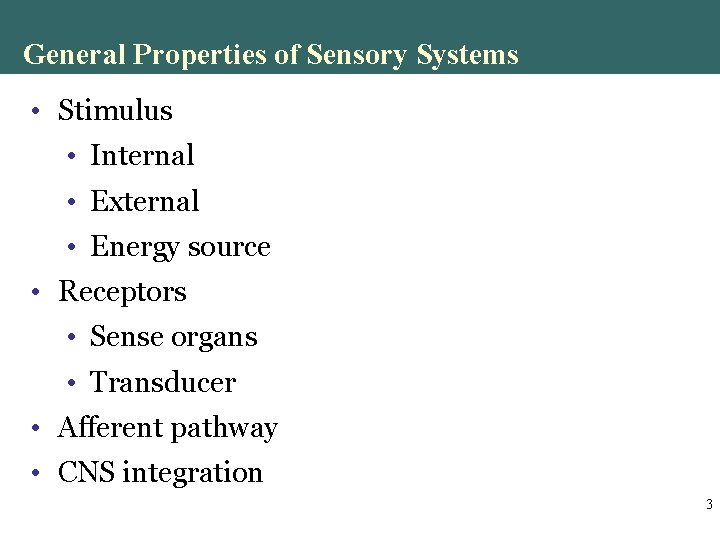
General Properties of Sensory Systems • Stimulus • Internal • External • Energy source • Receptors • Sense organs • Transducer • Afferent pathway • CNS integration 3
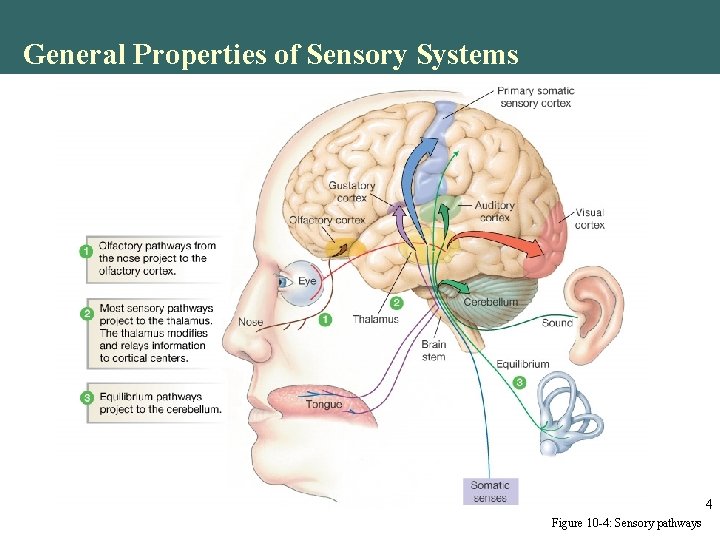
General Properties of Sensory Systems 4 Figure 10 -4: Sensory pathways
Sensory Receptor Types • Simple receptors • Complex neural • Special senses • Chemoreceptors • Mechanoreceptors • Thermoreceptors • Photoreceptors 5
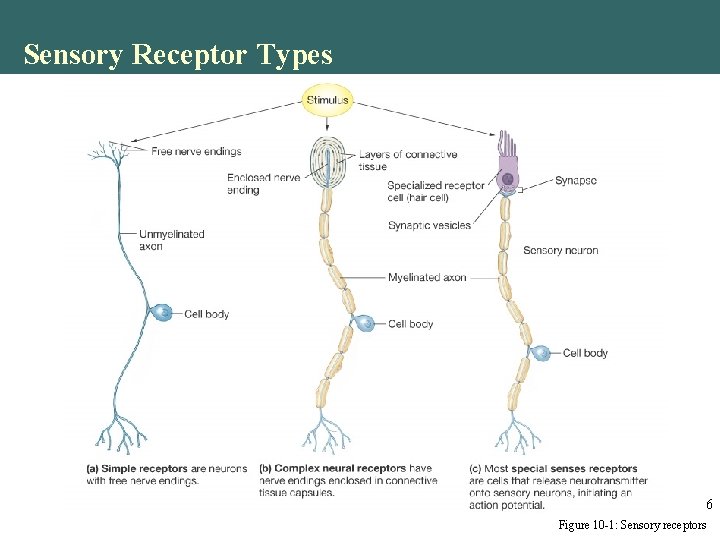
Sensory Receptor Types 6 Figure 10 -1: Sensory receptors
Special Senses – External Stimuli • Vision • Hearing • Taste • Smell • Equilibrium 7
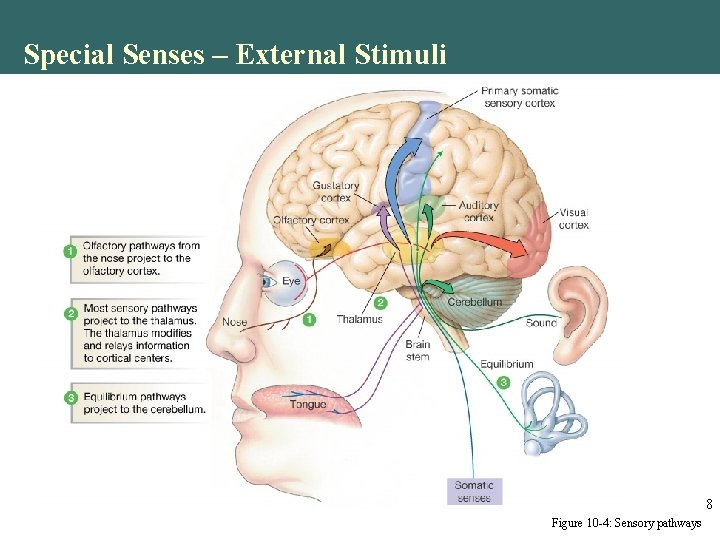
Special Senses – External Stimuli 8 Figure 10 -4: Sensory pathways
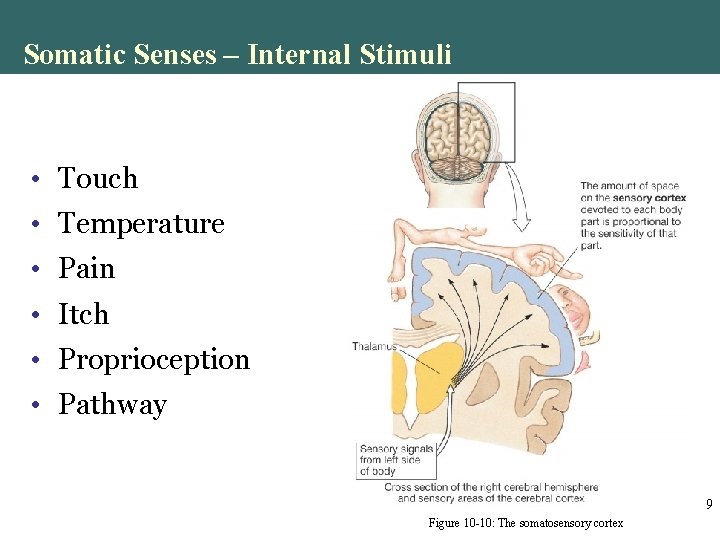
Somatic Senses – Internal Stimuli • Touch • Temperature • Pain • Itch • Proprioception • Pathway 9 Figure 10 -10: The somatosensory cortex
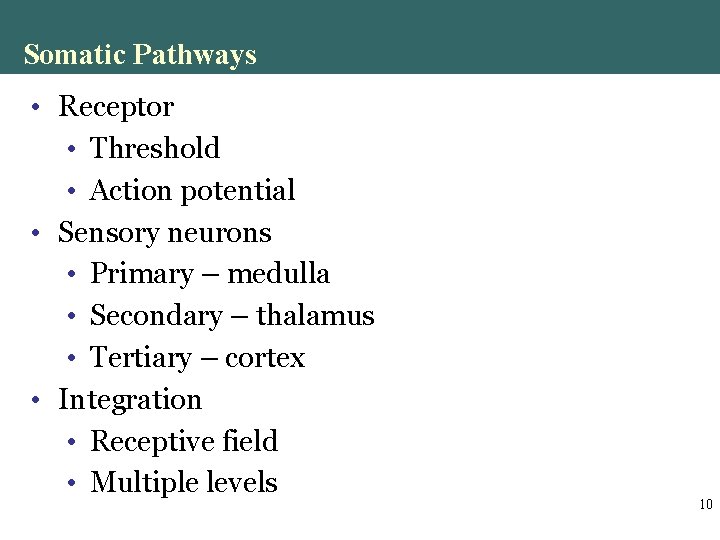
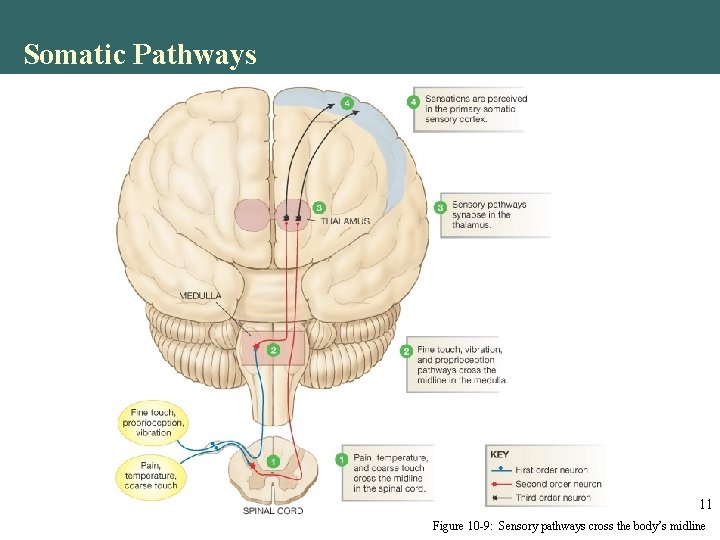
Somatic Pathways • Receptor • Threshold • Action potential • Sensory neurons • Primary – medulla • Secondary – thalamus • Tertiary – cortex • Integration • Receptive field • Multiple levels 10
Somatic Pathways 11 Figure 10 -9: Sensory pathways cross the body’s midline
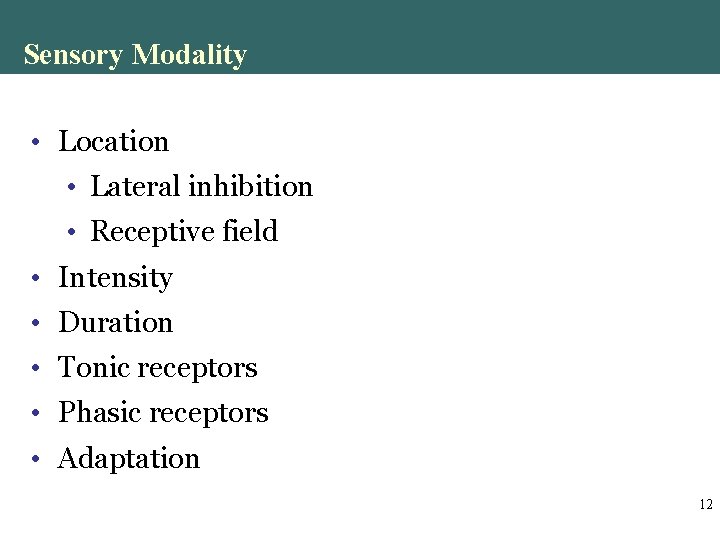
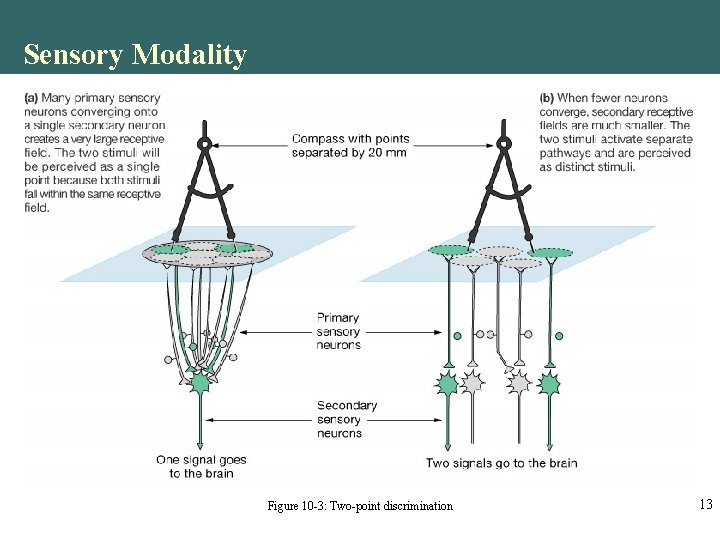
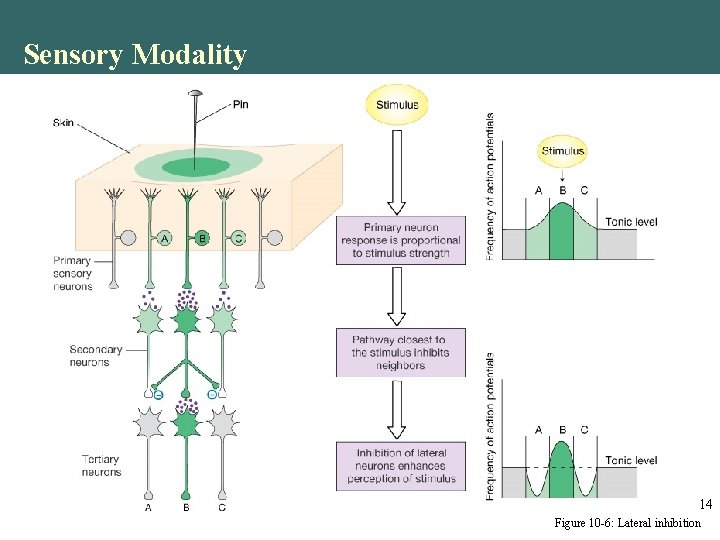
Sensory Modality • Location • Lateral inhibition • Receptive field • Intensity • Duration • Tonic receptors • Phasic receptors • Adaptation 12
Sensory Modality Figure 10 -3: Two-point discrimination 13
Sensory Modality 14 Figure 10 -6: Lateral inhibition
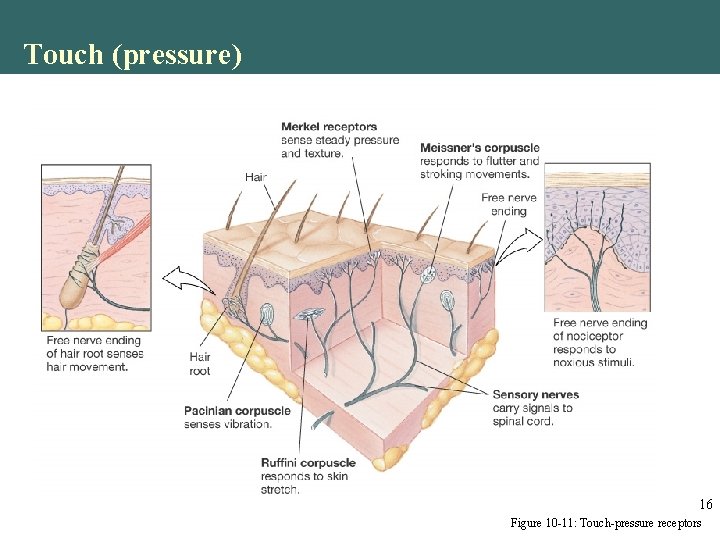
Touch (pressure) • Mechanoreceptors • Free nerve endings • Pacinian corpuscles • Ruffini corpuscles • Merkel receptors • Meisaner's corpuscles • Barroreceptors 15
Touch (pressure) 16 Figure 10 -11: Touch-pressure receptors
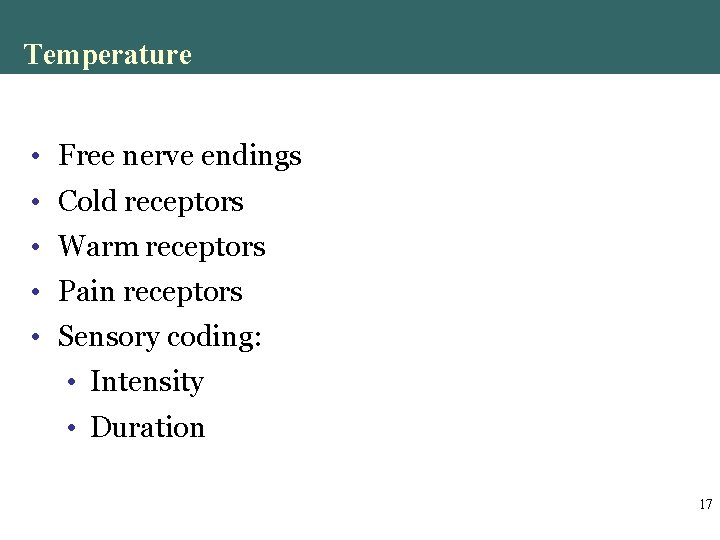
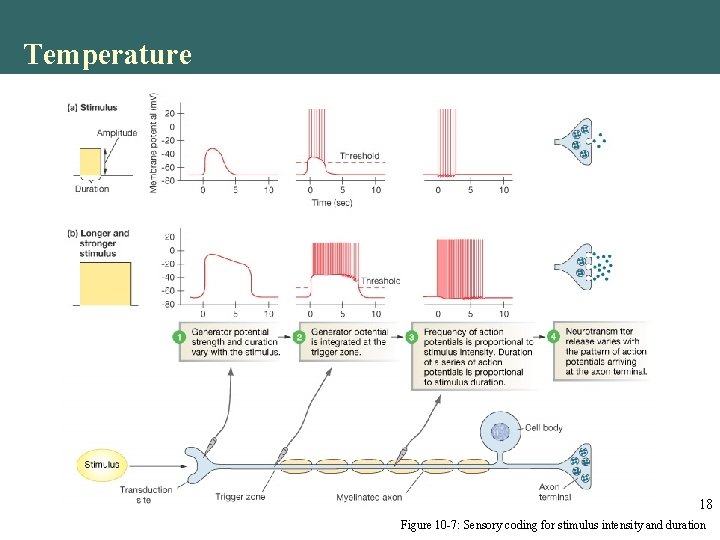
Temperature • Free nerve endings • Cold receptors • Warm receptors • Pain receptors • Sensory coding: • Intensity • Duration 17
Temperature 18 Figure 10 -7: Sensory coding for stimulus intensity and duration
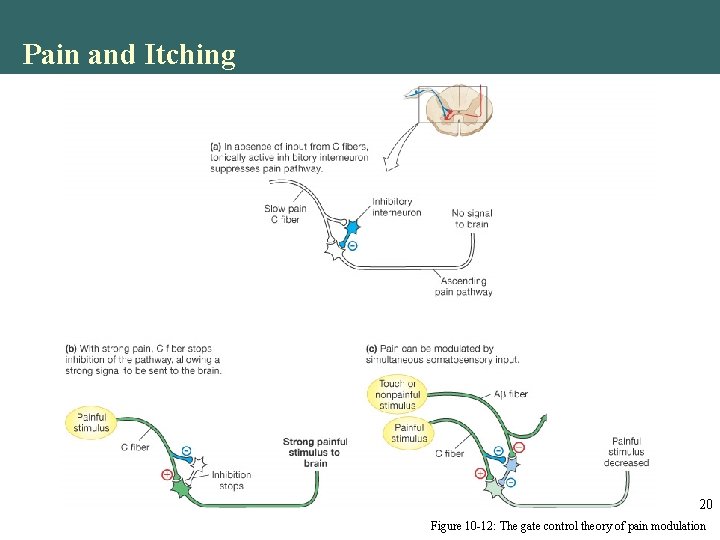
Pain and Itching • Nociceptors • Reflexive path • Itch • Fast pain • Slow pain 19
Pain and Itching 20 Figure 10 -12: The gate control theory of pain modulation
THIRD EDITION HUMAN PHYSIOLOGY AN INTEGRATED APPROACH Chapter 10, part B Sensory Physiology
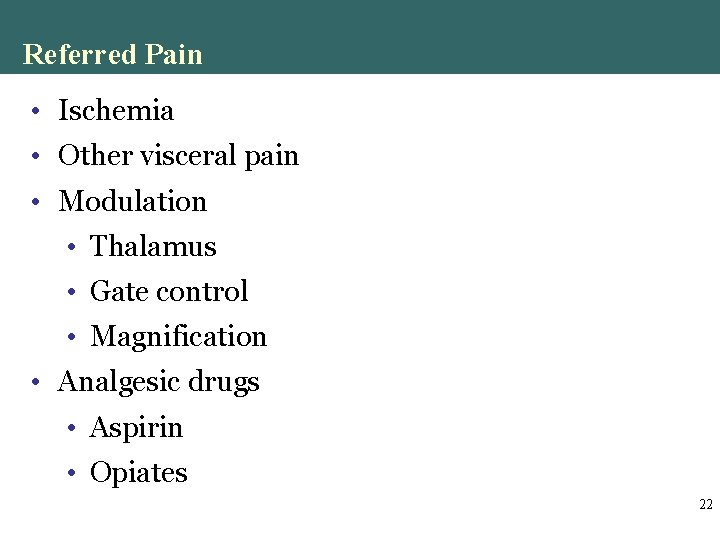
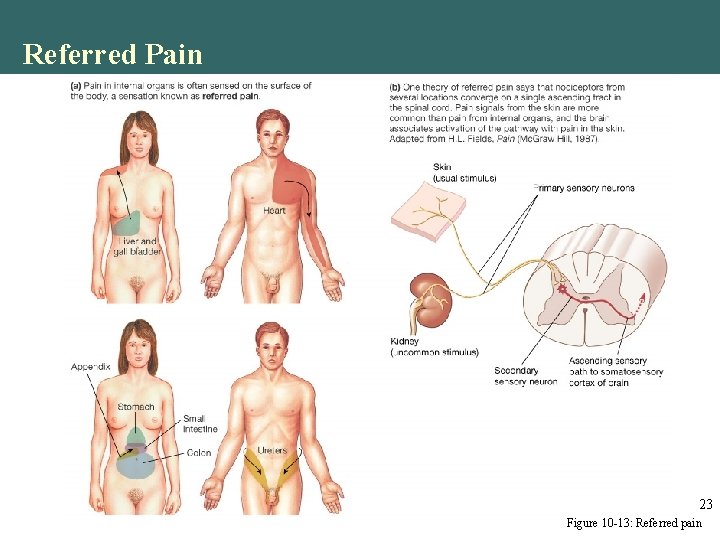
Referred Pain • Ischemia • Other visceral pain • Modulation • Thalamus • Gate control • Magnification • Analgesic drugs • Aspirin • Opiates 22
Referred Pain 23 Figure 10 -13: Referred pain
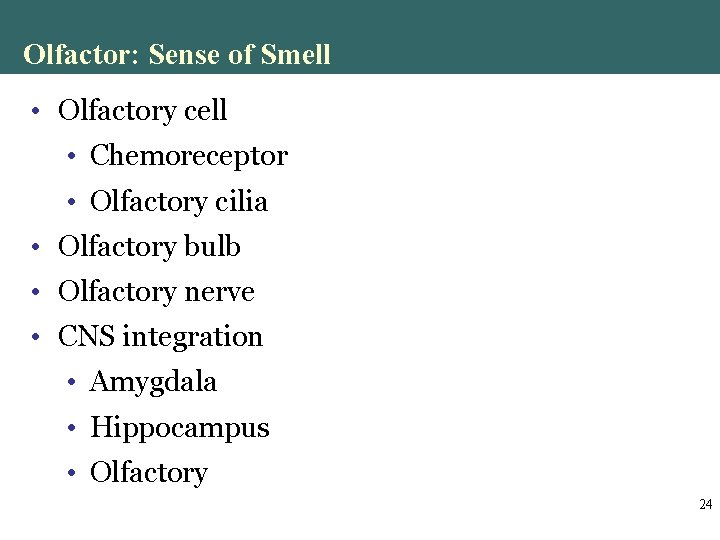
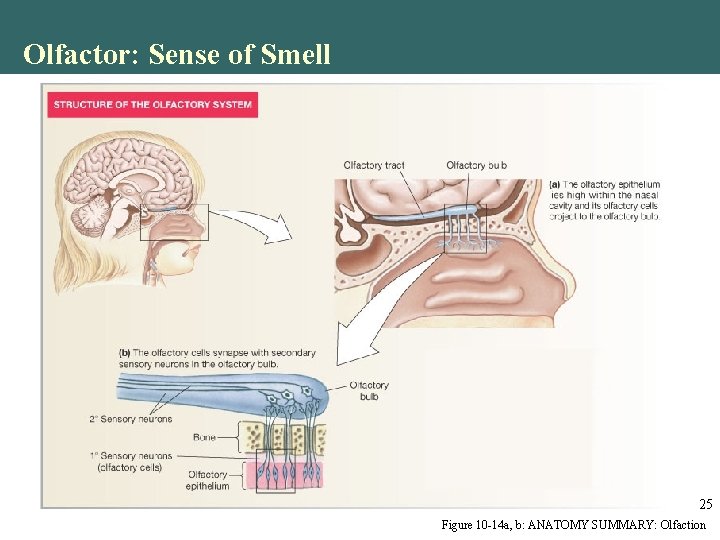
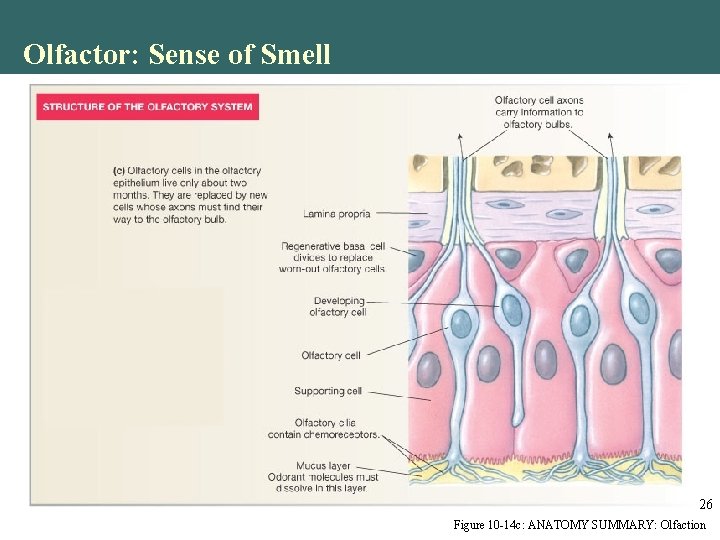
Olfactor: Sense of Smell • Olfactory cell • Chemoreceptor • Olfactory cilia • Olfactory bulb • Olfactory nerve • CNS integration • Amygdala • Hippocampus • Olfactory 24
Olfactor: Sense of Smell 25 Figure 10 -14 a, b: ANATOMY SUMMARY: Olfaction
Olfactor: Sense of Smell 26 Figure 10 -14 c: ANATOMY SUMMARY: Olfaction
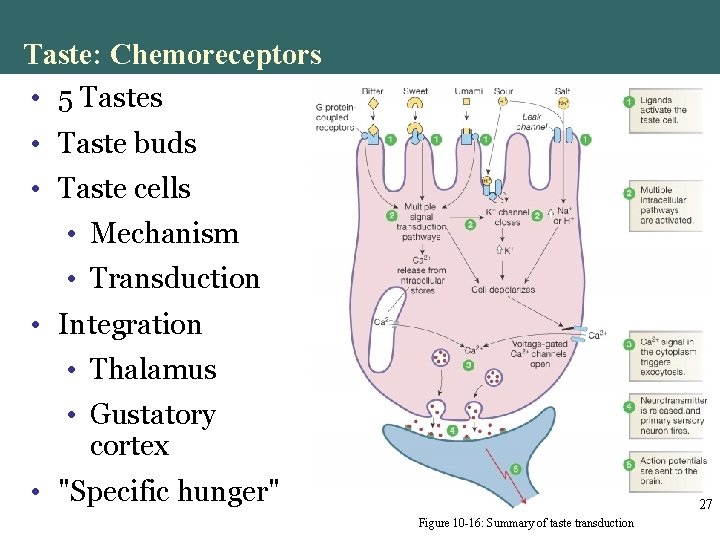
Taste: Chemoreceptors • 5 Tastes • Taste buds • Taste cells • Mechanism • Transduction • Integration • Thalamus • Gustatory cortex • "Specific hunger" 27 Figure 10 -16: Summary of taste transduction
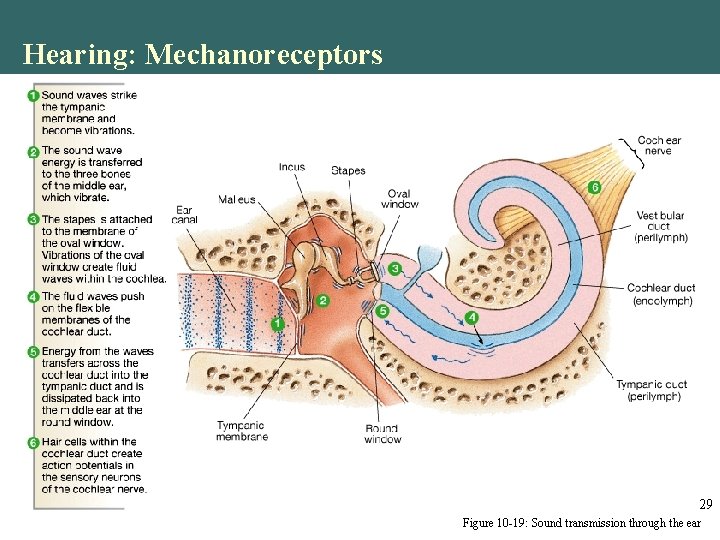
Hearing: Mechanoreceptors • Sound waves • Conduction • Air • Bone • Fluid • Membranes • To hair cell 28
Hearing: Mechanoreceptors 29 Figure 10 -19: Sound transmission through the ear
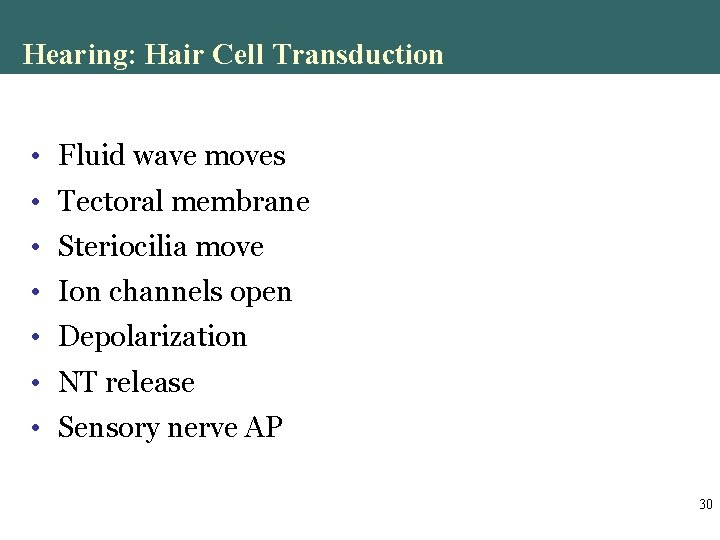
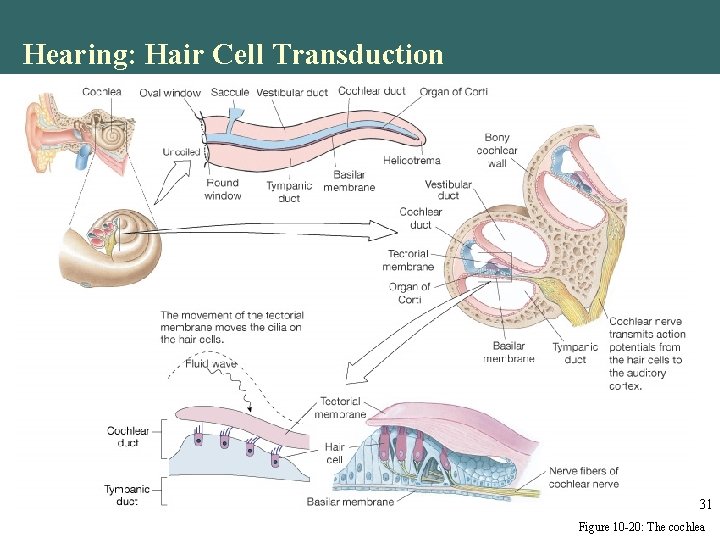
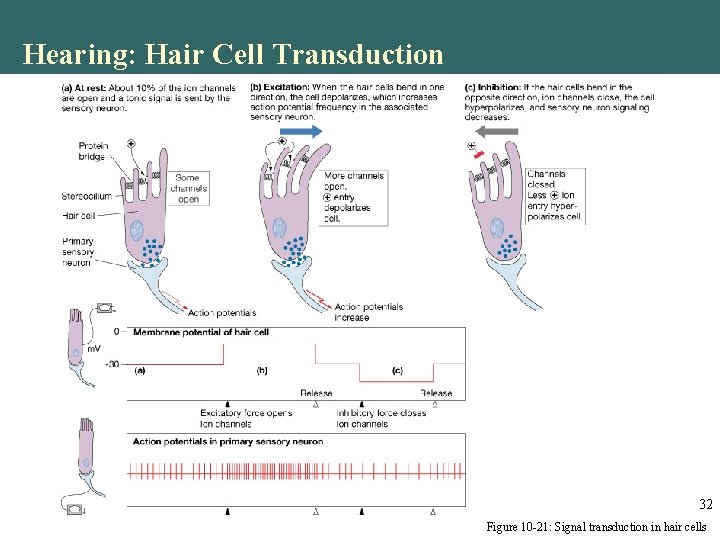
Hearing: Hair Cell Transduction • Fluid wave moves • Tectoral membrane • Steriocilia move • Ion channels open • Depolarization • NT release • Sensory nerve AP 30
Hearing: Hair Cell Transduction 31 Figure 10 -20: The cochlea
Hearing: Hair Cell Transduction 32 Figure 10 -21: Signal transduction in hair cells
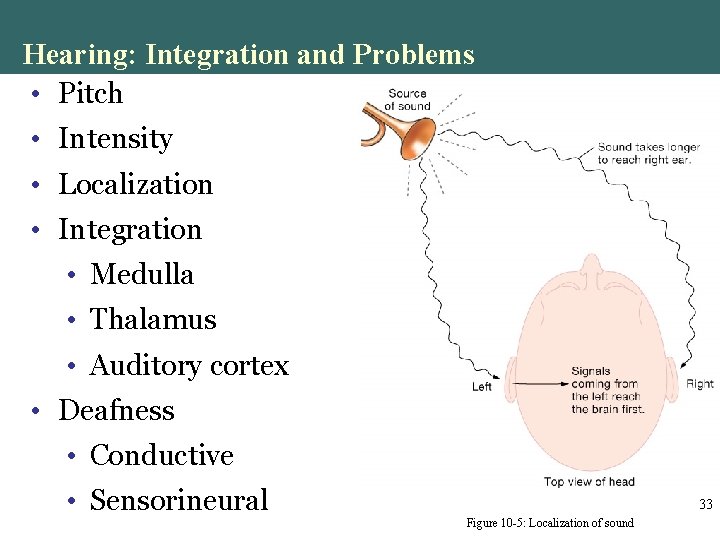
Hearing: Integration and Problems • Pitch • Intensity • Localization • Integration • Medulla • Thalamus • Auditory cortex • Deafness • Conductive • Sensorineural 33 Figure 10 -5: Localization of sound
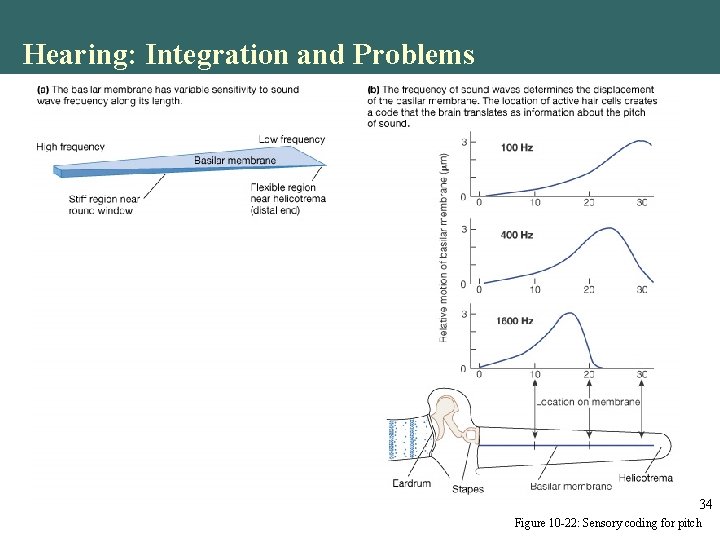
Hearing: Integration and Problems 34 Figure 10 -22: Sensory coding for pitch
THIRD EDITION HUMAN PHYSIOLOGY AN INTEGRATED APPROACH Chapter 10, part C Sensory Physiology
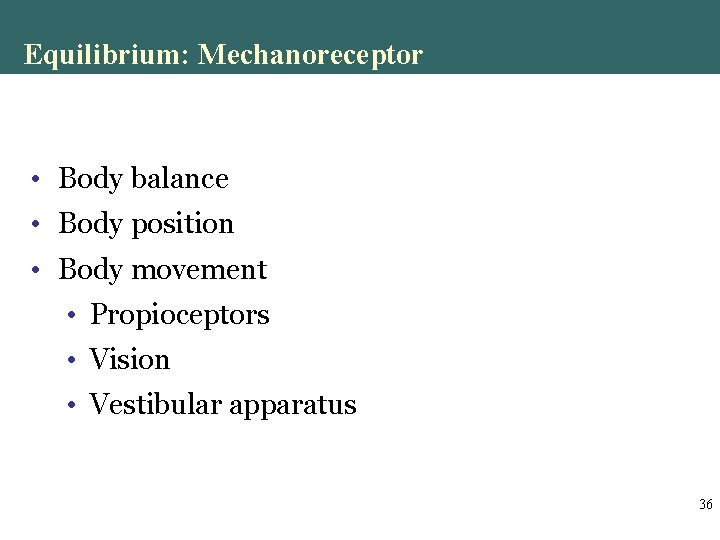
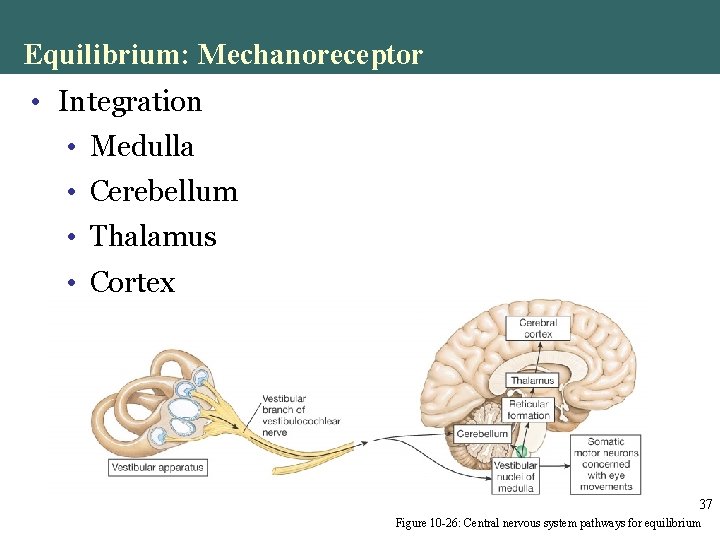
Equilibrium: Mechanoreceptor • Body balance • Body position • Body movement • Propioceptors • Vision • Vestibular apparatus 36
Equilibrium: Mechanoreceptor • Integration • Medulla • Cerebellum • Thalamus • Cortex 37 Figure 10 -26: Central nervous system pathways for equilibrium
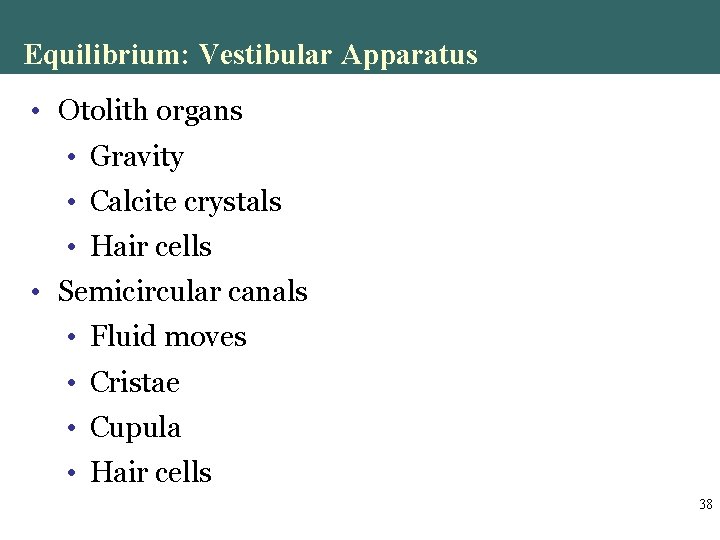
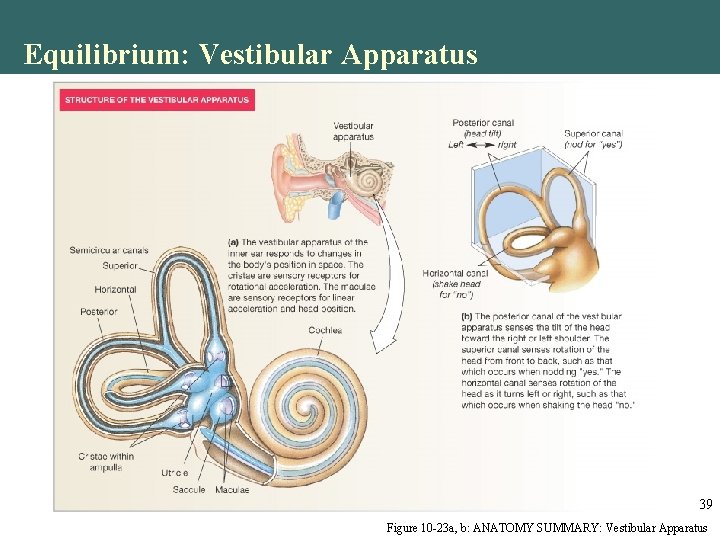
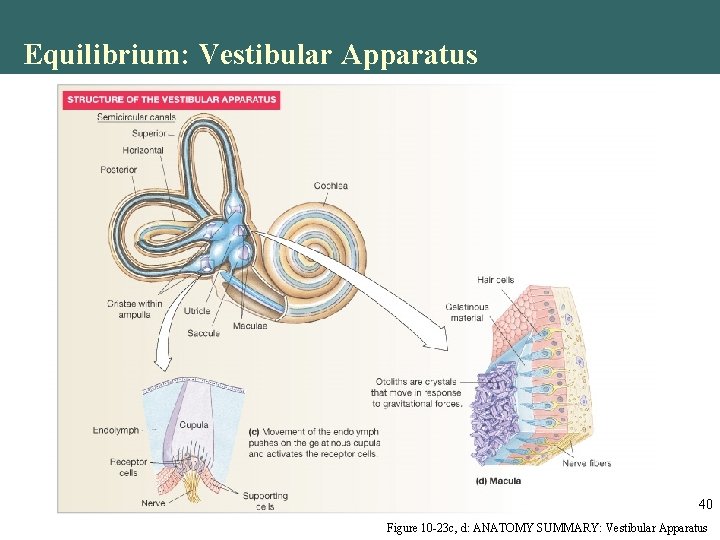
Equilibrium: Vestibular Apparatus • Otolith organs • Gravity • Calcite crystals • Hair cells • Semicircular canals • Fluid moves • Cristae • Cupula • Hair cells 38
Equilibrium: Vestibular Apparatus 39 Figure 10 -23 a, b: ANATOMY SUMMARY: Vestibular Apparatus
Equilibrium: Vestibular Apparatus 40 Figure 10 -23 c, d: ANATOMY SUMMARY: Vestibular Apparatus
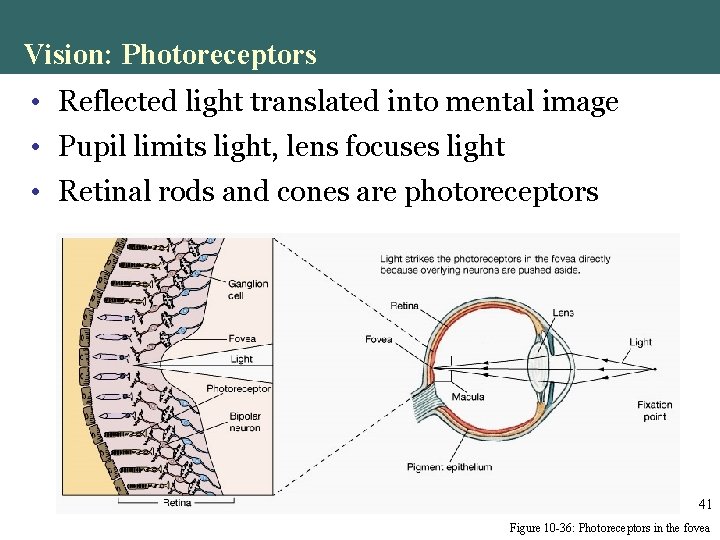
Vision: Photoreceptors • Reflected light translated into mental image • Pupil limits light, lens focuses light • Retinal rods and cones are photoreceptors 41 Figure 10 -36: Photoreceptors in the fovea
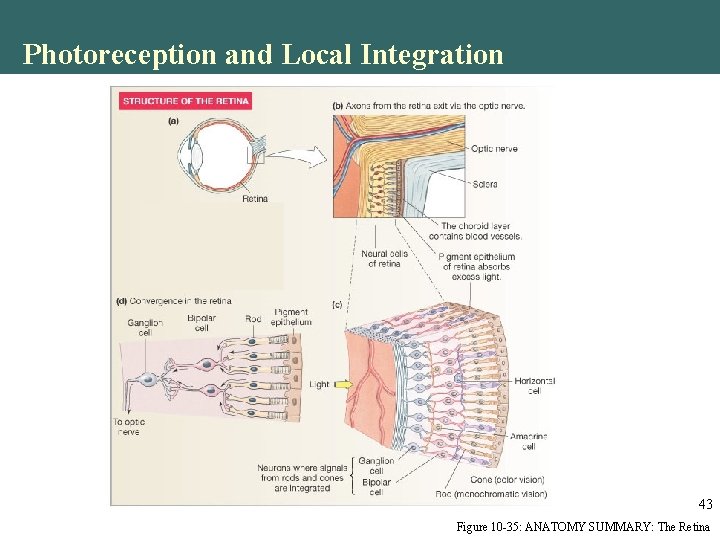
Photoreception and Local Integration • Rods – night vision • Cones – color & details • Bipolar & ganglion cells converge, integrate APs 42
Photoreception and Local Integration 43 Figure 10 -35: ANATOMY SUMMARY: The Retina
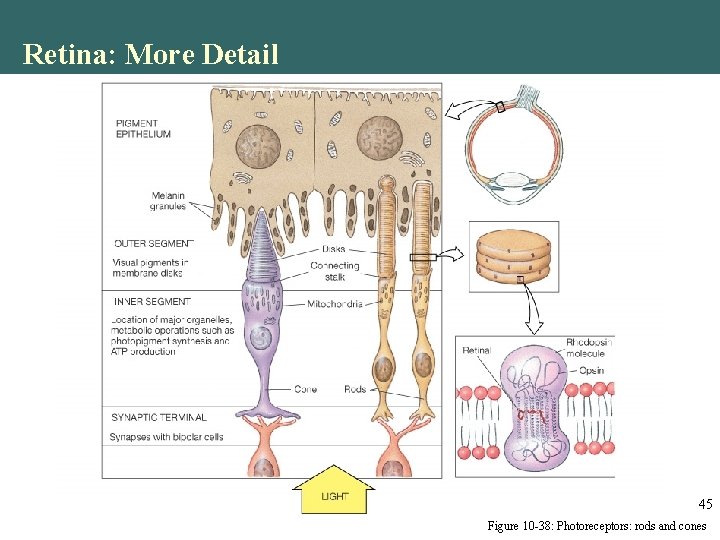
Retina: More Detail • Rod cells: monochromatic • Cone cells: red, green, & blue • Discs: visual pigments • Pigmented epithelium • Melanin granules • Prevents reflection 44
Retina: More Detail 45 Figure 10 -38: Photoreceptors: rods and cones
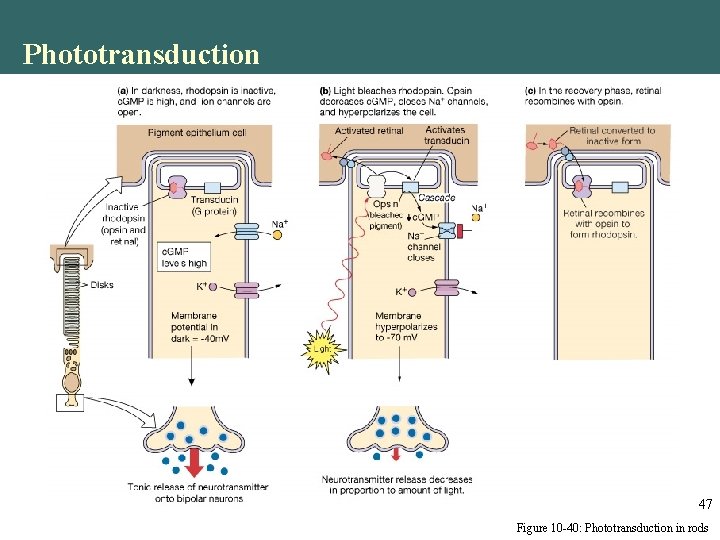
Phototransduction • Photons "bleach" opsin, retinal released, cascade, Na+ channel closes, K+ opens , hyperpolarization • Reduces NT release 46
Phototransduction 47 Figure 10 -40: Phototransduction in rods
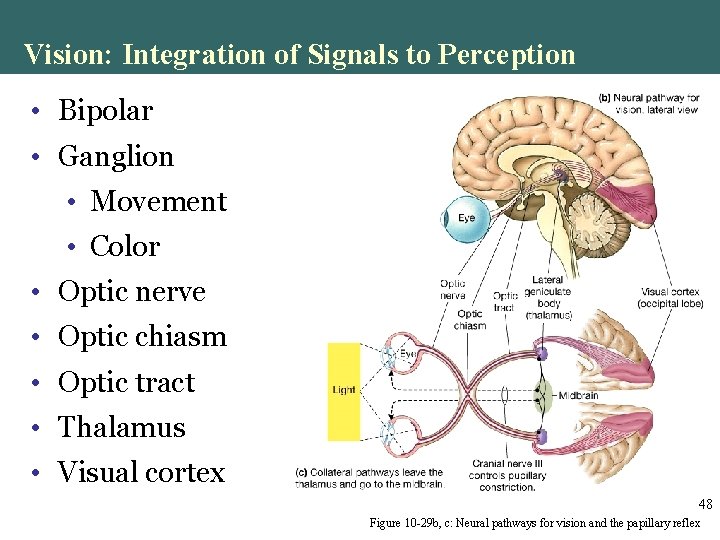
Vision: Integration of Signals to Perception • Bipolar • Ganglion • Movement • Color • Optic nerve • Optic chiasm • Optic tract • Thalamus • Visual cortex 48 Figure 10 -29 b, c: Neural pathways for vision and the papillary reflex
Summary • Sensory pathway: receptor, sensory neuron(s) & CNS • Somatic senses: touch, temperature, pain & proprioception communicate body information to CNS • Special senses: taste, smell, hearing, equilibrium, & vision • Outside conditions for CNS integration into perception • Receptors transduce mechanical, chemical or photon energy into GPs then to APs 49