
Thinking with Visualizations sense making loops Colin Ware
- Slides: 31
Thinking with Visualizations: sense making loops Colin Ware Data Visualization Research Lab University of New Hampshire
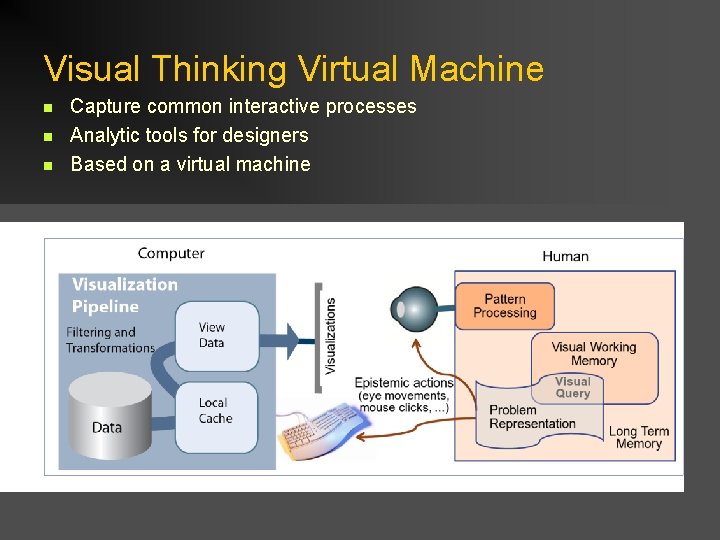
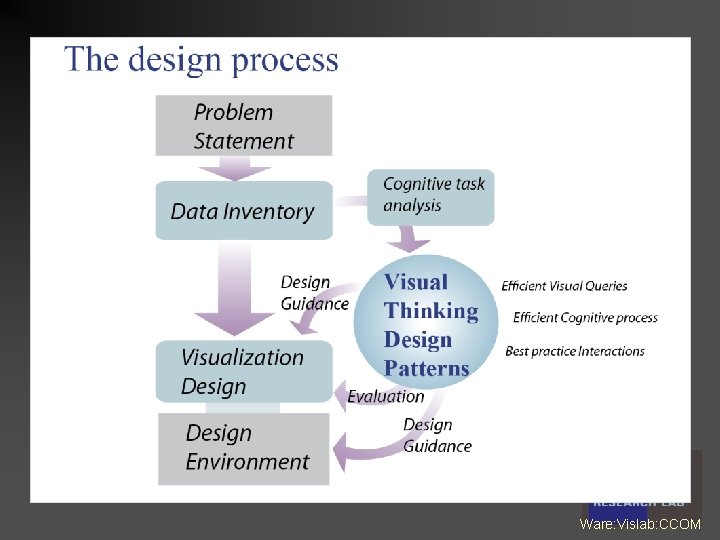
Visual Thinking Virtual Machine n n n Capture common interactive processes Analytic tools for designers Based on a virtual machine
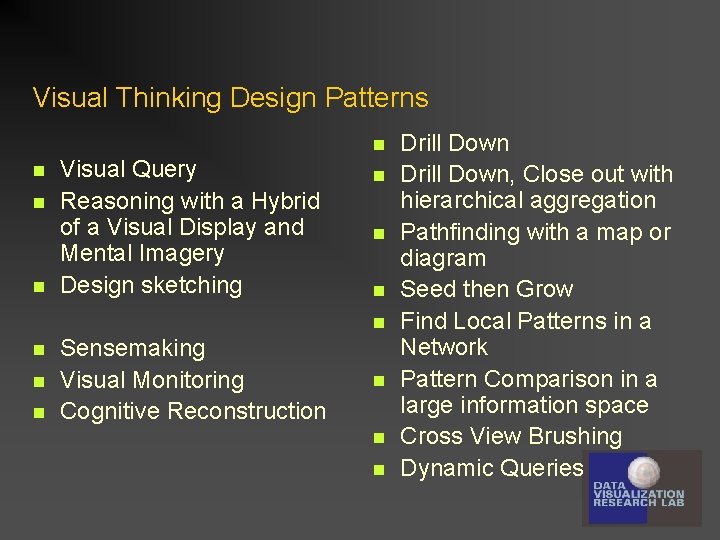
Visual Thinking Design Patterns n n Visual Query Reasoning with a Hybrid of a Visual Display and Mental Imagery Design sketching n n n n Sensemaking Visual Monitoring Cognitive Reconstruction n Drill Down, Close out with hierarchical aggregation Pathfinding with a map or diagram Seed then Grow Find Local Patterns in a Network Pattern Comparison in a large information space Cross View Brushing Dynamic Queries
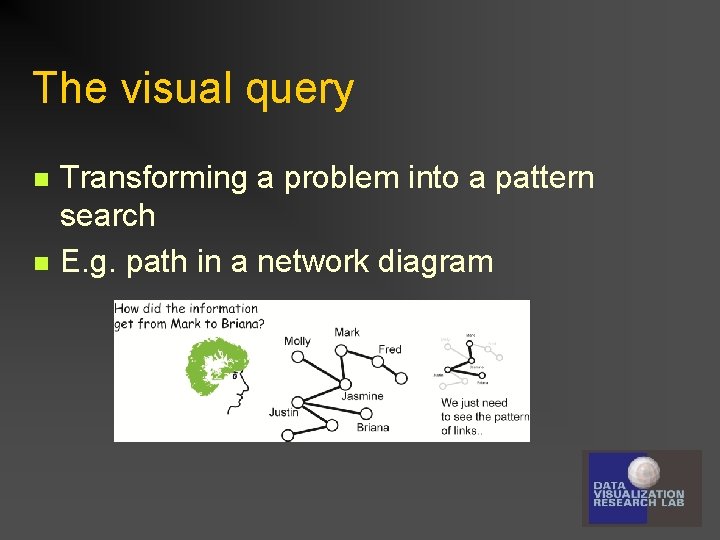
The visual query n n Transforming a problem into a pattern search E. g. path in a network diagram
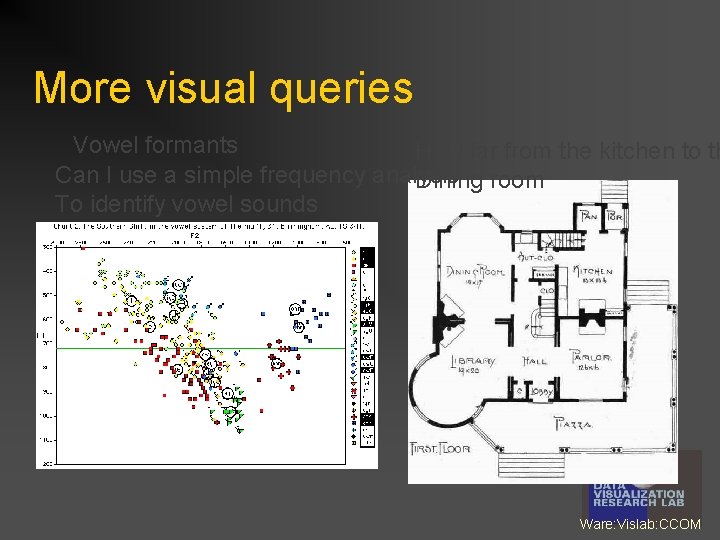
More visual queries Vowel formants How far from the kitchen to th Can I use a simple frequency analysis Dining room To identify vowel sounds Ware: Vislab: CCOM
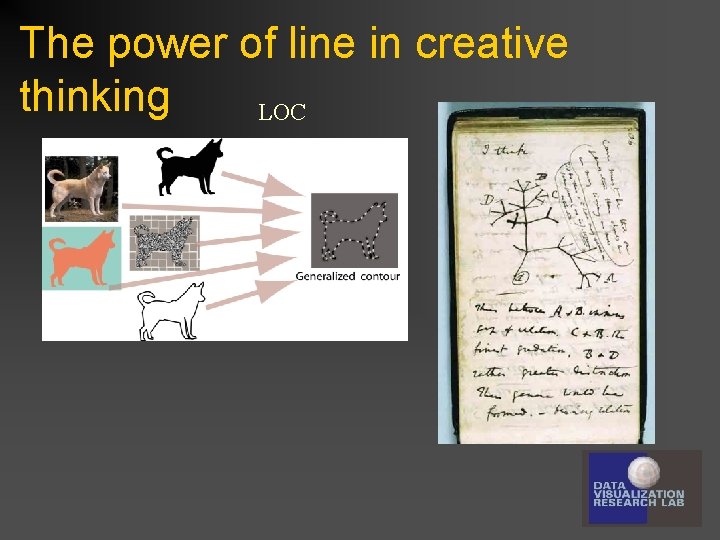
The power of line in creative thinking LOC
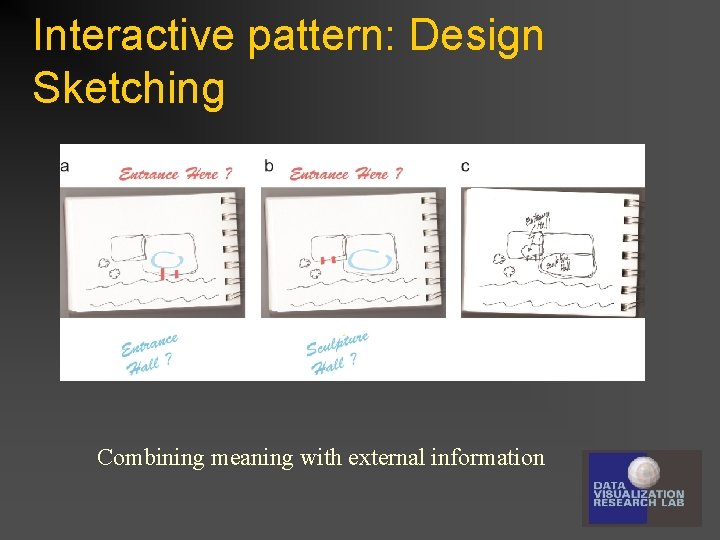
Interactive pattern: Design Sketching Combining meaning with external information
Thinking visually Embedded processes n Define problem and steps to solution n Formulate parts of problem as visual questions/hypotheses n Setup search for patterns n Eye movement control loop n Intra. Saccadic Scanning Loop (form objects)
Cost of Epistemic Actions n n n n Intra-saccade (0. 04 sec) (Query execution) An eye movement (0. 5 sec) < 10 deg : 1 sec> 20 deg. A hypertext click (1. 5 sec but loss of context) A pan or scroll (3 sec but we don’t get far) Brushing Dynamic queries Tree manipulation, etc. Goal rapid queries without loss of context
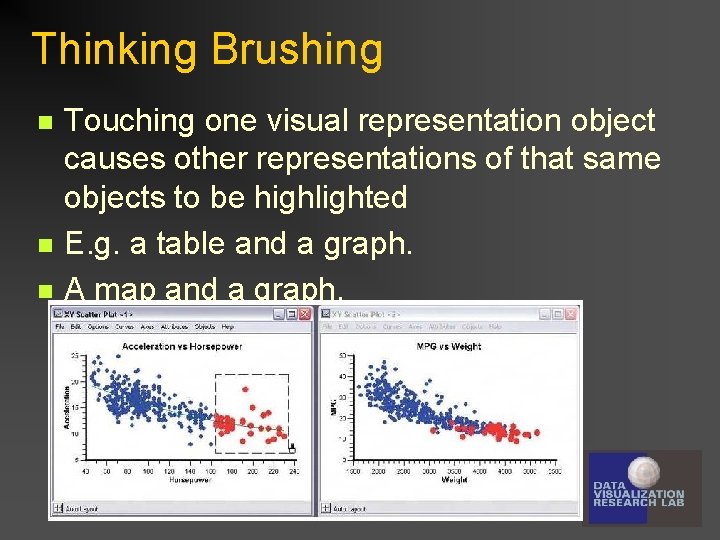
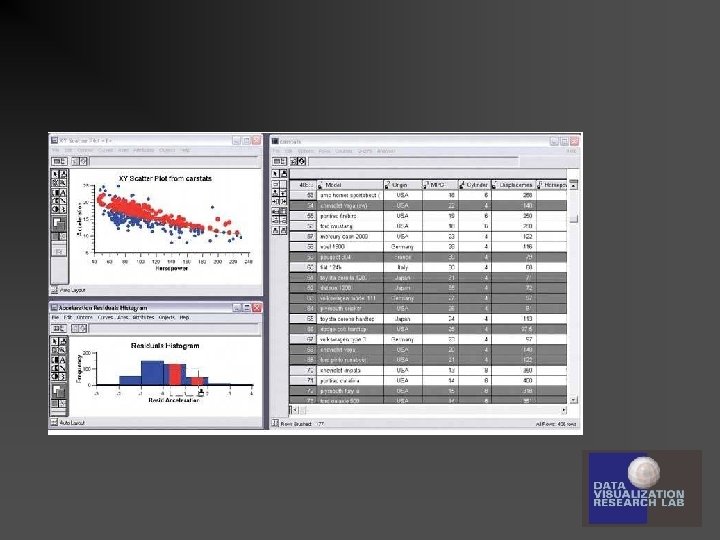
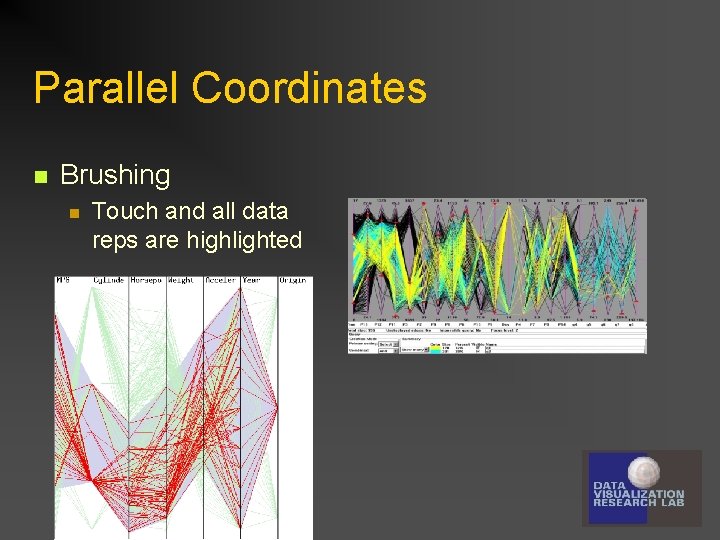
Thinking Brushing n n n Touching one visual representation object causes other representations of that same objects to be highlighted E. g. a table and a graph. A map and a graph.
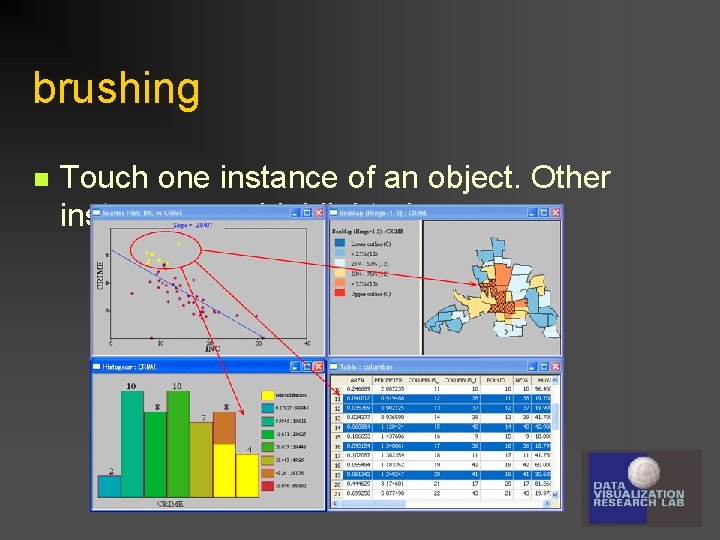
brushing n Touch one instance of an object. Other instances are highlighted
Parallel Coordinates n Brushing n Touch and all data reps are highlighted
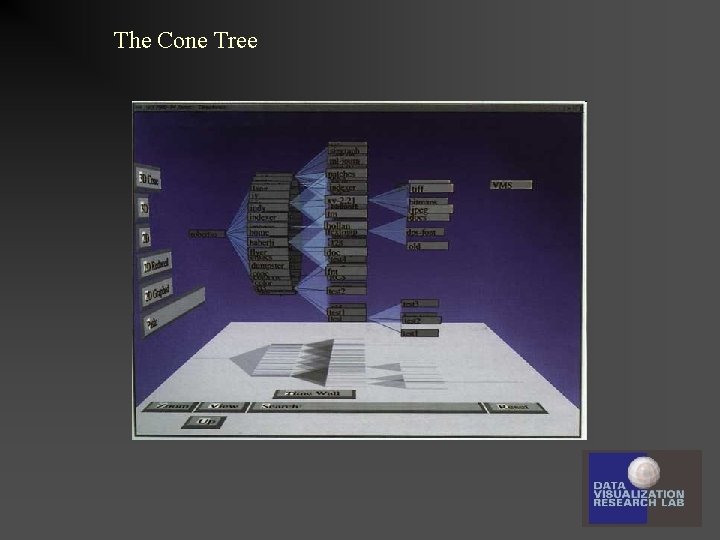
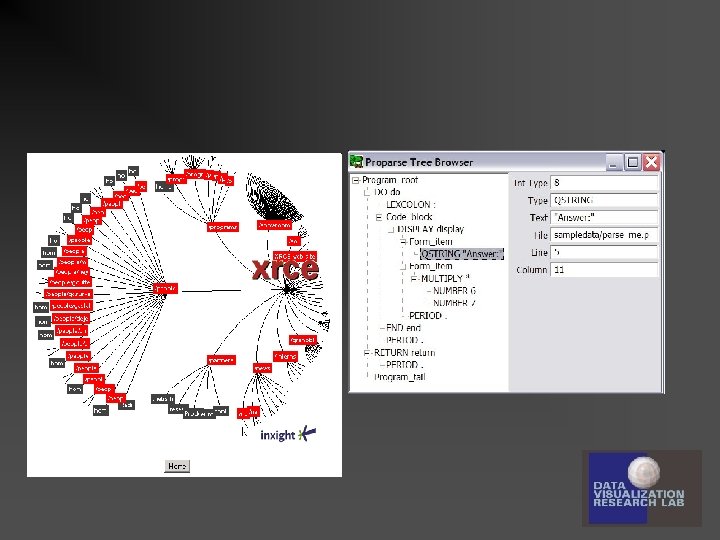
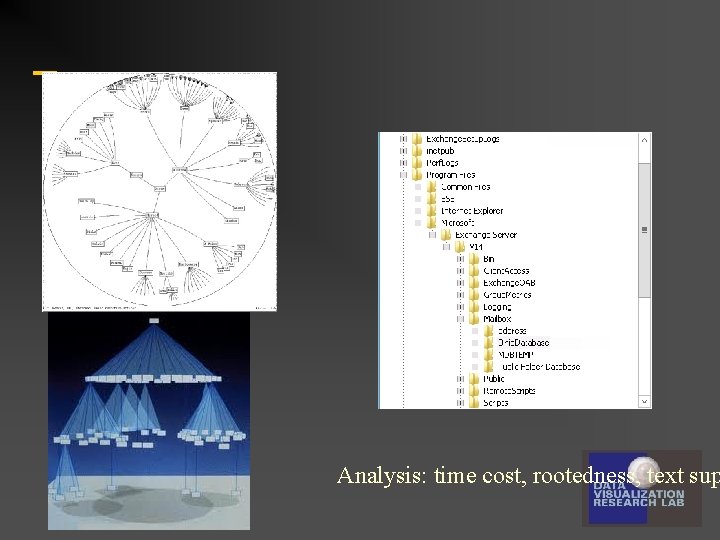
Trees n n n Cone Tree Hyperbolic Tree Standard MS browser
The Cone Tree
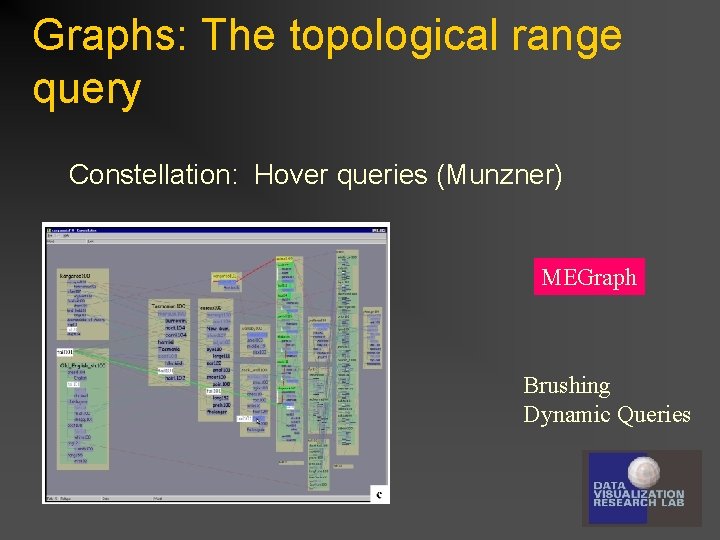
Graphs: The topological range query Constellation: Hover queries (Munzner) MEGraph Brushing Dynamic Queries
Dynamic queries n The use of interactive sliders to select ranges in multi-dimensional data. n Ahlberg and Shneiderman [Video]
Magic lenses n Lenses that transform what is behind them Video
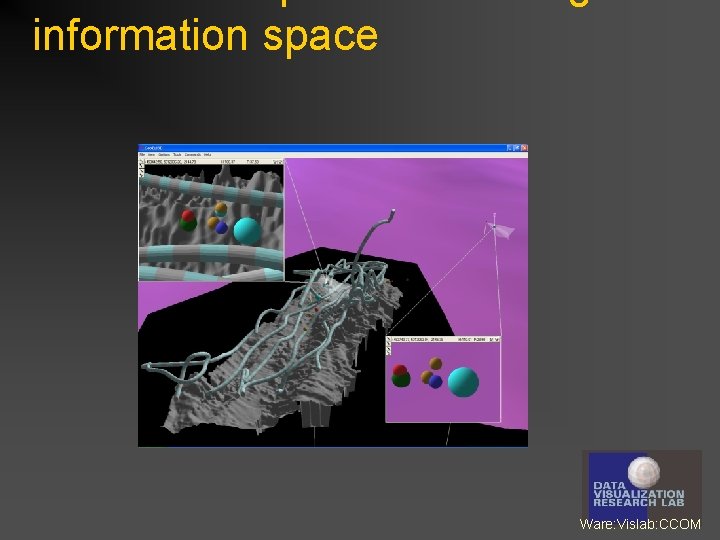
information space Ware: Vislab: CCOM
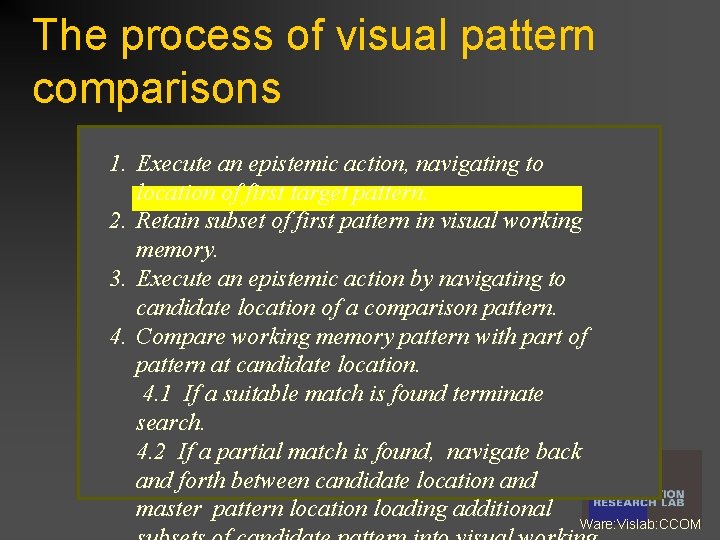
The process of visual pattern comparisons 1. Execute an epistemic action, navigating to location of first target pattern. 2. Retain subset of first pattern in visual working memory. 3. Execute an epistemic action by navigating to candidate location of a comparison pattern. 4. Compare working memory pattern with part of pattern at candidate location. 4. 1 If a suitable match is found terminate search. 4. 2 If a partial match is found, navigate back and forth between candidate location and master pattern location loading additional Ware: Vislab: CCOM
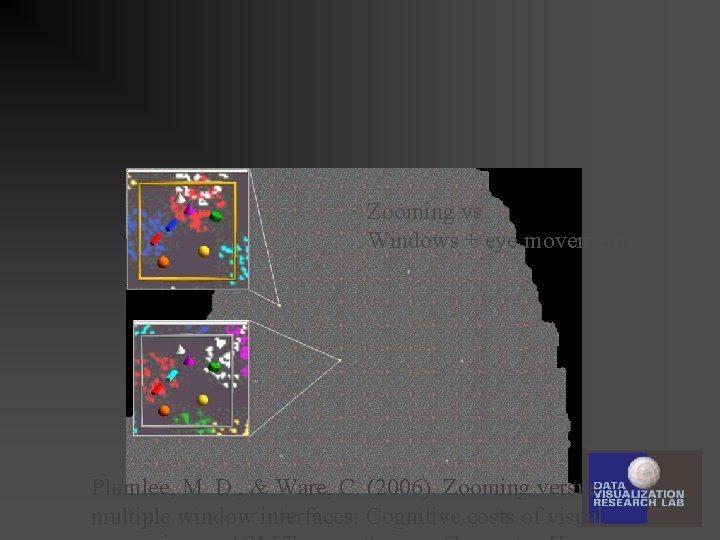
Zooming vs Windows + eye movements Plumlee, M. D. , & Ware, C. (2006). Zooming versus multiple window interfaces: Cognitive costs of visual
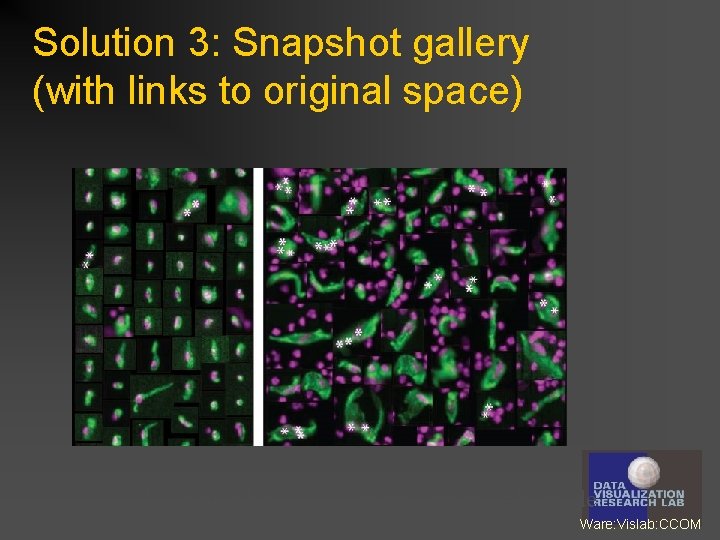
Solution 3: Snapshot gallery (with links to original space) Good in case where >20 comparisons must be made Ware: Vislab: CCOM
Drill down with hierarchial aggregation n Click on something and it opens to reveal more
Trees Analysis: time cost, rootedness, text sup
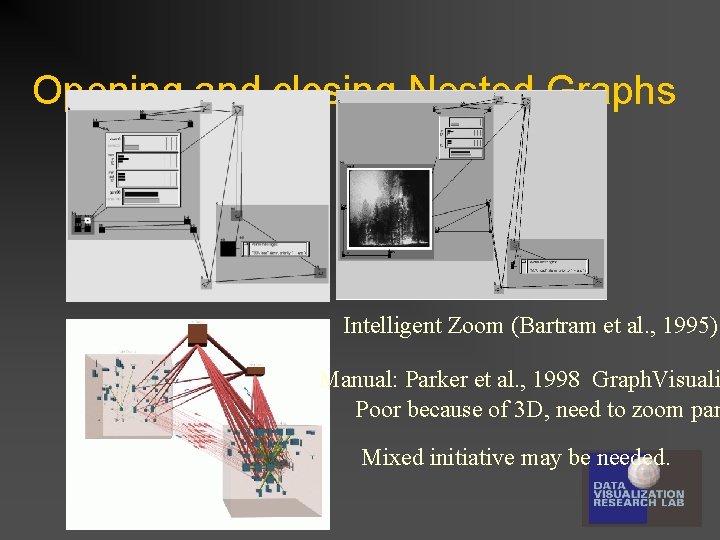
Opening and closing Nested Graphs Intelligent Zoom (Bartram et al. , 1995) Manual: Parker et al. , 1998 Graph. Visuali Poor because of 3 D, need to zoom pan Mixed initiative may be needed.
Ware: Vislab: CCOM
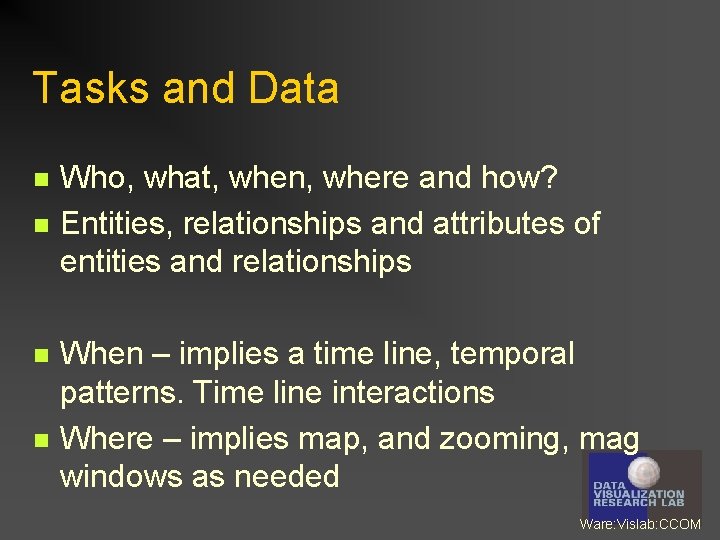
Tasks and Data n n Who, what, when, where and how? Entities, relationships and attributes of entities and relationships When – implies a time line, temporal patterns. Time line interactions Where – implies map, and zooming, mag windows as needed Ware: Vislab: CCOM
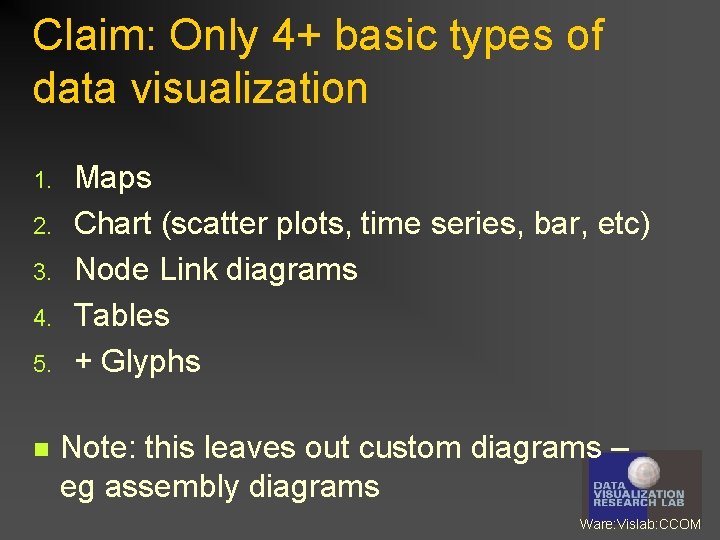
Claim: Only 4+ basic types of data visualization 1. 2. 3. 4. 5. n Maps Chart (scatter plots, time series, bar, etc) Node Link diagrams Tables + Glyphs Note: this leaves out custom diagrams – eg assembly diagrams Ware: Vislab: CCOM
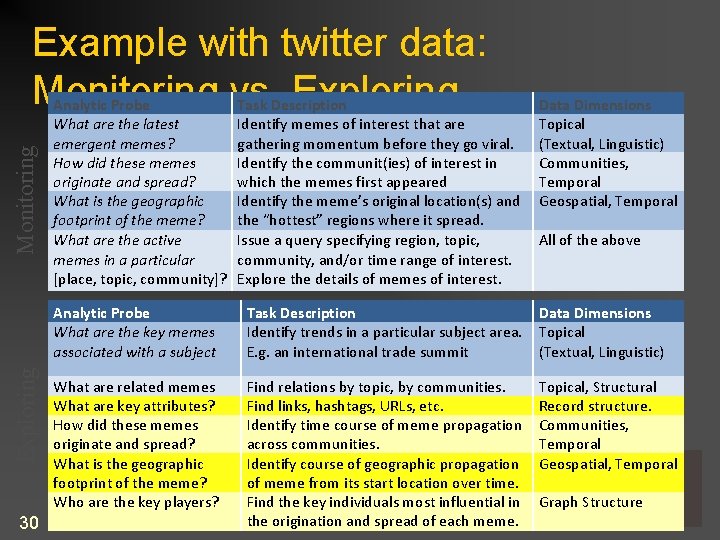
Exploring Monitoring Example with twitter data: Monitoring vs. Exploring 30 Analytic Probe What are the latest emergent memes? How did these memes originate and spread? What is the geographic footprint of the meme? What are the active memes in a particular [place, topic, community]? Task Description Identify memes of interest that are gathering momentum before they go viral. Identify the communit(ies) of interest in which the memes first appeared Identify the meme’s original location(s) and the “hottest” regions where it spread. Issue a query specifying region, topic, community, and/or time range of interest. Explore the details of memes of interest. Data Dimensions Topical (Textual, Linguistic) Communities, Temporal Geospatial, Temporal All of the above Analytic Probe What are the key memes associated with a subject Task Description Identify trends in a particular subject area. E. g. an international trade summit Data Dimensions Topical (Textual, Linguistic) What are related memes What are key attributes? How did these memes originate and spread? What is the geographic footprint of the meme? Who are the key players? Find relations by topic, by communities. Find links, hashtags, URLs, etc. Identify time course of meme propagation across communities. Identify course of geographic propagation of meme from its start location over time. Find the key individuals most influential in the origination and spread of each meme. Topical, Structural Record structure. Communities, Temporal Geospatial, Temporal Graph Structure
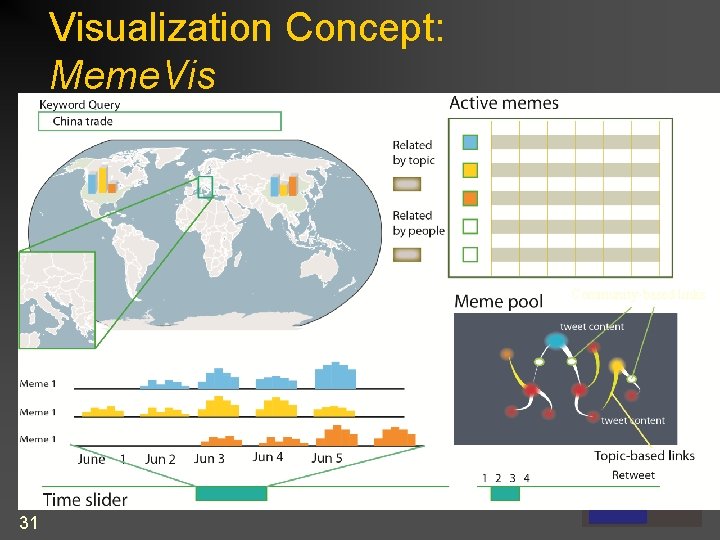
Visualization Concept: Meme. Vis Community-based links 31