
Thinking maps and thinkers tools in classroom displays
- Slides: 10
Thinking maps and thinkers tools in classroom displays
Thinking maps are a universal resource that enables students and teachers to organise thinking process in an appropriate manner. Part of their appeal is the fact that no resources are required beyond a pen and something to write on. Quick and easy to access reference materials in as classroom displays helps teachers to keep them in mind while planning, teaching and learning. 2
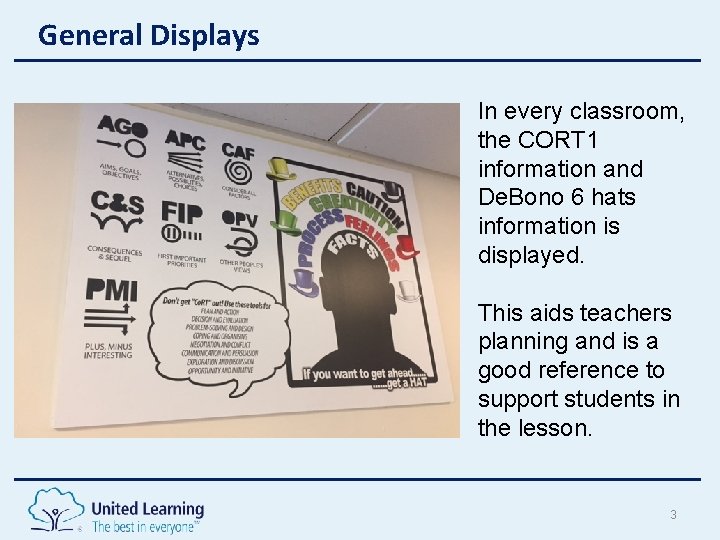
General Displays In every classroom, the CORT 1 information and De. Bono 6 hats information is displayed. This aids teachers planning and is a good reference to support students in the lesson. 3
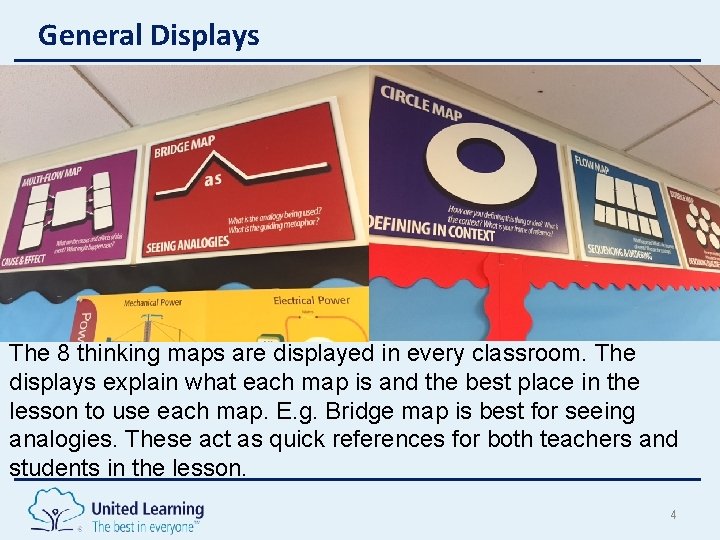
General Displays The 8 thinking maps are displayed in every classroom. The displays explain what each map is and the best place in the lesson to use each map. E. g. Bridge map is best for seeing analogies. These act as quick references for both teachers and students in the lesson. 4
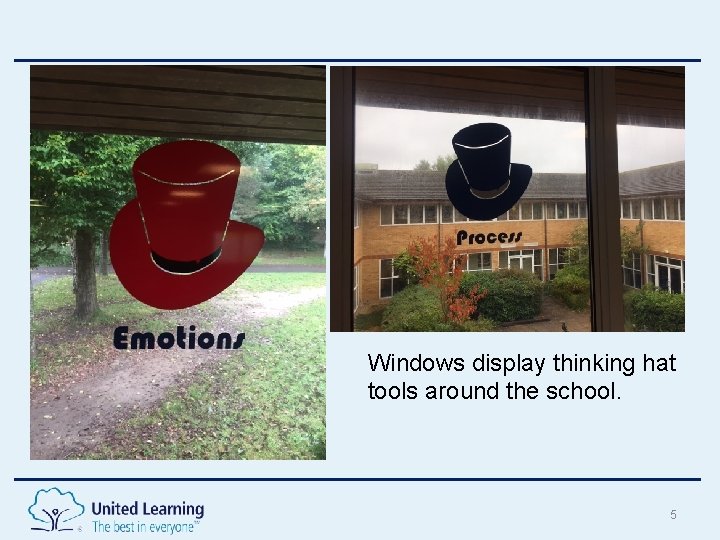
Windows display thinking hat tools around the school. 5
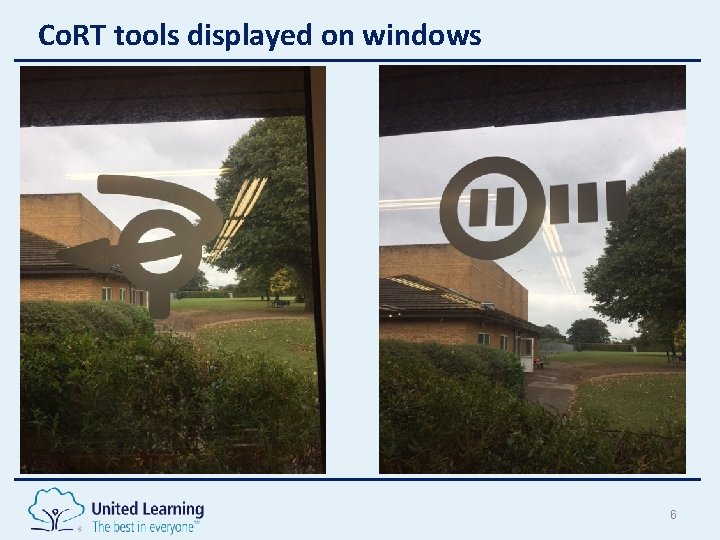
Co. RT tools displayed on windows 6
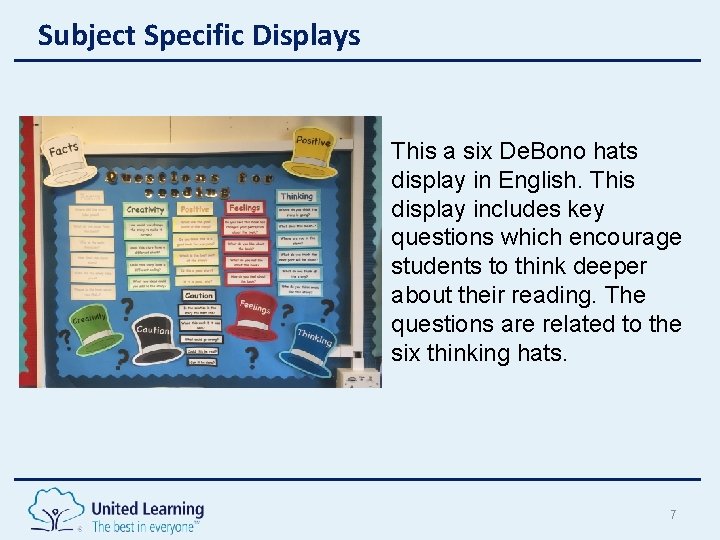
Subject Specific Displays This a six De. Bono hats display in English. This display includes key questions which encourage students to think deeper about their reading. The questions are related to the six thinking hats. 7
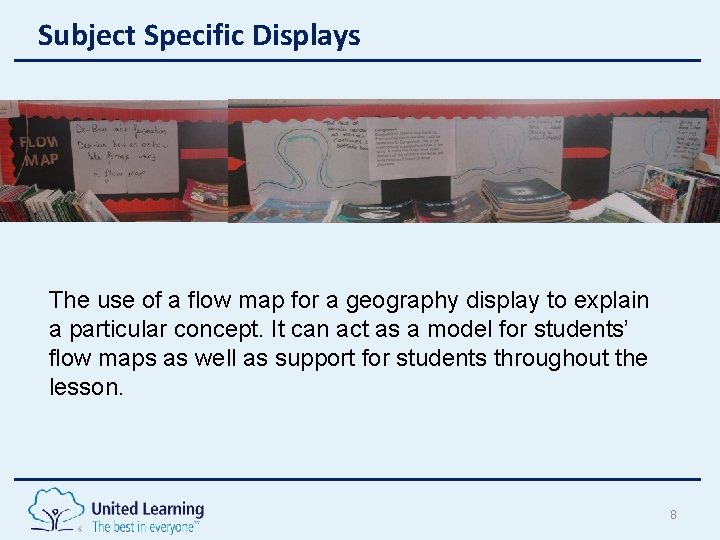
Subject Specific Displays The use of a flow map for a geography display to explain a particular concept. It can act as a model for students’ flow maps as well as support for students throughout the lesson. 8
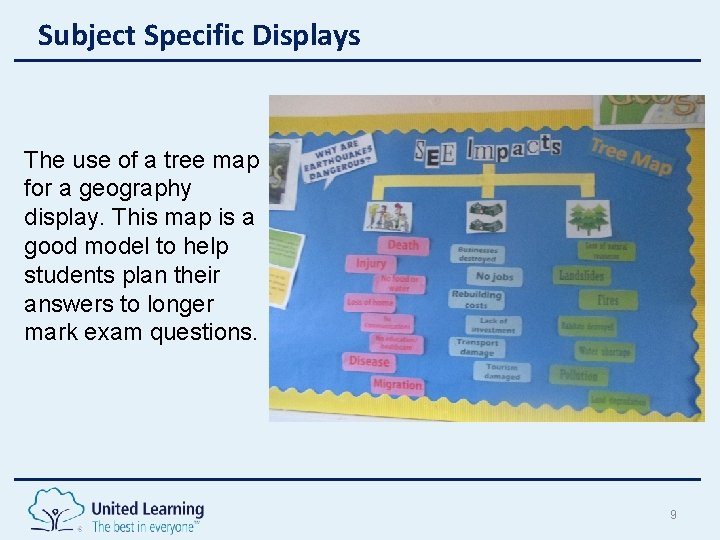
Subject Specific Displays The use of a tree map for a geography display. This map is a good model to help students plan their answers to longer mark exam questions. 9
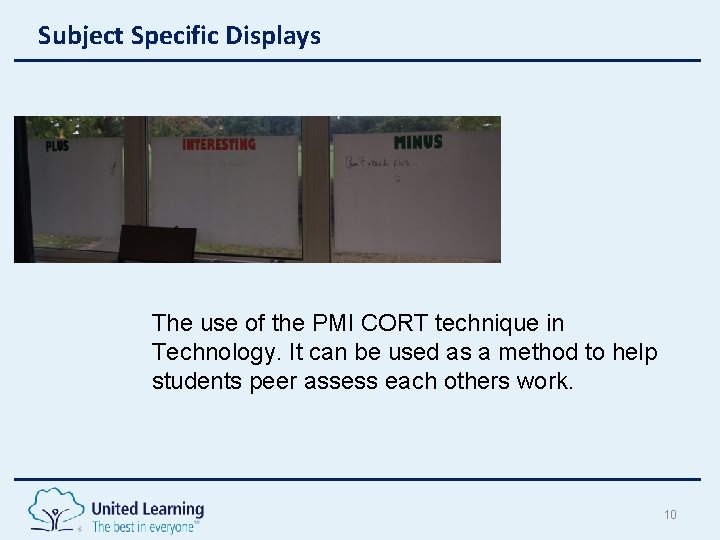
Subject Specific Displays The use of the PMI CORT technique in Technology. It can be used as a method to help students peer assess each others work. 10