
Thinking Learning Styles Damian Gordon Introduction to Type

- Slides: 19
Thinking & Learning Styles Damian Gordon
Introduction to Type Theory � Swiss psychiatrist Carl Jung developed a theory early in the 20 th century to describe basic individual preferences and explain similarities and differences between people ◦ Main postulate of theory is that people have inborn behavioral tendencies and preferences �Your natural response in daily situations �Used when we are generally not stressed and feel competent, and energetic �Could be defined as those behaviors you often don’t notice
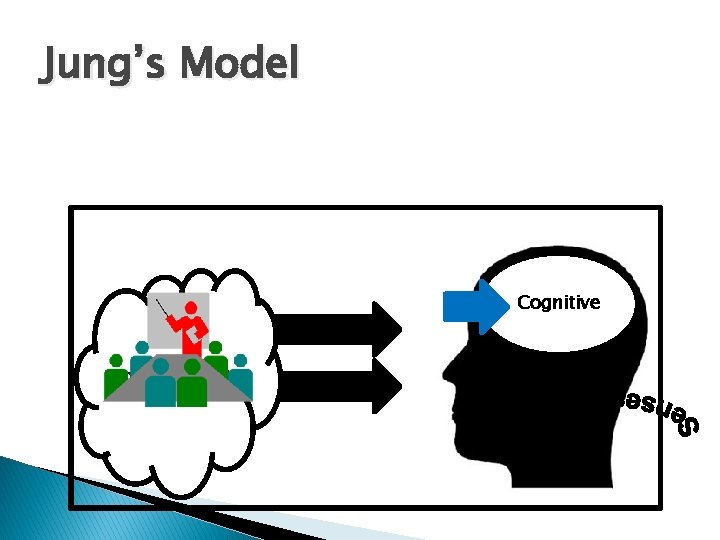
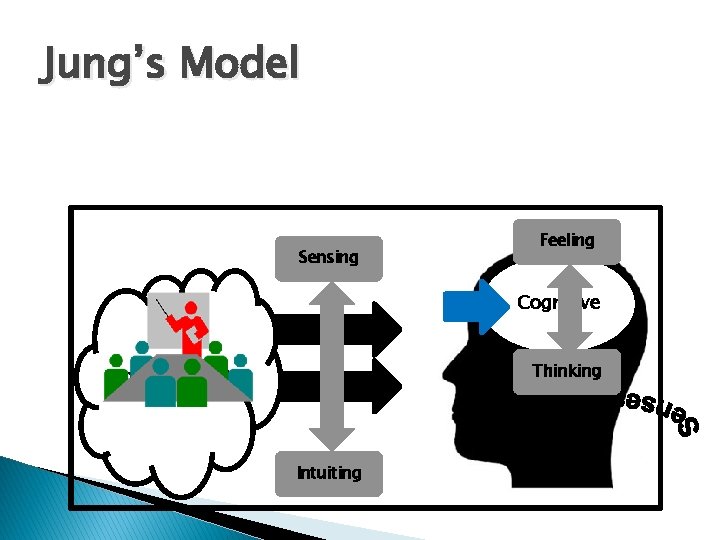
Jung’s Model Cognitive Environment
Jung’s Model Cognitive Environment
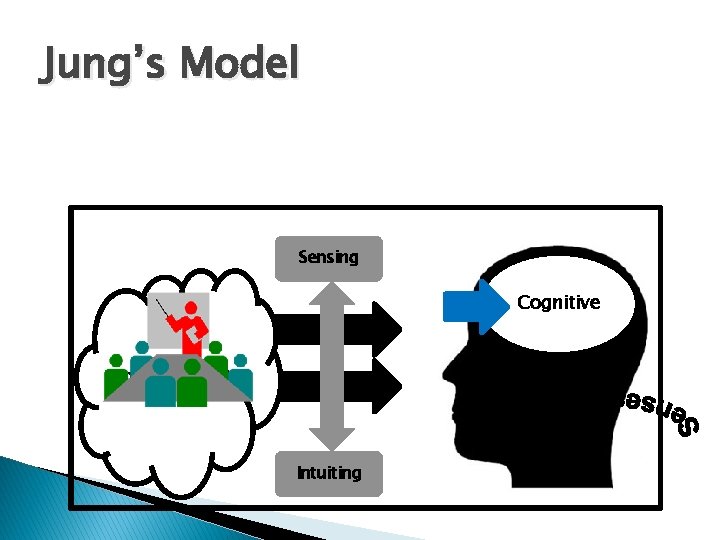
Jung’s Model Sensing Cognitive Environment Intuiting
Jung’s Model Sensing Feeling Cognitive Thinking Environment Intuiting
MBTI � � � Jung’s theory important but inaccessible to the general population Isabel Myers and Katherine Briggs (mother-daughter team) expanded on Jung’s work by developing an instrument to help people identify their preferences The MBTI tool is an indicator of personality type (i. e. innate preferences) that has proven to be remarkably reliable and valid ◦ Represents the result of over 50 years of research ◦ Is used globally in both education and corporate settings; over 2 million people each year
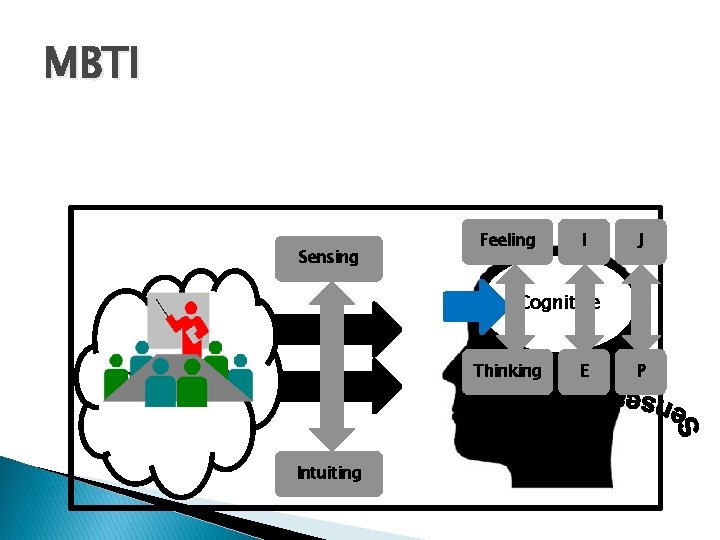
MBTI Sensing Feeling I J Cognitive Thinking Environment Intuiting E P
Mental Processes � Perceptions ◦ How you perceive your surroundings ◦ Sensing (S) �Rely on actual data �Gather information through the five senses �Pay attention to details ◦ Intuition (N) �Rely on inspiration �Gather information through “sixth sense” �Look at the big picture
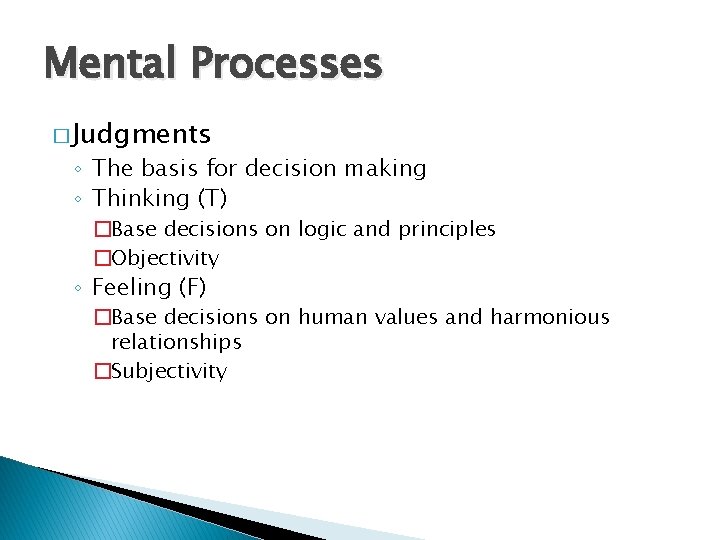
Mental Processes � Judgments ◦ The basis for decision making ◦ Thinking (T) �Base decisions on logic and principles �Objectivity ◦ Feeling (F) �Base decisions on human values and harmonious relationships �Subjectivity
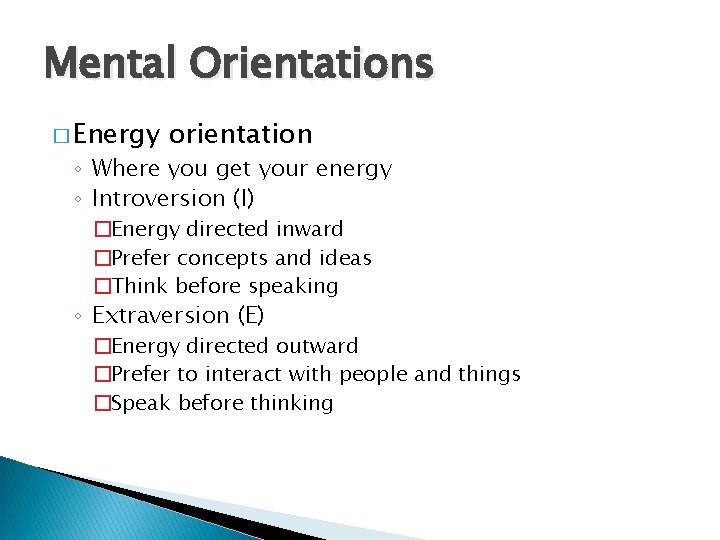
Mental Orientations � Energy orientation ◦ Where you get your energy ◦ Introversion (I) �Energy directed inward �Prefer concepts and ideas �Think before speaking ◦ Extraversion (E) �Energy directed outward �Prefer to interact with people and things �Speak before thinking
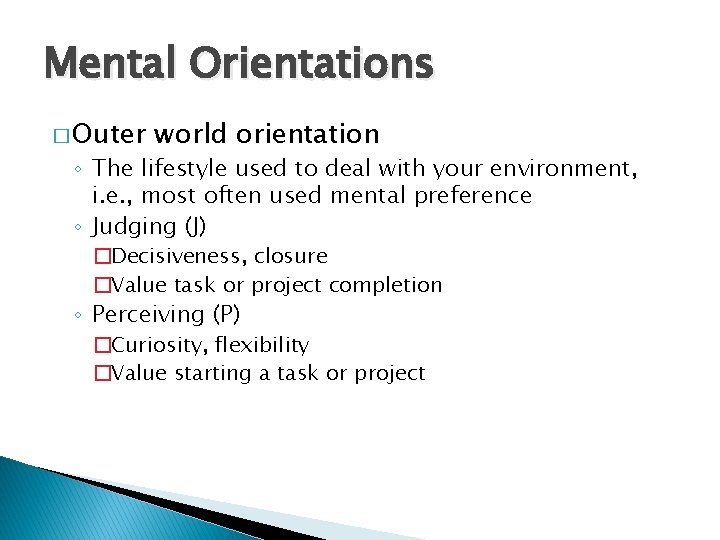
Mental Orientations � Outer world orientation ◦ The lifestyle used to deal with your environment, i. e. , most often used mental preference ◦ Judging (J) �Decisiveness, closure �Value task or project completion ◦ Perceiving (P) �Curiosity, flexibility �Value starting a task or project
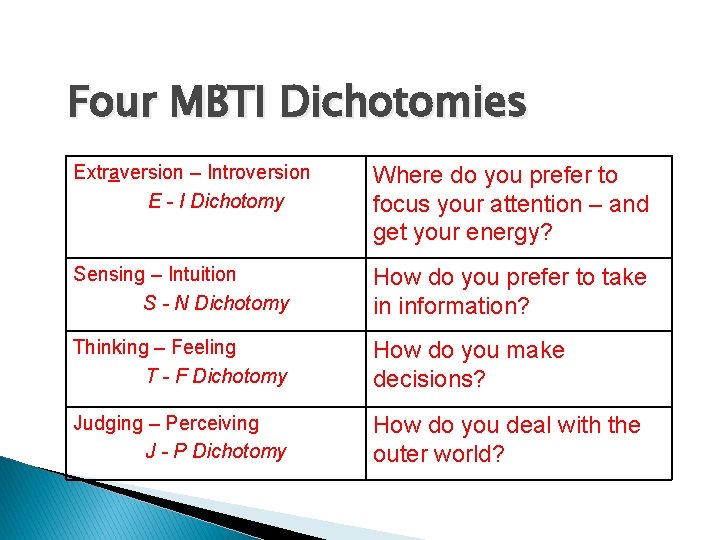
Four MBTI Dichotomies Extraversion – Introversion E - I Dichotomy Where do you prefer to focus your attention – and get your energy? Sensing – Intuition S - N Dichotomy How do you prefer to take in information? Thinking – Feeling T - F Dichotomy How do you make decisions? Judging – Perceiving J - P Dichotomy How do you deal with the outer world?
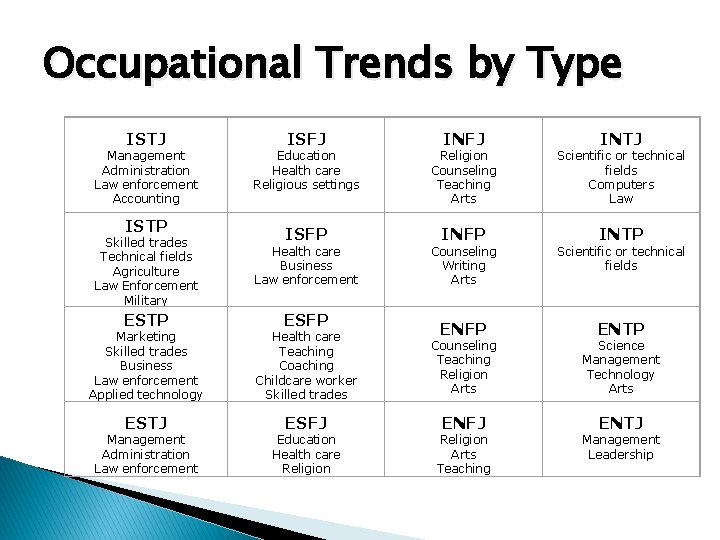
Occupational Trends by Type ISTJ Management Administration Law enforcement Accounting ISTP ISFJ Education Health care Religious settings ISFP Skilled trades Technical fields Agriculture Law Enforcement Military Health care Business Law enforcement ESTP ESFP INFJ Religion Counseling Teaching Arts INFP INTJ Scientific or technical fields Computers Law INTP Counseling Writing Arts Scientific or technical fields ENFP ENTP Marketing Skilled trades Business Law enforcement Applied technology Health care Teaching Coaching Childcare worker Skilled trades Counseling Teaching Religion Arts Science Management Technology Arts ESTJ ESFJ ENTJ Management Administration Law enforcement Education Health care Religion Arts Teaching Management Leadership
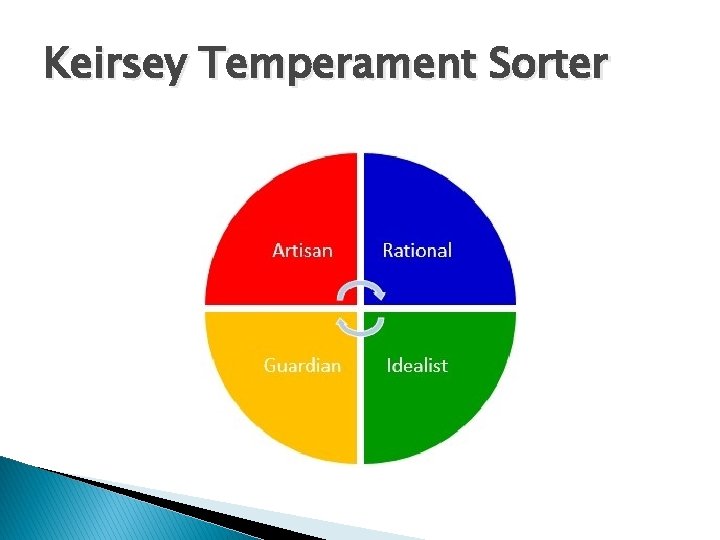
Keirsey Temperament Sorter
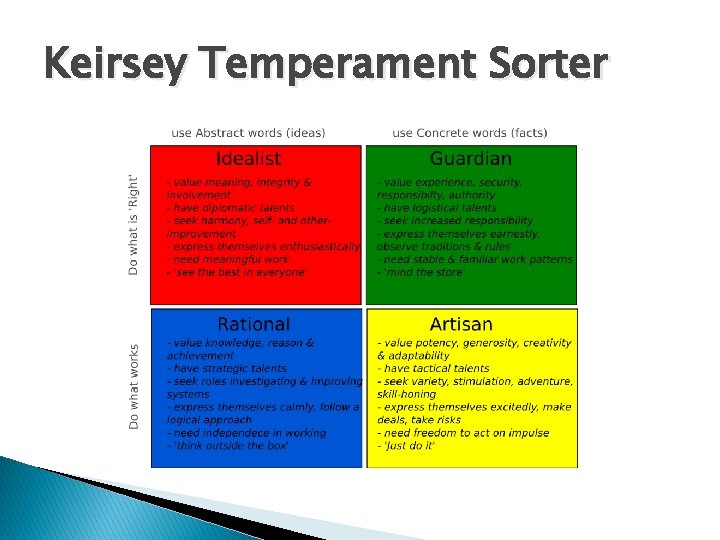
Keirsey Temperament Sorter
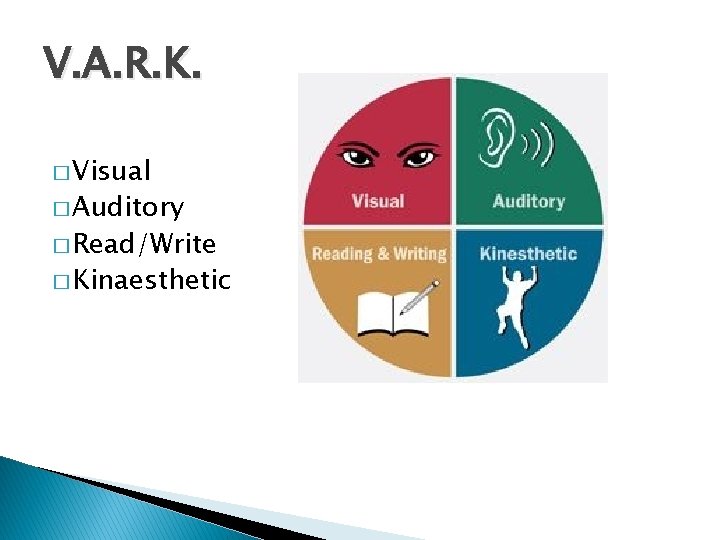
V. A. R. K. � Visual � Auditory � Read/Write � Kinaesthetic
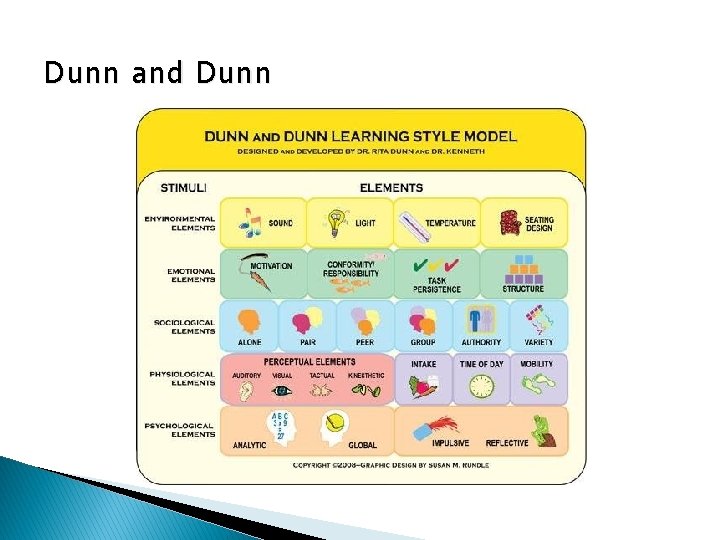
Dunn and Dunn
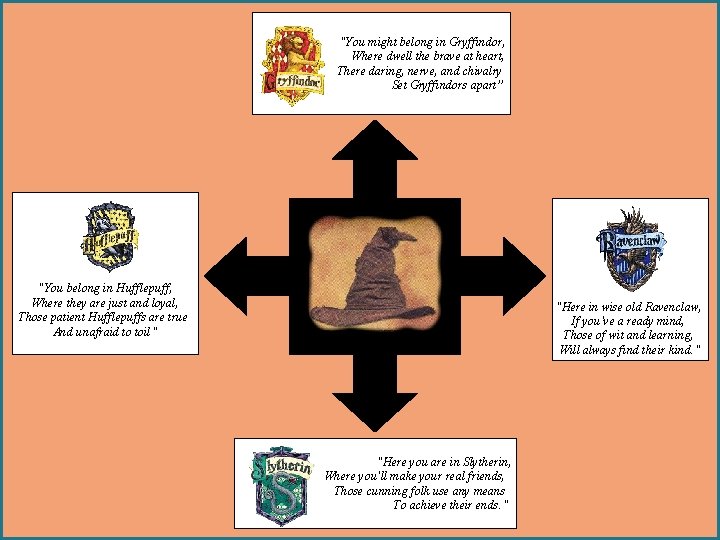
"You might belong in Gryffindor, Where dwell the brave at heart, There daring, nerve, and chivalry Set Gryffindors apart” "You belong in Hufflepuff, Where they are just and loyal, Those patient Hufflepuffs are true And unafraid to toil" "Here in wise old Ravenclaw, If you've a ready mind, Those of wit and learning, Will always find their kind. " "Here you are in Slytherin, Where you'll make your real friends, Those cunning folk use any means To achieve their ends. "