
Thinking Inside the Box The Mathematics of a
Thinking Inside the Box: The Mathematics of a Tennis Serve Roland Minton and Jake Bennett Roanoke College minton@roanoke. edu
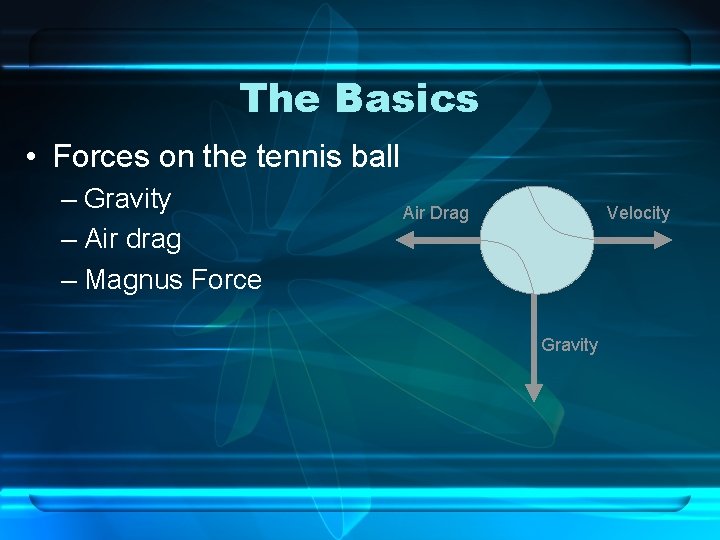
The Basics • Forces on the tennis ball – Gravity – Air drag – Magnus Force Air Drag Velocity Gravity
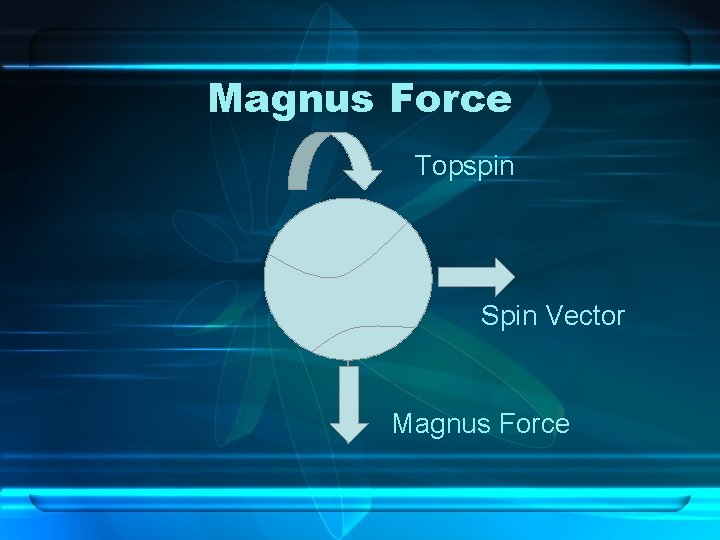
Magnus Force Topspin Spin Vector Magnus Force
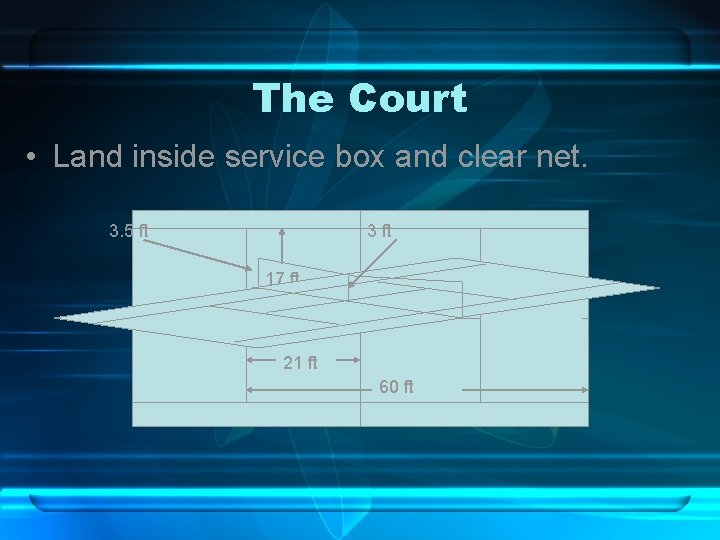
The Court • Land inside service box and clear net. 3. 5 ft 3 ft 17 ft 21 ft 60 ft
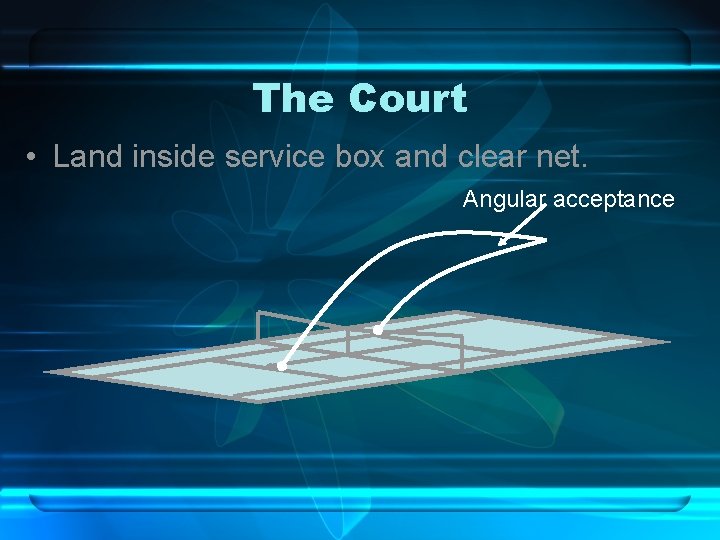
The Court • Land inside service box and clear net. Angular acceptance

Basic Equations
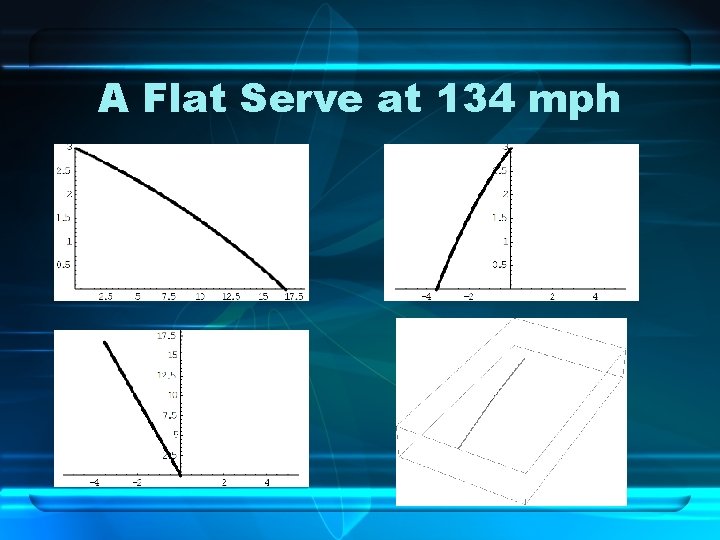
A Flat Serve at 134 mph
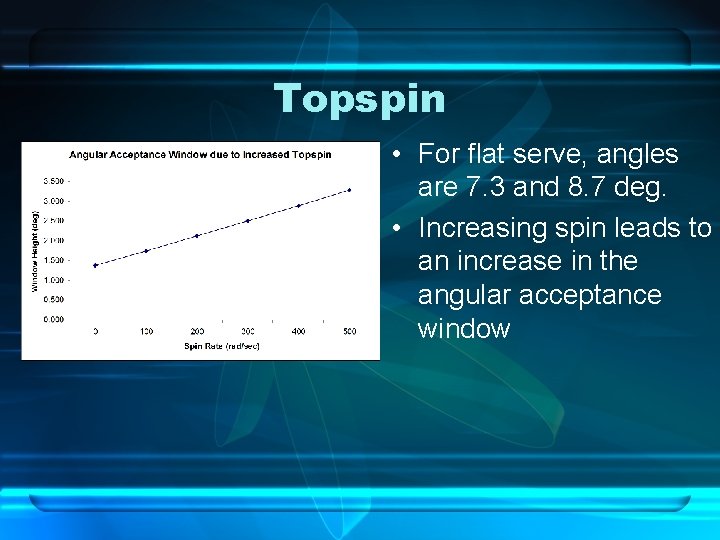
Topspin • For flat serve, angles are 7. 3 and 8. 7 deg. • Increasing spin leads to an increase in the angular acceptance window
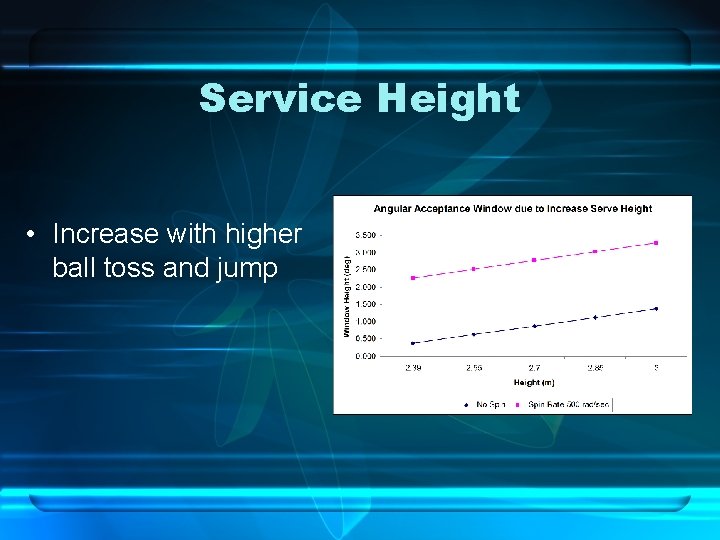
Service Height • Increase with higher ball toss and jump
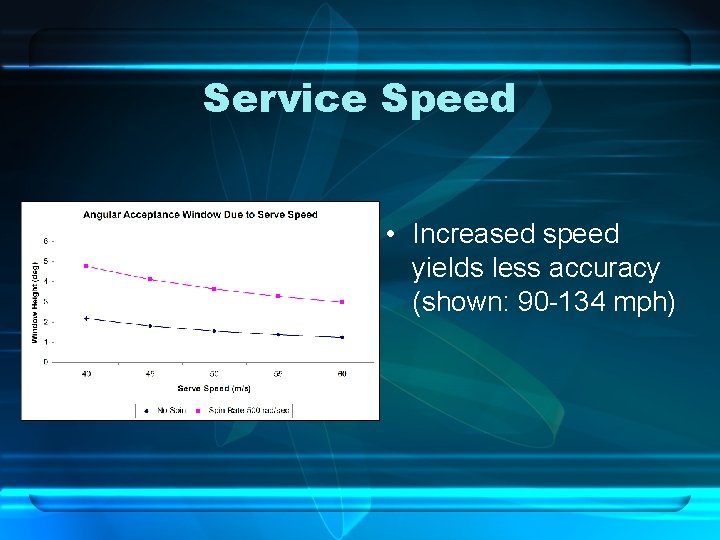
Service Speed • Increased speed yields less accuracy (shown: 90 -134 mph)
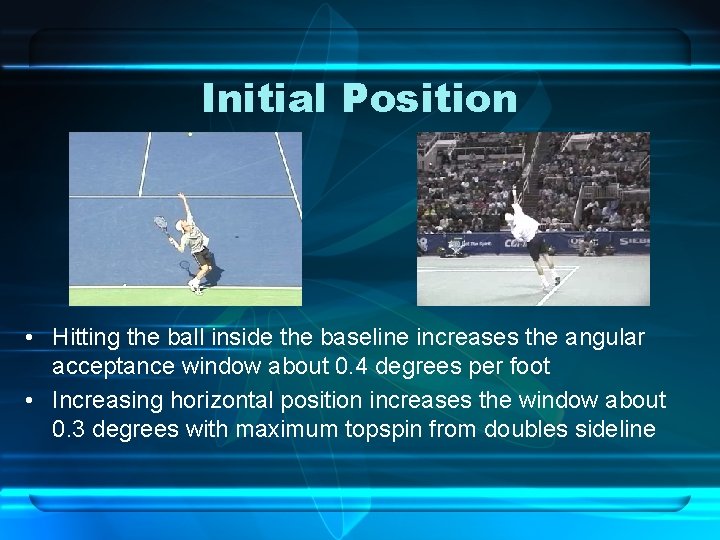
Initial Position • Hitting the ball inside the baseline increases the angular acceptance window about 0. 4 degrees per foot • Increasing horizontal position increases the window about 0. 3 degrees with maximum topspin from doubles sideline
How to Get Topspin (without really trying) • Toss the ball high; downward velocity imparts topspin as ball rolls on racket. • From The Physics and Technology of Tennis by Brody, Cross and Lindsey
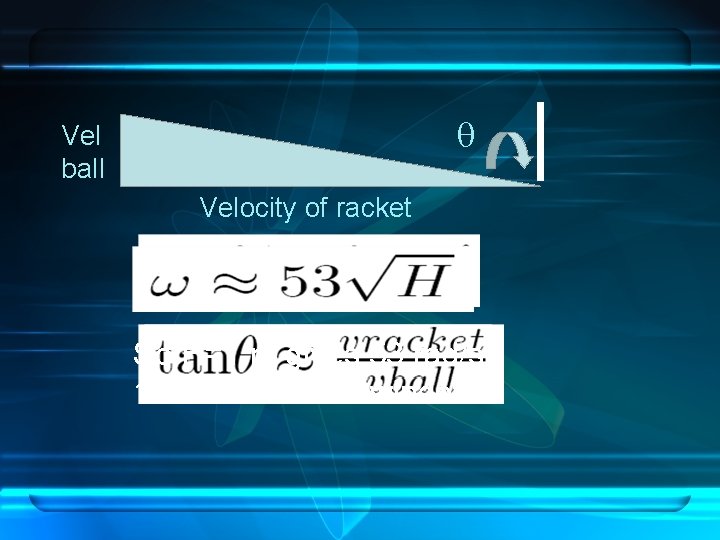
q Vel ball Velocity of racket So H=1 m gives 53 rad/s, 15% increase in window
Hit Up or Down? • • Flat serve: 7. 3 – 8. 7 down During impact, racket rotates about 15 deg. Downward velocity of ball lowers trajectory Ball comes off racket about 12 deg lower than angle of racket at initial impact. • So the answer is Yes.
- Slides: 14